
The rules of SEO are constantly shifting, especially with the rise of AI-driven search. A static strategy is no longer enough. This is where building a custom SEO agent becomes essential. Think of it as a proactive way to stay ahead—a flexible tool that adapts to new algorithms on Google and other AI platforms. This guide is your step-by-step plan for building a more resilient SEO strategy. You will learn how to create an analysis framework, implement custom prompts, and maintain an agent that keeps your content competitive for the long run.
Key Takeaways
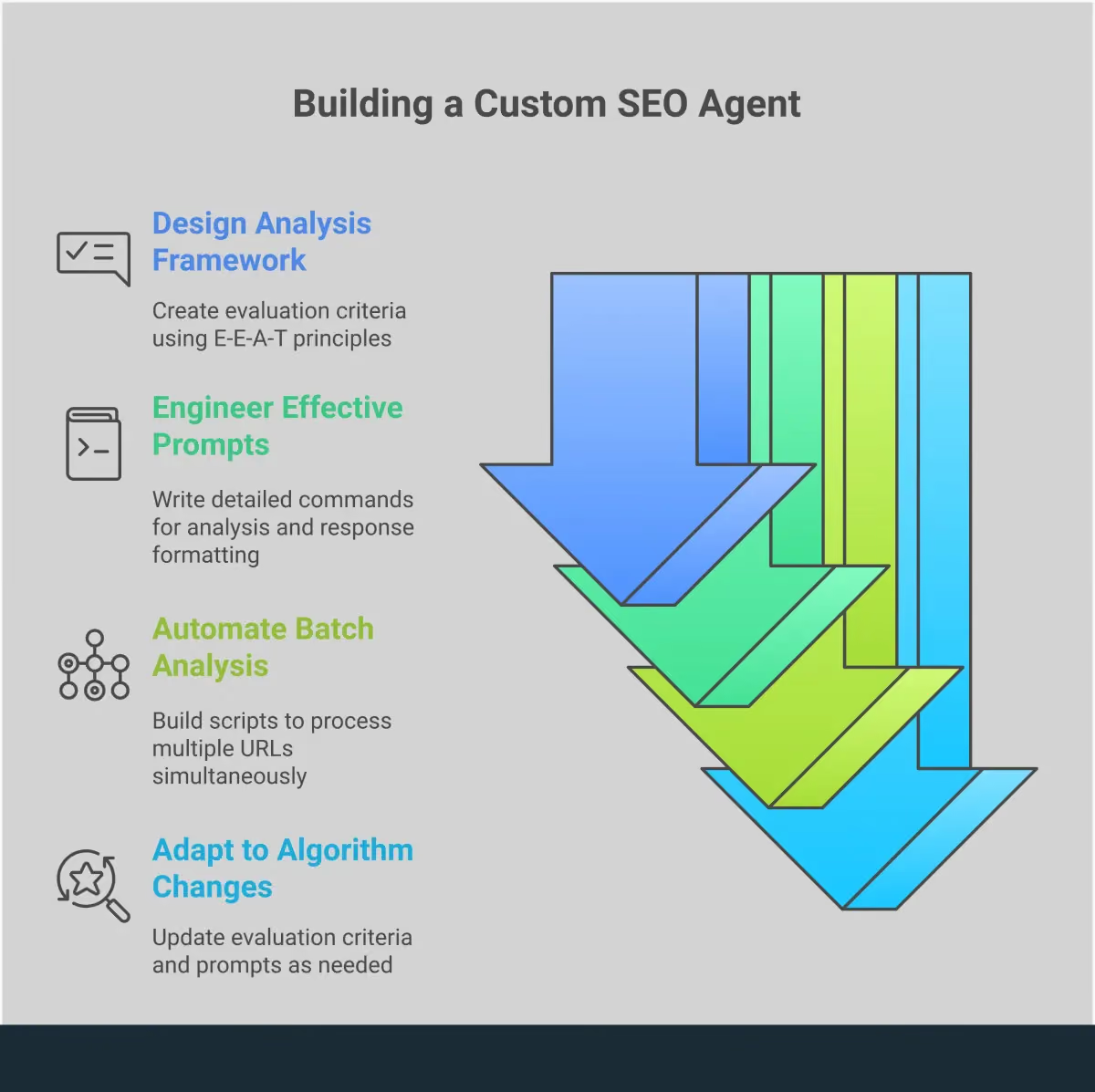
- Define Your Analysis Framework: To get reliable insights, you first need to teach your AI what to look for. Establish a clear set of rules with specific criteria, a scoring system, and E-E-A-T principles to guide your agent's analysis.
- Translate Your Framework into Clear Prompts: Your agent's output is a direct result of your instructions. Write specific commands that tell the AI exactly what to analyze, how to score it, and what format to use for its recommendations.
- Automate, Implement, and Refine: A custom agent is a dynamic tool, not a static report. Integrate it into your workflow to analyze content at scale, track the performance of your changes, and regularly update its logic to adapt to algorithm updates.
What is a Custom SEO Agent?
Think of a custom SEO agent as your personalized AI assistant, built using a platform like ChatGPT but trained specifically for your search engine optimization needs. Instead of using a generic chatbot, you're creating a specialist that understands your unique SEO goals and criteria. This agent can automate your SEO audits, analyze web page content, and provide clear, actionable recommendations to improve your rankings. It’s like having an on-demand SEO consultant that can process information and deliver insights in minutes.
The real power comes from its customization. You define the rules, the analysis framework, and the type of feedback you want. For example, you can instruct it to evaluate content against Google's E-E-A-T guidelines, check for specific on-page SEO elements, or even score a page's user experience based on its structure and readability. This moves you beyond generic advice and toward a tailored strategy that fits your content and your audience. For businesses looking to scale their SEO efforts without a massive team, a custom agent can be a game-changer, handling repetitive analysis so you can focus on high-level strategy.
AI Agent vs. AI Workflow: What's the Difference?
It's helpful to understand the distinction between an AI agent and a more basic AI workflow. An AI workflow is like a checklist; it follows a strict, predefined set of rules to complete a task. Think of it as an assembly line—it does the same thing over and over again, efficiently but without deviation. An AI agent, on the other hand, is more like a skilled assistant. It can think more like a human, making decisions based on your general instructions, but still within limits you set.
Instead of just following a rigid script, an agent can analyze new information, adapt its approach, and make independent judgments to achieve a broader goal. For example, while a workflow might just check for a keyword, an agent can evaluate the context and suggest better alternatives. This makes agents dynamic tools for complex tasks like SEO, where the landscape is always changing. This adaptability is what separates a simple automation from a truly intelligent system that helps you strategize and stay competitive.
What Does a Custom SEO Agent Do?
A custom SEO agent’s primary role is to analyze content through a specific SEO lens that you create. It goes beyond simple keyword checks to assess deeper quality signals. You can program it to evaluate content quality, credibility, and authority, ensuring your articles meet the standards of modern search engines. The agent can pinpoint exactly what’s wrong with a piece of content and provide actionable recommendations with examples. Its analysis can cover everything from audience engagement and originality to content structure, trustworthiness, and metadata optimization. This gives you a detailed, multi-faceted audit for any URL you provide.
Types of Custom SEO Agents
Instead of building one giant agent to do everything, you can create smaller, specialized agents for different SEO tasks. This approach makes the process more manageable and allows you to focus on one area at a time, from keyword research to content planning. Each agent works with a specific goal in mind, giving you targeted and actionable insights. Here are a few examples of custom agents you can build to streamline your SEO workflow and get better results.
AI Competitor Keyword Analyzer
An AI Competitor Keyword Analyzer acts as your digital scout, examining your competitors' websites to uncover the keywords they rank for. This agent doesn't just give you a list of terms; it provides context, showing you who currently holds the top spots and how difficult it might be to compete. By analyzing search volume and competition levels, it helps you identify valuable keyword opportunities you may have overlooked. This allows you to build a more strategic keyword research process, focusing your efforts on terms that will actually drive relevant traffic to your site instead of guessing what might work.
AI Blog Post Outliner
Writer’s block is a common hurdle, but an AI Blog Post Outliner can provide the structure you need to get started. You give it a topic, and it generates a comprehensive plan for your article. This agent finds the most relevant keywords, identifies common questions your audience is asking online, and analyzes top-performing competitor articles. The result is a detailed outline that serves as a blueprint for your content, ensuring it’s structured to meet user needs and search engine standards from the very beginning. This takes the guesswork out of content creation and helps you produce well-organized posts consistently.
AI Content Refresh Strategist
Your existing content is a valuable asset, and an AI Content Refresh Strategist helps you maximize its potential. This agent analyzes your older blog posts to identify opportunities for improvement. It can find new keywords to include, suggest sections to add for more depth, and provide a clear plan for what to update to make the content more relevant and visible in search results. At MEGA AI, our Maintenance Agent takes this a step further by automatically identifying and adding new content to existing articles to improve their rank and click-through rate. It’s an effective way to breathe new life into underperforming content without starting from scratch.
AI Content Cluster Planner
To establish your site as an authority, you need to show expertise in your niche. An AI Content Cluster Planner helps you do just that by organizing your content strategy around core topics. This agent takes your main keywords and groups them into related topic clusters. It then provides a roadmap showing you what pillar pages and supporting articles to create and how to link them together. This creates a logical site structure that helps search engines understand your expertise, making it easier for your content to rank for a wide range of related search queries.
AI Intent Optimizer
Creating content that ranks is about more than just using the right keywords; it’s about matching the user’s search intent. An AI Intent Optimizer analyzes your content to determine if it truly delivers what people are looking for. For example, if someone is searching for "how to fix a leaky faucet," they want a step-by-step guide, not a sales page for plumbing services. This agent identifies any mismatch between your content and user expectations, then provides specific recommendations to better align your page with the underlying search intent, which is critical for long-term ranking success.
AI Backlink Prospector
Backlinks are a powerful signal to search engines that your content is credible and valuable. However, finding the right websites for outreach can be a slow, manual process. An AI Backlink Prospector automates this task by identifying relevant websites that are likely to link to your content. It can even score prospects based on their authority and relevance to your niche. Some advanced agents can also draft personalized outreach emails, saving you hours of work. This allows you to scale your link-building efforts and focus on building relationships rather than getting lost in spreadsheets and email templates.
Why Should Marketers Use One?
For marketers, a custom SEO agent is all about efficiency and insight. It streamlines time-consuming tasks like manual content audits and competitor analysis, which frees up your time for creative and strategic work. This automation directly impacts productivity and can reduce the costs associated with outsourcing these tasks. Beyond just saving time, an agent can analyze huge amounts of data to spot market trends and shifts in consumer behavior. By having an AI assistant that can consistently apply your specific SEO criteria, you can ensure all your content is optimized to the same high standard, leading to more predictable and sustainable growth in rankings.
Improve Efficiency and Reduce Manual Work
A custom SEO agent saves a significant amount of time. Tasks that used to take hours, like performing manual content audits or analyzing competitor strategies, can be completed in minutes. This automation streamlines your entire workflow, from initial research to final analysis. The main goal is to automate repetitive tasks so you can redirect your energy toward higher-level strategy and creative thinking. Instead of getting bogged down in the details of every audit, you can focus on interpreting the insights and making impactful decisions. This efficiency helps you get more visitors from search engines and turn them into customers more quickly.
How Does It Integrate with Your Tools?
Integrating a custom agent into your existing workflow is where its value really multiplies. While building a custom AI solution from scratch involves challenges like data management and model training, using a platform simplifies the process significantly. You can design your agent to accept a URL, analyze it, and then output the results in a structured format like a spreadsheet or a document. This report can then be shared with your content team or plugged directly into your project management software. Tools like MEGA AI’s SEO platform are designed to handle this kind of automation, making it easier to deploy AI-driven insights across your entire content creation and optimization process.
How to Build Your Analysis Framework
Before you can ask an AI to analyze SEO performance, you need to teach it what to look for. A solid analysis framework acts as the brain for your custom agent, giving it a consistent and logical structure for evaluating content. This framework breaks down the complex idea of "quality" into specific, measurable components that guide the AI's decision-making process. By defining your evaluation criteria, creating a scoring system, and establishing clear quality metrics upfront, you ensure your agent provides reliable and actionable feedback every time. This foundational step is what separates a generic chatbot response from a targeted SEO analysis that can genuinely improve your rankings.
Guiding Principles for Agent Development
Building a custom agent is an exciting process, but it's easy to get lost in the technical details. To keep your project on track and ensure you create a tool that's genuinely useful, it helps to follow a few guiding principles. These aren't strict rules but rather a mindset for development that prioritizes practicality and strategic alignment. By focusing on a collaborative approach with the AI and starting with manageable objectives, you set yourself up for sustainable success. This ensures your agent becomes a valuable asset for your business, not just a complex project.
Maintain Human Oversight
Your custom agent is a powerful tool, but it works best as a co-pilot, not on autopilot. While AI can process vast amounts of data and automate repetitive tasks, the final strategic decisions should always rest with you. Think of the AI as an assistant that brings you detailed reports and highlights opportunities. It’s your job to use that information to make choices that align with your brand voice and broader business objectives. This human-in-the-loop approach is critical because your expertise in your industry is something an AI cannot replicate. True success comes when you involve human insight to guide the AI's powerful analytical capabilities, ensuring every optimization is both data-driven and strategically sound.
Start with a Clear, Small Goal
It can be tempting to design a single, all-powerful agent that handles every aspect of SEO. However, a more practical and effective strategy is to start with a clear, small goal. Instead of building a complex system, break down big tasks into smaller, more manageable parts. For instance, you could create an agent that focuses solely on analyzing the internal linking structure of your blog posts or one that evaluates the E-E-A-T signals of a single page. This approach makes the development process less daunting and allows for easier troubleshooting. Once you perfect one agent, you can move on to the next, gradually building a suite of specialized tools that work together to improve your overall SEO performance.
Establish Your Evaluation Criteria
The first step is to define the core principles your agent will use to judge a piece of content. When you evaluate web sources, you need to consider who created the content, why they created it, and if it's reliable. Start with a list of high-level criteria that cover the most important aspects of quality and SEO. A good starting point includes Authority, Accuracy, Objectivity, and Currency. Does the author have credentials in the subject? Is the information factually correct and supported by evidence? Is the content presented without bias? Is the information up-to-date? Answering these questions forms the basis of a comprehensive evaluation that your agent can learn to perform consistently.
Develop a Clear Scoring System
Once you have your criteria, you need a way to measure them objectively. A simple scoring system turns your qualitative assessment into quantitative data that you can track over time. For each criterion, create a scale, such as 1 to 10, where 1 is poor and 10 is excellent. This allows your agent to assign a numerical score to different aspects of a page. For more advanced analysis, you can implement a weighted scoring model. This approach lets you assign more importance to certain criteria. For example, for a medical blog, Accuracy might be weighted more heavily than other factors, ensuring your agent prioritizes factual correctness above all else.
Define Your Key Quality Metrics
With your criteria and scoring system in place, it's time to define the specific metrics that determine a score. These are the tangible signals your agent will look for. For example, under the "Accuracy" criterion, a key metric could be the presence of citations or a bibliography. Does the page cite current and reliable sources to support its claims? For "Authority," you might look for an author bio with clear credentials or links to their professional profiles. Defining these metrics removes ambiguity and helps your agent make consistent, evidence-based judgments instead of subjective guesses. This detailed approach ensures your analysis is thorough and grounded in real data points.
Incorporate E-E-A-T into Your Guidelines
Finally, your framework should be grounded in Google's E-E-A-T guidelines: Experience, Expertise, Authoritativeness, and Trustworthiness. These principles are what search engines use to determine if content is helpful and reliable. Your custom agent needs to understand how to identify signals of E-E-A-T on a page. This could include checking for author bios, clear contact information, links from other reputable sites, and evidence of first-hand experience. As AI search becomes more prevalent, these trust signals are more important than ever. Content that demonstrates strong E-E-A-T is better positioned to rank well on both traditional search engines and in AI-driven results.
What Should Your Custom SEO Agent Analyze?
To build an effective SEO agent, you need to teach it what to look for. A comprehensive analysis goes beyond simple keyword density. Your agent should evaluate a page from multiple angles, mirroring how both search engines and users determine quality. This means breaking down your analysis into core components that cover the full spectrum of SEO, from the words on the page to the code behind it. Here are the key areas your custom agent should focus on.
Evaluating Content Quality
Content is the foundation of any SEO strategy. Your agent needs to assess whether the material is genuinely helpful, comprehensive, and well-crafted. You can write prompts that instruct your agent to check for depth of information, clarity of writing, and originality. Does the content answer the user's query completely? Is it easy to read and free of grammatical errors? The agent can also identify if the content is thin or superficial, flagging pages that need more substance to be competitive. This moves the analysis from a simple checklist to a more nuanced evaluation of value.
Auditing Technical SEO
A technically sound website provides a solid base for your content to perform. You can program your custom agent to automate parts of your SEO audits, saving you hours of manual work. Have your agent scan the page’s HTML to check for a logical heading structure (H1, H2s, etc.), identify broken internal and external links, and ensure images have descriptive alt text. While it can't directly measure site speed, it can analyze the source code for common issues that slow pages down, like uncompressed images or bloated scripts. This gives you a quick, actionable list of technical fixes.
Assessing User Experience (UX)
While an AI can't feel frustration like a human user, it can identify elements that contribute to a poor experience. A well-planned SEO strategy must consider how users interact with a page. You can instruct your agent to analyze the page structure for clear navigation, check for mobile-friendliness by looking for a viewport meta tag, and assess readability by measuring sentence and paragraph length. It can also spot intrusive pop-ups or a lack of clear calls-to-action. By flagging these potential friction points, your agent helps you create a site that is not only optimized for search engines but also for the people using it.
Measuring Trust and Credibility
Search engines want to rank content from sources people can trust. Your agent can be trained to look for signals of Experience, Expertise, Authoritativeness, and Trustworthiness (E-E-A-T). This involves checking for an author bio, clear contact information, and an "About Us" page. You can also have it scan for outbound links to reputable domains, as citing reliable sources is a key indicator of credibility. By automating this analysis, you can quickly assess whether your content meets the high standards required to build confidence with both users and search algorithms.
Analyzing On-Page Metadata
Metadata, like title tags and meta descriptions, is your first chance to make an impression in the search results. Your agent can analyze this critical component to ensure it’s working effectively. Use ChatGPT prompts to have your agent check if the title tag is within the optimal length, includes the primary keyword, and is compelling enough to earn a click. It can do the same for the meta description, ensuring it accurately summarizes the page and includes a call-to-action. The agent can also verify the presence and correct implementation of schema markup, which helps search engines better understand your content.
How to Write Effective Custom Prompts
Once your framework is in place, the next step is to translate it into instructions your AI agent can understand. These instructions are called prompts, and they are the engine of your custom SEO agent. Well-crafted prompts ensure you get consistent, high-quality analysis every time. This process involves defining exactly what you want the agent to look for, how you want it to evaluate the content, and the format for its feedback. Think of it as creating a detailed job description and training manual for your new digital team member. By being specific and clear, you guide the AI to deliver the precise insights you need to improve your content strategy and search rankings.
Understanding the Basics of Prompting
Prompt engineering is simply the practice of writing clear and effective instructions for an AI. The good news is you don’t have to be an expert to get started. A great way to begin is by asking ChatGPT to help you write the prompts themselves. You can instruct it to act as an SEO specialist and create a detailed prompt that evaluates a piece of content. This approach ensures your prompts consider essential factors like content quality, credibility, and authority right from the start. The goal is to create a master prompt that you can reuse for any page you want to analyze.
Writing Your Evaluation Commands
Your prompts need to be specific. Instead of just asking "Is this content good for SEO?" you should provide detailed evaluation commands. Begin by instructing your agent to identify and highlight specific issues within the content. You can ask it to provide actionable recommendations and examples across the categories you defined earlier, such as content quality, originality, structure, and metadata optimization. For example, you could command it to "Analyze the following article for credibility and list three ways to improve it with specific examples." This directs the agent to give you concrete steps, not just vague feedback.
Optimizing for Clearer Response Formats
A huge block of text is difficult to work with. To make the agent’s output useful, your prompts should specify the response format. Using a structured format allows for an efficient analysis of your priority pages, making it easier to spot areas that need work. You can ask for the output in bullet points, a summary of key findings at the top, or even a simple markdown structure. This ensures the feedback is easy to read, share with your team, and turn into a checklist of tasks for your next content update.
Setting the Parameters for Scoring
To make your analysis measurable, it’s helpful to set scoring parameters directly in your prompt. This turns qualitative feedback into quantitative data you can use to track progress and prioritize efforts. You can implement a scoring system where each category in your framework is rated on a scale of 1 to 10. For example, you might draw inspiration from evaluation frameworks like the CRAAP test to build your criteria. This method provides a clear grade for each page, allowing you to quickly assess performance and decide which pages need the most attention.
Tools and Frameworks for Building Your Agent
With a clear framework and effective prompts, you're ready to choose the tools to bring your custom SEO agent to life. The right choice depends on your technical skills, budget, and how much control you want over the final product. The landscape ranges from user-friendly platforms that require no coding to powerful developer frameworks that offer endless customization. Understanding these options will help you decide whether to build your agent from the ground up or leverage a solution that has the groundwork already laid out. For many small businesses, the goal is to find a path that delivers powerful results without a steep learning curve or a dedicated development team.
No-Code and Low-Code Platforms
If you're not a developer, no-code and low-code platforms are the most accessible starting point. Think of these tools as switchboards that connect different applications. You can connect your SEO tools, like Ahrefs or SEMrush, with an AI model like GPT-4 through a simple drag-and-drop interface. Platforms like Gumloop or Make offer pre-built integrations that handle the technical connections for you, allowing you to focus on the logic of your agent. While this approach is much simpler than writing code, it still requires you to design the workflow, manage the connections, and troubleshoot when things don't work as expected. It’s a solid middle ground, but it's not a fully automated solution out of the box.
Developer Frameworks for Complex Agents
For those with coding experience or a development team, frameworks offer the most power and flexibility. Building a truly autonomous agent that can perform a wide range of SEO tasks is a significant undertaking that requires a deep understanding of both programming and search optimization. Using a developer framework like LangGraph, AutoGen, or even a custom Python script with Django can give you complete control over your agent's capabilities. You can design complex logic, integrate multiple data sources, and create a tool tailored precisely to your needs. However, this path involves a substantial investment in time and resources, which is why many businesses prefer an end-to-end platform that manages the technical complexity for them.
Connecting to Data with APIs
Your SEO agent is only as smart as the data it can access. To perform meaningful analysis, it needs to pull real-time information from authoritative sources using Application Programming Interfaces (APIs). For example, you could use the Google Search API for keyword research, the SEMrush API to analyze competitor backlink profiles, or the Moz API to check domain authority. Each of these services provides a way for your agent to "ask" for specific data. Managing these connections is a key part of building a custom agent, as you'll need to handle API keys, process different data formats, and respect the usage limits of each service.
Handling and Storing Data
Once your agent starts pulling data from various APIs, it needs a way to process and remember that information. This is where data handling tools and a "memory" system become essential. You can use libraries like Pandas to organize and analyze the data your agent collects. To make your agent smarter over time, you need to give it a memory to recall past analyses and learn from the results. This can be achieved with simple databases or more advanced tools like Redis. This step is crucial for building an agent that doesn't just perform one-off tasks but improves its performance, which is a core feature of advanced systems like MEGA AI's SEO platform.
Turning Analysis into Actionable Recommendations
Once your custom agent has analyzed a URL based on your framework, the next step is to translate that data into a clear plan. A good analysis is only half the battle; the real value comes from specific, actionable recommendations that tell you exactly what to fix and how. Your agent should be prompted to move beyond scores and data points to provide concrete steps for improving content, technical SEO, user engagement, and site credibility. This process turns a simple audit into a strategic roadmap for earning higher rankings. The goal is to create a feedback loop where the agent doesn't just identify problems but also suggests practical solutions. For example, instead of just saying "headline is weak," it should suggest three alternative headlines based on search intent and keyword relevance. This level of detail is what separates a basic tool from a powerful assistant. By structuring your agent's output this way, you get a clear, prioritized list of tasks that will make a real impact on your performance. For businesses looking to streamline this even further, platforms like MEGA AI offer end-to-end SEO automation that can handle analysis and implement changes, saving you valuable time and resources.
Get Recommendations for Content Improvement
Your agent’s primary function is to help you refine your content. You can instruct it to analyze on-page elements and provide clear suggestions for improvement. For example, you can prompt your agent with a command like: "I want to input a URL, and you should analyze key content elements, score each out of 10, and give me recommendations on fixing critical issues with examples." This directs the agent to identify weaknesses in headlines, keyword usage, or clarity and offer specific rewrites or additions. This process helps you systematically improve your content’s visibility and effectiveness.
Find Opportunities for Technical Optimization
Beyond the words on the page, your agent can spot technical issues that hurt your rankings. You can program it to check for common problems like slow page speed, poor mobile optimization, or broken links. A key instruction is to make sure each page meets a quality threshold. For instance, you can ask the agent to flag pages with low word counts, as "thin content" can harm your site's overall authority. By identifying these issues, your agent provides a clear checklist for your development team or for you to fix within your CMS, ensuring your site is technically sound and accessible to search engines.
Identify Ways to Improve User Engagement
How users interact with your site sends strong signals to search engines. Your agent can help you identify opportunities to make your content more engaging. By prompting it to review elements like page titles, meta descriptions, and internal linking strategies, you can get suggestions that encourage users to click and stay on your site longer. The agent can recommend adding a table of contents for long articles, breaking up text with images, or suggesting relevant internal links to guide users to other valuable pages. These small changes can significantly improve user experience and signal content quality to search engines.
Learn Tactics for Building Trust
Trust is a cornerstone of modern SEO. Your agent should be configured to evaluate your content for signals of credibility. Since large language models often rank content based on quality, clarity, originality, and trustworthiness, your prompts should reflect this. Ask your agent to check for an author bio, cited sources, and clear contact information. It can also verify that information is presented clearly and factually. By focusing on these trust-building elements, you align your content with the quality standards that both users and search engines value, helping you build a more authoritative online presence.
How to Automate Your SEO Analysis Process
Once you have a solid framework and well-defined prompts, the next step is to automate the analysis. This is where your custom agent transforms from a concept into a powerful tool. You can even use ChatGPT to help write the code that powers your agent. The goal is to create a simple script that takes a list of URLs, feeds the content of each page to your agent, and returns a structured analysis based on your predefined criteria.
This process allows your agent to systematically review key on-page elements, assign a score according to your system, and generate specific recommendations for fixing any issues it finds. What was once a manual and time-consuming audit can become an efficient, repeatable part of your operations. While building your own agent is a great way to customize your SEO approach, platforms like MEGA AI offer end-to-end SEO automation that handles everything from keyword research to content updates without requiring any coding. For teams building their own tools, this automation step is where the agent’s true value begins to show.
Integrating the Agent into Your Workflow
The real power of a custom SEO agent comes from making it a regular part of your operations. By automating your on-page audits, you can create a process that fetches a page’s HTML, runs it through your analysis framework, and delivers actionable feedback in minutes. This approach helps streamline your workflow and frees up your team to focus on more strategic initiatives. You can integrate the agent into your pre-publication checklist for new content or schedule it to run as part of your quarterly content audits to ensure your existing pages remain optimized.
How to Process Content in Batches
Analyzing pages one by one is inefficient. A key benefit of an automated agent is its ability to process content in batches. You can feed it a list of your highest-priority URLs—like top-performing blog posts or key service pages—and receive a comprehensive report for all of them at once. This method allows you to efficiently identify areas for improvement across your most important assets without getting bogged down in manual checks. It’s a practical way to prioritize your optimization efforts and focus on the pages that will have the greatest impact.
Set Up a System to Track Performance
Your custom agent provides excellent recommendations, but it’s still just one piece of a larger strategy. After you implement the suggested changes, it is critical to track performance metrics to measure their impact. Keep a close eye on organic traffic, keyword rankings, click-through rates, and conversion rates to understand what’s working. This data provides the feedback loop needed for continuous improvement. Remember that a tool can’t replace a comprehensive strategy, and ongoing optimization based on performance data is essential for long-term success.
Exporting Your Data and Creating Reports
An effective automation process should conclude with a clear and usable output. Configure your agent to export its findings into a structured format, such as a spreadsheet or a formatted document. When the agent runs, it should produce a downloadable sheet that summarizes the analysis, complete with scores, identified issues, and specific recommendations for each URL. This makes it easy to share insights with your team or clients, assign tasks, and create a clear action plan for implementation.
How to Maximize Your Agent's Performance
Building your custom SEO agent is a huge first step, but the real magic happens when you start refining its performance. An AI agent isn't a static tool; it's a dynamic partner that gets smarter and more effective with a bit of guidance. Think of it as moving from a basic model to a finely tuned machine that understands the specific nuances of your website and industry. This ongoing optimization process ensures your agent delivers increasingly accurate, relevant, and impactful recommendations that drive real results.
Refining Your Evaluation Criteria Over Time
Your initial evaluation criteria provide the foundation, but you'll need to refine them based on real-world performance. As you run different URLs through your agent, pay close attention to the scores and recommendations it provides. You can have your agent evaluate key elements of your content and assign a score, which helps you spot patterns in its analysis.
If you notice the agent consistently flags issues on pages that are already performing well, it’s a sign that your criteria may need adjustment. For example, maybe your prompt overemphasizes a certain metric that isn't as critical in your niche. Use this feedback to tweak your prompts and scoring system. The goal is to create a more nuanced framework that aligns with what actually moves the needle for your search rankings and user engagement.
Tips for Improving Your Agent's Accuracy
Improving your agent's accuracy is about making its insights more relevant and actionable. A good agent doesn't just find problems; it helps you focus on the ones that matter most. You can use your agent to efficiently prioritize SEO opportunities, ensuring you spend your time on tasks with the highest potential impact.
To enhance its accuracy, feed your agent data from your analytics tools, like Google Search Console. Provide it with context about your priority pages, target keywords, and business goals. This helps the agent move beyond generic SEO advice and offer recommendations tailored to your specific situation. For instance, instead of just saying "add more keywords," a well-trained agent might suggest specific long-tail keywords for a high-priority page that’s close to ranking on page one.
Following Best Practices for Implementation
The recommendations from your agent are only as good as your implementation. It's important to establish clear guidelines for how your team should act on the agent's feedback. This ensures consistency and prevents you from making changes that don't align with broader quality standards.
For example, if your agent identifies a page with thin content, the guideline shouldn't be to simply add a few hundred words. The focus should be on adding substantive, helpful information that satisfies user intent. It's crucial to maintain a high-quality threshold for all your content and avoid creating indexable pages with thin content that could harm your rankings. By setting these standards, you empower your team to use the agent's insights thoughtfully.
Create a Plan for Continuous Improvement
An effective SEO agent requires ongoing maintenance and improvement. The digital landscape is constantly changing, and your agent needs to evolve with it. This involves more than just occasional tweaks; it requires a strategic approach to data management, model training, and security.
Create a plan for regularly reviewing your agent's performance. After major search engine algorithm updates, revisit your prompts and evaluation criteria to ensure they are still relevant. Establish a feedback loop where you track the results of implemented recommendations and use that data to further refine the agent's logic. This cycle of analysis, implementation, and refinement is key to addressing the challenges in deploying custom AI agents and turning your tool into a long-term strategic asset.
Practical Challenges and Realistic Expectations
Building a custom SEO agent is an exciting project, but it's important to go in with a clear understanding of the potential hurdles. Creating an effective agent involves more than just writing prompts. You'll need to manage ongoing costs, work around technical limitations, and invest time in learning the tools. Setting realistic expectations from the start will help you avoid frustration and build a tool that genuinely supports your business goals, rather than becoming another unfinished project.
Managing API Costs and Rate Limits
Connecting your agent to external data sources, like keyword tools or OpenAI's models, comes with real-world costs. Many SEO APIs are expensive, charging based on the volume of data you request, not a flat monthly fee. These costs add up quickly, especially when processing content in batches. Furthermore, these services often have strict API limits on how much data you can pull at once. This means you need a strategic plan for collecting information to avoid hitting your cap or running up a large bill, which requires careful budgeting for a small business.
Understanding Task Automation Difficulty
Automation is powerful, but it isn't magic. An AI agent can only execute the specific instructions you provide. Its effectiveness depends entirely on how well you define its tasks. A vague goal like 'improve my SEO' will yield generic results. Instead, you need to break down big objectives into smaller, manageable steps. For example, you might build separate workflows for auditing metadata, checking for broken links, or evaluating content readability. This requires a clear understanding of your own SEO process before you can successfully teach it to a machine.
Navigating the Learning Curve
Even with no-code platforms, there is an unavoidable learning curve. Building a full AI agent for SEO is a significant project that requires a good grasp of both SEO principles and workflow design. While tools reduce the coding needed, you still need to invest time to understand how to structure the logic and connect the components effectively. For many small business owners, this time commitment is the biggest challenge. This is where platforms like MEGA AI can be a valuable alternative, offering the power of automation without the steep learning curve of building and maintaining a custom system from the ground up.
How to Adapt Your Agent to SEO Changes
The world of SEO is always in motion. Search engine algorithms change, new trends emerge, and user behavior evolves. A static strategy quickly becomes an outdated one. This is where your custom SEO agent truly shows its value. It’s not just a one-time analysis tool; it’s a dynamic system designed to adapt alongside the digital landscape. By building an agent that can learn and adjust, you create a more resilient and forward-thinking SEO approach that keeps you competitive.
This adaptability allows you to move from a reactive to a proactive SEO mindset. Instead of scrambling to understand the latest Google update, you can use your agent to analyze the changes and quickly adjust your content. This continuous process of refinement ensures your strategies remain effective and aligned with current best practices, helping you maintain and improve your search rankings over time.
Preparing Your Agent for Algorithm Updates
Search engine algorithm updates can feel like a constant curveball, forcing marketers to re-evaluate their strategies. With a custom SEO agent, you can handle these changes more systematically. When an update rolls out, you can adjust your agent’s evaluation criteria to reflect the new ranking factors. For instance, if an update prioritizes a specific aspect of user experience, you can modify your prompts to score content more heavily on that metric.
Once updated, your agent can re-analyze your existing content library to identify pages that are no longer optimized. This allows you to make targeted adjustments without having to manually review every article. Tools like MEGA AI’s Maintenance Agent automate this process, making instant adjustments to keep your content aligned with the latest algorithm, ensuring you don’t lose ground when search engines shift their focus.
Using AI to Re-optimize for Platform Changes
The definition of a "search engine" is expanding. Your content doesn't just need to rank on Google; it needs to perform well on AI-driven platforms and other search environments. A custom agent gives you the flexibility to adapt your strategy for any platform. Instead of starting from scratch, you can simply adjust your agent's evaluation criteria to match new ranking factors. This proactive approach means you're always prepared for what's next. Once you've updated the agent's logic, it can re-analyze your entire content library to find pages that need adjustments. This is where automation becomes incredibly powerful. For example, MEGA AI’s Maintenance Agent can be configured to re-optimize existing content for any platform, whether it's for a new Google update or for visibility in an LLM's search results.
Keeping Up with the Latest SEO Trends
Your custom agent can do more than just react to changes; it can help you anticipate them. By feeding it vast amounts of data from industry reports, competitor analysis, and search query trends, your agent can identify emerging patterns and shifts in consumer behavior. This capability allows you to get ahead of new topics and keyword opportunities before they become saturated.
For example, the agent can analyze search data to spot rising interest in a particular product feature or a new type of informational query. This insight helps you create timely and relevant content that meets user intent as it develops. Staying on top of SEO trends this way gives you a significant advantage, positioning your brand as a knowledgeable and current resource in your industry.
How to Maintain Your Custom SEO Agent
Building your SEO agent is the first step; maintaining it is what ensures its long-term effectiveness. An agent is only as good as the data and instructions it receives. Regular maintenance involves refining your prompts, updating your knowledge base with the latest SEO best practices, and recalibrating your scoring system to ensure its analysis remains sharp and accurate.
Deploying and managing a custom AI agent involves strategic data management and optimized model training. You’ll need to periodically review its outputs to check for inconsistencies and make adjustments. While this requires an ongoing commitment, the payoff is an SEO tool that evolves with your business and the industry. For those without the resources for constant upkeep, platforms that offer end-to-end SEO automation handle the maintenance for you, providing a continuously optimized tool without the heavy lifting.
Future-Proofing Your SEO Strategy
A custom SEO agent helps you build a strategy that’s prepared for the future of search. As new platforms and search technologies emerge, like generative AI-powered search engines, your agent can be adapted to optimize for them. You can create new evaluation frameworks tailored to different algorithms, whether for Google, an LLM, or a niche search engine.
This flexibility ensures your SEO efforts aren't tied to a single platform. By transforming your approach with AI, you create a more versatile and durable strategy. Your agent becomes a central part of your operations, capable of adjusting to whatever comes next. This forward-looking approach helps you secure your online presence and continue to drive organic traffic, no matter how the search landscape changes.