
Building a successful piece of content is a bit like renovating a house. You could start from scratch on an empty plot of land and hope people find it, or you could find the best house in a great neighborhood and make it even better. The skyscraper technique is the renovation approach to content marketing. It focuses on improving a proven asset rather than starting from zero. But before you can start renovating, you need a detailed blueprint of the original structure. This guide will show you how to use Screaming Frog for the skyscraper technique, acting as your tool for inspecting every part of your competitor’s content so you can build something stronger.
Key Takeaways
- Automate Competitor Research: Use Screaming Frog to crawl competitor sites and eliminate the guesswork from your content strategy. This process quickly reveals their most successful articles, giving you a proven blueprint to improve upon.
- Focus on High-Impact Metrics: Avoid getting lost in data by concentrating on a few key reports. Analyze word count for content depth, H1/H2 tags for structure, and the external links report to build your initial list of outreach targets.
- Create a Strategic Action Plan: Convert your raw crawl data into a clear roadmap. Organize your findings in a spreadsheet to list target articles, detail specific improvements, and build a prioritized list of websites for outreach.
What is the Skyscraper Technique? (And Why Use Screaming Frog?)
The Skyscraper Technique is a content marketing and link-building strategy focused on improving upon existing, popular content. The process involves finding an article or resource in your niche that has already earned a lot of backlinks, creating a piece of content that is significantly better, and then reaching out to those who linked to the original to promote your superior version.
For small businesses and startups with limited resources, this method is especially effective because it removes much of the guesswork. Instead of creating content and hoping it resonates, you’re building on a topic that has a proven track record of attracting attention and links. The main challenge, however, is the research. Manually finding top-performing content and analyzing its backlink profile can be incredibly time-consuming. This is where a tool like Screaming Frog becomes essential, allowing you to automate competitor analysis and gather actionable data quickly.
The 3-Step Skyscraper Process
The Skyscraper Technique can be broken down into three core steps. The first is to identify high-performing content that has already attracted a significant number of backlinks. This serves as your foundation. The second step is to create something demonstrably better. This doesn’t just mean longer; it could be more thorough, better designed, more up-to-date, or include unique data and visuals. Finally, you promote your new asset by reaching out to the right audience—specifically, the website owners who linked to the original piece—and suggest they update their link to point to your more valuable resource.
Why Screaming Frog is Perfect for Competitor Analysis
Screaming Frog is a website crawler that explores a site’s pages just like a search engine would. It’s the perfect tool for the Skyscraper Technique because it automates the most tedious part of your research. Instead of manually sifting through a competitor’s website, you can use Screaming Frog to quickly extract a complete list of their URLs, page titles, headings, word counts, and other on-page elements. It also helps you analyze a site’s internal link structure, revealing which pages your competitor values most. This gives you an organized, data-driven overview to pinpoint the best content to improve upon.
How to Set Up Screaming Frog for Competitor Analysis
Before you can start uncovering your competitor’s secrets, you need to get your tools in order. Setting up Screaming Frog correctly is the most important step. A proper configuration ensures you gather clean, relevant data for your skyscraper strategy instead of wasting time sifting through useless information. Think of it as calibrating your compass before heading into the wilderness. Getting these initial settings right will make the entire analysis process smoother and more effective, allowing you to focus on what really matters: finding content opportunities and building a better strategy. This initial setup is foundational for the kind of deep competitor research that an automated SEO agent performs to identify high-value keywords and content gaps. Let's walk through the essential steps to get you ready to crawl.
Download and Configure Screaming Frog
First things first, you need to get the software. Head over to the official Screaming Frog website to download the SEO Spider tool. It’s available for Windows, macOS, and Ubuntu. The free version is powerful and lets you crawl up to 500 URLs at a time, which is often enough for analyzing a specific section of a competitor's blog or a smaller website. If you plan to analyze larger sites or want access to more advanced features like saving your crawls and scheduling, you’ll need to purchase a license. For the purpose of the skyscraper technique, starting with the free version is a great way to get your feet wet and see if it works for you before committing to the paid plan.
Configure Essential Crawl Settings
Once installed, you need to tell Screaming Frog what to look for. By default, it crawls a lot of data, but for competitor analysis, you want to focus on specific elements. Before you enter a competitor’s URL, go to the main configuration menu. Ensure that the spider is set to crawl external links, as this is how you’ll find outreach opportunities later. You should also check the settings for images, CSS, and JavaScript. Crawling JavaScript is particularly important because it allows you to see the website as Google sees it, which is critical for understanding the true structure and content of a modern site. You can find detailed explanations of every option in the official Screaming Frog user guide.
Optimize Performance and Manage Memory
If you’re analyzing a large competitor site, Screaming Frog can use a lot of your computer’s memory. The default setting stores crawl data in RAM, which is fast but can lead to crashes if you run out of memory. To avoid this, switch to Database Storage mode. You can find this setting under Configuration > System > Storage. This mode saves crawl data to your hard drive, allowing you to analyze massive websites without performance issues. It’s a simple change that makes a huge difference, especially when you’re trying to pull comprehensive data for your skyscraper content. This small tweak ensures your research isn't interrupted by technical glitches, letting you focus on the analysis itself.
How to Find Top-Performing Content with Screaming Frog
Once Screaming Frog is set up, you can begin the core research for your skyscraper campaign. The goal is to systematically identify your competitors' most successful content—the articles and guides that attract the most traffic and links. This process gives you a data-backed list of content to improve upon. You’re not just looking for popular topics; you’re analyzing the structure, depth, and on-page elements that make them rank. While this manual process is powerful, it’s also the kind of deep competitor analysis that an AI-powered SEO agent can automate. For now, let’s walk through how to do it yourself.
Crawl Competitor Websites
Your first step is to crawl a competitor’s website. Open Screaming Frog, enter their homepage URL into the top search bar, and click “Start.” The tool will then spider the site, discovering all accessible pages. To keep the data manageable, focus on one primary competitor for your first analysis. The goal is to gather a complete list of their content assets. As the crawl runs, the tables will populate with URLs and data. This initial crawl is the foundation of the Skyscraper Technique, which requires finding high-performing content so you can create a superior version to earn links and traffic.
Analyze Page Titles, Meta Descriptions, and Structure
Once the crawl is done, analyze the on-page SEO elements. Go to the “Page Titles” tab to see every title tag on the site. Look for patterns: Are they using numbers, questions, or specific keywords? Repeat this process in the “Meta Description” and “H1” tabs. This data reveals how your competitor positions their content in search results, which impacts click-through rates. Screaming Frog makes it easy to analyze your website's URLs, helping you spot optimization opportunities. Prioritize pages with strong, clear titles and H1s, as these are often their top-performing assets.
Extract Word Count and Content Data
Content depth is a key factor in the skyscraper technique. In the main “Internal” tab, find the “Word Count” column and sort it from largest to smallest. This quickly identifies their longest, most in-depth articles—often prime candidates for a skyscraper campaign. Next, look at the “Inlinks” and “Outlinks” columns. A high number of inlinks suggests the competitor sees that page as important. A high number of outlinks might indicate a resource page. Using these content metrics helps you build a complete picture of which pages are most valuable to their site structure and users.
How to Find Link-Building Opportunities with Screaming Frog
You’ve identified your competitor’s top-performing content. The next critical step is figuring out who links to it. This is the foundation of the skyscraper technique’s outreach phase. It’s not enough to simply create a better piece of content; you have to get it in front of the right people—specifically, the ones who have already shown they are willing to link to articles on your topic.
Using Screaming Frog, you can systematically uncover these link opportunities and build a targeted outreach list. This process transforms link building from a guessing game into a data-driven strategy. It ensures your time and effort are focused on prospects who are most likely to provide a valuable backlink, setting your superior content up for success.
Identify High-Authority Pages
Your skyscraper efforts should focus on pages that have already proven their ability to earn links. While Screaming Frog doesn't measure backlinks directly, it helps you organize the URLs you need to analyze externally. Export the list of your competitor's top content URLs from your initial crawl. Use a separate backlink analysis tool to check these specific URLs for metrics like the number of referring domains. This simple step helps you prioritize "skyscraping" the pages that are true link magnets. A page with hundreds of links from unique websites is a far better target than one with only a handful.
Analyze Competitor Link Structures
Understanding how your competitors manage their link equity can give you a strategic edge. Within Screaming Frog, you can analyze which pages they link to most often internally. A page that receives many internal links is a clear signal that the competitor views it as a cornerstone asset. More importantly, you should review the Outlinks report for your target pages. This report shows every external website a competitor’s article links to. Analyzing these outlinks helps you understand their sourcing patterns and identify other authoritative, topically relevant sites that you can add to your outreach list.
Extract an Outreach Prospect List
Now it’s time to build your actionable target list. The most direct method is to take the high-authority competitor page you identified, run it through a backlink checker, and export the list of every site linking to it. This list is the core of your outreach campaign. You can also use Screaming Frog to find more prospects. From your crawl of the competitor's page, use the main window's filter to view External links. This provides a list of all the sites they consider credible enough to link out to. These sites are excellent prospects because they are already interested in the topic and may be open to linking to your superior resource. You can export these lists and start building your master outreach spreadsheet.
What Screaming Frog Features Should You Focus On?
Screaming Frog is a powerful tool with hundreds of settings and data points, which can feel overwhelming. For the skyscraper technique, you don't need to master every feature. Instead, focusing on a few key areas will give you all the information you need to find opportunities and build a winning content strategy. By concentrating on page health, content metrics, and link authority, you can quickly cut through the noise and extract actionable insights from your competitor's website. This targeted approach saves you time and ensures you’re gathering the right data to create content that truly stands out.
Think of this as your reconnaissance mission. You’re looking for the competitor’s strongest assets and their weakest points. Screaming Frog is your map, showing you exactly where to look. We’ll cover the three most important areas to analyze: the technical health of their pages, the quality of their on-page content, and the authority passed through their links. Mastering these will give you a clear blueprint for building your own skyscraper content. For businesses looking to automate this entire process, MEGA AI's SEO agent handles this kind of deep competitor analysis automatically.
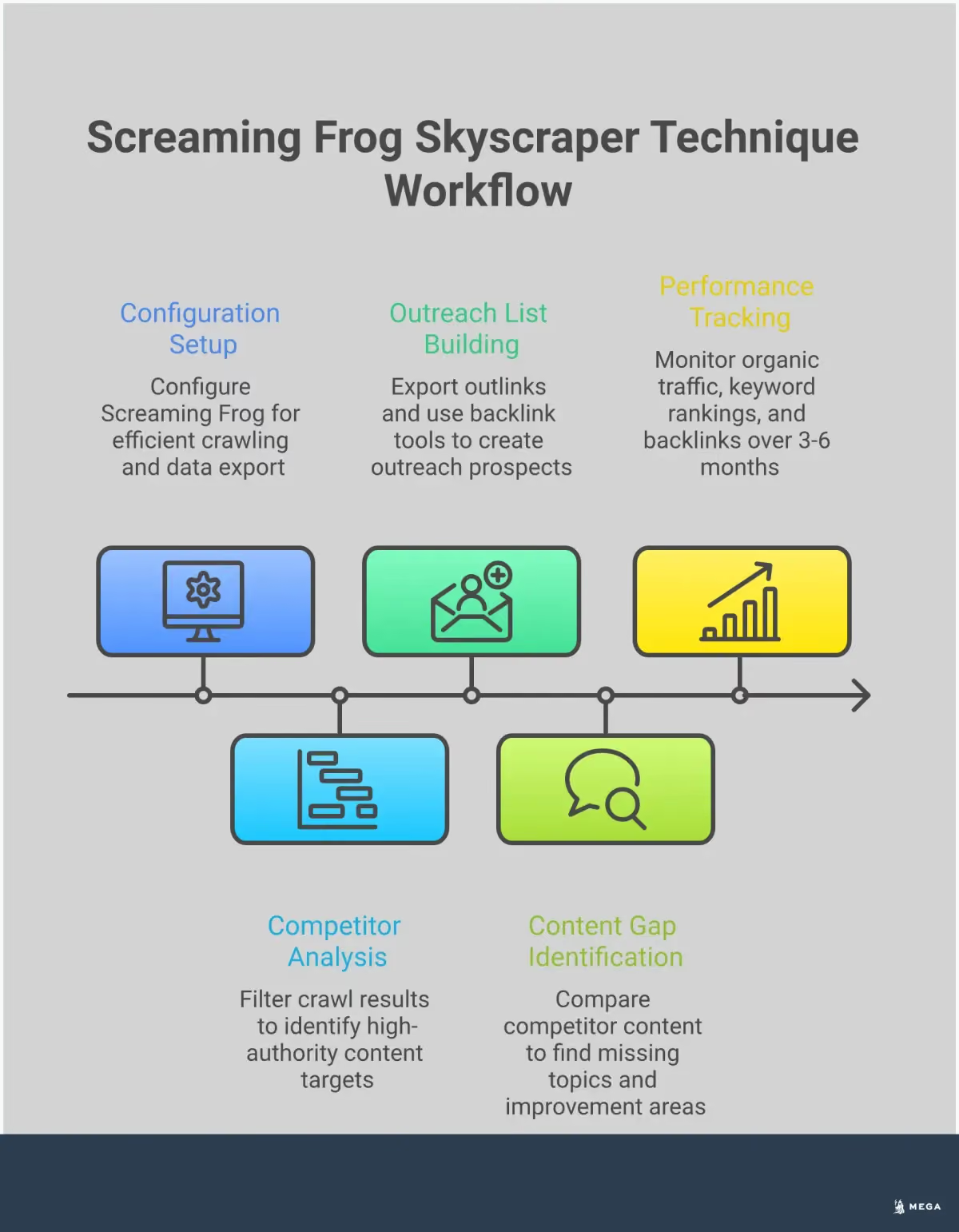
Analyze Response Codes and Page Health
First, you need to make sure you’re analyzing pages that are live and accessible. Response codes tell you the status of a URL. A "200 OK" code means the page is working correctly, while a "404 Not Found" means it's broken. Screaming Frog’s ‘Issues’ tab is a great place to start, as it flags over 300 common SEO problems. When you crawl a competitor’s site, filter for pages with a 200 status code. These are the healthy, active pages that are your primary targets for the skyscraper technique. Pay attention to these codes to assess the health of your competitor's content and avoid building your strategy around broken or outdated URLs.
Identify Content Optimization Indicators
Next, look for clues about how well your competitor’s content is optimized. Screaming Frog provides key metrics that reveal the quality of their on-page SEO. Focus on columns like Word Count, Page Titles, Meta Descriptions, and H1/H2 tags. Is their top-ranking content long and in-depth, or short and concise? Are their titles and descriptions compelling and keyword-focused? A weak title or a poorly structured article is a clear opportunity for you to do better. Using these data points helps you optimize your content and create a piece that is superior in every way, from readability to search engine visibility.
Evaluate Link Equity and Authority
Link equity is the authority a page passes to another through links. A page with many high-quality links pointing to it is seen as more authoritative by search engines. For the skyscraper technique, you want to target competitor pages that already have strong link authority. In Screaming Frog, check the "Inlinks" tab for any given URL. This shows you how many internal links point to that page, signaling its importance within the site’s structure. While Screaming Frog doesn’t show external backlinks without an API connection, identifying pages with strong internal support is a great starting point. This analysis helps you identify gaps and prioritize pages that are already proven winners.
How to Export and Organize Your Research
Once your Screaming Frog crawl is complete, you’ll have a mountain of data. This is where many people get stuck. Raw data is just noise until you organize it into an actionable plan. The goal is to transform long lists of URLs and metrics into a clear roadmap for creating your skyscraper content and identifying outreach targets. This process turns overwhelming spreadsheets into a strategic advantage, showing you exactly where your competitors are strong and where you can outperform them. Think of this as building the blueprint before you start construction. A well-organized research file is the foundation of a successful skyscraper campaign.
Choose the Right Export Options
Screaming Frog lets you export nearly everything it finds, but for the skyscraper technique, you only need a few key reports. Start by navigating to the Bulk Export menu. From here, you’ll want to grab All Inlinks and All Outlinks. These reports show you which pages on your competitor's site have the most internal authority and which external sites they are linking to. Next, go to the Internal tab and export the HTML report. This file contains crucial on-page data like page titles, meta descriptions, H1 tags, and word counts. You can export this information as a CSV or Excel file to easily manipulate the data.
Filter and Sort Your Data
A raw data export is messy. Your next step is to open these files in Google Sheets or Excel and clean them up. In your Internal - HTML export, start by filtering the list to only show pages with a "200 OK" status code. This removes redirects and broken pages from your view. Then, sort the remaining URLs by the "Inlinks" column in descending order. This immediately brings their most internally-linked, authoritative pages to the top. These are often the pillars of their content strategy and your prime targets. Sorting by "Word Count" can also help you spot their most in-depth articles, giving you a benchmark for how much better your content needs to be.
Create an Actionable Spreadsheet
Now, consolidate your findings into a master spreadsheet. This document will become your project plan. Create a tab called "Content Targets" and add columns for Competitor URL, Page Title, Word Count, and Inlinks. Use this sheet to list the top pages you identified in the previous step. Add another column for "Improvement Ideas" to jot down notes on how you can make your content better. Create a second tab called "Outreach Prospects" using your All Outlinks export. This list contains all the sites your competitor is linking to—your future outreach targets. Organizing your research this way turns data into a clear set of tasks, much like the process an AI-powered SEO agent uses to plan and execute a campaign.
How to Analyze Competitor Content and Build a Better Strategy
Once you have your data exported from Screaming Frog, the real work begins. This is where you move from data collection to strategic analysis. Your goal is to transform those spreadsheets of URLs, titles, and link metrics into a clear plan for creating content that is objectively better than the competition. This manual analysis is powerful, but it's also the kind of deep research that AI-driven SEO services now automate to save you time. By looking at your competitor’s content through a critical lens, you can pinpoint specific weaknesses and build a piece that is more thorough, useful, and technically sound.
Analyze Content Structure and Topics
Start by examining the structure of top-ranking pages. Your Screaming Frog crawl gives you the H1s, H2s, and word counts, which act as a blueprint for your competitor's content. Are they using a list format, a step-by-step guide, or a long-form narrative? How deep do they go on subtopics? The Skyscraper Technique is about more than just writing a longer article; it’s about creating something that is demonstrably better. Look for thin sections, outdated information, or a lack of practical examples. These are your entry points for improvement. Your goal is to build a more comprehensive and user-friendly structure that covers the topic more completely.
Identify Your Competitor's Content Gaps
A content gap isn't just a topic your competitor hasn't covered. It can also be a question they failed to answer or a shallow explanation on a page that already ranks. One of the biggest mistakes in content creation is failing to do thorough keyword research, which leads to missing valuable opportunities. By analyzing the keywords a competitor’s page ranks for, you can find overlooked keywords and user questions they haven’t fully addressed. Cross-reference the URLs from your crawl with data from Google Search Console or other keyword tools. This helps you find queries where your competitor ranks but doesn't fully satisfy search intent, giving you a clear opening to create more targeted content.
Find Technical SEO Opportunities
The Skyscraper Technique isn't limited to the words on the page. A technically superior page provides a better user experience and is more appealing to link to. Screaming Frog is excellent at uncovering technical SEO opportunities you can use to your advantage. As you analyze a competitor's top pages, check the crawl data for issues like slow page speed, broken internal links, missing image alt text, or a poor mobile experience. If their top-ranking article is slow to load or has broken images, you can gain an edge by simply creating a page that is technically flawless. A fast, accessible, and well-structured page is a quality signal to both users and search engines.
How to Solve Common Screaming Frog Challenges
Screaming Frog is a fantastic tool, but it can feel a bit intimidating at first. If you're running into performance lags on large crawls or feeling buried in data, you're not alone. These are common hurdles. The good news is that a few simple adjustments can make the process much smoother. Getting comfortable with these solutions will help you move from data collection to analysis more efficiently, which is the whole point of using it for the skyscraper technique. Let's walk through some frequent challenges and how to clear them.
Solve Memory and Crawl Size Issues
When you’re analyzing a competitor with a massive website, you might notice Screaming Frog slowing down or even crashing. This usually happens because the application runs out of memory trying to store all the crawl data in RAM. The fix is straightforward: switch to database storage. This setting allows the tool to save crawl data directly to your hard drive, which is much better for handling large sites. You can find this option under Configuration > System > Storage. Making this one change can prevent frustrating crashes and allow you to crawl extensive websites without interruption.
Interpret Your Data Accurately
A completed crawl can present you with thousands of rows of data, and it's easy to feel overwhelmed. Instead of trying to analyze everything at once, a great place to start is the ‘Issues’ tab. Screaming Frog uses this section to provide a prioritized list of potential problems, warnings, and opportunities it discovered during the crawl. This feature is a helpful guide because it automatically flags critical issues like broken links, missing page titles, or redirect chains. By focusing on the official list of SEO issues, you can make sure you’re addressing the most impactful items first and not getting lost in the noise.
Detect and Resolve Duplicate Content
Duplicate content can be a serious issue for SEO, as it confuses search engines and dilutes ranking potential. When you're analyzing a competitor, finding duplicates is a golden opportunity. Screaming Frog is excellent at finding these issues across a site. After a crawl, you can check for duplicate content under the ‘Content’ tab, which allows you to filter for duplicates like identical page titles, meta descriptions, and H1 tags. Identifying where your competitors have repetitive content helps you spot opportunities to build a more comprehensive and authoritative resource, which is exactly what the skyscraper technique is all about.
How to Build and Promote Your Skyscraper Content
Once you’ve used Screaming Frog to gather valuable competitor data, it’s time to put it into action. Your research is the blueprint for creating content that’s genuinely better than what’s currently ranking. This phase is all about execution: transforming your analysis into a high-performing asset and getting it in front of the right people. The process breaks down into three key stages: planning your content, building an outreach strategy, and handling the technical launch. Following these steps methodically ensures your research pays off with tangible results.
Plan Your Content Using Your Research
Your Screaming Frog export is your guide to creating superior content. Start by analyzing the structure, word count, and headings of the top-ranking articles. Your goal is to create something more comprehensive, up-to-date, or better designed. Look for content gaps—what questions did your competitors fail to answer? What topics did they only touch on briefly? Answering these questions is how you add unique value. Remember that even the best content can fail without the right foundation. One of the most common mistakes is skipping proper keyword research. Your analysis should confirm that you’re targeting a term with sufficient search volume and the right intent for your audience. Use your data to build a detailed outline that covers all the essential points and adds your own unique insights.
Build an Outreach Strategy
Your skyscraper content won’t attract links on its own; you need to promote it. The list of external links you exported from Screaming Frog is your starting point for an outreach campaign. These are websites that have already shown interest in your topic by linking to your competitor’s article. Your job is to reach out and show them why your resource is a better, more valuable replacement for their audience. Organize your prospects in a spreadsheet or task manager. When you conduct your outreach, personalize each email by mentioning why your content is a good fit for their specific site. Alongside external promotion, don’t forget about the power of internal linking. Linking to your new skyscraper article from other relevant pages on your own site helps search engines understand its importance and distributes authority throughout your domain.
Handle Technical Implementation and Distribution
Once your content is written and polished, it’s time to publish it. Pay close attention to the technical details to ensure your page is set up for success. This includes optimizing your title tag, meta description, and URL, as well as compressing images for faster load times. Good on-page SEO ensures that search engines can easily crawl, index, and understand your content. After publishing, run a new Screaming Frog crawl on the specific URL of your skyscraper article. This helps you catch any last-minute technical issues, like broken links or redirect chains. It’s also a good practice to check for duplicate content issues across your site to ensure your new asset stands out. Once everything looks good, you can begin your outreach and distribution efforts with confidence.
How to Measure Success and Refine Your Strategy
Launching your skyscraper content is a huge step, but the work isn’t over. The final phase is all about tracking your results to see what’s working and refining your strategy based on real-world data. For a small business, every piece of content needs to deliver, and consistent monitoring is what separates campaigns that succeed from those that fizzle out. By connecting your Screaming Frog research to performance analytics, you can make informed decisions that drive sustained growth. This process helps you understand the impact of your new content and identify clear opportunities for future improvements, ensuring your effort translates into tangible business results.
What KPIs Should You Track?
When you launch a skyscraper campaign, it’s crucial to track key performance indicators that measure its direct impact. Focus on the essentials: organic traffic to your new page, keyword rankings for your primary and secondary terms, and the number of new backlinks acquired. These metrics tell you if your content is visible, relevant, and authoritative. You can also use Screaming Frog for ongoing monitoring. The tool can help you identify over 300 potential SEO issues, allowing you to keep an eye on your site’s technical health as you build out more content. Tracking these KPIs in a central dashboard gives you a clear picture of your return on investment.
Refine Your Approach with Analytics
Your initial skyscraper piece is a starting point, not a final destination. Use analytics to understand how users engage with your content and refine your approach over time. Are people spending a lot of time on the page, or are they bouncing quickly? This data helps you make targeted improvements. Remember, not every piece of content will be a runaway hit. Avoid common pitfalls by continuously analyzing performance and adjusting your strategy. Regularly revisiting your content and its performance data is key to turning a good piece of content into a great one that consistently drives results.