
Ready to harness the power of AI but unsure where to begin? A strong AI Strategy is your roadmap to success, transforming how you work and compete. This guide provides practical steps to create your own AI Strategy, connecting it directly to your business goals. We'll cover identifying opportunities, allocating resources, and fostering an AI-driven culture. Plus, we'll explore ethical considerations and show how MEGA AI can streamline your AI content strategy. Let's get started!
Key Takeaways
- Strategic AI implementation requires a roadmap: Define clear business goals and identify areas where AI can add value. Start with pilot projects and scale strategically based on measurable results.
- Cultivate an AI-ready team: Invest in training and upskilling to empower your employees to use AI effectively. Encourage knowledge sharing and collaboration to maximize the benefits of AI across your organization.
- Measure, adapt, and refine your AI approach: Track KPIs, analyze results, and adjust your strategy based on data-driven insights. Stay informed about new trends and regulatory changes to ensure your AI initiatives remain effective and aligned with best practices.
What is an AI Strategy and Why You Need One
An AI strategy is a roadmap for how your business will use artificial intelligence to reach its objectives. It’s more than just adopting the latest tools; it’s about understanding where AI fits into your bigger picture. This includes pinpointing areas where AI can add value, choosing the right technologies for your needs, and setting up guidelines for responsible AI use. Think of areas like improving customer relations, optimizing sales processes, or streamlining operations.
A solid AI strategy is essential for aligning AI projects with your overall business goals. This ensures that your AI investments produce measurable results and drive innovation. It helps you manage the complexities of implementing AI and creates a culture of continuous learning and improvement within your company. A clear strategy also allows you to measure the success of your AI initiatives and adapt as technology evolves. This might involve tracking business outcomes, operational efficiency, or even user adoption of new AI-powered tools. Ultimately, a well-defined AI strategy helps you stay competitive and get the most out of this transformative technology.
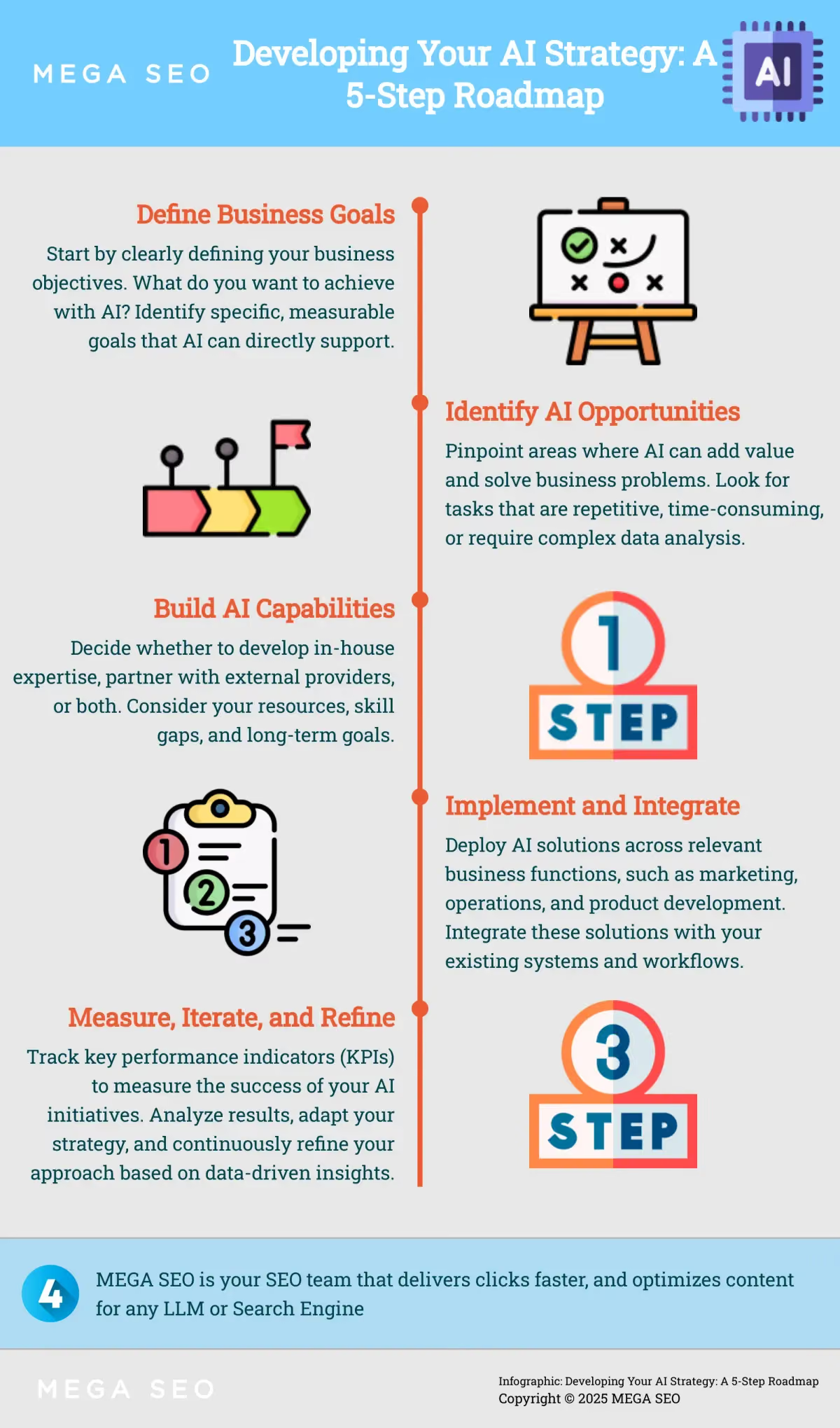
Assessing Your Current State
Before diving into AI implementation, take stock of your current resources, capabilities, and any existing AI infrastructure. This assessment helps you understand your starting point and identify areas for improvement—like planning a road trip: you need to know where you are before mapping the best route to your destination.
Evaluating Existing Resources and Capabilities
AI Infrastructure
Do you currently use any AI-powered tools or platforms? This could include anything from customer service chatbots to marketing automation software. Understanding your current AI landscape is the first step in determining what to build or acquire. Microsoft offers a decision tree to guide your choice of AI tools, including Software as a Service (SaaS), Platform as a Service (PaaS), and Infrastructure as a Service (IaaS).
Data Availability and Quality
High-quality data fuels successful AI initiatives. Assess the data you have available, its quality, and its accessibility. Consider the volume, variety, and veracity of your data. IBM emphasizes the importance of data governance, scalability, and lifecycle management for effective AI adoption. If your data is scattered, incomplete, or difficult to manage, address these issues before implementing AI solutions. A platform like MEGA AI can help centralize and optimize your data for AI initiatives, ensuring you get the most out of your data assets. Book a demo to learn more.
Talent and Expertise
Do you have team members with the skills and experience to work with AI? This includes technical expertise in areas like machine learning and data science, and the ability to apply AI to business problems. If you lack in-house AI expertise, consider upskilling your team or hiring AI specialists. Staying updated on the latest AI advancements is crucial for maintaining a competitive edge. MEGA AI offers intuitive tools and resources to help your team quickly become proficient in using AI for SEO and paid ads.
Identifying Gaps and Opportunities
Once you’ve evaluated your existing resources, identify any gaps or areas where AI could offer significant improvements. This involves a realistic assessment of your current capabilities and a forward-thinking approach to future opportunities.
AI Knowledge Gaps
A lack of understanding about AI can hinder adoption and lead to missed opportunities. Assess your team's overall understanding of AI concepts and technologies. Addressing knowledge gaps through training and education is essential for building buy-in and ensuring everyone is on board with your AI strategy. This also helps avoid resistance to new AI-driven processes and tools. MEGA AI provides comprehensive training and support to help your team effectively utilize its AI-powered platform.
Infrastructure Deficiencies
Are there gaps in your current infrastructure that could prevent successful AI implementation? This might include insufficient computing power, lack of access to relevant data, or outdated software. IBM recommends prioritizing projects that deliver quick wins and carefully planning your data strategy, algorithms, infrastructure, and talent needs. Addressing these deficiencies early on sets you up for long-term success with AI. MEGA AI integrates seamlessly with popular platforms, minimizing infrastructure challenges and streamlining your AI workflows.
Resource Constraints
Be realistic about your available resources, including budget, time, and personnel. AI projects can be resource-intensive, so it's important to develop a strategy that aligns with your constraints. Start with smaller, more manageable projects to demonstrate value and build momentum. This will make it easier to secure additional resources for larger AI initiatives down the line. Companies without a clear strategy risk falling behind. MEGA AI offers flexible pricing plans designed to meet the needs of startups, small businesses, and agencies, making AI-powered SEO and paid ads accessible to organizations of all sizes.
Building a Powerful AI Strategy: Key Components
An effective AI strategy is more than just adopting the latest technology; it’s about strategically aligning AI with your business objectives to achieve measurable results. This involves careful planning, resource allocation, and a commitment to continuous improvement. Here’s a breakdown of the key components:
Connecting AI Strategy with Business Goals
Before investing in any AI initiative, define your business goals. What are you trying to achieve? Whether it’s increasing sales, improving customer retention, or streamlining operations, your AI strategy should directly support these objectives. As Forbes highlights, aligning AI projects with business targets is crucial for understanding their impact and ensuring they contribute to the organization’s overall success. This alignment provides a clear direction for your AI efforts and allows you to measure their effectiveness against specific metrics. Start by identifying your top priorities and then explore how AI can help you achieve them. For instance, if lead generation is a primary goal, consider how AI can automate outreach and personalize messaging.
Finding the Right AI Opportunities for Your Business
Once you have a clear understanding of your business goals, you can start to identify areas where AI can make a real difference. This requires a thorough assessment of your current processes and an understanding of AI capabilities. Consider areas like customer relations, sales, and operational efficiency, as suggested by OpenGrowth. Look for tasks that are repetitive, time-consuming, or require complex data analysis. These are prime candidates for AI automation and optimization. For example, AI-powered chatbots can handle routine customer inquiries, freeing up your team to focus on more complex issues. AI can also analyze large datasets to identify trends and patterns that would be difficult for humans to spot, informing more strategic decision-making. By strategically identifying these opportunities, you can maximize the impact of your AI investments.
Prioritizing AI Initiatives
Developing a strong AI strategy involves more than just recognizing potential; it requires careful prioritization. A strong AI strategy, as highlighted by IBM, aligns AI initiatives with overall business goals. This provides a roadmap for using AI to improve areas like data analysis, automation, and customer experience. Start by identifying specific problems that AI can help solve and define the metrics you'll use to measure success. Not all AI projects offer the same return on investment. Prioritize potential AI applications based on their potential business value, feasibility, and actionability. A practical approach is using a matrix to evaluate these factors. This helps focus on initiatives that are both impactful and achievable. For example, if improving customer service is a key goal, an AI-powered chatbot might be a high-priority initiative, while AI-driven product development might be a lower priority initially.
Balancing Efficiency and Growth
While AI can significantly improve efficiency, leading to cost savings and streamlined operations, a successful AI strategy also prioritizes growth. Deloitte emphasizes that AI can create new opportunities, such as developing new products, improving customer satisfaction, and expanding into new markets. Companies that focus solely on cost reduction through AI risk missing out on these growth prospects. A balanced approach is essential. Integrate your AI strategy with your overall business goals, using AI as a tool to achieve existing objectives and unlock future potential. This might involve personalizing marketing campaigns with AI, leading to increased customer engagement and sales, or leveraging AI for predictive maintenance to minimize downtime and maximize production.
Smart Resource Allocation for AI
Implementing AI requires investment, not just in technology but also in talent and training. It’s essential to allocate resources strategically, starting with small pilot projects that deliver measurable ROI, as recommended by Neurond. This approach allows you to test and refine your AI strategy without overcommitting resources. As you see positive results from these pilot projects, you can justify further investment and scale your AI initiatives. AI Catalyst Partners emphasizes the importance of measuring AI performance to ensure long-term value and inform future investments. By tracking key metrics and iterating on your approach, you can optimize your AI spend and maximize its impact on your business. Remember, a successful AI strategy is built on data-driven decisions and continuous improvement. For example, begin by implementing AI for a specific task within your marketing department and track its impact on lead generation or conversion rates. If successful, expand its use to other marketing functions or other departments entirely.
Defining Your AI Approach
Defining your AI approach involves understanding the different types of AI, selecting the right tools and technologies, and establishing a robust data strategy. It's about making informed decisions that align with your business goals and ensure responsible AI implementation. This careful planning will set the stage for successful and ethical AI integration within your organization.
AI Technology Strategy
Choosing the Right AI Tools and Technologies
A strong AI strategy begins with selecting the right tools and technologies. This involves understanding your specific business needs and identifying AI solutions that can address those needs effectively. As IBM highlights in their insights on building a successful AI strategy, aligning AI initiatives with overall business goals is crucial. This means choosing tools that can improve areas like data analysis, automation, and customer experience. Consider factors like scalability, integration with existing systems, and ease of use when making your selections. For example, if you're looking to automate customer service, an AI-powered chatbot platform might be a good fit. For data analysis, consider machine learning tools to uncover hidden insights. Choosing the right tools sets the foundation for a successful AI implementation.
Understanding Different AI Types
AI encompasses a wide range of technologies, each with its own strengths and weaknesses. It's important to understand the different types of AI and how they can be applied to your business. IBM's guide on AI strategy emphasizes exploring different AI types, such as generative AI and machine learning. Generative AI can create new content, like articles or product descriptions. Machine learning algorithms analyze data to identify patterns and make predictions, such as forecasting customer behavior. Understanding these distinctions helps you choose the right AI solutions. For instance, generative AI might be a good option for personalized marketing content. If you're trying to predict customer churn, machine learning would be more suitable. MEGA AI offers AI-powered tools for SEO and Paid Ads, including content generation and automated campaign optimization, making it a versatile solution for businesses leveraging different types of AI.
AI Data Strategy
Data Governance and Scalability
Data fuels AI. A solid AI data strategy ensures you have the right data, in the right format, at the right time. Microsoft's Cloud Adoption Framework for AI emphasizes planning your data usage. This includes establishing data governance policies, ensuring data scalability, and managing the data lifecycle. Data governance ensures responsible and ethical data use. Scalability ensures enough data to train your AI models effectively. Data lifecycle management ensures data is properly stored, processed, and archived. For example, you might implement data anonymization techniques to protect customer privacy or invest in data storage solutions that can handle large volumes of information. A well-defined data strategy is crucial for successful AI implementation.
Addressing Bias in Datasets
AI models are only as good as the data they are trained on. Biased data leads to biased outcomes, which can have serious consequences. IBM's AI strategy guide highlights establishing ethical guidelines and addressing potential biases in your datasets. This involves carefully evaluating your data sources and implementing techniques to mitigate bias. For example, you might diversify your data sources or use data augmentation techniques to create a more balanced dataset. By proactively addressing bias, you ensure your AI initiatives are fair, equitable, and aligned with your values. This is particularly important for applications like hiring and loan applications, where biased algorithms can perpetuate discrimination. Ethical considerations are paramount in AI implementation.
Creating an AI-Driven Company Culture
Building a successful AI strategy isn’t just about the technology; it’s about fostering a culture that embraces and understands it. This means creating an environment where your team is equipped to use AI effectively, share knowledge openly, and contribute to AI initiatives.
Empowering AI Champions Within Your Organization
Start by identifying individuals within your organization who are passionate about AI and its potential. These internal champions will be key to driving adoption and promoting the benefits of AI across different teams. As Chris Dreyer mentioned on the Unknown Secrets of Internet Marketing podcast, simply providing generic AI training isn’t enough. You need dedicated individuals within your company who can champion AI and guide its integration into various workflows.
Upskilling Your Team for AI
Comprehensive AI literacy programs are essential. These programs ensure your employees understand how AI works and how it can enhance their roles. This goes beyond basic technical training. Focus on practical applications and how AI can be used to solve real-world business problems. As Forbes highlights, AI literacy programs should emphasize the benefits of AI and how it can complement existing skills, fostering a sense of trust and collaboration.
Fostering AI Knowledge Sharing and Experimentation
Encourage a culture of experimentation and knowledge sharing around AI. Create opportunities for teams to test new AI tools and techniques. Also, establish platforms for sharing best practices and lessons learned. This cross-pollination of ideas can lead to innovative applications of AI across different departments. The Unknown Secrets of Internet Marketing podcast offers a great example of this, describing how an HR department leveraged marketing’s AI prompts to create legally compliant job descriptions.
Clear Communication for AI Success
Effective communication is crucial for successful AI implementation. Establish clear communication channels and encourage regular dialogue between teams involved in AI initiatives. This helps ensure everyone is aligned on goals, progress, and any potential challenges. AI Plus Info emphasizes that effective communication is the backbone of cross-functional AI teams, enabling seamless collaboration and knowledge transfer. Building trust within your workforce is paramount, as Forbes notes, and open communication plays a vital role in fostering this trust.
Securing Leadership Buy-in
Securing leadership buy-in is crucial for a successful AI strategy. Executives need to champion the initiative; their support drives the vision and ensures alignment with overall business goals. Deloitte emphasizes that companies with strong AI strategies have leaders who clearly communicate AI's role, which significantly increases the likelihood of achieving desired outcomes. This commitment fosters a culture of innovation and helps mobilize resources effectively.
Furthermore, integrate your AI strategy with your organization's business objectives. IBM highlights that a successful AI strategy must be deeply integrated with company goals. This ensures AI initiatives are seen as essential tools for broader objectives, not isolated projects. This alignment clarifies the AI strategy's value, making it easier to gain stakeholder support.
Publicly sharing your AI strategy can enhance market value and attract talent. Deloitte notes this demonstrates a commitment to AI, inspiring confidence among employees and stakeholders, and paving the way for successful AI transformation. For startups and small businesses, this can be especially valuable in attracting investors and top-tier talent. This is where a platform like MEGA AI can be particularly helpful, offering automated SEO and paid ad solutions to amplify your message and reach a wider audience.
Securing leadership buy-in isn't simply about getting approval; it's about creating a shared vision, aligning AI initiatives with business goals, and fostering a culture that embraces innovation. This foundational support is crucial for navigating the complexities of AI implementation and ensuring long-term success. Schedule a demo with MEGA AI to see how our platform can help demonstrate the value of your AI strategy to leadership.
Implementing Your AI Strategy: Across Every Department
Once you’ve developed an AI-first culture, implement AI solutions across different business functions. This practical approach helps you leverage AI’s potential to improve efficiency, enhance customer experiences, and drive innovation.
AI for Marketing and Customer Experience
AI can transform your marketing strategies by automating tasks, personalizing customer interactions, and providing data-driven insights. AI-powered tools can analyze customer data to create targeted campaigns, predict customer behavior, and recommend personalized product offerings. AI can also instantly analyze language for clarity, tone, and target audience resonance, suggesting refinements to maximize impact and ensure a consistent message. This allows marketing teams to create more effective campaigns and improve customer engagement. Consider using AI-powered chatbots to provide 24/7 customer support and resolve customer issues quickly.
Optimizing Operations with AI
AI can streamline your operations by automating repetitive tasks, optimizing workflows, and improving resource allocation. AI-powered tools can automate tasks like data entry, inventory management, and scheduling, freeing up your team to focus on higher-value activities. Measuring AI’s performance is essential to ensuring long-term value, improving decision-making, and scaling successful initiatives. This data-driven approach helps identify areas for improvement and optimize processes for maximum efficiency.
AI-Powered Product Development
AI can play a crucial role in product development by helping you identify market trends, analyze customer feedback, and generate new product ideas. AI algorithms can analyze large datasets to uncover unmet customer needs and predict future market demands. This allows you to develop products that are relevant, innovative, and meet the evolving needs of your customers. Becoming a successful AI-driven organization means continuously measuring progress, refining business and AI strategies, and iteratively improving models and processes. This ongoing evaluation and adaptation are essential for leveraging AI effectively in product development.
Data-Driven Decisions with AI
AI can enhance your data analysis capabilities by processing large datasets, identifying patterns, and generating actionable insights. AI-powered tools can automate data analysis tasks, freeing up your data analysts to focus on interpreting results and making strategic recommendations. Tracking a variety of metrics that cover business outcomes, operational efficiency, and user adoption is important to effectively measure AI success. This comprehensive approach to data analysis enables you to make informed decisions and develop data-driven strategies. By leveraging AI across these business functions, you can unlock new opportunities for growth, improve efficiency, and gain a competitive edge. Learn more about how MEGA SEO can help you implement AI in your business.
Using AI for a Competitive Edge
AI isn’t simply a technological advancement; it’s a transformative force reshaping how businesses operate and compete. By strategically integrating AI, you can uncover new opportunities, optimize processes, and gain a significant market edge. This section explores how AI enhances decision-making, improves customer insights, streamlines operations, and personalizes user experiences.
Sharper Decisions Through AI
Data-driven decisions are the cornerstone of any successful business. AI empowers you to analyze massive datasets quickly and accurately, revealing patterns and insights humans might miss. Using AI-powered analytics tools, you can make more informed decisions about product development, marketing, resource allocation, and risk management. Establishing key performance indicators (KPIs) is crucial for measuring the success of your AI projects, especially with generative AI, ensuring alignment with your overall business objectives. For more on measuring AI success with KPIs, check out this helpful resource.
Deeper Customer Insights with AI
Understanding your customers is essential for delivering products and services that meet their needs and exceed expectations. AI can analyze customer data from various sources—website interactions, purchase history, and social media activity—to create detailed customer profiles. These profiles can reveal valuable insights into customer preferences, behaviors, and pain points, allowing you to refine your marketing messages, personalize product recommendations, and improve customer service. Measuring AI’s performance is key to ensuring long-term value and scaling successful initiatives that yield deeper customer insights. Learn more about measuring the performance and impact of your AI solutions.
Streamlining Operations Through AI
AI can automate repetitive tasks, optimize workflows, and improve efficiency across your business. From automating customer support with chatbots to optimizing supply chain management with predictive analytics, AI frees up your employees to focus on more strategic and creative work. This reduces costs, improves productivity, and accelerates time-to-market. AI optimizes operations and drives efficiency, making it invaluable for businesses seeking a competitive advantage. Explore how to measure AI success in your organization. Consider exploring MEGA SEO’s automation features to further streamline your SEO processes.
Personalized Experiences with AI
In today’s competitive landscape, personalized experiences are crucial for attracting and retaining customers. AI lets you tailor content, offers, and recommendations to individual customer preferences, creating a more engaging and relevant experience. Whether personalizing product suggestions on an e-commerce site or customizing email campaigns based on past behavior, AI helps build stronger customer relationships and increase loyalty. Investing in AI literacy programs for your employees empowers them to leverage AI effectively and create more personalized, engaging customer experiences. This article offers insights into building an AI strategy that works for your employees. For tailored AI-driven content solutions, explore MEGA SEO’s customized posts.
Developing a Roadmap for AI Implementation
Developing a robust roadmap is crucial for successful AI implementation. This roadmap should outline the steps, timelines, and resources required to achieve your AI goals. It acts as a guide, helping you navigate the complexities of AI adoption and ensuring your projects stay aligned with your overall business objectives. A well-defined roadmap also facilitates clear communication and collaboration among teams, fostering a shared understanding of the AI journey.
Prioritizing and Sequencing AI Projects
Implementing AI requires investment—not just in technology, but also in talent and training. It’s essential to allocate resources strategically, starting with small pilot projects that deliver measurable ROI. This approach allows you to test and refine your AI strategy without overcommitting resources. Focus on projects that address your most pressing business challenges or offer the greatest potential for quick wins. For example, if customer churn is a major concern, a pilot project might involve using AI to predict which customers are most likely to churn and then implement targeted retention strategies. As you see positive results from these pilot projects, you can justify further investment and scale your AI initiatives. MEGA AI's automated keyword research and content generation tools can be invaluable for these initial projects, allowing you to quickly test and iterate on AI-driven content strategies.
Setting Realistic Timelines and Milestones
A solid AI strategy is essential for aligning AI projects with your overall business goals. This ensures your AI investments produce measurable results and drive innovation. This strategic alignment, as highlighted by AI Catalyst Partners, helps you manage the complexities of implementing AI and creates a culture of continuous learning and improvement within your company. Break down your AI roadmap into smaller, manageable phases with clear milestones and deadlines. This phased approach allows for better tracking of progress and enables you to adapt to unforeseen challenges. Setting realistic timelines is crucial for maintaining momentum and demonstrating the value of your AI initiatives. Consider factors like data availability, infrastructure requirements, and team expertise when estimating project timelines. Ultimately, a well-defined AI strategy helps you stay competitive and get the most out of this transformative technology. Tools like MEGA AI can significantly streamline the process by automating tasks like content creation and optimization, allowing you to focus on strategic planning and analysis.
Addressing AI Challenges and Ethical Concerns
Implementing AI effectively requires careful consideration of potential challenges and ethical implications. Addressing these proactively ensures responsible and sustainable AI integration.
Ensuring Data Quality for AI
AI algorithms thrive on data. The success of your AI initiatives depends heavily on access to high-quality, relevant data. Insufficient or inconsistent data can lead to inaccurate insights and flawed predictions. Establish strong data governance practices, enforce consistent data collection methods, and invest in data cleaning and validation processes. This ensures your AI systems are trained on reliable data, leading to better outcomes. Accurate data is the foundation of effective AI.
Bias and Fairness in AI
AI systems can inherit and amplify biases present in the training data. This can lead to unfair or discriminatory outcomes. Be mindful of potential biases in your data and implement strategies to mitigate them. Regularly audit your AI systems for fairness and make adjustments as needed. The complexity of language and the diversity of domains add further layers to this challenge, requiring ongoing attention and a commitment to ethical AI practices.
Integrating AI with Your Current Systems
Introducing AI tools often requires integrating them with your current systems and workflows. Compatibility issues can arise, leading to disruptions and inefficiencies. Thoroughly evaluate integration options before purchasing any AI tools. Consult with AI vendors and seek expert guidance to ensure a smooth transition and avoid costly integration mistakes. Planning for integration upfront saves time and resources.
AI Content Detection: What You Need to Know
As AI-generated content becomes more prevalent, it’s important to address the challenges of detecting it. Current AI text detectors can be inaccurate, posing problems for tasks requiring precise identification. Stay informed about advancements in AI content detection technology and adopt appropriate strategies to manage AI-generated content. Understanding the limitations of current detectors helps you make informed decisions about their use and develop more robust detection methods.
Building Trust with Transparent AI
Transparency is crucial for building trust in AI systems, both internally with your employees and externally with your customers. Clearly communicate how your AI systems work, what data they use, and how decisions are made. Foster a culture of trust by involving employees in the AI implementation process and addressing their concerns. Open communication and collaboration are key to successful AI adoption.
Establishing Ethical Guidelines
Developing and deploying AI ethically is crucial for maintaining trust, promoting fairness, and ensuring long-term sustainability. As Microsoft emphasizes in its AI strategy guidelines, ethical considerations like fairness, transparency, and accountability should be at the forefront of any AI initiative. This means proactively addressing potential biases and communicating transparently about how your AI systems work.
Carefully evaluate your training data for potential biases that could lead to unfair or discriminatory outcomes. Implement strategies to mitigate these biases and regularly audit your AI systems for fairness, making adjustments as needed. Strong data governance practices, consistent data collection, and rigorous data cleaning and validation are essential. This ensures your AI systems are trained on reliable data, leading to better outcomes and building trust with your users. Transparency is paramount. Clearly communicate how your AI systems operate, what data they use, and how decisions are made. This fosters a culture of trust and accountability within your organization and with your customers.
Developing AI Capabilities: Build or Partner?
Building a robust AI capability requires a strategic approach. You can invest in developing in-house expertise or collaborate with external partners. Often, a combination of both works best. Let’s explore each approach:
Growing In-House AI Expertise
Developing internal AI expertise offers long-term benefits. A dedicated team can deeply understand your business needs and tailor AI solutions accordingly. This approach allows greater control over your AI initiatives and fosters innovation within your organization. To effectively manage and assess these initiatives, establish key performance indicators (KPIs) early on. Tracking project progress and measuring the success of your AI projects will demonstrate the value of your AI investments.
Partnering with AI Experts
Partnering with AI vendors and startups can accelerate your AI adoption. These specialized companies bring a wealth of experience and ready-to-implement solutions. This collaborative approach can be particularly valuable if you have specific skill gaps or need to quickly deploy AI capabilities. Look for partners who can provide cutting-edge technology and offer guidance on measuring AI performance. This strategic partnership can help you improve decision-making and scale successful AI initiatives.
Identifying Potential AI Partners and Vendors
Choosing the right AI partners is crucial for maximizing your AI investment. Look for vendors with a proven track record in your industry and a deep understanding of your specific business needs. Experience and a strong reputation are key factors to consider when building a successful AI business strategy. Don't hesitate to request case studies and client testimonials to assess their capabilities. A strong partner should not only provide cutting-edge technology but also offer ongoing support and guidance.
Partnering with AI vendors and startups can significantly accelerate your AI adoption. These specialized companies bring a wealth of experience and often have ready-to-implement AI solutions. This can be especially beneficial for businesses lacking in-house AI expertise. Evaluate potential partners based on their track record and alignment with your objectives. This is essential for successful collaboration. Consider vendors who offer expertise in the latest AI technologies and can provide guidance on measuring AI performance. This strategic partnership can improve your decision-making and help you scale successful AI initiatives. A good partner will also help you measure the success of your AI projects and provide valuable insights for continuous improvement.
Bridging the AI Skills Gap
Regardless of whether you choose to build in-house expertise or collaborate with external partners, addressing skill gaps is crucial. Invest in AI literacy programs to ensure your employees understand the basics of AI. This empowers your team to effectively use AI tools and contribute to AI projects. Upskilling your workforce maximizes the effectiveness of your AI technologies and fosters a culture of continuous learning.
Building Effective AI Teams
Creating cross-functional AI teams is essential for successful AI implementation. By bringing together individuals from different departments, you can leverage diverse perspectives and expertise. Effective communication is key to the success of these teams. Establish clear communication channels and encourage collaboration to ensure everyone is aligned on project goals. These cross-functional teams can effectively address complex AI challenges and drive innovation by combining their unique skills.
Implementing and Iterating on Your AI Strategy
Developing a robust AI strategy is a crucial first step, but the real value comes from effective implementation and continuous refinement. This involves a dynamic process of testing, learning, and adapting your approach based on real-world results. It's not a set-it-and-forget-it endeavor; it requires ongoing attention and a commitment to iterative improvement.
Starting with Pilot Projects
Launching small-scale pilot projects is a smart way to begin your AI journey. These initial projects allow you to test the waters, gather valuable data, and refine your strategy without overcommitting resources. Focus on specific, measurable goals for each pilot project. This targeted approach allows you to assess the impact of AI on a smaller scale and identify any potential roadblocks early on. For example, if you're exploring AI-powered customer service, start with a pilot program that deploys an AI chatbot for a specific segment of your customer base. Track key metrics like customer satisfaction and resolution times to gauge the effectiveness of the chatbot and identify areas for improvement. This data-driven approach minimizes risk and provides valuable insights to inform future AI initiatives. MEGA AI can help you manage and measure the results of your pilot projects, providing valuable data to inform your overall AI strategy.
Continuously Monitoring, Evaluating, and Adjusting
Implementing an AI strategy is an ongoing process. Continuous monitoring and evaluation are essential for long-term success. Establish key performance indicators (KPIs) aligned with your business goals and track them diligently. Regularly review your AI initiatives, analyze the data, and identify areas for improvement. This iterative process allows you to adapt your strategy as needed, ensuring your AI initiatives remain effective and aligned with your evolving business objectives. The AI strategy is not static; it requires regular review and updates to reflect changes in the market and technology. This dynamic approach ensures your AI strategy remains a powerful driver of growth and innovation. MEGA AI can assist in this process by providing ongoing analysis and recommendations for optimizing your AI-driven content strategy, ensuring you stay ahead of the curve and maximize your ROI.
Measuring AI's Impact and ROI
While AI offers transformative potential, measuring its impact and ensuring a return on your investment is crucial. A clear measurement strategy helps demonstrate the value of AI initiatives and informs future development.
Setting the Right KPIs for AI
Start by defining specific, measurable, achievable, relevant, and time-bound (SMART) key performance indicators (KPIs). These KPIs should directly align with your business goals and the objectives of your AI projects. For example, if you’re using AI for customer service, relevant KPIs might include customer satisfaction scores, resolution times, and the percentage of issues resolved without human intervention. Focusing on measurable outputs allows you to quantify the success of your AI initiatives and track progress. This then allows you to evaluate indirect benefits, like increased customer lifetime value.
Testing Your AI Strategy with Pilot Projects
Before committing to large-scale AI implementations, consider starting with smaller pilot projects. This approach allows you to test and refine your AI strategies in a controlled environment, minimizing risk and maximizing learning. Choose pilot projects with clear, achievable goals and measurable ROI. The insights gained from these projects can then justify further investment and inform the development of more ambitious initiatives. Starting small also helps manage expectations and demonstrate the practical value of AI to stakeholders.
Improving Your AI Initiatives
AI is not a one-time implementation. The key to success lies in continuous improvement. Regularly evaluate your AI initiatives, measure their performance against your defined KPIs, and identify areas for refinement. As your business and the broader technological landscape evolve, your AI strategy should adapt accordingly. This iterative process ensures your AI initiatives remain aligned with your business objectives and deliver sustained value. Continuously measuring progress and refining your approach is essential for long-term success with AI.
Presenting Your AI Strategy and Securing Funding
Developing and implementing a robust AI strategy isn't just about technical expertise; it requires effective communication and stakeholder buy-in. A well-crafted presentation is crucial for securing resources and support for your AI vision. This section focuses on crafting a compelling narrative and addressing stakeholder concerns to gain approval and funding.
Developing a Compelling Narrative
A successful AI strategy isn't just about the technology; it's about using technology to achieve business goals. Your narrative should clearly articulate why AI is important for your business. Explain how it aligns with your overall goals and the tangible benefits it offers. Instead of technical jargon, focus on the value proposition. Will AI improve customer experiences? Streamline operations and reduce costs? Create new revenue streams? Quantify these benefits with data and projections to demonstrate the potential return on investment. A compelling narrative generates excitement and demonstrates the strategic importance of your AI initiatives. Consider showcasing early wins and pilot project results to further strengthen your narrative and build confidence in your approach. For example, if MEGA AI helped you automate content creation and saw a 20% increase in organic traffic, share that data point to illustrate the potential of your broader AI strategy.
Addressing Stakeholder Concerns
Gaining stakeholder buy-in is essential for securing funding and ensuring successful AI implementation. First, identify your key stakeholders: executive leadership, department heads, IT teams, and potential investors. Understand their priorities and concerns. Some might hesitate about the cost, while others might worry about the impact on existing workflows or job security. Address these concerns directly by communicating the benefits, costs, and expected results of your AI initiatives, as advised by IBM. Transparency is key. Provide realistic timelines, milestones, and a detailed implementation plan. Highlight how you'll measure success and demonstrate ROI. Strong leadership support is crucial, as Deloitte explains. Secure executive buy-in by communicating your vision for AI's role and how it contributes to business objectives. Publicly sharing your AI strategy can build market value and attract talent, further solidifying support. Consider offering tailored presentations for different stakeholder groups, addressing their specific concerns and highlighting relevant benefits. For instance, if speaking to the marketing team, focus on how AI can automate content creation and improve campaign performance. If presenting to the finance team, emphasize the potential cost savings and efficiency gains. By proactively addressing concerns and building a strong case, you can secure funding and ensure successful implementation.
A Future-Proof AI Strategy for Continued Success
The AI landscape is constantly evolving. To ensure your AI strategy remains effective, you need to adapt and learn continuously. This means staying informed about new trends, adjusting to regulatory changes, and consistently refining your approach.
Staying on Top of AI Trends
The world of AI is dynamic. New algorithms and models emerge constantly. Subscribe to industry newsletters and follow thought leaders to stay informed about the latest advancements. Just as important as awareness is action. Establish key performance indicators (KPIs) to measure the success of your AI projects. This data-driven approach will help you understand what’s working, what’s not, and where to focus your efforts.
Adapting to Changing AI Regulations
As AI becomes more prevalent, governments and regulatory bodies are working to establish guidelines and standards. These regulatory changes can significantly impact how businesses use AI, particularly regarding data privacy, transparency, and accountability. Stay informed about upcoming legislation and be prepared to adjust your AI strategy accordingly. This might involve updating your data collection practices, refining your algorithms, or implementing new compliance measures.
Continuous Learning in AI
AI is not a set-it-and-forget-it solution. Continuous learning and improvement are essential for long-term success. Regularly evaluate the performance of your AI initiatives. Are they meeting your objectives? Are they delivering the expected return on investment? Use data analysis to identify areas for improvement and refine your AI models and processes. Document your learnings and create standard operating procedures (SOPs) to ensure consistency and scalability. This iterative approach will help you maximize the value of your AI investments over time. Consider building internal champions and documenting standard operating procedures (SOPs) to scale your AI initiatives effectively.
Regularly Reviewing and Updating Your Strategy
Developing a robust AI strategy isn't a one-time project; it's an ongoing process. The AI landscape constantly shifts, with new technologies and best practices emerging all the time. To ensure your AI initiatives remain effective and aligned with your business goals, regular review and adjustments are essential. Think of your AI strategy as a living document, not something you create and then file away.
Regular evaluation is key. Ask yourself, are your AI projects delivering the expected return on investment? Are they truly meeting your objectives? Use data analysis to identify areas for improvement and refine your AI models and processes, just as you would with any other business strategy. This might involve tweaking your algorithms, adjusting your data collection methods, or even revisiting your initial goals. AI Catalyst Partners suggests this iterative process ensures your AI initiatives remain aligned with your business objectives and deliver sustained value.
Staying informed about the latest advancements in AI is crucial for maintaining a competitive edge. Subscribe to industry newsletters, follow thought leaders, and participate in relevant online communities to stay on top of current trends. This continuous learning will help you identify new opportunities and adapt to the evolving AI landscape. For example, a new AI tool might emerge that automates a previously manual process, significantly improving efficiency. By staying informed, you can capitalize on these opportunities and maintain a leading position in your industry. Forbes highlights that continuous improvement is essential for AI success.
Supercharge Your AI Strategy with MEGA SEO
Integrating AI into your business strategy opens exciting opportunities to enhance efficiency and gain a competitive edge. However, maximizing the impact of your AI initiatives requires a robust SEO strategy. This is where MEGA SEO comes in.
SEO Automation for AI Content
AI can generate impressive volumes of content quickly. But how do you ensure this content ranks well in search results and reaches your target audience? MEGA SEO automates the entire SEO process for your AI-generated content. From keyword research and content optimization to link building and technical SEO improvements, MEGA SEO handles it all, allowing you to focus on other key aspects of your AI strategy. This automation is crucial for scaling your content operations and measuring the success of your AI projects, aligning with the need for clear KPIs highlighted by experts. For more insights, learn how to measure AI success with key performance indicators.
Integrating AI into Your Marketing
MEGA SEO seamlessly integrates AI into your existing marketing workflows. Our platform connects with popular content management systems (CMS), simplifying content publishing and distribution. By automating tedious SEO tasks, MEGA SEO frees up your marketing team to focus on strategy, creativity, and analysis. This continuous assessment of AI tools is essential for long-term value and improved decision-making. This approach also supports an adaptive strategy, allowing you to refine your business and AI strategies together.
Optimizing AI Content for Search
Optimizing AI-generated content for search engines presents unique challenges. The sophistication of AI writing, combined with the potential for manipulation and misinformation, requires a nuanced approach to SEO. MEGA SEO addresses these challenges head-on. Our platform analyzes AI-generated content, identifies areas for improvement, and optimizes it for maximum search visibility. We help you address the complexities of optimizing AI content, ensuring it adheres to ethical guidelines and avoids the pitfalls of false or misleading information. This focus on optimization and ethical considerations is critical for building trust with your audience and maintaining a positive online presence. Book a demo today to see how MEGA SEO can transform your AI strategy.