
Creating amazing content but not seeing the traffic it deserves? Your Trust Flow (TF) might be the missing piece. Think of TF SEO as a powerful metric that measures the quality of your backlinks. Like a vote of confidence, strong backlinks from reputable sites tell search engines your website is trustworthy. This post breaks down what a good trust flow score is, how Majestic SEO Trust Flow works, and actionable steps to improve your SEO TF and finally get the visibility you deserve.
Key Takeaways
- Prioritize quality backlinks: Focus on earning links from reputable and authoritative websites within your industry to build a strong Trust Flow.
- Valuable content attracts valuable links: Creating in-depth, insightful content naturally attracts backlinks from trusted sources, boosting your Trust Flow and overall SEO.
- Regularly audit your backlink profile: Identify and remove toxic backlinks from low-quality sites to protect your website’s reputation and maintain a healthy Trust Flow.
What is Trust Flow (TF) in SEO?
Trust Flow (TF) is a crucial SEO metric that helps determine a website’s perceived trustworthiness. Developed by Majestic, a well-respected link intelligence tool, TF analyzes the quality of backlinks pointing to your site. Think of it as a vote of confidence from other websites. The higher your TF, the more likely search engines are to view your site as a reliable source of information. This can significantly impact your search engine rankings and overall online visibility.
What is Trust Flow & Why Does It Matter?
Trust Flow is essentially a score assigned to your website based on the quality of sites linking back to you. A website with backlinks from authoritative sources, like established news publications or government websites, will have a higher TF. These high-quality backlinks act as endorsements, signaling to search engines that your content is valuable and trustworthy. A strong TF is important because it suggests to search engines that your site offers reliable information, which can lead to better search rankings and increased organic traffic.
The Majestic Trust Flow Algorithm
Majestic doesn’t publicize the exact formula for calculating Trust Flow. What we do know is that TF is calculated using a complex algorithm that's rebuilt every time the Majestic Fresh Index is updated. This algorithm takes into account the quality and quantity of backlinks, ensuring that the Trust Flow score reflects the current state of a website’s link profile. It's not just about how many sites link to you; it's about how trustworthy those sites are. A link from a respected university website, for example, carries more weight than a link from a spammy blog. This careful evaluation helps ensure that websites with genuinely valuable content and a strong reputation are rewarded with a higher TF.
Think of it like a network of trust. High-TF websites are like the influencers of the internet. If they link to you, it's a signal to search engines that you're part of a trusted network and can be relied upon for accurate information. This intricate system helps search engines sift through the mountains of online content and prioritize websites that offer genuine value and authority. As an SEO automation platform, we understand the importance of Trust Flow and incorporate it into our analysis to help our users improve their website's authority and search rankings.
Trust Flow's 0-100 Scale
Trust Flow is measured on a scale of 0 to 100. A higher score indicates a greater level of perceived trust. Generally, a TF score below 15 is considered low, while scores above 30 are seen as good, and anything above 50 is excellent. These benchmarks provide a helpful framework for evaluating your website's trustworthiness. However, it's important to remember that TF is a relative metric. It's more useful to compare your TF to your competitors' TF than to focus solely on reaching a specific number. Page One Power offers additional insights into interpreting Trust Flow scores and their implications for SEO.
A higher TF generally means a higher ranking because it signals to search engines that the website is a reliable source of information. Ideally, your Trust Flow (TF) should have a healthy relationship with your Citation Flow (CF), which measures the quantity of backlinks. A healthy balance between these two metrics is key. The ideal TF/CF ratio is between 1:1 and 2:1, indicating a balance between trustworthiness and popularity. A high TF combined with a healthy TF/CF ratio can significantly improve your chances of ranking higher in search results and attracting more organic traffic. Tools like MEGA SEO's free tools can help you analyze your backlink profile and identify areas for improvement.
How is Trust Flow Different From Other SEO Metrics?
Unlike some other metrics that simply count the number of backlinks, Trust Flow focuses on their quality. A single link from a highly trusted site like the BBC holds significantly more weight than numerous links from low-quality or spammy sites. This nuanced approach makes TF a more accurate indicator of true website authority. Metrics like TF, Domain Rating (DR), and Domain Authority (DA) are calculated by different companies—Majestic, Ahrefs, and Moz—and are not directly used by Google for ranking. However, they offer valuable insights into the strength of your backlink profile and overall SEO health. While Google doesn’t explicitly use Trust Flow, many SEO professionals believe that high-quality backlinks remain a critical factor in achieving top search rankings. Want to see how MEGA SEO can help you manage your backlinks and improve your TF? Book a demo.
Citation Flow (CF): Measuring Backlink Quantity
Citation Flow (CF) is a Majestic metric that predicts how influential a URL might be based on the number of backlinks it has. Think of it like popularity—how many websites are talking about this particular page? It's important to remember that CF focuses purely on quantity, not quality. A page could have tons of backlinks from spammy or irrelevant sites and still have a high CF. While CF offers a glimpse into a URL's potential reach, it doesn't tell the whole story. For a more complete picture, you need to consider CF alongside other metrics, especially Trust Flow.
Topical Trust Flow (TTF): Measuring Relevance
Topical Trust Flow (TTF) adds another layer of insight to backlink analysis. While CF measures the raw number of backlinks, TTF assesses their relevance. It examines the topics of the websites linking to you and determines how closely they align with your site's content. A high TTF indicates that your backlinks are coming from websites within your niche or industry, which is a strong signal of authority and trustworthiness to search engines. For example, if you run a food blog and have backlinks from reputable culinary websites, your TTF will likely be high. This topical relevance is a key factor in building a strong online presence and improving your search rankings. For help with building relevant backlinks and improving your TTF, explore MEGA SEO's resources.
The TF/CF Ratio: A Key Indicator
The relationship between Trust Flow and Citation Flow is crucial. The TF/CF ratio helps you understand the balance between the quantity and quality of your backlinks. Ideally, you want a TF/CF ratio close to 1:1, indicating a healthy balance. A significantly lower ratio, like 1:3 or lower, could be a red flag. This suggests that while you might have a lot of backlinks (high CF), many of them might be from low-quality or spammy sources (low TF). A low TF/CF ratio can harm your website's credibility in the eyes of search engines. Regularly monitoring this ratio can help you identify potential issues with your backlink profile and take corrective action. Majestic offers tools to help you calculate and track your TF/CF ratio.
Combining TF with DA and DR
Trust Flow, Domain Rating (DR), and Domain Authority (DA) are all valuable metrics for understanding your website's authority and backlink profile. They are calculated by different SEO tools—Majestic, Ahrefs, and Moz, respectively—and offer slightly different perspectives. DR, similar to TF, focuses on the quality of backlinks, while DA considers various factors, including Moz's proprietary metrics. Using these metrics together provides a more comprehensive view of your website's SEO health. While these metrics aren't direct ranking factors used by Google, they offer valuable insights that can inform your SEO strategy. By understanding and monitoring these metrics, you can identify areas for improvement and work towards building a stronger online presence. If you're looking for a tool to help you manage and improve these metrics, check out MEGA SEO's free tools.
Calculating & Interpreting Your Trust Flow Score
Understanding Trust Flow is key to improving your website’s authority and search engine rankings. This section breaks down how to assess and interpret this important metric.
What Factors Influence Trust Flow?
Trust Flow, developed by Majestic, measures a website’s trustworthiness based on the quality of its backlinks. Think of it as a vote of confidence from other sites. The higher the quality of sites linking to you, the higher your Trust Flow. Several factors contribute to this score, primarily the quality and relevance of referring domains. A link from a respected industry authority carries more weight than a link from a spammy or irrelevant site.
How Backlinks Impact Trust Flow
Backlinks are the foundation of Trust Flow. Unlike simply counting backlinks, Trust Flow prioritizes quality. A link from a well-established site like the BBC holds significantly more value than a link from a random blog comment. This emphasis on quality helps distinguish between genuine endorsements and manipulative link-building tactics. Focus on earning links from authoritative sites within your niche to see real improvements.
What is a Good Trust Flow Score?
A good Trust Flow score is generally considered to be 50 or above, according to resources like Page One Power. This indicates a highly trustworthy site. Scores between 10 and 50 are average, while scores below 10 suggest lower trustworthiness and may warrant further investigation into your backlink profile. Some SEO experts, as noted by Sagapixel, consider a TF under 15 as a red flag. However, remember that context matters. A newer site might have a lower Trust Flow initially, while a niche site might not reach the highest scores simply due to the limited number of authoritative sites in its industry. For a deeper dive into Trust Flow, check out Majestic’s introduction to Trust Flow.
Trust Flow vs. Other SEO Metrics
Trust Flow is a valuable metric, but it’s important to remember it’s just one piece of the puzzle. Similar to metrics like Domain Rating (DR) from Ahrefs and Domain Authority (DA) from Moz, Trust Flow is a third-party metric, not a direct Google ranking factor. These metrics, as explained by Sagapixel, primarily analyze backlink quality. While Google doesn’t explicitly use Trust Flow, many SEO professionals believe quality backlinks remain a crucial element of search engine algorithms. Use Trust Flow in conjunction with other SEO data for a comprehensive understanding of your website’s authority.
How to Improve Your Trust Flow Score
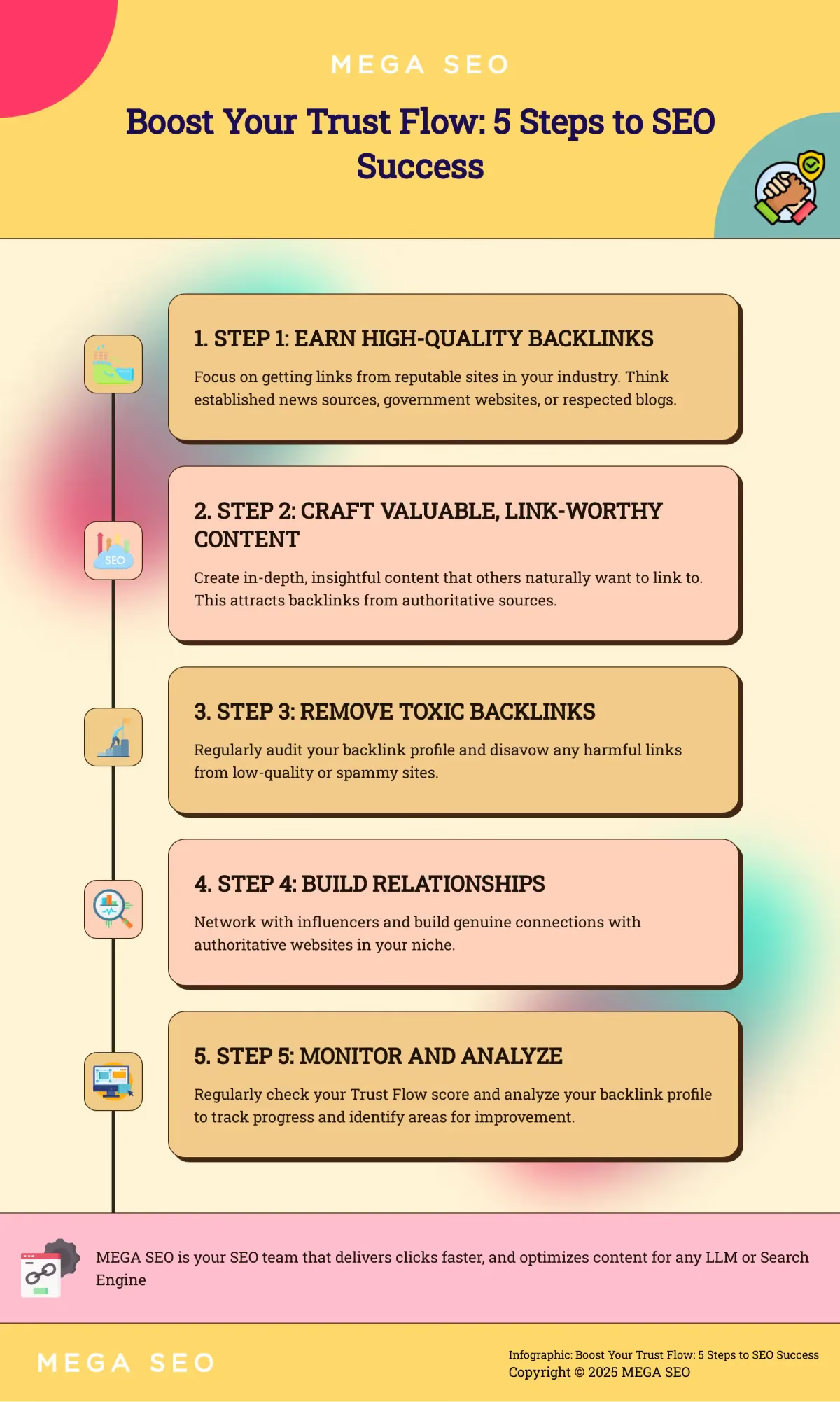
A good Trust Flow score is a sign of a healthy website. It shows search engines that your site is a trusted source of information. But how do you actually improve your Trust Flow? Here’s a breakdown of actionable strategies:
Getting High-Quality Backlinks
Trust Flow, developed by Majestic, measures the quality of your backlinks. Think of it like a vote of confidence from other websites. A high Trust Flow means your site is linked to by reputable, authoritative websites, which can significantly improve your search rankings. Focus on earning links from industry leaders, trusted news sources, and other high-quality sites. These strong endorsements tell search engines your content is valuable and trustworthy. You can explore MEGA SEO‘s features for automated link building to streamline this process.
Creating Link-Worthy Content
Content is king, especially when it comes to Trust Flow. Creating in-depth, insightful content naturally attracts backlinks from other authoritative sites. Think about what your audience truly needs and create resources that offer real value. A targeted content strategy focusing on valuable resources, like in-depth industry reports, can significantly increase your Trust Flow and organic traffic. Consider using MEGA SEO’s content generation tools to help you create high-quality, linkable content.
Maintaining Content Focus and Relevance
Creating in-depth, insightful content is key to attracting high-quality backlinks and boosting your Trust Flow. When your content offers real value to your audience, other reputable sites are more likely to link to it as a resource. Think of it this way: a well-researched blog post providing unique insights is far more link-worthy than a thin, superficial article. As explained in Majestic's guide to Trust Flow, a link from a respected industry authority carries more weight than a link from a spammy or irrelevant site. This targeted approach not only improves your TF but also establishes your website as a go-to resource in your niche, driving organic traffic and building a loyal audience. Consider using MEGA SEO's content generation tools to help you create this kind of high-quality, linkable content.
Avoiding TF Manipulation
While building a strong Trust Flow is essential for SEO success, it's crucial to avoid manipulative tactics. Schemes like buying backlinks from link farms or participating in reciprocal link exchanges might offer a temporary TF boost, but they ultimately harm your website's reputation and can lead to search engine penalties. Sagapixel advises against trying to manipulate TF, as Google will likely detect and penalize such attempts. Sagapixel also highlights how this emphasis on quality helps distinguish between genuine endorsements and manipulative link-building tactics. Page One Power recommends focusing on earning links from authoritative sites within your niche to see real, sustainable improvements in your Trust Flow. A genuine, organic approach to link building, focused on providing value and earning trust, is always the best strategy.
Removing Toxic Backlinks
Not all backlinks are created equal. Toxic backlinks from spammy or low-quality sites can actually harm your Trust Flow. Regularly audit your backlink profile and identify any potentially harmful links. Use Google’s disavow tool to tell Google to ignore these toxic backlinks, protecting your site’s reputation and Trust Flow. MEGA SEO can help you manage your backlinks effectively.
Connecting With Authoritative Websites
Networking is a powerful tool for building Trust Flow. Connecting with influencers and building relationships with authoritative websites in your niche can open doors to valuable backlink opportunities. Collaborating with reputable sources can lead to a remarkable increase in Trust Flow, driving more traffic and improving your site’s overall authority. MEGA SEO can help you connect with influential websites.
How Trust Flow Impacts Your SEO PerformanceTrust Flow Impacts SEO Performance
Your site’s Trust Flow score offers valuable insights into its backlink profile and can indirectly influence search engine rankings. While not a direct ranking factor used by Google, understanding and improving your Trust Flow contributes to a stronger SEO foundation. Think of it as strengthening the underlying structure of your online presence.
Does Trust Flow Influence Search Rankings?
Trust Flow, developed by Majestic, measures backlink quality. Unlike metrics that simply count backlinks, Trust Flow assesses the credibility of linking domains. A high Trust Flow suggests your site is linked to by reputable, authoritative websites. Search engines often view these as endorsements, potentially boosting your site’s perceived authority and, indirectly, its search rankings. It’s like earning recommendations from respected figures in your industry.
Trust Flow and Website Authority
Improving your Trust Flow involves attracting links from authoritative sites in your niche. Many websites have seen improvements after making strategic changes. For example, a fitness blog saw a significant Trust Flow increase after partnering with fitness experts. These collaborations led to high-quality backlinks from trusted sources, strengthening the blog’s authority. This demonstrates how strategic link building can positively impact Trust Flow. It’s about building genuine connections with relevant influencers.
Balancing Trust Flow With Other SEO Factors
Trust Flow is a helpful metric, but it’s essential to remember it’s one piece of the SEO puzzle. Don’t rely on it as your only SEO tool. Google uses its own complex algorithms, and Trust Flow isn’t directly factored in. However, many SEO professionals believe quality backlinks remain crucial for higher search engine rankings. Therefore, focus on a holistic SEO strategy that incorporates various factors, including relevant content, technical optimization, and a strong backlink profile with a healthy Trust Flow. It’s about finding the right balance for long-term, sustainable growth.
Content Quality and User Engagement
Creating top-notch content is crucial for attracting high-quality backlinks, which directly impacts your Trust Flow. Think of it this way: if you’re consistently publishing insightful, valuable content, other reputable sites will naturally want to link to you as a resource. This is where a robust content strategy comes into play. As discussed in our recent post on improving Trust Flow, creating in-depth, insightful content naturally attracts backlinks from trusted sources, boosting your Trust Flow and overall SEO. A targeted content strategy focusing on valuable resources, like in-depth industry reports, can significantly increase your Trust Flow and organic traffic.
Consider what unique insights you can offer your audience. Perhaps it’s original research, a comprehensive guide, or an expert interview. The key is to provide real value that keeps users engaged and encourages them to share your content, naturally attracting those valuable backlinks. MEGA SEO’s content generation tools can assist in creating high-quality, linkable content.
Technical SEO and Site Performance
While content quality plays a significant role in attracting backlinks, technical SEO optimization ensures search engines can easily crawl and index your site, maximizing the impact of those backlinks on your Trust Flow. A technically sound website, free of broken links and other errors, provides a seamless user experience, encouraging visitors to explore and engage with your content. This positive user experience can indirectly influence your Trust Flow by increasing the likelihood of other sites linking to you.
Remember, Trust Flow, developed by Majestic, measures a website’s trustworthiness based on the quality of its backlinks. As we've explained before, Trust Flow prioritizes quality over quantity. A link from a well-established site like the BBC holds significantly more value than a link from a random blog comment. This emphasis on quality backlinks within technical SEO is essential for improving site performance and boosting your Trust Flow. MEGA SEO’s tools can help you identify and address technical SEO issues, ensuring your site is optimized to benefit from your hard-earned backlinks.
Trust Flow: Limitations and Considerations
While Trust Flow is a helpful SEO metric, it’s important to understand its limitations and avoid common misconceptions. Thinking of TF as a magic bullet will lead to disappointment. This section clarifies TF’s role in a broader SEO strategy.
Why Trust Flow Isn't Everything
Website ranking involves hundreds of factors. Trust Flow, along with similar metrics like Domain Rank and Domain Authority, offers a helpful snapshot, not the complete picture. These metrics are useful estimates provided by third-party tools, not definitive measures used by Google. While Google considers links as part of its ranking algorithm, it uses a far more complex system than these tools can replicate. So, keep TF in perspective.
Common Trust Flow Misconceptions
One common misconception is that Google directly uses Trust Flow as a ranking factor. It doesn’t. Trust Flow, calculated by Majestic, helps you understand a website’s reputation based on its backlink profile. It’s a useful tool, but it’s not a direct line to a top Google ranking. Remember, metrics like Domain Authority and Domain Rank are created by third-party companies, not Google itself. Their algorithms offer valuable insights, but they don’t mirror Google’s internal processes.
PageRank is not relevant
While PageRank was once a cornerstone of Google's ranking algorithm, its relevance has diminished over the years. Today, metrics like Trust Flow (TF) offer more nuanced insights into a website’s authority. Trust Flow, developed by Majestic, measures a website’s trustworthiness based on the quality of its backlinks, rather than simply counting them. This focus on quality means that a single link from a highly trusted site can significantly impact your Trust Flow score, unlike PageRank, which primarily emphasized quantity.
It's also important to remember that Trust Flow is a third-party metric, not something Google directly uses for ranking. As SEO professionals have pointed out, high-quality backlinks remain crucial for strong search rankings. Metrics like Trust Flow, Domain Rating (DR), and Domain Authority (DA) offer valuable perspectives on your backlink profile, but they don't directly control Google's complex algorithms. For a deeper understanding of these nuances, you can explore the limitations of Trust Flow and other third-party metrics.
PageRank helped establish the importance of links, but modern SEO now prioritizes quality over quantity. Metrics like Trust Flow provide a more accurate view of a website's authority and trustworthiness by assessing the quality of backlinks. If you're interested in seeing how MEGA SEO can help you build a strong backlink profile and improve your Trust Flow, book a demo.
Integrating Trust Flow Into Your SEO Strategy
Improving your Trust Flow score requires sustained effort and a smart link-building strategy. It’s not a quick fix. Think of it as a long-term investment in your website’s authority. Trust Flow helps you quickly assess the quality of a website’s backlinks, which is particularly useful when comparing your site to competitors. Focus on earning high-quality links from reputable websites. This is the cornerstone of building a strong Trust Flow and a healthy online presence.
Trust Flow Tools and Resources
Knowing your site’s Trust Flow is helpful, but understanding how to use that information is even more critical. This section explores tools and techniques to monitor, analyze, and incorporate Trust Flow data into your overall SEO strategy.
Best Software for Monitoring Trust Flow
Majestic, the developer of Trust Flow, offers a range of tools to check and monitor this important metric. You can get started with their free tools, including a browser plugin, for quick checks on any website. For deeper analysis and ongoing tracking, consider a paid Majestic subscription, which unlocks more advanced features. Several other SEO platforms also incorporate Trust Flow data, providing a convenient way to see it alongside other key metrics.
MEGA SEO for Automated TF Monitoring and Improvement
Trust Flow is a critical metric for assessing your website’s authority. Leveraging tools like MEGA SEO can significantly streamline the process of monitoring and improving your TF. Trust Flow isn’t just about the number of backlinks; it emphasizes the quality of those links. As noted earlier, “A website with backlinks from authoritative sources… will have a higher TF,” which underscores the importance of focusing on reputable sites for link-building.
MEGA SEO offers automated features to help you regularly audit your backlink profile, allowing you to identify and disavow toxic links that could harm your Trust Flow. Regular backlink audits are essential, as toxic backlinks from spammy or low-quality sites can actually harm your Trust Flow. By utilizing MEGA SEO’s tools, you can ensure your backlink profile remains healthy and robust.
Creating valuable, in-depth content is crucial for attracting high-quality backlinks. MEGA SEO can assist in generating link-worthy content that resonates with your audience, naturally attracting backlinks from authoritative sites. As you build relationships with influencers and reputable sources, MEGA SEO can help facilitate these connections, leading to increased Trust Flow and improved search rankings. Learn more about MEGA SEO.
Analyzing Competitor Trust Flow
Don’t just focus on your own Trust Flow; check out your competitors’ scores, too. Analyzing competitor websites’ Trust Flow offers valuable context for your own link-building strategies. This competitive analysis can reveal what’s working in your niche and highlight areas to improve your own approach. By understanding your competitors’ link profiles, you can identify high-quality link opportunities and refine your content to attract similar links.
Using TF to Benchmark Against Competitors
Keeping tabs on your competitors is always smart. Analyzing their Trust Flow scores gives you valuable context for your own link-building strategies. It’s like scoping out the competition before a race—you get a sense of where you stand and what you need to do to pull ahead. MEGA SEO's research shows this competitive analysis can reveal what’s working in your niche and highlight areas where you can improve. By understanding your competitors’ link profiles, you can identify high-quality link opportunities and refine your content to attract similar links. Trust Flow helps you quickly assess the quality of a website’s backlinks, which is especially useful when comparing your site to competitors. This benchmarking process offers strategic insights, allowing you to prioritize earning high-quality links from reputable websites. This, according to MEGA SEO, is key for building a strong Trust Flow and a healthy online presence. For example, if a competitor has a much higher TF, looking at their backlink profile can reveal which authoritative sites they’re connected with. This knowledge can inform your own outreach and content strategies, helping you target similar high-quality links. A strong backlink profile, reflected in a healthy Trust Flow, is a major signal of a site's authority and trustworthiness to search engines.
Using Trust Flow Data in SEO Strategies
Trust Flow is a crucial metric for understanding the quality of your site’s backlink profile. A high Trust Flow, as explained in this Trust Flow SEO guide, suggests that your site is linked to by reputable, authoritative websites. This positive association can significantly impact your search rankings. Use Trust Flow data to guide your link-building efforts, prioritize outreach, and ensure your content resonates with high-quality sources. Regularly monitoring your Trust Flow can help you track the effectiveness of your SEO strategy and identify potential issues early on.
TF for Keyword Research
Trust Flow can be a valuable asset in keyword research, helping you identify high-potential keywords that can drive both traffic and build authority. A site with a high TF is more likely to rank well for competitive keywords. When brainstorming keywords, consider how they align with your overall content strategy and your target audience's needs. For example, if you're in the health and wellness industry and your site has a strong TF, you might target keywords like "best fitness routines" or "healthy eating tips." These broader terms are often highly competitive, but a robust TF can give you an edge. Conversely, if your TF is lower, focusing on long-tail keywords, like "best fitness routines for beginners at home" or "healthy eating tips for busy moms," might be a more effective initial strategy. These more specific phrases typically have less competition, allowing you to gain traction and gradually build your TF over time. MEGA SEO's keyword research tools can help you identify relevant keywords and analyze their competitiveness, factoring in your current TF.
Remember, creating in-depth, insightful content naturally attracts backlinks from other authoritative sites. Think about what your audience truly needs and create resources that offer real value. A targeted content strategy focusing on valuable resources, like in-depth industry reports, can significantly increase your Trust Flow and organic traffic.
Monitoring SEO Work with TF
Trust Flow is a valuable metric, but it’s important to remember it’s just one piece of the puzzle. Similar to metrics like Domain Rating (DR) from Ahrefs and Domain Authority (DA) from Moz, Trust Flow is a third-party metric, not a direct Google ranking factor. These metrics primarily analyze backlink quality. While a high TF is generally a positive sign, it shouldn't be your sole focus. Regularly monitor your Trust Flow alongside other key SEO metrics to get a comprehensive view of your website's performance. Use TF to track the impact of your link-building efforts and identify any sudden drops or spikes that might warrant further investigation. A sudden decrease in TF could indicate a loss of high-quality backlinks or the presence of toxic backlinks, requiring you to audit your backlink profile.
Regularly audit your backlink profile and identify any potentially harmful links. Use Google’s disavow tool to tell Google to ignore these toxic backlinks, protecting your site’s reputation and Trust Flow. By combining TF analysis with regular backlink audits and a focus on high-quality content, you can create a sustainable SEO strategy that builds trust with both search engines and your target audience. MEGA SEO's platform offers automated TF monitoring and integrates this data with other crucial SEO metrics, providing a streamlined approach to tracking your progress and managing your backlinks.
The Future of Trust Flow in SEOTrust Flow in SEO
As search engine algorithms grow more sophisticated, Trust Flow will likely play an even greater role in determining search rankings. Understanding how link quality is assessed and adapting your SEO strategy accordingly is crucial for future success.
Trends in Link Quality Assessment
Trust Flow, developed by Majestic, is a vital metric for measuring the quality of backlinks. Unlike metrics that simply count backlinks, Trust Flow assesses the credibility of the linking domains. This shift towards quality over quantity reflects the increasing importance of genuine authority online. As Majestic refines its algorithms, expect Trust Flow to become even more precise in identifying high-quality links. This means focusing on earning links from reputable sources within your niche will be essential for building a strong Trust Flow.
Trust Flow's Evolving Role
Trust Flow is no longer just a standalone metric; it’s becoming integral to a holistic SEO strategy. We’re seeing websites achieve significant Trust Flow improvements through strategic changes. For example, a niche blog focusing on fitness saw a substantial Trust Flow increase after collaborating with reputable fitness influencers. This demonstrates the power of associating your brand with trusted voices in your industry. As search engines prioritize user experience, expect Trust Flow to become a stronger indicator of a website’s overall trustworthiness and value.
Preparing Your SEO Strategy for the Future
To stay ahead of the curve, prepare your SEO strategy for the evolving role of Trust Flow. Focus on creating high-quality, linkable content that resonates with authoritative websites in your industry. A B2B company that implemented a targeted content strategy, focusing on in-depth industry reports, saw its Trust Flow increase by 15 points, correlating with a 30% rise in organic traffic. This example highlights the long-term benefits of investing in valuable content that attracts natural, high-quality backlinks. By prioritizing genuine connections and valuable content, you can future-proof your SEO strategy and establish a strong online presence. Consider exploring MEGA SEO’s resources for tools and strategies to enhance your link-building efforts and improve your Trust Flow. You can also book a demo to see how MEGA SEO can automate and simplify your SEO processes.