
You can publish fantastic content and optimize your website perfectly, but if you’re not seeing the traffic you expect, a weak backlink profile might be the reason. Search engines like Google rely on signals from other websites to determine if your content is authoritative and trustworthy. Backlinks are one of the most powerful signals you can get. When a reputable site links to one of your pages, it’s essentially vouching for your content. This guide will walk you through the essential strategies for earning these valuable endorsements, helping you build the authority needed to rank higher in search results.
Key Takeaways
- Prioritize Link Quality Over Link Count: A single backlink from a high-authority, topically relevant website provides more SEO value than dozens of links from low-quality or unrelated sources.
- Create Content That Attracts Links Naturally: The most sustainable link building strategy is publishing exceptional content—like original research or in-depth guides—that others in your industry will want to cite and share.
- Use a Mix of Link Building Tactics: A strong backlink profile comes from a variety of sources. Combine different methods, such as fixing broken links, analyzing competitor backlinks, and engaging in digital PR, to build a natural and authoritative presence.
What is Link Building?
Link building is the process of getting other websites to link to pages on your site. Think of these incoming links, also known as backlinks, as recommendations or votes of confidence. When a reputable website links to your content, it signals to search engines like Google that your site is a credible source of information. This process is a cornerstone of any effective SEO strategy because it helps build your website's authority.
The more high-quality "votes" you have from other sites, the more trustworthy your own site appears. This trust is a major factor in how search engines decide to rank your content. A strong backlink profile can lead to higher rankings in search results, which in turn drives more organic traffic to your business. It’s not just about the quantity of links, but the quality. A single link from a well-respected industry site is often more valuable than dozens of links from unknown or irrelevant blogs.
How link building works
At its core, link building works by creating content that other people find valuable enough to share with their own audiences. The process often involves a combination of creating exceptional content and strategic outreach. You might get other websites to link back by writing a guest post for a relevant blog, creating an original research report that others want to cite, or simply reaching out to site owners who might be interested in your content. The goal is to build genuine relationships and provide real value, which naturally encourages others to link to your work.
Why backlinks matter for SEO
Backlinks are critical for SEO because search engines use them as a primary signal for ranking. Google’s algorithm views links as endorsements. When multiple authoritative sites link to one of your pages, it assumes that page contains high-quality, relevant information on a given topic. This perceived authority helps your content rank higher for your target keywords. A solid effort in earning backlinks from other websites can significantly improve your site’s visibility, making it easier for potential customers to find you when they’re searching for the products or services you offer.
What Makes a Backlink Valuable?
When it comes to link building, quality always trumps quantity. A single, high-quality backlink can be more impactful than a hundred low-quality ones. But what exactly makes a link "high-quality"? Search engines like Google look at several factors to determine a backlink's value and how much authority it should pass to your site. Understanding these factors helps you focus your efforts on acquiring links that will actually move the needle for your business.
Website authority
Think of a backlink as a recommendation. A recommendation from a well-respected expert in your field carries a lot more weight than one from a random stranger. In the world of SEO, this is known as website authority. Links from established, trustworthy websites signal to search engines that your content is credible and valuable. Tools like Moz and Ahrefs have created metrics like Domain Authority to estimate a site's authority. When you get a link from a site with high authority, some of that credibility is passed on to your website, which can improve your rankings.
Topical relevance
A link's value is also determined by how relevant the linking website is to your own. For example, if you run a local bakery, a backlink from a popular food blogger’s article about the best croissants in your city is extremely valuable. A link from a blog about car maintenance, however, would be far less so. Search engines use this topical relevance to understand the context of your content. When a site in your niche links to you, it reinforces to Google that you are a legitimate player in that industry, helping you rank for related search queries.
On-page link placement
Where a link is placed on a page matters. A link that’s naturally included within the main body of an article is considered an editorial endorsement. It suggests the author is genuinely recommending your content to their readers and is much more valuable than links tucked away in a website's footer or sidebar. These out-of-the-way links are often overlooked by both users and search engines. Think about it from a user's perspective: a link within a paragraph you're reading is a direct suggestion, while a list of links in a footer feels more like a directory. The more prominent the link, the more likely it is to be clicked, driving referral traffic and signaling its importance to Google.
Optimized anchor text
Anchor text is the visible, clickable text in a hyperlink. The words used in the anchor text provide important context to both users and search engines about the content of the linked page. For instance, anchor text like "check out our guide to small business accounting" is much more descriptive and valuable than a generic phrase like "click here." When another site links to you, having relevant keywords in the anchor text helps search engines understand what your page is about. This can directly influence its ability to rank for those specific terms, making anchor text a small but powerful element of a valuable backlink.
Link attributes: Nofollow, sponsored, and UGC
Not all links pass authority. HTML attributes can tell search engines how to treat a specific link. By default, links are "dofollow," meaning they pass authority. However, links can also be tagged with attributes like nofollow, sponsored (for paid links), or ugc (for user-generated content like comments). These tags typically tell Google not to pass ranking credit through the link. While these links don't provide the same SEO value as a dofollow link, they can still be beneficial for driving referral traffic and building brand awareness. It's important to understand how to qualify your outbound links and recognize the type of links you're acquiring.
How to Build Links (and What to Avoid)
Link building strategies generally fall into three categories: earning them, asking for them, or adding them yourself. Each approach has its place, but they aren't all created equal in the eyes of search engines. There's also a fourth, riskier method—buying links—that you should understand so you can avoid it. Knowing the difference between these methods is key to building a backlink profile that supports long-term growth instead of putting your site at risk. Let's look at each one.
Earning links naturally
This is the gold standard of link building. Earning links means creating such high-quality, useful content that other website owners and creators link to it without you even having to ask. Think of original research, in-depth guides, free tools, or compelling infographics. When you produce truly valuable content, it becomes a resource for your industry, and people will naturally reference it. This approach takes time and effort, but the backlinks you gain are powerful and authentic. They signal to search engines that your site is a credible authority, which is exactly what you want for sustainable SEO success. It’s a long-term play that always pays off.
Asking for links through outreach
Sometimes, even great content needs a little push to get noticed. That’s where outreach comes in. This process involves identifying websites, blogs, or publications that are relevant to your business and reaching out to ask for a link. A successful outreach campaign is a powerful strategy, but it requires a personal touch. Instead of sending generic emails, explain why your content would be a valuable addition for their specific audience. Point to a particular article where your link would fit naturally. The goal is to build a genuine relationship and offer value, not just to make a request. When done thoughtfully, outreach can land you high-quality, relevant backlinks.
Adding links manually
Manually adding links involves placing your own backlinks on other websites. This is common for building a foundational link profile, especially for new or local businesses. Examples include submitting your site to reputable business directories, creating social media profiles, or participating in relevant industry forums and blog comment sections. The key is to ensure your contributions are contextually appropriate and add value to the conversation. Simply dropping a link without context looks spammy and is often ineffective. When done correctly, manual link building can secure relevant, foundational links that help search engines and users find your business.
Buying links and the risks involved
This is the one tactic to steer clear of. Buying links is a direct violation of Google's webmaster guidelines and is considered a risky tactic. While it might seem like a quick shortcut to getting backlinks, the potential consequences are severe. Search engines have become incredibly sophisticated at detecting unnatural link patterns and paid link schemes. If you're caught, your site could face a manual penalty, causing your rankings to plummet or even leading to your site being removed from search results entirely. It’s simply not worth the risk. Focusing on legitimate, value-driven strategies is the only sustainable way to build a strong and trustworthy backlink profile for your business.
9 Effective Link Building Tactics
Once you understand what makes a backlink valuable, you can start building them. These tactics are effective for earning links that both Google and newer AI search engines will see as signals of authority. Many of these strategies require significant time for research and outreach, which is why many small businesses use an AI-powered SEO agent to handle the process.
1. Use targeted email outreach
This is the classic approach to link building. It involves finding websites relevant to your industry and sending a personalized email asking them to link to your content. The key to success is personalization. Generic, mass emails rarely work. Instead, focus on building a genuine connection. Show that you’ve actually read their content and explain exactly why your link would provide value to their audience. A well-crafted link building outreach message can be incredibly effective, but it requires careful research to identify the right websites and contacts.
2. Become a source for journalists
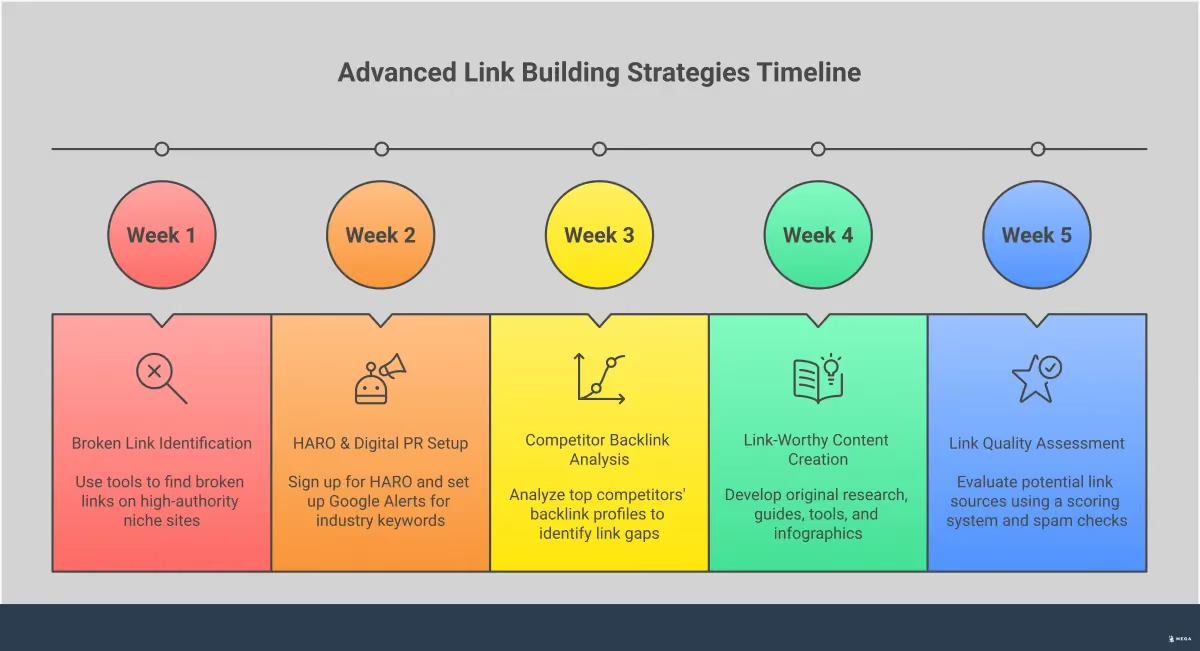
Journalists and bloggers are always looking for expert sources to quote in their articles. By positioning yourself as an expert in your field, you can earn high-quality backlinks from authoritative news sites and industry publications. Services like Help a Reporter Out (HARO) connect journalists with sources. Responding to relevant queries with a thoughtful, insightful quote can land you a mention and a valuable link. This tactic is a core part of digital PR, helping you build both links and brand credibility at the same time.
3. Fix broken links
Broken link building is a smart and helpful way to earn backlinks. The process involves finding a broken link (one that leads to a 404 error) on a website in your niche. Once you find one, you reach out to the site owner to let them know about the dead link. In the same email, you can suggest a piece of your own relevant content as a replacement. You’re doing the site owner a favor by helping them fix an error on their site, which makes them much more likely to add your link.
4. Publish link-worthy content
The most sustainable link building strategy is to create content so good that people naturally want to link to it. This is often called "link bait," but it’s really just about creating exceptional value. Think about what your audience needs and create the best possible resource to meet that need. This could be an in-depth guide, original research with compelling data, a free tool, or a unique case study. When you create high-quality content that serves as the definitive resource on a topic, other websites will link to it as a reference for their own readers.
5. Claim unlinked brand mentions
It’s common for websites to mention your brand, products, or services without actually linking to your site. These unlinked mentions are prime link building opportunities. You can use tools like Google Alerts or brand monitoring software to find these instances. Once you find one, a polite email to the author or editor is all it takes. Simply thank them for the mention and ask if they would consider adding a link to your homepage or a relevant page. It’s a simple request that often has a high success rate.
6. Learn from your competitors' backlinks
Your competitors have already done some of the hard work for you. By analyzing their backlink profiles, you can discover hundreds of potential websites to get links from. Use an SEO tool to see which sites are linking to your top competitors. This gives you a roadmap of relevant blogs, directories, and publications in your industry that are open to linking out. While you won't be able to replicate every link, a thorough competitor analysis will reveal patterns and opportunities you can pursue for your own site.
7. Reclaim your lost backlinks
Backlinks can disappear for various reasons. The linking page might be deleted, the website might be restructured, or the link might be removed during a content update. It’s important to monitor your backlink profile for these lost links. It’s often easier to reclaim a lost backlink than it is to build a brand new one. When you notice a valuable link has been lost, reach out to the site owner. A friendly email asking to have the link reinstated is often all you need to get it back.
8. Fill the gaps in your backlink profile
A strong backlink profile is a diverse one, with links coming from a variety of sources like blogs, news sites, and industry directories. Analyze your own backlink profile and compare it to your competitors. Are there certain types of websites where your competitors are getting links but you aren't? Identifying these gaps can help you create a more targeted outreach strategy. Focusing on underrepresented link types helps you build a more natural and authoritative profile in the eyes of search engines.
9. Leverage digital PR
Digital PR involves creating newsworthy campaigns, stories, or data that attract the attention of journalists and media outlets. This is a powerful way to earn high-authority backlinks from major publications that would be difficult to get otherwise. Think about creating an interesting industry study, a viral piece of content, or a compelling story about your business. A successful digital PR campaign can generate a massive number of high-quality links, drive referral traffic, and significantly build your brand’s authority online.
How to Measure Your Link Building Success
Building links is only half the battle. To know if your efforts are actually paying off, you need a clear way to measure your success. Tracking your progress helps you understand which tactics are working, what kind of links are most valuable, and where to focus your energy next. It turns link building from a shot in the dark into a data-backed strategy that drives real results for your business.
Essential link tracking tools
To measure your link building success, you need the right tools in your corner. You don’t need a huge, expensive suite of software to get started. A few key platforms can give you all the data you need to see what’s working. For example, you can use tools like Moz’s Link Explorer to check the Domain Authority (DA) of sites linking to you, which helps you gauge the quality of your backlinks.
Another essential tool is Google Analytics. By setting it up correctly, you can track how much referral traffic your new links are sending to your site. This shows you not just if you’re getting links, but if those links are from websites with an engaged audience that’s interested in what you offer. Monitoring these key metrics is fundamental to understanding your campaign's performance.
How to analyze backlink quality
Not all backlinks are created equal. When analyzing your backlink profile, focus on quality over quantity. One of the most important factors is the authority of the linking website. A site’s Domain Authority (DA) is a score that predicts its ability to rank in search results. A link from a high-DA site is much more valuable than dozens of links from low-quality sites.
Relevance is also critical. A link from a website in your own industry or a related niche sends a strong signal to Google that your site is a credible resource on that topic. Finally, consider the site’s trustworthiness. Links from established, reputable websites can significantly improve your own site’s authority. Using a variety of link building metrics helps you maintain a healthy and effective backlink profile.
Start Building High-Quality Links
Link building is a long-term investment in your website’s authority. Instead of chasing a high volume of links, the goal is to acquire high-quality backlinks from reputable and relevant websites. A single link from a trusted industry site is far more valuable than dozens of links from irrelevant or low-quality sources. The most sustainable link-building strategies are rooted in creating value and building genuine connections within your industry and community. It’s about earning trust, not just collecting URLs.
This is where strategy meets execution. While AI agents like MEGA's SEO agent can automate the technical optimization and content creation that form the foundation of your strategy, the human element of relationship-building remains key. With a strong content base in place, you can focus your efforts on the following principles to attract links that make a real impact on your search rankings and brand visibility.
Create Content That Earns Links
The most effective way to get high-quality backlinks is to publish content that people naturally want to share and cite. Think about what your audience finds useful, informative, or interesting. This could be an in-depth guide, a piece of original research, a helpful tool, or a compelling case study. When you create valuable content, you establish your brand as an authority. This makes other websites more likely to link to you as a trusted source, often without you even having to ask. This approach builds your site's authority and drives referral traffic over time.
Build Genuine Relationships
Link building is as much about people as it is about websites. Focus on building relationships with other business owners, content creators, and influencers in your industry. Engage with their content on social media, leave thoughtful comments on their blogs, and look for opportunities to collaborate. Networking can lead to organic opportunities like being featured in an expert roundup or contributing a guest post. Guest blogging on a respected site in your niche allows you to share your expertise with a new audience while earning a valuable backlink to your own website.
Engage With Your Community
For local businesses, community involvement is a powerful and often overlooked link-building strategy. Sponsoring a local event, partnering with a neighborhood charity, or hosting a free workshop can generate positive press and earn links from local news outlets, event calendars, and community organizations. Participating in online communities and forums relevant to your industry also works well. By actively contributing and sharing your expertise, you can foster relationships that lead to natural backlink opportunities and establish your business as a trusted local resource.