When people hear “automated link building,” they often think of spammy, low-quality tactics that can get your site penalized. That’s an outdated view. Modern automation is about precision and efficiency, not just volume. The goal is to use smart tools to handle the repetitive parts of the process, like finding prospects and sending initial emails, so you can focus on quality control and building real relationships. This article will show you how to automate link building the right way. We’ll explore strategies and tools that help you acquire high-quality links from reputable sites, improving your SEO without compromising your brand.
Key Takeaways
- Pair automation with human oversight: Use tools to manage repetitive tasks like finding prospects and sending follow-ups, but reserve your time for strategic planning, building genuine relationships, and making final quality judgments.
- Prioritize quality to protect your brand: Set strict filters for domain authority and relevance before launching any campaign. This ensures your automated outreach targets reputable sites and avoids acquiring low-quality links that could harm your SEO.
- Integrate your tools for a seamless process: Connect your link-building platform with your CMS and analytics. This creates a unified workflow that makes it easier to manage campaigns, track performance, and measure the real impact of your efforts.
What is Automated Link Building and Why Does It Matter?
Automated link building uses software to streamline the process of acquiring backlinks. Think of backlinks as votes of confidence from other websites. When a reputable site links to yours, it signals to search engines that your content is valuable and trustworthy, which can improve your rankings. This process is a fundamental part of any effective SEO strategy. For small businesses, building a strong backlink profile is essential for gaining visibility and competing with larger players.
It’s important to set the right expectations. A tool that completely automates link building from start to finish doesn’t exist. Instead, automation handles the most time-consuming parts of the process, like finding potential link opportunities, discovering contact information, and sending outreach emails. This frees you up to focus on the parts that require a human touch, like strategy and relationship building. The goal isn’t to remove people from the process but to make their efforts more efficient and scalable.
The real value of automation is that it makes your SEO efforts more successful and helps you see results faster. For a busy founder or small business owner, manually building links is a slow, repetitive task. Automation takes care of the grunt work, allowing you to manage a consistent outreach campaign without dedicating dozens of hours each week. The focus has also shifted from getting as many links as possible to getting high-quality links. Quality is far more important than quantity, and the right tools help you identify and connect with authoritative sites that will actually move the needle for your business.
The Best Automated Link Building Tools
Choosing the right tool depends on how much of the link-building process you want to automate. Some tools handle specific tasks like finding emails, while others offer a complete solution. For busy founders, an autonomous agent that manages everything from strategy to execution might be the best fit. Here’s a look at some top options.
MEGA AI’s SEO Agent: Your Complete SEO Agent
MEGA AI’s SEO Agent is an autonomous SEO agent that manages your entire link-building strategy. It actively acquires backlinks by writing guest posts and performing backlink analysis to remove toxic links. For business owners who need a “set it and forget it” solution, the SEO Agent acts as your dedicated SEO team, executing tasks without constant oversight.
Linkee.ai: AI-Powered Outreach Platform
Linkee.ai helps manage the outreach process in one place. The platform finds potential websites, vets them for quality, and uncovers contact information. You can then send personalized outreach and schedule automated follow-ups. It’s a solid choice if you want a single platform to organize your outreach campaigns while you handle the strategy.
Postaga: All-in-One Link Building Suite
Postaga is an all-in-one outreach tool that uses AI to suggest relevant websites based on your content. It helps you find contacts and provides proven email templates to streamline your campaigns. Postaga is a flexible option for marketers who want AI-driven assistance for different campaign types, from link building to PR.
Respona: Personalized Outreach at Scale
Respona’s main strength is personalizing outreach emails at scale. The platform finds relevant link opportunities and provides verified email addresses for your contacts. Its AI features focus on making each email feel unique to improve response rates. It’s best for users who want to scale their outreach efforts without sounding generic.
BuzzStream: Contact Management and Outreach
Think of BuzzStream as a CRM built for link building. It helps you manage outreach campaigns by keeping all your contacts and conversation histories organized. The platform’s AI can assist with drafting emails and subject lines, making it ideal for teams that need a robust system to track their relationships across multiple campaigns.
Hunter.io: Email Discovery and Verification
Hunter.io specializes in one critical task: finding and verifying email addresses. You can use it to find the emails associated with any website, and each result includes a “Confidence Score” for accuracy. Many marketers use Hunter.io alongside other outreach platforms to ensure their messages reach a real person.
How Automated Link Building Tools Work
Automated link building isn’t a single action but a series of connected steps. Most tools are designed to streamline one or more parts of this process, from finding potential partners to tracking your results. Think of it as having a digital assistant who handles the most repetitive parts of the job. These tools work by scanning the web for opportunities, gathering contact details, sending personalized outreach messages, and monitoring the links you earn.
Some platforms, like standalone email finders or outreach tools, focus on doing one thing really well. Others, like MEGA AI’s SEO agent, the SEO Agent, manage the entire end-to-end workflow. Instead of you having to piece together multiple tools, an autonomous agent can identify opportunities, write guest post content, handle outreach, and report on performance all on its own. This approach simplifies the process, making it more accessible for small business owners who need to focus on running their business, not just marketing it.
Find Link Opportunities
The first step in any link-building campaign is finding websites that might want to link to you. Automated tools make this much easier by scouring the internet for relevant prospects based on your keywords and industry. They can identify guest post opportunities, resource pages, and even mentions of your brand that don’t yet include a link. This saves you from hours of manual searching. Instead of building a list of potential sites one by one, these tools can generate a targeted list of hundreds of link-building opportunities in minutes, giving you a solid foundation for your outreach campaigns.
Find and Verify Contact Information
Once you have a list of target websites, you need to find the right person to contact. Automated tools can scan a website to find the most relevant email addresses, such as an editor or content manager. Many tools, like Hunter.io, go a step further by verifying these emails and providing a “confidence score” to show how likely the address is to be correct. This step is critical for improving your email deliverability and ensuring your outreach messages actually reach a real person. It removes the guesswork and tedious data entry from building your contact list.
Automate Outreach and Follow-ups
This is where automation really shines. Instead of sending emails one by one, you can use tools to send personalized outreach campaigns at scale. You can create email templates and use variables to automatically insert details like the recipient’s name, website, or a specific article you liked. Many platforms also let you schedule a sequence of follow-up emails that stop automatically once someone replies. This consistent, hands-off approach ensures you never miss a chance to connect, which is key for turning a cold outreach email into a valuable backlink.
Track Performance and Analytics
After your campaigns are running, you need to know what’s working. Automated tools provide dashboards that track key metrics in real-time. You can monitor email open rates and reply rates to see how effective your messaging is. More advanced tools and agents also track your backlink profile, alerting you when you gain a new link or lose an existing one. This continuous monitoring helps you understand the impact of your efforts, identify your most successful strategies, and make data-driven decisions to refine your approach over time.
How to Automate Your Link Building, Step-by-Step
Automating your link building isn’t about flipping a switch and watching backlinks appear. It’s about creating a smart, repeatable system that handles the most time-consuming parts of the process. By setting up a clear framework, you can scale your outreach, maintain quality, and focus your energy on strategy instead of manual tasks. A successful automation strategy is built on a solid foundation, with clear rules and consistent monitoring to ensure everything runs smoothly.
This process can be broken down into four main phases. First, you’ll establish your automation framework by selecting your tools and connecting them to your website and analytics platforms. Next, you’ll configure your quality controls to make sure your automation targets only relevant, high-authority sites. After that, you’ll create personalized outreach templates and follow-up sequences to engage your prospects effectively. Finally, you’ll launch your campaigns and manage them by tracking performance and making data-driven adjustments. Each step builds on the last, creating a powerful engine for your link-building efforts.
Set Up Your Automation Framework
First things first: a tool that completely automates link building from start to finish doesn’t exist. However, many tools can automate a lot of the work. Your initial step is to choose your platform and build your framework. This involves connecting your chosen tool to your core business systems. For an AI agent like MEGA AI’s SEO Agent to work effectively, it needs access to your content management system (CMS) and Google Search Console. This integration allows the AI to understand your existing content, identify opportunities, and even publish new content like guest posts directly to your site as drafts for your review. This initial setup is crucial for a seamless marketing technology stack.
Configure Your Quality Control
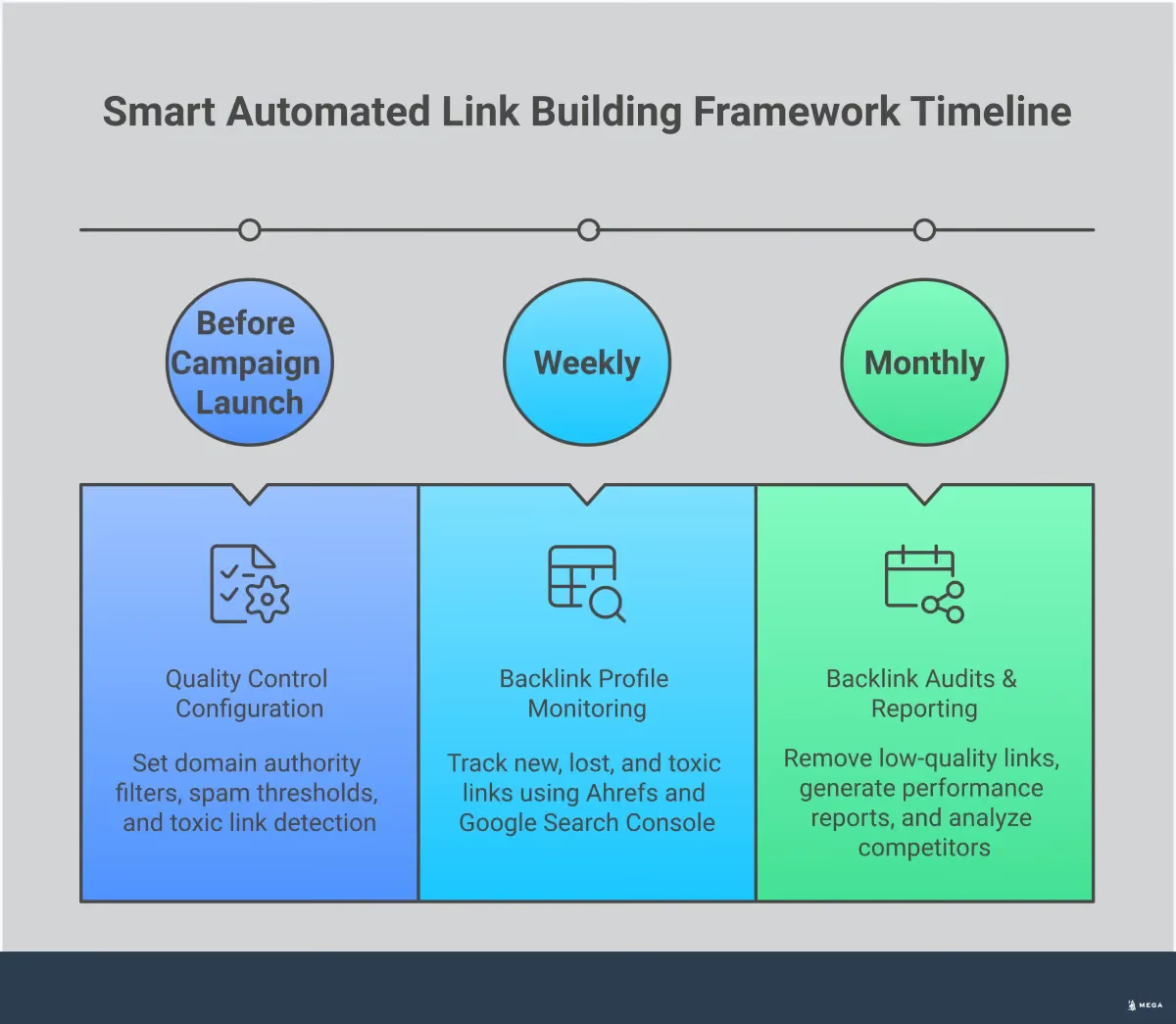
Once your framework is in place, the next step is to define your rules of engagement. Automation without guardrails can do more harm than good. You should always try to get links from important, trustworthy websites that are related to your topic. Before launching any campaign, configure your tool to filter out low-quality sites based on metrics like domain authority, spam score, and topical relevance. With a platform like MEGA AI, you can set these parameters upfront. The system can also perform ongoing backlink analysis, identifying and helping you remove toxic links that could hurt your rankings. This ensures your automated efforts are always building a healthy, authoritative backlink profile.
Create Outreach Templates and Sequences
Effective outreach is all about personalization, even when automated. Even if you use templates, always add personal touches like the recipient’s name or a specific detail about their content. This helps get more replies. Start by creating a few solid base templates for different campaign types, such as guest posting or broken link building. Use personalization tokens to automatically insert details like the prospect’s name, company, and website. An advanced AI can take this further by generating unique opening lines or suggesting relevant content to reference. Setting up automated follow-up sequences is also a huge time-saver, ensuring you stay top-of-mind without having to manually track every conversation.
Launch and Manage Your Campaigns
With your framework, quality controls, and templates ready, it’s time to launch. But automation isn’t a “set it and forget it” solution. You need to monitor your campaigns to see what’s working. Use your tool to track your links—new, lost, and bad ones. Regularly check your link profile to see what’s working and what needs fixing. Platforms like MEGA AI offer a task management system that gives you full visibility into every action taken, from outreach to content creation. You can even set up approval workflows to review certain actions before they go live, giving you the perfect balance of automation and control. This allows you to measure the ROI of your efforts and refine your strategy over time.
Key Benefits of Automating Your Link Building
Link building is essential for SEO, but the manual process can feel like a full-time job—time most small business owners don’t have. Automating your link building streamlines this workflow, turning a tedious task into a manageable part of your marketing strategy. Automation handles the repetitive work, freeing you to focus on strategy and relationship-building. This approach helps you build a powerful backlink profile that drives traffic and authority without the manual grind.
Save Time and Improve Efficiency
The most immediate benefit of automating link building is the time you get back. Manually researching websites, finding contacts, and sending emails can take weeks. Automation tools condense that work into hours. Instead of getting lost in spreadsheets, you can set up campaigns that run on their own. This efficiency means you spend less time on outreach logistics and more time on business development activities that actually grow your company.
Scale Your Efforts Without Sacrificing Quality
As your business grows, your link building strategy needs to grow with it. Automation makes it possible to scale your outreach without hiring a large team. AI-powered tools can analyze thousands of link opportunities to find the most relevant prospects, often uncovering gems a manual search might miss. This allows you to run multiple, targeted campaigns at once. With a platform like MEGA AI, you can ensure your outreach is both broad and personalized, helping you build an authoritative backlink profile that would otherwise be out of reach.
Manage Campaigns Consistently
Consistency is key to successful link building. Following up, tracking responses, and monitoring links are crucial tasks that often fall through the cracks when done manually. Automation tools create a structured system for managing your campaigns from start to finish. You can schedule follow-ups, get alerts for new links, and monitor your backlink profile for any issues. This systematic approach ensures a steady, professional outreach process that builds credibility and improves your chances of securing high-quality links.
Reduce Costs Compared to Manual Work
Hiring an SEO agency or a dedicated link builder is expensive. Automated link building offers a much more cost-effective alternative. By handling the heavy lifting, these tools provide the power of a marketing team at a fraction of the price. This saves you money on salaries and agency fees and delivers a higher return on investment by making your SEO efforts more efficient. You can achieve agency-level results without the corresponding budget, making it a smart choice for any resource-conscious business.
Where Do You Still Need a Human Touch?
Automation is a powerful partner in link building, but it’s not a replacement for human strategy and judgment. Think of it as a highly efficient assistant that handles the repetitive work, freeing you up to focus on the tasks that require a personal connection and deep understanding. Even with the most advanced tools, certain aspects of link building thrive on human insight to ensure your efforts are effective, authentic, and safe for your brand.
Plan Your Strategy and Set Goals
Before you can automate anything, you need a plan. Link building isn’t just about collecting links from anywhere; it’s a strategic part of your larger SEO goals. A human needs to sit down and define what success looks like. Are you trying to increase authority for a specific service page, or are you building brand awareness through guest posts on industry blogs? Answering these questions requires understanding your business, your customers, and your market in a way that AI can’t. You set the destination; automation just helps you get there faster.
Build Relationships and Handle Negotiations
At its core, link building is about people. You’re asking another website owner or editor to vouch for your content. That process often involves building genuine relationships and handling delicate negotiations. While AI can help you find contacts and send initial outreach, the human element is what turns a cold email into a warm connection. A personal touch, a genuine compliment on their work, or a flexible approach to negotiation can make all the difference. These are the moments where your personality and professional courtesy shine, creating partnerships that can last for years.
Ensure Quality and Protect Your Brand
This is perhaps the most critical area for human oversight. The quality of your backlinks matters far more than the quantity. Getting links from spammy, irrelevant, or low-quality sites can do more harm than good, potentially leading to penalties from Google. A human eye is essential for evaluating the authority and relevance of a potential link source. You are the ultimate guardian of your brand’s reputation, and it’s your job to ensure every backlink you acquire is one you can be proud of.
Create Content and Define Your Value
Automation can help you scale content creation, but it can’t replace the human insight needed to create something truly valuable. Understanding your audience’s search intent—the real question behind their query—is a nuanced skill. It requires empathy and a deep knowledge of your field to create content that resonates and earns links naturally. Your unique perspective, stories, and expertise are what make your content worth linking to. AI can help assemble the pieces, but you provide the soul and the core message that makes your brand stand out.
What to Look For in an Automated Link Building Tool
Choosing the right tool is the most important step in automating your link building. The market is full of options, but they don’t all offer the same features or level of quality. A great tool goes beyond just sending emails; it helps you find the right contacts, personalize your outreach, integrate with your current systems, and track your results. Think of it as hiring a specialist for your team. You want someone who is efficient, smart, and fits into your workflow. The following features are what separate a basic tool from a true link building partner.
Email Finding and Verification
Your outreach campaign is only as good as your contact list. Sending messages to outdated or incorrect email addresses is a waste of time and can harm your sender reputation. A top-tier automation tool should have built-in features for finding and verifying contact information. For example, some platforms can find emails associated with a specific website or locate contact details for bloggers in bulk. This ensures your carefully crafted messages actually reach a real person, which is the first and most critical step in building a relationship and earning a backlink. Without accurate contact data, even the best outreach strategy will fall flat.
AI-Powered Personalization
Generic, one-size-fits-all outreach emails rarely get a response. Personalization is key, but doing it manually for hundreds of prospects isn’t practical for a small business. This is where AI can make a huge difference. The best AI link building tools analyze a prospect’s website, blog posts, or social media activity to generate highly personalized email copy. This could mean referencing a recent article they wrote or mentioning a specific point they made. This level of detail shows you’ve done your homework and makes your request far more compelling. It allows you to scale your outreach without sounding like a robot.
CMS and Analytics Integrations
Your link building tool shouldn’t operate in a silo. To be truly efficient, it needs to connect with the other systems you already use, like your Content Management System (CMS) and analytics platforms. For example, a platform like MEGA AI integrates directly with WordPress, Webflow, and Shopify to manage both internal and external linking automatically. This creates a seamless workflow where your SEO agent can not only acquire backlinks but also ensure your site structure is optimized. This level of integration saves you from manually updating spreadsheets and allows your tools to work together, giving you a more complete view of your SEO performance.
Performance Monitoring and Reporting
Automation helps you execute, but data helps you improve. You need to know which campaigns are working, which links you’ve acquired, and if any valuable links have been lost. A good tool provides clear and focused reporting on these key metrics. Look for features that track your backlink profile over time, notify you of new or lost links, and help you monitor the overall health of your domain. This feedback loop is essential. By regularly tracking your backlinks, you can understand what strategies are driving results and make informed decisions to refine your approach for future campaigns.
Common Mistakes to Avoid in Automated Link Building
Automating link building can speed up your SEO workflow, but it’s not a “set it and forget it” solution. The most effective strategies use automation to handle repetitive tasks, freeing you up to focus on strategy, quality control, and relationship building. When you let tools run without proper oversight, you risk damaging your brand’s reputation. The goal is to create a system where technology executes the manual work while you guide the high-level strategy. Avoiding a few common mistakes is key to striking this balance.
Relying Too Much on Automation
One of the biggest mistakes is assuming a tool can handle the entire link-building process from start to finish. While technology has come a long way, no tool can fully replicate human strategic thinking. Automation is best used for tasks like finding potential link prospects, discovering contact information, and sending follow-up emails. The core strategy—defining your ideal link profile and crafting your value proposition—still requires your expertise. Think of an AI agent like MEGA AI’s SEO Agent as an expert executor, carrying out the plan you’ve put in place.
Forgetting About Quality Control
In the race to acquire links, it’s easy to prioritize quantity over quality. This is a critical error. A single backlink from a highly relevant, authoritative website is far more valuable than dozens of links from low-quality sites. Automated tools can generate massive lists of prospects, but it’s your job to set strict quality filters. Before launching a campaign, define your criteria for what makes a good link target. You should always assess a website’s authority and relevance to your niche. Automation can help filter out low-quality sites, but the final decision should always be based on a clear quality standard.
Using Generic or Spammy Templates
We’ve all received those generic, impersonal outreach emails that immediately get deleted. Using bland or spammy templates in your automated campaigns is a surefire way to get ignored and damage your brand’s credibility. Personalization is essential for getting responses. Advanced tools can help you customize messages at scale by inserting dynamic fields like the recipient’s name or company. However, the core template itself should be well-crafted, genuine, and clearly explain the value you’re offering. Your outreach should never feel like it came from a robot, even when one helped send it.
Missing Opportunities to Build Relationships
At its core, link building is about building professional relationships. A backlink is a vote of confidence from one site owner to another. When you rely exclusively on automated outreach, you miss the chance to create genuine connections that can lead to more than just a single link. These relationships can result in future collaborations and valuable industry partnerships. Use automation to handle the initial outreach and follow-ups, which frees up your time to engage with high-value prospects personally. A thoughtful comment on their blog can do more to secure a great link than a hundred automated emails.
How to Personalize Outreach Messages at Scale
Automating your link building doesn’t mean you have to send cold, generic emails. In fact, the most successful automated campaigns feel deeply personal. The goal is to use technology to do the heavy lifting so you can focus on making a genuine connection. Scaling personalization is about sending the right message to the right person at the right time, without spending hours manually writing every single email.
Modern SEO tools have moved far beyond simple mail merges that just insert a first name. They use AI and smart segmentation to create messages that resonate with recipients because they’re relevant to their work. By combining dynamic content, targeted audience segments, and specific details about your prospect, you can build an outreach engine that feels one-to-one, even when it’s running at scale. This approach not only improves your reply rates but also helps you build real relationships that can lead to high-quality backlinks.
Use AI to Generate Dynamic Content
Artificial intelligence is a game-changer for personalizing outreach. Instead of relying on static templates, AI can analyze a prospect’s website, recent articles, or even social media activity to generate unique, relevant sentences for your email. This could be a specific compliment about a point they made in a recent blog post or a question about their research. As one industry analysis notes, “AI is changing link building” by helping to automate and improve how websites earn links. This level of customization shows you’ve done your homework and makes your request stand out in a crowded inbox.
Segment Your Audience for Better Targeting
Sending the same pitch to every website on your list is a recipe for low response rates. A much better approach is to segment your prospects into smaller, targeted groups. You can group them by industry, domain authority, the type of content they publish, or their potential interest in your topic. Once you have these segments, you can tailor your outreach templates to address their specific needs and interests. This targeted approach makes your SEO efforts more effective because each message is highly relevant to the recipient, which saves time and leads to better results.
Add Recipient-Specific Details
Even when using templates, including specific details about the recipient can dramatically increase your reply rate. Go beyond just using their first name and company. Use custom fields to mention the title of a specific article they wrote, their website’s name, or a recent project they launched. As experts suggest, you should always “add personal touches” like a specific detail about their content. This simple step proves that your email isn’t just another automated blast; it’s a thoughtful message from someone who genuinely values their work and sees a real opportunity for collaboration.
Balance Automation with Authenticity
While automation is powerful, it works best when guided by human strategy. The most effective link-building campaigns balance the efficiency of AI with the authenticity of a human touch. Use automation for repetitive tasks like finding prospects, verifying emails, and sending initial outreach. However, it’s important to remember that you still need to “build relationships, customize your content, and make final strategic decisions yourself.” Let your tools handle the scale, but reserve your time for building genuine connections, negotiating placements, and ensuring every backlink aligns with your brand’s quality standards.
Best Practices for Automated Link Building
Automating your link building can feel like unlocking a superpower for your SEO. It saves an incredible amount of time and helps you scale your efforts consistently. But with great power comes the need for a smart strategy. Simply turning on a tool and hoping for the best can do more harm than good. To make sure your automation works for you, not against you, it’s important to follow a few key practices. These guidelines will help you maintain quality, track your performance, and build a sustainable link building engine that drives real results for your business.
Maintain High-Quality Standards
The golden rule of link building is that quality always beats quantity. One great link from an authoritative website in your niche is worth more than a hundred links from irrelevant, low-quality sites. When you automate, it’s easy to get caught up in the volume of outreach you can send. Instead, your focus should be on using automation to efficiently filter for high-quality opportunities. Use tools to vet potential sites based on their relevance, domain authority, and traffic. A true end-to-end SEO solution doesn’t just send emails; it strategically identifies reputable sites and can even handle tasks like removing toxic backlinks to keep your profile clean.
Optimize Your Campaign Performance
Automation shouldn’t be a “set it and forget it” process. The most successful campaigns are the ones that are regularly monitored and refined. You need to keep a close eye on your results to understand what’s working. This means tracking key metrics like your email open and reply rates, the number of new links you acquire, and any links you may have lost. Regularly checking your link profile helps you spot trends and see which outreach strategies are resonating. This data is your guide to making smart adjustments, like tweaking your email copy or changing the types of sites you target for better results.
Integrate Automation into Your SEO Workflow
For automation to be truly efficient, it needs to fit seamlessly into your existing processes. The best tools are the ones that connect with the other systems you already use, like your CMS or analytics platforms. This integration prevents you from having to constantly switch between different apps and manually move data around. For example, a system that connects to your Google Search Console can pull performance data directly into its reports. This creates a unified SEO workflow where your link building efforts are directly tied to your overall strategy, making everything easier to manage and measure.
Monitor and Adjust Your Strategy
The world of SEO is always changing. Search engine algorithms get updated, new competitors emerge, and industry trends shift. Because of this, your link building strategy needs to be flexible. Continuously monitor the impact of your new links on your website’s rankings and traffic. If you see a certain type of content or outreach angle performing well, double down on it. If an approach isn’t yielding results, don’t be afraid to pause it and try something new. Being ready to adjust your strategy based on performance data is what separates a good campaign from a great one.