
Not all backlinks are created equal. A single link from a high-authority, relevant website is worth more than a dozen links from low-quality domains. The real challenge in guest posting isn’t just finding sites that accept contributions; it’s finding the right sites. A website’s technical health is a huge indicator of its overall quality, but how can you check that at scale? This is where a tool like Screaming Frog becomes invaluable. This guide will teach you how to use Screaming Frog for guest posting? with a focus on quality control, showing you how to vet a site’s technical SEO before you ever send an outreach email.
Key Takeaways
- Go Beyond Technical Audits: Use Screaming Frog to systematically find guest post opportunities by crawling competitor backlinks and searching for sites with footprints like “write for us.”
- Vet Prospects with Crawl Data: Analyze a site’s technical health, content relevance, and authority metrics from your crawl data to ensure you only pursue high-quality backlink opportunities.
- Streamline Outreach with Custom Extraction: Configure Screaming Frog to automatically pull contact details and author names, turning a manual data entry task into an efficient and scalable process.
What is Screaming Frog for Guest Posting?
While Screaming Frog is best known as a tool for technical SEO audits, its capabilities go much further. When used strategically, it becomes a powerful resource for your guest posting efforts. It helps you find high-quality outreach opportunities at scale and ensures the sites you target are technically sound, which makes your hard-earned backlinks more valuable. Before you can find prospects, it’s important to understand what the tool is and why a site’s technical health matters for your outreach.
What is the Screaming Frog SEO Spider?
The Screaming Frog SEO Spider is a desktop website crawler tool that scans websites much like a search engine does. It gathers key onsite data, allowing you to analyze a site’s structure and SEO elements in real time. Its main purpose is to perform technical SEO audits by identifying common issues that can affect search engine rankings. This includes finding broken links (404s), analyzing page titles and meta descriptions, discovering duplicate content, and reviewing redirect chains. By providing a complete overview of a site’s architecture and SEO health, it helps you understand exactly how a search engine views a domain.
Why Technical SEO Matters for Guest Outreach
When you’re building links, your goal is to acquire high-quality backlinks from reputable websites. A site’s technical health is a major indicator of its overall quality. A website with numerous errors, such as broken links or slow page load times, provides a poor user experience. Search engines may see these issues as signs of a low-quality or poorly maintained site, which can diminish the value of any backlink you get from it. Using Screaming Frog to quickly check a potential guest post site for major technical problems helps you filter out low-quality prospects and focus your efforts on domains that will pass meaningful authority to your own website.
Find Guest Posting Opportunities with Screaming Frog
Screaming Frog is more than just a tool for technical site audits. It’s a powerful ally in your link-building efforts, helping you systematically uncover high-quality guest posting opportunities that your competitors might miss. Instead of relying on endless manual Google searches, you can use the SEO Spider to crawl the web with a specific purpose: to build a targeted list of potential partners. This approach turns a time-consuming task into a repeatable, data-driven process.
By pointing Screaming Frog at the right places—like your competitors’ websites or lists of industry blogs—you can quickly gather intelligence on who is linking to similar content, which sites are actively seeking contributors, and how to best contact them. This method allows you to work smarter, not harder, by automating the initial discovery phase. It lays the groundwork for an effective outreach campaign by ensuring every site you contact is relevant and potentially receptive to your pitch.
Crawl Competitor Backlinks
One of the most effective ways to start is by analyzing who links to your competitors. If a website has linked to a competitor, they are likely interested in your industry and may be open to a guest post from you. You can connect Screaming Frog to the APIs of tools like Ahrefs or Moz to pull in a competitor’s entire backlink profile. This gives you a direct list of URLs to investigate. By running a crawl on these linking domains, you can gather more data on their content, authority, and overall health, helping you prioritize the best opportunities first. This API access transforms competitor analysis from a manual chore into an automated intelligence-gathering mission.
Find Sites That Accept Guest Posts
Beyond looking at competitors, you can use Screaming Frog to find sites that are openly inviting guest contributors. Start with a list of industry-relevant blogs and use the crawler’s custom search feature to look for common guest posting footprints, such as “write for us,” “guest post guidelines,” or “become a contributor.” Another effective strategy is to identify broken links on a target website. If a site has pages with 404 errors, it can impact their user experience. You can use this as an opportunity to reach out, point out the broken link, and offer your guest post as a valuable replacement. This broken link building tactic is a great way to get your foot in the door.
Extract Contact Info and Author Guidelines
Once you have a list of promising sites, the next step is gathering the information needed for outreach. Manually copying and pasting contact details or submission guidelines from hundreds of pages is inefficient. Instead, you can configure Screaming Frog’s custom extraction feature to automatically pull this data during a crawl. Using XPath or regex, you can tell the tool to find and collect specific information, like author names, email addresses, or links to contact pages. This allows you to build a clean, organized spreadsheet with all the necessary details, streamlining your outreach process and freeing up your time to focus on crafting the perfect pitch for each prospect.
How to Set Up Screaming Frog for Guest Post Research
Before you can find great guest posting opportunities, you need to tell Screaming Frog what to look for. A proper setup makes your crawl fast and focused, gathering only the data you need for outreach. Taking a few minutes to configure these settings will save you hours of sifting through irrelevant information later. Think of it as giving your tool a clear set of instructions so it can work efficiently for you. Here’s how to get your crawl ready for prospecting.
Configure Your Essential Settings
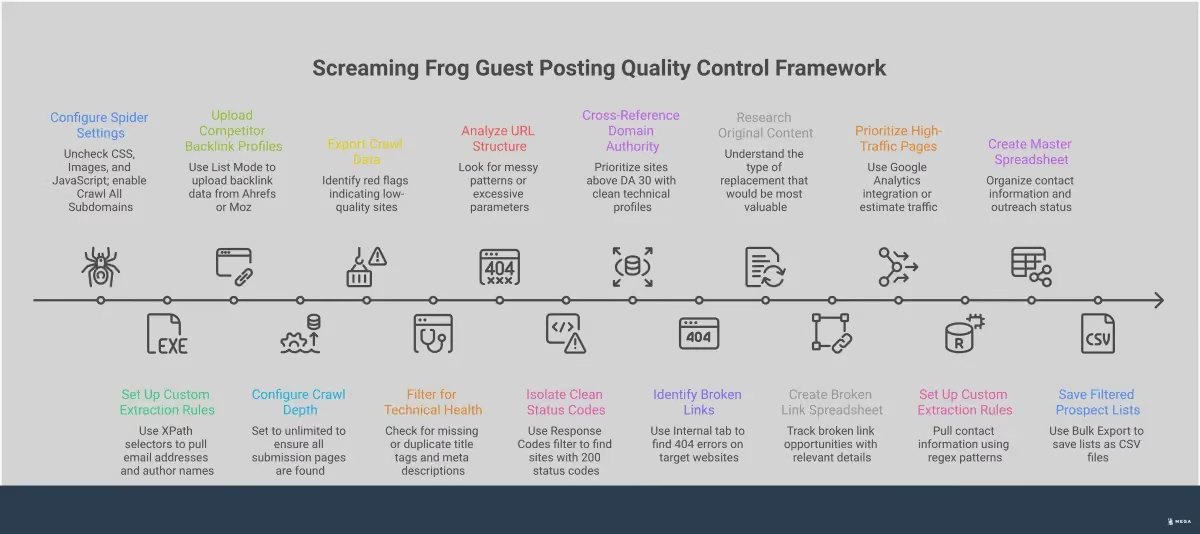
To get started, open the spider configuration menu by going to Configuration > Spider. The goal here is to streamline your crawl by focusing only on a website’s HTML content. First, check the box for ‘Crawl All Subdomains’ to get a complete picture of a larger site. Next, under the main configuration, uncheck resource-heavy elements like CSS, Images, and JavaScript. While these are critical for a full technical audit, they aren’t necessary for finding guest post pages and will only slow down your crawl. This simple adjustment helps you get to actionable data much more quickly.
Create Custom Extraction Rules for Outreach Data
This is where you can get specific with your data collection. Screaming Frog’s Custom Extraction feature (Configuration > Custom > Extraction) lets you pull targeted information directly from a site’s HTML. Think about what you need for outreach: author names, social media profiles, or keywords like “guest post guidelines.” You can set up rules that use XPath or CSS selectors to grab this text from every page the spider crawls. For example, you could create a rule to extract any email addresses it finds. This turns a general site crawl into a targeted prospecting tool, building a list of potential contacts as it runs.
Set Your Crawl Depth and User-Agent
Finally, let’s look at two settings that control your crawl’s scope and identity. First is crawl depth (Configuration > Spider > Limits), which determines how many clicks from the start URL the spider will travel. For prospecting, you want to analyze an entire site, so it’s best to leave this limit unchecked for an unlimited depth. This ensures you don’t miss a “write for us” page buried deep in the site structure. Second, check your User-Agent (Configuration > User-Agent). This tells a server what is visiting the site. Some sites may block the default Screaming Frog bot, so setting it to a common browser like Chrome can help your crawl run without interruption.
Analyze Data to Find Quality Guest Post Sites
Once you’ve crawled a list of potential guest posting targets, you’ll have a mountain of data. The next step is to turn that data into a shortlist of high-quality opportunities. A large list of low-quality sites won’t help you grow. Vetting each site for authority, relevance, and technical health ensures your outreach efforts are spent on partners that will actually move the needle for your business.
This analysis is a critical part of any link-building strategy. It’s about looking beyond a site’s homepage and understanding its true quality. While our SEO agent, the SEO Agent, automates this entire vetting process, learning how to do it manually gives you a powerful skill for managing your brand’s online presence. By focusing on the right metrics, you can identify websites that are a perfect fit for your content and will provide a valuable, authoritative backlink.
Check Domain Authority and Link Metrics
Domain authority is a helpful score for quickly gauging a site’s overall strength and trustworthiness. Screaming Frog allows you to connect to the APIs of tools like Moz or Ahrefs to pull these metrics directly into your crawl report. This lets you see the authority scores for every URL in your list without having to check them one by one.
When you review the data, sort your list by domain authority to see the strongest candidates at the top. However, don’t automatically discard sites with lower scores. A niche blog with a highly engaged, relevant audience can be more valuable than a generic site with a higher authority score. Use these link metrics as a first-pass filter to prioritize your list, not as the final word.
Review Content Relevance and Site Structure
A backlink is only valuable if it comes from a relevant website. Your Screaming Frog crawl gives you all the data you need to assess relevance without visiting hundreds of pages manually. Start by looking at the Page Titles, H1s, and H2s from your crawl export. Do the topics align with your industry and expertise? Would your guest post feel at home among their existing articles? If a pet grooming business sees titles about auto repair, it’s clearly not a good fit.
You can also get a sense of the site’s quality by looking at its structure in the crawl. A well-organized site with a clear URL structure is a positive sign. On the other hand, a site with messy URLs, duplicate content, or many broken links might be poorly maintained, making it a less desirable partner.
Evaluate Technical SEO Health
A technically sound website is a strong indicator of a quality, well-maintained publication. If a site owner cares about their technical SEO, they likely care about publishing high-quality content, too. Screaming Frog is the perfect tool for a quick technical health check. In your crawl data, look for red flags that might signal a low-quality site.
Pay close attention to the status codes. A high number of broken links (4xx errors) suggests the site is not regularly updated. You should also check for missing or duplicate title tags and meta descriptions, as these are basic on-page SEO elements that a quality site will have in order. A clean technical SEO profile means the site is in good standing with search engines, and any link you get from it will carry more weight.
How to Extract and Organize Your Prospect List
Once your crawl is complete, you have a massive amount of raw data. The next step is to turn that data into a clean, actionable list of guest posting prospects. Organizing this information properly is key to running an efficient outreach campaign. Instead of getting lost in data, you can systematically identify the best opportunities and build a targeted contact list that’s ready for your pitch. This process ensures you focus your energy on sites that are most likely to respond.
Export Crawl Data for Your Outreach List
First, you need to get your data out of Screaming Frog and into a format you can work with. The tool allows you to export crawl data into a CSV or Excel file. Simply use the “Bulk Export” menu to save specific reports, like all inlinks or pages with custom extractions. Working in a spreadsheet lets you sort, filter, and add notes, transforming a raw data dump into a structured outreach plan. This step is foundational for organizing your list and tracking your progress.
Filter and Sort Potential Targets
With your data in a spreadsheet, you can start filtering for the best opportunities. One effective tactic is to look for broken links by isolating pages that return a 404 status code. These broken pages are prime targets because you can pitch your guest post as a helpful replacement for their dead link. This approach provides immediate value to the site owner and makes your outreach email much more compelling than a generic request. By focusing on these specific SEO issues you can fix, you streamline your efforts and increase your chances of getting a positive response.
Build Your Contact Database
The final step is to build a clean and organized contact database. Create a new spreadsheet with columns for the target website, the specific page you’re interested in, the author or editor’s name, their email, and your outreach status. As you review your filtered data, populate this sheet with your top prospects. For more advanced users, you can even connect Screaming Frog to other tools via its API to pull in more detailed information automatically. This database becomes your central hub for managing your entire guest posting campaign.
Common Screaming Frog Mistakes to Avoid
Screaming Frog is a powerful tool, but a few common missteps can lead to wasted time and poor results. By being mindful of these potential pitfalls, you can make your guest posting research much more efficient and effective. The key is to focus your efforts on gathering clean, relevant data that points you toward high-quality opportunities.
Avoid Configuration Errors
One of the easiest mistakes to make happens before you even start your crawl. A default configuration can pull in a lot of unnecessary data, slowing down the process and cluttering your results. To avoid this, go into the spider configuration menu before you begin. For guest post prospecting, you can often uncheck resource-heavy elements like images, CSS, and JavaScript. This tells the tool to focus only on the HTML, which is where you’ll find the links and content you need. This simple tweak creates a faster, more targeted crawl, saving you valuable time. For a full walkthrough, check out a beginner’s guide to the tool’s settings.
Sidestep Data Analysis Pitfalls
Once your crawl is complete, it’s easy to feel overwhelmed by the sheer volume of data. A common pitfall is trying to analyze everything at once or exporting a raw, unfiltered spreadsheet. Instead of getting lost in the data, focus only on the columns relevant to your goal. For guest posting, you’ll want to look at outlinks, anchor text, and status codes to find “write for us” pages or author bios. Filter out the noise and export a clean list. The goal isn’t to create a massive report; it’s to build a short, actionable list of prospects. Remember to properly utilize Screaming Frog by turning raw data into a clear, prioritized outreach plan.
Prevent Low-Quality Outreach
Finding a site that accepts guest posts is only half the battle. The biggest mistake is failing to vet the quality of the site itself. A backlink from a low-quality, spammy, or poorly maintained website won’t help your SEO and could even hurt it. Use your crawl data to look for red flags. Does the site have a high number of broken links? Is the content thin or outdated? Failing to set expectations for what makes a good partner is a critical error. Your outreach efforts are valuable, so spend them on sites that will provide a meaningful boost to your domain authority.
How This Fits Into MEGA AI’s SEO Workflow
While using Screaming Frog for manual guest post prospecting is a powerful technique, it highlights the work required to build a scalable link-building engine. For small business owners and time-strapped marketing managers, dedicating hours to crawling and filtering data isn’t always feasible. This is where an automated approach comes in. At MEGA AI, our process mirrors the logic of a manual Screaming Frog crawl but executes it autonomously. Our SEO agent, the SEO Agent, handles the entire workflow—from identifying targets to creating and placing content. Understanding the manual steps helps you appreciate the complexity AI can simplify.
How Our AI Agent, the SEO Agent, Automates Guest Posting
Our AI agent, the SEO Agent, handles the entire guest posting lifecycle. It starts with automated keyword research to identify content gaps and topics that will resonate with your audience and potential host sites. From there, the SEO Agent generates expert-level articles ready for outreach. Instead of you manually crawling for prospects, the SEO Agent continuously scans the web for relevant, high-authority sites. Our system also includes a Link Manager that automatically refreshes internal links to ensure your site’s link structure remains healthy. This end-to-end automation turns a time-consuming task into a consistent, hands-off growth strategy.
Why We Run Technical Audits Before Outreach
Before reaching out to a potential guest post partner, it’s crucial to assess their website’s technical health. Linking to a site with broken links or slow load times can reflect poorly on your brand and dilute the SEO value of the backlink. A technical SEO audit acts as a quality check. The SEO Agent automates this vetting process, crawling potential partner sites to identify red flags, just as you would with Screaming Frog. We prioritize partners with strong technical foundations to ensure every backlink is a high-quality endorsement. This protects your site’s reputation and contributes positively to your SEO performance.
How to Integrate This with Content and Link Building
A successful guest posting strategy must be integrated with your broader content and link-building efforts. The data from a site crawl informs which content to create and which internal pages to link to in your guest post. For example, finding a partner’s popular but outdated article presents an opportunity to pitch a fresh take. MEGA AI’s platform handles this integration automatically. The SEO Agent not only finds guest post opportunities but also performs continuous content optimization on your own site. This creates a healthy ecosystem where guest posts drive traffic to high-quality pages, creating a powerful and sustainable link-building strategy.
Advanced Screaming Frog Techniques for Guest Posting
Once you’ve mastered the basics of crawling competitor backlinks and finding sites with “write for us” pages, you can move on to more advanced techniques. These methods are about working smarter, not just harder. Instead of generating massive, unfiltered lists of potential sites, you can use Screaming Frog’s more powerful features to create highly targeted, data-rich prospect lists from the start. This approach saves significant time during the analysis phase and leads to a higher success rate for your outreach campaigns.
Think of it as refining your raw materials. A basic crawl gives you a block of marble, but advanced techniques provide the chisel to sculpt it into something useful. By customizing your crawls and integrating other data sources, you can automate the tedious parts of prospecting and focus your energy on what matters: building relationships and writing great content. This is a core principle behind our own SEO agent, the SEO Agent, who uses automation to execute link-building strategies efficiently. These techniques will help you bring a similar level of efficiency to your manual outreach efforts.
Use Custom Filters for Better Targeting
Screaming Frog’s custom extraction feature is one of its most powerful tools for targeted prospecting. Instead of just collecting URLs, you can configure the spider to pull specific pieces of information directly from the HTML of the pages it crawls. For guest posting, this means you can automatically find and extract email addresses, author names from bio pages, or links to social media profiles. You can set up rules to find specific footprints that signal a site accepts guest content, even if they don’t have an obvious “write for us” page.
For example, you can use custom extraction to find pages that contain specific phrases like “guest post by” or “contributing author.” This allows you to build a list of sites that are already publishing guest content. As one user noted, you can even use it to find specific elements like embedded forms and “pull out details like the page URL, form ID, and the text on the form.” This level of detail turns a simple list of URLs into an actionable outreach database.
Automate Your Data Processing
Manually enriching your prospect list with SEO metrics is time-consuming. A great way to streamline this is by connecting Screaming Frog to other tools through their APIs. By integrating with platforms like Ahrefs, Moz, or Google Analytics, you can pull crucial data points like Domain Authority, page traffic, or keyword rankings directly into your crawl results. This eliminates the need to export multiple spreadsheets and merge them manually.
This integration provides a complete picture of a prospect’s value in a single view. For instance, connecting to the Google Analytics API can help you find pages on your own site that have good traffic but few backlinks, making them perfect candidates to support with a new guest post. Combining Screaming Frog data with analytics helps you “find pages that have no views, which Google Analytics might not show you directly,” allowing you to prioritize your content and link-building efforts more effectively.
Track Your Outreach Success
Your work isn’t finished once a guest post is published. It’s important to monitor your hard-earned backlinks to ensure they continue to provide value. Screaming Frog can be used to automate this process. By scheduling regular crawls of the pages where your guest posts are live, you can keep an eye on important changes. You can verify that your link is still present, check if it has been changed from “dofollow” to “nofollow,” or see if the page’s title or content has been significantly altered.
This ongoing monitoring helps you protect your investment. As one SEO professional mentioned, “Tracking your website crawls over time helps you see how your SEO efforts are changing things.” If you find a broken link or an issue with your guest post, you can reach out to the site editor to get it fixed. This proactive approach to link building ensures your guest posting strategy delivers long-term results for your business.
How to Scale Your Guest Posting Efforts
Finding a few guest post opportunities is a good start, but creating a steady stream of high-quality backlinks requires a scalable system. Once you’re comfortable with the basics, you can use Screaming Frog to move from manual, one-off searches to an efficient, large-scale outreach program. This involves creating repeatable processes, managing your campaigns effectively, and measuring what matters. By systemizing your approach, you can build a powerful link-building engine that consistently drives results for your business.
Build Repeatable Processes
Scaling any marketing activity starts with creating a consistent, repeatable workflow. Instead of starting from scratch with every search, you can configure Screaming Frog to run the same checks every time you look for new prospects. Use the custom extraction feature to automatically pull specific footprints, like pages containing phrases such as “write for us” or “guest post guidelines.” You can save these configurations to create a prospecting template. This ensures you apply the same quality criteria to every site you analyze, helping you build a high-quality prospect list much faster.
Manage Large-Scale Outreach Campaigns
As your prospect list grows from dozens to hundreds of sites, manual management becomes impossible. This is where Screaming Frog’s “List mode” becomes essential. Instead of crawling an entire website, you can upload a list of specific URLs you want to check. This is perfect for periodically re-validating your prospect list. For example, you can run your list through a crawl every quarter to check for broken links, updated contact pages, or changes to guest post guidelines. This keeps your outreach database fresh and accurate, improving your response rates and overall campaign efficiency.
Measure Your ROI and Success
To justify the time and effort spent on guest posting, you need to track your return on investment. Screaming Frog allows you to export all crawl data into a spreadsheet. You can use this data to build a master outreach tracker, monitoring metrics like prospects identified, emails sent, replies received, and links acquired. For deeper insights, integrate Screaming Frog with your Google Analytics account. This helps you identify which of your own pages have low traffic, making them perfect candidates for a promotional backlink from a future guest post. This connects your outreach efforts directly to tangible site performance goals.