
Is your paid advertising draining your budget without delivering the desired results? A well-structured paid advertising funnel can change that. This post reveals the core components of a high-converting funnel, from creating compelling ads to optimizing landing pages. We'll cover strategies to acquire leads cost-effectively, maximize ROI, and scale your paid ads funnel for consistent growth. Get ready to transform your advertising into a predictable revenue stream.
Key Takeaways
- Know your signup value: Calculate the average revenue generated per signup to set realistic ad budgets and measure campaign effectiveness.
- Optimize every step: From platform selection to landing page design, refining each element of your funnel is crucial for maximizing conversions.
- Track, analyze, and adapt: Regularly monitor key metrics, use data to inform decisions, and stay flexible to maintain a profitable paid ads strategy.
Understanding the Paid Advertising Funnel
An advertising funnel is a step-by-step process illustrating how people discover your product and ultimately make a purchase. It's visualized as a funnel—wide at the top where many people encounter your ads, and progressively narrowing toward the bottom where fewer people convert into paying customers. This model helps businesses understand the customer journey and tailor advertising strategies for better results.
Think about your own online shopping habits. You rarely see an ad and immediately buy the product. Most customers interact with a brand multiple times (seven is the average) before purchasing. A well-structured paid advertising funnel acknowledges this and helps maintain consistent contact throughout the customer journey, nurturing leads and building trust. This consistent engagement is key to turning initial interest into conversions.
Marketing funnels are crucial for reaching customers at every stage. From the initial awareness phase where potential customers first learn about your product, through consideration and decision, to the final action (the purchase), a funnel guides your messaging and ad targeting. Even after a purchase, the funnel plays a role in fostering customer loyalty and encouraging repeat business. This ensures your advertising efforts align with customer needs at every touchpoint.
A full-funnel strategy is more critical than ever. Customer behavior has changed, and a comprehensive approach is essential for success. A full-funnel strategy considers the entire customer lifecycle, from initial awareness to post-purchase engagement. This allows you to optimize ad spend by targeting the right audience with the right message at the right time, maximizing your return on investment.
A paid advertising funnel acts as a roadmap, guiding customers through their buying process from initial discovery to repeat purchases. It uses ads to connect with customers at each stage, providing relevant information and incentives that encourage purchases. By understanding and implementing a robust paid advertising funnel, you can transform your advertising into a predictable and profitable system. For businesses seeking to automate and optimize this entire process, MEGA SEO offers tools and resources to streamline your paid advertising strategy. Learn more about how MEGA SEO can help.
What is a Paid Advertising Funnel?
A profitable paid ads funnel is a structured approach to converting leads into customers through targeted advertising. It’s a system designed to guide potential customers through a series of steps, from initial awareness to final purchase. A well-crafted funnel allows businesses to manage their marketing spend effectively and maximize their return on investment. As Matt Diggity explains, a profitable paid ads funnel can feel like “an infinite money glitch machine,” generating consistent revenue through optimized ad strategies. Learn more about why paid ads are profitable.
Stages of the Paid Advertising Funnel
The paid advertising funnel, often visualized as a roadmap, outlines the customer journey toward a purchase. It’s a helpful framework for understanding how to connect with potential customers at each stage, guiding them toward becoming loyal brand advocates. Think of each stage as a rung on a ladder, leading customers closer to a purchase with each step.
Awareness
At the top of the funnel is the awareness stage. Here, potential customers might not even know they have a problem your product solves. Your goal is to introduce your brand and capture their attention. Think broad reach, engaging content, and sparking curiosity. As Amazon Ads explains, this is the first step in the customer's journey, laying the foundation for a future relationship.
Consideration
Once customers are aware of your brand and the problem you solve, they enter the consideration phase. Now, they're actively researching solutions and comparing different options. This is where a tool like MEGA SEO can help you automate keyword research to understand what your target audience is searching for. Your job in this stage is to showcase your product's unique value proposition and build trust. Neighbourhood emphasizes the importance of using social proof, like reviews and testimonials, to demonstrate why your product stands out from the competition. Consider offering free resources or lead magnets to capture contact information and nurture these potential customers.
Conversion
This stage is all about turning interested prospects into paying customers. A seamless website experience, clear calls to action, and excellent customer service are essential for driving conversions. Optimizing your landing pages is crucial during this phase. Amazon Ads highlights the importance of making it easy for customers to complete their purchase. A/B testing different landing page variations can help you identify what resonates best with your audience and drives the highest conversion rates. This is another area where MEGA SEO can assist by automatically generating and testing different versions of your landing page copy.
Loyalty/Engagement
The journey doesn't end with a sale. Nurturing customer relationships and fostering loyalty is key for long-term success. This involves providing ongoing value, personalized communication, and building a strong community. Amazon Ads points out that this stage focuses on keeping customers coming back for more. Consider implementing a loyalty program, offering exclusive discounts, or providing personalized content to keep your customers engaged and satisfied. MEGA SEO can help automate these processes, making it easier to maintain consistent communication and nurture customer relationships.
Why a Full-Funnel Approach Matters
A full-funnel paid media strategy considers the entire customer lifecycle, from initial awareness to repeat business. It involves strategically using paid advertising across all stages of the funnel, ensuring a consistent and engaging brand experience. This approach allows you to connect with potential customers at every touchpoint, maximizing your chances of converting them into loyal brand advocates. The Graygency offers a comprehensive guide to full-funnel paid media marketing, explaining how it maximizes the impact of your advertising efforts. By addressing the needs of customers at each stage, you build a stronger brand presence and drive sustainable growth.
Mapping the Customer Journey
Understanding how customers interact with your brand at each stage of the funnel is crucial for a successful full-funnel strategy. This involves analyzing customer behavior, identifying touchpoints, and tailoring your messaging to resonate with their specific needs and motivations. By understanding the customer journey, you can identify areas for improvement in your funnel and optimize your advertising spend for maximum impact. The Graygency emphasizes the importance of mapping the customer journey to create a cohesive and effective advertising strategy. Tools like Google Analytics can provide valuable insights into customer behavior, helping you refine your approach and target your ads more effectively.
Non-Linear Customer Journeys
It's important to remember that customer journeys aren't always a straight line. Customers might skip stages, revisit previous stages, or take an entirely different path. This is where flexibility and adaptability become essential. Neighbourhood reminds us that flexibility is key in your paid media approach, and being prepared to adapt to non-linear journeys is essential. By monitoring customer behavior and adjusting your strategy accordingly, you can ensure that your message reaches the right audience at the right time, regardless of their path to purchase.
Impact of the Pandemic on Customer Behavior
The pandemic significantly shifted consumer behavior, accelerating the adoption of digital channels and changing purchasing habits. This shift has made a full-funnel strategy even more critical for businesses looking to connect with their target audience. Neighbourhood notes that a full-funnel strategy is more critical than ever in this evolving landscape, allowing businesses to adapt to changing customer needs and maintain a competitive edge. By embracing a full-funnel approach, you can effectively navigate the complexities of the modern digital landscape and build lasting relationships with your customers.
Is There a Paid Ads "Infinite Money Glitch"?
The “infinite money glitch machine” analogy describes the potential of paid advertising to generate consistent profits. It’s not about a literal glitch, but rather the power of a well-oiled funnel to acquire leads at a low cost and convert them into paying customers. Diggity emphasizes that acquiring leads for under $10, especially on platforms like Meta, Google, and YouTube, is key to unlocking this profit potential. This highlights the importance of cost-effective lead acquisition in building a sustainable advertising strategy.
Build a Paid Ads Funnel: Key Components
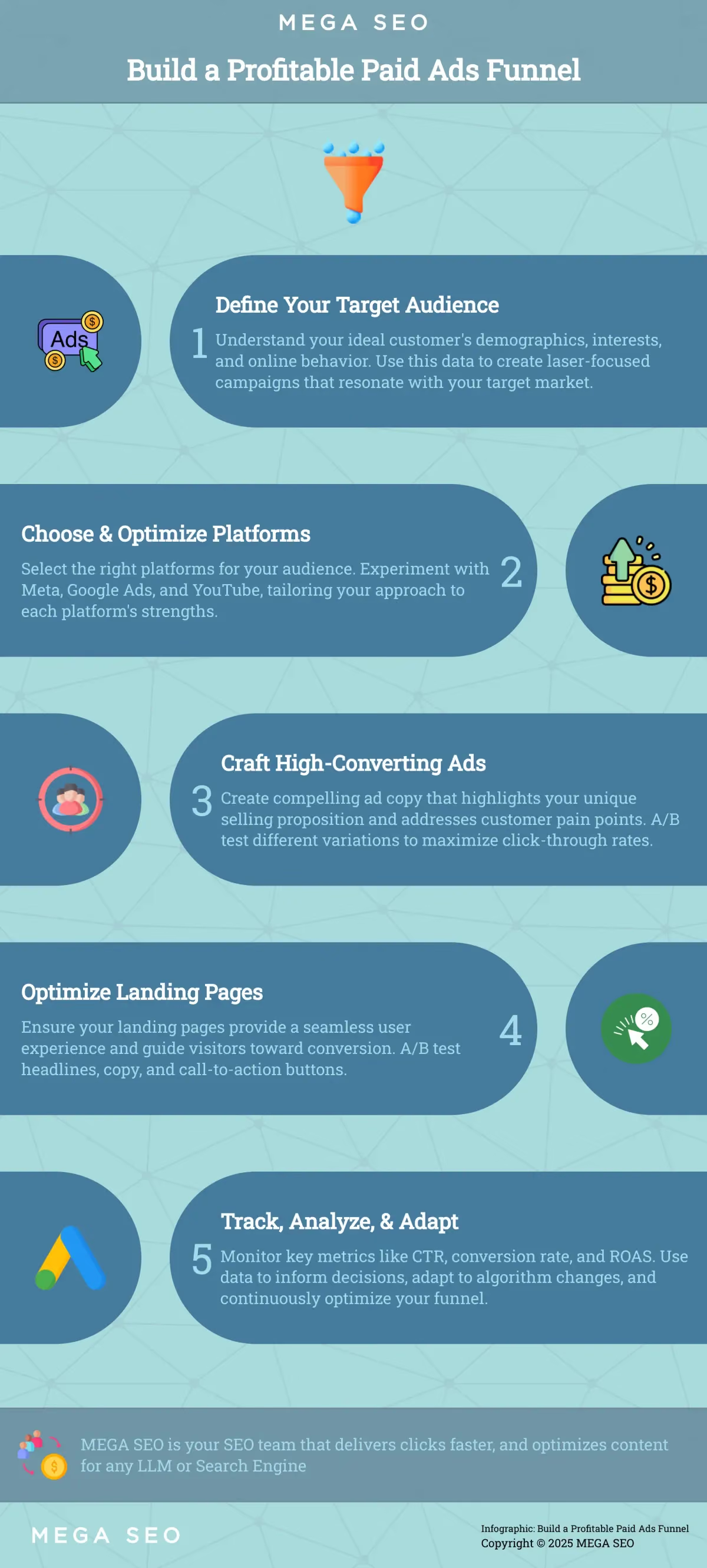
Building a successful paid ads funnel involves several key components working together seamlessly:
-
Lead Acquisition Marketing: This focuses on attracting and nurturing potential customers. A strong lead acquisition strategy is the foundation of a high-performing funnel, ensuring a steady stream of qualified leads entering the pipeline.
-
Conversion Funnel Structure: A well-defined structure guides potential customers through the stages of the buying process. This structure ensures that prospects receive the right information at each stage, increasing the likelihood of conversion.
-
Optimization Techniques: Continuously optimizing your funnel is crucial for maximizing its effectiveness. This includes enhancing landing pages for search engine optimization (SEO), testing call-to-action buttons, ensuring mobile responsiveness, and leveraging marketing automation. Explore various optimization techniques to refine the user experience and improve conversion rates.
Identifying Initial Touchpoints
Where do your ideal customers spend their time online? Identifying the right platforms is the first step. Are they scrolling through Instagram, searching on Google, or watching videos on YouTube? Understanding your target audience’s online behavior is crucial for choosing effective advertising channels. This aligns with the core principle of a marketing funnel, which maps the customer journey from initial contact to final purchase. Consider platforms like social media, search engines, and relevant websites where your audience is most active. This targeted approach ensures your ads reach the right people, maximizing your chances of engagement and conversion.
Key Moments in Each Stage
Once you’ve identified your initial touchpoints, map the key moments in each stage of the customer journey. What actions do you want customers to take? A website visit? Signing up for your email list? Downloading a resource? Defining these key moments helps you create targeted ads and landing pages that guide prospects toward the desired action. As Neighborhood suggests, understanding these key moments, like website visits and email interactions, is essential for a successful paid media funnel. This strategic approach ensures a smooth and engaging customer experience, increasing the likelihood of conversion at each stage.
Offers and Incentives
Everyone loves a good deal. Strategic offers and incentives are essential for enticing customers to move through your funnel. Think free trials, discounts, exclusive content, or early bird access to new products. These incentives not only attract new customers but also encourage existing leads to take the next step. Neighborhood emphasizes the importance of such offers in driving customer engagement and conversions within the paid media funnel. Tailor your incentives to your target audience and the specific stage of the funnel for maximum impact.
Estimating Time in Funnel
How long does it typically take a customer to move from awareness to purchase? Understanding the average time spent in your funnel is crucial for optimizing your campaigns. If the sales cycle is longer, you’ll need to nurture leads with valuable content and targeted follow-ups. A shorter sales cycle might require a more direct approach. Neighborhood highlights this as a key consideration for optimizing the funnel’s effectiveness. This knowledge allows you to tailor your messaging and timing to the customer journey, improving conversion rates and maximizing your return on investment.
Addressing Drop-off Points
Where are people abandoning your funnel? Analyzing drop-off points is crucial for identifying areas for improvement. Are there technical issues with your landing page? Is your messaging unclear? Is the checkout process too complicated? By pinpointing these friction points, you can make strategic adjustments to improve the user experience and increase conversions. Regularly analyzing and addressing these drop-off points, as recommended by Neighborhood, is essential for maintaining a healthy and high-converting paid media funnel. This proactive approach ensures that you’re constantly refining your funnel for optimal performance.
How Much is a Signup Worth?
Before diving into paid advertising, you need to understand the value of a signup. This metric is crucial for determining the profitability of your campaigns. The value of a signup represents the average revenue generated by each person who signs up for your email list or creates an account. Think of it as the lifetime value of a customer acquired through your signup process.
Calculating Signup Value for Your Paid Ads Funnel
Calculating signup value is straightforward. Take the total revenue generated by signup customers and divide it by the total number of signups. As Matt Diggity explains in his video on paid advertising, this simple calculation gives you a clear picture of how much each signup is worth to your business. For example, if your signup customers have collectively spent $10,000, and you’ve had 1,000 signups, then the value of each signup is $10.
This $10 represents the average amount you can expect each new signup to contribute to your revenue. Knowing this number is essential for setting profitable ad budgets and measuring the effectiveness of your campaigns. If you can acquire leads for less than your signup value, you’re on the path to a profitable paid advertising strategy.
Why Signup Value Matters for Paid Advertising
Understanding signup value is fundamental to effective paid advertising. It allows you to set realistic budget goals and measure the return on investment (ROI) of your campaigns. Paid advertising plays a vital role in boosting acquisition funnel performance, and knowing your signup value helps you optimize each stage. By understanding how much each signup is worth, you can determine how much you’re willing to spend to acquire a new lead.
This knowledge empowers you to make informed decisions about your ad spend and target your ideal audience effectively. Lead acquisition marketing is all about attracting and nurturing potential customers, and your signup value provides a concrete benchmark for evaluating the success of your efforts. It helps you focus on acquiring high-value leads that are more likely to convert into paying customers, ultimately maximizing the impact of your paid advertising campaigns.
How to Get $10 Leads
Getting leads for under $10 can feel like discovering a gold mine—especially when your paid ads funnel is profitable. This isn’t about tricks, but a strategic approach to making your marketing budget work harder. This section breaks down how to reach this $10 benchmark and why it’s crucial for sustainable growth.
Breaking Down the $10 Lead Acquisition Cost
Think of your $10 lead acquisition goal as a puzzle. One piece is your Cost Per Lead (CPL). Lowering your CPL involves careful channel selection and optimizing your lead generation process. This means attracting high-quality leads—people genuinely interested in your product—without overspending. Another piece is understanding your customer. What motivates them? What problems do they face? Knowing your audience helps you create focused ads that resonate, improving your click-through and conversion rates. Data analytics are the final piece. By analyzing metrics like click-through rates and cost per click, you can pinpoint what’s working, allowing you to refine your campaigns.
The Importance of Cost-Effective Leads
Cost-effective lead acquisition marketing is the engine of business growth. It’s how you find and nurture potential customers. Every dollar saved on acquiring a lead contributes to your profit. This allows you to reinvest in other business areas, like product development or team expansion. When you consistently acquire leads at or below $10, you create a foundation for long-term profitability. Tracking key metrics like conversion rates helps you understand the return on your ad spend. This data-driven approach is key for success in the competitive digital landscape.
Choosing the Right Paid Advertising Platform
Finding the right advertising platform is the first step toward a profitable paid ads funnel. Each platform attracts a different audience and offers unique ad formats. Understanding these nuances helps you target potential customers effectively.
Multi-Platform Strategies
Think of your paid advertising strategy as a multi-pronged approach. Different platforms cater to different audiences and offer unique advantages. A multi-platform strategy diversifies your reach, connecting with potential customers where they spend their time. Just like a marketing funnel guides customers through their buying journey, a multi-platform approach ensures you're present at every stage.
Understanding Channel Selection
Choosing the right channels is crucial. Consider your target audience, budget, and marketing goals. Are you targeting businesses or consumers? What content resonates with your ideal customer? Experimenting with different channels and analyzing the results is key to finding the perfect mix. Consider keyword strategies on platforms like Google Ads to refine your targeting.
Google Ads
Google Ads is a powerhouse for reaching potential customers actively searching for products or services like yours. Using a mix of general and specific keywords allows you to cast a wide net while also targeting those closer to making a purchase.
LinkedIn Ads
If you're in the B2B space, LinkedIn Ads are your secret weapon. You can target professionals based on their industry, job title, and even their company size. This laser-focused approach ensures your ads reach key decision-makers.
TikTok Ads
TikTok is the king of short-form video content. TikTok's unique format lets you create engaging, shareable content that resonates with a younger audience. If your target market is Gen Z or Millennials, TikTok is worth exploring.
Podcast Advertising
Podcast advertising is a growing market with highly engaged listeners. Partnering with the right podcasts is key to reaching a niche audience that aligns with your brand.
Video Advertising (YouTube, etc.)
Creating video ads is a powerful way to tell your brand story and connect with viewers. Short, engaging videos can capture attention and drive traffic to your website or landing pages.
Display Advertising Networks
Display advertising networks offer a cost-effective way to reach a wide audience through banner ads and other visual formats. They can be effective for building brand awareness and driving website traffic.
Amazon Advertising
If you're selling products on Amazon, Amazon Advertising is essential. With various ad formats, you can reach customers at every stage of their buying journey, from product discovery to purchase.
Relevance Scores and Monitoring
Once your multi-platform strategy is running, monitoring its performance is crucial. Pay attention to relevance scores (or similar metrics) on each platform. These scores indicate how well your ads resonate with your target audience. A low relevance score means your ads could be wasting your budget. Regularly reviewing and adjusting your campaigns based on these scores maximizes your ROI and keeps your paid ads funnel profitable.
Effective Meta Ads for Your Funnel
Meta’s platforms, including Facebook and Instagram, offer robust targeting options based on demographics, interests, and behaviors. Advantage+ Shopping Campaigns (ASC+) use machine learning to streamline ad delivery and optimize for conversions. Consider using ASC+ if your primary goal is driving sales through your ecommerce store. Visual storytelling works well on these platforms, so invest in high-quality images and videos. Remember to A/B test different ad creatives to see what resonates with your target audience. MEGA SEO can help automate this process.
Targeting Strategies for Meta Ads
Meta’s platforms, including Facebook and Instagram, offer robust targeting options based on demographics, interests, and behaviors. Consider your ideal customer. What are their age ranges, locations, hobbies, and online behaviors? These insights help create highly targeted ad campaigns, ensuring your message reaches the right people. This precision targeting maximizes your ad spend and improves your chances of conversion.
For e-commerce businesses, Advantage+ shopping campaigns (ASC+) leverage machine learning to optimize ad delivery and boost conversions. If driving sales is your primary goal, ASC+ might be a good fit. It streamlines the process, automating many of the manual adjustments required in traditional campaigns. This frees up your time to focus on other important aspects of your business, like creating compelling ad content.
Visual storytelling is essential on Meta platforms. Invest in high-quality images and videos that capture attention and communicate your brand's message effectively. A compelling visual can significantly impact user engagement. Experiment with different ad formats, from carousel ads showcasing a range of products to short, engaging video clips highlighting key features. MEGA SEO can assist in developing impactful visual content.
A/B testing is crucial for optimizing your Meta ads. Test different ad creatives, headlines, and calls to action. Even small changes can significantly affect your click-through and conversion rates. Regularly analyze your ad performance data and use these insights to refine your campaigns. This iterative approach ensures you're using the most effective messaging and visuals to reach your target audience.
Optimizing Your Google Ads
Google Ads, with its various campaign types, offers flexibility for different marketing objectives. Search Ads target users actively searching for specific keywords, making them ideal for businesses offering solutions to immediate needs. Promoting valuable content through Search Ads can be a successful top-of-funnel strategy. Ensure your ad copy clearly communicates the value proposition of your content. For visual products or services, consider using Google Display Ads, which appear on a network of websites across the internet.
Keyword Strategies for Google Ads
Keywords are the foundation of successful Google Ads campaigns. They’re the words and phrases that connect your ads with potential customers actively searching online for products or services like yours. A well-defined keyword strategy ensures your ads reach the right audience at the right time. This involves understanding different keyword types and how they align with the various stages of the advertising funnel.
Start with general keywords to cast a wider net and capture users at the top of the funnel who are still exploring their options. For example, if you sell handmade jewelry, general keywords might include "jewelry," "necklaces," or "earrings." These broader terms help increase brand visibility and reach a larger audience.
As users move down the funnel and their search becomes more specific, use long-tail keywords to target their refined needs. These longer, more specific phrases, such as "sterling silver pendant necklace" or "handmade beaded earrings," attract users closer to making a purchase. This targeted approach ensures your ads are shown to users who are most likely to convert, maximizing the efficiency of your ad spend. Consider user intent when selecting long-tail keywords, focusing on phrases that indicate a strong purchase intent.
Consider using negative keywords to refine your targeting further. These are words or phrases that prevent your ads from showing to users searching for irrelevant terms. For example, if you sell high-end jewelry, you might add negative keywords like "cheap" or "discount" to avoid attracting customers looking for budget-friendly options. This helps you focus your ad spend on users who are genuinely interested in your products, maximizing your return on investment. Tools like MEGA SEO’s free tools can help you identify relevant keywords and optimize your campaigns for better performance.
YouTube Ads Best Practices
YouTube offers a unique opportunity to engage your audience through video content. With various ad formats, including skippable in-stream ads and non-skippable bumper ads, you can tailor your approach to your budget and campaign goals. Consider using YouTube ads to build brand awareness at the top of the funnel and retargeting campaigns to drive conversions further down the funnel.
Comparing Paid Advertising Platforms
Once you’ve launched your campaigns, regularly analyze their performance. Tracking key metrics like return on investment (ROI), clickthrough rate (CTR), conversion rate, and cost per click (CPC) is crucial. Comparing these metrics across different platforms helps you identify which channels drive the best results for your business. MEGA SEO’s automated tools can streamline this process, providing insights into platform effectiveness and suggesting optimization strategies. Use this data to refine your campaigns, reallocate budget, and maximize your overall ROI. Experiment with different platforms and strategies to find the perfect mix for your business.
Create High-Converting Paid Ads
Once you’ve chosen your advertising platforms, focus on creating ad content that grabs attention and drives conversions. This stage is where your creativity and understanding of your target audience truly shine.
What Makes a Compelling Ad?
Think about what makes you click on an ad. It’s rarely the generic, bland promotions we see every day. Compelling ads offer something unique, whether it’s a surprising image, a thought-provoking question, or an irresistible offer. Start by identifying your unique selling proposition. What makes your product or service stand out? Use this as the foundation of your ad copy. Highlight the benefits, not just the features. What problem does your product solve for your customer? Address that directly. Finally, include a clear call to action. Tell people exactly what you want them to do, whether it’s “Shop Now,” “Learn More,” or “Download Our Guide.” MEGA SEO can help you generate ad copy variations.
Tailoring Ad Content to Each Platform
What works on Facebook might not resonate on Google. Each platform has its own nuances and best practices. Google Search Ads, for example, often perform well when promoting downloadable content or valuable resources. Make sure your ad copy clearly communicates this value proposition. On platforms like Meta, visuals are key. High-quality images and videos can significantly impact engagement. Consider the user experience on each platform. Are people scrolling quickly through their feeds, or are they actively searching for information? Tailor your content accordingly. Request a customized post from MEGA SEO to ensure your content is optimized for each platform.
A/B Testing Your Ad Creatives
Creating high-converting ad content isn’t a one-and-done process. It requires continuous refinement and optimization. A/B testing is your best friend here. Experiment with different headlines, images, calls to action, and even ad formats. Test different elements of your ads and landing pages to see what resonates best with your audience. Monitor key metrics like impressions, reach, clicks, click-through rate (CTR), and conversion rate to track the success of your A/B tests. Use this data to inform your decisions and continuously improve your ad performance. Hurrdat Marketing offers a great overview of the key metrics to track in your paid advertising campaigns. Don’t be afraid to experiment. The more you test, the better you’ll understand what works. Use MEGA SEO’s free tools to streamline your A/B testing process.
Optimize Landing Pages for Conversions
Once someone clicks your ad, they land on a page designed to convert them into a lead or customer. This is your landing page, and optimizing it is crucial for a profitable paid ads funnel. A well-structured conversion funnel is key to maximizing lead generation and improving sales.
Essential Landing Page Elements
Think of your landing page as the next step in the conversation you started with your ad. Maintain a consistent message and offer a clear, compelling reason for visitors to take action. Key elements include a headline that grabs attention, concise and benefit-driven copy, high-quality images or videos, and a prominent call to action. Don’t clutter the page with unnecessary distractions. Focus on guiding visitors toward the desired conversion, whether it’s signing up for a newsletter, requesting a demo, or making a purchase. MEGA SEO can help optimize landing pages for search engines, ensuring your target audience finds them.
A/B Test Your Landing Pages
Creating a landing page isn’t a one-and-done task. A/B testing is essential for continuous improvement. Experiment with different headlines, images, call-to-action buttons, and even page layouts. Test different elements of your ads and landing pages to see what resonates best with your audience. By tracking the performance of each variation, you can make data-driven decisions to improve your conversion rates. Consider which metrics are most meaningful for your business goals. Even small changes can yield significant results.
Tracking and Analytics for Your Paid Ads Funnel
After launching your paid ads, the next crucial step is tracking their performance. This involves monitoring key metrics, using the right tools, and leveraging the data to refine your strategies. Without proper tracking and analysis, you’re essentially working in the dark.
Metrics for Each Stage
Just like a video game, each stage of your paid ads funnel has its own objectives and metrics. Tracking these metrics is crucial for understanding customer behavior and optimizing your campaigns. Think of it like leveling up your marketing strategy.
Awareness Metrics
At the top of the funnel, your goal is to introduce your brand to potential customers. You want to get your name out there and make a good first impression. Key metrics at this stage include reach, impressions, and brand mentions. These metrics tell you how many people are seeing your ads and how often. This awareness stage is where customers first hear about your product.
Consideration Metrics
Once people are aware of your brand, the next step is to pique their interest. You want them to start considering your product or service as a solution to their needs. Key metrics at this stage include website clicks, time on site, and product page views. These metrics indicate how engaged potential customers are with your offerings. The consideration stage involves tracking how many people visit your product page and search for your brand.
Conversion Metrics
This is where the magic happens. The conversion stage is all about turning interested prospects into paying customers. Key metrics here include conversion rates, cost per conversion, and return on ad spend (ROAS). These metrics tell you how effectively your ads are driving sales and generating revenue. This stage focuses on tracking how many people buy your product.
Loyalty Metrics
Acquiring a new customer is great, but retaining them is even better. The loyalty stage focuses on building long-term relationships with your customers and encouraging repeat purchases. Key metrics include customer lifetime value (CLTV), repeat purchase rate, and customer churn rate. It's significantly more expensive to acquire a new customer than to retain an existing one. Focusing on loyalty can significantly impact your bottom line.
Key Metrics to Track for Paid Ads
Several key metrics offer insights into your campaigns’ effectiveness. Start by tracking impressions and reach to understand your ad visibility. Clicks and click-through rate (CTR) reveal how compelling your ads are and whether people want to learn more. Deeper down the funnel, track your conversion rate, cost per acquisition (CPA), and return on ad spend (ROAS). These metrics show how effectively your ads are driving desired actions and generating a return on your investment. Finally, consider monitoring your return on investment (ROI) and customer lifetime value (CLV) to understand the long-term profitability of your campaigns. For a helpful overview of paid advertising metrics, check out this article from Hurrdat Marketing.
Tools to Measure Ad Performance
Use the right tools to simplify the process and gain deeper insights. Google Search Console is invaluable for tracking organic search metrics like CTR and impressions, helping you understand how your organic presence complements your paid efforts. For paid campaigns, consider platforms like Adroll to monitor metrics like ROI and conversion rates across various channels. GetWPFunnels offers a beginner’s guide to understanding marketing funnel metrics. MEGA SEO also provides tools to help you track and optimize your SEO efforts, from keyword research to content generation and technical SEO improvements. Explore our free tools or book a demo for a more in-depth look.
Leveraging Marketing Automation
Marketing automation tools are essential for managing the complexities of paid advertising funnels, especially across multiple platforms. These tools act as your behind-the-scenes assistants, automatically moving customer data between systems, nurturing leads effectively, and freeing up your time to focus on strategy.
A key advantage of marketing automation is streamlining repetitive tasks. This includes sending personalized emails, segmenting audiences, and tracking campaign performance. Automating these processes improves efficiency and reduces human error, allowing you to scale your campaigns and reach a wider audience without increasing your workload. Tools like ActiveCampaign and HubSpot offer robust features for managing your marketing automation strategy. MEGA SEO also integrates with popular marketing automation platforms, further enhancing your ability to manage and optimize paid advertising funnels.
Regularly analyzing data is crucial for successful marketing automation. A/B testing different campaign elements—such as email subject lines, landing page copy, and ad creatives—helps identify what resonates with your audience. This data-driven approach ensures that you’re continuously optimizing your funnel for conversions. As experts point out, this iterative process of analyzing data, A/B testing, and adjusting your strategy is key for staying ahead and maximizing your return on ad spend. A profitable paid ads funnel is dynamic and requires constant refinement.
Data-Driven Decisions for Paid Advertising
Don’t just collect data—use it. A high CTR but a low conversion rate, for example, might suggest a disconnect between your ad copy and your landing page content. Perhaps your ad promises something your landing page doesn’t deliver. A/B testing different ad elements and landing page variations can help pinpoint what resonates with your audience. Continuously analyzing your data and making informed adjustments is key to optimizing your paid ads funnel and maximizing your ROI. For customized support in optimizing your content and SEO strategy, check out MEGA SEO’s options for customized posts and our available resources. You can also contact us directly to discuss your specific needs.
Scaling Your Paid Ads with a Conversion Funnel
Once your paid ads funnel generates leads and conversions, it’s time to scale and maximize your return on investment. Scaling involves strategically expanding your reach, managing increased ad spend, and maintaining profitability as you grow.
Expanding Your Reach with Paid Ads
Start by revisiting your target audience. Are there other demographics or interests you could target? Consider expanding your keyword research to capture more relevant search terms and long-tail keywords. Diversifying your advertising platforms is another effective strategy. If you’ve primarily focused on Meta, explore Google Ads or YouTube Advertising. Test new channels and audiences to see what resonates with your brand and drives the most conversions. Lead acquisition marketing plays an important role, enabling businesses to identify, attract, and nurture potential customers. Don’t forget about retargeting strategies to re-engage potential customers and bring back abandoned cart users. Consider optimizing landing pages for SEO and testing call-to-action buttons. Ensure your website uses a responsive design for mobile devices and implement marketing automation tools.
Managing Increased Ad Spend
As you scale, your ad spend will naturally increase. It’s crucial to manage this increase effectively to avoid overspending and maintain a positive ROI. Start by carefully analyzing your current campaign performance. Identify your top-performing campaigns and keywords. Allocate a larger portion of your budget to these high-performing areas. Regularly review and adjust your budget allocation based on performance. This dynamic approach ensures that resources are allocated effectively. Consider using automated bidding strategies offered by platforms like Google Ads and Meta. These tools leverage machine learning to optimize your bids and maximize your conversions. Understanding paid advertising is crucial for boosting acquisition funnel performance. Platforms like Meta’s Advantage+ Shopping Campaigns (ASC+) and Google’s Performance Max (PMax) can streamline campaign management and improve results.
Maintaining Profitability While Scaling
Scaling your paid ads funnel shouldn’t come at the expense of profitability. Closely monitor key metrics like impressions, reach, clicks, clickthrough rate (CTR), conversion rate, cost per acquisition (CPA), return on ad spend (ROAS), return on investment (ROI), and customer lifetime value (CLV). These metrics provide valuable insights into your campaigns’ effectiveness and help you identify areas for improvement. Focus on optimizing your landing pages for conversions. A high-converting landing page can significantly impact your CPA and overall profitability. Continuously test different elements of your landing pages, such as headlines, copy, and call-to-action buttons, to find what works best. Reducing your cost per lead (CPL) is essential for maintaining profitability. This requires a strategic approach that combines marketing expertise with data analysis and a deep understanding of consumer behavior. MEGA SEO’s automated tools can help you optimize your entire SEO strategy, from keyword research and content generation to technical SEO improvements and content maintenance, allowing you to scale efficiently and profitably. Book a demo to see how MEGA SEO can help you take your paid ads funnel to the next level.
Common Paid Ads Mistakes to Avoid
Even with a solid plan, paid advertising can be tricky. Let’s explore some common pitfalls and how to address them.
Avoid These Costly Paid Advertising Mistakes
One of the biggest mistakes is not knowing your audience. Without a defined target audience, your ads become generic and ineffective, wasting your budget and missing opportunities to connect with potential buyers. Take the time to research your ideal customer. What are their demographics, interests, and online behavior? Use this information to create laser-focused campaigns. MEGA SEO’s customized posts can help you define your target audience and create highly effective campaigns.
Another common error is setting unclear campaign goals. Are you aiming for brand awareness, website traffic, or direct sales? Each objective requires a different approach. Define your goals from the outset to guide your strategy and measure success accurately.
Troubleshooting Your Paid Ads Campaigns
If your campaigns aren’t delivering the desired results, don’t panic. Start by analyzing your ad performance data. Look at metrics like click-through rate (CTR), conversion rate, and cost per conversion. Low CTR may indicate weak ad copy or irrelevant targeting. A low conversion rate could point to issues with your landing page or sales process.
Next, review your keyword selection. Are you bidding on the right terms? Are your keywords too broad or too narrow? Refine your keyword list based on performance data and competitor research. Consider using negative keywords to exclude irrelevant searches. MEGA SEO offers free tools to help you analyze and improve your campaigns.
Adapting to Algorithm Changes
Advertising platforms like Google and Meta constantly update their algorithms. What worked last month might not work today. Stay informed about platform changes and adjust your strategies accordingly. This might involve testing new ad formats, revising your bidding strategy, or exploring new targeting options. MEGA SEO’s Maintenance Agent can automatically update your content to stay optimized, even after algorithm changes. Book a demo to see how it works.
Advanced Paid Advertising Strategies
Once you’ve built a solid foundation, these advanced strategies can further maximize your return on investment. Think of these as the fine-tuning steps that separate good campaigns from truly great ones.
MEGA SEO: Automating Your Paid Advertising Funnel
Feeling overwhelmed by the complexities of paid advertising? You're not alone. Managing bids, tweaking ad copy, and analyzing data across multiple platforms can feel like a full-time job. That's where MEGA SEO comes in. Our platform automates your paid advertising funnel from start to finish, so you can focus on what matters most: growing your business. We handle the heavy lifting, so you don't have to.
Imagine effortlessly scaling your campaigns, optimizing your landing pages, and making data-driven decisions, all without the manual effort. With MEGA SEO, this isn't a dream; it's a reality. We empower businesses of all sizes—from startups to SEO agencies—to achieve sustainable growth through automated SEO and paid advertising solutions.
How MEGA SEO Automates Your Funnel
MEGA SEO integrates with popular advertising platforms like Google Ads and Meta Ads, providing a centralized hub for managing your campaigns. Our automated bidding strategies leverage machine learning to optimize your bids in real-time, ensuring you get the most out of your ad spend. We also automate A/B testing for both ad creatives and landing pages, continuously refining your campaigns for optimal performance. This data-driven approach eliminates guesswork and maximizes your return on investment. Learn more about data-driven advertising.
Beyond automation, MEGA SEO offers powerful tools for keyword research, content generation, and technical SEO improvements. Our platform ensures your landing pages are optimized for search engines, attracting organic traffic and complementing your paid advertising efforts. We even handle ongoing content maintenance, automatically updating your content to stay optimized, even after algorithm changes. This comprehensive approach ensures your paid advertising funnel is always performing at its best. Book a demo to see how MEGA SEO can transform your paid advertising strategy.
Benefits of Automating with MEGA SEO
Automating your paid advertising funnel with MEGA SEO offers several key benefits. First, it saves you time and resources. Our platform handles the tedious tasks, freeing up your team to focus on strategic initiatives. Second, it improves campaign performance. Our automated bidding and A/B testing features ensure your campaigns are always optimized for maximum conversions. Finally, it provides valuable data and insights. MEGA SEO offers comprehensive analytics and reporting, giving you a clear understanding of your campaign performance and empowering you to make informed decisions. Contact us to learn more about how MEGA SEO can benefit your business.
Retargeting and Remarketing
Retargeting is like a friendly reminder for potential customers who have shown interest but haven’t yet converted. Maybe they visited your site, added an item to their cart, or even interacted with your ad. Retargeting campaigns re-engage these users with tailored messaging, gently nudging them back toward a purchase. For example, you might offer a small discount or highlight the products they viewed. Optimizing landing pages for SEO and ensuring they’re mobile-responsive are crucial for capturing returning traffic. Don’t forget about clear call-to-action buttons—test different variations to see what resonates best with your audience. Implementing marketing automation streamlines these processes, making retargeting even more efficient.
Personalizing Ads with Customer Data
The more you know about your customers, the better you can tailor your ads to their specific needs and interests. Lead acquisition marketing helps you identify and understand your target audience, enabling you to create highly personalized ad experiences. Use data like demographics, browsing history, and past purchases to segment your audience and deliver the right message at the right time. Personalized ads feel more relevant and are far more likely to grab attention and drive conversions.
Continuous Optimization and Testing
Paid advertising isn’t a set-it-and-forget-it endeavor. Continuous monitoring and optimization are key to long-term success. Keep a close eye on essential metrics like clickthrough rate (CTR), conversion rate, cost per acquisition (CPA), and return on ad spend (ROAS). If your CTR is high but your conversion rate is low, it might be time to revisit your landing page or ad copy. A/B testing different ad elements and landing page variations is crucial for identifying what works best. Regularly testing and tweaking your campaigns ensures you’re always getting the most out of your ad spend and achieving the highest possible ROI. Remember, even small changes can make a big difference. Use tools like Google Analytics to track your progress and make data-driven decisions. This constant refinement is what keeps your campaigns performing at their peak. You can also use this data to adjust your paid ad strategy and optimize for visibility on search result pages.