
Think of this guide as a report card for your marketing channels. From your email newsletter to your paid ad campaigns, each one should be graded on its performance. Too often, we stick with a channel because it’s familiar, not because it’s effective. This leads to wasted time and money. A marketing channel evaluation framework gives you a simple, structured way to analyze what’s working and what isn’t. We’ll walk you through how to score each channel based on its actual contribution to your business goals, so you can make data-driven decisions about where to invest your budget.
Key Takeaways
- Evaluate channels systematically: Use a consistent framework based on intent, attribution, cost, and scale to compare your marketing channels objectively and make data-driven decisions.
- Prioritize business-focused metrics: Measure success with metrics tied directly to revenue, such as customer acquisition cost and lifetime value, instead of vanity metrics like clicks or impressions.
- Optimize your budget with a consistent review cycle: Implement a regular process to shift funds from underperforming channels to proven performers and new experiments, using a balanced approach like the 70-20-10 rule.
What Is a Marketing Channel Evaluation Framework?
A marketing channel evaluation framework is a structured system for analyzing where you spend your marketing budget and determining what’s actually working. Think of it as a report card for all your channels, from Google Ads and social media to your blog and email newsletters. The goal is to move beyond guesswork and make data-driven decisions about where to invest your time and money for the best possible return.
Instead of spreading your budget thin or sticking with a channel just because you’ve always used it, a framework gives you a repeatable process for comparison. It helps you align your marketing efforts with your core business objectives, ensuring every dollar spent is pushing you closer to your goals. By regularly evaluating performance, you can identify which channels are driving high-quality leads and which are draining your resources without delivering results.
One popular example is the Bullseye Framework, which helps businesses systematically test various channels to find the one that offers the most traction. This approach prevents you from getting distracted by every new marketing trend and instead focuses your energy on what is proven to work for your specific business. Ultimately, any good framework relies on solid data. To evaluate your channels effectively, you need to track the right data points that reveal how well your campaigns are truly performing.
Why Most Marketing Budgets Miss the Mark
It’s a familiar story: you pour money into marketing, but the return on investment feels fuzzy at best. Many small businesses fall into the trap of spreading their budget too thin, trying to be active on every platform without a clear strategy. This "spray and pray" approach often comes from a fear of missing out, but it dilutes your impact and makes it nearly impossible to tell what’s actually working. Instead of doubling down on high-performing channels, resources get wasted on experiments that never gain traction.
Another common issue is focusing on the wrong metrics. It’s easy to get caught up in vanity metrics like likes, impressions, and even website traffic. While these numbers can feel encouraging, they don't always connect directly to business results. High-performing teams learn to ignore the noise and zero in on metrics that truly matter, such as lead quality, customer acquisition cost, and lifetime value. Without a clear way to measure marketing effectiveness, your budget decisions are based on guesswork, not growth.
Many of these issues stem from a few common mistakes, including a lack of marketing expertise, copying competitors without a tailored strategy, and poor budget allocation. Without a system to evaluate channels objectively, you risk investing in low-signal environments while overlooking opportunities with high-intent audiences. This is where an AI-powered agent for Paid Ads can make a difference by automatically shifting budget to campaigns that deliver real results. A structured framework helps you move from gambling with your budget to making calculated investments that fuel sustainable growth.
A 4-Pillar Framework for Evaluating Marketing Channels
Making smart decisions about your marketing budget can feel like a high-stakes game. It’s easy to spread your funds too thin across too many channels or to keep pouring money into a familiar one just because it’s what you’ve always done. A structured evaluation framework removes the guesswork and emotion from the equation, giving you a consistent way to measure every channel, from SEO to social media ads.
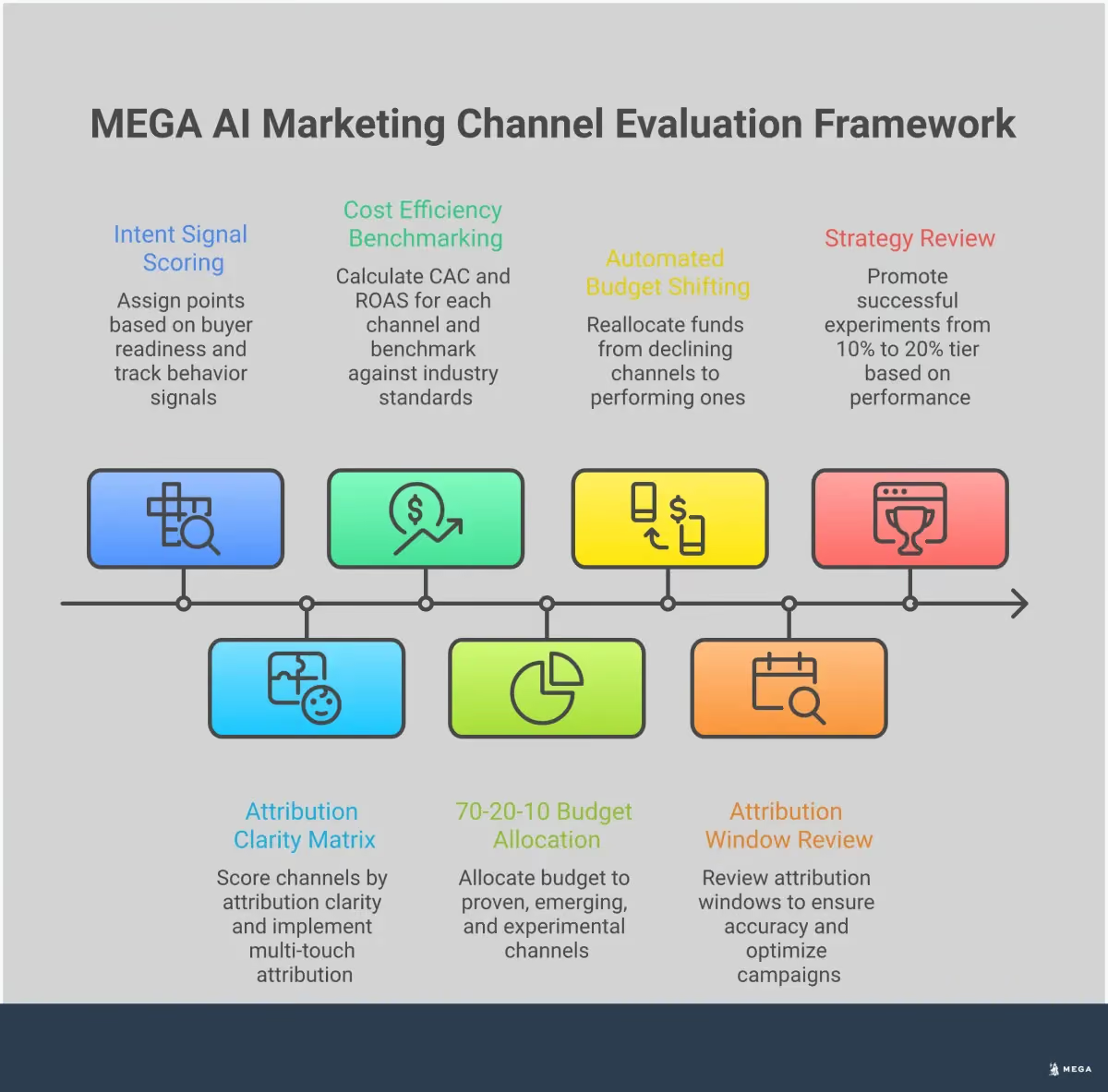
This framework is built on four core pillars: Strength of Intent, Clarity of Attribution, Cost Efficiency, and Potential for Scale. By analyzing each of your marketing channels through these four lenses, you can see which ones are truly driving growth and which are just draining your budget. This approach is especially critical for small businesses, where every marketing dollar has to count. It helps you move from hoping for results to building a predictable system for customer acquisition. With a clear framework, you can confidently allocate your budget to the channels that deliver the best returns and support your long-term goals.
Pillar 1: Strength of Intent
Strength of intent refers to how motivated a person is to make a purchase when they encounter your marketing. Someone searching Google for "emergency plumber near me" has extremely high intent, while someone scrolling through social media has very low intent. Understanding this difference is key. High-intent channels capture people who are actively looking for a solution you provide, which often leads to higher conversion rates and a shorter sales cycle. The right tools can help you spot high-intent buyers and personalize your outreach. When evaluating your channels, ask yourself: is this channel reaching people who are ready to buy now, or is it just building general awareness?
Pillar 2: Clarity of Attribution
Attribution is your ability to connect a specific marketing activity to a desired outcome, like a sale or a lead. Some channels, like paid search, offer a very clear line of sight; you can track a user from their click directly to a purchase. Others, like word-of-mouth or organic social media, can be much harder to measure. While perfect attribution is often out of reach, you should prioritize channels where you can clearly track performance. Top marketers focus on metrics that connect directly to business outcomes, not just surface-level engagement. Without clear attribution, you can’t accurately calculate your return on investment, making it difficult to justify your spend or optimize your strategy.
Pillar 3: Cost Efficiency
Cost efficiency isn’t about finding the cheapest channel; it’s about finding the one that provides the most value for every dollar you spend. To measure this, you need to focus on metrics that tie directly to revenue, like Customer Acquisition Cost (CAC) and Return on Ad Spend (ROAS). These marketing KPIs provide a much clearer picture of business impact than vanity metrics like likes or impressions. By comparing the CAC of each channel, you can see which ones are acquiring customers most profitably. AI-powered tools, like MEGA's Paid Ads Agent, can automatically optimize your campaigns to lower your acquisition costs and improve overall efficiency.
Pillar 4: Potential for Scale
A marketing channel might work well when you’re just starting out, but does it have the potential to grow with your business? Scalability is a channel’s ability to reach a larger audience without a significant drop in performance or a massive increase in management effort. For example, manual outreach can generate early customers, but it’s difficult to scale. In contrast, channels like SEO and paid search have a much higher ceiling for growth. When choosing where to invest, it's important to strike a balance between immediate results and long-term potential. Focusing on scalable channels ensures you’re building a sustainable marketing engine that can fuel your growth for years to come.
How to Audit Your Current Marketing Channels
A regular marketing audit helps you understand what’s working, what isn’t, and where your budget is making the biggest impact. Instead of guessing, you can use a structured process to review your channels and make data-informed decisions. This audit doesn't have to be complicated. It boils down to three core steps: gathering the right information, comparing it to meaningful benchmarks, and analyzing how each channel contributes to your overall goals. By making this a routine practice, you can stop wasting money on channels that don’t deliver and double down on the ones that do. This process ensures your marketing spend is always working as hard as you are.
Collect the Right Data
To evaluate your channels effectively, you need to track metrics that connect directly to your business results. While metrics like website traffic are interesting, focus on data that shows real business impact. Start by gathering performance data for each channel you use, whether it's social media, email marketing, or paid search. Key metrics to pull include conversion rate, cost per acquisition (CPA), and customer lifetime value (LTV). The goal is to build a clear picture of how each channel turns prospects into customers. A good analytics setup is the foundation for collecting clean, reliable data that you can trust to guide your decisions.
Benchmark Your Performance
Once you have your data, you need context to understand what it means. Benchmarking is the process of comparing your performance against a standard. The most important benchmark is your own past performance. Are your numbers improving month-over-month or year-over-year? You can also compare your results to industry averages to see how you stack up against competitors. For paid channels, tracking your Return on Ad Spend (ROAS) is a critical benchmark. This tells you how much revenue you generate for every dollar you spend on advertising, giving you a clear measure of profitability for platforms like Google and Meta.
Analyze Each Channel's Impact
With your data collected and benchmarked, the final step is to analyze each channel’s role in your marketing strategy. Some channels, like your SEO efforts, might be great at generating initial awareness, while others, like email marketing, might be better at closing sales. It’s important to understand how your channels work together. A customer might discover you through a blog post, follow you on social media, and finally make a purchase after seeing a paid ad. Using a holistic approach helps you see the full picture and avoid cutting budget from a channel that plays a crucial supporting role in your customer's journey.
How to Find Channels with the Strongest Intent Signals
Finding the right marketing channels is about more than just reaching a large audience. It’s about connecting with people who are actively looking for a solution you provide. Focusing on channels with strong intent signals means you spend your budget more effectively, reaching customers at the exact moment they are ready to make a decision.
Identify High-Intent Environments
A high-intent environment is any place where customers are actively searching for products or services. Think of the difference between someone scrolling through social media versus someone typing "emergency roof repair near me" into Google. To find these spots, you need to identify high-intent environments where potential customers are already in a buying mindset. For most small businesses, this means prioritizing search engines, review sites, and specialized directories over channels designed for passive content consumption. Focusing your efforts here ensures your message reaches people who have a problem and are looking for your specific solution right now.
Use Tools to Track Intent
Once you know where to look, you need a way to spot the signals. This is where intent marketing tools come into play. These tools help you track buying signals, such as a user visiting your pricing page multiple times or downloading a case study. For your own website, you can start by analyzing first-party data from Google Analytics to understand user behavior. However, interpreting this data and acting on it can be time-consuming. An automated platform can act as your intent-tracking tool, using its own data models to identify promising audiences. MEGA AI’s Paid Ads agent, for example, autonomously finds these signals and targets campaigns to capture high-intent customers.
Measure Intent Quality Across Channels
Not all intent signals are created equal. A click from a high-intent keyword should be more valuable than a click from a general awareness campaign. That’s why it’s critical to measure the effectiveness of each channel by looking at the quality of the leads it generates. Instead of just tracking clicks or impressions, focus on metrics that connect to business results, like lead-to-customer conversion rates and customer lifetime value. If one channel delivers fewer leads but they consistently become high-value customers, its intent quality is higher. This data-driven approach allows you to confidently shift your budget toward the channels that truly grow your business.
What Metrics Should You Prioritize for Channel Evaluation?
When you start digging into marketing data, it’s easy to get lost in a sea of numbers. Clicks, impressions, and bounce rates all tell a part of the story, but they don't show you the full picture. To truly understand which channels are driving growth, you need to focus on metrics that connect directly to your business goals, like revenue and customer loyalty.
Prioritizing the right key performance indicators (KPIs) helps you move beyond surface-level data and see which channels attract your best customers. Instead of just asking which channel brings in the most traffic, you can start asking which one brings in the most profitable, long-term relationships. This shift in focus is what separates a good marketing strategy from a great one. Let's look at three essential metrics that will give you a much clearer view of your channel performance.
Customer Lifetime Value (LTV) by Channel
It’s tempting to focus on the immediate sale, but the real gold is in understanding the long-term worth of a customer. Customer lifetime value (LTV) measures the total revenue you can expect from a single customer over the entire course of their relationship with your business. When you calculate LTV for each marketing channel, you can see which sources are bringing in one-time buyers versus loyal, repeat customers. A channel might have a higher initial cost per acquisition, but if it consistently delivers high-LTV customers, it’s providing a much better return on your investment. This insight helps you allocate your budget to the channels that build a sustainable business.
Multi-Touch Attribution Models
Rarely does a customer see one ad and immediately make a purchase. Their journey often involves multiple touchpoints; maybe they discover you on social media, read a blog post from a Google search, and then click on a retargeting ad. Multi-touch attribution models help you assign value to each of these interactions, so you can understand how different channels work together to create a conversion. Instead of giving all the credit to the very last click, you get a more holistic view of what’s working. This prevents you from cutting the budget for a channel that plays a crucial role early in the customer journey.
Lead Quality Scoring
Not all leads are created equal. Some people who fill out a form are ready to buy today, while others are just starting their research. A lead quality scoring system helps you identify which leads are most likely to become customers. By assigning points based on factors like demographics, engagement, and behavior, you can prioritize your follow-up efforts on the most promising opportunities. This ensures your sales team, or even just you, are spending time on leads that have the highest potential to convert. It’s a smart way to work more efficiently and improve your overall conversion rate.
How to Build a Scoring System to Allocate Your Budget
A scoring system helps you compare marketing channels objectively. This process removes guesswork from budget decisions, giving you a clear, data-driven reason to invest in one channel over another. The system assigns a numerical value to each channel based on its performance against key metrics, allowing you to rank them and allocate funds accordingly. While this takes some initial effort, it makes future budget conversations much faster. An AI-powered tool can also handle the complex task of budget allocation by automatically shifting spend to top-performing campaigns.
Set Your Scoring Criteria
First, choose the criteria you will use to score each channel. These should be the metrics that matter most to your business goals. You can start with the four pillars: intent, attribution, cost, and scale. For each, select one or two specific metrics, like lead quality score for intent or cost per acquisition (CPA) for cost efficiency. It’s important to select key performance indicators (KPIs) that you can measure consistently across all channels. This creates a level playing field and helps you avoid vanity metrics that don't contribute to revenue.
Define Performance Thresholds
Next, define what good, average, and poor performance looks like for each metric. For example, a CPA under $50 could be excellent (3 points), $51 to $100 average (2 points), and over $100 poor (1 point). Applying this rubric to every metric lets you grade each marketing channel. Summing the points gives you a total score, making it easy to see which channels deliver the best results. This approach connects your metrics directly to business outcomes and provides a clear framework for your budget decisions.
Integrate Advanced Metrics
Once you’ve mastered the basics, refine your scoring system with advanced metrics. Metrics like incremental return on ad spend (iROAS) help you understand which sales happened only because of a specific marketing touchpoint, filtering out customers who would have converted anyway. You can also explore holistic metrics that show how channels work together, such as how a social media campaign influences organic search conversions. Incorporating these advanced analytics helps you appreciate the full customer journey and create more coordinated campaigns.
How to Optimize Your Budget Across Channels
Once you have a clear picture of how each marketing channel performs, you can start making strategic decisions about your budget. Optimizing your spend isn't about making massive, risky changes overnight. Instead, it's a continuous process of reallocating resources to the areas that drive the most value. This involves protecting your core performers while creating space to explore new growth opportunities. By using a structured approach, you can ensure every dollar is working as hard as possible to help you reach your business goals.
Apply the 70-20-10 Rule
A great way to structure your budget is with the 70-20-10 rule. This popular budgeting framework helps you balance reliable returns with future growth. Here’s how it works: allocate 70% of your budget to your proven, core marketing channels. These are the activities you know deliver consistent results.
Next, dedicate 20% to emerging channels. These are promising but not yet fully proven for your business, such as a new social media platform. Finally, use the last 10% for experimental channels. This is your innovation fund for testing high-potential, unproven ideas. This structured approach ensures your primary revenue drivers are well-funded while you strategically explore new avenues for growth.
Shift Budget from Underperforming Channels
Being a smart marketer means knowing when to cut your losses. Regularly review your channels and ask a simple question: is this channel providing clearer, stronger intent signals than it did last quarter? If the answer is no, it’s time to consider reducing its budget. Don't be afraid to reallocate funds from a channel that has plateaued or declined in performance.
This doesn't mean you have to abandon the channel forever. It just means that for now, your money is better spent elsewhere. Moving budget from a low-performing channel to a high-performing one is one of the fastest ways to improve your overall marketing ROI. This is where an automated tool like MEGA AI’s Paid Ads agent can be a huge asset, as it automatically shifts spend toward the campaigns and platforms delivering the best results.
Test New Channel Opportunities
Dedicating a portion of your budget to testing is essential for long-term growth. When you explore a new channel, it’s important to be methodical. Before you start, define what success looks like. Set clear goals and identify the key metrics you’ll use to evaluate marketing campaigns and their performance. This allows you to make data-driven decisions instead of relying on guesswork.
Start with small, controlled tests to measure a new channel's potential without committing a large part of your budget. Track everything from initial engagement to final conversions to understand the full impact. As you gather data, you can compare the new channel’s performance against your established benchmarks. If it shows promise, you can gradually increase your investment.
Common Pitfalls to Avoid in Channel Evaluation
Building a framework is the first step, but executing it correctly means steering clear of common mistakes that can undermine your efforts. Even the most thoughtful strategy can fail if it’s based on flawed data or unrealistic expectations. By understanding these potential traps, you can ensure your evaluation process is accurate, insightful, and truly effective for guiding your budget decisions.
Overlooking Data Accuracy
Your marketing analysis is only as reliable as the data it’s built on. Inaccurate data leads to flawed conclusions and wasted spend. Unfortunately, many factors can compromise your data integrity, from missing tracking codes and bot traffic to browser privacy updates that limit what you can measure. Making decisions based on messy or incomplete information is often worse than making no decision at all.
Before you analyze performance, take the time to audit your data sources. Ensure your tracking is set up correctly across all platforms and that you have filters in place to clean up your analytics. A practical guide to content marketing metrics can help you focus on what truly matters, ensuring you’re not just collecting data but collecting the right data.
Making Poor Budget Decisions
One of the most frequent mistakes in marketing is allocating budget based on assumptions rather than evidence. This often happens when businesses copy their competitors' strategies without a clear understanding of their own goals or audience. Just because a competitor is pouring money into a specific channel does not mean it will work for you. Every business has a unique position in the market.
Another common error is letting personal bias or vanity metrics drive spending. Instead of focusing on channels that deliver measurable ROI, some leaders stick to what’s familiar or what looks impressive on the surface. A successful strategy requires an objective, data-driven approach to budget allocation, ensuring every dollar is working toward your specific business objectives.
Ignoring Long-Term Performance
Not all marketing channels deliver results at the same speed. While paid ads can generate traffic overnight, channels like SEO and content marketing are long-term investments that build value over time. A major pitfall is evaluating these slower channels with the same short-term expectations you would apply to a paid campaign. Doing so can lead you to abandon a strategy right before it starts to pay off.
When evaluating channels, it’s important to measure their long-term impact on goals like brand awareness, customer loyalty, and organic growth. For example, our SEO Agent is designed to build sustainable organic traffic over several months. Judging its success after just 30 days would miss the point entirely. Your framework should account for different timelines to get a true picture of each channel’s contribution.
How to Create a System for Reviewing Marketing Spend
A one-time audit is a great start, but the market changes quickly. What worked last quarter might not work next quarter. To stay ahead, you need a consistent system for evaluating your marketing spend. This isn't about creating more meetings for your calendar. It's about building a simple, repeatable process to ensure your budget is always working as hard as you are. By setting up a rhythm of monthly, quarterly, and annual reviews, you can make smarter decisions, adapt to new trends, and confidently invest in the channels that truly drive growth for your business.
Conduct Monthly Reviews
Think of your monthly review as a quick health check for your marketing campaigns. The goal here isn't to overhaul your entire strategy but to spot immediate trends and make small adjustments. Each month, you should track essential marketing metrics like conversion rates, click-through rates (CTR), and cost per acquisition (CPA) for each channel. Are your ads still performing well? Is a specific campaign suddenly underperforming? These monthly check-ins allow you to catch problems early and double down on what’s working in the short term. This consistent monitoring provides the data you'll need for making bigger decisions later on.
Adjust Budgets Quarterly
Your quarterly review is where you make more significant strategic shifts. Using the data from your monthly check-ins, you can now see broader trends. This is the time to be decisive. Even businesses with growing budgets are smart about cutting specific channels that aren't delivering. If a channel has consistently underperformed for three months, it’s time to reallocate that budget. Move those funds to your top-performing channels or use a small portion to test a new, promising one. An AI-powered ads agent can even automate this process, shifting your budget to ensure every dollar is spent optimally.
Plan Your Annual Strategy
The annual review is your opportunity to zoom out and look at the big picture. This is when you align your marketing plan with your overarching business goals for the year ahead. Re-evaluate your entire channel mix. Does it still make sense for your target audience? Are you investing in long-term growth channels? This is where you should focus on metrics that connect directly to business results, like customer lifetime value and market share. Your annual plan should balance short-term wins from paid ads with the sustained growth that a strong SEO strategy provides, setting a clear direction for the next 12 months.