
Most advertising platforms guess what you want based on your browsing history. Amazon’s Demand-Side Platform (DSP) is different because it knows what you actually buy. Its real power comes from using decades of purchase data to find your ideal customers. This allows you to target people based on proven buying habits, not just fleeting interests. For advertisers, this means connecting with audiences who have already shown they need products like yours. While this precision is powerful, the platform's high costs and complexity can be a barrier. This guide breaks down how Amazon's DSP works and explores how you can use similar data-driven strategies without the enterprise-level price tag.
Key Takeaways
- Focus on purchase history, not just clicks: Amazon's DSP gives you access to real shopping data, so you can target audiences based on what they have actually bought. This leads to more efficient ad spend compared to targeting based on browsing interest alone.
- Manage all your streaming ads in one place: The platform integrates with top streaming services like Netflix and Roku, allowing you to run and track campaigns from a single dashboard. This simplifies management and helps you reach viewers across their favorite platforms.
- Use AI to access programmatic-style advertising: If Amazon's DSP is out of reach, AI tools can provide similar benefits. An AI Ads Agent automates budget allocation and optimizes campaigns across platforms, giving small businesses a way to compete without the high minimum spend.
What Is Amazon's DSP and How Does It Work?
Amazon's Demand-Side Platform, or DSP, is a tool that lets advertisers automatically buy video and display ads across a massive network. This network includes Amazon's own sites and apps, like Prime Video and Twitch, but it also extends to thousands of other websites and apps that Amazon partners with. Think of it as a centralized hub for reaching customers wherever they are online, not just when they're shopping on Amazon. What makes it so powerful is its ability to use Amazon's vast customer data to find the right audience. This isn't just about what people search for; it's about what they actually buy. For small businesses, this opens up a new level of targeting precision that was once only available to the biggest brands.
What Is a Demand-Side Platform (DSP)?
Let's break down the term. A demand-side platform (DSP) is a software system that allows advertisers to buy ad placements through an automated process. This method is called programmatic advertising, which means using software to purchase digital ads in real-time auctions. Instead of manually negotiating with individual website owners, you set your budget, define your target audience, and upload your ad creative. The DSP then goes to work, finding and bidding on ad space across the web that matches your criteria, all in the blink of an eye. It simplifies a complex buying process into a manageable, automated workflow.
How Amazon's Exclusive Data Gives You an Edge
While other platforms guess what you might want based on your browsing history or social media likes, Amazon knows what you bought last week. This is the core of Amazon's advantage. The platform leverages decades of purchase behavior from hundreds of millions of shoppers. This first-party data provides a direct look at consumer intent, not just interest. This is a game-changer because it works for nearly any business. Whether you run a local hotel, a software company, or a professional service, you can target audiences based on their real-world shopping habits, reaching customers who have already demonstrated a need or interest in products and services like yours.
Amazon's Two DSPs: Advertising vs. Delivery
When you hear "Amazon DSP," it's easy to get confused because Amazon uses the same acronym for two completely different programs. One is a powerful advertising platform that lets you reach customers with precision, while the other is a logistics program for entrepreneurs who want to start their own delivery business. Understanding the distinction is critical. For small business owners and marketers, the advertising DSP offers a way to tap into Amazon's rich customer data. The delivery program, on the other hand, is a franchise-like opportunity in the logistics space. This section will break down both programs so you can see exactly what each one entails and which one is relevant to your business goals.
The Demand-Side Platform for Advertising
The Amazon Demand-Side Platform is the tool that gives advertisers access to Amazon's massive network and, more importantly, its customer data. It allows you to automatically buy video and display ads on Amazon's own sites like Prime Video and Twitch, as well as on thousands of partner websites and apps. The real power comes from its targeting capabilities. Instead of just guessing what people might be interested in based on their browsing history, this DSP uses actual purchase data. It knows what customers have bought in the past, allowing you to create audiences based on real-world buying habits. This means you can reach people who have already shown they need products or services like yours, making your ad spend much more effective.
The Delivery Service Partner Program for Logistics
Separate from the advertising world is Amazon's Delivery Service Partner (DSP) program. This initiative has nothing to do with placing ads and everything to do with getting packages to customers' doorsteps. It's an opportunity for entrepreneurs to start their own local delivery business, operating a fleet of vans and managing a team of drivers. These businesses work as independent contractors for Amazon, handling the "last mile" of delivery. While it shares the DSP acronym, this program is focused on operations, logistics, and fleet management, making it a completely different venture from using the advertising platform to grow an existing business.
Business Model and Operations
The business model for a Delivery Service Partner is straightforward: you run a logistics company that exclusively serves Amazon. As a DSP owner, your responsibilities include hiring and training drivers, managing a fleet of 20 to 40 delivery vans, and ensuring that packages are delivered safely and on time within your designated territory. Amazon provides the delivery volume, routing technology, and operational support, so you can focus on managing your team and day-to-day operations. It’s designed to be a turnkey business opportunity, allowing entrepreneurs to build a company from the ground up with the backing of a global logistics leader.
Financial Requirements and Profit Potential
Starting an Amazon delivery business requires a significant financial commitment. Entrepreneurs need around $10,000 for initial startup costs, which covers expenses like business licensing, insurance, and professional services. Additionally, Amazon requires candidates to show they have at least $30,000 in liquid assets to cover personal living expenses and unexpected business costs while the company gets established. For those who succeed, the financial returns can be substantial. According to Ad Badger, high-performing DSP owners can expect to make between $75,000 and $300,000 in annual profit, depending on the size and efficiency of their operation.
Support and Risks for Entrepreneurs
Amazon provides extensive support to help its Delivery Service Partners succeed. The program includes hands-on training, access to a business coach, and negotiated discounts on essential resources like vehicle leases, insurance, and branded uniforms. This support structure is designed to lower the barrier to entry for new business owners. However, like any startup, it comes with risks. Owners are responsible for managing all aspects of their business, from employee relations to vehicle maintenance. The success of the business depends heavily on the owner's ability to lead a team and manage complex daily logistics, all while operating within Amazon's strict performance standards.
Why Amazon's DSP Is a Game-Changer for Advertisers
Amazon's Demand-Side Platform (DSP) isn't just another tool in the digital advertising landscape; it represents a fundamental shift in how brands can reach their audiences. By combining a massive user base with detailed purchasing information, Amazon offers a unique advantage. It allows advertisers to connect with customers on and off Amazon, using insights that go far beyond simple demographics or browsing habits. This approach makes advertising more precise, integrated, and effective.
Go Beyond Browsing: Target by Purchase History
Most advertising platforms let you target users based on their interests or what they’ve searched for. Amazon takes this a step further by letting you target them based on what they’ve actually bought. With access to over a decade of purchase data from millions of shoppers, advertisers can build audiences with unmatched precision. Imagine you sell high-end coffee makers. Instead of targeting people who just like coffee, you can target people who have recently purchased premium coffee beans. This ability to target audiences based on real buying behavior means your ad spend is focused on consumers who are already primed to convert.
Run Cohesive Ad Campaigns Across Platforms
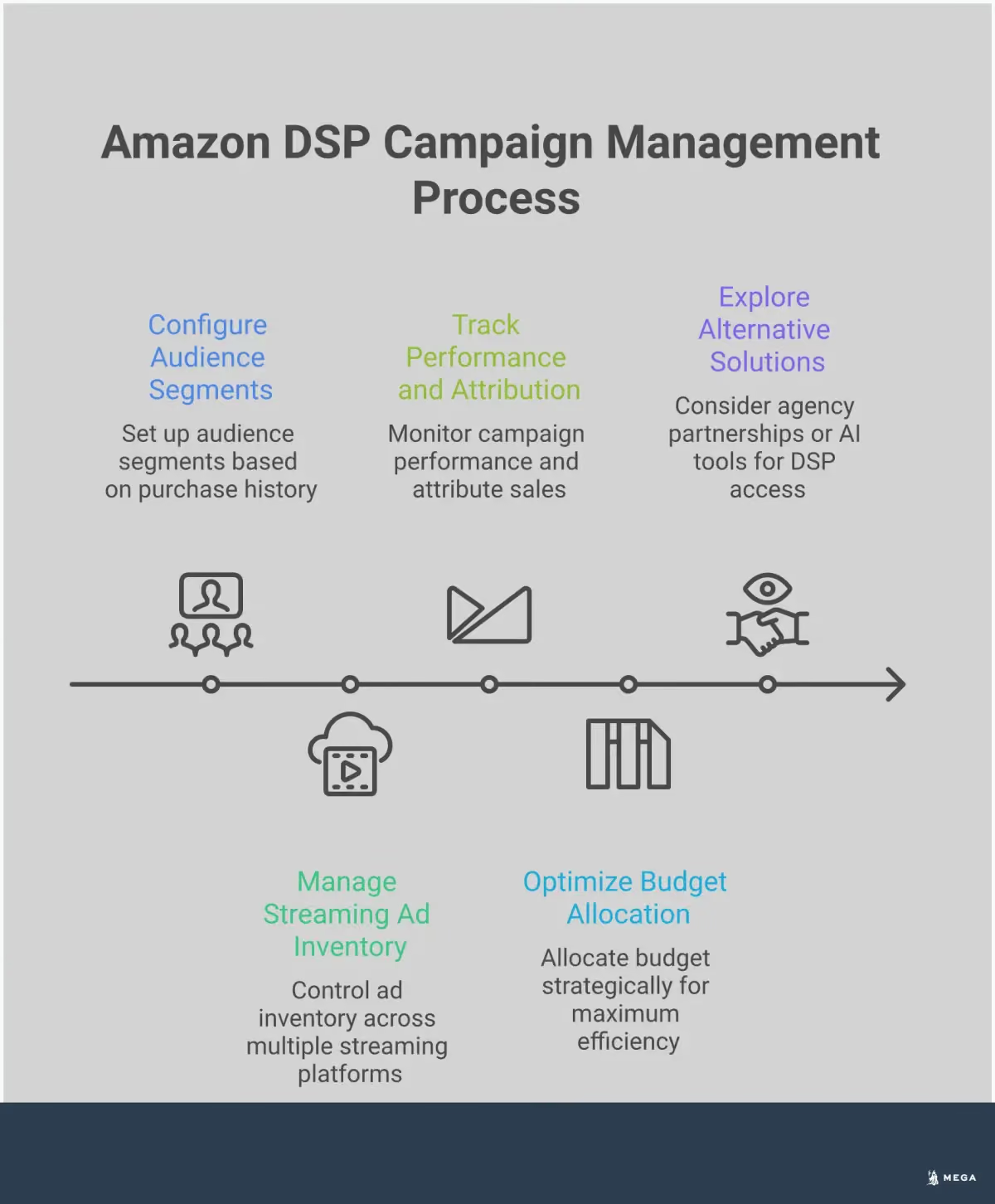
For many small businesses, managing ad campaigns across multiple platforms is a major headache. Each platform has its own budget, reporting system, and creative requirements. Amazon's DSP helps simplify this process by acting as a central hub for buying ad space across a wide network, including streaming services like Netflix, Disney Plus, and Spotify. Instead of juggling five different ad managers, you can run campaigns across various channels from a single interface. This integration streamlines campaign management, makes budget allocation more efficient, and provides a unified view of your advertising performance, saving you valuable time and resources.
Reach Audiences on Fire TV, Kindle, and In-Store
Amazon's advertising network extends far beyond its website. Your ads can appear across a diverse ecosystem that customers interact with daily. This includes placements on popular streaming services like Prime Video and Twitch, as well as on Amazon's own devices like Fire TV and Kindle. The reach even extends into the physical world, with ads showing up in Amazon Fresh stores. This multi-channel approach allows you to connect with your audience in various contexts, whether they're watching a movie, reading a book, or doing their weekly grocery shopping. It’s about meeting customers where they are, creating more touchpoints and opportunities to stay top of mind.
Advertise Even if You Don't Sell on Amazon
A common misconception is that Amazon's advertising platform is only for businesses that sell products on its marketplace. The reality is that you can use Amazon DSP even if you don't sell anything on Amazon.com. This opens up the platform’s powerful targeting capabilities to a much wider range of businesses, including local service providers, B2B companies, and brands with their own ecommerce sites. For example, a local real estate agent could target users who have recently purchased moving boxes or home decor. You get to leverage Amazon's rich purchase data to find relevant customers and direct them to your own website or physical location, making it a valuable tool for nearly any business.
Use First-Party Data for Precision Targeting
In an era of increasing privacy concerns and the phasing out of third-party cookies, access to reliable data is crucial. Amazon's data is first-party data, meaning it's collected directly from its users with their consent. They own the shopping behavior data, and it doesn't rely on cookies to track users across the web. This makes the data not only highly accurate but also more resilient to changes in privacy regulations. For advertisers, this means you can build sustainable, long-term strategies on a foundation of high-quality data, ensuring your campaigns remain effective and compliant as the digital landscape evolves.
How Does Amazon's DSP Work with Streaming Platforms?
Amazon's move into streaming advertising has fundamentally changed the landscape for digital marketers. By integrating with major streaming services, Amazon has created a centralized hub for reaching audiences where they spend their time. This isn't just about placing ads on another platform; it's about connecting Amazon's powerful purchase data with the massive, engaged audiences of services like Netflix, Roku, and Spotify. For advertisers, this means you can now manage campaigns across multiple streaming giants from a single interface, using data that goes far beyond simple demographics to target actual buying behavior. This consolidation simplifies ad buying and provides a more holistic view of the customer journey, from ad view to final purchase. The real advantage here is efficiency. Instead of learning the nuances of several different ad platforms, each with its own reporting and targeting systems, you can use one familiar environment to reach viewers across the streaming ecosystem. This approach not only saves time but also allows for smarter budget allocation, as you can see performance data from various services side-by-side and make informed decisions about where to invest your ad dollars for the best return.
Advertising on Netflix Through Amazon's DSP
One of the most significant developments in this space is the partnership between Amazon and Netflix. When Netflix introduced its ad-supported tier, it opened up a massive inventory of highly engaged viewers. By allowing its ad inventory and data to be accessed through Amazon's DSP, Netflix gave advertisers a direct line to its audience. This collaboration means Amazon's platform now sits in the middle of an estimated 80% of streaming households. For small businesses, this provides an unprecedented opportunity to reach customers on one of the world's most popular streaming services using sophisticated targeting that was previously out of reach.
Expand Your Reach to Roku and Other Services
The expansion doesn't stop with Netflix. Amazon's DSP also integrates with other major players like Spotify, Roku, and Disney Plus, as well as live sports broadcasts. Instead of juggling five different platforms with separate budgets, creative assets, and reports, you can manage it all from one place. This unified approach to programmatic advertising saves time and allows for more strategic budget allocation. You can see which channels are performing best and shift your spending accordingly, all within the Amazon ecosystem. This level of control and oversight makes it easier to run efficient, multi-channel campaigns that reach your audience across their favorite streaming apps and services.
Connect Streaming Views to Actual Purchases
The true power of Amazon's DSP lies in its ability to connect streaming ad views with actual purchase data. Amazon uses a concept called "household identity" to link activity across different devices. For example, if a viewer sees an ad for dog food while watching a show on their smart TV and then buys it on their phone an hour later, Amazon connects the dots. This allows for precise cross-device attribution, giving you a clear picture of your ad's impact on sales. This closed-loop system means you can move beyond vanity metrics and measure the direct return on your ad spend.
What Makes Amazon's Purchase Data So Powerful?
Many advertising platforms have access to user data, but Amazon's data is in a class of its own. The difference lies in its foundation: it’s built on decades of actual purchase history from millions of customers. This isn't just data about what people search for or what content they like; it's a direct record of what they buy. For advertisers, this shifts the focus from guessing what customers want to knowing what they need, creating a powerful advantage in a competitive market.
Target Real Buyers, Not Just Browsers
Most ad platforms target users based on their browsing history or search queries, which signal interest. Amazon, however, targets users based on what they actually purchase. Think about it: searching for "new headphones" is one thing, but buying a specific brand of noise-canceling headphones every two years is a much stronger indicator of purchase intent. Amazon’s platform uses this history to show you ads that are relevant to your real-world buying habits, not just your fleeting interests. This allows brands to connect with customers who have a proven history of buying their products or similar ones, making ad spend far more efficient.
Get a Clear View of Sales Attribution
One of the biggest challenges in digital advertising is proving that an ad led directly to a sale. Amazon’s DSP solves this with a closed-loop system. Because the advertising and the point of sale both happen within Amazon’s ecosystem, brands can see exactly which ad exposure resulted in a purchase. This clear line of sight makes sales attribution incredibly straightforward. For e-commerce brands, this means you can measure the return on your ad spend with a high degree of accuracy. You’re no longer guessing if your campaign worked; you have the data to prove it, allowing you to make smarter decisions about where to invest your budget.
Follow the Customer Journey Across Devices
People rarely use just one device. They might see an ad on their smart TV during a movie, research the product on their laptop, and finally make the purchase on their phone. Amazon connects these dots using a "household identity" model. This system recognizes that the different devices in a home often belong to the same user or family unit. So, when a customer sees an ad on one screen and converts on another, Amazon can map that entire cross-device customer journey. This gives advertisers a complete picture of how their campaigns influence behavior across multiple touchpoints, providing insights that are often lost on other platforms.
What Key Metrics Should You Track on Amazon's DSP?
Once your campaigns are live on Amazon's DSP, the real work begins: tracking performance. It’s not enough to just run ads; you need to know what’s working and what isn’t. Focusing on the right key performance indicators (KPIs) helps you understand your campaign's impact on your business goals. This data allows you to make informed decisions, adjust your strategy, and ultimately get more value from your ad spend. Instead of getting lost in a sea of data, zeroing in on a few core metrics will give you the clarity you need to succeed.
Measure and Improve Your Return on Ad Spend (RoAS)
Return on Ad Spend (RoAS) is a straightforward yet powerful metric. It tells you how much revenue you earn for every dollar you spend on ads. According to advertising experts, RoAS is critical for understanding if your investments are paying off. A high RoAS means your campaigns are profitable, while a low one signals that you may need to adjust your targeting, creative, or bidding strategy. For small businesses with tight budgets, keeping a close eye on RoAS ensures that every dollar is working as hard as possible to grow your bottom line.
Identify and Attract New Customers
While sales are great, growth often comes from attracting new customers. That’s where New-to-Brand (NTB) purchases come in. This metric tracks how many first-time buyers your ads are bringing in. It’s a direct measure of your brand awareness efforts and your ability to expand your customer base. If your goal is to grow your market share, a high NTB rate is a strong indicator of success. This data helps you see if your campaigns are reaching beyond your existing audience and effectively introducing your products to people who haven't purchased from you before.
Go Beyond Clicks: Track Views and Conversions
Beyond the initial click, you need to know what actions users are taking. Monitoring metrics like page views, click-through rates (CTR), and conversion rates gives you a full picture of campaign performance. As noted by industry agencies, these insights are vital for making strategic decisions. For example, high page views but low conversions might suggest an issue with your product detail page. By analyzing these engagement and conversion metrics, you can identify friction points in the customer journey and make data-backed adjustments to improve your results.
A Critical Look at Attribution Windows
An attribution window is the timeframe in which a sale is credited to a specific ad after a customer has seen or clicked on it. This window is a critical setting because it directly impacts how you measure the success of your campaigns and calculate your return on ad spend. Amazon's platform offers a distinct advantage here with its closed-loop system, where both the ad exposure and the final purchase occur within its ecosystem. This provides a clear, direct line from an ad view to a sale, making it easier to attribute conversions accurately and understand the true impact of your advertising efforts. This clarity extends across devices, helping you see the full customer journey even when a shopper sees an ad on one screen and buys on another. For small businesses, this level of precision is invaluable for making every ad dollar count.
What Challenges Does Amazon's DSP Present for Small Businesses?
While the potential of Amazon's DSP is clear, accessing its full power isn't always straightforward, especially for smaller companies. The platform comes with a unique set of hurdles that can make it difficult for startups, local shops, and small to medium-sized businesses to compete. From high costs to a steep learning curve, understanding these challenges is the first step toward building a realistic and effective advertising strategy. Let's break down the main obstacles you might face.
Can You Afford the Minimum Spend?
The biggest barrier for most small businesses is the cost of entry. This isn't a platform where you can experiment with a few hundred dollars. As marketing expert Neil Patel notes, "Amazon's DSP has minimums that lock out 90% of small businesses." To work directly with Amazon, advertisers often need to commit to a significant budget, which is simply out of reach for many businesses. This structure is designed for large brands with deep pockets, not for the local business owner or early-stage startup trying to make every dollar count. It creates a high barrier that keeps many promising businesses on the sidelines.
Self-Serve vs. Managed-Service Options
When you decide to use Amazon's DSP, you have two main paths: managing the campaigns yourself (self-service) or letting Amazon's team handle it for you (managed-service). The managed-service option is hands-off, but it comes with a significant financial commitment. Typically, this requires a minimum ad spend of around $50,000, a figure that places it well out of reach for most small businesses. For those who can't meet this threshold, the self-service route offers more flexibility. It gives you direct control over your campaigns and budget, allowing you to experiment with different strategies without a massive upfront investment. However, this approach requires a deep understanding of the platform's complexities, which can present its own set of challenges.
Dealing with Complex Campaign Management
The platform's interface and reporting can also be a challenge. Unlike more intuitive platforms, Amazon Ads lacks some basic features, making it difficult to compare campaign performance over time. This complexity means you can't just log in and figure it out in an afternoon. Effectively managing a DSP campaign requires specialized knowledge and a significant time commitment to analyze data and optimize performance. For small teams where everyone wears multiple hats, dedicating someone to master this platform is often not feasible. This steep learning curve can lead to wasted ad spend and frustrating results if you don't have the right expertise.
Expert Perspectives on Profitability and Tech
Industry experts agree that the technology behind Amazon's DSP is impressive, but they also caution that profitability is not guaranteed. The platform's complexity means that without a deep understanding of programmatic advertising, it's easy to mismanage your budget and see poor returns. Large brands overcome this with dedicated teams and expensive third-party software, but this leaves small businesses at a disadvantage. The core challenge is not just the minimum spend, but the technological and expertise gap required to make that spend profitable. This is why many small businesses are turning to AI-driven platforms to level the playing field. An AI Ads Agent can automate the complex tasks of budget allocation and campaign optimization, providing access to programmatic-style advertising without the steep learning curve or need for a specialized team.
Staying Ahead of Rising Costs and Competition
Beyond the initial investment, small sellers on Amazon often face a "multitude of fees that cut into their margins." As more large advertisers flock to the platform, competition for ad space intensifies, driving up costs. To succeed, you not only need a sufficient budget but also the expertise to handle this competitive landscape. Many businesses find they need to invest in specialists to get a decent return. For a small business, these compounding costs can make it difficult to justify the investment, especially when other, more accessible advertising channels are available.
How Can Small Businesses Compete in Programmatic Advertising?
The high costs and complexity of platforms like Amazon's DSP can feel discouraging for small businesses. It’s easy to assume that programmatic advertising is a game only large corporations can afford to play. However, with the right strategy, small and local businesses can find their footing and use these powerful tools to grow. Instead of trying to match the massive budgets of enterprise brands, the key is to be strategic, resourceful, and focused on a clear return on investment. By taking a measured approach, you can make programmatic advertising work for you.
Start with More Accessible Platforms
You don’t have to become an expert on Amazon’s DSP overnight. A great first step is to build your knowledge on more accessible parts of the advertising ecosystem. As noted by Karooya, "Amazon advertising provides businesses with a powerful platform to reach millions of potential customers." By starting with simpler campaign types, you can learn the fundamentals of the platform, understand your audience, and gather initial performance data. Using ad campaign management tools can help simplify the process, allowing you to effectively manage and enhance your campaigns as you gain more confidence and expertise. This foundational knowledge will be invaluable as you scale your efforts.
How an Agency Partnership Can Help
For many small businesses, partnering with an agency is the most direct path to leveraging advanced advertising platforms. Agencies often have access to DSPs without the high minimum spend requirements that individual businesses face. According to marketing expert Neil Patel, "collaborating with an agency can provide small businesses with greater flexibility and opportunities to test and engage with programmatic advertising." An experienced partner can help you get started, manage the technical details, and develop a strategy that aligns with your budget and goals. This allows you to benefit from the platform’s capabilities without needing a dedicated in-house team to manage the complexities.
How to Allocate Your Ad Budget Strategically
Success in programmatic advertising requires a thoughtful approach to your finances. Small sellers often face various platform fees that can eat into profit margins, making a clear budget essential. As Blue Wheel Media points out, it's critical for sellers "to allocate a sufficient advertising budget to effectively compete." This doesn't mean you need an enormous budget, but it does mean the funds you allocate must be managed carefully. Start with a clear goal for your return on investment and monitor your campaigns closely. A well-planned budget ensures you can compete effectively and make data-driven decisions to optimize your spending over time.
Amazon's DSP vs. Traditional Programmatic: What's the Difference?
While Amazon's DSP is a form of programmatic advertising, it has a few key advantages that set it apart from traditional platforms. The main distinction comes down to the quality of data, the precision of measurement, and the scope of its reach. Traditional programmatic platforms often rely on third-party data to guess at user interests, but Amazon uses its own first-party data to know exactly what its users are buying. This difference fundamentally changes how advertisers can connect with potential customers. For small businesses, understanding these distinctions is key to deciding where to allocate your advertising budget for the best results.
Better Data for Better Attribution
The biggest advantage of Amazon's DSP is its direct access to purchase data. While other platforms might know you browsed for running shoes, Amazon knows you bought a specific brand three weeks ago. This is because Amazon can draw from decades of purchase behavior from millions of users. This allows advertisers to move beyond simple demographics and target audiences based on actual buying habits. This level of data granularity means you can reach people with a demonstrated interest in your product category, making your ad spend much more efficient. This direct line to purchase history provides a level of targeting precision that traditional platforms struggle to match.
Measure Performance with Greater Accuracy
Amazon's platform offers what is often called "closed-loop" attribution. In simple terms, this means you can see the entire customer journey, from when they see your ad to when they make a purchase. As Amazon Advertising notes, to gauge success, "you must define what you want out of it, so you know which performance metrics to focus on." With the DSP, you can track exactly which ad led to which sale, giving you a clear picture of your return on investment. This comprehensive attribution model helps you understand the direct impact of your campaigns, providing clear insights that are often harder to find in traditional programmatic advertising.
Run More Effective Cross-Platform Campaigns
Managing campaigns across multiple platforms can be a major headache. Amazon's DSP simplifies this by acting as a central hub for buying ad inventory across a huge range of channels. Instead of managing separate campaigns for different streaming services, you can use one platform to buy ads on Netflix, Roku, Spotify, and even live sports. With Amazon's DSP connected to a majority of streaming households, its reach is massive. This streamlined approach makes it easier for your brand to connect with your target audience wherever they are watching or listening, creating a more cohesive and effective cross-platform advertising strategy without the logistical challenges.
How MEGA AI's Ads Agent Fits into Your Strategy
While platforms like Amazon's DSP offer incredible power, they often come with high minimum spends and complexity that place them out of reach for many small businesses. This doesn't mean you have to miss out on the benefits of programmatic-style advertising. An effective strategy involves using tools that provide similar advantages, like automated, data-driven campaign management, but are built for your scale. You can achieve sophisticated targeting and optimization without the enterprise-level price tag.
This is where an AI-powered solution can make a significant difference. Gomega is designed to give small businesses access to advanced advertising capabilities without needing a dedicated marketing team. Our Ads Agent autonomously plans, launches, and optimizes your paid ad campaigns across the channels that matter most to your business. It works to find your ideal customers, allocate your budget effectively, and scale your results, allowing you to compete in a crowded digital landscape. By leveraging AI, you can implement a smarter, more efficient advertising strategy that drives real growth and frees you up to focus on other parts of your business.
Let AI Handle Your Budget Allocation
Managing budgets across multiple ad platforms is a major challenge for small teams. A key advantage of a DSP is centralizing this process. Our Paid Ads Agent brings this same principle to your campaigns by providing autonomous budget allocation. Instead of manually shifting funds between Google, Meta, and LinkedIn, the AI agent analyzes performance data across all channels. It then automatically moves your budget to the campaigns and platforms that are delivering the best results. This ensures your ad spend is always working as hard as possible to achieve your goals, maximizing your return without constant manual oversight.
Make Real-Time Campaign Optimizations
The digital ad landscape changes quickly, and campaign success often depends on making fast adjustments. Amazon's DSP uses software to bid on ad slots and track performance instantly. Similarly, MEGA AI's Ads Agent provides real-time bid adjustments and audience targeting optimization. The agent continuously monitors your campaigns, identifying what’s working and what isn’t. It adjusts bids, refines audience segments, and even tests new ad creative variations automatically to improve performance. This constant optimization cycle helps you adapt to market changes and customer behavior, ensuring your campaigns stay effective and efficient over time.
Simplify Your Multi-Platform Campaign Management
For many small business owners, the idea of running campaigns on Google, Meta, TikTok, and LinkedIn all at once can feel overwhelming. The complexity and expertise required often seem like a major barrier. Our Ads Agent is built to simplify this process. It handles campaign creation, launch, and management across all major ad networks from a single place. You can book a demo to see how the platform works. This centralized approach removes the need to learn the intricacies of each individual platform. It allows you to execute a sophisticated, multi-channel strategy with ease, giving you the power of a full marketing team in one AI-powered tool.
How Amazon's DSP Will Reshape Digital Advertising
Amazon's Demand-Side Platform represents a significant shift in digital advertising. By combining its massive trove of first-party purchase data with an expanding inventory of premium streaming content, Amazon is creating a powerful, unified ecosystem for advertisers. This change will affect everything from campaign planning to ad costs. For small businesses, understanding these changes is key to staying competitive. The platform’s evolution creates new opportunities to reach specific audiences with unparalleled precision, but it also introduces new challenges. Here are the main ways Amazon's DSP is set to reshape the industry.
What This Means for the Programmatic Industry
The world of programmatic advertising is consolidating, with Amazon at the center. Major streaming services like Netflix, Spotify, and Roku are opening their ad inventory to the platform. This allows advertisers to buy ad space across a huge portion of the streaming market from a single place. Instead of managing separate campaigns, you can reach viewers on Disney Plus, Netflix, and Roku through Amazon's DSP. The platform also lets you layer its purchase data from over 300 million people directly onto the content your audience is watching, creating a level of targeting that was previously difficult to achieve.
How Growing Demand Will Affect Ad Prices
When a new, effective advertising channel emerges, early adoption is key. The brands that move in first learn the audience, build a playbook, and secure cheaper reach. As more advertisers recognize the platform's value, the market tightens and costs rise due to supply and demand. For small businesses, this presents a clear window of opportunity. Exploring Amazon's DSP now allows you to gain a head start while competition is still relatively low. This early experience helps you test strategies and establish a foothold before the platform becomes more crowded and expensive.
What Advertisers Should Expect in the Long Term
Amazon's strategy has powerful long-term benefits because it's built on first-party data. In an advertising world moving away from third-party cookies, this is a massive advantage. Amazon owns the shopping behavior data, and that information only gets more valuable over time. It knows what people actually buy. The company is building tools for full-funnel campaigns, pushing AI-driven optimization, and investing in high-demand content like live sports. For advertisers, this means the platform will become more sophisticated, offering better attribution and performance measurement. Aligning your strategy with this ecosystem can help future-proof your advertising efforts.