
For too long, marketers have relied on renting audiences from big tech platforms. The end of third-party tracking presents a new opportunity: to own your customer relationships directly. When you focus on building a direct line to your audience, you’re no longer dependent on outside systems for data. You can build trust, understand what your customers truly want, and create personalized experiences that foster long-term loyalty. This article explains how to shift your strategy from chasing clicks to building a community, using data you collect yourself to create a more resilient and profitable business.
Key Takeaways
- Move beyond outdated attribution models: Traditional methods like last-click are no longer effective because customer journeys are complex and privacy changes limit tracking, giving you an incomplete view of your marketing performance.
- Build your strategy on first-party data: Focus on collecting information directly from your audience through your website, email list, and social channels to gain accurate insights, build trust, and create a reliable system for measurement.
- Measure overall business impact, not just clicks: Shift your focus to metrics that reflect long-term growth, such as customer lifetime value, brand awareness, and the clear connection between your marketing activities and revenue.
Why Traditional Marketing Attribution No Longer Works
For years, marketers have relied on attribution models to figure out which channels and campaigns drive sales. The goal was simple: connect every dollar spent to a specific result. But the path a customer takes to make a purchase is no longer a straight line. It’s a winding journey across multiple devices, platforms, and touchpoints, making it nearly impossible to assign credit with perfect accuracy.
A major reason for this shift is the changing landscape of online privacy. As platforms like Google phase out third-party cookies, the ability to track a user’s activity across different websites diminishes. This makes traditional models that depend on this data less reliable. Without a clear view of the entire customer journey, you’re left with an incomplete picture, making it difficult to justify your marketing spend or understand what’s truly effective.
The challenge is compounded by siloed data. Your customer might see an ad on Instagram, search for your brand on their laptop, and finally make a purchase after clicking an email link on their tablet. Most attribution tools struggle to connect these dots because the data lives in separate systems. This fragmentation means you might overvalue the final touchpoint (the email click) while completely missing the crucial role the social media ad played in building initial awareness.
This measurement uncertainty leads many businesses to focus only on what they can easily track, like last-click conversions. But this approach is flawed. As marketing expert Neil Patel explains, the brands that succeed will stop trying to fix a broken system and instead double down on what they can measure effectively. Instead of chasing perfect attribution, the focus is shifting toward building a stronger data foundation with information you collect directly from your audience.
What's Wrong with Current Attribution Models?
If you’ve ever looked at a marketing report and felt like the numbers didn’t tell the whole story, you’re not alone. Traditional marketing attribution models were built for a simpler time, when the path from discovery to purchase was much more linear. Today, that path looks more like a tangled web of interactions across different channels and devices. A customer might see your ad on social media, read a blog post found through search, click a link in an email, and finally convert through a paid ad.
The old ways of measuring success, like giving all the credit to the last click, just don't hold up anymore. This approach ignores all the other valuable touchpoints that influenced the customer's decision. The result is a skewed understanding of your marketing performance, leading you to invest in the wrong channels while underfunding the ones that are quietly building brand trust and awareness. The core problem is that these models fail to account for the complexity of modern consumer behavior, the impact of new privacy regulations, and the reality of our multi-device lives.
The Challenge of Multi-Touch Journeys
Think about the last significant purchase you made. Did you just see one ad and immediately buy it? Probably not. Your journey likely involved multiple steps: maybe you saw an Instagram post, searched for reviews on Google, watched a YouTube video, and then finally clicked a retargeting ad. This is a multi-touch journey, and it’s the new normal. The trouble is, classic attribution models struggle to assign value correctly across all these interactions.
As marketing expert Neil Patel notes, many brands are realizing that trying to perfectly fix attribution is a losing battle. Instead, they are focusing on what they can measure clearly. Channels like paid search and email often have more direct attribution, but that doesn't mean your content marketing or social media efforts aren't working. Relying on a last-click model gives you an incomplete picture and can cause you to undervalue the channels that build awareness early in the journey.
How the End of Cookies Affects Tracking
For years, marketers have relied on third-party cookies to track user behavior across the web. These tiny data files allowed platforms to see which sites a person visited, helping to connect the dots between an ad viewed on one site and a purchase made on another. However, this era is coming to an end. As platforms like Google phase out third-party cookies, the models that depend on them are becoming obsolete.
This shift fundamentally challenges attribution models that use third-party data to follow users. Without that cross-site tracking, it becomes much harder to understand the full customer journey. This change forces a necessary pivot in strategy. Businesses must now focus on collecting their own data directly from customers, known as first-party data, to build a more accurate and privacy-compliant view of their marketing performance.
The Problem with Cross-Device Tracking
Another major hurdle for attribution is tracking a single user across their many devices. A potential customer might browse your website on their laptop at work, see a targeted ad on their smartphone during their commute, and complete the purchase on their tablet at home. To an outdated attribution system, this could look like three separate, anonymous visitors who all dropped off, rather than one engaged person moving toward a decision.
This fragmentation leads to inaccurate data and poor marketing decisions. When you can't connect the dots, you can't see how different channels work together to influence a single customer. This is why cross-device tracking is such a critical piece of the modern measurement puzzle. Without a unified view of the customer, you risk misallocating your budget and missing opportunities to create a cohesive and effective marketing experience.
Why You Need to Focus on First-Party Data
As third-party cookies disappear and privacy regulations tighten, the old ways of tracking customers across the web are becoming less reliable. This shift makes it nearly impossible to get a clear picture of what’s working, leaving many attribution models broken. The solution is to shift your focus inward to first-party data. This is the information you collect directly from your audience through your website, app, CRM, social media, or email lists. It’s the most valuable and accurate data you can own because it comes straight from the source, reflecting real actions and interests.
Building a strong first-party data strategy is no longer optional; it’s the foundation for sustainable growth. It allows you to move away from renting audiences from big tech platforms and toward building your own. By owning the relationship with your customers, you gain a clearer understanding of their journey and can measure your marketing efforts more effectively, all while respecting their privacy. This approach gives you the control needed to build resilient, long-term marketing strategies that don't depend on outside platforms. It's about creating a direct line to your customers, which is the most reliable way to understand impact, personalize experiences, and drive results in a privacy-first world.
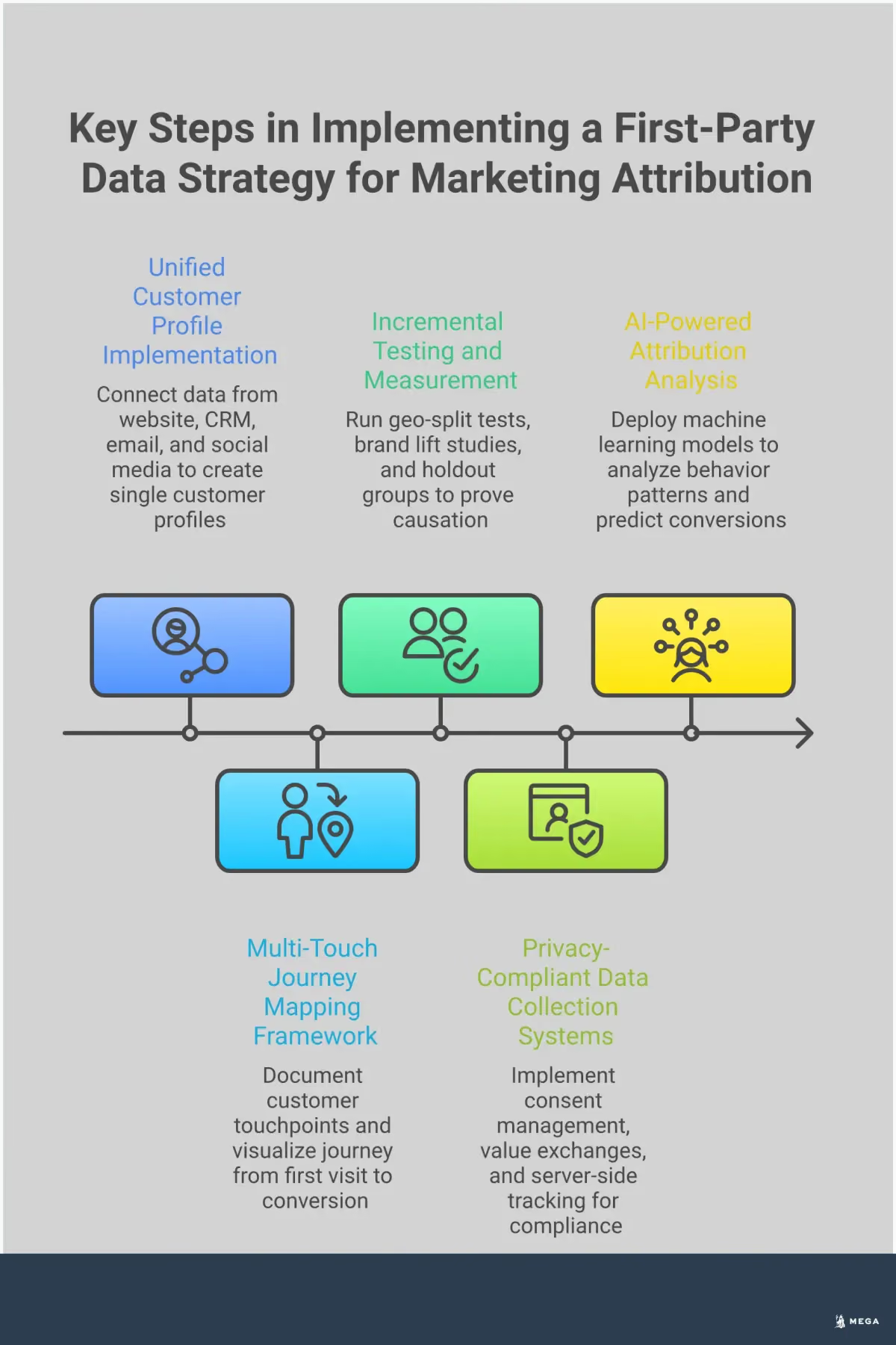
Build Direct Customer Relationships
First-party data gives you direct insight into what your customers want and how they behave. When you leverage this information, you can create truly personalized campaigns that resonate with your audience. Instead of making educated guesses based on broad third-party segments, you can use actual interaction data, like purchase history or content downloads, to tailor your messaging. This transforms your marketing from generic broadcasts into helpful conversations. By showing customers you understand their needs, you build trust and foster stronger, more loyal relationships that last far beyond a single transaction.
Measure Results While Respecting Privacy
In an era of growing privacy concerns, first-party data offers a path to effective marketing that honors customer consent. Because this data is collected directly from your audience with their permission, it provides a transparent way to measure results. You can fine-tune your targeting and deliver meaningful messages without relying on invasive tracking methods that follow users across the internet. This approach not only helps you comply with regulations like GDPR and CCPA but also builds confidence with your customers. When people trust that you are respecting their privacy, they are more likely to engage with your brand and share their information willingly.
Get Higher-Quality, More Accurate Data
First-party data is the most reliable source for generating accurate customer insights. Unlike third-party data, which is often aggregated and can be outdated or inaccurate, your own data comes directly from your customers’ interactions with your business. It’s clean, relevant, and exclusive to you. This high-quality information allows you to make better strategic decisions, from product development to campaign optimization. With a clear and accurate view of your customers, you can build more effective marketing strategies, reduce wasted ad spend, and develop a loyal customer base that drives predictable revenue for your business.
How to Measure Success Without Perfect Attribution
Chasing perfect, one-to-one attribution is often a losing battle. The modern customer journey is too complex, spanning multiple devices and channels. Instead of trying to assign exact credit for every conversion, a better approach is to understand the overall impact of your marketing efforts. By focusing on directional correctness rather than perfect precision, you can still make smart, data-informed decisions that grow your business.
This means shifting your mindset from "which channel gets all the credit?" to "how are my channels working together to influence customers?". Adopting this perspective allows you to measure what truly matters: how your marketing connects to revenue. The following strategies will help you build a clearer picture of your marketing performance, even with imperfect data.
Clarify Each Channel's Role
Not every marketing channel has the same job. Some are great for building initial awareness, while others are designed to capture existing demand. Trying to measure every channel by the same metric, like last-click sales, will give you a skewed view of performance. Instead, define a primary role and key performance indicator (KPI) for each channel based on its strengths.
For example, your social media goal might be engagement and audience growth, while your paid search campaigns are measured by clicks and conversions. As marketing expert Neil Patel notes, "Paid search, email, and CRO all offer clearer attribution than emerging channels. In uncertain conditions, that clarity becomes currency." By setting clear expectations for each channel, you can evaluate its success based on what it’s actually designed to do within the broader customer journey.
Use Incremental Testing
Incremental testing helps you measure the true lift your marketing provides. The idea is to compare a group that sees your marketing to a control group that doesn't, then measure the difference in behavior. For example, you could run a brand awareness campaign on Meta in one city but not in a similar, nearby city. By comparing website traffic or sales from both locations, you can isolate the campaign's actual impact.
This approach moves beyond simple correlation and helps prove causation. It answers the question: "Did this campaign cause more sales, or would they have happened anyway?". As one report from Celebrus explains, using your own data "helps marketers better understand how customers interact with their product or service, as well as their campaign assets, allowing them to spot trends and craft more effective marketing strategies." Incremental tests provide concrete data to validate a channel's contribution.
Map Your Customer's Journey
Understanding the path customers take from discovery to purchase is fundamental to measuring success. A customer journey map is a visual representation of the touchpoints a person has with your brand. While you may not capture every single interaction, you can piece together a general path using tools like your website analytics, CRM, and customer surveys. This helps you see how different channels hand off to one another.
For instance, a customer might first discover your brand through an organic search result, later see a retargeting ad on social media, and finally convert after receiving an email offer. As Forbes points out, "By providing specific insights into the entire customer journey, first-party data gives marketers the ability to tailor email content to every stage of the funnel." Mapping this journey helps you appreciate the role of top-of-funnel activities, like SEO, that don't always get direct credit for the final sale.
What Should You Measure Instead?
When you can no longer track every click on the customer's path to purchase, you have to shift your focus. Instead of obsessing over individual touchpoints, it’s time to measure what truly matters: the overall health of your marketing and its impact on your business goals. This means moving away from granular attribution and toward metrics that reflect long-term growth and customer relationships.
By concentrating on bigger-picture outcomes, you can get a more accurate and useful understanding of your marketing performance. This approach helps you make smarter strategic decisions without getting lost in data that is often incomplete or misleading.
Customer Lifetime Value (CLV)
Customer lifetime value (CLV) is the total profit you expect to earn from a customer throughout their entire relationship with your business. Focusing on CLV encourages you to build lasting loyalty instead of just chasing one-time sales. When you understand which channels bring in high-value customers who stick around, you can invest your marketing budget more effectively.
First-party data is essential here. It helps you understand how customers interact with your brand over time, allowing you to spot trends and improve their experience. By analyzing purchase history and engagement, you can identify your most valuable customer segments and create strategies to retain them. This long-term view provides a much more stable and predictable measure of marketing success than last-click attribution ever could.
Brand Awareness and Engagement
While not as direct as a sales metric, brand awareness and engagement are powerful indicators of your marketing's effectiveness. When people know and trust your brand, they are more likely to choose you when they're ready to buy. You can measure this through metrics like direct traffic to your website, branded search volume (how many people are searching for your company name), and social media engagement.
These metrics show that your message is resonating with your target audience. Leveraging first-party data allows you to create personalized campaigns that drive more meaningful interactions. A steady increase in these "soft" metrics often precedes a lift in sales, making them a crucial leading indicator of business growth in a privacy-focused world.
How Marketing Connects to Revenue
Ultimately, every marketing activity should contribute to revenue. Without perfect attribution, the key is to find clear correlations between your marketing efforts and your sales figures. Instead of trying to link a specific ad to a specific purchase, look at the bigger picture. Did your revenue increase during the month you ran a major social media campaign? Do sales from a certain region go up after you launch a local SEO effort?
Using first-party data gives you reliable customer insights to optimize marketing strategies and connect them to revenue. Simple tools like post-purchase surveys ("How did you hear about us?") and unique discount codes for different channels can also provide valuable directional data. This approach helps you understand which channels are driving growth, even if you can't track every step of the journey.
How to Collect High-Quality First-Party Data
Since old attribution models are no longer reliable, the best path forward is building your own source of truth with first-party data. This is information you collect directly from your audience through your website, app, or social media. It’s more accurate and gives you a direct line to understanding your customers' needs. The key is to collect this data thoughtfully. Here are a few strategies to get started.
Develop a Multi-Touchpoint Strategy
Your data is most powerful when it tells a complete story. A unified strategy helps you connect the dots across every interaction a customer has with your business. Think about all the places you connect with your audience: your website, email newsletters, social media profiles, and even in-person events. Each touchpoint is an opportunity to gather information. By breaking down internal silos, you can create 360-degree customer profiles that fuel personalized experiences and give you a clearer picture of the customer journey, from their first click to their final purchase.
Offer Value in Exchange for Data
People are more willing to share information when they get something valuable in return. This value exchange is built on trust. Instead of just asking for an email address, offer a compelling reason for them to provide it. This could be a 10% discount on their first order, a free downloadable guide, or access to an exclusive webinar. The goal is to make your audience feel comfortable sharing their data because they know it will lead to a better customer experience. When customers trust you, they are more likely to become loyal advocates.
Create Interactive and Personalized Content
One of the best ways to gather data is to make it fun. Interactive content like quizzes, polls, and calculators can collect valuable information while keeping your audience engaged. For example, a local contractor could create a cost calculator for a kitchen remodel. This provides a useful tool for the customer and gives the business a qualified lead. By creating these kinds of interactive experiences, you can craft personalized campaigns that resonate with your audience, reduce wasted ad spend, and build stronger relationships.
Common First-Party Data Mistakes to Avoid
Switching your focus to first-party data is a smart move, but it’s not without its challenges. Collecting and using this information effectively requires a thoughtful approach. By understanding the common pitfalls ahead of time, you can create a strategy that builds trust and delivers real results for your business.
Expecting Results Overnight
It’s easy to get excited about the potential of first-party data, but it’s important to set realistic expectations. Building a high-quality data set doesn’t happen in a day. It takes time to earn customer trust, collect meaningful information, and identify patterns that can inform your marketing. Think of it as building a relationship rather than flipping a switch. A successful data strategy is a long-term investment that pays off through deeper customer understanding and more effective campaigns, not instant wins. Rushing the process can lead to frustration and poor decisions based on incomplete information.
Forgetting to Segment Your Data
Collecting data is only the first step. The real value comes from organizing it in a way that makes sense for your business. Failing to segment your data is like having a library with no categories: all the information is there, but you can’t find what you need. Customer segmentation involves grouping your audience based on shared characteristics, such as purchase history, location, or engagement level. This allows you to tailor your messaging and offers to specific groups, making your marketing far more relevant and effective. Without segmentation, you’re left sending generic messages that may not resonate with anyone.
Overestimating Your Data's Scope
Many businesses fall into the trap of thinking more data is always better. This can lead to collecting vast amounts of information without a clear purpose, much of which is irrelevant to your goals. The objective isn’t to amass the largest database possible; it’s to gather high-quality, actionable insights that help you understand your customers. Focus on collecting data that directly relates to your business objectives. A smaller, well-curated dataset is much more powerful than a massive one filled with noise. Prioritizing quality over quantity ensures your efforts are focused and your insights are clear.
Underestimating Privacy Risks
In the process of gathering customer information, it's critical to prioritize data privacy. Consumers are more aware than ever of how their data is being used, and a single misstep can permanently damage their trust in your brand. Simply wanting first-party data doesn’t give you a free pass to collect it without care. You must be transparent about what you’re collecting and why, and you need to comply with regulations like the GDPR or CCPA. Underestimating these risks can lead to legal trouble and, more importantly, a loss of the customer loyalty you’ve worked so hard to build.
How to Collect Data Ethically and Legally
Collecting first-party data is a powerful way to understand your customers and grow your business, but it comes with serious responsibilities. Think of it as building a relationship. Trust is the foundation, and you earn that trust by being upfront, respectful, and protective of the information people share with you.
Following ethical and legal guidelines isn’t just about avoiding fines. It’s about showing your customers you value their privacy. When people feel safe sharing their information, they are more likely to become loyal customers. This approach helps you build a sustainable marketing strategy that respects privacy while still delivering results. The goal is to create a fair exchange where customers give you their data in return for better, more personalized experiences. This focus on trust is essential for any small business looking to build a strong reputation and a dedicated customer base.
Get Explicit Consent
Getting explicit consent means a user must actively and clearly agree to let you collect their data. Gone are the days of pre-checked boxes and confusing language buried in the fine print. Your customers need to make a conscious choice. For example, instead of a box that says "I agree to the terms and conditions," use clear language like, "Yes, sign me up for weekly marketing tips and special offers."
This practice is a requirement under laws like GDPR and CCPA, but it’s also just good business. When someone knowingly opts in, they are more engaged and interested in what you have to offer. Collecting first-party data properly ensures you build a high-quality list of contacts who genuinely want to hear from you, which is far more valuable than a large list of unengaged users.
Be Transparent About How You Use Data
Being transparent is about being honest and open with your customers about what you’re doing with their information. Don’t hide your intentions in a long, complicated privacy policy nobody reads. Instead, provide clear, simple explanations right where you ask for data. If you want their email for a newsletter, say so. If you’re using tracking pixels to personalize ads, explain that in plain language.
This transparency is key to building trust. When customers understand how their data improves their experience, they are more willing to share it. A great first-party data strategy is built on this foundation of honesty. By being upfront, you not only comply with regulations but also show customers that you respect them, which can turn a one-time buyer into a long-term advocate for your brand.
Prioritize Data Security
Once you’ve collected customer data, you have a responsibility to protect it. Data breaches can happen to any business, big or small, and the consequences can be devastating for your reputation and your customers' trust. Prioritizing data security means taking practical steps to keep the information you hold safe. This includes using secure software and platforms, enforcing strong password policies for your team, and limiting who has access to sensitive data.
Think of it as locking the door to your shop at night. You wouldn't leave your inventory unprotected, and the same care should apply to your customer data. Leveraging measurement and first-party data gives you valuable insights, but it also makes you a custodian of personal information. Protecting that information is a critical part of your role.
Provide an Easy Opt-Out
Just as it should be easy for customers to opt in, it should be just as simple for them to opt out. Every marketing email you send must have a clear and easy-to-find unsubscribe link. The same goes for SMS messages or any other form of direct communication. Hiding the opt-out button or making users jump through hoops to unsubscribe is a quick way to lose trust and land your emails in the spam folder.
Providing an easy opt-out is a core part of a respectful first-party data strategy. It shows customers you respect their choices and are not interested in sending them unwanted messages. It also helps you maintain a healthier, more engaged contact list, as you'll only be communicating with people who have actively chosen to hear from you.
How to Use First-Party Data for Better Measurement
Once you start collecting high-quality first-party data, you can use it to get a much clearer picture of what’s working in your marketing. Instead of guessing which touchpoints led to a sale, you can begin to connect the dots using information your customers have shared directly with you. This approach moves you away from fragile, cookie-based attribution and toward a more durable and accurate way of understanding your impact. It’s about building a measurement framework on a foundation you own and control.
Using first-party data for measurement isn’t about achieving perfect, one-to-one attribution for every single conversion. That's a goal that often leads to frustration. Instead, it’s about understanding customer behavior, identifying trends, and making smarter decisions with the information you have. By focusing on the data you own, you can see how different channels work together to guide customers from discovery to purchase. This allows you to build a marketing strategy based on real insights from your audience, not just platform-reported metrics that can often be misleading. An integrated system that manages your SEO and paid ads in one place makes this process much simpler, as it connects your efforts automatically.
Create Unified Customer Profiles
A unified customer profile is a single, complete view of each customer, built from all the first-party data you’ve collected. Think of it as a digital file that combines a customer's purchase history, website activity, email engagement, and any other direct interactions they've had with your business. Instead of having customer information scattered across different tools, you create one central record. This strategy helps you break down internal data silos to see the full picture. With a 360-degree view of your customers, you can better understand their needs and map out their journey with your brand.
Track Performance Across All Channels
With unified profiles in place, you can start tracking how individual customers interact with your brand across all your marketing channels. You can see if a customer first discovered you through a blog post, then signed up for your newsletter, and later made a purchase after seeing a social media ad. This helps you understand the real-world paths people take. While it won’t give you a simple "last-click" answer, it provides much richer context. This allows you to spot trends and see how different channels support each other, helping you craft more effective omnichannel marketing strategies based on actual customer behavior.
Personalize and Optimize Your Campaigns
First-party data is the key to creating marketing that feels personal and relevant. When you understand your customers' preferences and past behaviors, you can tailor your messaging to match their interests. For example, instead of sending a generic discount to your entire email list, you can send a special offer for a product a customer has viewed several times. This level of personalization makes your campaigns more effective and improves your return on investment. By using deep insights into your audience, you can run more targeted and efficient paid ad campaigns that resonate with the right people at the right time.
Integrate Your Marketing Channels
When your marketing channels are integrated and powered by the same first-party data, you create a seamless and consistent experience for your customers. This means your email campaigns, social media ads, and website content can all work together to deliver a cohesive message. For instance, you can retarget website visitors on social media with an ad that reflects the specific products they viewed. This fine-tuned targeting allows you to deliver more meaningful messages at scale. An end-to-end platform like MEGA AI helps you manage different channels cohesively, ensuring your strategy is built on a solid foundation of your own data.
Tools and Strategies for First-Party Data Success
Collecting first-party data is a great start, but you need the right systems to manage, analyze, and act on it. Without a solid tech stack, your data can end up siloed and unused, leaving you with the same attribution blind spots you had before. The goal is to create a connected ecosystem where data flows freely between tools, giving you a complete and actionable view of your customer's journey.
This doesn’t mean you need a dozen complex and expensive platforms. For most small businesses, a few core tools can make all the difference. The key is to choose platforms that integrate well and focus on a clear strategy for how you’ll use the data you collect. When your tools work together, you can move from simply gathering information to using it to build better campaigns, personalize experiences, and accurately measure what’s driving growth. An AI-powered growth agent can help automate this entire process, from planning to execution and optimization.
Customer Data Platforms (CDPs)
Think of a Customer Data Platform (CDP) as a central hub for all your customer information. It pulls data from every touchpoint, like your website, mobile app, email service, and CRM, to create a single, unified profile for each customer. This is crucial for fixing broken attribution because it solves the cross-device and cross-channel tracking problem. Instead of seeing a website visitor and an email subscriber as two different people, a CDP understands they are the same person on a single journey. This unified view allows you to build consistent customer profiles that support more accurate segmentation and targeting, giving you a clearer picture of how your marketing efforts connect.
Marketing Automation Systems
Marketing automation platforms do more than just schedule emails or social media posts. They are powerful tools for collecting first-party behavioral data. These systems track how individual users interact with your marketing materials, from which emails they open to which links they click and what pages they visit on your site. This information provides deep insight into customer interests and intent. By analyzing these interactions, you can identify trends and understand which touchpoints are most effective at moving customers toward a purchase. This helps you build a more accurate attribution model based on real engagement data from your paid ad campaigns and other marketing channels.
Advanced Segmentation and Targeting
With a rich source of first-party data, you can move beyond basic demographic segmentation. Advanced segmentation involves grouping your audience based on their specific behaviors, interests, and purchase history. For example, you could create segments for customers who have bought a specific product, visited your pricing page multiple times, or abandoned a shopping cart. This allows you to create highly personalized campaigns that resonate with each group. From an attribution standpoint, this strategy is incredibly effective. When you target a specific segment with a tailored message, it becomes much easier to measure the direct impact of that campaign on their behavior and, ultimately, your revenue.
How AI Helps Build Your Data Foundation
Building a solid first-party data foundation might sound like a project reserved for large companies with dedicated data science teams. The good news is that AI makes it accessible for everyone. Instead of manually piecing together customer information from different sources, AI can do the heavy lifting, turning scattered data points into a clear picture of your marketing performance. This is about more than just collecting data; it’s about creating a system that helps you understand what’s working and why.
AI-powered platforms can connect your marketing efforts directly to business outcomes. For example, an AI-powered growth agent can autonomously manage your SEO and paid ad campaigns, tracking every interaction along the way. It sees which blog post led to a demo request or which ad campaign brought in the most valuable customers. This gives you a more holistic view of performance, helping you move away from flawed attribution models and toward a smarter, data-driven strategy that grows with your business.
Automate Data Collection and Processing
One of the biggest hurdles in using first-party data is the sheer amount of work it takes to collect and organize it. AI automates this entire process. It can gather information from your website analytics, CRM, ad platforms, and email marketing tools without you having to lift a finger. This ensures your data is clean, consistent, and ready to use. First-party data helps you better understand how customers interact with your brand, allowing you to spot trends and refine your strategy. By handing off the manual work to AI, you can spend your time focusing on what the data actually means for your business.
Gain AI-Powered Customer Insights
Once your data is collected, AI helps you make sense of it. It can analyze thousands of customer interactions to identify patterns, behaviors, and preferences that would be impossible to spot manually. These AI-powered insights show you who your most valuable customers are, what they care about, and how they make purchasing decisions. By leveraging first-party data, you can gain deep insights into your target audience and create personalized campaigns that resonate. This moves you from making educated guesses to making strategic decisions based on real customer behavior.
Build Scalable Measurement Solutions
A major weakness of traditional attribution is that data lives in separate, disconnected systems. AI helps solve this by creating a unified view of your customer. It can stitch together a user’s journey across different touchpoints, from their first visit to your website to their most recent purchase. A unified first-party data strategy breaks down these internal silos to create 360° customer profiles that fuel personalized experiences. This creates a scalable measurement framework that shows you how all your marketing channels work together, giving you the clarity needed to invest your budget wisely and drive sustainable growth.