
Want a marketing strategy that delivers real results? With PPS marketing (pay-per-sale), you only pay when a sale happens. This guide breaks down everything you need to know about PPS marketing, from the basics to advanced strategies. We'll cover how it works, compare it to other affiliate models, and highlight the benefits for both businesses and affiliates. Plus, we'll share practical tips for creating a winning PPS marketing strategy, tracking your performance, and adapting to the latest trends. Ready to make sales your bottom line? Let's get started.
Key Takeaways
- PPS marketing focuses on sales: Advertisers pay only when a sale happens, making it a results-oriented approach.
- Strong partnerships are essential: Merchants and affiliates both benefit from clear communication, reliable tracking, and competitive commission structures.
- Data and adaptability drive success: Tracking key metrics and adapting to emerging trends are crucial for maximizing PPS campaign performance.
What is Pay-Per-Sale (PPS) Marketing?
Pay-per-sale (PPS) marketing, sometimes called cost-per-sale (CPS), is a performance-based advertising model where businesses pay a commission to affiliates for each sale generated through their marketing efforts. It’s a results-oriented system—advertisers only pay when a sale is made. This makes PPS marketing a potentially cost-effective strategy for businesses. Accurate tracking, however, is crucial for its success.
How PPS differs from other affiliate models (PPC, PPL, PPA)
PPS marketing stands out from other affiliate models because of its laser focus on actual sales. Let’s break down how it differs from pay-per-click (PPC), pay-per-lead (PPL), and pay-per-action (PPA) models:
Unlike PPC (where you pay for each click), PPS only charges you when a sale is made. PPC campaigns prioritize driving website traffic, while PPS campaigns prioritize driving sales. This makes PPS a more efficient use of your marketing budget, as you’re only investing in actions that directly contribute to revenue. Think of PPC as casting a wide net, hoping for clicks, while PPS is like using a spear, aiming directly for the sale.
In the Pay-Per-Lead (PPL) model, advertisers pay for each lead generated, regardless of whether those leads convert into sales. While PPL can provide valuable contacts, it doesn’t guarantee revenue. PPS, on the other hand, guarantees a return on your investment because you only pay when a sale is completed. Imagine PPL as stocking a pond with fish and hoping they’ll bite, while PPS is like going fishing with a guide who guarantees you’ll catch something.
Pay-Per-Action (PPA) is similar to PPS but can include a variety of actions beyond just sales, such as sign-ups or downloads. PPA can be useful for building an audience or driving specific actions, but PPS focuses specifically on sales, making it a more targeted approach for businesses looking to boost revenue directly. Think of PPA as offering a variety of snacks at a party, while PPS is like serving the main course—it’s what everyone came for.
Even compared to models like Cost Per Impression (CPI), where advertisers pay every time their ad is shown, PPS offers a more targeted and cost-effective approach. With CPI, you’re paying for visibility, not necessarily results. PPS ensures that your marketing spend directly translates into revenue. If CPI is like renting a billboard, PPS is like hiring a sales team.
Understanding PPS Marketing Essentials
At its core, PPS marketing is about driving revenue growth. While it can be a riskier approach than focusing on profit per sale, the potential for significant revenue increases—and even company acquisition—is a compelling draw for many businesses. The key components of PPS marketing include:
- The merchant: This is the business that owns the product or service being sold.
- The affiliate: This is the marketer who promotes the merchant’s offerings to their audience. Affiliates can be individuals, bloggers, influencers, or other businesses.
- The customer: This is the individual who makes a purchase through the affiliate’s marketing efforts.
- The commission: This is the pre-agreed percentage or fixed amount paid to the affiliate for each completed sale.
- The platform/network: This is often the software or marketplace that connects merchants and affiliates, facilitating tracking and payments. Our own platform, MEGA SEO, offers seamless integration for managing your PPS campaigns. You can book a demo to see how it works.
PPS Marketing vs Other Affiliate Models
PPS marketing stands apart from other advertising models like cost-per-impression (CPI) or cost-per-click (CPC), where advertisers pay for ad views or clicks regardless of whether a sale occurs. In PPS, the focus is solely on conversions. This distinction is important because it ensures that marketing spend directly translates into revenue. PPS also differs from lead generation, where payment is made for leads regardless of conversion to sales. With PPS marketing, you only pay for actual sales, making it a more efficient use of your marketing budget. Explore our free tools to start optimizing your marketing efforts today.
How PPS Marketing Works
Pay-per-sale (PPS) marketing, sometimes called cost-per-sale (CPS), is a performance-based advertising model. At its core, it’s a partnership where businesses (merchants) team up with other websites or individuals (affiliates) to promote their products or services. Unlike other affiliate models where payment is triggered by clicks or impressions, PPS marketing focuses solely on completed sales. This makes it a results-oriented system where merchants only pay when an actual sale is generated.
Merchant and Affiliate Roles in PPS
In the PPS marketing model, merchants own the products or services being sold. They’re responsible for setting up the PPS program, determining commission rates, and providing affiliates with the necessary marketing materials, such as banners or text links. The merchant also handles order fulfillment and customer service. Affiliates act as promoters or referral sources for the merchant. They integrate the merchant’s promotional materials into their own websites, social media platforms, or email campaigns. Their goal is to drive traffic to the merchant’s website and encourage visitors to make purchases.
PPS Commission Structures and Payments
The payment structure in PPS marketing is straightforward: the merchant pays the affiliate a pre-agreed commission for each sale generated through the affiliate’s marketing. This commission is typically a percentage of the sale price, though it can sometimes be a fixed amount. The process usually involves a customer clicking a unique affiliate link, which uses cookies to track the referral. When the customer completes a purchase, the affiliate earns their commission. This results-oriented system ensures that merchants only pay for tangible results, making it a potentially cost-effective strategy. The use of cookies is essential for accurately attributing sales to the correct affiliate. This system benefits both parties; the merchant gains increased sales and brand visibility, while the affiliate earns income based on their performance.
Common PPS Commission Structures (Percentage, Fixed Fee, Tiered)
The payment structure in PPS marketing is straightforward: the merchant pays the affiliate a pre-agreed commission for each sale generated through the affiliate’s marketing efforts. This results-oriented system ensures that merchants only pay for tangible results, making it a potentially cost-effective strategy. There are several common commission structures:
- Percentage of Sale: This is the most common structure. Affiliates earn a percentage of the total sale amount. For example, an affiliate might earn a 10% commission on a $100 sale, resulting in a $10 commission.
- Fixed Fee: In this model, affiliates earn a fixed amount for each sale, regardless of the sale price. This can be beneficial for products with consistent pricing. For instance, an affiliate might earn a $5 commission for every sale they generate.
- Tiered Commission: This structure incentivizes higher performance. Affiliates earn a higher commission rate as they generate more sales. For example, an affiliate might earn 5% for the first 10 sales, 7% for the next 10, and 10% for any sales beyond 20. This motivates affiliates to drive more conversions.
Choosing the right commission structure depends on your product, target audience, and overall marketing goals. Consider factors like average order value, profit margins, and competitor benchmarks when deciding on your PPS commission structure. Competitor analysis can help inform your decision. For help automating this process, consider using MEGA SEO's free tools.
Tracking and Payment Methods
Accurate tracking is crucial for the success of PPS marketing. The process usually involves a customer clicking a unique affiliate link, which uses cookies to track the referral. When the customer completes a purchase, the affiliate earns their commission. The use of cookies is essential for accurately attributing sales to the correct affiliate. This ensures fair compensation and allows for accurate performance measurement. Several tracking methods are commonly used:
- Unique Affiliate Links: These specialized links contain identifiers that track the source of the sale. When a customer clicks the link and makes a purchase, the sale is attributed to the corresponding affiliate.
- Tracking Software/Platforms: Many platforms offer robust tracking capabilities. MEGA SEO, for example, automates the tracking process, providing detailed reports on affiliate performance and sales data. You can book a demo to see how it works.
- Cookie Tracking: Cookies stored on the customer's computer track their activity after clicking an affiliate link. This allows for accurate attribution even if the purchase is made later.
Payment methods vary depending on the platform or agreement between the merchant and affiliate. Common methods include direct bank transfers, PayPal, and other online payment processors. Ensure you choose a reliable and secure payment method to facilitate timely and accurate payments to your affiliates. Consider MEGA SEO's custom solutions to streamline your PPS tracking and payment processes.
Why Use PPS Marketing?
Pay-per-sale marketing offers distinct advantages for both businesses and affiliates. Let’s explore the key benefits for each:
PPS Benefits for Businesses
For businesses, PPS marketing offers a compelling blend of cost-effectiveness, targeted reach, and performance-driven results. Here’s a closer look at the advantages:
-
Cost-Effective Advertising: With PPS marketing, you only pay when a sale is made. This eliminates wasted ad spend on impressions or clicks that don’t convert, making it a highly efficient use of your marketing budget. This results-oriented approach incentivizes marketing agencies to prioritize actual sales, as explained in Intellibright’s comparison of PPS marketing and lead generation.
-
High-Quality Leads: PPS campaigns attract high-quality leads more likely to convert into paying customers. Because affiliates are incentivized to drive sales, they focus on attracting genuinely interested prospects. This focus on quality helps build your brand and ensures that the leads you receive are exclusive to your business, not shared with competitors, a point highlighted by Intellibright.
-
Increased Profitability: The combination of cost-effective advertising and high-quality leads naturally translates to increased profitability. By maximizing your return on investment and minimizing wasted ad spend, PPS marketing contributes directly to your bottom line. Plus, you gain access to a skilled marketing team that might otherwise be beyond your budget. Intellibright discusses these financial benefits in detail.
-
Results-Oriented Approach: PPS marketing is inherently results-oriented. Wikipedia defines pay-per-sale as a system where advertisers only pay when a sale is made. This clear focus on conversions simplifies performance tracking and allows you to directly measure the success of your campaigns.
PPS Benefits for Affiliates
Affiliates also benefit significantly from the PPS model, enjoying flexible earning potential and minimal upfront investment. Here’s a breakdown of the advantages:
-
Comprehensive Sales Tracking: PPS marketing allows for precise tracking of both online and offline sales generated through your promotional efforts. This comprehensive tracking, combined with an understanding of your audience’s buying habits, can lead to substantial returns, as noted by TOP Agency.
-
Performance-Based Earnings: With PPS, your earnings are directly tied to your performance. You receive a commission for every sale you generate, providing a clear incentive to optimize your marketing strategies. While converting visitors into buyers can be challenging, the potential rewards make it a worthwhile pursuit, according to TOP Agency.
-
Established Payment Structure: PPS is a widely recognized and commonly used payment structure in affiliate marketing. Zorraquino offers a clear explanation of this model. This established model provides clarity and transparency in how you’ll be compensated for your efforts.
-
Low Barrier to Entry: One of the most attractive aspects of PPS marketing for affiliates is the minimal upfront investment required. This low barrier to entry makes it an accessible option for those looking to venture into affiliate marketing. Combined with a deep understanding of your audience, PPS offers the potential for significant returns without substantial initial costs, a benefit highlighted by TOP Agency.
PPS Marketing Challenges
While PPS marketing offers compelling benefits, both merchants and affiliates face unique obstacles. Understanding these challenges is crucial for developing strategies to overcome them and achieve PPS success.
Overcoming Obstacles for PPS Merchants
Merchants implementing PPS programs often encounter challenges related to affiliate management, fraud prevention, and program logistics. Finding and vetting reliable affiliates who can drive conversions requires careful consideration. It’s essential to partner with affiliates who align with your brand and target audience. Thorough vetting processes can help mitigate the risk of partnering with low-quality or fraudulent affiliates. Ensuring smooth campaign management, including timely commission payments and providing affiliates with necessary marketing materials, can also be complex.
Another significant challenge is dealing with fraudulent activities, such as fake clicks and fabricated sales. Implementing robust fraud detection tools and monitoring affiliate activity closely are essential for protecting your budget and ensuring accurate commission payments. Clear communication with affiliates regarding your fraud prevention measures can also deter malicious actors. Finally, establishing clear processes and utilizing automation tools can streamline these tasks and maintain positive affiliate relationships. Your market opportunity must also be large enough to justify the costs of running a PPS program. MEGA SEO can help automate many of these processes, simplifying PPS marketing for merchants. Book a demo to learn more.
Affiliate Hurdles in PPS Marketing
Affiliates also face distinct challenges in PPS marketing. The primary hurdle is the higher barrier to earning commissions compared to other affiliate models. Unlike pay-per-click or pay-per-lead models, PPS requires affiliates to drive actual sales, which can be significantly more challenging. Converting website visitors into paying customers demands effective marketing strategies, compelling content, and a deep understanding of the target audience. This inherent difficulty in driving conversions makes PPS a more demanding model for affiliates, especially those new to affiliate marketing or working within highly competitive niches.
As PPS is a performance-based system, your earnings are directly tied to your ability to generate sales. This performance-driven nature can be both motivating and challenging, requiring affiliates to continuously optimize their strategies and adapt to changing market dynamics. The pressure to perform can be particularly intense for affiliates relying solely on PPS programs for income. Consider using MEGA SEO’s free tools to improve your content and optimize your strategies for increased conversions.
Building a Winning PPS Strategy
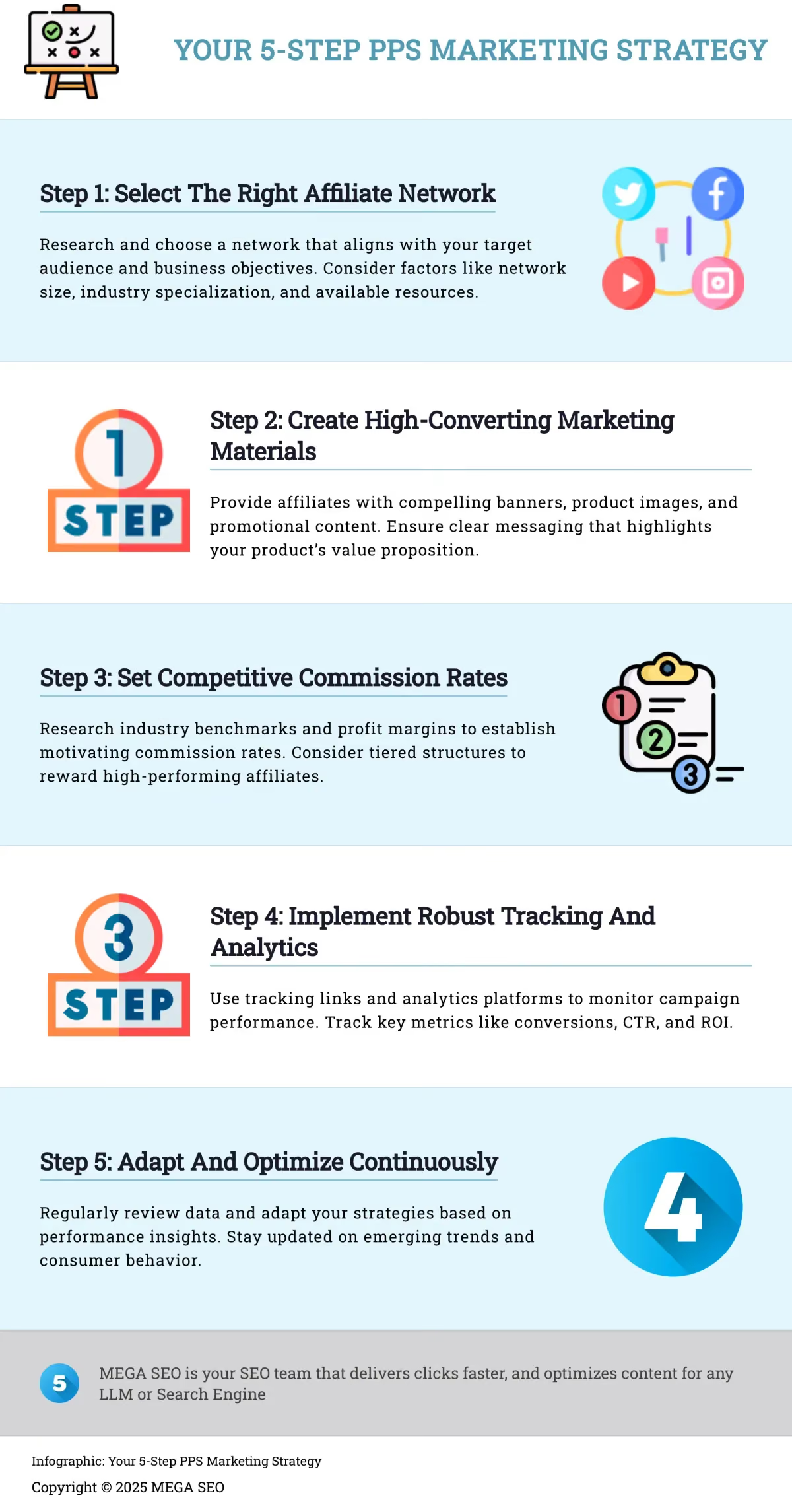
Pay-per-sale (PPS) marketing offers a performance-based approach where you pay affiliates only when they generate sales. Getting started with PPS marketing is straightforward. Let’s explore the key steps to implement a successful PPS strategy.
Choosing the Right PPS Affiliate Network
Choosing the right affiliate network is crucial for PPS marketing success. Aligning your choice with your target audience and business objectives is key. The right affiliate network provides access to affiliates best suited to promote your products. Consider factors like network size, industry specialization, and available resources when making your decision. MEGA SEO streamlines this process by integrating with various affiliate networks, simplifying affiliate management and maximizing your reach. Explore our Resources page for more insights on affiliate network selection.
Key factors to consider when selecting a network
Choosing the right affiliate network is crucial for PPS marketing success. Think of it like picking the right team—you want players who understand your game plan and can deliver results. Here’s what to consider:
- Target Audience Alignment: Does the network specialize in reaching your ideal customer demographic? A network specializing in SaaS products might not be the best fit if you're selling handmade jewelry. Look for a network that aligns with your niche and target audience, as emphasized by Sellbery.
- Affiliate Quality and Relevance: Does the network host affiliates whose audiences match your target market? A large network isn’t necessarily better if the affiliates aren’t a good fit for your products. Prioritize quality and relevance over quantity, ensuring the affiliates within the network align with your brand—a point also made by Sellbery.
- Network Size and Resources: While quality is key, network size does matter. A larger network often offers more diverse affiliate options and greater reach. Also, consider the resources the network provides. Do they offer training, support, and robust reporting tools? Sellbery highlights the importance of considering these factors.
- Technology and Integration: Can the network integrate seamlessly with your existing platform? Smooth integration simplifies tracking, reporting, and payment processing. MEGA SEO, for instance, integrates with various affiliate networks, streamlining affiliate management and maximizing your reach. Explore our resources to learn more.
- Commission Structures and Fees: Does the network’s commission structure align with your budget and business goals? Understand the network’s fees and ensure they’re transparent and competitive. Consider what you can afford to pay while still attracting and retaining high-performing affiliates.
Finding the right affiliate network takes time and research. Don’t rush the process. The right network can significantly impact your PPS marketing success.
Crafting Effective PPS Marketing Materials
Equipping your affiliates with compelling marketing materials is essential for driving sales. Provide high-quality banners, product images, and promotional content to enhance their marketing efforts. Clear and concise messaging that highlights your product’s value proposition is key. Leverage MEGA SEO’s content generation capabilities to create a variety of marketing assets that resonate with your target audience and boost conversion rates. Consider offering customized landing pages and resources to further support your affiliates. Book a demo to see how MEGA SEO can help you create effective marketing materials.
Setting Competitive PPS Commission Rates
Attracting and retaining top-performing affiliates requires a competitive commission structure. Research industry benchmarks and consider your profit margins to determine a commission rate that motivates affiliates. Competitive commission structures encourage affiliates to actively promote your products, leading to increased sales. MEGA SEO helps you manage commission structures efficiently, ensuring timely and accurate payments to your affiliates, fostering strong relationships, and maximizing your return on investment. You can also explore tiered commission structures to reward high-performing affiliates and incentivize increased sales volume. Check out our free tools to help you calculate optimal commission rates.
PPS Best Practices
This section covers best practices for both merchants and affiliates to maximize their success with PPS marketing.
PPS Tips for Merchants
Merchants bear the responsibility for setting up a successful PPS program. Prioritizing quality leads over simply maximizing profit per sale is crucial. PPS marketing, by nature, prioritizes revenue growth, sometimes at the expense of profit per sale. While this approach carries inherent risks, it can unlock significant revenue increases, potentially even leading to acquisitions. Focus on attracting affiliates who can deliver high-quality traffic that converts into paying customers. Choosing the right affiliate network is paramount. The network should align with your target audience and overall business goals. Aligning with the right network ensures your products reach the right customers through relevant affiliates.
Optimizing your website and checkout process is another critical factor. A seamless and efficient purchasing experience encourages conversions and reduces cart abandonment. Make sure your site is mobile-friendly, loads quickly, and offers various payment options. Finally, implement robust tracking systems. This not only helps you accurately measure the performance of your PPS campaigns but also helps detect and prevent fraudulent activities, protecting your business and ensuring accurate payouts.
Leveraging MEGA SEO for PPS Marketing Automation
MEGA SEO offers a suite of tools to streamline and automate many aspects of PPS marketing, helping both merchants and affiliates improve efficiency and maximize returns. For merchants, MEGA SEO simplifies the often complex process of managing affiliate programs. Our platform integrates with various affiliate networks, centralizing affiliate management and broadening your reach. This streamlined approach simplifies communication, tracking, and payments, freeing up your time to focus on other key aspects of your business.
Content creation is another area where MEGA SEO shines. Our content generation tools empower you to create high-quality marketing materials, including banners, product images, and compelling ad copy. This equips your affiliates with the resources they need to drive conversions. Providing affiliates with effective marketing materials is crucial for PPS marketing success. This not only saves you time and resources but also ensures consistent brand messaging across all affiliate channels.
For affiliates, MEGA SEO offers tools to optimize content and improve conversion rates. Our free tools can help you refine your content strategy, target the right keywords, and create engaging content that resonates with your audience. Converting visitors into buyers is the key challenge in PPS marketing, and MEGA SEO provides the resources to tackle this head-on. By improving your content's visibility and effectiveness, you can increase traffic to the merchant's site and ultimately drive more sales, maximizing your commission earnings.
PPS Strategies for Affiliates
For affiliates, building strong relationships with merchants is key. Merchants who offer support and competitive commission rates are more likely to attract and retain high-performing affiliates. A collaborative approach benefits both parties. Leveraging data for optimization is essential for affiliate success. Tracking PPS data provides insights into which products and marketing strategies are performing best, allowing you to refine your approach and improve sales. MEGA SEO offers tools to help you analyze this data and optimize your campaigns. You can learn more by booking a demo.
Understanding your audience is fundamental. Knowing their needs, preferences, and online behavior allows you to tailor your marketing strategies for maximum impact. This includes creating compelling content and choosing the right platforms to reach your target audience. Successfully optimizing your website and marketing strategies for conversions hinges on truly understanding your audience. Finally, focus on utilizing effective marketing strategies. Since PPS is performance-based, your efforts should center on driving conversions and generating sales. Experiment with different approaches, such as social media marketing, email marketing, and content marketing, to find what works best for your audience and niche. MEGA SEO can automate many of these tasks, freeing up your time to focus on relationship building and strategy. Check out our free tools to get started.
Measuring and Optimizing PPS Results
After launching your PPS marketing campaigns, measure results and optimize for better performance. This involves tracking key metrics and leveraging analytical tools for actionable insights.
Tracking Key PPS Metrics
Evaluating your PPS campaigns requires close attention to relevant metrics, just like any other marketing campaign. Key performance indicators (KPIs) provide a quantifiable measure of your campaign’s success. Start by defining your desired outcomes. Are you aiming for increased sales, higher average order values, or a broader customer reach? Once you’ve established your goals, select the metrics that best reflect progress toward those objectives.
Essential metrics for PPS campaigns include conversion rates, clickthrough rate (CTR), average order value (AOV), customer acquisition cost (CAC), and return on investment (ROI). Conversion rates measure the percentage of clicks that turn into sales. A high conversion rate indicates affiliates are effectively driving purchasing decisions. Learn how to refine your strategy and boost your results. Clickthrough rate (CTR) measures how often people click affiliate links. A high CTR suggests compelling ad copy and good placement. Average order value (AOV) tracks the average amount spent per customer transaction. Increasing AOV can significantly impact revenue. Customer acquisition cost (CAC) represents the cost of acquiring a new customer through your PPS program. Keeping CAC low while maintaining high conversion rates is crucial. Finally, ROI is the ultimate measure of your campaign’s profitability. It calculates the revenue generated for every dollar spent on your PPS program. You can achieve this by benchmarking your marketing campaign performance metrics. Regularly monitoring ROI helps identify areas for optimization.
Tools for PPS Analysis and Optimization
Various tools and software can streamline measuring and optimizing PPS performance. These tools provide valuable data and insights, enabling informed decisions and refined strategies.
Consider affiliate network platforms, performance marketing software, tracking links and UTM parameters, and web analytics platforms. Many affiliate networks offer built-in tracking and reporting features, providing real-time data on clicks, conversions, and commissions. Dedicated performance marketing tools offer advanced analytics. Some platforms even offer features like automated A/B testing. Using unique tracking links with UTM parameters allows you to track the source of your traffic and conversions. Finally, integrate your PPS tracking data with web analytics platforms like Google Analytics. This provides a holistic view of marketing performance, allowing you to analyze user behavior and optimize your website. Anytrack is one example of a robust performance marketing tool.
By consistently tracking key metrics and using analytical tools, you can gain a deep understanding of your PPS campaign performance. This data-driven approach helps identify what’s working and how to optimize your strategies.
Key Metrics to Track (Conversion Rates, Average Order Value, Customer Lifetime Value)
Tracking the right metrics is crucial for understanding how well your PPS campaigns perform. Here’s a breakdown of the key metrics you should monitor:
- Conversion Rates: This measures the percentage of visitors who complete a desired action, such as making a purchase. A high conversion rate indicates your affiliates effectively influence purchasing decisions, as highlighted by Astute. For example, if 100 people click an affiliate link and 5 buy something, your conversion rate is 5%.
- Average Order Value (AOV): AOV tracks the average amount spent per customer transaction. Increasing AOV can significantly increase revenue. Astute emphasizes the importance of AOV in measuring campaign success. Divide your total revenue by the number of orders to calculate AOV.
- Customer Lifetime Value (CLTV): While not directly tied to individual PPS campaigns, CLTV measures the total revenue you can expect from a customer throughout their relationship with your business. Understanding CLTV helps you assess the long-term value of customers acquired through PPS marketing. This knowledge helps make informed decisions about commission structures and marketing investments. You can find resources on calculating CLTV on sites like Shopify.
MEGA SEO can help you track these and other important metrics, giving you valuable insights into your PPS campaign performance. Book a demo to learn more.
The Future of PPS Marketing
Pay-per-sale (PPS) marketing isn’t static; it’s constantly evolving alongside technology and consumer behavior. Understanding these shifts is crucial for staying ahead and maximizing your PPS campaigns’ effectiveness.
Emerging Trends in PPS Marketing
Artificial intelligence is poised to revolutionize PPS marketing. AI-powered tools can analyze vast amounts of data to identify high-potential affiliates, predict consumer behavior, and personalize marketing messages for better conversion rates. Sophisticated marketing performance management software empowers teams to track, analyze, and fine-tune their marketing strategies, providing valuable insights into successful tactics. As AI and machine learning continue to advance, expect even more automation and data-driven insights within PPS marketing. This will lead to more efficient campaigns and better returns for both merchants and affiliates. MEGA SEO’s maintenance agent leverages AI to identify areas for improvement in existing content, automatically updating articles to boost click-through rates and search ranking.
Adapting PPS to Changing Consumer Behavior
Consumer behavior is another dynamic force shaping the future of PPS marketing. As people increasingly shop online and through social media platforms, businesses must adapt their strategies to reach these audiences effectively. Understanding audience demographics, like age, gender, location, income, and interests, allows businesses to tailor their messaging and offers for specific customer segments. Demographic data is crucial for crafting targeted campaigns that connect with potential customers. By staying informed about evolving consumer preferences and leveraging data-driven insights, businesses can create PPS campaigns that deliver the right message to the right audience at the right time. This personalized approach will be key to driving conversions and building strong relationships with customers. Check out our free tools to start optimizing your audience targeting today.