
You can pay for clicks. You can pay for leads. But neither of those guarantees a sale. It's easy to end up with high traffic and low conversions, leaving you wondering where the disconnect is. Pay per sale marketing cuts through the noise. It focuses on the only metric that truly matters: revenue. In this model, you compensate marketing partners only after a customer completes a purchase. This guide demystifies the PPS model, showing you how it works and if it's the right strategy for your business goals. We'll cover its unique advantages and potential challenges.
Key Takeaways
- PPS marketing delivers measurable results: By focusing solely on sales, businesses minimize risk and invest only in proven conversions, while affiliates earn based on their performance.
- Strategic planning is essential for PPS success: Choosing the right products, setting competitive commission rates, and cultivating a strong affiliate network are key to maximizing your ROI.
- Embrace innovation to stay competitive: Integrating AI and machine learning, prioritizing mobile-first strategies, and exploring emerging technologies will be crucial for future success in PPS marketing.
What is Pay Per Sale (PPS) Marketing?
Pay Per Sale (PPS) marketing, sometimes called Cost Per Sale, is a performance-based advertising model where advertisers pay only when a sale is made. Unlike other models where payment is triggered by clicks or leads, PPS focuses solely on conversions. This makes it a results-oriented system, ideal for businesses looking to directly tie their marketing spend to revenue. This setup incentivizes publishers to focus on driving high-quality traffic that converts into actual sales.
The Core Concept of Pay Per Sale
At its core, PPS marketing operates on a simple principle: you only pay for what you sell. The advertiser sets a commission rate—a percentage of the sale price—that they’ll pay to the publisher (often an affiliate marketer) for each successful transaction generated through their marketing efforts. This commission structure ensures that the advertiser’s investment is directly linked to tangible results, minimizing risk and maximizing the return on ad spend. It’s a win-win where the advertiser gains sales, and the publisher earns a commission for their contribution.
How Pay Per Sale Works
PPS marketing typically involves two main players: the advertiser (the business selling a product or service) and the publisher (the marketer promoting the product). The publisher, using various marketing channels, directs potential customers to the advertiser’s website. When a customer makes a purchase through the publisher’s unique referral link, the sale is tracked, and the publisher earns their pre-determined commission. This tracking is often facilitated by affiliate networks or specialized tracking software, ensuring accurate attribution of sales and timely commission payments. This transparent and straightforward process makes PPS marketing a popular choice for businesses seeking measurable results and a clear understanding of their marketing ROI.
Defining What Constitutes a "Sale"
In Pay Per Sale marketing, it's crucial to have a clear definition of what counts as a "sale." It’s not always as simple as a customer clicking "buy." A "sale" is an agreement between your business and your marketing partner. It could be a completed online purchase, but it might also be a signed contract for a service, a booked appointment, or another specific action that directly brings in revenue. This flexibility allows the PPS model to work for various business types, from e-commerce stores to service-based companies. The important thing is that both parties agree on the specific, money-generating action that will trigger a commission payment, ensuring everyone is aligned on the campaign's goals.
Once you've defined what a sale is, you need a reliable way to track it. This is where technology comes in. Typically, systems use tracking cookies or unique referral links to validate the transaction and connect it back to the right publisher. This process ensures accurate attribution, so the affiliate who drove the conversion gets the credit they deserve. This tracking is often handled by affiliate networks or dedicated software, which automates the process of monitoring sales and managing timely commission payments. This reliable system builds trust and makes the partnership between advertisers and publishers work smoothly.
Who Qualifies for PPS Programs?
While the pay-per-sale model sounds appealing, it's not always accessible to every business, especially when working with a marketing agency. Because agencies often invest their own time and resources upfront to generate sales, they need to be selective about their partners. They look for established businesses with a proven track record and a high potential for conversions to ensure the partnership is profitable for both sides. This means that many PPS programs come with a specific set of qualifications that businesses must meet before they can be considered.
Strict Entry Requirements for Agencies
To minimize their risk, agencies that offer PPS marketing have stringent entry requirements. For example, some agencies require your business to be at least five years old with annual sales of $30 million or more. They might also look for a minimum monthly spend on digital advertising, such as $10,000, to ensure you're already committed to growth. These criteria help the agency verify that your business has a stable foundation, a validated product, and the capacity to handle an increase in sales. It's a significant partnership, and these qualifications are designed to create a strong client relationship built for long-term success.
Options for Businesses That Don't Qualify
If your business doesn't meet these high-level requirements, don't worry. There are still plenty of effective ways to grow your sales with performance in mind. Many agencies offer alternative services, such as managing paid ad campaigns or providing marketing advice on a retainer or project basis. You can also leverage powerful tools to manage your growth in-house. Platforms like MEGA AI are designed for startups and small businesses, offering end-to-end automation for SEO and Paid Ads. By using AI to handle keyword research, content creation, and ad optimization, you can drive sales efficiently and build the track record needed to qualify for PPS programs down the road.
PPS vs. PPC vs. PPL: What's the Difference?
Understanding how pay-per-sale (PPS) marketing compares to other performance-based models is crucial for selecting the right strategy. This section clarifies the differences between PPS and two common alternatives: pay-per-click (PPC) and pay-per-lead (PPL).
PPS vs. Pay Per Click (PPC)
PPS marketing prioritizes results. You pay only when a sale occurs, minimizing risk for advertisers. This model is frequently used in affiliate marketing, where publishers earn a commission for each sale generated through their promotions. Regardless of whether the sale happens online or in person, the principle remains consistent: no sale, no charge.
In contrast, PPC advertising focuses on clicks. You incur a fee each time a user clicks your ad, regardless of whether a purchase follows. While PPC can boost traffic and brand visibility, it doesn’t ensure sales. You could accumulate clicks without a corresponding rise in revenue, particularly if your ads aren’t targeted effectively or your landing pages aren’t optimized for conversions.
PPS vs. Pay Per Lead (PPL)
PPS marketing requires more effort than PPL marketing. With PPS, payment is contingent upon a completed sale. PPL, however, compensates for each qualified lead, regardless of conversion to a sale. Generating leads is typically easier than closing sales, making PPL less challenging than PPS.
While PPL delivers faster results, the return on investment (ROI) can be less predictable. The leads generated might not be high-quality, and many may not become paying customers. PPS, while potentially slower, yields higher-quality leads that result in a guaranteed return for the client. This makes PPS more appealing for businesses focused on maximizing profitability.
Understanding PPS within the Cost Per Action (CPA) Model
Cost Per Action (CPA) is a broad marketing model where advertisers pay for a specific user action. This action could be filling out a form, signing up for a trial, or downloading a resource. Pay Per Sale fits neatly under this umbrella as a highly focused type of CPA. While the broader CPA model can track various conversions, PPS is exclusively concerned with the final, most valuable action: a completed sale. This makes it a powerful strategy for businesses that want to tie their marketing spend directly to revenue generation, ensuring every dollar spent is on a confirmed purchase rather than just a potential lead.
Think of CPA as the parent category, with PPS and PPL (Pay Per Lead) as specialized approaches within it. A PPL campaign compensates for generating a potential customer, like when someone submits their contact information. A PPS campaign, however, only pays out when that potential customer becomes an actual paying customer. This direct link to revenue makes PPS a lower-risk, higher-reward strategy within the CPA framework. It shifts the focus from generating interest to closing deals, guaranteeing that advertisers only pay for marketing efforts that produce a tangible financial return.
Which Model Is Right for You?
The fundamental difference between these models lies in the payment trigger. PPS focuses exclusively on sales, providing a direct path to revenue generation. PPC centers on clicks, a valuable metric for brand awareness but not a guarantee of return. PPL occupies a middle ground, rewarding lead generation but not ensuring sales. The optimal model depends on your specific business objectives and risk tolerance. If guaranteed returns are paramount and you’re willing to invest more effort, PPS might be the ideal choice. If broader reach and brand visibility are your priorities, PPC might be more suitable. If you seek a balance between speed and ROI, PPL could be a good fit. Understanding these key differences is essential for developing an effective marketing strategy.
Why Choose Pay Per Sale Marketing?
Pay Per Sale (PPS) marketing offers a range of advantages for both businesses and affiliates. Let’s explore the key benefits that make this performance-based model so attractive.
How Businesses Win with PPS
For businesses, PPS marketing offers a low-risk, high-reward advertising model. Since you only pay when a sale is made, you’re minimizing upfront costs and investing only in proven results. This payment structure makes budgeting predictable. As TOP Agency explains, “Pay Per Sale (PPS) compensates owners or publishers of websites based on the number of sales generated from clicks of advertisements on their sites.” This direct link between cost and revenue makes PPS particularly appealing for businesses focused on maximizing ROI. The simplicity of PPS is a major draw. You don’t need to create ads or track payments; affiliates handle those tasks, freeing up your resources. With a clear understanding of your audience’s buying habits, PPS can yield significant returns, making it a powerful tool for driving sales and revenue growth.
What's in It for Affiliates?
From an affiliate perspective, PPS marketing presents a unique opportunity to earn substantial income based on performance. It’s a challenging model, as LeadsHook points out in their guide to PPS marketing, but the potential rewards are significant. The performance-based nature of PPS means your earnings directly correlate with your ability to drive sales. This incentivizes affiliates to optimize their strategies and focus on delivering high-quality traffic that converts. It’s important to understand that PPS is a specific type of affiliate marketing, focused solely on commissions earned per sale. This distinction helps clarify the payment structure and ensures alignment between affiliates and businesses. By effectively qualifying leads and understanding the products or services they promote, affiliates can maximize their earning potential.
Challenges and Opportunities for Publishers
While PPS marketing offers high earning potential, it’s not without its hurdles for publishers. The primary challenge is that compensation is tied directly to a completed sale. Unlike PPL, which pays for qualified leads, PPS requires publishers to guide customers all the way through the purchase process. This demands a deeper focus on creating high-intent traffic and persuasive content that leads to conversions. As Intellibright notes, setting up accurate tracking and clearly defining what constitutes a "sale" can also add a layer of technical complexity. However, these challenges present a significant opportunity. Publishers who master the art of driving sales are rewarded with higher commissions and build more valuable, long-term partnerships with advertisers who appreciate the guaranteed ROI.
Benefits for Niche and Small Websites
PPS marketing is particularly well-suited for niche and small websites with dedicated, engaged audiences. A smaller, highly targeted audience can often convert better than a large, general one. For example, a blog dedicated to sustainable pet products can effectively promote eco-friendly toys and earn commissions on sales. Because advertisers only pay for results, they are often more willing to partner with smaller publishers in a PPS model, creating a low-risk entry point for new affiliates. This allows niche content creators to monetize their platforms without needing massive traffic volumes. The key is to build an authentic connection with your audience and promote products that genuinely align with their interests, turning trust into a reliable revenue stream.
Managing Risk and Maximizing ROI
One of the most compelling benefits of PPS marketing is its potential for high ROI. By focusing solely on sales, businesses can accurately track their advertising spend and measure the effectiveness of their campaigns. Even offline purchases originating from online ads can be tracked, providing a comprehensive view of your marketing performance. However, the success of PPS hinges on a deep understanding of your target audience and the ability to convert website traffic into sales. PPS is strictly performance-based, requiring a strategic approach to audience engagement and conversion optimization. For affiliates, effective lead qualification is crucial for maximizing profitability and mitigating risks. By focusing on high-quality leads and optimizing their marketing efforts, affiliates can unlock the significant earning potential of PPS marketing while managing the inherent challenges of a performance-based model.
How PPS Mitigates Risk in Search Engine Marketing
Pay Per Sale marketing provides a low-risk, high-reward advertising model, which is especially valuable in search engine marketing where costs can quickly add up. Since you only pay when a sale is made, you eliminate the upfront cost of clicks or impressions that don't convert. This structure makes your marketing budget predictable and directly ties your spending to proven results. The simplicity of PPS is another significant advantage. Affiliates often handle the ad creation and payment tracking, which frees up your internal resources for other priorities. By focusing your efforts on a model that guarantees a return for every dollar spent, you can mitigate financial risk and invest confidently in your growth.
Key ROI Statistics for Affiliate Marketing
The return on investment for affiliate marketing, which frequently uses the PPS model, can be substantial. According to research from Fiverr, businesses can see a return of $15 for every $1 spent on affiliate marketing. One of the main reasons for this high ROI is the model's inherent efficiency. As LeadsHook notes, focusing solely on sales allows businesses to accurately track their advertising spend and measure the effectiveness of their campaigns with precision. This clear line of sight between spending and revenue means every part of the campaign can be optimized for performance, ensuring that marketing dollars are working as hard as possible to generate actual income for your business.
Typical Services Included in PPS Packages
When you engage with a PPS program, you're getting more than just a referral link; you're accessing a full suite of marketing activities. These digital marketing packages are managed by the publisher or an affiliate agency. A core component is strategic planning, which includes setting a competitive commission rate to attract top-tier affiliates. The package also covers affiliate recruitment and management, so you don't have to find and vet publishers yourself. The publisher then uses their own channels—like popular blogs or social media accounts—to promote your product, allowing you to tap into established audiences without the upfront costs.
The actual marketing execution is where these packages shine. Services often include sophisticated content marketing and SEO strategies to capture high-intent organic traffic. Publishers might create in-depth product reviews that rank on Google, directing qualified buyers to your site. Many also run targeted paid ad campaigns, absorbing the ad spend themselves. Crucially, PPS packages always include robust tracking and analytics. Using unique affiliate links and tracking software, every sale is meticulously monitored. This ensures accurate attribution, transparent reporting, and confidence that you're only paying for verified sales.
Understanding the Costs of a PPS Program
While the "pay only for sales" model is appealing, launching a PPS program isn't entirely without cost. There are initial and ongoing investments to consider that cover the technology and infrastructure needed to track sales, manage affiliates, and process payments. Understanding these expenses from the outset helps you budget effectively and set your program up for long-term success. Let's break down the primary costs you can expect when establishing your program.
Initial Setup and Program Costs
Getting your PPS program off the ground involves an initial setup fee, which can range from $500 to over $2,000. This one-time investment covers the essential groundwork, like creating your merchant account and integrating the tracking system with your ecommerce platform. This integration is critical for ensuring every sale referred by an affiliate is accurately recorded. A solid setup prevents tracking errors and ensures your affiliates are compensated correctly, which is fundamental for building trust and a strong affiliate network.
Affiliate Software and Marketing Materials
A successful PPS program requires a strategic approach to how your affiliates represent your brand. This means investing in quality affiliate software and providing compelling marketing materials. You'll need a reliable platform to manage affiliates, monitor performance, and handle commission payouts. Beyond the software, empowering your partners with professional resources like high-quality banners, ad copy, and product images is key. Creating these assets is an investment, but they equip your partners to effectively promote your products and maintain brand consistency.
Affiliate Network Fees
Once your program is live, you'll have recurring costs, usually in the form of monthly maintenance fees. These fees, which can range from $30 to $300, are for using an affiliate network or software platform. The cost often depends on the program's complexity and the level of service included. These monthly payments typically cover platform access, customer support, fraud detection, and payment processing. This ongoing expense ensures your program runs smoothly and maintains the technical infrastructure needed for accurate tracking and reliable affiliate payouts, which is essential for retaining high-performing partners.
How to Build a Winning PPS Strategy
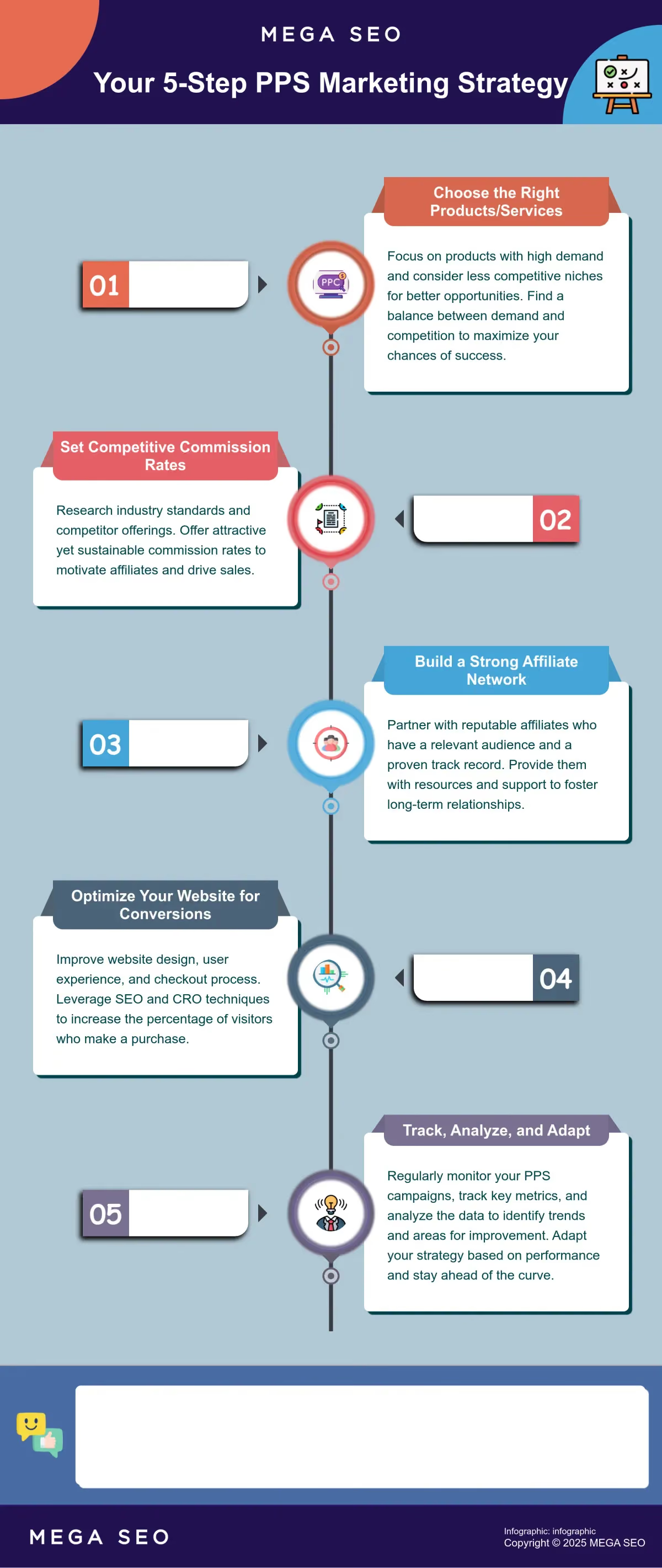
A well-defined strategy is crucial for successful pay-per-sale marketing. Here’s how to develop one:
Calculate Customer Acquisition Costs First
Before you can set a commission rate that attracts top affiliates and remains profitable, you need to understand your numbers. The most important metric here is your Customer Acquisition Cost (CAC). This figure represents the total sales and marketing cost required to convince a customer to make a purchase. Calculating your CAC helps you determine a sustainable commission for your PPS program. For instance, if your average customer brings in $150 in profit and your CAC is $40, you have a clear margin to work with when setting affiliate payouts. This data-driven approach ensures that you are investing only in proven, profitable conversions.
Knowing your CAC is foundational to building a scalable marketing strategy. It allows you to make informed decisions not just for your affiliate program, but across all your channels, from paid ads to content marketing. By focusing on the cost of each sale, you can create a PPS model that is both appealing to partners and financially sound for your business. This clarity prevents you from overspending on acquisitions and ensures every sale contributes positively to your bottom line. It transforms your marketing from a cost center into a predictable revenue driver, which is the ultimate goal of any performance-based model.
Set Clear Goals and Policies
A successful PPS program runs on clarity. Without clear goals and well-defined policies, you risk confusion and disputes with your affiliates. Start by defining what constitutes a "sale." Does it include a 30-day return window? Are there specific conditions that must be met for a transaction to be considered valid? Since the payment trigger in PPS is exclusively the sale, this definition must be unambiguous to ensure everyone is on the same page. This transparency builds trust and sets the stage for a healthy, long-term partnership with your affiliates.
Next, establish your commission structure and affiliate policies. Your commission rates should be competitive enough to attract skilled marketers while aligning with your CAC to ensure profitability. Consider offering tiered commissions to reward top performers. Your policies should also outline acceptable promotional methods, brand guidelines, and payment schedules. Creating a comprehensive affiliate agreement protects both you and your partners. As experts from TOP Agency note, the direct path to revenue generation in PPS relies on a clear understanding of these rules, which helps cultivate a strong and effective affiliate network.
Find the Right Products for Your Program
Selecting the right products or services is the first step in a successful PPS strategy. High-demand niches like travel, fashion, and technology are good choices, but less competitive niches can also be profitable. Consider exploring niches like vacuum cleaners or sustainable products to find your sweet spot. The key is to find a balance between demand and competition. A niche with high demand but also high competition might be challenging to break into, while a niche with low demand won’t generate significant sales even with low competition.
Focusing on "Evergreen" Products
To build a resilient PPS program, concentrate on evergreen products—items or services that maintain consistent demand regardless of the season or current trends. Think about industries where people are always spending money, such as dating services, personal finance tools, or health supplements. These products are not subject to the volatile cycles of fads, providing a more stable foundation for your sales efforts. By promoting items that are always in demand, affiliates can create content and campaigns with a longer shelf life, leading to more predictable and sustained revenue streams. This approach simplifies your strategy by removing the need to constantly pivot to the next big thing, allowing you to refine and optimize your marketing for a reliable product category.
How to Set Competitive Commission Rates
Competitive commission rates are essential for attracting and motivating affiliates. Rates typically range from 5% to 30% depending on the product or service sold. Higher commissions can attract more affiliates and drive better sales, but you need to balance this with your profit margins. Research what your competitors are offering and set rates that are attractive yet sustainable for your business. Consider offering tiered commission structures, where affiliates earn higher commissions for reaching specific sales targets. This can incentivize them to promote your products or services more actively.
Grow Your Affiliate Network
Cultivating strong relationships with affiliates is paramount. By nurturing partnerships with reputable affiliates who have a relevant audience and a track record of success, you can significantly enhance your marketing efforts. Look for affiliates who align with your brand values and target audience. Provide them with the resources they need to succeed, such as marketing materials, product information, and dedicated support. Regularly communicate with your affiliates, offer incentives, and build a sense of community to foster long-term partnerships.
Provide Ready-to-Use Marketing Materials
To maximize your affiliate partnerships, you need to make it easy for them to promote your products. Providing a toolkit of ready-to-use marketing materials is one of the most effective ways to do this. When you supply well-designed banners, high-quality product images, and pre-written content, you reduce the time affiliates spend on creative tasks. This frees them up to focus on what they do best—optimizing their strategies to drive sales. This approach also helps maintain a consistent brand message across all channels. Cultivating strong partnerships with affiliates is key, and supplying them with professional materials shows you're invested in a mutually beneficial relationship, which ultimately leads to higher conversion rates.
Optimize websites for conversions
Optimizing your website for conversions is just as important as attracting traffic. Improving website design and user experience increases the percentage of visitors who make a purchase. This includes leveraging SEO to attract more visitors and using conversion rate optimization (CRO) techniques. A well-designed website with clear calls to action, easy navigation, and a seamless checkout process can significantly impact your conversion rates and overall PPS performance. Regularly test different elements of your website, such as headlines, images, and calls to action, to identify what resonates best with your audience and drives the most conversions.
Pay Per Sale Marketing Best Practices
Successfully implementing a Pay Per Sale (PPS) marketing program involves more than just setting up tracking links. It requires a strategic approach to maximize conversions and build strong, lasting partnerships. Here’s a breakdown of best practices to ensure your PPS campaigns thrive:
Use a Mix of Marketing Channels
Don’t put all your eggs in one basket. Encourage your affiliates to promote your products across a variety of channels. This could include social media marketing, email marketing, content marketing (like blog posts and articles), influencer collaborations, and even paid advertising. Diversification expands your reach and allows you to tap into different audience segments, increasing your chances of driving sales. A robust, multi-channel approach ensures consistent visibility and engagement. Consider providing your affiliates with customized posts and other marketing materials to streamline their efforts.
How to Track and Analyze Performance
Data is king in PPS marketing. You need to meticulously track every sale and attribute it to the correct affiliate. Utilize unique identifiers like cookies or special links to monitor the customer journey from click to conversion. This accurate tracking is crucial for calculating commissions and understanding which affiliates and channels are performing best. Regularly analyze this data to identify trends, optimize campaigns, and ensure you’re getting the most out of your PPS program. Wikipedia’s page on Pay Per Sale offers a good overview of tracking methods. Remember, what gets measured gets managed. MEGA SEO’s automated tools can significantly simplify this process, providing comprehensive tracking and reporting features.
Nurture Your Affiliate Relationships
Your affiliates are your partners in PPS marketing. Nurturing these relationships is essential for long-term success. Establish clear communication channels and set expectations from the outset. Provide your affiliates with the resources they need to effectively promote your products, such as marketing materials, product information, and training. Regularly check in with your affiliates, offer support, and address any concerns they may have. Building strong affiliate relationships fosters trust and encourages them to invest more in promoting your brand. A collaborative approach leads to better results for everyone involved. Consider using MEGA SEO’s platform to streamline communication and provide your affiliates with valuable resources. Contact us to learn more about how MEGA SEO can help you manage and optimize your PPS marketing program.
Common PPS Challenges and How to Solve Them
Pay-per-sale (PPS) marketing presents unique challenges. Understanding these hurdles and how to address them is crucial for a successful PPS campaign.
Solving Tracking and Attribution Problems
Accurately tracking which specific ad led to a sale can be complex. For online sales, use unique identifiers like cookies or special links to follow the customer journey. This ensures the sale is credited to the correct ad, providing clear attribution data. Robust tracking mechanisms are essential for transparent reporting and optimizing your PPS campaigns. Clear attribution allows you to understand which strategies are working and allocate your budget effectively.
How to Track Offline Sales
Sales that happen offline, whether over the phone or in person, can still be traced back to an online ad. This is often done using specific attribution methods, like assigning unique, rotating phone numbers to different online ads or affiliate links. When a customer calls one of these numbers, the system can credit the call and any resulting sale to the specific online source. This method provides a complete view of your marketing performance, ensuring affiliates are properly compensated for all the sales they generate, not just those completed through a website checkout.
How to Handle Affiliate Fraud
Finding trustworthy affiliates is paramount. Identifying high-quality affiliates with the right audience and ethical practices can be difficult. Thorough vetting and ongoing monitoring are essential to prevent fraudulent activities like click fraud or fake leads. This protects your budget and brand reputation. Building strong relationships with your affiliates can also help foster transparency and trust.
Finding the Right Balance Between Risk and Reward
PPS models shift financial risk to the agency, as they invest without guaranteed returns. This can be a deterrent, especially for established firms. Finding the right balance between potential rewards and inherent risks is key. A deep understanding of your target audience and their needs is crucial for success in PPS marketing. Start with smaller campaigns to test the waters and gradually scale as you gain confidence and see positive results. While challenging, PPS marketing offers significant earning potential when managed effectively. Consider offering performance-based bonuses to incentivize affiliates and drive better results.
When PPS Isn't the Right Fit
While PPS marketing is a powerful tool, it’s not a universal solution. Certain business models and goals are better served by other strategies. If your business has a long or complex sales process, this model might not be the best choice. Products that require significant customer education, multiple consultations, or a lengthy decision-making period are difficult to track within a standard PPS framework. For example, high-ticket B2B software or custom-built services often involve several touchpoints before a sale is closed. Attributing that final sale to a single affiliate click becomes challenging. In these cases, a model like Pay Per Lead (PPL) might be more appropriate, as it rewards affiliates for an earlier, more easily trackable step in the sales funnel.
The financial structure of your business also plays a role. If you sell products with very low profit margins, offering a commission rate that is both sustainable for you and attractive to high-quality affiliates can be a tough balancing act. Furthermore, the PPS model places the financial risk primarily on the affiliate or marketing agency. They invest their time and resources to promote your product without a guaranteed payout. For new or unproven products, it can be difficult to find skilled partners willing to take on that risk. This is why having a product with a proven conversion rate and a clear value proposition is often a prerequisite for a successful PPS program.
Finally, consider your primary marketing goals. If your main objective is to build brand awareness, generate top-of-funnel traffic, or grow your email list, PPS is not the right tool for the job. This model is laser-focused on driving sales, a bottom-of-funnel activity. For broader marketing goals, Pay Per Click (PPC) or social media campaigns might be more effective. Additionally, the initial setup can be a hurdle. It takes considerable effort to define what constitutes a "sale," implement accurate tracking systems, and manage the program. Businesses without the technical resources or expertise to handle these complexities may find the model more trouble than it's worth.
The Right Tools for Your PPS Campaign
Getting the right tools for your pay-per-sale marketing campaigns is key to effectively tracking, managing, and optimizing your efforts. Here’s a breakdown of essential tools and platforms:
Top Affiliate Networks to Consider
Affiliate networks act as intermediaries, connecting businesses (merchants) with potential affiliates to promote their products or services. Choosing the right network depends on your specific needs and industry. Some popular options include:
- ShareASale: A large network known for its user-friendly interface and diverse range of merchants. It’s a solid choice for beginners.
- CJ Affiliate (formerly Commission Junction): One of the oldest and most established networks, CJ Affiliate boasts a massive selection of big-name brands. It’s suitable for experienced marketers looking for established programs.
- ClickBank: Specializing in digital products and online courses, ClickBank offers high commission rates and a global reach.
- Awin: A global affiliate network with a strong focus on performance marketing. Awin provides advanced tracking and reporting tools to help optimize campaigns.
- Rakuten Advertising: Formerly known as Linkshare, Rakuten Advertising connects businesses with a large network of publishers and influencers.
Remember, affiliate programs that pay per sale are often more suitable for international businesses, while pay-per-sale marketing can be more effective for local businesses using pay-per-call strategies. Consider your target market and geographic reach when selecting a network.
Software for Tracking and Management
Managing multiple affiliate campaigns can quickly become complex. Dedicated PPS tracking and management software helps streamline your efforts:
- Impact (formerly Impact Radius): A comprehensive partnership management platform that helps businesses manage all aspects of their affiliate programs, from recruitment and onboarding to tracking and payments. Impact offers robust tracking and reporting features to measure campaign performance accurately.
- PartnerStack: Designed for B2B SaaS companies, PartnerStack focuses on building and managing channel partnerships. It offers automated onboarding and streamlined communication tools.
- Everflow: A cloud-based platform that provides real-time tracking and analytics for affiliate and partner marketing programs. Everflow offers customizable dashboards and reporting features to gain granular insights into campaign performance.
- Refersion: A popular choice for ecommerce businesses, Refersion offers easy integration with popular platforms like Shopify. It provides detailed tracking and reporting to measure the effectiveness of affiliate campaigns. This makes it easy to see which affiliates are driving the most sales.
PPC management software can also be valuable for PPS marketers, offering tools to plan, execute, optimize, and track pay-per-click campaigns, automating tasks, and providing insights to improve efficiency and ROI. Consider exploring options like Optmyzr for advanced PPC management.
Essential Analytics and Reporting Tools
Data-driven decisions are crucial for successful PPS marketing. Analytics and reporting tools provide the insights you need to optimize your campaigns:
- Google Analytics: A free and powerful tool that provides comprehensive data on website traffic and user behavior. Google Analytics can be integrated with other marketing platforms to track conversions and attribute them to specific affiliate campaigns. This helps you understand which marketing channels are most effective.
- Adobe Analytics: A more advanced analytics platform that offers deeper insights into customer journeys and behavior. Adobe Analytics is suitable for larger businesses with complex data needs.
Analyzing case studies of successful PPS campaigns can also provide valuable insights. These case studies often highlight common marketing and sales challenges—along with expert paid search strategies, solutions, and results. Look for resources that offer real-world examples and actionable takeaways.
Which Industries Benefit Most from PPS?
Pay Per Sale (PPS) marketing isn’t one-size-fits-all. Its effectiveness depends on the industry, niche, and target audience. Some sectors naturally lend themselves to PPS marketing, offering higher conversion rates and better returns. Let’s explore a few industries where PPS marketing truly shines:
E-commerce and Retail
E-commerce and retail are fertile ground for PPS marketing. High-demand niches like travel, fashion, and technology are good choices, but less competitive niches can also be profitable. Consider the travel industry. Travel bloggers and influencers can partner with travel agencies and hotel chains, earning commissions on vacation packages or hotel bookings. Fashion and technology offer similar opportunities, with fashion influencers promoting clothing brands and tech reviewers earning commissions on gadgets and software. The key is to find a niche with strong demand and a product or service that aligns with your audience. For more insights on PPS marketing strategies, explore our customized posts. MEGA SEO’s automated keyword research can also help you identify the right keywords to target for your e-commerce products.
Digital Products and Services
Digital products and services are another area where PPS marketing excels. Because Pay Per Sale (PPS) marketing is performance-based, you only get paid when your client receives payment. This makes it a potentially lucrative model, especially for digital products where the cost of production is often lower. This allows for higher profit margins and greater flexibility when setting commission rates. Software companies, online course creators, and digital marketing agencies can leverage PPS marketing to expand their reach and drive sales. They can do this by offering attractive commissions to affiliates who successfully promote their products or services.
Subscription-Based Businesses
Subscription-based businesses also find PPS marketing particularly advantageous. Pay Per Sale marketing offers a powerful and cost-effective way to drive sales, especially for subscription-based services that rely on recurring revenue. This model aligns the interests of marketers and businesses, as both benefit from generating consistent revenue streams. Think about streaming services, subscription boxes, or online learning platforms. By offering recurring commissions on each successful subscription, businesses can incentivize affiliates to actively promote their services. This creates a win-win situation, driving long-term growth for both the business and its marketing partners. Explore MEGA SEO’s free tools to start optimizing your subscription-based business for PPS marketing. Our resources provide additional information on how to implement a successful PPS marketing strategy.
What's Next for Pay Per Sale Marketing?
The digital marketing landscape is constantly evolving, and Pay Per Sale (PPS) marketing is no exception. Staying ahead of the curve requires understanding and adapting to emerging trends. Here’s a glimpse into the future of PPS marketing:
The Role of AI and Machine Learning
Artificial intelligence (AI) and machine learning (ML) are poised to revolutionize PPS marketing. These technologies offer the ability to analyze massive datasets, identify patterns, and predict consumer behavior with greater accuracy than traditional methods. This enhanced precision allows marketers to target the right audience with the right message at the right time, optimizing ad spend and maximizing ROI. Imagine AI automatically adjusting bids and optimizing ad placements for each individual consumer. As AI and ML continue to develop, expect more automation in PPS marketing, leading to more efficient campaigns and improved returns for advertisers. MEGA SEO is already leveraging the power of AI and ML to automate keyword research, content generation, and other critical aspects of SEO, making it easier than ever for businesses to optimize their online presence. Learn more about how MEGA SEO can help you stay ahead of the curve.
Using AI for Ad and Campaign Optimization
AI is a game-changer for optimizing ad campaigns because it can process and learn from data at a scale humans simply can't. In a PPS model, where every dollar spent needs to lead to a sale, this capability is invaluable. AI algorithms can analyze past campaign performance, user behavior, and market trends to predict which ad creatives and audience segments are most likely to convert. This means your campaigns become smarter over time, automatically shifting budget toward the ads that generate the most sales. This level of data-driven precision helps you refine your targeting and messaging, ensuring your ads reach the right people at the moment they are ready to buy.
How MEGA AI Simplifies Paid Ads Management
Managing paid ad campaigns across multiple platforms can be a huge time sink. MEGA AI streamlines this entire process. Our platform allows you to upload your ad content in bulk to Meta, Google, and LinkedIn all at once. From there, our AI can automatically remix your content to create hundreds of variations, testing different headlines, images, and calls to action to find the top performers. It also handles budget allocation, moving your spend to the campaigns and ads that are delivering the best results. This end-to-end automation simplifies paid ads management, making it accessible for small teams and agencies looking to achieve better outcomes without getting bogged down in manual adjustments.
Why a Mobile-First Approach Matters
With the rise of mobile commerce, optimizing your PPS campaigns for mobile platforms is no longer optional—it’s essential. Consumers are increasingly using their smartphones for everything from product research to purchasing, making mobile optimization a critical factor in PPS marketing success. This involves designing mobile-friendly landing pages that load quickly and provide a seamless user experience. Location-based targeting offers opportunities to reach consumers based on their physical location, delivering relevant offers and promotions. Consider using MEGA SEO’s automated tools to ensure your website is fully optimized for mobile devices and provides a positive user experience. Explore our free tools to get started.
How New Technologies Are Shaping PPS
Beyond AI and mobile, other emerging technologies are shaping the future of PPS marketing. Augmented reality (AR) and virtual reality (VR) offer immersive experiences that can transform how consumers interact with products and brands. AR, for example, can enable customers to visualize products in their own homes before making a purchase, bridging the gap between online and offline shopping. Blockchain technology can enhance transparency and security in transactions, building trust and fostering stronger relationships with consumers. As these technologies mature, they will unlock new possibilities for PPS marketing, creating more engaging and effective campaigns. MEGA SEO’s platform is designed to adapt to these evolving technologies, ensuring your PPS campaigns remain effective and innovative. Contact us to learn more about how we can help you integrate these emerging technologies into your marketing strategy.