
The future of market data analysis is moving beyond static dashboards and reports. The real value now comes from turning that information into action—automatically. This evolution is powered by AI agents that can analyze data, make strategic decisions, and execute tasks with minimal human oversight. For small businesses, this provides access to a level of marketing sophistication that was once out of reach. This article explores the shift from manual interpretation to automated implementation, where technology not only provides insights but also acts on them to drive growth around the clock.
Key Takeaways
- Gain a Complete Market View: Relying only on your internal business data creates blind spots; integrate external intelligence about your competitors and customer trends to make truly informed strategic decisions.
- Adopt a Flexible, Real-Time Approach: Marketing data is dynamic, so your strategy must be too. Build a plan that allows you to adapt to new information quickly, adjusting campaigns based on what is working right now.
- Automate from Insight to Execution: The greatest value of data comes from acting on it. Use AI agents to autonomously analyze information and implement marketing tasks, closing the gap between knowing what to do and getting it done.
Understanding Key Market Analysis Concepts
Market Analysis vs. Market Research vs. Marketing Analytics
These terms are often used interchangeably, but they represent distinct stages of understanding your market. Think of market analysis as the strategic overview; it’s a broad assessment of a market’s potential, examining its size, competition, and customer behavior to determine its attractiveness. Market research, on the other hand, is the tactical process of gathering the data needed for that analysis through surveys, interviews, or focus groups. Finally, marketing analytics focuses inward on your own activities, measuring the performance of your campaigns to see what’s working. A solid strategy requires all three: research to gather data, analysis to form a plan, and analytics to measure the results and refine your approach.
How Market Analysis Differs from a SWOT Analysis
While both are foundational planning tools, a market analysis and a SWOT analysis serve different purposes. A market analysis is primarily external, focusing on the viability of a product or service within a specific market. It answers questions about your potential customers and competitors. A SWOT analysis, however, evaluates your business itself by identifying its internal Strengths and Weaknesses, along with external Opportunities and Threats. The two are complementary; your market analysis provides the critical information needed to accurately identify the opportunities and threats in your SWOT analysis. You first need to understand the playing field before you can assess your position on it.
The Role of Market Segmentation
You can’t effectively market to everyone at once. This is where market segmentation comes in. It’s the process of dividing your broad target market into smaller, more manageable groups of people with shared characteristics, such as age, location, interests, or buying habits. By understanding these different customer types, you can tailor your messaging, products, and marketing campaigns to resonate with each specific group. For a small business, this is essential for using your marketing budget efficiently. Instead of shouting into the void, you can have direct conversations with the people most likely to become customers. This targeted approach is the foundation for effective search engine optimization, as it helps you create content that directly answers the questions your ideal customers are asking.
Applying the Principle of Supply and Demand
At its core, market analysis is about finding opportunities, and the economic principle of supply and demand is your guide. This concept helps you evaluate how much people want something versus how much is available. High demand paired with low supply often points to a market gap—an unmet need you could fill. Conversely, low demand and high supply can signal a saturated market where it might be difficult to compete. For a local business, this could mean assessing how many other coffee shops are in your neighborhood compared to the number of residents and office workers. Understanding this balance helps you identify underserved niches, set competitive pricing, and position your business for growth.
How Data Is Redefining Marketing Strategy
Marketing used to rely heavily on intuition and creative bets. Today, data has transformed it into a science. By collecting and analyzing information about customer behavior, preferences, and needs, businesses can make smarter, more effective decisions. A data-driven marketing strategy allows you to move beyond guesswork, replacing assumptions with concrete evidence to guide your campaigns. This shift means you can understand your audience on a deeper level, creating personalized experiences that resonate and drive results.
Integrating data analysis into your marketing efforts helps you identify which channels and messages deliver the best returns. This clarity allows you to allocate your resources more wisely, investing in what works and cutting what doesn’t. Instead of waiting weeks or months to see if a campaign was successful, you can monitor performance in real time. This constant feedback loop creates a more agile approach, enabling you to pivot your strategy in response to emerging market trends and shifting consumer behaviors.
For small businesses, the challenge isn't a lack of data, but the capacity to process it. AI agents solve this problem by autonomously analyzing massive datasets to inform strategy and execution. For example, MEGA AI’s systems are trained on over 450 million Google Search data points to identify opportunities and optimize campaigns continuously. This allows our SEO Agent to plan, launch, and refine your content strategy without requiring a dedicated analytics team, turning raw data into measurable growth.
What Is the Role of Data in Modern Marketing?
Data is the foundation of any effective marketing strategy. It transforms marketing from a guessing game into a calculated science, allowing you to understand what your customers want, how they behave, and where you should invest your resources. Instead of relying on assumptions, you can use data to make informed decisions that lead to real growth. A data-driven marketing strategy is about using customer information and analytics to guide your campaigns and make them more effective. It helps you connect with the right people, refine your messaging, and ultimately improve your return on investment.
Go from Gut Instinct to Data-Backed Decisions
In the past, many marketing decisions were based on gut feelings or past experiences. While intuition has its place, it can’t compete with hard data. Data provides clear, unbiased insights into what works and what doesn’t. Instead of guessing which ad copy will resonate, you can test different versions and let the numbers tell you which one performs best. This approach removes subjectivity and focuses your efforts on proven tactics. By analyzing search trends and user behavior, you can create content and campaigns that directly address your audience's needs, giving you a much higher chance of success. This is the core of modern SEO, where decisions are guided by what people are actively looking for.
The Impact of Data on Revenue Growth
Using data in your marketing isn't just an academic exercise; it has a direct effect on your bottom line. In fact, one study found that 95% of companies using targeted data to inform their growth strategies reported an increased revenue. When you understand what your customers are searching for and what they value, you can tailor your products, services, and messaging to meet those needs precisely. This alignment naturally leads to more sales. A thorough market analysis, for example, helps you identify new trends and opportunities in your industry, pointing you toward the most profitable areas to invest your time and resources. It’s about making smarter bets that have a higher likelihood of paying off.
Move from Reactive to Predictive Marketing
Relying solely on past performance reports means you are always looking backward. Data allows you to shift from a reactive stance to a predictive one. By analyzing trends over time, you can start to anticipate future customer behavior, market shifts, and industry developments. This foresight helps you prepare for changes instead of just reacting to them. For example, identifying a growing interest in a specific product feature allows you to get ahead of the curve with your marketing campaigns. Using predictive analytics helps make your marketing plans more resilient and adaptable, ensuring you stay relevant no matter how the market evolves.
Gain a Competitive Edge with Real-Time Data
The market moves fast, and information that is a month old can already be outdated. Real-time data gives you a significant competitive edge by allowing you to respond instantly to changing conditions. You can monitor campaign performance as it happens, identify what’s working, and quickly reallocate your budget to the most effective channels. This agility is crucial for optimizing your ad spend and capitalizing on emerging opportunities before your competitors do. For instance, if you notice a sudden spike in traffic from a specific social media platform, you can immediately increase your paid ads budget there to maximize your reach while the interest is high.
How Has Marketing Data Evolved?
The way we collect and use marketing data has changed dramatically. We’ve moved from looking in the rearview mirror with historical reports to using a real-time GPS that guides our next move. This evolution isn’t just about having more data; it’s about having smarter, faster, and more connected intelligence that shapes every part of your strategy.
Traditional vs. Modern Data Intelligence
Not long ago, marketing data meant reviewing last quarter's sales figures or analyzing customer surveys. This traditional approach was slow and backward-looking, offering a snapshot of what already happened. Modern data intelligence, however, is dynamic and predictive. It uses a constant flow of information to guide decisions in the moment. This strategic approach uses customer data and analytics to refine targeting, improve the customer experience, and make smarter campaign choices. Instead of guessing what customers want, you can build strategies based on what their actions are telling you right now.
What Is Autonomous Data Processing?
The biggest shift in marketing data comes from our ability to process it. Humans can no longer keep up with the sheer volume and speed of information. This is where autonomous processing comes in. AI-powered systems can analyze billions of data points, identify complex patterns, and execute tasks without needing manual approval. This creates a marketing plan that is more resilient to changes in the data ecosystem. For small businesses, this means you can have an SEO strategy that adapts to algorithm updates or ad campaigns that optimize themselves, all without you having to become a data scientist overnight.
Why Cross-Channel Integration Matters
Your customers don’t interact with your business in a neat, orderly line. They might see an ad on social media, search for you on Google, and sign up for your newsletter from their laptop. When your data is stuck in separate silos, you miss the full story. Cross-channel integration brings all that information together. A flexible marketing strategy built on integrated data allows you to see the complete customer journey. This unified view helps you create a more consistent brand experience and understand which channels are truly driving growth, allowing you to pivot your messaging and budget effectively.
Why Do Brands Struggle with External Market Intelligence?
Most businesses are pretty good at tracking their own performance. You likely have a handle on your sales data, website traffic, and customer feedback. This is your internal data, and it tells you what’s happening within your own ecosystem. The real challenge comes from understanding the world outside your walls: what are your competitors doing, what new trends are emerging, and how are customer expectations changing? This external market intelligence is crucial for growth, but gathering and making sense of it is a common hurdle. The market is vast, noisy, and moves quickly, leaving many brands feeling like they’re always a step behind.
The Problem with Internal Data and External Blind Spots
Relying only on your internal data is like trying to navigate the ocean with a detailed blueprint of your own ship but no map of the sea. Your internal analytics tell you what happened, such as a dip in sales last month. But external intelligence helps you understand why it happened. Perhaps a competitor launched a major promotion, or a new trend captured your audience's attention. Without that outside context, you’re left guessing. Many brands have their internal house in order but lack a holistic picture of the broader market, creating blind spots that can lead to missed opportunities and reactive, rather than proactive, strategies.
Dealing with Data Overload and Fragmented Sources
The problem today is rarely a lack of data; it’s an overload of it. Information streams in from countless fragmented sources: social media trends, industry reports, competitor ad campaigns, and keyword ranking tools. Each source provides a small piece of the puzzle, but they don’t automatically connect. This forces you to manually piece together a coherent picture, which is time-consuming and prone to error. The key is to develop a system for separating useful data from the noise. Without a way to synthesize these disparate signals, you risk drowning in information while starving for actionable insights.
The Growing Data Skills Gap in Marketing
As the amount of marketing data explodes, a new challenge has emerged: the data skills gap. Many small businesses find themselves with access to more information than ever before, but they lack the specialized expertise to turn that data into a clear strategy. The skills needed to analyze complex datasets, interpret performance metrics, and translate insights into action are in high demand and often out of reach for smaller teams. This creates a situation where valuable opportunities are missed, not because the data isn't available, but because there's no one with the time or training to effectively use it. It’s a common frustration to have powerful analytics tools at your fingertips but feel unsure how to leverage them for real business growth.
The Challenge of Real-Time Market Interpretation
Market dynamics can shift in a matter of days or even hours. A new social media trend can change consumer conversations overnight, or a competitor can adjust their pricing and instantly affect your position. By the time you manually collect, analyze, and report on this data, the window of opportunity may have already closed. A flexible marketing strategy is essential, allowing you to pivot your messaging and tactics in response to these evolving dynamics. The ability to interpret and act on market signals in real time is no longer a luxury; it’s a competitive necessity for staying relevant and capturing growth.
What Questions Should Guide Your Data Strategy?
A strong data strategy starts with good questions, not just a pile of numbers. Before you get lost in analytics dashboards, defining your purpose is key. Asking the right questions ensures every piece of data you collect has a job: helping you make smarter decisions, understand your customers, and grow your business. This focused approach turns data from a source of overwhelm into your most valuable asset.
Start by Defining Clear Business Objectives
Before you track a single metric, ask yourself: What am I trying to accomplish? Your data strategy should be built around your clear business objectives. Instead of vaguely wanting "more traffic," set a specific goal like "increase online sales from local customers by 15%." This clarity acts as a filter, helping you ignore distracting data points and focus only on information that helps you reach your target. When your goals lead the way, your data becomes a roadmap showing you which steps to take.
How to Align Research with Strategic Goals
Once your objectives are set, the next question is: What information do I need to achieve them? This is where you align your data collection with your strategic goals. If your goal is to improve customer loyalty, you might gather data on repeat purchase rates and customer feedback. If you want to outperform a local competitor, you’ll need data on their pricing and online visibility. This alignment ensures your marketing efforts are purposeful, making calculated moves based on insights directly tied to your business’s success.
Move Beyond Vanity Metrics to Actionable Insights
It’s easy to get caught up in numbers that look impressive, like social media likes or page views. But you should ask: Does this metric help me make a business decision? To truly leverage data, you need to focus on actionable insights rather than vanity metrics. An actionable insight tells a story and points toward a specific action. For example, knowing that 70% of your sales come from a single ad campaign is an insight you can act on by reallocating your budget. This focus on what truly drives results separates a data-aware business from a data-driven one.
A Step-by-Step Guide to Conducting a Market Analysis
A market analysis sounds like something you’d need a business degree to complete, but it’s really just a structured way of looking around before you leap. It’s about understanding the landscape you’re operating in so you can find the best path forward. By breaking it down into a few key steps, you can gather the external intelligence you need to build a strategy that is grounded in reality, not just optimism. This process helps you spot opportunities, anticipate challenges, and make smarter decisions about where to invest your time and money.
Step 1: Define Your Key Research Questions
Before you dive into data, you need to know what you’re looking for. Defining your key research questions is the most important step because it gives your analysis focus and purpose. Instead of trying to learn everything about the market, concentrate on what’s most relevant to your business goals. Start with fundamental questions: Who are my ideal customers, and what do they truly need? Who are my main competitors, and what are they doing well? What trends are shaping my industry right now? Answering these questions will guide your research and ensure you gather insights you can actually use, preventing you from getting lost in a sea of irrelevant information.
Step 2: Identify Market Gaps and Barriers to Entry
Once you know what to ask, you can start looking for opportunities. Identifying market gaps means finding the unmet needs your competitors are overlooking. This could be a product, a service, or even a level of customer care that is currently missing from the market. At the same time, you need a realistic view of the challenges. Understanding barriers to entry, like high startup costs or strong brand loyalty to existing players, is essential for judging if a new venture is feasible. This balanced perspective helps you find a sweet spot where a genuine customer need aligns with a viable business opportunity, giving your strategy a solid foundation.
Step 3: Create a Data-Informed Sales Forecast
A sales forecast is your educated guess about future revenue, and it’s a vital tool for planning. Creating a data-informed sales forecast helps you set realistic goals and manage your resources effectively. You can build this forecast by analyzing historical sales data, the size of your target market, and broader industry trends. This isn’t about predicting the future with perfect accuracy; it’s about making informed business decisions. A solid forecast can help you determine how much inventory to order, when to hire new staff, and what you can afford to spend on marketing, turning your market analysis into a practical guide for growth.
How to Get a Complete View of the Market
To build a marketing strategy that truly works, you need to look beyond your own sales numbers and website traffic. While that internal data is valuable, it only shows you one part of the picture. A complete view of the market requires external intelligence, which means understanding the broader industry landscape, your competitors' moves, and your customers' true feelings. Without this context, you’re essentially making decisions with one eye closed, hoping your assumptions are correct. This is where many small businesses get stuck, relying on what they know instead of exploring what they could know.
Gathering this external data helps you spot opportunities you might otherwise miss and anticipate threats before they impact your business. It’s about knowing where you stand and where you can go next. For example, you might discover a customer need that your competitors are ignoring or a new marketing channel that is gaining traction in your industry. By combining internal and external data, you can make more informed, strategic decisions that lead to real growth. The following methods are essential for building that comprehensive market view, turning raw information into a clear roadmap for your marketing efforts.
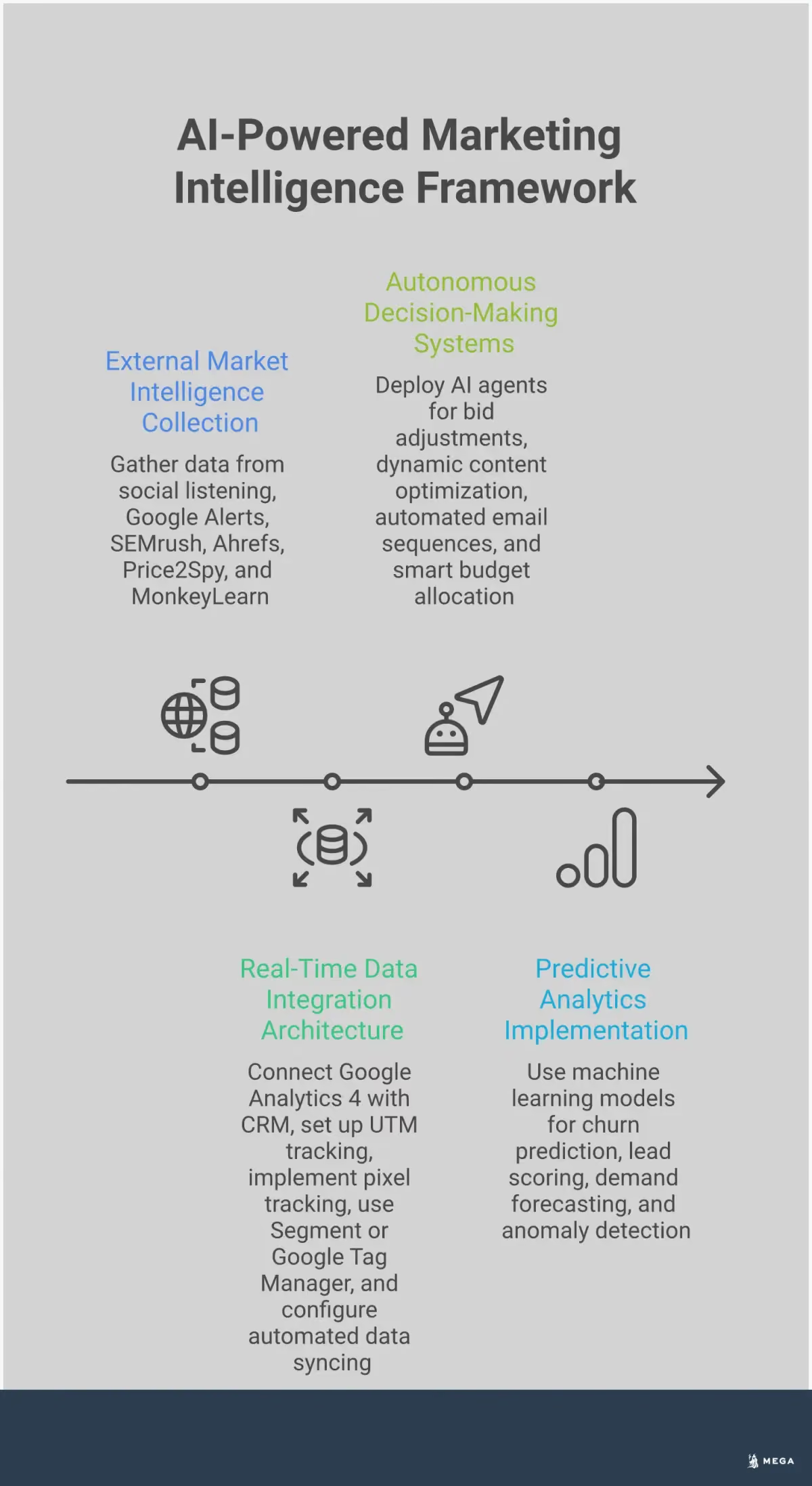
Conduct Market Research and Competitive Analysis
Effective market research is about understanding the environment where your business operates. It starts with identifying your direct and indirect competitors and analyzing their strategies. What keywords are they ranking for? What kind of ads are they running? Which social media platforms are they most active on? Answering these questions reveals gaps in the market and highlights opportunities for you to stand out. A solid data-driven marketing strategy is built on this foundational knowledge. Instead of guessing what might work, you can base your decisions on what is already succeeding for others and where they are falling short.
Listen to Social Media and Track Sentiment
Your customers and potential customers are constantly talking online. Social listening involves tuning into these conversations to understand what they truly think about your industry, products, and competitors. This goes beyond just tracking mentions of your brand name. It means monitoring keywords and topics relevant to your business to get an unfiltered view of customer needs, pain points, and desires. By tracking sentiment, you can gauge the overall feeling surrounding these topics. Are people excited about a new trend? Are they frustrated with the current solutions available? This qualitative data provides deep insights into your audience's preferences and behaviors, informing your social media marketing strategy and product development.
Bring Together Data from All Your Channels
Your audience interacts with your brand across multiple touchpoints, including your website, social media profiles, email newsletters, and paid ads. If you analyze the data from each channel in isolation, you’ll only get a fragmented view of the customer journey. Integrating data across all your channels allows you to see the complete path a customer takes, from initial awareness to final purchase and beyond. This unified view is critical for creating a cohesive and effective marketing experience. It helps you understand how different channels work together and where you can optimize handoffs between them. Having this level of insight is key to maintaining flexibility in your marketing strategy, as it allows you to adapt quickly to shifting consumer behaviors.
How to Overcome Common External Data Challenges
Gathering external market intelligence can feel overwhelming. Many business owners struggle with data overload, trying to make sense of countless reports, articles, and social media trends. The data is often fragmented across different sources, making it difficult to piece together a coherent picture. Even when you have the data, finding the time to analyze it and extract actionable insights is a significant challenge. The key is to focus on smart analysis rather than just collecting more information. By using tools that can automate data collection and identify meaningful patterns, you can overcome these hurdles. This approach helps you focus on the insights that matter most, allowing you to allocate your resources more wisely.
Essential Frameworks and Techniques for Analysis
Once you have access to both internal and external data, the next step is to make sense of it all. This is where many business owners get stuck, staring at spreadsheets and dashboards without a clear path forward. The key is to use structured frameworks and techniques to guide your analysis. These methods provide a lens through which you can examine your data, helping you move from raw numbers to clear, actionable insights. They help you organize your thoughts and ensure you’re looking at the market from all the right angles.
You don’t need a degree in data science to use these approaches. Many are simple, logical frameworks designed to help you think critically about your business and the environment it operates in. From high-level strategic scans to practical tips for digging into your own analytics, these techniques will help you build a more complete picture. They serve as a starting point for asking better questions and finding the answers within your data. While AI can automate much of this heavy lifting, understanding these core principles will make you a much smarter marketer.
Using PEST Analysis for Macro-Environmental Scans
A PEST analysis is a framework used to scan the major external forces that could affect your business. It helps you look beyond your immediate industry and consider the bigger picture. PEST stands for Political, Economic, Social, and Technological factors. For a local business, this could mean tracking new city regulations (Political), understanding shifts in local consumer spending (Economic), noticing a growing community interest in sustainability (Social), or seeing how new delivery apps are changing customer expectations (Technological). This kind of analysis helps you anticipate opportunities and threats before they arrive.
Applying Conjoint Analysis to Understand Customer Preferences
Have you ever wondered what features your customers value most? Conjoint analysis is a market research technique that helps you answer that question. It works by presenting customers with different product combinations and asking them to choose their favorite. This process reveals the trade-offs people are willing to make. For example, would your customers prefer a lower price or faster shipping? Do they care more about organic ingredients or a wider variety of flavors? By analyzing these choices, you can understand what truly drives their decisions, which is invaluable for product development and marketing.
Practical Data Analysis Techniques
Beyond high-level frameworks, there are practical techniques you can apply to your everyday data. A strong data strategy always begins with asking the right questions, not just collecting numbers. Once you have your data, the goal is to find the story it’s telling. You don’t need complex software to start finding valuable insights. Simple techniques like segmenting your audience, looking for unusual activity, and focusing on long-term trends can reveal a wealth of information. These methods help you turn a confusing dataset into a clear guide for your next steps.
Segmenting Data to Uncover Details
Looking at your data as one big average can hide important details. Segmenting means breaking your data into smaller, more specific groups to get a clearer view. For example, instead of just looking at your overall website conversion rate, you could segment it by traffic source, device type, or geographic location. You might discover that customers visiting from Instagram on a mobile device convert at a much higher rate than other groups. This insight allows you to focus your marketing efforts where they’ll have the most impact, rather than using a one-size-fits-all approach.
Spotting Outliers for Deeper Insights
Outliers are data points that are significantly different from the rest. It’s tempting to dismiss them as flukes, but they often contain valuable information. A sudden spike in website traffic could point to a successful social media mention you can capitalize on. A sharp drop could signal a technical issue, like a broken link that needs fixing. When you spot an outlier, your first question should be "Why did this happen?" Investigating these anomalies can help you identify both problems and unexpected opportunities for growth.
Focusing on Patterns Instead of Spikes
While outliers are worth investigating, your main focus should be on consistent patterns over time. A single good sales day is nice, but a steady, month-over-month increase in sales is what builds a sustainable business. Don't get distracted by short-term spikes or dips. Instead, look for the underlying trends. Is your organic search traffic gradually climbing? Are your email open rates consistently improving? These patterns show that your strategy is working. This is where automation shines; for example, MEGA AI's Maintenance Agent works to continuously improve your content's rank and click-through rate, focusing on creating positive, long-term growth patterns for your SEO.
Why Flexibility Is Key in Market Data Analysis
In marketing, data isn't a static snapshot. It’s a live feed of customer behavior, market trends, and competitor actions. Because this landscape is constantly shifting, your approach to interpreting data must be just as dynamic. A rigid strategy based on last quarter's numbers can quickly become irrelevant. True data-driven marketing requires flexibility, which is the ability to adjust your understanding and actions as new information comes in.
For small businesses, this adaptability is a major advantage. It allows you to respond to opportunities and threats much faster than larger, more bureaucratic competitors. Instead of getting locked into an annual plan, a flexible approach lets you refine your campaigns based on what the data is telling you right now. This means you can continuously improve your messaging, targeting, and budget allocation to get the best possible results without wasting time or money on tactics that are no longer working.
How to Adapt Your Analysis While Maintaining Accuracy
Flexibility in data analysis doesn't mean starting from scratch every time a new trend appears. It’s about having a system that can incorporate new information without losing sight of your core objectives. A company’s ability to adapt its strategies in response to market changes is crucial for staying relevant. This means your analysis should be built to evolve.
For example, if your data shows a sudden spike in interest for a specific product feature, a flexible approach allows you to dig deeper into that trend immediately. You can adjust your keyword focus or ad creative to capitalize on the moment, all while your foundational understanding of your audience remains intact. The goal is to create a resilient marketing plan that bends with new data points instead of breaking, ensuring your decisions are always based on the most current and accurate picture of the market.
Mapping Metrics to the Customer Journey
Your customers don't just appear and make a purchase; they go on a journey. To understand their experience, you need to map your data to each stage of that journey. For the awareness stage, you might track metrics like social media reach or new website visitors. As they move into consideration, you’ll want to look at email sign-ups or how long they spend on a product page. Finally, at the conversion stage, you’ll focus on sales and lead form completions. By assigning metrics to each step, you can pinpoint where your strategy is strong and where potential customers might be dropping off, allowing you to invest resources where they will have the greatest effect.
This approach requires you to see the complete path a customer takes, not just isolated interactions. When you integrate data from all your channels—social media, email, your website—you can follow a user from their first click on an ad to their final purchase. This unified view helps you understand how different marketing efforts work together. For example, you might see that a blog post drives initial interest, while an email campaign is what finally convinces someone to buy. This insight is essential for creating a smooth and effective customer experience.
How Often Should You Review Your Data?
The right frequency for reviewing your data depends on what you’re trying to achieve. There isn’t a one-size-fits-all answer, but establishing a consistent rhythm is essential. For high-stakes activities like a new product launch or a major holiday sale, you should check your key metrics daily. This allows you to make quick adjustments to your ad spend or messaging to capitalize on what’s working. For your regular marketing activities, weekly general checks are usually sufficient to spot emerging trends and address any small issues before they become big problems.
Beyond the frequent check-ins, it’s important to schedule a deeper, more strategic review at least once a month. This is your opportunity to zoom out and look at the bigger picture. During this monthly analysis, you can assess the overall performance of your strategy against your business objectives and plan for the upcoming month. This cadence strikes a balance between staying agile enough to react to daily changes and maintaining a long-term perspective. It ensures you’re making informed decisions without getting bogged down by constant analysis, keeping your strategy both responsive and focused.
Adjust Your Strategy in Response to Market Changes
The speed at which markets and consumer preferences change means that quarterly or even monthly reports are often too slow. To stay competitive, you need to harness real-time data to make immediate adjustments. When a competitor launches a new promotion or a social media conversation shifts, a flexible strategy allows you to pivot your messaging and offers on the fly. This ensures you remain part of the conversation and can meet customer needs as they arise.
This is where autonomous tools can make a significant impact. An AI-powered Paid Ads agent, for instance, can analyze performance data as it comes in, automatically shifting your budget to the best-performing ads or platforms. This kind of real-time optimization moves you from a reactive position to a proactive one, allowing you to capitalize on opportunities the moment they appear.
Finding the Balance Between Speed and Accuracy
Making quick decisions is important, but making the right decisions is what truly drives growth. Flexibility requires a careful balance between speed and accuracy. A knee-jerk reaction to a single data point can lead you down the wrong path. The key is to build a system that can process information quickly while also considering the broader context.
Effective data-driven decision-making relies on separating the meaningful signals from the noise. This means your analytics should be sophisticated enough to identify a genuine trend versus a random fluctuation. By combining real-time data with historical performance and strategic goals, you can make adjustments that are both timely and well-informed. This balanced approach ensures your marketing efforts are agile enough to keep up with the market but grounded enough to produce consistent, reliable results.
Overcoming Common Problems in Data Analysis
While data offers a clear path to better marketing, the journey isn’t always smooth. Many businesses find themselves wrestling with common obstacles that can make analysis feel more like a chore than an advantage. You might be dealing with messy spreadsheets, a budget that feels too small for ambitious research, or the subtle influence of your own assumptions. These challenges are normal, but overcoming them is what separates businesses that simply have data from those that use it to drive meaningful growth. Recognizing these hurdles is the first step toward building a more resilient and effective data strategy.
Dealing with Bad or Incomplete Data
One of the most common frustrations in data analysis is working with information that is messy, incomplete, or tells only half the story. Relying only on your internal data is like trying to navigate the ocean with a detailed blueprint of your own ship but no map of the sea. Your website analytics can tell you that sales dipped last month, but they can’t tell you why. To get the full picture, you need to combine your internal metrics with external intelligence. This means looking at competitor activities and broader market trends to understand the context behind your numbers and maintain good data quality.
Working with Limited Budgets and Resources
You don’t need a massive budget to conduct effective market analysis. It’s about being strategic with the resources you have. Start by focusing on your competitors to understand the environment where your business operates. A simple competitive analysis can reveal what keywords your rivals are ranking for, the types of ads they are running, and where they are most active on social media. Answering these questions helps you identify gaps in the market and opportunities to stand out. For small businesses, this is where automation becomes a powerful ally, handling the heavy lifting of data collection and analysis so you can focus on strategy.
Recognizing and Correcting for Bias
Every person has biases, and these can unintentionally influence how we interpret data. We naturally look for information that confirms what we already believe, a tendency known as confirmation bias. This can lead you to overvalue data that supports a favorite campaign while ignoring signs that it’s underperforming. The first step in correcting for bias is simply to recognize it exists. To get a more objective view, establish clear metrics before you start your analysis and lean on systems that can process information without human assumptions. This ensures your decisions are based on what the data actually says, not what you hope it says.
Limitations and Ethical Considerations in Market Analysis
Data is an incredibly powerful tool, but it’s not a crystal ball. It has limitations, and its use comes with significant ethical responsibilities. Understanding these boundaries is essential for building a strategy that is not only effective but also trustworthy and sustainable. Acknowledging that data can be imperfect or that its collection requires care helps you become a more sophisticated and responsible marketer. It ensures you use your insights to build genuine customer relationships rather than just chase short-term metrics.
Understanding the Limitations of Market Research
Market dynamics can shift in a matter of days or even hours. A new social media trend can change consumer conversations overnight, or a competitor can adjust their pricing and instantly affect your position. This means any market research you conduct is a snapshot of a single moment in time. By the time you manually collect, analyze, and report on this data, the window of opportunity may have already closed. To counter this, your strategy must be built for agility. Think of market analysis not as a one-time project but as a continuous process of agile marketing that allows you to adapt as the landscape evolves.
Navigating Ethical Challenges and Data Privacy
Collecting customer data is a privilege that comes with a serious responsibility to protect it. In an era of frequent data breaches, customers are rightly concerned about their privacy. Building trust requires you to be transparent about what data you are collecting and how you are using it. The rise of autonomous processing, where AI systems analyze vast amounts of information, makes this even more critical. While these tools offer incredible efficiency, they must be guided by strong ethical principles. Adhering to data privacy laws isn’t just about compliance; it’s about respecting your customers and building a brand they can believe in.
How Should You Communicate Data Insights?
Collecting market intelligence is just the first step. The real value appears when you can translate that data into clear, actionable insights for your team and stakeholders. Raw numbers on a spreadsheet don’t inspire action, but a well-communicated finding can change the direction of a campaign or even the entire business. Effective communication turns complex information into a shared understanding that everyone can use to make better decisions.
The goal is to move your organization from simply having data to using it strategically. This means presenting your findings in a way that is not only understood but also compelling enough to drive change. Whether you’re talking to your co-founder, your sales team, or an investor, the way you frame your insights determines whether they are ignored or acted upon. The following practices will help you ensure your data makes the impact it deserves, fostering a culture where information consistently leads to intelligent action.
Know Your Audience and Tailor Your Insights
Not everyone in your company cares about the same metrics. To make your data resonate, you need to align your messages with what each stakeholder values. Your CEO might want to see the high-level impact on revenue and market position, while your social media manager needs to know which content formats are driving the most engagement.
Before presenting your findings, ask yourself what your audience’s priorities are. What problems are they trying to solve? Frame your insights as solutions to their specific challenges. For executives, focus on the bottom line. For marketing colleagues, highlight tactical details that can inform their next campaign. Speaking their language ensures your data is not just heard but also seen as directly relevant to their goals.
Tell a Story with Visuals and Clear Reports
Humans are wired for stories, not spreadsheets. The most effective way to communicate data is to weave it into a compelling narrative. Instead of listing isolated metrics, explain what they mean in the context of your business objectives. Your report should answer key questions: What was the situation? What did we discover in the data? What does this mean for us, and what should we do next? This approach makes the information more memorable and easier to grasp.
Use visual aids like charts and graphs to make complex data digestible at a glance. A simple bar chart showing customer acquisition cost by channel is far more powerful than a table of numbers. Effective stakeholder reporting combines a clear narrative with clean visuals to guide your audience through the findings and lead them to the right conclusions.
How to Build Data Literacy Across Your Teams
For data to truly transform your business, it needs to be understood and used by everyone, not just the marketing department. Fostering data literacy across your organization empowers every team member to interpret information and apply it to their role. When your sales team understands lead quality reports and your product team can read user behavior analytics, the entire company operates with a more cohesive and informed strategy.
Start by making data accessible through user-friendly dashboards and regular training sessions. Encourage a culture of curiosity where employees feel comfortable asking questions about the numbers. Building this company-wide capability ensures that data-driven decision-making becomes a standard practice, not a specialized skill limited to a few analysts. This creates a stronger, more adaptable organization from the ground up.
What's Next for Data-Driven Marketing?
The future of data-driven marketing is moving beyond spreadsheets and dashboards. The real value comes from turning information into action quickly and effectively. The next evolution isn't just about having more data; it's about automating the entire process from analysis to execution. This shift is powered by artificial intelligence that can operate with minimal human oversight to make strategic decisions that drive growth. For small businesses, this means gaining access to marketing sophistication that was once only available to large corporations. The focus is shifting from manual interpretation to automated implementation, where technology not only provides insights but also acts on them.
AI Agents and the Shift to Autonomous Decisions
The next step in marketing automation is the rise of AI agents. These are not just tools that schedule posts; they are autonomous systems that analyze data, make strategic decisions, and execute marketing tasks on their own. As technology evolves, these agents handle increasingly complex work, creating more personalized and efficient customer interactions. This allows you to offload entire functions, like SEO or paid advertising, to an AI that works toward your goals around the clock. You can book a demo for a system that acts less like software and more like a dedicated team member.
How Continuous Learning Systems Drive Optimization
Modern AI marketing platforms are built on continuous learning systems. These systems improve over time by constantly analyzing new data from your campaigns and the market. They don't just follow pre-set rules; they adapt their strategies in real time to optimize for the best possible results. For example, a system can automatically shift your budget to the highest-performing ad creative or update a blog post to reflect new search trends. This constant cycle of learning and optimization ensures your marketing efforts become more effective over time. This is especially powerful for paid ads, where performance can change daily.
Moving from Insights to Intelligent Action
Ultimately, the future of data-driven marketing is about closing the gap between insight and action. It’s not enough to know what you should do; you need a way to get it done efficiently. The most advanced platforms are evolving from tools that simply gather insights to intelligent systems that take action to produce measurable outcomes. For small business owners who wear multiple hats, this is a game-changer. Instead of trying to find time to implement every data-backed recommendation, you can rely on an autonomous system to handle the execution. This ensures your SEO strategy is always aligned with the latest data.
How to Build Your Data-Driven Marketing Infrastructure
Turning data into a real strategy requires more than just access to information. It requires a solid foundation, or infrastructure, to collect, analyze, and act on it. Building this doesn't have to be complicated. It comes down to having the right tools, the right skills on your team, and the right way to measure what’s working. Let's break down these three core components.
How to Choose the Right Tools and Integrations
Your marketing tools are the backbone of your data infrastructure. The goal is to create a connected system, not a collection of separate apps. Your tech stack should allow data to flow freely between your website analytics, customer relationship management (CRM) platform, and marketing automation tools. This integration is what allows you to see the full customer journey.
A flexible system helps you adapt to market changes quickly. Look for tools that offer real-time data analytics and can integrate with the platforms you already use. For small businesses, an all-in-one platform can simplify this process, combining SEO, paid ads, and analytics in one place. This removes the complexity of managing multiple vendors and ensures your data works together seamlessly.
Essential Tools for Data Analysis and Visualization
Once you have a system for collecting data, you need the right tools to make sense of it. Data analysis tools help you dig into the numbers to find patterns, while visualization tools turn those findings into easy-to-understand charts and graphs. For many small businesses, powerful options like Google Analytics are free and provide deep insights into website traffic and user behavior. To bring that data to life, you can use a platform like Looker Studio to create custom dashboards that track your key performance indicators. A wide array of data visualization tools are available, many of which integrate directly with the analytics platforms you already use. The goal is to transform raw data into a clear story that anyone on your team can understand at a glance, making it easier to spot trends and make informed decisions.
Free Government Data Sources for Market Research
Building a complete view of the market requires looking beyond your own business, and you don't need a huge budget to do it. Many government agencies offer a wealth of free data that can be invaluable for market research. The U.S. Census Bureau, for example, provides detailed demographic data that can help you understand the population in your target service area, from age and income to household size. The Bureau of Labor Statistics offers insights into economic trends and industry employment data. Furthermore, the U.S. Small Business Administration provides guides on how to conduct market research and competitive analysis. Using these free resources can help you validate your business ideas, identify new opportunities, and make strategic decisions based on solid external intelligence.
Structuring Your Team for Data-Driven Success
A data-driven culture starts with your team. You don't necessarily need to hire a team of data scientists. Instead, focus on developing key skills within your existing marketing roles. The most important skill is curiosity, followed by the ability to interpret data and tell a compelling story with it. Your team needs to translate numbers into actionable insights that stakeholders can understand and support.
Encourage everyone to ask "why" and look for patterns in the data. Skills in data visualization can help present research findings in a way that is clear and persuasive. For small teams, this might mean one person wears multiple hats, but the core principle remains the same: empower your people to use data confidently to make strategic decisions.
How to Measure Success with the Right KPIs
To know if your data-driven strategy is working, you need to track the right metrics. Modern marketing moves beyond vanity metrics like website traffic or social media likes. Instead, focus on Key Performance Indicators (KPIs) that are directly tied to business goals. These include metrics like customer acquisition cost (CAC), customer lifetime value (CLV), and conversion rates.
These KPIs give you a clear picture of your return on investment and help you make smarter budget decisions. By focusing on outcomes, you can improve targeting and customer experience because you're measuring what truly matters to business growth. Regularly review your KPIs to ensure they still align with your objectives, and don't be afraid to adjust your strategy based on what the data tells you.
The Market Research Analyst: A Career Overview
While many small business owners take on the role of market analyst themselves, it’s a dedicated profession for a reason. Understanding the skills, responsibilities, and value of a market research analyst helps clarify what it takes to turn raw data into a winning strategy. This expertise is what data-driven marketing is built on, whether it comes from a person on your team or an automated system designed to replicate that intelligence.
What Does a Market Research Analyst Do?
A market research analyst acts as a business detective. Their primary job is to study market conditions to determine the potential sales of a product or service. They help companies understand what customers want, who will buy their products, and what price they are willing to pay. To do this, they gather and interpret information about target audiences, competitors, and broader industry trends. According to the U.S. Bureau of Labor Statistics, their work involves monitoring and forecasting marketing and sales trends, measuring the effectiveness of marketing campaigns, and presenting their findings to company leaders.
Skills, Education, and Career Outlook
The role of a market research analyst requires a strong mix of analytical, communication, and critical-thinking skills. Most positions require a bachelor's degree in fields like market research, business, or communications, with coursework in statistics and research methods being particularly valuable. The career outlook for this profession is solid, with employment projected to grow 7% over the next decade. The typical yearly pay for market research analysts was $76,950 in May 2024. For small businesses, these figures highlight the significant investment required to bring this expertise in-house, making automated solutions an accessible alternative for gaining a competitive edge.