In today's data-driven world, privacy has become a paramount concern, especially with the rise of large language models (LLMs). Are you interested in a career at the forefront of legal and technological advancements? An LLM in Privacy Law offers a deep dive into the legal frameworks governing data protection and cybersecurity in the age of AI. This article explores everything you need to know about pursuing this specialized degree, from top universities and curriculum highlights to career paths and salary expectations. Whether you're a lawyer seeking to specialize or a professional looking to transition into this high-demand field, understanding llm privacy law is more important than ever.
Key Takeaways
- Specialize in data protection and cybersecurity with an LLM in Privacy Law. This focused degree prepares you for the evolving legal landscape of the digital age. Explore programs at universities like USC, NYU, UC Berkeley, George Washington University, and Drexel.
- Tailor your studies with core courses, electives, and hands-on learning. Gain a strong foundation in privacy law and specialize in areas like data breaches or AI's impact on personal data. Seek out programs offering internships for practical experience.
- Position yourself for a promising career with in-demand skills. Privacy law professionals are needed across various sectors, including technology, finance, and healthcare, in roles like Cybersecurity Attorney and In-House Counsel. Research salary expectations and growth potential as you consider this field.
What is an LLM in Privacy Law?
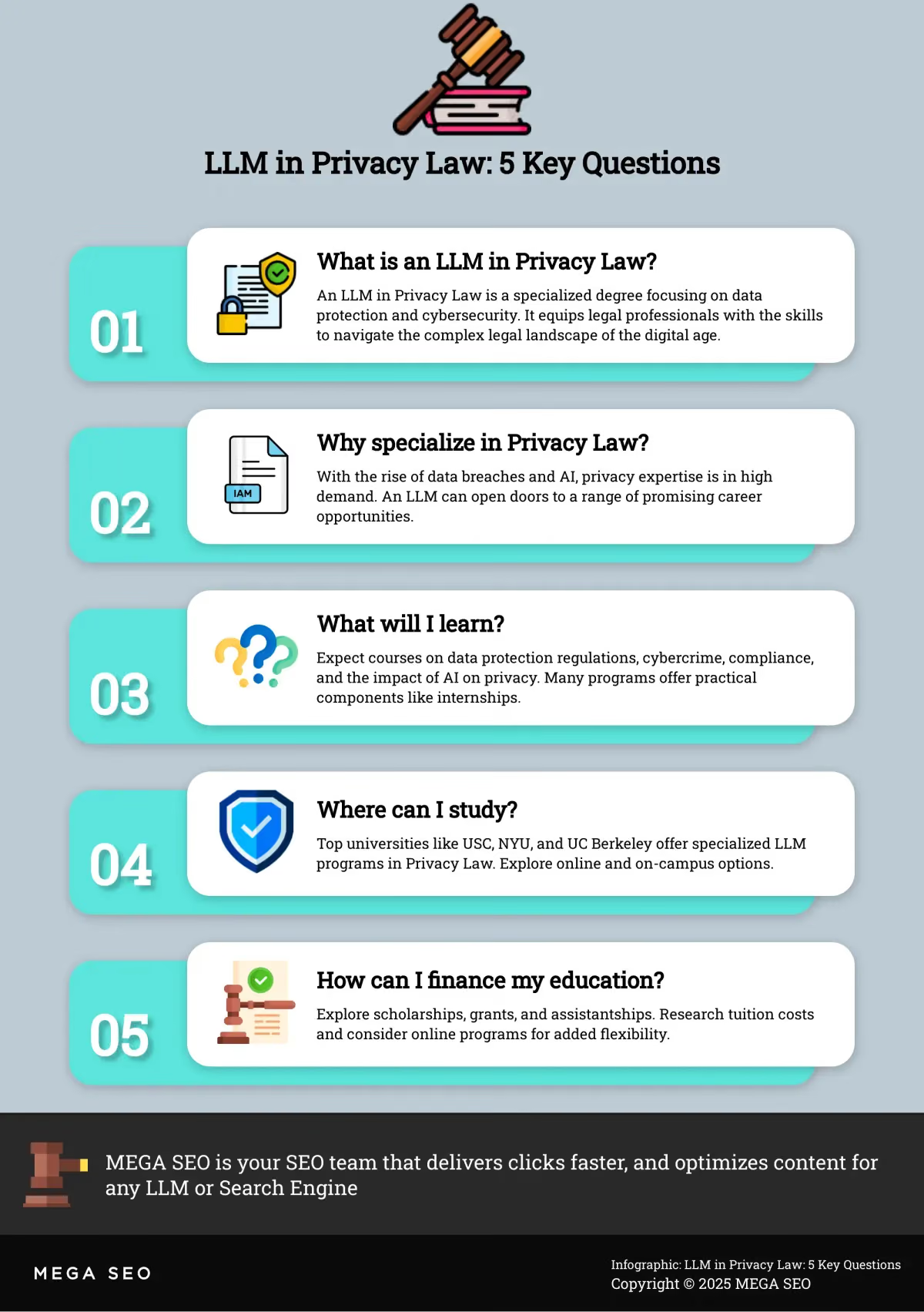
An LLM in Privacy Law is a specialized postgraduate degree designed to equip legal professionals with expertise in data protection and cybersecurity. This section explores the definition, purpose, key study areas, and growing importance of this specialized degree.
Definition and Purpose
An LLM in Privacy Law and Cybersecurity is a one-year master's degree that delves into the legal and practical aspects of privacy law and cybersecurity. Programs like the one at USC Gould School of Law are structured to provide lawyers with the knowledge to manage the legal risks related to data handling in our increasingly digital world. It's designed for those seeking to specialize in this complex and rapidly changing area of law.
Key Areas of Study
LLM programs in Privacy Law cover a broad spectrum of subjects crucial for understanding the intricacies of data protection. Core curriculum often includes data protection regulations, cybercrime (encompassing hacking, identity theft, and fraud), and various compliance frameworks. Students also gain expertise in areas such as information privacy law, cybersecurity strategies, international data privacy laws like the EU's GDPR, HIPAA, and financial regulations, as highlighted in Drexel University's program. This comprehensive approach prepares graduates for the multifaceted challenges of privacy law.
Importance in the Digital Landscape
The rise of large language models (LLMs) and their integration into applications handling sensitive data necessitates a deep understanding of the associated privacy and security risks. Ensuring user privacy and robust security is paramount, especially as LLMs become more prevalent. LLM programs in Privacy Law address these challenges by providing a multi-faceted approach to LLM security, combining technical solutions with regulatory compliance and ethical considerations. The future of LLMs, and indeed the digital landscape itself, depends on proactively addressing these concerns, making this specialized legal expertise increasingly critical.
Top Universities for LLM Programs in Privacy Law
Several universities offer excellent LLM programs specializing in privacy law. Here are a few leading institutions known for their comprehensive curricula and expert faculty:
USC Gould School of Law
The University of Southern California Gould School of Law offers a dedicated LLM in Privacy Law and Cybersecurity. This program covers the evolving legal landscape of data privacy, cybersecurity, and related fields. Students gain practical skills and theoretical knowledge to tackle complex issues in this rapidly changing area.
NYU School of Law
New York University School of Law's LLM program includes a strong focus on privacy law and cybersecurity. The specialized curriculum delves into data protection, privacy regulations, and the legal challenges of emerging technologies. NYU's program benefits from its location in a global hub for technology and law.
UC Berkeley
The University of California, Berkeley, School of Law offers a robust LLM program that explores the intersection of technology and law. With specialized courses on privacy law, data protection, and intellectual property, students gain a deep understanding of the legal implications of technological advancements.
George Washington University Law School
George Washington University Law School's LLM in National Security and U.S. Foreign Relations Law provides significant coursework on privacy law, particularly as it relates to national security. This program is ideal for those interested in the legal and policy aspects of data privacy in the context of national security.
Drexel University Kline School of Law
Drexel University Kline School of Law offers a convenient online LLM in Cyber Law and Data Privacy. This program is designed for working professionals seeking to specialize in the legal risks associated with data privacy. The online format allows students to continue their careers while pursuing their LLM degree.
Curriculum Overview: What to Expect
A deep dive into the curriculum of a typical LLM in Privacy Law reveals a blend of foundational knowledge, specialized electives, and practical experiences. This structure prepares graduates for the multifaceted challenges of this dynamic field.
Core Courses
Core courses provide a strong base in the fundamentals of privacy law and cybersecurity. You can expect courses covering legal research, data protection principles, information governance, and cybersecurity risk management. These courses often explore landmark cases, statutes like the California Consumer Privacy Act (CCPA), and emerging legal frameworks. A core understanding of compliance and risk assessment is also typically emphasized.
Elective Options
Building upon the core curriculum, elective courses allow you to specialize in areas of particular interest. These specializations can range from data breach response and incident handling to intellectual property and technology law. Some programs offer electives in specific industry verticals, such as healthcare privacy or financial data security. This flexibility lets you tailor your degree to your career goals.
Practical Components and Internships
Many LLM programs in privacy law incorporate practical components to bridge the gap between theory and practice. These components can include simulations, moot court exercises, and client counseling sessions. Some programs require a thesis project, providing an opportunity for in-depth research and analysis. Internships with law firms, corporations, or government agencies offer real-world experience and valuable networking opportunities. These practical experiences are often structured around short, intensive courses, with some lasting just seven weeks.
AI and Machine Learning Integration
Given the increasing prevalence of AI and its impact on data privacy, many LLM programs now integrate coursework on these topics. You can expect discussions on the privacy challenges posed by large language models (LLMs) and other AI-driven technologies. The curriculum may explore how these technologies collect, process, and use personal data, and the legal and ethical implications that arise. This focus on AI and machine learning equips graduates to address the unique privacy concerns of the digital age.
Global Privacy Regulations
With data flowing across borders, understanding global privacy regulations is crucial. LLM programs often dedicate coursework to international data protection laws, including the EU's General Data Protection Regulation (GDPR). You'll learn about the different approaches to privacy regulation around the world and the challenges of ensuring compliance in a globalized context. This knowledge is essential for advising clients or organizations operating in multiple jurisdictions.
Ethical Considerations
Beyond legal compliance, ethical considerations play a significant role in privacy law. LLM programs often incorporate discussions on the ethical principles underlying data protection, such as fairness, transparency, and accountability. You’ll explore the ethical dilemmas that arise in practice and develop the critical thinking skills to make informed decisions in complex situations. This focus on ethics prepares graduates to be responsible and ethical leaders in the field of privacy law.
LLM Program Admission Requirements
Thinking about applying to an LLM program specializing in privacy law? This section breaks down the typical admission requirements, so you’ll know what to expect. Since specific requirements can differ between universities, always double-check the program's website for the most up-to-date information.
Educational Prerequisites
Most LLM programs in Privacy Law require applicants to hold a Juris Doctor (JD), Bachelor of Laws (LLB), or an equivalent law degree. This foundational legal knowledge is essential for tackling the complex issues within privacy law and cybersecurity. It ensures you're prepared to dive into advanced coursework. For example, the USC Gould School of Law lists a JD, LLB, or equivalent as a prerequisite for their LLM in Privacy Law and Cybersecurity.
Required Documents
Along with a completed application form, you'll typically need to gather a few key documents. Be prepared to submit a personal statement outlining your interests and goals, letters of recommendation showcasing your abilities, and official transcripts from all prior academic institutions. Some programs, like Drexel University's LLM in Cyber Law & Data Privacy, may also request a resume or writing sample.
Application Timeline and Deadlines
LLM programs usually have set application deadlines, often with a priority deadline for early consideration. Keep an eye out for these dates, as applying early can sometimes offer advantages, like an application fee waiver. For example, some programs, such as the USC Gould School of Law, might waive the application fee for those who apply before a specific date. Knowing these timelines will help you stay organized and submit your application materials promptly.
English Proficiency Requirements
If you're an international applicant, you'll likely need to demonstrate English proficiency. Standardized tests like the TOEFL or IELTS are commonly used to assess language skills. Meeting these requirements is key for non-native English speakers to fully participate in coursework, discussions, and research. Albany Law School, for instance, details its English proficiency requirements on its website.
Career Opportunities and Salary Expectations
Earning an LLM in Privacy Law opens doors to a range of legal and tech careers. This specialized degree equips you with the skills to address the increasing demand for privacy expertise across various sectors.
Potential Job Roles
Graduates are well-suited for roles like Cybersecurity Attorney, In-House Counsel, and Information Security Analyst. These positions often involve advising companies on data protection regulations, handling data breaches, and implementing security measures. A deep understanding of both legal frameworks and the technical aspects of cybersecurity is crucial. For example, a Cybersecurity Attorney might work on legal cases related to data breaches, while an In-House Counsel could advise their company on complying with privacy regulations. For a closer look at these roles, explore resources from Albany Law School.
Industries with High Demand
The demand for privacy law professionals is rapidly growing across several industries. Technology, finance, healthcare, and government sectors actively seek experts to handle complex legal issues related to data protection and cybersecurity. With the increasing importance of data privacy, these industries need professionals who can ensure compliance and manage risks. USC Gould School of Law offers insights into the growing need for privacy law expertise.
Salary and Growth Potential
The career outlook for privacy law specialists is promising, with competitive salaries and significant growth potential. A Cybersecurity Attorney earns an average salary of approximately $132,962, while In-House Counsel positions command around $165,706. The field of Information Security Analysis is experiencing robust growth, projected at 32% by 2032, further highlighting the demand for skilled professionals. Learn more about salary expectations and growth trends within this field.
Financial Aid and Considerations
Pursuing an LLM, especially in a specialized field like privacy law, requires careful financial planning. This section breaks down the key financial aspects to consider.
Tuition Costs
Tuition is a significant investment. Costs vary widely based on the institution, its prestige, and location. Public universities often have lower tuition for in-state residents, while private institutions may have higher tuition across the board. Researching and comparing tuition rates between different universities is crucial. Remember to factor in additional fees, which can cover technology, library access, and student activities. Understanding the total cost of attendance, including living expenses like housing, food, and transportation, will give you a clearer picture of your financial commitment.
Scholarships and Grants
Scholarships and grants offer essential financial relief because they don't require repayment. Scholarships can be merit-based, recognizing academic excellence, or need-based, providing support to students with demonstrated financial need. Some scholarships target specific fields of study, like privacy law. Grants, often need-based, can significantly reduce tuition costs. Explore various scholarship and grant opportunities through professional organizations, foundations, and the universities themselves.
Work-Study and Assistantships
Work-study programs and assistantships offer a way to earn money while gaining practical experience. Federal Work-Study (FWS) provides part-time jobs, often on campus or with community service organizations. For LLM students, this can be a great way to gain practical experience in privacy law while balancing studies. Assistantships, typically offered by universities, involve research or teaching responsibilities in exchange for a stipend and sometimes tuition remission. These programs not only help with tuition but also enhance your resume. Check with individual LLM programs about their specific assistantship opportunities.
Online vs. On-Campus LLM Programs
Choosing between an online and on-campus LLM program depends on your learning style, career goals, and lifestyle. Both offer distinct advantages, so carefully weigh your options.
Flexibility and Scheduling
Online LLM programs offer unparalleled flexibility. As Drexel University's online LLM program demonstrates, these programs cater to busy professionals. Students learn at their own pace, often asynchronously. This structure is ideal for lawyers juggling work commitments or located far from university campuses. You can study part-time or full-time, fitting your studies around your existing schedule. On-campus programs adhere to a fixed schedule. While this provides structure, it may not suit everyone. On-campus programs require a significant time commitment, often necessitating relocation or a career break.
Networking Opportunities
Traditional on-campus programs excel at providing networking opportunities. Students benefit from face-to-face interactions with professors, classmates, and guest speakers. Institutions like the USC Gould School of Law emphasize the value of their alumni network, which can be a powerful tool for career advancement. These connections, built through shared experiences and social events, can lead to mentorships and job opportunities. While online programs may not replicate the in-person experience perfectly, many actively foster online communities. These digital platforms facilitate valuable connections through forums, virtual events, and networking sessions.
Technology Requirements for Online Programs
Successfully participating in an online LLM program requires reliable technology and digital literacy. As highlighted by Albany Law School's online program, these programs utilize learning management systems. They also use video conferencing software and online collaboration tools. Ensure you have a stable internet connection and a computer that meets the program's specifications. You should also have the necessary skills to learn effectively in a digital environment. Some programs, like Albany Law School's, offer small class sizes and personalized attention from professors to support online students.
Choosing the Right LLM Program
So, you’re considering an LLM in Privacy Law? Excellent choice. As data privacy becomes increasingly important, this specialization is a smart move. But with a wide range of programs available, how do you select the best fit? This section breaks down key factors, questions to ask, and how to evaluate program outcomes.
Factors to Consider
First, consider the program focus and curriculum. Some programs, like the LLM in Privacy Law and Cybersecurity at USC, offer a deep dive into the intersection of privacy law and cybersecurity. Others may focus on data protection or specific industries. Consider your career goals and choose accordingly.
Next, think about flexibility and format. If you're a working professional, an online LLM program like the one offered by Drexel University might be more manageable. Consider your learning style and available time.
Finally, research accreditation and reputation. Ensure the program is accredited by a respected organization, such as the American Bar Association. A school's reputation can influence your career trajectory. Albany Law School, for instance, has ABA accreditation for its JD program, and while their LLM may not have the same specific accreditation, the school's standing is a relevant factor.
Questions for Admissions Offices
Once you’ve identified a few potential programs, contact the admissions offices. Ask detailed questions about the curriculum. Does the program cover data protection, cybercrime, and compliance frameworks? Ask about career resources and networking opportunities. Does the school offer career workshops or mentorship programs? These resources can be invaluable.
Evaluating Program Outcomes and Alumni Success
Look beyond coursework and consider long-term impact. What are the career outcomes for graduates? Does the program have a strong alumni network and solid employment rates? USC, for example, highlights that its graduates develop in-demand skills and join the extensive Trojan Family network. Connecting with alumni can offer valuable firsthand perspectives.
Emerging Trends in Privacy Law and LLM Education
As our world becomes increasingly digital, privacy law is rapidly evolving to address new challenges. This is especially true with the rise of large language models (LLMs). For those pursuing an LLM in privacy law, understanding these emerging trends is crucial for a successful career.
Impact of AI and Machine Learning
LLMs are now integrated into many applications that handle sensitive data, creating unique privacy and security challenges. Conversational interfaces like chatbots and AI-powered features in everyday software often process personal data, raising concerns about how this information is used and protected. Researchers are actively exploring these risks, working toward stronger safeguards for user privacy, including the contextual analysis of privacy policies, using LLMs to better understand and enforce protections within specific applications.
Evolving Global Privacy Regulations
The regulatory landscape is also shifting. In 2023 alone, the US saw a surge in comprehensive privacy laws at both the state and federal levels, focusing on sensitive data categories like consumer health and children’s online information. Globally, regulations like the GDPR and CCPA impose strict requirements on how AI models, including LLMs, handle personal data, impacting how companies collect, process, store, and use this data. This creates a complex web of legal obligations for businesses.
Ethical Considerations in Practice
Beyond legal compliance, ethical considerations are paramount. Developing and deploying LLMs responsibly requires careful attention to potential biases, fairness, and transparency. Companies face significant legal and reputational risks if they fail to address these challenges. Experts are examining the complex interplay between ethical principles, legal frameworks, and technological advancements, seeking ways to ensure LLMs are used responsibly. Ongoing research explores the practical challenges of implementing privacy-preserving mechanisms in LLMs, paving the way for more ethical and sustainable AI practices.
Privacy Law Solutions and Tools
Navigating the evolving landscape of privacy law can feel overwhelming. Thankfully, a host of solutions and tools are available to help organizations stay compliant and build trust with their users. Let's explore some key players in this space.
Privacy Management Software Providers
Software solutions offer a range of features to streamline privacy management. These platforms often include tools for data mapping, consent management, and automated compliance reporting. They can help organizations adhere to regulations like GDPR, CCPA, and others by automating key processes and providing a centralized hub for privacy-related activities.
Data Protection Consultancies
For organizations needing specialized guidance, data protection consultancies bring expert advice to the table. These firms offer services such as risk assessments, privacy audits, and implementation of best practices. They can help organizations understand their legal obligations and develop tailored strategies to mitigate privacy risks. As regulations continue to evolve, expert guidance can be invaluable. Companies like DataGrail provide data privacy software and consulting services.
Legal Tech Startups
Innovation is flourishing in the legal tech space, with startups developing cutting-edge solutions for privacy compliance. These companies often focus on specific areas, such as AI-powered data discovery or automated contract analysis. They offer organizations new ways to address privacy challenges and leverage technology to enhance their compliance efforts. For generating privacy policies, terms and conditions, and other legal agreements, consider tools like Termly.
MEGA SEO and Privacy Compliance
While adhering to privacy regulations is crucial, maintaining effective SEO practices is equally important for online visibility. MEGA SEO recognizes this delicate balance and offers tools to support both. Our platform helps businesses optimize their content for search engines while respecting user privacy. We focus on strategies like optimizing content for natural language queries and using structured data, ensuring your SEO efforts align with ethical standards and legal requirements. Book a demo to learn how MEGA SEO can help you achieve your SEO goals while prioritizing privacy.
Frequently Asked Questions
What is the difference between a general LLM and an LLM focused on Privacy Law? A general Master of Laws (LLM) provides a broad overview of legal principles, while an LLM in Privacy Law specializes in data protection, cybersecurity, and related legal and ethical issues. This specialized degree equips graduates with the specific knowledge and skills to navigate the complex world of data privacy in the digital age, including the increasing use of AI and machine learning.
How can an LLM in Privacy Law benefit my career? An LLM in Privacy Law can significantly enhance your career prospects by opening doors to specialized roles like Cybersecurity Attorney, In-House Counsel focusing on data protection, or Information Security Analyst. These roles are in high demand across various industries, offering competitive salaries and substantial growth potential. The specialized knowledge gained in this program can also benefit those in more general legal roles, as data privacy considerations become increasingly relevant across all legal fields.
What are the key areas covered in a typical LLM in Privacy Law curriculum? Core courses typically cover data protection regulations, cybercrime, compliance frameworks, and information privacy law. Electives allow for specialization in areas like data breach response, intellectual property, and technology law. Many programs also incorporate practical components such as simulations, moot court exercises, and internships to provide real-world experience. Increasingly, LLM programs in Privacy Law are integrating coursework on AI and machine learning, recognizing the growing impact of these technologies on data privacy.
Are online LLM programs in Privacy Law as valuable as on-campus programs? Both online and on-campus LLM programs in Privacy Law offer valuable learning experiences. Online programs provide flexibility for working professionals, allowing them to study at their own pace and manage their existing commitments. On-campus programs offer more traditional networking opportunities through direct interaction with faculty and peers. The value of each format depends on individual learning styles, career goals, and lifestyle preferences. Both formats can lead to successful careers in privacy law, provided the program is reputable and accredited.
How can I finance my LLM in Privacy Law education? Financing an LLM requires careful planning. Explore options like scholarships, grants, work-study programs, and assistantships to offset tuition costs. Research and compare tuition rates and additional fees between different universities. Remember to factor in living expenses when budgeting for your LLM program. Contact the financial aid offices of prospective universities to discuss available funding opportunities and payment plans.