
Your competitors are leaving clues about their digital strategy all over the web. You can spot them in their top traffic channels, their most engaging content, and the user paths that lead to conversions. While you can't peek directly into their Google Analytics account, you can use your own to gather powerful intelligence. A proper Analytics competitor analysis allows you to reverse-engineer what works in your industry. This guide will show you exactly how to find and interpret those clues, helping you build a smarter game plan for your own business.
Key Takeaways
- Use Benchmarking for Context, Not Spying: You can't access a competitor's private account, but you can use Google Analytics' Benchmarking reports to compare your performance against aggregated industry data. This shows you how your traffic channels and audience demographics stack up against the average.
- Accurate Setup is the Foundation: Your analysis is only as good as your data. Before you start, go to your Admin settings to enable Benchmarking and select the correct industry category. This ensures the comparisons you see are relevant and useful for your strategy.
- Connect Specific Reports to Actionable Steps: Use insights from the Acquisition reports to find new traffic channels your competitors are using successfully. Then, review Behavior reports to identify the types of content that engage your shared audience and inform your own content plan.
Setting the Stage for Your Competitor Analysis
Before you can extract meaningful insights from Google Analytics, you need to lay the groundwork. A successful competitor analysis isn’t a random dive into data; it’s a focused investigation with a clear purpose. By defining your objectives and identifying the right players in your market, you ensure that the information you gather is relevant and actionable. This initial setup is the most critical part of the process because it provides the context for everything that follows. It transforms raw data into a strategic roadmap, guiding your decisions on everything from content creation to market positioning. Taking the time to prepare properly prevents you from getting lost in metrics and helps you focus on what truly matters for your business growth.
Define Your Goal
First, ask yourself a simple question: What do you want to achieve with this analysis? Your answer will shape the entire project. Are you launching a new service and need to find gaps in the market? Perhaps you want to understand why a rival is outranking you for key search terms, or you're looking for fresh content ideas that resonate with your shared audience. Your goal could be to benchmark your performance, refine your pricing strategy, or discover new advertising channels. By setting a clear objective, you can focus your research and avoid analysis paralysis. Without a specific goal, you risk collecting a mountain of data with no clear way to use it.
Identify Your Competitors
Once you know your goal, you need to identify who you're up against. Start by searching on Google for the products or services you offer, just as a potential customer would. Look at the businesses that appear on the first page. Check relevant social media hashtags and online directories for your industry. Your aim is to create a list of your most significant competitors. It’s helpful to categorize them into two main groups: primary and secondary. This distinction allows you to prioritize your analysis and understand the different types of competitive pressures your business faces. This process also helps you uncover the keywords and phrases your competitors are targeting, which is foundational for any effective SEO strategy.
Primary (Direct) Competitors
Primary competitors are the most obvious ones. They target the same audience as you and offer a very similar product or service. If you run a local Italian restaurant, the other Italian restaurants in your neighborhood are your direct competitors. These are the businesses you are most likely fighting with for the same customers and search engine rankings. Analyzing their online presence is crucial because their successes and failures offer a direct lesson for your own strategy. Understanding what they do well can give you a benchmark, while identifying their weaknesses can reveal immediate opportunities for you to capture more market share.
Secondary (Indirect) Competitors
Secondary competitors are a bit trickier to spot, but they are just as important. These businesses offer a different product or service that solves the same customer problem. For that same Italian restaurant, an indirect competitor could be a gourmet pizza delivery service, a meal-kit company that provides Italian recipes, or even a high-end grocery store with a large prepared foods section. They may not offer the exact same experience, but they are competing for the same share of your customer's wallet. Watching these competitors can help you spot broader market trends and innovate beyond the confines of your specific niche.
Frameworks for a Structured Analysis
With your goals defined and competitors identified, you need a system to organize your findings. Frameworks provide a structure for your analysis, ensuring you evaluate each competitor consistently and turn your observations into a coherent strategy. Instead of just collecting random data points, these models help you categorize information and see the bigger picture. Using a framework like a SWOT analysis or the 4 P's allows you to compare your business against others methodically. This structured approach is essential for translating insights from Google Analytics into concrete actions that can strengthen your market position. It helps you build a story from the data, highlighting where you lead, where you lag, and where your greatest opportunities lie.
SWOT Analysis: Strengths, Weaknesses, Opportunities, and Threats
A SWOT analysis is a classic framework for a reason: it’s simple and effective. For each competitor, you’ll identify their Strengths (what they do well, like having a popular blog), Weaknesses (where they fall short, like a slow website), Opportunities (market gaps they could exploit), and Threats (external factors that could harm them, like a new market entrant). Then, perform the same honest SWOT analysis on your own business. This comparative view is incredibly powerful. For example, a competitor's weakness in content for a specific service you offer becomes a clear opportunity for you to create targeted articles and draw in their potential customers.
The 4 P's: Product, Price, Promotion, and Place
The 4 P's framework helps you analyze a competitor's marketing mix. While it originated in traditional marketing, it adapts perfectly to the digital landscape. First, look at their Product: what features and benefits do they highlight? Next is Price: what is their pricing model, and do they offer discounts? Then, analyze their Promotion: what channels do they use for advertising, what is their social media presence like, and what is their content strategy? Finally, consider Place: where do they sell their product or service online? This could be their website, a marketplace, or through affiliates. Analyzing these elements gives you a holistic view of their go-to-market strategy and where you can differentiate yourself.
What Can Google Analytics Reveal About Your Competitors?
Competitor analysis is the process of examining similar brands in your industry to gain insight into their offerings, sales, and marketing approaches. It’s about understanding what they do well, where they fall short, and how you can use that information to build a better strategy. When you use Google Analytics for this task, you get a data-driven view of how your competitors perform online. While you can’t directly access their private analytics accounts, you can use GA’s benchmarking reports to compare your website's performance against aggregated industry data from businesses like yours.
This process isn’t about copying your competitors. It’s about gathering intelligence to make smarter decisions for your own business. By understanding the digital landscape, you can identify gaps in the market, discover new growth opportunities, and refine your marketing efforts. For example, if you notice competitors are getting significant traffic from a particular channel you’ve overlooked, it might be time to explore it. Google Analytics provides the data you need to stop guessing and start knowing what works in your industry, helping you build a stronger SEO strategy and stay ahead of the curve.
Think of it as a roadmap. The data shows you the paths other businesses have taken—which ones led to high traffic and which ones were dead ends. This allows you to allocate your resources more effectively, focusing on channels and content types that are proven to work in your niche. Instead of throwing marketing budget at every new trend, you can make targeted investments based on real performance data. This strategic approach is essential for startups and small businesses that need to make every dollar count.
What Is Competitive Intelligence?
Competitive intelligence is the actionable insight you gain from evaluating your rivals' strengths and weaknesses. Think of it as building a detailed profile on each competitor to understand their playbook. This intelligence helps you position your business more effectively in the market. A comprehensive competitive analysis provides the insights you need to make informed decisions about everything from product development and pricing to your marketing and sales strategies. It helps you answer critical questions like, "Where are my competitors winning customers?" and "What can I offer that they don't?"
Which Metrics Should You Track?
When you dive into Google Analytics, focus on a few key areas to get the most valuable information. Start with the Acquisition reports. These show you how users find your site and, through benchmarking, how that compares to your competitors. You can see which channels—like organic search, social media, or referrals—drive the most traffic in your industry. Next, look at the Behavior section. This tells you what users do once they arrive. Pay attention to popular pages, how long people stay, and how many pages they visit. These metrics can reveal what content resonates most with your shared audience.
Why Should You Use Data for Competitor Analysis?
Using data for competitor analysis removes the guesswork from your strategy. Instead of making assumptions about what your competitors are doing, you can use concrete numbers to guide your decisions and improve your own marketing efforts. This process helps you find your unique selling proposition—the thing that makes your business the better choice for customers. When you understand where your competitors are succeeding and where they have weaknesses, you can carve out a space in the market that is uniquely yours. This data-driven approach allows you to spot trends, anticipate market shifts, and build a more resilient business.
Which Google Analytics Reports Give You Competitor Insights?
Google Analytics is built to analyze your own website’s performance, but it also holds valuable clues about the competitive landscape. While you can’t get a direct look at your competitor’s dashboard, you can use specific reports to see how your site stacks up against industry averages. This data provides the context you need to understand where you’re leading and where you’re falling behind.
Think of these reports as your starting point for a data-informed strategy. They help you identify which channels are driving traffic for others in your space and what kind of audience they’re attracting. By regularly checking these key reports, you can uncover opportunities to refine your marketing efforts, from improving your SEO performance to optimizing your ad spend. Let’s walk through the most useful reports for gathering this competitive intelligence.
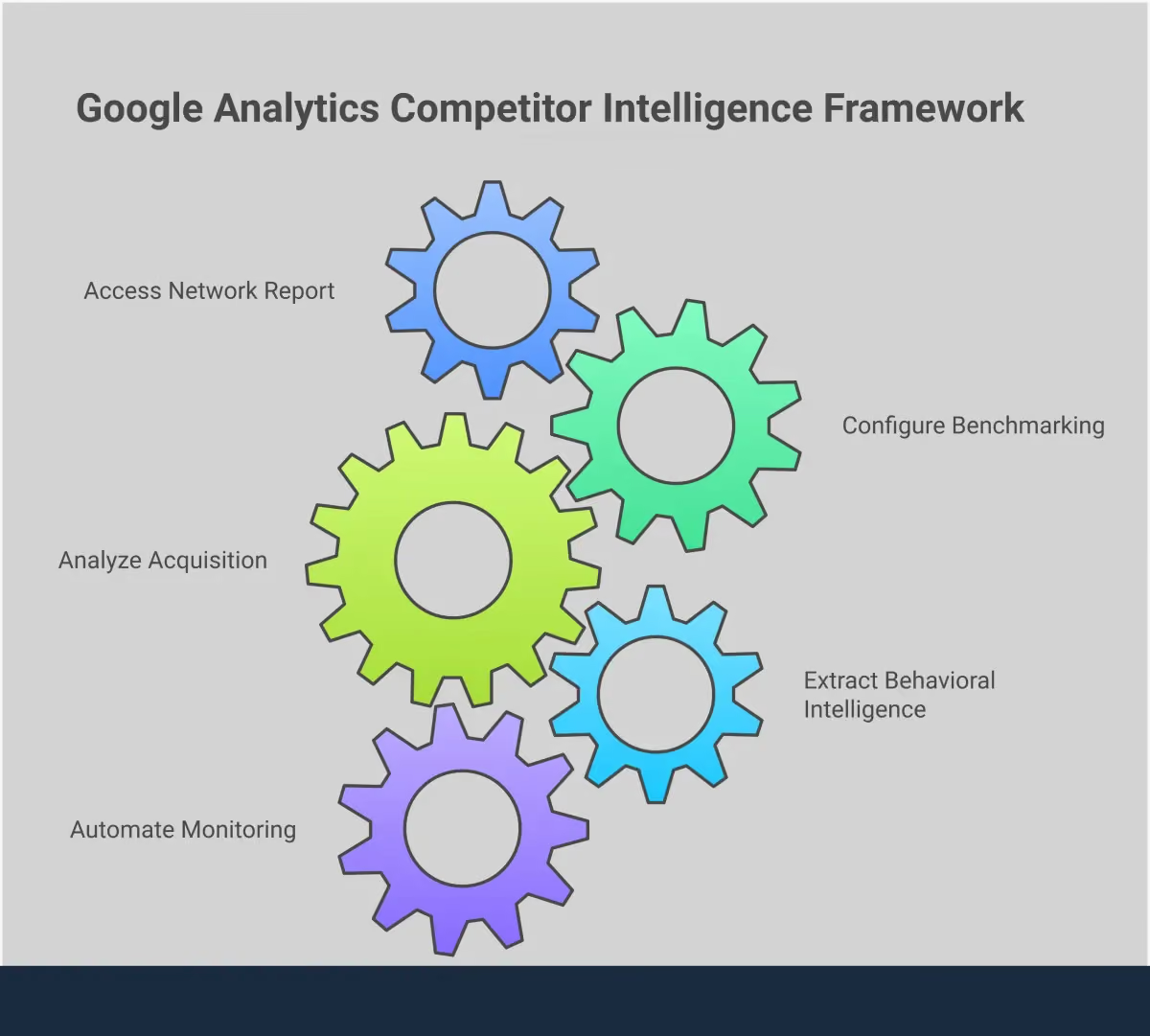
Compare Performance with Benchmarking Reports
The Benchmarking reports are your most direct tool for comparison inside Google Analytics. To find them, head to the Audience section and select Benchmarking. Here, you can compare your website data against aggregated industry data from other companies that share their data anonymously.
This feature allows you to measure your performance across three main categories: Channels, Location, and Devices. For example, you can see if your percentage of traffic from organic search is higher or lower than the industry standard. If you find you’re lagging behind, it’s a clear signal to focus more on your content and keyword strategy. These reports provide a clear, objective baseline for your performance.
Discover Their Traffic Sources in the Acquisition Overview
Your Acquisition report tells the story of how visitors arrive at your site. When combined with benchmarking data, it becomes a powerful tool for competitor analysis. The report breaks down your traffic by sources like Organic Search, Direct, Social, and Referral. By comparing your channel mix to the industry benchmark, you can spot channels your competitors are likely using to their advantage.
If the benchmark data shows that a significant portion of traffic in your industry comes from paid search but it’s a small slice of your own traffic, you may be missing a key opportunity. Understanding where your competitors are likely finding their visitors helps you make smarter decisions about where to invest your time and marketing budget.
Learn About Their Audience
Knowing your audience is fundamental, and knowing how your audience compares to your competitors’ is a strategic advantage. The Audience reports in Google Analytics provide details on user demographics, interests, and geographic location. Using the Benchmarking feature here lets you see if you are attracting the same type of visitor as others in your industry.
Are your users younger or older than the industry average? Do they have different interests? This information helps you refine your customer personas and tailor your content more effectively. If you discover you’re attracting a unique niche, you can double down on serving them. If your audience profile matches the industry, you know you’re competing for the same attention.
Identify Visitors with the Network Report
For a more direct look at competitor activity, you can use the Network Report. This report shows you the Internet Service Providers (ISPs) people use to visit your website. You can find it by going to Audience, expanding the Technology section, and clicking on Network.
While most visitors will appear under common ISPs like Comcast or Verizon, many companies have their own registered network name. If you see a competitor’s company name in this list, you know they’ve been on your site. It’s a simple yet effective way to see which of your rivals are keeping tabs on you and what you’re doing.
Use Service Provider Data to Find Clues
The Service Provider Report is the same as the Network Report, but the focus here is on how you can act on the data. Once you’re in the report, use the search bar to filter for the names of your known competitors. If you get a match, you can click on the network name to drill down further.
This allows you to see which specific pages they viewed, how many pages they looked at per session, and how long they spent on your site. This data offers direct clues into what aspects of your business they’re most interested in, whether it’s your pricing page, a new feature announcement, or a popular blog post. You can even create a custom segment to easily monitor their activity over time.
How to Set Up Google Analytics for Competitor Tracking
Before you can pull meaningful insights, you need to configure Google Analytics to properly track and display competitor data. This isn’t an out-of-the-box feature; it requires a few specific settings to unlock the right information. Think of it as calibrating your tools before you start your project. By taking a few minutes to set up tracking, you create a solid foundation for all your competitive analysis efforts.
The following steps will walk you through enabling benchmarking, defining your industry, and creating custom views to isolate relevant data. Properly configuring these settings will activate the reports we’ve already discussed and prepare you for more advanced analysis. This initial setup is crucial for gathering accurate intelligence that you can use to inform your SEO and marketing strategies. Let’s get your account set up for success.
Start by Enabling Benchmarking
First, you need to turn on the benchmarking feature in your account settings. This tool aggregates data from other companies in your industry who also share their data, giving you a valuable reference point. To enable it, navigate to the Admin section of your Google Analytics account, select Account Settings, and check the box for Benchmarking. Once enabled, you can find the reports under the Audience section. These reports show you how your website’s performance on channels, location, and devices compares to industry benchmarks. It’s a quick way to see if you’re ahead of or behind the curve.
Select Your Industry Category
For benchmarking data to be useful, Google Analytics needs to know which industry to compare your site against. If this setting is incorrect, you’ll be comparing your performance to irrelevant competitors, making the insights less actionable. To set this up, go to the Admin section and, under the Property column, select Property Settings. From there, you can choose an Industry Category that best describes your business. Taking the time to select the right category ensures the data you see in your benchmarking reports is as relevant and accurate as possible, helping you make better strategic decisions.
Create Custom Segments to Isolate Data
While Google Analytics won't let you spy directly on your competitor's website traffic, you can use custom segments to analyze the traffic they send to you. For example, you can create a segment to isolate all referral traffic coming from a specific competitor’s domain. This allows you to see what pages these visitors land on and how they behave on your site. To create one, go to any report and click "+ Add Segment," then "New Segment." From there, you can define conditions, such as setting the "Source" to match your competitor's domain. This helps you understand the quality of the traffic they refer.
Save Time with Automated Reporting
Manually checking competitor data can be time-consuming. A better approach is to automate your reporting. Once you have a report or custom dashboard you find valuable, you can schedule it to be emailed to you and your team on a regular basis. In any standard or custom report, look for the "Share" button in the top right corner. This allows you to set up recurring email updates daily, weekly, or monthly. Automating this process ensures you consistently monitor competitor activity without adding another manual task to your plate, freeing you up to focus on strategy.
Visualize Data for Clearer Insights
Numbers in a table can be hard to interpret, but visualizing them can reveal trends you might otherwise miss. Google Analytics has built-in charts, but you can take it a step further by connecting your data to a tool like Looker Studio. Visualizing data over different date ranges helps you spot patterns in competitor referral traffic or see how your performance benchmarks change over time. For instance, a line graph can clearly show if a competitor’s marketing campaign caused a spike in traffic to your site, helping you connect their actions to tangible results.
Gathering Intelligence Beyond Google Analytics
While Google Analytics gives you a great starting point, it only shows you part of the picture. To build a truly effective strategy, you need to look beyond the data and dig into the qualitative aspects of your competitors' businesses. This means putting on your detective hat and exploring their website, content, and brand from a customer's perspective. This deeper level of analysis helps you understand the "why" behind their performance numbers, revealing opportunities that data alone can't show you. It’s about combining quantitative data with qualitative insights to get a complete view of the competitive landscape.
Analyze Their Website and SEO Strategy
A competitor's website is a treasure trove of strategic information. Every element, from the page titles to the way content is linked together, is a deliberate choice that reveals their priorities. By systematically exploring their site, you can reverse-engineer their SEO strategy and understand how they attract and guide visitors. This manual review gives you a feel for their user experience and uncovers the framework supporting their digital presence. It’s a foundational step in understanding how they compete for your target audience's attention in search results.
Review Page Titles, Headings, and Keywords
Start by exploring every corner of their website to see how they structure their content for users and search engines. Make a note of their page titles, URLs, and main headings (H1 tags), as these elements signal their most important keywords. This process helps you figure out what they do well and where you might have an edge. While this manual audit is insightful, it can be time-consuming for small teams. This is where automated SEO tools can be a game-changer, quickly pulling this data so you can focus on strategy instead of getting bogged down in spreadsheets.
Map Their Internal Linking Structure
How a competitor links between their own pages reveals their content hierarchy. Internal links act like signposts, guiding both users and search engine crawlers to what the site considers its most important content. Pay attention to which pages get the most internal links—it’s often their key product pages, service offerings, or cornerstone blog posts. Mapping this structure helps you understand how they funnel traffic toward conversion points. It also provides a blueprint you can adapt for your own site to ensure your most valuable pages are getting the authority and visibility they deserve.
Dive into Their Content and Product
Beyond the technical SEO elements, the actual content and product information on a competitor's site offer deep insights into their strategy. This is where you can learn how they communicate with their audience, what problems they claim to solve, and what features they highlight as key differentiators. By examining their educational resources and product showcases, you can identify their core messaging and find gaps in their offerings that your business can fill. This step moves you from analyzing how they get traffic to understanding what they do with it.
Read Their Help Center and Watch Product Demos
Your competitors' support content is an often-overlooked source of intelligence. Go through their help center, read their FAQs, and watch any available product demos or tutorials. This content is designed to address common customer questions and pain points, giving you a direct look at the challenges their users face. You can learn about their product's limitations, areas of confusion, or features that customers love. This information is invaluable for refining your own product positioning and highlighting how you offer a better solution to those same problems.
Look for Analyst Reports and Internal Documents
For a more formal look into a competitor's strategy, search for publicly available documents like white papers, case studies, or analyst reports. You can often find these in a "Resources" or "Investor Relations" section on their website. These documents provide a polished view of their market positioning, target audience, and value proposition. According to a guide from Coursera, this type of analysis helps you make informed decisions on everything from product development to marketing. It’s like getting a peek at their official playbook, written for stakeholders and potential investors.
Understand Their Business and Brand
A competitor is more than just a website; it's a living business with a unique brand, culture, and growth strategy. Understanding these broader elements helps you contextualize their marketing efforts and anticipate their future moves. Looking at their company structure, brand messaging, and partnerships gives you a holistic view of their position in the market. This intelligence allows you to compete not just on keywords and products, but on brand identity and market perception, which can be a much stronger differentiator in the long run.
Investigate Business Structure and Job Postings
Get a sense of your competitor's scale by looking at their "About Us" page for information on their history, team size, and locations. For an even better inside look, check their careers page and job postings on sites like LinkedIn. Job descriptions reveal a lot about a company's direction and priorities. Are they hiring a lot of sales representatives? That signals an aggressive growth push. Are they looking for developers with specific skills? That hints at their technology stack and future product features. This is one of the best ways to see where they plan to invest next.
Analyze Brand Identity and Value Proposition
How does your competitor talk about themselves? Analyze their homepage tagline, mission statement, and the overall tone of their copy to understand their brand identity. What is the core promise they make to their customers? This is their unique selling proposition (USP). Identifying their USP is critical because it helps you define your own. If they compete on being the cheapest option, you might position yourself as the premium, high-quality choice. Understanding their brand narrative allows you to craft a compelling counter-narrative that resonates with your target audience.
Check for Influencer and Affiliate Programs
Many businesses extend their reach through partnerships. Look for any mention of an affiliate or referral program on their site, which is often found in the footer. You can also search social media for posts where influencers tag your competitor or use branded hashtags. Identifying their partners shows you which audiences they are actively targeting and which voices they believe hold influence in your niche. This can spark ideas for your own outreach or reveal untapped communities that your competitors have overlooked, giving you a fresh audience to connect with.
Conduct Primary Research
Sometimes, the best way to understand a competitor is to experience their business firsthand. Primary research involves stepping into the shoes of their customers to see their operation from the inside. This hands-on approach moves beyond observation and gives you direct, tangible feedback on their customer journey. It allows you to compare their processes directly against your own, providing clear, actionable insights that you can't get from simply browsing their website. This is where you can uncover the small details that make a big difference in customer experience.
Become a Customer
The most direct way to research a competitor is to become one of their customers. Sign up for their email list, follow them on social media, and if it makes sense, purchase their product or service. Go through their entire sales funnel, from the initial ad you see to the checkout process and the follow-up emails you receive. Pay attention to the user experience at every step. Was it smooth and intuitive, or were there points of friction? This exercise gives you a baseline for their customer journey and reveals strengths and weaknesses you can learn from.
Talk to Their Customers and Read Reviews
Your competitors' customers are an incredible source of honest feedback. Read reviews on third-party sites like G2, Capterra, and Google, as well as comments on their social media posts. Look for recurring themes in both positive and negative reviews. What features do customers consistently praise? More importantly, what are their biggest complaints? These pain points are golden opportunities. Every frustrated customer is a potential new lead for your business if you can offer a better solution to their problem. This is market research straight from the source.
Advanced Techniques for a Deeper Analytics Competitor Analysis
Once you have the basic reports set up, you can start digging for more specific, actionable information. These advanced techniques move beyond high-level comparisons and help you understand the why behind your competitors’ performance. By analyzing their traffic sources, content engagement, and conversion funnels, you can piece together their digital strategy and find gaps to exploit.
Think of this as moving from a wide-angle view to a microscopic one. Instead of just knowing a competitor gets more search traffic, you’ll learn which channels drive their most engaged visitors and what content keeps them on the site. This level of detail is where you find the insights that can truly inform your own SEO and marketing campaigns. It allows you to make data-driven decisions about where to invest your time and resources, whether that’s creating new content, optimizing your user experience, or exploring new marketing channels. The goal is to turn raw data into a clear strategic advantage.
Analyze Their Traffic Patterns Over Time
Understanding where your competitors' visitors come from is fundamental. In Google Analytics, the 'Acquisition' section provides a breakdown of traffic sources, such as organic search, social media, and referrals. By applying your competitor segment to the benchmarking report, you can directly compare your channel mix.
Use this data to see how you and your competitors get visitors and identify areas for improvement. If a competitor is getting significant traffic from a source you’ve neglected, like Pinterest or a specific industry forum, it could be a new channel worth exploring. This analysis helps you diversify your traffic sources and reduce reliance on a single channel, making your marketing strategy more resilient.
Gauge Their Content's Performance
Great content keeps an audience engaged. The 'Behavior' section in Google Analytics helps you see which pages on your competitors' sites are most popular. Pay attention to metrics like average time on page and pages per session for your competitor segment. This data reveals what topics, formats, and styles of content resonate most with your shared audience.
If you notice their blog posts on a particular subject have exceptionally high engagement, it’s a strong signal to create your own content around that theme. This insight helps you create content your audience will like, taking the guesswork out of your content strategy. By understanding what works for them, you can refine your own editorial calendar to focus on proven topics that attract and retain visitors.
Examine Their Conversion Strategies
While you can’t see your competitors' specific conversion rates, you can analyze how they guide users toward a sale. The 'Behavior Flow' and 'Goal Flow' reports can show the paths users take to key pages, like a demo request or pricing page. Look at their most effective landing pages and the calls-to-action they use.
By examining their user journey, you can get ideas for how to make your own sales process better. For example, you might notice that their top-performing blog posts effectively funnel readers to a product page. This can inspire you to add more strategic internal links and calls-to-action within your own content, improving your site’s ability to turn visitors into customers.
What Does Their User Behavior Reveal?
Did you know you can often see if competitors are visiting your website? Using the Network report (found under Audience > Technology), you can filter traffic by service provider. Many companies use their own company name as their network service provider. By filtering for your competitors' names, you can see if they’ve been on your site.
This simple trick helps you understand what they are interested in. If you see a competitor repeatedly visiting your new feature page or pricing information, it gives you valuable intelligence about their priorities and what they perceive as a threat. This information can help you anticipate their next move and stay one step ahead.
Build a Custom Competitor Dashboard
Sifting through different reports for competitor data can be time-consuming. Google Analytics lets you create custom dashboards that consolidate the most important information in one place. You can build a dedicated dashboard that pulls in widgets for benchmarking channels, top content performance for your competitor segment, and key audience demographics.
This creates a single view for all your competitive analysis, making it easy to track trends over time without having to rebuild reports. A custom dashboard saves you time and ensures you’re consistently monitoring the metrics that matter most, allowing you to quickly spot changes in a competitor’s performance or strategy.
Common Competitor Analysis Mistakes to Avoid
Google Analytics is a powerful tool, but its complexity means it's easy to make small errors that lead to big misunderstandings about your competitors and your own performance. Getting clean, accurate data is the foundation of any good analysis. If your setup is flawed or you're looking at the wrong things, the insights you gather won't be reliable. This can lead you to make strategic decisions based on faulty information, which is a risk no business wants to take. A flawed analysis can send your team down the wrong path, wasting time and resources on initiatives that don't align with market realities.
Being aware of the common pitfalls is the first step toward avoiding them. This means understanding not just what data to look at, but how to look at it. It involves ensuring your Google Analytics property is configured correctly from the start, especially with the shift to GA4. It also means being disciplined about what you track and, most importantly, what you do with the information you find. By sidestepping these frequent mistakes, you can build a competitor analysis process that delivers clear, trustworthy, and actionable insights to inform your marketing strategy.
Misinterpreting What the Data Means
One of the biggest mistakes is jumping to conclusions based on surface-level metrics. For example, seeing a competitor's bounce rate might seem insightful, but without context, it's just a number. It's important to review aggregate data to understand broader trends rather than getting lost in isolated data points. A single metric rarely tells the whole story. Always look for patterns over time and compare different data sets to get a more complete picture of what’s actually happening. This helps you understand the nuances of user behavior and performance.
Setting Up Your Analytics Incorrectly
Your analysis is only as good as the data you collect. An incorrect Google Analytics setup can lead to skewed or incomplete information, making your competitor insights unreliable. With the full transition to GA4, it's more important than ever to ensure your property is configured correctly. This includes setting up proper GA4 attribution, customizing reports to fit your needs, and understanding how data is collected and processed. Taking the time to get the technical details right from the beginning will save you from making poor decisions based on bad data later on.
Overlooking Important Data Points
It's easy to focus on vanity metrics like pageviews while ignoring the data that truly matters. For instance, many marketers don't consistently use tools like the URL builder to tag campaign links. This simple oversight makes it difficult to accurately track which marketing efforts are driving traffic and conversions. Similarly, treating competitor analysis as a one-time task is a mistake. You should continuously monitor competitors to spot emerging trends and changes in their strategy. Regularly checking in ensures you don’t miss critical insights that could shape your own marketing plans.
Gathering Data but Failing to Act
Gathering data is only half the battle. The most common mistake is creating a detailed competitor report that just sits in a folder, collecting digital dust. If your insights don't lead to action, the entire exercise is a waste of time. Your goal should be to create an actionable competitive report that translates directly into strategic adjustments. For every insight you uncover, ask yourself, "So what?" What does this mean for our content, our SEO, or our user experience? Define clear next steps and assign ownership to ensure your findings are put into practice.
Focusing on Only One Aspect of Their Business
It’s easy to get fixated on a single, shiny metric, like a competitor's massive Instagram following or a viral blog post. But focusing on one part of their strategy gives you an incomplete and often misleading picture. That huge social media account might have low engagement, and the viral post might attract an audience that doesn't convert. A more effective approach is to develop a holistic view of their entire digital presence. Look at how their SEO, content, social media, and paid ads work together. This comprehensive analysis helps you understand their complete strategy, not just a single tactic, revealing both their true strengths and the real opportunities for you to compete.
Ignoring New or Smaller Competitors
While it's important to keep an eye on the big players in your industry, it's a mistake to ignore the newcomers. Smaller, more agile competitors are often the ones testing innovative strategies and finding new ways to connect with customers. They might be the first to capitalize on a new social platform or target a niche audience you've overlooked. By the time they show up on your radar as a major threat, you've already lost ground. You can anticipate disruptive innovation by regularly scanning for new domains in your referral traffic and setting up alerts for industry keywords. This vigilance helps you spot emerging trends and adapt your own strategy before you're forced to react.
Focusing Only on Quick Wins
When you see a competitor succeed with a specific tactic, the temptation is to copy it for a quick win. But this reactive approach will always leave you a step behind. The real value of competitor analysis isn't in finding short-term tricks to imitate; it's in gathering intelligence to build a stronger, long-term strategy. Instead of just copying a competitor's popular blog post, analyze the underlying customer questions it answers. Use that insight to create a strategic plan for your own content that addresses those needs more comprehensively. This shifts your focus from chasing their successes to building a sustainable advantage that is harder to replicate.
How to Act on Your Competitor Insights
Gathering data is just the first step. The real value comes from turning those numbers into a concrete plan of action. Once you’ve used Google Analytics to peek at your competitors' performance, you can use those insights to make smarter decisions for your own business. This process helps you move from simply reacting to the market to proactively shaping your position within it. By focusing on a few key areas, you can translate competitive intelligence into tangible growth in your marketing, user experience, and overall strategy.
Find Untapped Market Opportunities
Analyzing your competitors’ traffic and audience data can shine a light on untapped opportunities. By looking at where they succeed, you can find gaps in the market that your business is perfectly positioned to fill. This might mean targeting a customer segment they’re overlooking or exploring a marketing channel they haven’t yet dominated. A good guide on competitor analysis explains that this process helps you understand their tactics and overall market positioning, which in turn helps you find these valuable openings. For example, if your GA benchmarking data shows competitors getting significant traffic from a social platform you’re not active on, it could be a sign of a ready-made audience waiting for you.
Optimize Your Marketing Strategy
Understanding what works for others is a shortcut to refining your own approach. A thorough competitive analysis gives you the context needed to make informed decisions about your marketing, from channel focus to budget allocation. If your organic search traffic is lagging behind the industry benchmark, it’s a clear signal to invest more in your SEO strategy. As industry experts note, a comprehensive analysis provides invaluable insights that allow you to make smarter business decisions. Use the Acquisition reports in GA to see which channels drive the most engaged users for your competitors and adjust your own marketing mix accordingly. This data-driven approach ensures you’re putting your resources where they’ll have the greatest impact.
Enhance Your Website's User Experience
How users interact with your competitors' websites can offer important clues for improving your own. While you can't see their exact user behavior, you can infer a lot from metrics like bounce rate and session duration benchmarks. If your bounce rate is significantly higher than the industry average, it’s time to examine your landing pages. As the Sedulo Group points out, understanding competitor strategies is key to gaining an advantage. By analyzing how competitors engage their customers, you can find best practices to apply to your own site. Look at their top pages for inspiration on layout, calls-to-action, and navigation to create a more intuitive and engaging experience for your visitors.
Inform Your Content Strategy
Your content should serve your audience better than anyone else's. Competitor analysis helps you figure out what topics resonate with your shared target audience and where you can create something better. It’s a method for understanding what others are offering so you can build a more effective business strategy. This includes refining your content strategy to connect more deeply with potential customers. Use insights from GA to see what types of content are driving traffic for others in your space. Are they creating blog posts, videos, or tools? By identifying these content gaps and successful formats, you can build a plan to create more valuable resources that attract and convert your ideal customers.
Refine Your Product and Pricing
The insights you gather from competitor analysis extend far beyond your marketing campaigns. They provide a clear window into the market landscape, helping you evaluate your own products and pricing. The process involves examining similar brands to understand their offerings, from key features to pricing tiers. This isn’t about starting a price war or copying their product roadmap. Instead, it’s about gathering intelligence to find your strategic sweet spot. If you notice all your competitors target large enterprises with complex, expensive plans, you might find an opportunity to serve small businesses with a simpler, more affordable solution. This data helps you position your product to fill a genuine gap in the market.
Sharpen Your Unique Value Proposition
Your unique value proposition (UVP) is the clear, concise answer to the question, "Why should a customer choose you over anyone else?" Using data from your competitor analysis removes the guesswork from crafting this statement. Instead of making assumptions, you can use concrete information to find your unique selling proposition—the one thing that truly sets you apart. If you discover that competitors’ customers complain about slow support, your UVP could be your responsive, 24/7 customer service. If their products are notoriously difficult to use, your UVP could be simplicity and an intuitive design. This data-driven approach allows you to build your brand around a promise that you know the market needs and your competitors aren't delivering.
Tools and Integrations for Your Analysis
While Google Analytics is a powerful tool on its own, combining it with other resources can give you a more complete picture of the competitive landscape. From built-in features to third-party software and automation, these integrations help you gather, analyze, and act on competitive intelligence more effectively. Using the right mix of tools ensures you’re not just collecting data, but turning it into a strategic advantage for your business.
Essential Google Analytics Features
Google Analytics has several built-in reports that are perfect for competitor analysis. The Benchmarking report, found under the Audience section, is a great starting point. It shows you how your website’s performance stacks up against industry averages for channels, location, and device usage. Another useful, though less direct, feature is the Network or Service Provider report. This can sometimes reveal traffic from competitors' corporate networks, giving you a hint as to who is checking out your site. Using these native Google Analytics reports is the first step to understanding where you stand.
Tools to Use with Google Analytics
To get a deeper look at your competitors' strategies, you’ll want to use specialized tools alongside Google Analytics. Platforms like Ahrefs and SimilarWeb provide detailed insights into your competitors’ backlink profiles, top keywords, and overall traffic that GA can’t show you. For paid advertising, the Google Ads Auction Insights report is invaluable. It directly shows you which other domains are bidding on the same keywords as you and how your performance compares. These tools fill in the gaps, giving you a 360-degree view of their digital footprint and helping you analyze any website's traffic.
Use Reporting Templates to Speed Things Up
Gathering data is only half the battle; you also need to present it in a way that’s easy to understand and act on. Creating a competitive analysis report template helps you organize your findings consistently. Within Google Analytics, you can build custom reports that focus on the metrics that matter most to you, such as traffic sources or top-performing pages. A standardized template ensures you’re tracking the same data points over time, making it easier to spot trends and share insights with your team. This structured approach turns raw data into a clear story about your market position.
Explore Your Automation Options
Manually pulling reports can be time-consuming. This is where automation comes in. AI-powered tools can automatically generate insights and reports, freeing you up to focus on strategy. For instance, you can set up automated reporting in Google Analytics to have key data sent to your inbox regularly. Beyond GA, platforms like MEGA AI can automate entire workflows, from keyword research and content generation to optimizing your paid ads based on competitor performance. Automation helps you stay on top of performance metrics and react quickly to changes in the competitive landscape without getting bogged down in manual data collection.
How AI Platforms Can Help
AI platforms take automation a step further by not just scheduling reports, but by actively analyzing the data for you. These tools can connect with Google Analytics, SEO tools, and ad platforms to synthesize information and deliver strategic recommendations. For a small business owner, this is like having a data analyst on your team. For example, an AI-powered SEO tool can identify a competitor's top-performing keywords, help you generate content to target those same terms, and then monitor your article's performance to ensure it ranks. This end-to-end automation allows you to act on competitive insights quickly, turning data into a real advantage without the manual work.
Put Your Insights into Action
Gathering competitive intelligence is only half the battle. The real value comes from turning those insights into tangible results for your business. A folder full of reports won't change your market position, but a clear, data-driven strategy will. This final step is about closing the loop: taking what you’ve learned from Google Analytics and using it to make smarter decisions, refine your marketing efforts, and ultimately, grow your business. It’s a continuous cycle of planning, executing, monitoring, and adjusting. Let's break down how to make your analysis actionable.
Create a Clear Action Plan
Start by creating a comprehensive competitive analysis report to document your findings. This report should clearly outline your market position compared to your competitors. From there, build a step-by-step action plan. If your analysis shows a competitor is winning with long-tail keywords, your plan might involve a new content push. Identify the specific topics, assign them to your team, and set deadlines. A good marketing action plan translates your data into a clear roadmap, detailing what needs to happen, who is responsible, and when it should be completed. This document will be your guide for the next steps.
Monitor Your Performance Against Benchmarks
Your action plan is not a "set it and forget it" document. Once you've put your new strategies into motion, you need to monitor their performance closely. Use Google Analytics to track the key metrics you identified earlier. Are you seeing an increase in organic traffic from your new content? Have your conversion rates improved? A comprehensive competitive analysis provides invaluable insights that allow you to make informed business decisions. By continuously tracking your performance against your initial benchmarks and your competitors' activities, you can ensure your efforts are paying off and spot any necessary adjustments early on.
Stay Flexible and Adjust Your Strategy
The digital landscape is always changing, and your competitors are not standing still. Consistent market monitoring is essential. What worked last month might not work next month. Be prepared to pivot based on the data you're collecting. If a new content format is driving significant engagement for a competitor, consider how you could adapt that approach for your own brand. Understanding competitor strategies is pivotal for maintaining a competitive advantage. This means being flexible enough to refine your plan, whether that involves re-optimizing existing articles after a Google update or shifting your paid ads budget to a more effective channel.
Measure the Impact of Your Changes
Finally, you need to measure the overall impact of your changes. Go back to your initial goals. Did you successfully close the gap with your top competitor? Did you capture a new segment of the market? Conducting competitive strategy analysis offers valuable insights into market trends, allowing you to create strategies that are well-aligned with the competitive landscape. By measuring your impact, you can demonstrate the value of your work and justify future marketing investments. This data-driven approach not only improves your current strategy but also builds a stronger foundation for all future campaigns. It’s how you turn analysis into a repeatable process for growth.
Make Competitor Analysis a Regular Practice
Competitor analysis isn't a task you complete once and then file away. The digital landscape is constantly shifting, with rivals adjusting their strategies and new players entering the market. Making this analysis a regular part of your routine is crucial for staying agile. Regularly checking in ensures you don’t miss critical insights that could shape your own marketing plans. This process isn’t about copying your competitors; it’s about gathering intelligence to make smarter decisions for your own business. For small businesses, this continuous monitoring can seem daunting, but it doesn't have to be a manual chore. Automating parts of your analysis helps you consistently gather intelligence and turn it into a strategic advantage.