As a founder or marketing manager, your time is your most valuable asset. Manually sending promotional messages isn't a scalable strategy. This is where a smart Email SMS Marketing plan comes in. By setting up automated sequences, you create a sales engine that runs in the background, engaging customers at the perfect moment without your constant input. From welcoming new subscribers to recovering abandoned carts, these systems turn casual website visitors into loyal buyers. The right automations save you time, build customer relationships, and generate consistent revenue so you can focus on growing your business.
Key Takeaways
- Use each channel for its unique strengths: Send detailed stories and promotions through email, and use SMS for urgent, high-impact alerts like flash sales or final reminders. This creates a cohesive customer experience without overwhelming your audience.
- Turn browsers into buyers with automation: Set up automated workflows like abandoned cart reminders and welcome sequences to engage customers at critical moments, recovering lost sales and building loyalty without constant manual work.
- Focus on quality growth and measurable results: Attract the right subscribers with valuable opt-in incentives and track key metrics like conversion and opt-out rates to understand what drives revenue and refine your approach.
What Are Email and SMS Marketing?
Email and SMS marketing are two of the most direct ways to communicate with your customers. Think of them as your owned communication channels—you control the message and the list, turning website traffic into a reliable source of sales. Email marketing uses email to send newsletters, promotions, and updates. It's the perfect format for telling a story, sharing detailed product information, and building a long-term relationship with your audience over time. You have the space to be creative with design and copy, guiding subscribers from interest to purchase.
On the other hand, SMS (Short Message Service) marketing uses text messages to send concise, time-sensitive information. It’s ideal for flash sales, shipping notifications, and quick announcements that you want customers to see immediately. While channels like SEO and paid ads are excellent for attracting new customers, email and SMS are your go-to tools for nurturing those leads and encouraging repeat purchases. They allow you to speak directly to people who have already shown interest in your business, making them incredibly effective for driving revenue without constantly paying for new traffic.
Why You Need Both Email and SMS
Relying on just one channel means you’re missing opportunities. While email is a fantastic tool for in-depth communication, inboxes are crowded, and open rates can vary. SMS marketing cuts through the noise with near-instant delivery and exceptionally high open rates. By using both, you create a more resilient and effective multichannel strategy that reaches customers on their preferred platform. This approach ensures your most important messages are seen, whether it’s a detailed product launch in an email or an urgent sale reminder via text. Combining them helps you build stronger, more engaged relationships with your audience.
How Email and SMS Drive Sales Together
The real power comes from integrating email and SMS so they complement each other. For example, you can send an email announcing a week-long sale with beautiful product images and detailed descriptions. A few days later, you can send a follow-up SMS to subscribers who haven’t made a purchase, reminding them that the sale is ending soon. This one-two punch is highly effective; if your email gets buried, a quick text can re-engage the customer and drive them back to your site. This coordinated approach allows you to communicate more effectively and guide customers through their buying journey without overwhelming them.
Email vs. SMS: A Performance Comparison
When you're deciding where to invest your marketing budget, understanding how each channel performs is critical. While email and SMS are powerful partners, they have distinct strengths when you look at the data. The numbers show clear differences in how customers interact with each format, from how quickly they open a message to whether they make a purchase. Let's break down the performance metrics to see where each channel shines.
Open and Click-Through Rates
The most immediate difference you'll see is in engagement. SMS messages command attention in a way emails often can't. Data shows that SMS click-through rates (CTR) land between 3.6% and 5.4%, while email CTR is typically lower, around 1.1% to 1.8%. This means a significantly higher percentage of your SMS subscribers will click a link compared to your email list. More importantly, when you use both channels, the effect is compounded. According to Attentive, customers who receive both SMS and email are 2.4 times more likely to buy than those who only get texts. This highlights how a coordinated strategy can turn initial interest into actual sales.
Conversion Rates and ROI
Higher engagement is great, but conversions are what grow your business. Here again, SMS shows an edge, with conversion rates between 2.1% and 3.7%, compared to email's 1.5% to 2.9%. While the gap isn't massive, it shows that the urgent nature of SMS can effectively prompt immediate action. The real power is in combining them. For instance, businesses using both email and SMS could see a 97% higher click rate compared to using only email. Even more compelling for small businesses, Mailchimp e-commerce users reported an ROI of up to 22 times their investment after launching their first SMS campaign, proving it's a cost-effective way to generate revenue.
Message Read Speed and Customer Engagement
The speed at which your message is seen can make or break a time-sensitive campaign. SMS is the clear winner for immediacy, with 65% of people reading a brand's text message within just five minutes of receiving it. In contrast, it takes about an hour for 63% of people to open a brand's email. This makes SMS the perfect tool for flash sales, event reminders, or last-chance offers where urgency is key. Using both channels allows you to tailor your communication style to the message. You can send detailed, story-driven content via email and use SMS for quick, high-impact alerts, ensuring you reach customers effectively no matter the context.
How to Generate Revenue with Email and SMS Marketing
Email and SMS marketing are powerful tools for generating revenue because they give you a direct line of communication to people who have already expressed interest in your business. Unlike social media or paid ads, where you're competing for attention in a crowded space, these are owned marketing channels. You control the list and the message, allowing you to build relationships and guide customers toward a purchase without relying on third-party algorithms. This direct access is invaluable for small businesses looking for a reliable way to drive growth and see a clear return on their efforts.
When used correctly, email and SMS don't just send information; they drive action. You can announce a new product and link directly to the sales page, or you can send a text with a limited-time discount code that creates a sense of urgency. These channels work together to nurture leads at every stage of the customer journey, turning curious browsers into first-time buyers and first-time buyers into loyal, repeat customers. By automating these communications, you can create a consistent revenue stream that works for your business around the clock. This is where the real power lies—setting up systems that generate sales without constant manual input, freeing you up to focus on running your business.
Create a Direct Path to Purchase
The most straightforward way email and SMS generate revenue is by giving customers a direct path to purchase. A single message can announce a flash sale, launch a new product, or remind a customer about an item left in their cart, all with a clickable link that takes them straight to checkout. Think of these messages as a personal invitation to buy. By including a clear and compelling call to action (CTA), you remove friction from the buying process. This immediacy is especially effective for time-sensitive offers that encourage customers to act now rather than later, making it a simple yet effective sales driver.
Increase Customer Lifetime Value
Beyond one-time sales, email and SMS are essential for increasing customer lifetime value (CLV). By segmenting your audience based on their purchase history and interests, you can send highly relevant content that makes them feel understood. This builds loyalty and encourages repeat business. For example, you can send a post-purchase follow-up with care tips, offer exclusive discounts to your most loyal customers, or announce new products you know a specific segment will love. These targeted communications strengthen the customer relationship, making them more likely to choose your brand again in the future and spend more over time.
Track Your ROI and Performance
Email and SMS marketing are highly measurable, which means you can track your return on investment (ROI) with precision. Every campaign provides data on who opened your message, who clicked a link, and who made a purchase. You can monitor key email marketing metrics like open rates, click-through rates, and conversion rates to understand what resonates with your audience. This allows you to refine your strategy based on real performance data, not guesswork. By attributing sales directly to specific campaigns, you can see exactly how these channels contribute to your bottom line and make informed decisions to optimize future efforts for even better results.
Email Strategies That Grow Sales
Moving beyond generic email blasts is the first step toward turning your email list into a reliable sales engine. A thoughtful strategy ensures your messages resonate with subscribers, encouraging them to engage and purchase. Instead of guessing what works, you can focus on three core pillars: personalizing the experience for different customer groups, automating your communication for timeliness and efficiency, and optimizing your campaigns based on real performance data. By implementing these foundational strategies, you create a system that not only saves you time but also builds stronger customer relationships that drive revenue.
Segment and Personalize Your Emails
Sending the same email to every single person on your list is a missed opportunity. The most effective approach is to use segmentation, which involves dividing your audience into smaller, more focused groups based on shared characteristics. Creating targeted email marketing lists makes it easier to organize your customers into categories, allowing you to create meaningful emails that are more likely to lead to conversions. You can segment your audience based on purchase history, geographic location, or even how they’ve engaged with past emails. This allows you to send personalized content, like product recommendations for past buyers or a special offer for subscribers in a specific city, making your messages feel relevant and valuable.
Create Automated Sequences That Convert
Automation is your best friend when it comes to scaling your email marketing without spending hours every week writing and sending messages. Automated sequences, or drip campaigns, are a series of emails sent automatically based on a specific trigger, like a new subscription or an abandoned cart. According to Mailchimp, small businesses that use marketing automations see significantly higher engagement than those sending bulk emails. A welcome series can introduce new subscribers to your brand, while a post-purchase follow-up can encourage repeat business. Setting up these sequences means you’re communicating with customers at key moments in their journey, all without lifting a finger.
Optimize Your Send Times and Frequency
The best email in the world won’t drive sales if no one opens it. That’s why optimizing when and how often you send messages is so important. There’s no single "best time" to send an email; it depends entirely on your audience’s habits. The key is to test different days and times and see what generates the best results. It’s also crucial to find the right sending frequency to avoid subscriber fatigue. To figure this out, you need to monitor key email metrics like open rates, click-through rates, and unsubscribe rates. This data will tell you exactly how your audience is responding and help you fine-tune your schedule for maximum impact.
How to Drive Sales with SMS Marketing
While email is a cornerstone of digital marketing, SMS provides a direct, immediate line to your customers that is hard to ignore. Text messages feel personal and urgent, making them a powerful tool for driving immediate action. When used correctly, SMS marketing can cut through the noise of a crowded inbox and place your message right in front of your audience. The key is to treat it as a distinct channel with its own set of rules and best practices, focusing on delivering timely, high-value content that respects the personal nature of a text message.
Why SMS Open Rates Are So High
The standout feature of SMS marketing is its incredible engagement. Text messages have an open rate of around 98%, a figure that most email marketers can only dream of. This happens because we treat our phones differently than our email inboxes. A text message notification prompts an immediate look, and most messages are read within minutes of being received. This immediacy makes SMS the perfect channel for time-sensitive promotions, flash sales, and important updates. You can be confident that your message will be seen almost instantly, giving you a direct and reliable way to communicate with your audience.
Craft Effective SMS Messages for Sales
Because SMS is a concise medium, every character counts. Your message needs to be clear, direct, and provide immediate value. Start by personalizing your texts; using a customer's name or referencing a past purchase can make the message feel more relevant. Always include a clear call to action that tells the recipient exactly what to do next, whether it’s clicking a link to your site or using a specific discount code. Creating a sense of urgency with phrases like "offer ends tonight" or "limited stock" can also encourage customers to take action right away.
Stay Compliant with SMS Best Practices
Before you send a single text, you must understand the rules. Regulations like the Telephone Consumer Protection Act (TCPA) require you to get explicit, written consent from customers before sending them marketing messages. This means they need to knowingly opt-in to receive your texts. You also must provide a clear and simple way for them to opt-out at any time, such as by replying "STOP." Using a reputable SMS marketing platform can help you manage consent and stay compliant. Following these rules not only keeps you out of legal trouble but also builds trust with your audience by respecting their privacy.
Keep Messages Concise
With SMS, you have limited space, so every word needs to serve a purpose. Your goal is to deliver a clear, direct message that provides immediate value to the recipient. Vague or lengthy texts get ignored. Start by personalizing the message with the customer's name to make it feel more relevant. Then, get straight to the point of why you're texting them. Most importantly, every message should include a clear call to action that tells the customer exactly what to do next, whether it's clicking a link to a special offer or using a discount code at checkout. This directness respects their time and makes it easy for them to act.
Respect Business Hours
A text message feels more personal than an email, which is why you must be mindful of when you send it. A message sent late at night or early in the morning can feel intrusive and may prompt an immediate unsubscribe. As a general rule, schedule your SMS campaigns to send during normal business hours, typically between 9 a.m. and 6 p.m. in your customer's local time zone. Most SMS marketing platforms allow you to schedule messages in advance, so you can set it and forget it. Respecting your customer's personal time is a fundamental part of SMS marketing etiquette and helps build a foundation of trust with your audience.
Manage Sending Frequency
Finding the right sending frequency is a balancing act. You want to stay on your customers' radar, but you don't want to overwhelm them to the point of annoyance. While there is no single "best" frequency, a good starting point for most businesses is between two and four messages per month. The key is to pay close attention to your performance metrics. If you see a spike in your opt-out rate after a campaign, you might be sending too often. Conversely, if your engagement is low, your subscribers may be forgetting who you are between messages. Test different cadences and let the data guide your strategy to find the sweet spot for your audience.
What Automation Strategies Turn Browsers into Buyers?
Automation is your key to turning casual interest into consistent sales. Instead of manually sending every message, you can create intelligent systems that engage customers at the perfect moment. These automated workflows run in the background, nurturing leads and recovering lost revenue, allowing you to focus on other parts of your business. By setting up a few core automated campaigns, you can build a powerful sales engine that works for you around the clock.
Set Up Behavior-Based Trigger Campaigns
The most effective marketing feels like a one-on-one conversation. Behavior-based trigger campaigns make this possible by sending targeted messages based on specific user actions. When you analyze customer behavior, you can tailor your communications to meet their immediate needs and interests. For example, you can send a follow-up email with more information after someone views a specific product three times, or trigger an SMS with a helpful guide when a user visits your pricing page. This level of relevance ensures your messages are helpful, not intrusive, guiding customers smoothly toward a purchase.
Recover Abandoned Carts Automatically
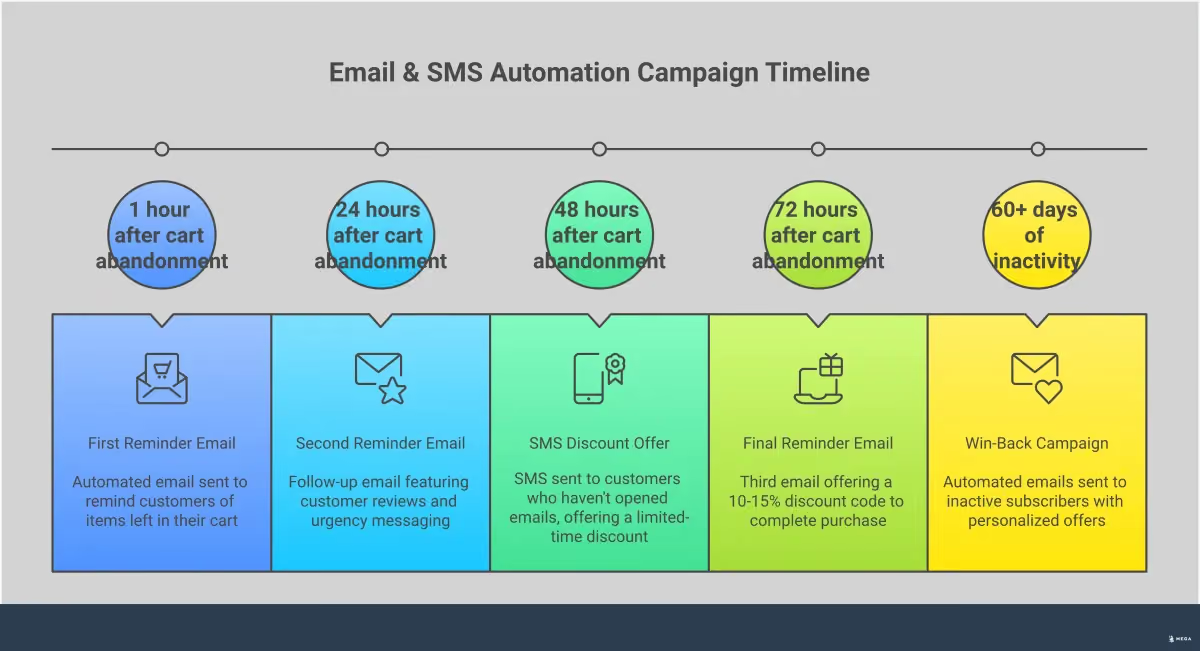
Nearly 70% of online shopping carts are abandoned before the customer completes a sale. An automated abandoned cart sequence is one of the most direct ways to reclaim that lost revenue. This strategy involves automatically sending reminders to customers who have left items in their cart. For an even greater impact, you can utilize SMS marketing to send a message with a dynamic discount code, creating a timely incentive that encourages them to finalize their purchase. This simple automation can significantly increase your conversion rates by re-engaging shoppers who were already close to buying.
Create Welcome and Post-Purchase Sequences
Your relationship with a customer begins the moment they subscribe and continues long after their first purchase. A welcome sequence for new subscribers is essential for making a strong first impression and introducing them to your brand. Similarly, a post-purchase sequence can improve customer satisfaction and encourage repeat business by providing order updates, asking for reviews, or offering a discount on their next order. Both of these automated series help build trust and loyalty, turning one-time buyers into long-term customers and brand advocates.
How to Build and Grow Your Subscriber Lists
Your email and SMS campaigns are only as effective as the list of people receiving them. Building a high-quality subscriber list is the foundation of a successful marketing strategy, giving you a direct line of communication with potential and current customers. Unlike social media followers or search engine traffic, your subscriber list is an asset you own. You control the messaging, the timing, and the relationship without an algorithm getting in the way. The goal isn’t just to collect as many contacts as possible; it’s to attract people who are genuinely interested in what you offer.
A healthy list is made up of engaged subscribers who want to hear from you. This focus on quality over quantity leads to better open rates, higher click-through rates, and ultimately, more sales. Think of it as building a community around your brand. Each person who opts in is raising their hand and expressing interest. Your job is to nurture that interest with valuable content and relevant offers. The strategies that follow focus on sustainable growth, helping you build a list of loyal fans who are more likely to become repeat customers. By investing time in these foundational steps, you set your business up for long-term success.
Create Compelling Opt-In Incentives
People are protective of their inboxes and phone numbers. To earn a spot, you need to offer a clear and valuable reason for them to subscribe. This is your opt-in incentive, also known as a lead magnet. It’s a simple trade: their contact information in exchange for something of value. A great incentive is relevant to your audience and provides an immediate benefit. Common examples include a discount on their first purchase, free shipping, access to exclusive content, or a helpful downloadable guide. The right lead magnet not only encourages sign-ups but also attracts your ideal customer, making it easier to send targeted emails that convert.
Use Pop-Up Forms and Lead Magnets
One of the most effective ways to capture new subscribers is through well-placed forms on your website. Pop-up forms, when used thoughtfully, can significantly increase your opt-in rate. Instead of interrupting the user experience, you can set them to appear based on visitor behavior, such as when they are about to leave the site (exit-intent) or after they have spent a certain amount of time on a page. Your pop-up should clearly communicate the value of subscribing by highlighting your incentive. Keep the form simple, asking only for essential information like an email address or phone number to reduce friction and make signing up easy.
Segment Your List from Day One
Don’t wait until you have thousands of subscribers to start organizing your list. Segmentation is the practice of dividing your audience into smaller groups based on specific criteria. This allows you to send more personalized and relevant messages. Small businesses that use marketing automation see significantly higher engagement compared to those sending generic bulk emails. You can start with simple segments, such as new subscribers, repeat customers, or customers who purchased a specific product. By segmenting your audience from the beginning, you can deliver the right message to the right person at the right time, which is key to building relationships and driving sales.
Prioritize Phone Number Collection
While growing your email list is essential, don't overlook the power of collecting phone numbers. With open rates around 98%, SMS marketing offers a level of engagement that email can't always match. This direct line of communication is perfect for time-sensitive offers and urgent updates that you want customers to see immediately. Apply the same opt-in strategies you use for email; offer a compelling incentive like a special discount or early access in exchange for a phone number. Because text messages feel personal, they are incredibly effective and can drive immediate action. Just be sure you have explicit consent before sending any messages to maintain trust and stay compliant.
Which Metrics Should You Track for Sales Success?
Tracking the right data is the only way to know if your marketing efforts are turning into sales. Instead of getting lost in dozens of data points, focus on a few key metrics that directly reflect revenue and customer engagement. These numbers will tell you what’s working, what isn’t, and where to focus your energy for better results.
Email KPIs That Matter for Sales
To understand how your emails contribute to sales, you need to monitor a few core metrics. These indicators show how subscribers are interacting with your messages at each step, from opening the email to making a purchase. Consistently tracking these numbers helps you understand audience engagement and refine your strategy.
Focus on these four KPIs:
- Open Rate: The percentage of subscribers who opened your email. This metric is a good indicator of your subject line's effectiveness and brand recognition.
- Click-Through Rate (CTR): The percentage of email recipients who clicked on a link. CTR shows if your message and offer are compelling enough to drive action.
- Conversion Rate: The percentage of recipients who completed a desired action, like making a purchase. This is the most direct measure of sales success.
- Unsubscribe Rate: The percentage of users who opt out. A high rate might signal that your content isn't meeting expectations.
SMS Metrics That Actually Matter
SMS marketing provides real-time data that can help you quickly adjust your campaigns. Because it’s such an immediate channel, the analytics you track should focus on quick actions and conversions. Monitoring these metrics helps you optimize performance and ensure your messages are hitting the mark.
Keep an eye on these essential SMS analytics:
- Delivery Rate: This shows the percentage of messages successfully delivered to recipients. A low rate could indicate issues with your contact list.
- Click-Through Rate (CTR): Just like with email, this measures how many people clicked the link in your text. It’s a strong sign of engagement.
- Conversion Rate: This tracks how many recipients completed a purchase after clicking your link. It’s the clearest indicator of your campaign's ROI.
- Opt-Out Rate: The percentage of subscribers who unsubscribe after receiving a message. This helps you gauge message relevance and frequency.
Attribute Revenue and Track Conversions
Knowing your open and click rates is useful, but connecting those actions directly to revenue is what truly matters. Attribution is the process of identifying which specific emails or texts led to a sale. By setting up proper conversion tracking, you can see exactly how much revenue each campaign generates. This allows you to calculate your return on investment (ROI) and make data-driven decisions.
A high click rate is the first step, as it measures how many subscribers engaged with your content enough to visit your site. From there, you can track their journey to purchase. This process turns abstract metrics into concrete financial results, proving the value of your marketing channels and helping you invest your budget more effectively.
How to Integrate Email and SMS for Maximum Impact
Using email and SMS marketing in isolation is like having two separate conversations with the same customer. When you integrate them, you create a single, seamless dialogue that meets customers on the right channel at the right time. Instead of competing for attention, these channels work together to guide customers from awareness to purchase and build long-term loyalty. A smart integration strategy ensures your messages feel cohesive and helpful, not repetitive or overwhelming.
The goal is to create a customer journey where each channel plays a specific, valuable role. Email is perfect for detailed storytelling, product education, and newsletters, while SMS excels at delivering urgent, high-impact messages. By coordinating your efforts, you can use data from both channels to send more relevant, personalized content. This unified approach not only improves the customer experience but also gives you a more complete picture of how your audience engages with your brand. Soon, MEGA AI's Email Marketing Agent will automate this entire process, ensuring your campaigns are perfectly synchronized without the manual effort.
Coordinate Your Cross-Channel Campaigns
The first step to successful integration is planning. Avoid sending the same message across both channels at once, which can annoy subscribers. Instead, create a content calendar that maps out a unique role for each platform. This ensures you’re not overwhelming customers with redundant communications. A well-coordinated strategy might use email to announce a week-long sale with detailed product features, followed by an SMS message on the final day to create a sense of urgency. This approach respects the customer's attention while using each channel’s strengths to drive a specific action. Think of it as a one-two punch: email sets the stage, and SMS delivers the final, time-sensitive nudge.
Implement Message Orchestration
Message orchestration means making your email and SMS channels work as a team instead of as separate players. When used in isolation, it’s like having two different conversations with the same person. A truly integrated strategy creates a seamless dialogue that meets customers where they are. For example, you can set up a rule where if a subscriber doesn’t open your promotional email within 24 hours, an automated SMS follows up with a short, compelling reminder. This ensures your message gets seen without being repetitive and adapts to customer behavior in real time, guiding them more effectively from interest to purchase.
Provide New Information in Follow-Ups
A coordinated campaign is more than just timing; it’s about making sure each message adds new value. Instead of sending the same promotion on both channels, use follow-ups to provide fresh information or a different angle. For instance, you can launch a new collection with a detailed email showcasing the story behind the products. A few days later, an SMS can highlight a single best-selling item from that collection with a direct link to buy. This approach respects your customer’s attention and uses each channel for what it does best. The goal is to create a sense of urgency or offer a new piece of information, not just repeat yourself.
Use Dynamic Content and Product Recommendations
Integrating your channels allows you to build a richer customer profile. When you know what a customer clicks on in an email, you can send them a highly relevant SMS offer later. This is where targeted email marketing becomes even more powerful. By sending customized campaigns based on demographics, interests, or past behavior, you make your marketing feel like a personalized service. For example, if a subscriber browses a specific category on your site after clicking an email link, you can follow up with an SMS featuring a new arrival from that same category. This level of personalization shows you understand their needs and increases the likelihood of a purchase.
Time Your Multi-Channel Messages Effectively
Timing can make or break a campaign. To get it right, you need to monitor key metrics like open rates, click-through rates, and conversion times for both email and SMS. This data helps you understand when your audience is most receptive to different types of messages. You might find your customers prefer to read newsletters over their morning coffee but are more likely to act on a flash sale SMS in the evening. Use these insights to measure your marketing success and schedule your campaigns for maximum impact. You can also use timing to sequence your messages, like sending an abandoned cart email first, followed by an SMS with a special discount 24 hours later if the customer still hasn't completed their purchase.
Expanding to an Omnichannel Strategy
While integrating email and SMS is a powerful first step, the next level is expanding to a full omnichannel strategy. This means creating a unified experience across every touchpoint a customer has with your brand—from social media ads and website pop-ups to email newsletters and SMS alerts. Instead of treating each channel as a separate conversation, an omnichannel approach ensures they all work together. For example, a customer might discover a product through a targeted ad, sign up for your email list to get a discount, receive a detailed email about the product, and finally get an SMS reminder about a flash sale. This approach allows you to create a single, seamless dialogue that builds stronger relationships and guides customers smoothly from discovery to purchase.
What Advanced Tactics Maximize Sales?
Once you have your foundational email and SMS strategies in place, you can move on to more advanced tactics that drive significant sales growth. These methods go beyond basic newsletters and focus on using data, testing, and timing to create highly effective campaigns that resonate with your audience. While they require more strategic thinking, the return on investment is often much higher. The key is to continuously refine your approach based on how your customers respond, turning your marketing from a one-way broadcast into a two-way conversation that builds trust and encourages purchases.
This is where automation becomes a powerful ally, especially for small businesses and founders with limited time. Automated systems can help you implement sophisticated strategies without needing a large team or hours of manual work. Think of it as setting up smart rules that run in the background, delivering personalized experiences at scale. By focusing on optimization and personalization, you can turn your email and SMS lists into your most reliable revenue channels, consistently converting subscribers into loyal customers. These advanced tactics are about working smarter, not harder, to achieve measurable results that directly impact your bottom line.
A/B Test Your Campaigns for Better Results
Guessing what your customers want is a risky strategy. A/B testing, also known as split testing, removes the guesswork by letting your audience tell you what works best. This method involves creating two versions of a single campaign and sending each to a small portion of your audience to see which one performs better. You can test different subject lines, calls-to-action, images, or even send times. A/B testing helps you optimize your campaigns for improved open and click-through rates. By consistently testing one variable at a time, you can gather clear data that informs your future marketing decisions and leads to more effective, revenue-generating emails.
Plan Seasonal and Promotional Campaigns
Aligning your marketing with holidays and seasonal events gives customers a timely and relevant reason to buy. Planning these campaigns in advance allows you to create cohesive messaging across all your channels. Sending targeted emails during peak shopping times helps you increase engagement and conversions. Think beyond major holidays like Black Friday. Consider creating campaigns around seasons, industry events, or even fun, unofficial holidays relevant to your brand. A well-structured promotional calendar ensures you never miss an opportunity to connect with customers when they are most likely to be shopping, turning predictable lulls into profitable periods.
Use Customer Data for Deeper Personalization
Personalization is more than just using a customer's first name in an email. True personalization uses customer data to deliver messages that feel uniquely relevant to each subscriber. By tracking purchase history, browsing behavior, and other interactions, you can send targeted product recommendations, birthday offers, and content that resonates on an individual level. Small businesses that use marketing automation see 95% higher open rates on average. This is because personalized, automated messages reach the right person with the right offer at the right time. This level of targeting builds stronger customer relationships and directly translates to higher sales and loyalty.
Leverage AI for Smarter Marketing
Artificial intelligence automates the complex analysis and decision-making that powers personalization. AI tools can analyze customer behavior in real-time to determine the best moment to send a message, personalize email content, and even write compelling subject lines. This level of automation allows you to run highly sophisticated campaigns that would otherwise require a dedicated team. It also helps coordinate your email and SMS campaigns to work together, ensuring customers receive a cohesive experience. End-to-end platforms like MEGA AI are designed to manage this entire process, making advanced marketing strategies accessible for businesses of any size.
Choosing the Right Email and SMS Marketing Tools
Selecting the right software is the first step in turning your email and SMS strategies into reality. The best tool for your business will do more than just send messages; it will act as the command center for your customer communication, helping you automate workflows, segment your audience, and track your performance. With so many options available, it’s easy to feel overwhelmed. The key is to focus on platforms that simplify your process, integrate your channels, and provide clear, actionable data. This will allow you to execute your campaigns efficiently and see a real return on your investment.
All-in-One vs. Specialized Platforms
One of the first decisions you’ll face is whether to use an all-in-one platform that handles both email and SMS, or separate, specialized tools for each. For most small businesses, an integrated platform is the smarter choice. When your email and SMS efforts are disconnected, you risk sending confusing or contradictory messages to your customers. The best tools help you coordinate your campaigns so they work together, creating a single, cohesive customer experience. This unified approach not only saves you time but also ensures your data is centralized, making it easier to track performance and understand your customer's journey from a single dashboard.
Understanding Customer Data Platforms (CDP)
You might see the term Customer Data Platform (CDP) as you research tools. In simple terms, a CDP is a system that gathers all your customer data from various sources—like your website, sales records, and marketing channels—into one central place. This creates a unified profile for each customer, giving you a complete view of their interactions with your brand. Platforms like Klaviyo are built around this concept, acting as a specialized CRM for businesses that sell directly to consumers. By centralizing data, a CDP allows you to create highly specific segments and deliver deeply personalized marketing messages that resonate with your audience and drive sales.
Key Platform Features to Look For
When comparing platforms, focus on features that will directly support your sales goals. Look for robust automation capabilities that allow you to set up welcome series, abandoned cart reminders, and other triggered campaigns. Ensure the platform allows for easy integration of email and SMS so you can combine your marketing efforts effectively. Strong analytics are also crucial for tracking performance and proving ROI. Increasingly, AI-powered features are becoming standard, helping with everything from writing copy to optimizing send times. Soon, MEGA AI's own Email Marketing Agent will automate this entire process, ensuring your campaigns are perfectly synchronized without the manual effort.
Popular Email and SMS Marketing Platforms
While there are many options on the market, a few names consistently come up as leaders in the space. Klaviyo is well-regarded for its powerful segmentation and AI-driven automation, making it a strong choice for B2C brands. Mailchimp is known for its user-friendly interface and is a great starting point for beginners, offering built-in AI tools to simplify campaign creation. Brevo is another popular option that provides an integrated suite of tools, including email, SMS, and transactional messaging. Reviewing a list of the top tools is a good way to start your research, but remember to choose the platform that best fits your specific needs and budget.
Considering the Cost of Marketing Software
The cost of email and SMS marketing software can vary widely, so it’s important to understand the pricing models. Most platforms charge based on the number of contacts on your list and the volume of messages you send each month. Many offer free or low-cost introductory plans, which are perfect for small businesses just getting started. As your list grows, you can expect your costs to increase. When evaluating different pricing tiers, look closely at the features included. Some advanced capabilities, like A/B testing or detailed segmentation, may only be available on higher-priced plans. Think of it as an investment that should generate a positive return through increased sales.
How to Avoid Common Email and SMS Marketing Mistakes
Email and SMS marketing are direct lines to your customers, but common missteps can turn these assets into liabilities. Sending the wrong message, facing technical glitches, or ignoring the mobile experience can lead to unsubscribes and wasted effort. Focusing on your subscribers' experience is key. By avoiding these frequent pitfalls, you can ensure your messages are welcomed, opened, and effective at driving sales.
Prevent Over-Messaging and Subscriber Fatigue
Sending too many messages is one of the fastest ways to burn out your subscriber list. When customers receive communications that aren't relevant or are simply too frequent, they start to ignore them, leading to low engagement rates. To keep your audience interested, focus on quality over quantity. Develop a content calendar to plan your sends and avoid overlap. More importantly, segment your audience based on their purchase history and behavior. This allows you to send targeted, valuable content that feels personal, not intrusive. Consider adding a preference center where subscribers can choose how often they hear from you.
Address Technical and Deliverability Issues
Your marketing message is only effective if it reaches the inbox. Technical issues can stop your campaigns before they have a chance. For email, this often means landing in the spam folder. You can improve your email deliverability by authenticating your domain and regularly cleaning your list of inactive subscribers. For SMS, the technical side can feel complex, but the payoff is huge, with open rates as high as 98%. Using a reputable platform that manages carrier compliance is crucial. Setting up the technical foundation correctly ensures your messages are seen by the people who want to see them.
Prioritize Mobile Optimization
Nearly every email and text message is opened on a mobile device, so a mobile-first approach is non-negotiable. If your emails are difficult to read or links are hard to tap on a small screen, you’ll lose the sale. Use a single-column layout for emails, with large fonts and clear call-to-action buttons. Always test how your emails look on a phone before sending. For SMS, keep your message concise and your link short. Remember the user journey doesn't end with a click. The landing page you direct customers to must also be fully optimized for mobile to provide a seamless path to purchase.