
Many marketing teams find themselves swimming in data but struggling to find a clear path forward. With countless metrics across dozens of dashboards, it’s easy to feel overwhelmed. The solution isn't more data—it's better marketing analytics. This means moving beyond tracking everything and focusing on the few key performance indicators that truly connect to your business goals. This guide shows you how to cut through the noise. You'll learn to build a simple measurement framework, choose the right tools, and foster a team culture where data empowers smarter, faster decisions that drive real growth.
What is Marketing Analytics?
Marketing analytics is the practice of studying data from your marketing efforts to see what’s working and what isn’t. It’s about moving beyond guesswork and using real numbers to make informed decisions. By collecting and analyzing data from your website, social media, email campaigns, and ads, you can understand customer behavior, measure the return on your investment (ROI), and find opportunities for improvement. The main goal is to convert raw data—like clicks, views, and sales—into actionable insights that help you refine your strategy, allocate your budget more effectively, and ultimately grow your business.
A Brief History of Measuring Marketing
The idea of measuring business performance is not new; merchants have been tracking ledgers for centuries. The formal concept of marketing analytics, however, began to take shape in the late 19th century. The arrival of the internet and digital marketing dramatically accelerated its evolution. What once required manual data collection and slow analysis can now happen in real time. Today, powerful tools and platforms give businesses of all sizes the ability to measure campaign performance with incredible speed and detail, making data-driven marketing a standard practice rather than a luxury.
Marketing Analytics vs. Market Analysis
Though they sound similar, marketing analytics and market analysis serve different purposes. Marketing analytics is focused inward, examining the performance of your own marketing activities. It answers questions like, "How many people clicked our ad?" or "Which email subject line led to more opens?" The goal is to optimize your campaigns. In contrast, market analysis looks outward at the broader market landscape. It helps you understand your target audience, identify competitors, and spot industry trends. Both are essential, but marketing analytics is about measuring what you do, while market analysis is about understanding the environment you do it in.
The Four Types of Marketing Analytics
Marketing analytics isn't a single activity but a spectrum of analysis that ranges from simple reporting to complex forecasting. These are often broken down into four distinct types, each answering a progressively more difficult question. Understanding these four types helps you see the different levels of insight you can get from your data. Most businesses start with the first two and gradually incorporate the more advanced types as their capabilities grow. This framework provides a clear path from understanding past events to shaping future outcomes.
Descriptive Analytics: What Happened?
Descriptive analytics is the most straightforward type of analysis. It summarizes past data to tell you what happened. This includes metrics like website traffic, email open rates, social media engagement, and the number of leads generated from a campaign. It’s the foundation of all marketing reporting and gives you a clear snapshot of your performance over a specific period. For example, a descriptive report might show that your website received 2,000 visitors last month from organic search.
Diagnostic Analytics: Why Did It Happen?
Once you know what happened, the next logical question is why. Diagnostic analytics helps you answer this by digging deeper into the data to find causes and relationships. If descriptive analytics shows that website traffic spiked, diagnostic analytics might reveal it was because a particular blog post was shared by an influencer. This type of analysis moves beyond simple reporting to uncover the drivers behind your performance, helping you understand which specific actions led to certain results.
Predictive Analytics: What Will Happen?
Predictive analytics uses historical data, statistical algorithms, and machine learning techniques to forecast future outcomes. It looks for patterns in your past performance to predict what is likely to happen next. For instance, it could help you estimate future sales based on current lead generation trends or predict which customers are most likely to churn. This allows you to be more proactive, anticipating future needs and opportunities instead of just reacting to past events.
Prescriptive Analytics: What Should We Do?
Prescriptive analytics is the most advanced form, as it not only predicts what will happen but also recommends specific actions to achieve a desired outcome. It explores various "what-if" scenarios to suggest the best course of action. For example, it might recommend reallocating your ad budget from one channel to another to maximize conversions. Advanced AI-powered SEO tools can automate this by identifying which content to update or what new topics to cover to improve your search engine rankings and hit your traffic goals.
Common Categories of Marketing Analytics
Marketing analytics can be applied to nearly every aspect of your strategy. To keep things organized, it’s helpful to group your analysis into different categories based on the channel or platform you're measuring. This allows you to evaluate the performance of specific initiatives while still seeing how they contribute to your overall goals. Focusing on these common categories helps you track the metrics that matter most for each part of your marketing mix, from initial customer acquisition to long-term retention.
Campaign Analytics
Campaign analytics measures the performance of specific marketing initiatives, such as a paid ad campaign, an email promotion, or a social media contest. It focuses on metrics like click-through rates, conversion rates, and cost per acquisition to determine if a campaign met its objectives. By analyzing this data, you can identify your most effective tactics and messaging. For small businesses running ads on multiple platforms, tools that centralize campaign management and reporting can simplify this process and provide a unified view of performance.
Web Analytics
Web analytics focuses on understanding how users interact with your website. Using tools like Google Analytics, you can track metrics such as page views, bounce rate, time on site, and user flow. This data helps you identify which pages are most popular, where visitors are dropping off, and how they navigate from one page to another. The goal is to optimize the user experience to guide visitors toward key actions, like making a purchase or filling out a contact form.
Product Analytics
For businesses that offer a software application or digital product, product analytics is essential. It tracks how users engage with the product itself, monitoring actions like feature adoption, user retention, and session length. This information is crucial for identifying pain points, prioritizing new features, and improving the overall user experience. By understanding how people actually use your product, you can make data-driven decisions to increase its value and keep users coming back.
Behavioral Analytics
Behavioral analytics groups users into segments based on their actions, such as their purchase history, browsing activity, or engagement with your content. By understanding these patterns, you can create more personalized marketing experiences. For example, an ecommerce store might use behavioral analytics to recommend products to a customer based on items they’ve previously viewed or purchased. This helps you deliver the right message to the right person at the right time, making your marketing more relevant and effective.
Key Takeaways
- Define success before you measure it: Start by setting specific, measurable goals for your marketing. This ensures you track KPIs that are directly tied to business outcomes, turning raw data into a clear roadmap instead of just a collection of numbers.
- Focus on revenue, not just reach: Move beyond vanity metrics like clicks and impressions. Prioritize tracking customer lifetime value (CLV) and return on investment (ROI) to understand the direct financial impact of your campaigns and make smarter budget decisions.
- Empower your team with data literacy: Analytics tools are only effective if your team knows how to use them. Invest in training and encourage collaboration to build a culture where data informs every marketing decision, from campaign strategy to content creation.
Why Your Business Needs Marketing Analytics
Marketing analytics is the practice of measuring and analyzing marketing performance to understand what’s working and what isn’t. It moves your strategy from guesswork to informed decision-making, helping you spend your budget more effectively and achieve better results. By tracking key metrics, you can see a clear picture of how your efforts impact your business goals. This data-driven approach is essential for growth, allowing you to refine your campaigns, understand your audience on a deeper level, and prove the value of your marketing activities.
How We Measure Marketing Today
Marketing used to rely heavily on intuition and broad assumptions. Today, that approach is no longer enough. Data analytics has become the foundation of modern marketing, enabling businesses to tailor their messages and offers to individual customer preferences. This shift means you can create more relevant and engaging experiences for your audience. Integrating data analytics into your marketing strategies requires a thoughtful approach to ensure that the insights you gather are effectively used and aligned with your overall business goals. It’s about turning raw data into a clear roadmap for connecting with consumers in a meaningful way.
What Your Team Gains from Marketing Analytics
When your team uses analytics, you can make smarter, faster decisions. Instead of guessing what customers want, you can use data to understand their journeys and identify important trends. This allows you to refine your strategies based on insightful data rather than intuition alone. By using advanced analytical tools, you can create highly personalized marketing efforts that resonate with specific audience segments. This ultimately helps you optimize campaign performance and gain a competitive edge. The integration of data analytics transforms how you communicate with consumers, making every interaction more impactful.
Gain a Competitive Advantage
In a crowded market, understanding your customers better than the competition is your biggest advantage. Marketing analytics gives you that clarity. It helps you move past broad assumptions and see exactly how people find and interact with your business. By analyzing this data, you can identify which marketing channels bring in the most valuable customers and create personalized campaigns that resonate with specific groups. This data-driven approach allows you to refine your strategy based on what's actually working, not just what you think is working. You can allocate your budget more effectively and adapt to market changes quickly, keeping you a step ahead.
Essential Tools and Metrics for Marketing Analytics
To build a data-driven strategy, you need the right tools and a clear understanding of what to measure. Your analytics toolkit helps you collect, track, and analyze data from your marketing campaigns. This allows you to move beyond intuition and make decisions based on real performance. The goal is to combine information from your website, SEO efforts, paid ads, and social media into a clear picture of what’s working. By focusing on the right metrics, you can see how your efforts connect to your overall business goals and find opportunities for improvement.
Foundational Analytics Platforms to Know
Core analytics platforms are the foundation of your measurement strategy. These tools gather data from your digital channels and present it in a way that helps you understand performance. The most well-known example is Google Analytics, a powerful tool that tracks website traffic and user interactions. A good platform will consolidate data from various sources, like your website, social media channels, and ad campaigns, into a single dashboard. This gives you a central place to monitor everything without having to jump between different tools. This unified view is essential for seeing the big picture and making informed decisions about where to focus your marketing efforts.
Specialized Analytics Tools for Every Need
While foundational platforms give you a broad overview, specialized tools offer deeper insights into specific marketing areas. Think of it like a doctor's office: you have a general practitioner for overall health, but you see a specialist for specific issues. Similarly, using tools designed for social media, SEO, or user behavior can give you a more detailed understanding of performance. These tools help you answer very specific questions about your campaigns and customers. For a small business, choosing one or two specialized tools that align with your primary marketing channels can provide a significant advantage without overwhelming your team or your budget.
All-in-One Marketing Platforms
All-in-one marketing platforms offer a unified solution for managing many of your marketing activities in one place. These systems often bundle email marketing, social media management, and a CRM together, complete with their own analytics dashboards. This integration allows you to track a customer’s journey across multiple touchpoints, from their first website visit to their latest purchase. For small businesses, this can streamline workflows and reduce the need to learn and pay for multiple separate tools. Platforms like HubSpot provide a comprehensive view of your marketing funnel, helping you see how different channels work together to drive growth.
Social Media Analytics Tools
Understanding what resonates with your audience on social media is critical for building an engaged community. Specialized social media analytics tools go beyond the basic metrics offered by the platforms themselves. They help you track audience sentiment, monitor brand mentions, and analyze competitor performance in detail. By tracking metrics like shares, comments, and overall reach, you can get a clear picture of what content performs best. This data allows you to refine your strategy based on real-time feedback, ensuring your social media efforts are contributing directly to your business goals.
AI-Powered SEO and Content Platforms
Search engine optimization can feel complex, but AI-powered platforms are making it more accessible. These tools use machine learning to analyze search trends, identify valuable keywords, and assess competitor strategies. They can provide actionable recommendations for improving your content and even help automate updates to keep your articles ranking highly. For example, platforms like MEGA AI can analyze your existing content and identify opportunities to improve its click-through rate or add new information to make it more comprehensive. This makes it easier for small businesses to compete in search results without needing a dedicated SEO expert.
Data Visualization and Dashboards
Raw data can be difficult to interpret, which is where data visualization tools come in. These platforms connect to your various data sources and transform complex spreadsheets into easy-to-understand charts, graphs, and dashboards. A well-designed dashboard gives you a quick, visual summary of your most important KPIs, allowing you to spot trends and identify issues at a glance. Tools like Google Looker Studio let you build custom reports that consolidate data from Google Analytics, Google Ads, and other sources, providing a unified view that aids in strategic planning and performance evaluation.
Product and User Behavior Tools
Product and user behavior tools help you understand how people interact with your website or app. By tracking user journeys, you can see exactly where visitors click, how far they scroll, and where they drop off. This information is invaluable for identifying pain points in the user experience and finding opportunities for improvement. For instance, you might discover that users are struggling to find your checkout button or are confused by your navigation menu. Tools like Hotjar use heatmaps and session recordings to give you a visual representation of user behavior, enabling you to make data-driven changes that enhance user experience and drive conversions.
Key Metrics for Understanding Customer Behavior
Understanding how people interact with your brand is critical. Customer behavior metrics help you map out the customer journey and identify patterns in how users find and engage with your content. By tracking metrics like page views, session duration, bounce rate, and conversion paths, you can see what content resonates and where potential customers might be dropping off. This data allows you to refine your strategies, create more personalized messaging, and improve the user experience. Instead of guessing what your audience wants, you can use these insights to give them exactly what they’re looking for, building stronger relationships and guiding them more effectively toward a purchase.
Metrics to Measure Campaign Success
While customer behavior metrics give you a broad view, campaign performance metrics tell you how your specific marketing initiatives are doing. These are the numbers that show whether your ads, emails, or content pieces are hitting the mark. Key metrics include click-through rate (CTR), cost per acquisition (CPA), and conversion rate. Tracking these helps you understand the effectiveness of your paid ads and other campaigns in real time. This information is vital for optimizing your efforts. If a campaign isn't performing well, you can analyze the data to see why and make adjustments, ensuring your marketing budget is always working as hard as possible.
Calculating Conversion Rate
Your conversion rate is the percentage of visitors who complete a desired action on your website. This action could be anything from making a purchase to filling out a contact form or signing up for your newsletter. To calculate it, you simply divide the number of conversions by the total number of visitors, then multiply by 100 to get a percentage. For example, if 1,000 people visited your landing page and 50 of them made a purchase, your conversion rate would be 5%. This metric is one of the most direct ways to measure the effectiveness of your marketing in persuading users to take the next step.
Calculating Cost Per Acquisition (CPA)
Cost per acquisition, or CPA, tells you exactly how much you spend to gain one new customer. To find your CPA, divide the total cost of a marketing campaign by the number of new customers you acquired from that specific campaign. For instance, if you spent $500 on a Google Ads campaign and it brought in 10 new customers, your CPA would be $50. This metric is essential for managing your budget because it clarifies the financial efficiency of your marketing. Understanding your CPA helps you make sure the cost to acquire a new customer doesn't exceed their value to your business.
Key Email Marketing Metrics
When evaluating your email marketing, a few key metrics tell most of the story. The open rate shows the percentage of recipients who opened your email, indicating how effective your subject line was. The click-through rate (CTR) measures how many people clicked on a link within your email, which speaks to the quality of your content and call to action. Finally, the conversion rate tracks how many recipients completed the desired action after clicking. Analyzing these metrics together provides a full picture of your email campaigns. For example, a high open rate with a low CTR suggests your content needs refinement, a problem that content optimization tools can help solve.
Key Social Media Metrics
On social media, it’s important to look beyond simple follower counts. Reach tells you how many unique users saw your content, while impressions count the total number of times your content was displayed. The engagement rate is often the most telling metric, as it measures the percentage of your audience that interacts with your posts through likes, comments, and shares. A high engagement rate signals that your content is resonating with your audience. Tracking these metrics is fundamental to effective social media strategies, especially when running paid campaigns where you need to identify which ad variations are performing best.
Connecting Your Marketing to Revenue and ROI
Ultimately, marketing efforts need to contribute to the bottom line. Revenue and return on investment (ROI) tracking connects your campaigns directly to business results. Metrics like customer lifetime value (CLV) and return on ad spend (ROAS) show the financial impact of your marketing. This is about more than just tracking conversions; it’s about understanding the long-term value each customer brings. By focusing on these metrics, you can prove the value of your marketing department and make a stronger case for future investments. It also helps you allocate your budget to the channels and campaigns that deliver the best financial returns, ensuring sustainable business growth.
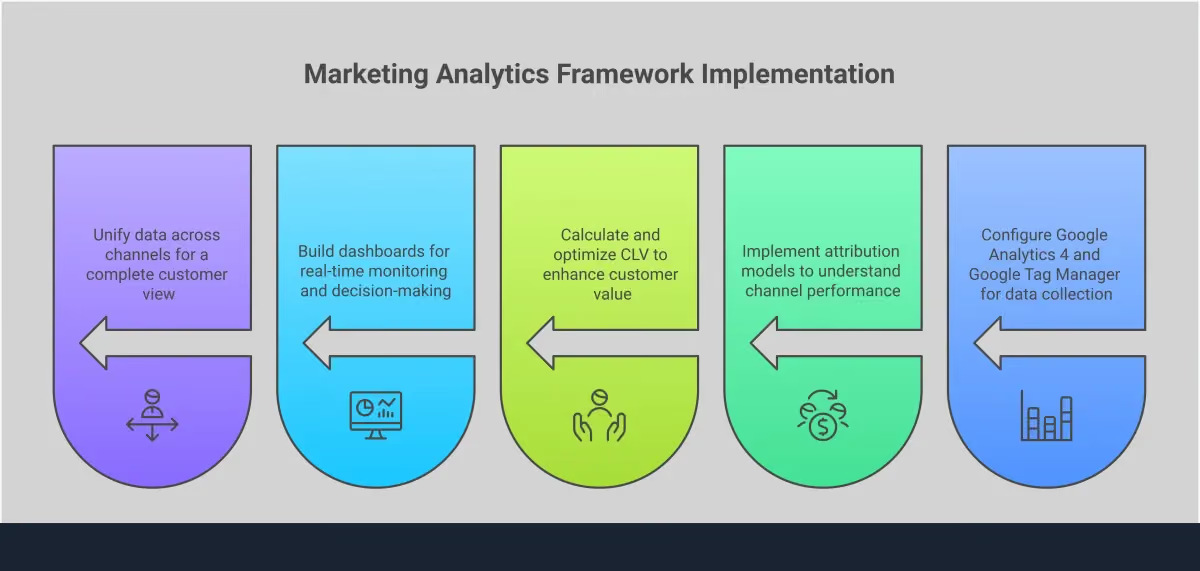
Overcoming Common Marketing Analytics Hurdles
Adopting a data-driven approach is a game-changer, but it’s not without its obstacles. Many teams find themselves swimming in data but struggling to turn it into clear actions. From technical roadblocks and messy data to tight budgets and team resistance, these challenges are common. The key is to address them with a clear strategy and the right tools. By understanding these hurdles, you can create a plan to overcome them and build a marketing engine that truly runs on data. This section will walk you through the most frequent issues and provide practical steps to solve them.
Addressing Technical Roadblocks
One of the biggest challenges isn't collecting data, but knowing what to do with it. As one report notes, a common problem is "a lack of understanding of how to read and use marketing data to bring actionable insights." You might have access to dozens of dashboards, but if your team can't translate those charts into what they mean for your business, the data is useless. This often comes down to a skills gap or using tools that are overly complex. The solution is to focus on both technology and training. Invest in platforms with intuitive interfaces and clear reporting, and provide your team with the resources to understand the core metrics that matter to your goals.
How to Improve Data Quality and Integration
Your marketing insights are only as good as the data they’re built on. Inaccurate or incomplete data leads to flawed conclusions and wasted effort. Another major issue is data silos, where information from your website, CRM, and ad platforms exists in separate, disconnected systems. Integrating data analytics into your strategy requires a thoughtful approach to connect these sources. To get a complete picture of your customer's journey, you need to unify your data. Start by establishing clear standards for data collection and then use tools that can integrate with your entire marketing stack to create a single, reliable source of truth.
The Importance of Data Cleaning
Think of data cleaning as the essential quality control for your analytics. It’s the process of fixing or removing incorrect, duplicate, or incomplete information from your datasets. Without this step, you risk making important decisions based on a skewed view of reality. For instance, if your customer list has duplicate entries or outdated contact information, your personalization efforts will fall flat, and your budget will be wasted on campaigns that never reach the right audience. Remember, your marketing insights are only as good as the data they’re built on. Regularly cleaning your data ensures your reports are accurate and your ROI calculations are reliable, giving you the confidence to invest in what truly works.
Making the Most of Your Analytics Budget
For many startups and small businesses, resources are the primary barrier. Marketing analytics teams often face "limited budgets, time constraints, personnel shortages, competing priorities, and lack of executive buy-in." It’s hard to justify expensive software or a dedicated data analyst when you’re focused on immediate growth. The key is to be strategic and efficient. Prioritize the few metrics that have the biggest impact on your revenue. You can also lean on automated platforms that handle the heavy lifting of SEO and ad optimization, giving you powerful insights without the need for a large team or budget.
How to Get Your Team Excited About Data
Implementing new analytics tools is as much about people as it is about technology. You might face resistance from team members who are comfortable with the old way of doing things or feel intimidated by data. As experts point out, "bridging the skill gap between traditional marketing and digital marketing remains a challenge for businesses." To get everyone on board, you need to build a data-driven culture. This starts with clear communication about why you’re making these changes and how data can help everyone do their jobs more effectively. Provide training, celebrate wins that come from data-informed decisions, and make analytics an accessible part of your team's regular workflow.
How to Build Your Team's Analytics Capabilities
Developing a strong analytics foundation is less about becoming a data scientist overnight and more about building a practical skill set within your team. It starts with understanding which skills matter most, how to interpret the data you collect, and how to use those insights to make smarter marketing decisions. The right tools and a clear process will help you turn raw numbers into a strategic advantage. By focusing on these core areas, you can create a culture where data informs every campaign, every piece of content, and every dollar you spend. This approach empowers your team to move beyond guesswork and start delivering measurable results that align directly with your business goals.
Assess Your Team's Current Skillset
Before you can build new capabilities, you need a clear picture of where your team stands today. One of the biggest challenges isn't just collecting data, but knowing what to do with it. You might have access to plenty of dashboards, but if your team struggles to translate those charts into actionable insights, the data isn't helping your business grow. Take an honest look at your team’s comfort level with analytics. Do they understand how to read and use marketing data effectively? Identifying this skill gap is the first step toward creating a targeted training plan and building a more data-driven culture where everyone feels confident using insights to make smarter decisions.
The Essential Technical Skills for Analytics
To get started, your team needs a solid grasp of a few key technical areas. Today’s digital marketer must have strong digital analytics skills to effectively interpret performance data. This doesn’t mean everyone needs to code. Instead, focus on proficiency with core platforms like Google Analytics 4 to track user behavior and campaign results. Competence with spreadsheets, whether in Excel or Google Sheets, is also crucial for organizing and manipulating data sets. Finally, familiarity with data visualization tools like Looker Studio helps in creating clear, digestible reports that make it easy for anyone on the team to understand performance at a glance and share important findings with stakeholders.
Proficiency in SQL
While not everyone on your team needs to be a coder, having someone with SQL (Structured Query Language) skills can be a significant advantage. Think of SQL as the language used to ask very specific questions of your data. While platforms like Google Analytics are great for high-level insights, SQL lets you dig deeper into your raw data to uncover more granular trends. For example, you could use it to analyze the exact path a customer takes from their first visit to their final purchase. This skill allows your team to move beyond pre-built dashboards and explore complex customer behaviors, leading to more nuanced and effective marketing strategies.
Familiarity with GenAI
Generative AI is rapidly changing the marketing landscape, and it’s about more than just writing blog posts. For analytics, GenAI can act as a powerful assistant, helping your team make sense of complex data without needing a deep technical background. It can summarize lengthy performance reports, identify key trends, and even suggest optimizations for your campaigns. This helps bridge the skill gap and reduces the intimidation factor that often comes with data analysis. Platforms like MEGA AI use this technology to automate and simplify tasks like SEO content optimization, making it easier for small businesses to implement data-driven strategies and see real results without a dedicated analytics team.
Understanding the Fundamentals of Data Analysis
Once you have the data, the next step is knowing how to read it. The fundamentals of data analysis are about finding the story within the numbers. This means learning to spot trends, identify patterns, and understand the difference between correlation and causation. Data analytics has become the cornerstone of marketing personalization, allowing you to tailor your messaging to individual customer preferences. A key part of this is customer segmentation, which involves grouping your audience based on shared characteristics or behaviors. This practice helps you move from broad assumptions to a nuanced understanding of who your customers are and what they want from your business.
Turning Data into Strategic Action
The true power of analytics is unlocked when it informs your strategy. Marketers who use analytics can identify trends, understand customer journeys, and refine their strategies based on insightful data rather than intuition alone. For example, if your data shows a specific blog post is driving significant organic traffic, you can use a tool like MEGA AI’s Maintenance Agent to update it with new content and improve its click-through rate. Similarly, if analytics reveal that your ads perform best with a certain demographic on a specific platform, you can adjust your budget to focus on that high-performing segment. This creates a feedback loop where data continuously improves your marketing efforts.
How to Select and Implement the Right Tools
The right technology makes data collection and analysis much more manageable. Marketing analytics tools help you collect, track, analyze, and report on data from your digital campaigns. When choosing your toolkit, start with your goals. What do you need to measure? Look for platforms that integrate with your existing systems, like your CMS or ad accounts. An end-to-end solution can simplify this process by consolidating your SEO and paid ads data in one place. The goal is to find tools that automate routine tasks and present insights clearly, so you can spend less time pulling reports and more time acting on them to grow your business.
How to Create a Data-Driven Marketing Strategy
A data-driven strategy is your roadmap for making smarter marketing decisions. It’s about moving beyond intuition and using concrete evidence to guide your actions, from the content you create to the ads you run. This approach doesn't require you to be a data scientist; it just requires a clear plan. A solid strategy ensures you’re not just collecting data for the sake of it, but actively using it to understand your audience, refine your campaigns, and achieve your business objectives. It's the difference between guessing what your customers want and knowing what they want.
Building this strategy involves four key steps. First, you need to define what success looks like by setting clear, measurable goals. Next, you'll create a framework to track your progress toward those goals. With data in hand, you can then personalize your marketing to connect with customers on a deeper level. Finally, and most importantly, you’ll learn to act on the insights you gather to continuously improve your results. This systematic process turns raw numbers into a powerful engine for growth for both your SEO and paid media efforts, helping you allocate resources effectively and demonstrate tangible returns on your marketing investment.
Setting Clear, Measurable Marketing Goals
The first step in any data-driven plan is to define what you want to achieve. Setting measurable goals is essential because it allows you to accurately track progress and understand what’s working. Vague objectives like "increase brand awareness" are hard to quantify. Instead, aim for specific, measurable targets like "increase organic search traffic by 20% in the next quarter" or "achieve a 15% conversion rate on our new landing page."
By defining clear objectives, you can align your marketing efforts with your company's larger business outcomes. Every goal should have a number and a timeline attached, giving your team a clear benchmark for success and helping you justify your marketing spend.
Building Your Marketing Measurement Framework
Once you have your goals, you need a plan for how you'll measure them. A measurement framework outlines the specific key performance indicators (KPIs) you'll track to gauge your progress. This framework acts as a bridge between your daily activities and your high-level goals, ensuring the data you collect is always relevant and actionable. For example, if your goal is to improve customer retention, your KPIs might include customer lifetime value (CLV), churn rate, and repeat purchase rate.
Your framework should be tailored to your specific objectives. Don't get bogged down tracking dozens of vanity metrics. Instead, focus on the handful of KPIs that truly reflect the health of your marketing and its impact on the business.
Using A/B Testing to Refine Your Approach
Once you have a framework for measurement, you can start using data to actively improve your campaigns. A/B testing, or split testing, is a straightforward method for doing this. Instead of guessing which headline, image, or call-to-action will perform best, you test two versions against each other to see which one your audience prefers. This practice is fundamental to making data-driven decisions rather than relying on intuition alone. Each test provides a clear winner based on the metrics you’ve chosen, like click-through rate or conversions. This creates a feedback loop where you are constantly learning and making small, informed adjustments that lead to better results over time.
Automating Ad Variation Testing
Manually testing different ad variations can be a huge time sink, especially for a small team. Creating multiple versions of an ad, launching them across different platforms like Google and Meta, and then tracking the results for each one is a lot of work. This often means you can only run a few tests at a time, which limits how quickly you can learn and improve. The process can feel overwhelming, leaving you stuck with campaigns that are good enough but not great, simply because you lack the bandwidth to optimize them further.
This is where automation becomes a powerful ally. Platforms designed for paid ads can streamline this entire process. For instance, a tool like MEGA AI allows you to upload your creative assets and can then automatically remix them into hundreds of variations. It can test different headlines, images, and calls-to-action across multiple platforms at once. The system then analyzes the performance data and can even move your budget to the best-performing ads automatically, ensuring your money is always working as efficiently as possible. This lets you test at scale and maximize your insights without the manual effort.
Using Data to Personalize Your Marketing
Data gives you the power to treat your customers as individuals, not as a monolith. Personalization is one of the most significant advantages of a data-driven approach. By using analytics, you can tailor your marketing messages, offers, and experiences to fit the unique preferences and behaviors of different customer segments. This could be as simple as creating targeted email campaigns based on past purchases or as advanced as dynamically changing website content for different visitors.
When you personalize your marketing, you show customers that you understand their needs. This builds stronger relationships, enhances engagement, and ultimately leads to higher conversion rates.
Putting Your Data Insights into Action
Collecting data is only half the battle; the real value comes from acting on what you find. Acting on insights is what separates successful data-driven marketers from the rest. When you leverage analytics, you can spot emerging trends, understand the complete customer journey, and refine your campaigns based on performance. This means you’re making decisions based on evidence, not just a hunch.
Create a feedback loop where you regularly review your data, identify opportunities for improvement, and test new approaches. Whether it’s reallocating your paid ads budget to a higher-performing channel or updating an article that has a low click-through rate, turning insights into action is the key to continuous optimization and sustainable growth.
How to Integrate Digital and Traditional Analytics
Many businesses operate in both the physical and digital worlds, and their marketing strategies should reflect that reality. Integrating analytics from traditional channels like print, radio, or direct mail with your digital data is no longer optional; it’s essential for a complete understanding of your customer’s journey. While digital marketing provides a wealth of granular data, traditional marketing often excels at building broad brand awareness and reaching different demographics. The real magic happens when you can connect the dots between the two.
The goal is to create a single, cohesive view of your marketing performance. When you can see how a local radio spot drives traffic to a specific landing page or how a trade show appearance leads to a spike in demo requests, you move beyond channel-specific metrics. You start to understand the entire ecosystem of your marketing efforts. This holistic view allows you to make smarter budget decisions, refine your messaging across all platforms, and create a seamless experience for your customers, regardless of how they first discover your brand. By aligning your data sources, you can finally measure the true impact of your entire marketing mix.
Bringing Offline and Online Data Together
The first step in creating a unified strategy is to build bridges between your offline efforts and your online analytics. You need to find ways to translate real-world actions into trackable digital data points. For example, you can use unique, easy-to-remember URLs or QR codes in your print ads, direct mailers, or event signage. You could also assign a specific phone number to a radio campaign to track calls generated from that source.
By "aligning traditional media with digital insights and delivery systems, marketers can create a cohesive brand-to-demand experience." This approach allows you to directly measure the response to your offline campaigns within your digital analytics platforms. You can see not only how many people visited a specific URL from a magazine ad but also what they did on your site afterward. This creates a clear path for tracking offline conversions and understanding the role each traditional channel plays in your funnel.
Defining Online and Offline Data
To get a full picture of your marketing, you need to understand two main kinds of data. Online data is information collected from your digital activities. This includes everything from website visits and mobile app usage to the performance of your ad campaigns and email newsletters. It's the digital footprint your customers leave behind. On the other hand, offline data is information gathered from interactions that happen in the physical world. Think of in-store purchases, responses to a direct mail campaign, phone calls to your business, or leads collected at a local event. Both data types are crucial for understanding the complete customer journey and measuring the true impact of your marketing efforts.
Making Sense of Cross-Channel Attribution
Figuring out which marketing touchpoint gets the credit for a conversion is one of the most persistent challenges in marketing. A customer might hear your ad on a podcast, see a post on social media, and then click a search ad before finally making a purchase. Bridging the gap between the tangible data of digital marketing and the often intangible results of traditional marketing remains a significant challenge for many businesses.
While perfect attribution modeling is difficult, the goal is to move beyond a simple last-click model that gives 100% of the credit to the final touchpoint. By integrating offline and online data, you can begin to build a more accurate picture of the customer journey. This helps you appreciate the value of top-of-funnel activities, like brand awareness campaigns, that may not drive immediate sales but play a crucial role in guiding a customer toward a final decision.
How to Create a Single View of Your Customer
A unified customer view means consolidating every interaction a person has with your brand into a single, comprehensive profile. This includes everything from their website browsing history and email engagement to their in-store purchase records and customer service calls. Businesses are increasingly relying on data to drive their marketing strategies, which allows for more effective targeting and personalized messaging.
Creating this 360-degree view is the foundation of effective personalization. When you understand a customer’s complete history and preferences, you can tailor your communications to be more relevant and timely. Tools like Customer Data Platforms (CDPs) are designed specifically for this purpose, pulling data from disparate sources to create a single source of truth for each customer. This allows you to stop marketing to channels and start marketing to people.
Measuring Performance Across Every Channel
Once you have integrated data and a clearer view of the customer journey, you can begin to measure the performance of your marketing mix as a whole. Instead of looking at your SEO, paid ads, and print campaigns in isolation, you can analyze how they work together. Combining traditional and digital strategies enables marketers to leverage the strengths of each channel, leading to more effective campaigns and better overall results.
This holistic approach helps you answer critical strategic questions. Did your billboard campaign lead to an increase in branded search queries? Does your podcast sponsorship correlate with a lift in direct website traffic? By analyzing these cross-channel effects, you can optimize your entire budget, shifting resources to the most effective combination of activities. This is how you build a truly data-driven strategy that maximizes your return on every marketing dollar spent, whether online or off.
How to Develop Your Marketing Analytics Team
Your analytics tools are powerful, but they're only as effective as the team that uses them. Building a strong analytics capability isn't just about hiring a data expert; it's about cultivating a specific skill set and mindset across your entire marketing organization. When your team is equipped to interpret data and collaborate effectively, you can turn raw numbers into a clear roadmap for growth. This involves a commitment to ongoing training, fostering collaboration, ensuring clear communication, and building a culture where data is central to every decision.
Creating Effective Team Training Programs
Today’s digital marketer must have strong digital analytics skills. Investing in training programs not only enhances your team's capabilities but also ensures they are equipped to leverage data effectively in their marketing strategies. This isn't a one-and-done task but an ongoing commitment. You can support your team’s growth through online courses, industry certifications like those for Google Analytics, and internal workshops. This helps everyone feel more confident in their roles and better prepared to turn insights into action. When you invest in your team's skills, you also show them you're committed to their professional development.
How to Foster Cross-Team Collaboration
Analytics insights become much more powerful when they aren't confined to a single team. By combining the tangible impact of traditional media with the precision of digital tools, businesses can create more comprehensive campaigns. Set up regular meetings where teams from content, paid ads, and sales can share their data and observations. Creating shared dashboards and goals helps everyone see how their work contributes to the bigger picture. This cross-team collaboration breaks down silos and often leads to innovative strategies you wouldn't have discovered otherwise. When your SEO and paid ads teams share insights, for example, they can create a much more effective and unified strategy.
Establishing Clear Communication About Data
Marketing analytics teams often face challenges like limited budgets, competing priorities, and a lack of executive buy-in. Establishing clear communication channels can help mitigate these issues and ensure all team members are aligned on goals. A key part of this is learning to translate complex data into simple, actionable stories that resonate with non-technical stakeholders. Practice presenting findings with a clear "so what?" that explains the business impact. Regular, easy-to-understand reports and open forums for questions can help your entire organization understand the value of your analytics efforts and get the buy-in you need to move forward.
How to Build a Data-Driven Culture
Ultimately, the goal is to create an environment where data is at the heart of every marketing decision. Businesses are increasingly relying on data to drive their marketing strategies, allowing for more effective targeting and personalized messaging. Building a data-driven culture is essential for maximizing the impact of your analytics efforts. It’s about shifting the conversation from "I think this will work" to "the data suggests this is our best approach, and here's how we'll test it." This change starts with leadership. When managers ask for data to support ideas and celebrate data-informed wins, it signals to the entire team that data is a core value.
Getting Started with Advanced Marketing Analytics
Once you have a solid analytics foundation, you can begin to implement more advanced techniques to get a deeper understanding of your marketing efforts. This isn't about finding more complicated tools; it's about asking more sophisticated questions of your data. Advanced analytics helps you move from reporting on what happened in the past to predicting what will happen in the future and why. It’s the difference between seeing that your sales dipped last month and understanding which customer segments are at risk of churning next month so you can intervene.
By leveraging these deeper insights, you can create more effective campaigns, deliver highly personalized customer experiences, and make smarter, data-driven decisions that guide your strategy. For example, instead of just tracking keyword rankings, you can analyze user intent signals to predict which content topics will drive the most qualified traffic. Instead of just looking at ad click-through rates, you can forecast which creative variations will yield the highest conversion rates among specific audience segments. This proactive approach is how you find your competitive edge and ensure your marketing stays effective as your business grows and the market inevitably changes. It transforms your data from a simple report card into a strategic roadmap for future growth.
How to Use Predictive Analytics
Predictive analytics uses your historical data, statistical algorithms, and machine learning to identify the likelihood of future outcomes. Instead of just looking at past performance, you can start to forecast trends and anticipate customer behaviors. For example, you can analyze past data to predict which leads are most likely to convert, allowing your sales team to prioritize their efforts. You could also identify customers who show early signs of churning and proactively reach out with a special offer. This allows you to be proactive with your marketing, allocating your budget and resources where they will have the greatest impact instead of reacting after the fact.
A Guide to Advanced Customer Segmentation
Effective marketing starts with knowing your audience, and advanced analytics takes segmentation to a new level. Instead of grouping customers by broad demographics like age or location, you can use data to create highly specific segments based on behavior, purchase history, and engagement patterns. AI-driven tools can identify subtle patterns in your data, allowing you to tailor content and experiences to individual preferences. This level of personalization makes your marketing feel more relevant and helpful, leading to better engagement and higher conversion rates. It also improves cost efficiency by ensuring your message reaches the most receptive audience.
Using Advanced Data to Optimize Performance
Relying on intuition alone is no longer enough to succeed in a competitive market. Advanced analytics allows you to refine your strategies based on insightful data rather than guesswork. By tracking the entire customer journey across different touchpoints, you can identify what’s working and what isn’t. This helps you understand which channels are driving the most value and where you can make improvements to your campaigns. Marketers who harness the power of analytics can move beyond simple metrics like clicks and impressions to focus on what truly matters: driving revenue and achieving a better return on investment for their Paid Ads and SEO efforts.
How to Future-Proof Your Analytics Strategy
The marketing landscape is always changing, and a future-proof strategy is one that can adapt. Advanced analytics helps you build this resilience by providing a deeper understanding of market dynamics and consumer behavior. By integrating data from all your marketing channels, both online and offline, you can create a unified view of your customer and your overall performance. This holistic perspective allows you to make more strategic decisions, anticipate shifts in the market, and leverage the strengths of each channel. It ensures your strategy remains effective and relevant over the long term, no matter what changes come your way.
Adapting to the End of Third-Party Cookies
For years, marketers relied on third-party cookies to track user behavior across the web, but that era is ending as browsers prioritize user privacy. This change means the old way of following potential customers from site to site is no longer an option. For small businesses, this isn't a setback; it's an opportunity. The shift levels the playing field, moving the focus from complex, expensive tracking systems to building direct relationships with your audience. Instead of renting attention on other platforms, you can concentrate on creating an excellent experience on your own website. This transition empowers you to build an owned audience, giving you more control and a clearer line of communication with people genuinely interested in your brand.
The strategy now centers on first-party data—the information you collect directly from your audience through your website, email lists, and customer interactions. This data is more accurate and valuable because it comes with consent from people who have already shown interest in your business. To gather this data effectively, you need a strong flow of qualified traffic to your site. This makes your SEO and content strategy more critical than ever. Your content must be perfectly optimized to attract visitors and keep them engaged. Using automated tools to find the right keywords and continuously improve existing articles ensures your website becomes a powerful engine for collecting first-party insights, helping you personalize experiences without relying on outdated tracking methods.
How to Measure What Matters in Marketing
Measuring marketing success goes far beyond tracking likes, shares, and website visits. While these metrics can indicate engagement, they don't tell the whole story. True success is measured by how your marketing efforts contribute to core business objectives, like generating revenue and building a loyal customer base. To get a clear picture, you need to connect your activities directly to outcomes. This means moving from vanity metrics to meaningful data that informs your strategy and proves your value. It's about understanding the why behind the numbers and using that knowledge to make better choices.
By focusing on the right key performance indicators (KPIs), you can understand what’s working, what isn’t, and where to invest your resources for the best results. This data-driven approach transforms marketing from a cost center into a predictable revenue driver. It allows you to make smarter decisions, optimize campaigns for profitability, and demonstrate a clear return on every dollar spent. The following methods will help you measure what truly matters and build a stronger, more effective marketing engine for your business.
How to Accurately Attribute Revenue to Marketing
Revenue attribution is the process of connecting a sale to the specific marketing touchpoints that influenced the customer's decision. In a simple world, a customer would see one ad, click it, and buy. But the modern customer journey is rarely that linear. A buyer might discover you on social media, read a blog post from a Google search, and finally convert after clicking an email link. By leveraging advanced analytical tools and techniques, businesses can decode this data to craft highly personalized marketing efforts and optimize campaign performance. Accurately attributing revenue helps you understand which channels are most effective at driving sales, not just clicks.
Why and How to Calculate Customer Lifetime Value (CLV)
Customer lifetime value (CLV) is a prediction of the total net profit your company will make from any given customer. It’s a vital metric because it shifts your focus from a single transaction to the long-term health of your customer relationships. Knowing your CLV helps you determine how much you can afford to spend to acquire a new customer while remaining profitable. Marketers who harness the power of analytics can identify trends, understand customer journeys, and refine their strategies based on insightful data rather than intuition alone. A high CLV indicates strong customer loyalty and a sustainable business model.
A Simple Guide to Assessing Marketing ROI
Return on investment (ROI) is the ultimate measure of your marketing's financial performance. It answers the simple but critical question: for every dollar we spend on marketing, how many dollars do we get back? Calculating ROI for each campaign and channel—from SEO to paid ads—is essential for smart budget allocation. Integrating data analytics seamlessly into marketing strategies requires a thoughtful approach to ensure that insights are effectively leveraged and aligned with overall business goals. When you know which activities deliver the highest returns, you can confidently double down on what works and cut spending on underperforming efforts.
Turning Measurement into Continuous Improvement
Measuring success isn't a one-time task; it's an ongoing cycle of analysis and optimization. The market, customer behavior, and search engine algorithms are constantly changing, and your strategy must adapt. Use your data to form hypotheses, run A/B tests, and iterate on your campaigns. This commitment to continuous improvement ensures your marketing stays effective and efficient over time. By taking these measures, businesses can leverage marketing analytics to gain valuable insights and drive effective decision-making. This iterative process turns your marketing into a learning machine that gets smarter with every campaign.