
The promise of AI marketing is that it can handle complex optimization work for you. But for an AI agent to make smart decisions, it needs a complete picture of your business. It can’t work effectively if your website data is siloed from your ad performance data. To get the full power of automation, you must first connect marketing data from all your platforms. This creates the unified data stream that AI tools need to analyze performance, identify opportunities, and automatically make adjustments that drive real growth.
Key Takeaways
- Prove your marketing's impact: Connecting your ad platforms, website, and sales software allows you to see exactly which campaigns lead to actual revenue, turning marketing from an expense into a measurable investment.
- Focus on quality connections, not quantity: Begin by integrating your most critical tools—like your website CMS, Google Search Console, and primary ad platforms—to build a reliable data foundation without unnecessary noise.
- Turn insights into automated action: A connected data system is the fuel for automation, enabling AI agents to make real-time adjustments that optimize your campaigns for growth without constant manual effort.
What Are Data Connections and Why Do They Matter for Growth?
Think of a data connection as a bridge that allows your different marketing tools to talk to each other. Your website, ad platforms, analytics software, and content management system (CMS) all hold valuable pieces of information about your business. By themselves, these pieces are useful. But when they’re connected, they create a complete picture of your customer’s journey and give you the power to make smarter, faster decisions that directly impact your bottom line.
Without these connections, you’re operating with blind spots. You might know how many people clicked an ad, but do you know what they did on your website afterward? You might see a spike in traffic, but can you trace it back to a specific campaign? A solid data connection strategy removes the guesswork. It’s the foundation for turning scattered information into a clear roadmap for growth, allowing you to see exactly what’s working and where to focus your efforts for the best results.
See How Connected Data Drives Revenue
When your marketing tools are connected, you can follow a customer from their very first click on an ad to their final purchase. This end-to-end visibility is critical because it proves which marketing activities are actually making you money. By integrating data from your ad platforms, website, and sales software, you can track leads and directly attribute revenue to specific campaigns.
This clarity allows you to do more of what works and less of what doesn’t. Understanding this customer behavior is a powerful advantage. In fact, companies that effectively leverage data analytics have seen conversion rates increase by an average of 20%. When you know which blog posts lead to sales or which ad copy resonates most with buyers, you can refine your strategy to attract more high-quality customers and grow your revenue more efficiently.
Real-Time vs. Static Data: Why It Matters
Static data is a snapshot in time, like a monthly performance report. It’s useful for looking back at what happened, but it’s often outdated by the time you see it. Real-time data, on the other hand, is a live stream of information. It shows you what’s happening right now—who is on your site, which campaigns are driving traffic, and how users are interacting with your content at this very moment.
This distinction is crucial for making agile business decisions. With static data, you might wait weeks to discover a campaign is underperforming. With real-time data integration, you can spot the issue in minutes and make immediate adjustments, saving your budget and improving results. This ability to react instantly is what allows modern marketing tools to optimize campaigns continuously, ensuring your resources are always working as hard as possible to grow your business.
The Numbers Behind Connected Data
Let's move beyond the concept and look at the actual impact. Connecting your data isn't just about organization; it's about driving measurable results. For instance, businesses that effectively use data analytics see an average conversion rate increase of 20%. This happens because a unified view of your customer allows for smarter decisions. When you can trace the path from a social media ad to a website visit and finally to a sale, you stop guessing what works. You can confidently prove your marketing's impact by showing exactly which campaigns generate revenue. This transforms your marketing from a simple expense into a predictable, growth-driving investment for your business.
How Faster Reporting and Automation Impact ROI
Faster reporting is where connected data truly pays off. Manually pulling reports from different platforms is slow, meaning you're always looking in the rearview mirror. By the time you spot a problem, you may have already wasted a significant portion of your budget. With an integrated system, you get insights in near real-time, allowing you to make immediate adjustments. This speed is fundamental to improving your return on investment (ROI), ensuring your money is always allocated to the most effective channels and campaigns.
This is also where automation comes into play. A connected data system provides the necessary fuel for AI-powered tools to function effectively. Instead of you manually analyzing reports, an AI agent can monitor performance and make instant optimizations, like reallocating ad budget from an underperforming campaign to a successful one. This is the core of what platforms like MEGA AI do—they use your unified data to automate the complex work of SEO and paid ads, ensuring your campaigns are always optimized for growth without constant manual oversight.
How to Improve Customer Experience with Connected Data
Connecting your marketing data is about more than just organizing information. It’s about understanding your customers on a deeper level. When your website, ad platforms, and analytics tools communicate with each other, they create a single, clear picture of your customer’s journey. This unified view helps you move past generic marketing and start making decisions based on real user behavior. You can see which channels bring in the most valuable traffic, what content resonates with your audience, and where potential buyers drop off.
This insight allows you to create a smoother, more relevant experience for every person who interacts with your business. Instead of showing everyone the same message, you can present the right information at the right time. This builds trust and shows customers that you understand their needs, which is fundamental to growing your business. With an AI marketing agent, you can automate this process, ensuring every customer interaction is meaningful and moves them closer to a purchase. By focusing on the customer experience, you create a foundation for sustainable revenue growth and long-term loyalty.
Show Customers Exactly What They Want
Your customers are already telling you what they’re interested in through their actions. When you connect data from your website and tools like Google Search Console, you can clearly see what they are searching for and which pages they visit most. This information is a roadmap to understanding their intent. You can use these insights to test the appetite for certain products or services.
For example, if you notice a blog post about a specific service is getting a lot of organic traffic, you can feature that service more prominently on your homepage or in your ad campaigns. This isn’t a guess; it’s a data-informed decision that responds directly to customer interest, making it much more likely to lead to a conversion.
Automate Your Content Personalization
For a small business, personalizing every customer interaction by hand is simply not possible. This is where connecting your data to an automation platform becomes a game-changer. When your systems are integrated, an AI agent can deliver personalized experiences at scale, saving you countless hours while improving results.
Companies that use AI-powered marketing automation see significant growth because they can tailor content based on a customer’s past behavior. For instance, if someone repeatedly visits pages related to a particular product category, your system can automatically highlight those products on their next visit. This makes the customer feel seen and understood, creating a more engaging experience that encourages them to come back.
Tailor Your Messaging for Different Buyer Segments
Not every visitor to your website is at the same stage of the buying process. Some are just starting their research, while others are ready to make a purchase. A one-size-fits-all message rarely works for everyone. By connecting data from your ad platforms, website, and CRM, you can segment your audience based on their behavior and intent.
This allows you to track leads from their very first click and tailor your communication accordingly. A new visitor might see an ad with an introductory offer, while a returning customer could receive a message about a new product that complements their previous purchase. Speaking directly to the needs of different buyer types makes your marketing more effective and shows customers you value their specific journey with your brand.
Bridge the Physical and Digital with "Phygital" Marketing
"Phygital" marketing is a strategy that merges your physical, real-world presence with your digital, online one. It’s about creating a smooth and continuous experience for your customers, whether they’re in your store or on your website. For a local business, this could be as simple as a QR code on a menu that links to an online ordering page or an in-store event promoted through targeted social media ads. The goal is to make the customer's journey effortless and personal. By connecting these two worlds, you can build stronger relationships with your customers, fostering a sense of loyalty that keeps them coming back. It’s about meeting them where they are and making their interaction with your brand memorable and convenient.
Using Connected Products to Build Trust and Authenticity
One powerful way to apply phygital marketing is through connected products. This involves embedding technology like NFC tags or QR codes directly into your physical items. When a customer interacts with the tag—say, by tapping their phone on it—they can be directed to exclusive online content. For example, a clothing brand could use a tag to prove an item is authentic, share the story behind its creation, or offer styling tips. This simple interaction does more than just provide information; it builds trust and adds value long after the sale. It also creates a new data point, connecting a physical product interaction to a digital experience. This gives you a more complete picture of your customer's journey, helping you understand their interests and behaviors in a way that purely online data can't capture.
How to Drive Revenue with Real-Time Data
Connecting your marketing data isn't just a technical chore; it's the most direct way to understand how your efforts translate into actual sales. When your tools talk to each other, you move from guessing what works to knowing what works. Real-time data gives you a live look into your business, showing you which ad campaigns are driving sales, which blog posts are attracting qualified leads, and where customers are dropping off in the buying process.
This continuous flow of information allows you to make smarter, faster decisions. Instead of waiting for a monthly report to tell you that a campaign isn't performing, you can see it in hours and adjust accordingly. This agility is crucial for small businesses where every marketing dollar counts. By creating a system where data from your website, ads, and sales platforms are unified, you build a powerful engine for growth. This engine doesn't just provide reports; it powers automated actions that can optimize your campaigns and improve your customer experience without constant manual input.
Turn Website Clicks into Sales Insights
Every click on your website is a piece of a larger story. By itself, a click doesn't tell you much. But when you connect your website data to your ad platforms and customer relationship management (CRM) software, you can follow the entire customer journey. You can see which ad a customer clicked, what pages they visited, and whether they eventually made a purchase. By integrating these systems, you can track leads from the first interaction to the final sale. This proves marketing's direct impact on your bottom line and helps you understand the true value of each channel, allowing you to invest your budget more effectively.
Get Faster Insights for Quicker Results
In marketing, speed matters. The traditional approach of reviewing monthly or quarterly reports means you're always acting on old information. Real-time data shortens the feedback loop from months to days or even hours. When you can see performance data as it happens, you can quickly identify what’s working and double down on it. You can also spot failing campaigns early and pause them before they waste more of your budget. Most small businesses see improvements in 60–90 days when they start acting on connected data. With an AI-powered SEO strategy, this process can be even faster, as the system continuously learns and adjusts based on live results.
Use AI to Automate Growth Decisions
Connecting your data is the first step. The next is letting technology act on it for you. AI-powered marketing platforms use your real-time data to make autonomous growth decisions. For example, an AI agent can automatically shift your ad budget to the best-performing campaigns, rewrite ad copy to improve click-through rates, or update your website content to rank for new keywords. Companies using AI-powered marketing automation see significant increases in efficiency and revenue growth. This frees you from the cycle of constantly analyzing data and lets you focus on running your business while the AI handles the optimization.
What Happens When You Connect All Your Marketing Data?
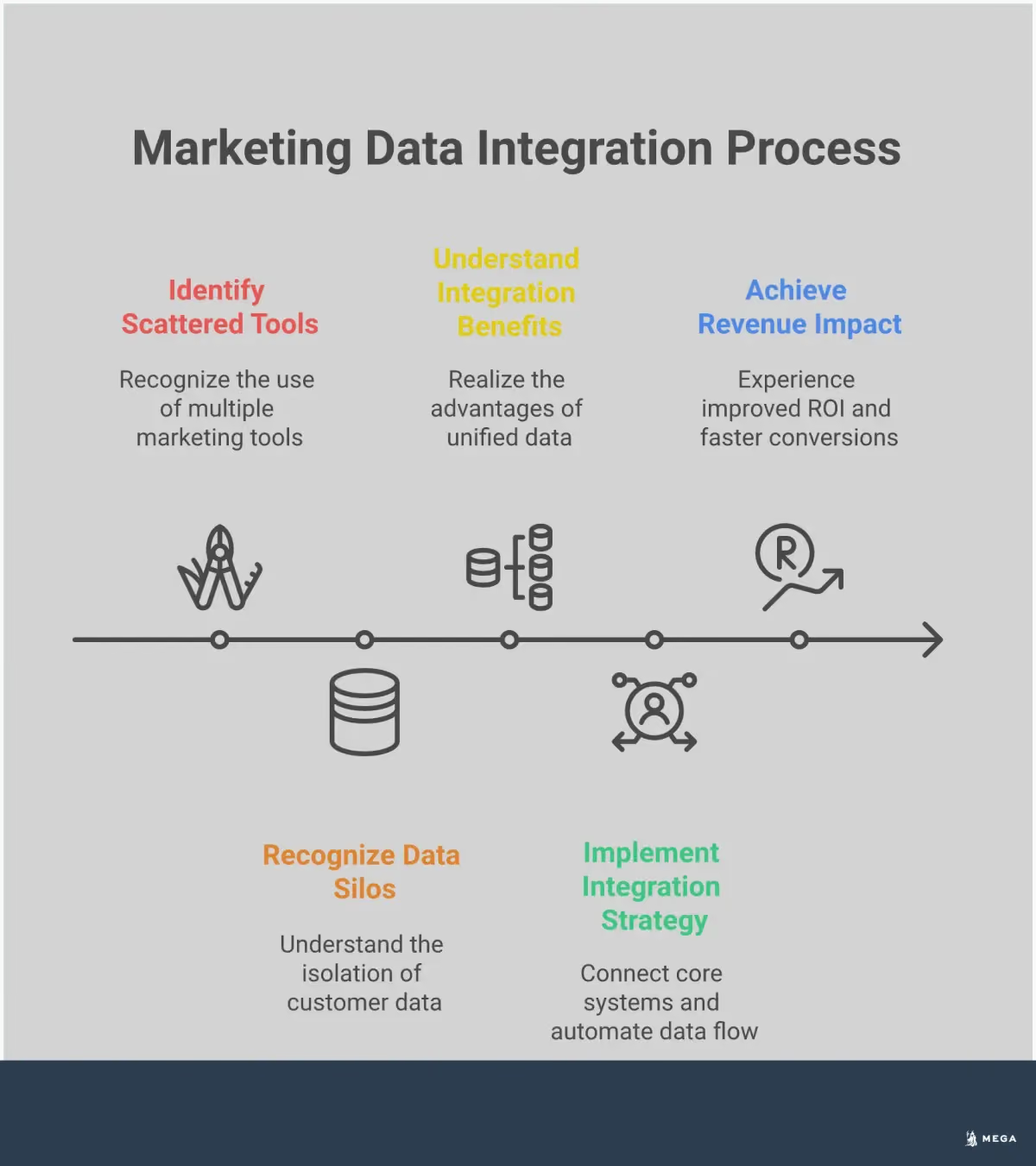
When your marketing tools operate in isolation, you only get small pieces of a much larger puzzle. Your website analytics know who visited, your ad platform knows who clicked, and your sales software knows who bought. But without a connection between them, you can't see the full journey from prospect to loyal customer. Connecting your data sources is the first step toward building a marketing engine that runs itself and delivers clear, measurable results.
By creating a unified system, you allow information to flow freely between platforms. This means your SEO agent can see which keywords are driving actual sales, not just traffic. Your paid ads agent can automatically shift budget toward campaigns that attract high-value customers. This isn't just about convenience; it's about making smarter, faster decisions. When all your data works together, you can finally prove marketing’s direct impact on your bottom line. This integrated approach is the foundation of automated platforms like MEGA AI, where AI agents use this complete picture to optimize your campaigns for revenue, not just clicks.
Break Down Your Data Silos
Disconnected data, or "data silos," happen when information is trapped within a single application. Your Google Analytics data doesn't talk to your Meta Ads data, and neither of them talks to your e-commerce platform. This forces you to manually piece together reports, making it nearly impossible to see how your efforts connect. You might know a campaign got a lot of clicks, but you won't know if those clicks led to sales without hours of spreadsheet work.
Breaking down these silos gives you a clear line of sight from the first ad a customer sees to their final purchase. You can identify your most profitable marketing channels and confidently invest more in what works. This is how you move from guessing to knowing, turning your marketing from an expense into a predictable driver of growth.
Build a Single View of Your Customer
When your data is connected, you can start to build a comprehensive profile of your ideal customer. You can see which blog posts they read before making a purchase, which ads they responded to, and how long they considered your products. This single view of the customer allows you to personalize their experience in powerful ways. Instead of showing everyone the same generic message, you can deliver content and offers that are highly relevant to their interests and behavior.
This level of personalization has a direct effect on your revenue. Businesses that use data-driven strategies report significantly higher growth than those that rely on intuition alone. By understanding your customers on a deeper level, you can build stronger relationships, increase loyalty, and improve your overall marketing effectiveness.
Keep Your Platforms in Sync Automatically
Manually exporting and importing data between platforms is not only time-consuming but also prone to errors. By the time you move the data, it’s already out of date. Automatic, real-time data integration solves this problem by ensuring all your tools are continuously updated with the latest information. This means your systems are always working with the most current data, allowing for immediate and intelligent actions.
For an AI-powered system, this is essential. MEGA AI’s agents use this real-time data flow to make instant optimizations. For example, our Paid Ads agent, Erle, can detect a high-performing ad and increase its budget in minutes, not days. This automated synchronization ensures your marketing is always adapting to new opportunities, maximizing your budget and accelerating your growth without constant manual oversight.
How Data Connections Save You Time and Money
Connecting your marketing data is more than a technical setup; it's a business strategy that directly impacts your bottom line. For small businesses, time and money are the most valuable resources. A disconnected set of tools forces you to spend hours manually pulling reports and paying for software that might not even be working. When your data sources talk to each other, you create a streamlined system that saves you from wasting both. This efficiency allows you to focus on what you do best—running your business—while your technology handles the heavy lifting. An integrated approach simplifies your operations, reduces unnecessary costs, and gives you back the time you need to focus on growth.
Stop Paying for Tools You Don't Need
Many businesses accumulate a collection of software for different tasks: one for email, another for social media, one for analytics, and another for ads. Each comes with its own subscription fee and data silo. When these tools are integrated, you get a clear picture of your entire customer journey. You can see exactly which platforms are bringing in leads and which are just costing you money. By auditing your marketing stack, you can identify redundant tools and eliminate subscriptions that don't contribute to revenue. This consolidation not only saves money but also simplifies your workflow by focusing your efforts on the channels that deliver real results.
Automate Manual Data Tasks
How much time do you spend each week exporting spreadsheets, copying data, and trying to build reports? Automating these manual data tasks is one of the fastest ways to reclaim your schedule. When your marketing platforms are connected, data flows between them automatically. This means reports can be generated instantly, and performance insights are always up to date. Instead of spending your time on data entry, you can focus on higher-value activities like strategy and customer engagement. This level of marketing automation allows you to operate more efficiently, making smarter decisions without getting bogged down in the manual work of data collection and analysis.
Manage All Your Data from One Place
Jumping between different tabs and platforms to understand your performance is inefficient and can lead to missed opportunities. A connected data strategy brings all your key metrics into a single, unified dashboard. This gives you a holistic view of your marketing efforts in real time. You can track website traffic, ad spend, lead generation, and sales data all in one place, making it easier to spot trends and understand what’s driving growth. Having a single source of truth removes the guesswork from your decisions and streamlines how you monitor the health of your business, allowing you to react quickly and effectively.
How to Connect Your Marketing Data Across Tools
Connecting your marketing tools is the foundational step to building an automated system that drives growth. Think of it as giving your marketing strategy a central nervous system. When your website, analytics, and search tools can all talk to each other, you get a complete picture of what’s working and what isn’t. This might sound technical, but modern platforms are designed to make these connections simple and secure, often with just a few clicks. For small and local businesses, this is a game-changer. You no longer need a dedicated IT team to get your data working for you.
Instead of having valuable insights trapped in separate platforms—your website traffic in one place, your ad performance in another—connecting them creates a single, unified view of your customer's journey. This holistic perspective is what allows an AI-powered platform to identify patterns, make intelligent recommendations, and even take action on your behalf. By linking these key data sources, you empower tools like MEGA AI's SEO agent to operate with full context, turning disconnected data points into a cohesive growth strategy. It’s the difference between guessing what your customers want and knowing exactly what they need, allowing you to make smarter, faster decisions that directly impact your bottom line.
Sync Your CMS for Better Content Optimization
Your Content Management System (CMS) is the backbone of your website—it’s where you house your blog posts, landing pages, and product descriptions. Platforms like WordPress, Shopify, or Webflow are common examples. Connecting your CMS to a marketing platform allows it to access and analyze your content directly. This is essential for effective SEO, as it enables an AI agent to read your articles, identify optimization opportunities, and even make updates for you. By integrating your website data, you can track how content changes lead to more traffic and conversions, proving marketing’s direct impact on sales.
Integrate Search Console to Find What's Working
Google Search Console is a free tool that offers a direct line of sight into how Google sees your website. It tells you which keywords people are using to find you, which pages are ranking, and how many people are clicking through. Connecting this data is non-negotiable for growth. An AI agent can analyze this information to spot pages with high impressions but low click-through rates, then rewrite titles to attract more visitors. Businesses that embrace data-driven strategies report significantly higher revenue growth because they base decisions on real-world performance, not guesswork.
Connect Analytics to Understand User Behavior
Analytics platforms like Google Analytics show you what visitors do once they arrive on your site. They track which pages are viewed most, how long people stay, and the path they take before they leave or make a purchase. Connecting your analytics provides crucial context that search data alone can’t. It helps you understand which content truly resonates with your audience. This information allows an AI to identify your most valuable content and find opportunities to improve underperforming pages. Real-time data collection from analytics is key to enhancing the customer experience and making smarter marketing decisions.
How to Use APIs for Secure Data Connections
An Application Programming Interface (API) is simply a messenger that allows different software applications to communicate with each other securely. You don’t need to be a developer to use them. Most modern platforms use secure authentication methods where you just log in to your account and grant permission. This is the technology that enables real-time data integration, allowing your tools to share information instantly and continuously. When you connect your accounts to a platform like MEGA AI, you’re using APIs to create a seamless flow of information that powers automated growth and keeps all your marketing efforts in sync.
Beyond APIs: File Uploads and Custom Connections
While APIs are the standard for connecting major platforms, they don’t cover every scenario. What about the valuable data you have stored in spreadsheets, like customer lists or offline sales records? A truly flexible system understands that important information comes from many places. That’s why it’s important to have options beyond standard integrations. The ability to upload files, such as CSVs, allows you to incorporate this offline data into your central system, giving your AI agent an even more complete picture of your business performance. This ensures that no data is left behind, allowing for more accurate insights and better-informed automated decisions.
Live Connection vs. Data Replication
Not all data connections are created equal. Some systems use data replication, which means they periodically copy data from one platform to another. This is like taking a snapshot—the information is static and can quickly become outdated. A live connection, however, is like a continuous video stream. It provides real-time data, showing you what’s happening at this very moment. This is critical for agile marketing. A live connection shortens the feedback loop from weeks to hours, allowing you to act on insights immediately. For an AI agent, this is essential. It uses this live data to make instant adjustments, ensuring your campaigns are always optimized based on the most current information available.
Flexible Data Outputs for BI and Reporting
Bringing all your data together is the first step, but a great platform also lets you take it out again. Once you have a unified view of your marketing performance, you may want to use that information in other tools. Flexible data outputs allow you to export your combined data for use in business intelligence (BI) platforms like Google Looker Studio or for custom internal reports. This means you aren’t locked into a single dashboard. You can create specialized reports for different stakeholders, combine marketing data with other business metrics, and maintain full control over your information. It ensures your connected data can serve all your business needs, not just the ones within a single platform.
The Right Tools to Connect Your Marketing Data
Once you know which data sources matter most, the next step is choosing the right technology to bring them all together. The market is full of options, but they generally fall into a few key categories. Understanding these categories will help you build a tech stack that works for your business, not against it. The goal is to find tools that not only connect your data but also make it easy to act on the insights you gather.
AI marketing platforms
AI marketing platforms use artificial intelligence to automate tasks, personalize customer interactions, and make data-driven decisions. These systems analyze customer data to predict behavior, optimize campaigns, and deliver more relevant content. For example, some platforms leverage AI to personalize customer interactions, leading to significant increases in sales efficiency. An autonomous system like MEGA AI takes this a step further by using AI agents to plan and execute entire SEO and paid ad campaigns. This approach helps businesses see measurable growth without needing a large, dedicated marketing team.
How platforms like MEGA AI provide end-to-end data connection
Platforms like MEGA AI solve the data silo problem by acting as a central hub for all your marketing tools. You can securely connect your website CMS, Google Search Console, and ad platforms in just a few clicks. This process creates a unified data stream, giving the AI a complete, end-to-end view of your customer's journey. The system can then trace the path from an initial ad impression to a final sale, moving beyond isolated metrics like clicks or traffic. This comprehensive understanding allows MEGA AI's agents to make intelligent, automated decisions that optimize for revenue and directly tie your marketing efforts to business growth.
Real-Time Data Processors
Unlike tools that update data daily or weekly, real-time data processors handle information as it happens. Think of it as a continuous stream of insights from your website, social media, and sales channels. This constant flow is made possible by real-time data integration, which uses streaming technology to operate at scale. For a small business, this means you can react instantly to customer behavior, like adjusting ad spend based on live conversion data, instead of waiting for a report the next day. This immediacy allows for faster, more effective decision-making.
Website Optimization Tools
Connecting your data isn't just about backend processes; it's also about understanding what happens on the front end of your website. Website optimization tools help you see your site through your customers' eyes. Tools in this category offer real-time performance insights that show you where users get stuck, what they engage with most, and why they might be leaving without converting. Using features like heatmaps and session recordings, you can gather qualitative data to improve your site's layout and overall user experience to guide more visitors toward a purchase.
Integration and Automation Software
Integration and automation software acts as the central hub for your data. These tools connect your separate systems—like your CRM, ad platforms, and analytics—so they can share information freely. By creating a unified dashboard, you can track leads from their first click to the final sale, proving marketing's direct impact on revenue. An end-to-end platform like MEGA AI uses this same principle, connecting all your marketing channels to automate workflows and optimize your budget across platforms automatically. This saves time and ensures your different marketing efforts are working together toward the same goal.
How to Measure the Impact of Connected Data
Connecting your data is a huge step, but it’s only half the story. The real value comes when you start measuring the impact of those connections. When your tools talk to each other, you get a clear picture of what’s driving growth and what isn’t. This isn't about vanity metrics like likes or page views; it's about tracking the numbers that directly affect your bottom line.
The Most Important Metrics to Track
When your data is connected, you can move beyond surface-level numbers. Instead of just tracking website traffic, you can focus on the key performance indicators (KPIs) that truly matter. Think about metrics like customer acquisition cost (CAC), which tells you how much you spend to get a new customer, and lead-to-customer conversion rate, which shows how effective your sales process is. By integrating your CRM, ad platforms, and website analytics, you can follow a lead from their very first click all the way to a final sale. This gives you a complete story, not just a single chapter.
Connect marketing efforts to revenue
For small businesses, every dollar counts. That’s why it’s so important to connect your marketing activities directly to revenue. When your data is integrated, you can finally answer questions like, "Did that blog post actually lead to a sale?" or "Which ad campaign brought in our most valuable customers?" AI-powered platforms like MEGA AI use these connections to show you exactly which efforts are paying off. This allows you to stop guessing and start making data-driven decisions, putting your budget where it will have the greatest impact on your growth.
How Long Does It Take to See Results?
Patience is a virtue, but you also need to know what to expect. With paid advertising, connected data can help you see initial results and optimize campaigns within weeks. For organic growth through SEO, it’s more of a long-term strategy. Typically, businesses start to see meaningful improvements in traffic and rankings within three to nine months. The good news is that when you align your marketing with clear business goals and act on the data, you can often see positive changes in as little as 60 to 90 days. Real-time data shortens the learning curve, helping you find what works faster.
Measure Conversions and Customer Lifetime Value
A conversion is any action you want a visitor to take, whether it’s filling out a contact form, signing up for a newsletter, or making a purchase. Tracking these actions is fundamental to understanding your marketing effectiveness. When you have insight into customer behavior, you can optimize your website and campaigns to improve conversion rates. Beyond a single conversion, it’s also helpful to understand the customer lifetime value (CLV). This metric tells you the total revenue you can expect from a single customer account, helping you decide how much to invest in acquiring new ones and retaining the ones you have.
Common Data Connection Mistakes to Avoid
Connecting your data is the first step toward smarter growth, but it's easy to get tripped up along the way. Setting up your integrations correctly ensures you get clean, actionable insights instead of a confusing mess of numbers. By avoiding a few common pitfalls, you can build a data foundation that fuels real, measurable results for your business.
Focusing on Data Quality, Not Quantity
It’s tempting to think that more data is always better, but the truth is, quality trumps quantity every time. Connecting dozens of irrelevant data sources will only create noise and make it harder to find meaningful insights. Instead, focus on integrating the platforms that directly track your customer’s journey. Start with the essentials: your website CMS, Google Search Console, and your primary ad platforms. This core setup allows you to prove marketing's impact by following a lead from their first click to the final sale. An AI-powered system uses these high-quality connections to identify what’s working, cut wasted spend, and scale the campaigns that actually drive revenue.
Ignoring the Need for Real-Time Data
Making marketing decisions based on last week’s or last month’s data is like driving while looking in the rearview mirror. The digital landscape changes in an instant, and your strategy needs to adapt just as quickly. Static reports can’t tell you when a campaign suddenly takes off or when a new search trend emerges. This is why real-time data collection is so critical. When your tools are constantly synced, an AI agent can spot an opportunity and act on it immediately—shifting budget to a high-performing ad or updating your website content to capture new traffic. This agility improves efficiency and helps you get ahead of the competition.
Overlooking Data Security and Privacy
Handing over access to your business data can feel daunting, which is why security should be a top priority. As a small business, you handle sensitive customer information, and protecting it is non-negotiable. When choosing tools to connect your data, look for platforms that use secure, modern authentication methods to protect your accounts. It's one of the most important technology challenges to address proactively. Reputable platforms are designed to keep your information safe and ensure you always retain ownership of your data and the content generated for you. This focus on security builds trust with your customers and protects your business.
The Importance of Security Certifications like SOC 2
One way to verify a platform's commitment to security is by checking for certifications like SOC 2. Developed by the American Institute of CPAs (AICPA), SOC 2 is a framework that outlines how organizations should manage customer data based on principles like security and confidentiality. When a company is SOC 2 compliant, it means they’ve passed a strict, independent audit, proving they have robust controls in place to protect your information. For you, this certification is a clear sign that a platform takes data protection seriously. Choosing a partner with this credential helps you mitigate risks and shows your own customers that you're handling their data responsibly. It’s a key factor that can set a service provider apart and give you peace of mind when connecting your valuable business data.
How to Build Your Data Connection Strategy
Connecting your data isn't just a technical task; it's a core business strategy. A thoughtful approach ensures you’re not just collecting information, but using it to make smarter decisions that lead directly to growth. Many businesses make the mistake of trying to connect every tool at once, which can lead to confusion and data overload. Instead, the goal is to build a strong foundation that links your marketing activities to real sales outcomes. This process involves three clear steps: identifying your most critical data streams, prioritizing the connections that have the biggest financial impact, and then automating the workflows that will sustain your growth over time. By focusing on quality over quantity, you create a clear line of sight from a marketing campaign all the way to a new customer.
Identify Your Most Important Data Sources
To get a clear picture of your marketing performance, you need to focus on the data sources that track the entire customer journey. Start with the essentials: your website, your advertising platforms, and your customer relationship management (CRM) system. Your website data, from platforms like Google Analytics and your CMS, shows how customers find you and what content they engage with. Ad platform data reveals which campaigns are driving traffic, while your CRM data tells you which leads turn into actual sales. Connecting these sources allows you to follow a lead from the first click to the final purchase, giving you a complete view of what’s working.
Prioritize Integrations That Impact Revenue
Once you’ve identified your key data sources, prioritize connecting the ones that most directly influence revenue. For most small businesses, this means integrating your ad platforms and website analytics first. This connection allows you to measure your return on ad spend (ROAS) and understand which channels are most profitable. Companies using marketing automation see significant gains in efficiency and revenue because they can act on this performance data quickly. An AI agent, for example, can analyze this integrated data to automatically shift your budget toward high-performing campaigns and away from those that aren’t delivering results.
Set Up Automated Workflows for Ongoing Growth
Connecting your data is the first step. The real power comes from setting up automated workflows that use this data to continuously improve your marketing. This creates a cycle of ongoing optimization where your systems get smarter over time. For instance, you can connect your CMS and Google Search Console to an SEO automation tool that identifies underperforming content and updates it automatically. By aligning your marketing actions with clear business goals and letting technology handle the execution, most businesses begin to see measurable improvements within 60 to 90 days. This approach turns your data from a static report into an active driver of growth.
Answering Common Marketing Data Questions
What is the 3-3-3 rule in marketing?
While there isn’t a universally accepted "3-3-3 rule" in marketing, the concept points to the importance of focus. Instead of getting lost in countless metrics, prioritize quality over quantity with your data. This means you should begin by integrating your most critical tools to build a reliable data foundation without unnecessary noise. For most small businesses, this includes your website CMS, Google Search Console, and primary ad platforms. Connecting these essential sources first creates a clear, trustworthy stream of information that allows you to see what’s driving growth, turning scattered data into a roadmap for success.
What are the 4 types of marketing analytics?
Marketing analytics can be broken down into four types, each answering a progressively more complex question. When your data is connected, you can move beyond basic reporting and start making strategic decisions.
- Descriptive Analytics: What happened? This is the most basic form, covering historical data like website visits, ad clicks, or social media engagement.
- Diagnostic Analytics: Why did it happen? This type digs deeper to understand the cause behind the numbers, such as why a certain campaign led to a spike in traffic.
- Predictive Analytics: What will happen next? Using historical data and trends, this analysis forecasts future outcomes, like potential sales for the next quarter.
- Prescriptive Analytics: What should we do? This is the most advanced type, offering specific recommendations for action, such as automatically shifting ad spend to the highest-performing campaigns.
Connected data allows you to focus on the key performance indicators that matter, enabling AI-powered tools to provide the predictive and prescriptive insights that drive growth.
What are the 4 types of data sources?
To get a complete view of your marketing performance, it’s essential to integrate information from several key data sources. Each source provides a different piece of the puzzle, and connecting them allows you to track the entire customer journey from start to finish. The most important types for any small business include:
- Website Analytics: Data from your CMS and tools like Google Analytics tells you how visitors find your site and what they do once they arrive.
- Ad Platforms: Information from Google Ads, Meta Ads, and other platforms shows you how your paid campaigns are performing and what your return on investment is.
- CRM Systems: Your Customer Relationship Management software holds vital information about your leads and customers, helping you connect marketing efforts directly to sales.
- Social Media Platforms: These sources offer insights into brand awareness, audience engagement, and how people perceive your business online.