
Selling to HR professionals is different. They manage a company's most valuable asset—its people—and operate in a world of compliance, data security, and complex human dynamics. This makes them inherently risk-averse. Before they trust a new technology partner, they need to see deep expertise. A simple product pitch isn't enough. That's why creating content for HRTech demands a more thoughtful strategy, one that demonstrates a genuine understanding of their challenges. This guide will show you exactly how to do that, from audience research to effective promotion.
Key Takeaways
- Address Audience Pain Points, Not Product Features: Build trust with HR professionals by creating content that solves their real-world problems, like improving compliance or justifying ROI, before you ever pitch your solution.
- Map Your Content to the Buyer's Journey: Create distinct content for each stage of the sales funnel. Use educational articles for the awareness stage, comparison guides for the consideration stage, and data-driven case studies for the decision stage.
- Promote Your Content Strategically: Don't just publish and hope for an audience. Actively distribute your content through SEO, email marketing, and professional networks like LinkedIn to ensure it consistently reaches your target HR audience.
What is HRTech Content Marketing?
Content marketing for HR technology companies involves creating and sharing valuable, relevant content that addresses the specific needs of your potential customers. Instead of leading with a product pitch, you provide resources that help HR professionals solve their daily challenges, whether it's improving employee onboarding, navigating compliance, or boosting team morale. The goal is to establish your company as a trusted advisor in the HR space. By consistently delivering useful information, you build a relationship with your audience long before they are ready to make a purchase.
This strategy shifts the dynamic from you being just another software vendor to becoming an essential resource. When an HR leader encounters a problem, your brand should be the first one that comes to mind for a solution. This is built on a foundation of high-quality articles, reports, and webinars that educate and guide your audience. While creating this content consistently is a major commitment, AI-powered SEO tools can help you research topics, generate drafts, and optimize articles to meet your audience's needs at scale. Ultimately, a strong content marketing plan turns your industry expertise into a reliable engine for generating high-quality leads.
Why Your HRTech Company Needs a Content Strategy
In the competitive HRTech industry, a thoughtful content strategy is critical for growth. First, it directly improves your online visibility. A strong library of helpful content helps your company rank higher on Google, making it easier for HR professionals to find you when they are actively searching for solutions. This leads to more qualified website traffic from an audience that already has a problem you can solve.
More importantly, high-quality content builds the trust and credibility necessary to close a deal. HR technology decisions are significant, impacting everything from legal compliance to overall company culture. Producing informative, well-researched content demonstrates your expertise and shows that you understand the complexities of your customers' roles. This approach helps you build trust with potential buyers, making them more confident in choosing your solution when the time comes.
What Makes Creating HRTech Content Different?
The HRTech market presents a unique set of content creation challenges. A common mistake is producing generic content that fails to address the specific, nuanced problems that different HR professionals face. For example, an HR manager at a 50-person startup has vastly different compliance concerns than a Chief People Officer at a global enterprise, and your content must reflect that specificity.
Another frequent misstep is ignoring the buyer's journey. A prospect who is just beginning to understand a problem needs different information than one who is actively comparing software features. Without a clear strategy that maps content to each stage, you risk providing the wrong information at the wrong time. Meeting the demand for this wide range of targeted content requires significant resources, but you can book a demo to see how automation can help you scale your efforts efficiently.
What Content Formats Work Best for HR Audiences?
HR professionals are busy, analytical, and focused on solving complex people-centric problems. The content you create needs to respect their time and offer immediate value. While every audience is different, certain formats consistently perform well because they align with the priorities of HR leaders, from demonstrating ROI to ensuring compliance. Choosing the right format helps your message land effectively and positions your brand as a credible resource in the HRTech space.
Blog Posts That Answer HR's Biggest Questions
HR professionals are constantly searching for solutions to challenges like employee retention, compliance, and talent acquisition. Create educational blog posts that teach them how to solve these problems, even if the solution doesn't directly involve your product. Focus on topics that address their primary pain points, such as guides on improving the onboarding process or articles explaining new labor laws. This approach builds trust and establishes your authority. An SEO agent can help you discover the exact questions your audience is asking online, ensuring your content is always relevant and helpful.
Interactive Tools That Provide Instant Value
Go beyond static content by creating useful tools, templates, and quizzes that your audience can use and share. Think about developing an "Employee Turnover Cost Calculator," a "Company Culture Health Quiz," or a downloadable performance review template. These interactive tools provide tangible value and serve as excellent lead magnets. When an HR manager uses your calculator to understand a key business metric, you become more than just a software vendor; you become a partner in their success. This type of content is highly shareable and can attract valuable backlinks from other industry sites.
Webinars and Videos for Visual Learners
HR technology can be complex, and its benefits are often easier to show than to tell. Use demo videos, infographics, and interactive tours to make your product’s features and advantages clear. Visuals are great for grabbing attention and explaining complicated ideas in a digestible way. Consider hosting a webinar on a pressing industry trend, like the role of AI in recruitment, or creating a short animated video that explains the ROI of your platform. This type of visual content gives prospects a preview of your product in action and helps them visualize its impact on their organization.
Whitepapers and Reports Backed by Data
For HR leaders in the later stages of the buyer's journey, detailed guides and reports are essential. Offer in-depth whitepapers on topics like "Ensuring Data Security in HR Systems" or publish an original data report on the "State of Remote Work." This long-form content allows you to explore complex subjects thoroughly and showcase your deep industry expertise. Gated assets like these are effective for collecting high-quality leads, as professionals are often willing to exchange their contact information for valuable, data-driven insights. This is a classic strategy for building thought leadership and credibility.
How to Align Content With the Buyer's Journey
Not every potential customer is ready to buy your HRTech solution right away. They move through a process, often called the buyer's journey, which typically includes three main stages: awareness, consideration, and decision. Creating content that meets them at each step is the key to building trust and guiding them toward a purchase.
When a potential buyer is in the awareness stage, they are experiencing a problem but may not have a name for it yet. In the consideration stage, they’ve defined their problem and are actively researching solutions. Finally, in the decision stage, they are comparing vendors and are ready to choose one.
Your content strategy should map directly to this journey. By providing the right information at the right time, you help prospects move forward with confidence. This approach ensures your marketing efforts are relevant and effective, turning strangers into leads and leads into customers. It also positions your brand as a helpful guide rather than just another vendor.
Awareness Stage: Address Your Audience's Problems
In the awareness stage, your audience is looking for answers, not a sales pitch. Your goal is to create educational content that addresses their pain points. Think about the common challenges HR professionals face: improving employee retention, streamlining onboarding, or managing performance reviews. Write blog posts, create podcast episodes, or host webinars that teach them how to solve these problems.
This content establishes your brand as a thought leader and a trusted resource. Even if you don't mention your product directly, you're building a relationship by providing value first. An AI content generator can help you scale the production of high-quality, educational articles, ensuring you consistently publish helpful resources that attract problem-aware buyers.
Discuss Practicalities like Implementation Timelines
HR leaders are practical. Before they commit to a new technology, they need to understand the real-world impact on their team and operations. Your content should address implementation head-on by discussing timelines, required resources, and integration capabilities. For example, you could create a guide that outlines the setup process, showing that a team can get started in a matter of weeks, not months. This transparency builds trust and helps your prospect make a stronger business case internally. Highlighting seamless integrations with existing systems, like popular CMS platforms, also demonstrates that you've considered their current technology stack and are focused on minimizing disruption.
Cover Topics on Internal Employee Support
When HR adopts a new tool, they become responsible for how it impacts the entire company. They need to know that your solution will make life easier for employees, not create more confusion. Create content that shows you understand this responsibility. For instance, you can write about features that improve the employee experience, such as an intuitive user interface or a built-in ticketing system for handling questions efficiently. This type of content proves that your product is designed with the end-user in mind, which is a major selling point for any HR professional whose core job is to support their people.
Consideration Stage: Introduce Your Solution
Once your audience has a clear name for their problem, they enter the consideration stage. Now, they are actively researching and comparing potential solutions. This is your opportunity to introduce your product as a top contender. Create content that helps them evaluate their options, such as "best of" lists (e.g., "Top 10 Employee Engagement Platforms") or articles tailored to specific needs (e.g., "Best Payroll Software for Small Businesses").
This content should provide clear reasons why your product is a great choice. Explain how its features directly address the challenges you discussed in your awareness-stage content. The goal is to show how your HRTech solution fits their needs and stands out from the competition, making it easier for them to shortlist your product.
Showcase Specific AI Applications in HR
HR leaders are curious about AI, but they need to see how it applies to their specific roles beyond the general hype. Your content should bridge that gap by demonstrating tangible use cases. For example, create a detailed guide that shows how an AI-powered system can screen thousands of resumes for key qualifications, saving recruiters dozens of hours. You could also produce a case study illustrating how AI analyzes anonymous employee feedback to identify flight risks and suggest proactive retention strategies. This type of content moves beyond abstract benefits and helps HR professionals visualize exactly how your technology solves their real-world problems, making a compelling case for its adoption.
Decision Stage: Prove Your Value
In the final stage, buyers are ready to make a decision. They need proof that your product delivers on its promises. This is where you showcase real-world results with case studies, customer stories, and product reviews. Instead of just listing features, share data on how your solution improved key metrics for a client, like increasing employee retention by 15% or reducing time spent on administrative tasks.
This type of content provides the social proof needed to build confidence and justify a purchase. Sharing stories from real customers is far more powerful than making claims yourself. It shows prospects how your product actually helps people in similar roles, making their decision to choose you much easier.
What are the Top HRTech Content Mistakes to Avoid?
Creating content that connects with HR professionals requires a specific approach. Many HRTech companies make similar missteps that prevent their content from generating high-quality leads. By understanding these common pitfalls, you can create a strategy that stands out, builds trust, and drives results for your business. Avoiding these mistakes is the first step toward building a content engine that consistently attracts and converts your ideal customers.
Talking Too Much About Your Product
It’s easy to fall into the trap of writing exclusively about your product’s features. While you’re proud of your platform, your audience is more interested in solving their problems. Content that reads like a sales brochure fails to build trust or attract prospects who aren't ready to buy. Instead of focusing on website traffic and rankings, create content that helps your audience with specific challenges. Shift your perspective from "what our product does" to "how we help you solve X." This problem-first approach is fundamental to a successful content marketing strategy.
Forgetting Your Audience's Pain Points
Many HRTech companies create content without considering where the reader is in their buying process. This means they don't create different types of content for people just learning about a problem versus those ready to purchase a solution. A CHRO researching employee retention strategies needs different information than an HR manager comparing performance management software. By ignoring the buyer's journey, you miss opportunities to guide prospects from initial awareness to a final decision. Map your content to specific pain points at each stage to ensure you’re providing value every step of the way.
Misunderstanding Who You're Writing For
A one-size-fits-all approach to content doesn’t work in the HRTech space. The priorities of a tech-savvy Gen Z HR coordinator are very different from those of a seasoned VP of People who is focused on compliance and budget. You need to understand who you're writing for, as different generations and roles prefer different content formats and platforms. Creating detailed B2B buyer personas based on real data helps you tailor your messaging, tone, and topics to resonate with the specific segments you want to reach. Generic content speaks to no one.
Publishing Without a Consistent Schedule
Sporadic blog posts and an inactive social media presence can damage your credibility and hurt your search engine rankings. A strong and consistent online presence helps your HRTech company rank higher on Google, making it easier for potential clients to find you. Irregular publishing signals to both your audience and search engines that you aren't a reliable source of information. To solve this, build a content calendar and stick to it. For small teams, using an AI agent for SEO can automate content creation and scheduling, ensuring you maintain a steady presence without overwhelming your internal resources.
How to Create Content That Resonates With HR Professionals
To connect with HR professionals, your content needs to go beyond surface-level topics. This audience is knowledgeable, busy, and focused on specific outcomes like compliance, employee retention, and operational efficiency. Creating content that truly resonates means addressing their distinct challenges and priorities with credible, practical advice. The following strategies will help you build trust and demonstrate a genuine understanding of their world.
Understand Their Priorities and Challenges
HR leaders are constantly balancing strategic initiatives with daily operational demands. Your content should reflect this reality by addressing their most pressing problems, from reducing employee turnover to improving the onboarding experience. It’s essential to create content tailored to each stage of the buyer's journey. For someone just identifying a problem, an article on "Signs of a Disengaged Workforce" is more useful than a product demo. For those evaluating options, a detailed comparison guide or case study provides the necessary proof. By focusing on their challenges first, you position your brand as a helpful resource, not just a vendor.
Speak Their Language
Using generic business jargon is a quick way to lose credibility with an HR audience. To build trust, your content must use the specific terminology of their field, referencing concepts like talent acquisition, employee lifecycle management, and HRIS integration. This shows you’ve done your homework and understand the nuances of their profession. This specialized language is also critical for effective search engine optimization. HR professionals use precise terms when searching for solutions, and content that incorporates this vocabulary is more likely to rank for relevant queries. Demonstrating fluency in their professional language makes your content more discoverable and authoritative.
Address Compliance, Security, and Integration
HR departments handle sensitive employee data and must navigate a complex web of regulations like GDPR and HIPAA. Because of this, they are inherently risk-averse. Your content should proactively address their concerns about data security, privacy, and compliance. Create materials that clearly explain your security protocols or how your solution helps maintain compliance. Equally important is integration. An HR tool that doesn’t work with a company’s existing payroll or applicant tracking system is a non-starter. Develop content like integration guides and technical briefs that show how your technology fits seamlessly into their established tech stack.
Focus on ROI and Business Impact
Ultimately, every HR technology purchase must be justified as a sound business investment. HR leaders need to build a strong business case to get budget approval from executives. Your content can empower them to do this by focusing on return on investment (ROI). Go beyond listing features and instead quantify the benefits. Create content that shows how your solution reduces time-to-hire, lowers recruitment costs, or improves employee retention rates by a measurable percentage. Use case studies with hard data, develop ROI calculators, and write articles that connect HR key performance indicators to broader company goals like revenue growth and profitability.
Write with Genuine Passion and Authenticity
HR professionals can spot a sales pitch from a mile away. Your content needs to show that you genuinely understand their world, from the complexities of compliance to the pressure of improving employee retention. This is where authenticity comes in. It's about more than just using the right keywords; it's about demonstrating deep expertise and a real desire to help. When your content builds trust by addressing their specific pain points, you stop being just another vendor and become a valued partner. This approach shows you're invested in their success, not just your own sales targets.
How to Research Your HRTech Audience
You can only create content that resonates if you truly understand your target audience's needs and problems. This is the most important step in your content strategy. Before you write a single blog post or record a webinar, you need a clear picture of who you're talking to. What are their biggest professional challenges? What questions keep them up at night? What kind of information are they actively searching for to make their jobs easier?
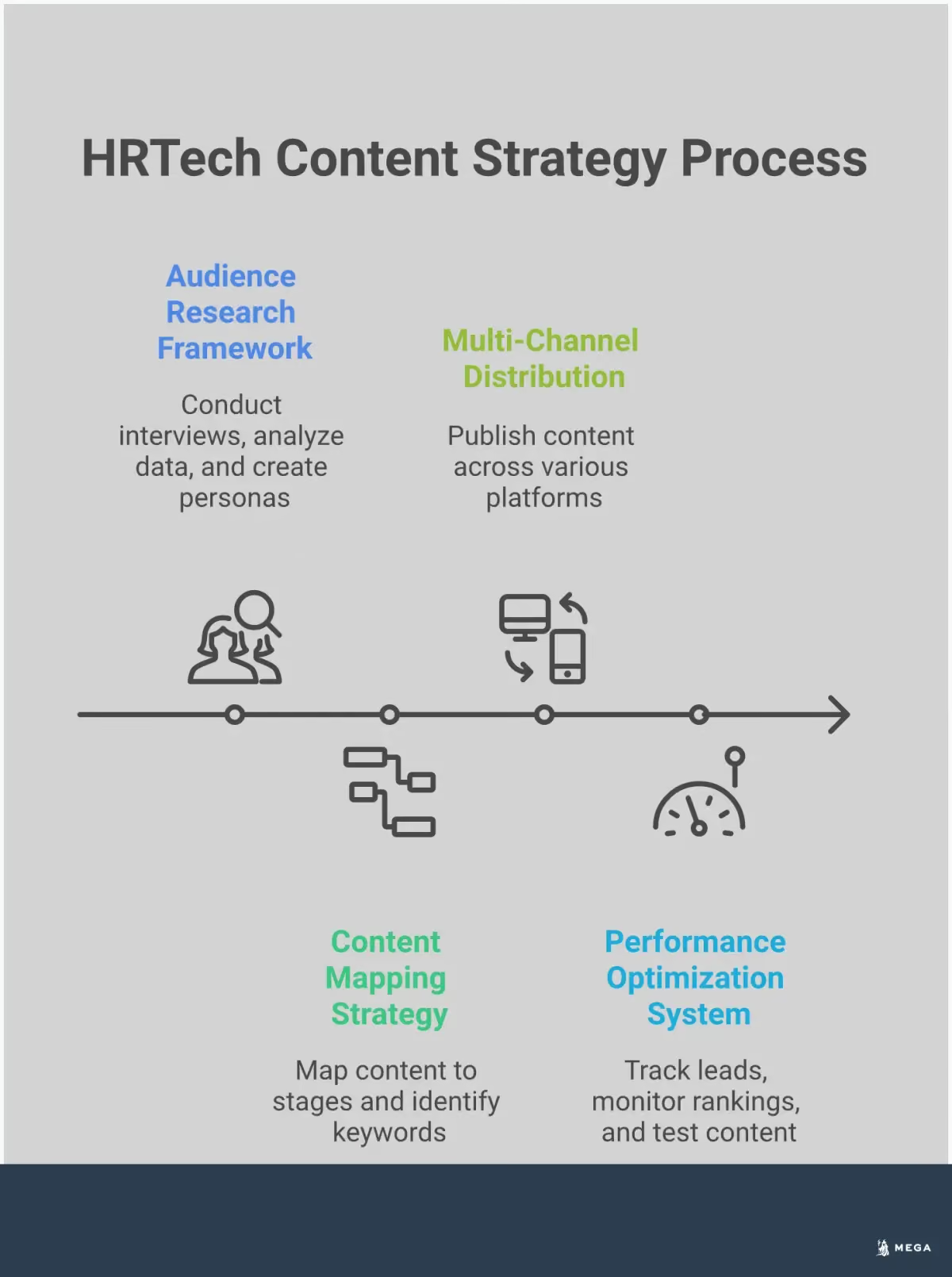
Answering these questions requires moving beyond assumptions and gathering real data. Effective audience research involves a mix of qualitative and quantitative methods that give you a well-rounded view of your ideal customer. By combining direct feedback from interviews with behavioral data from your support teams and observations from social media, you can build a solid foundation for a content plan that attracts, engages, and converts. The following strategies will help you gather the insights needed to create content that HR professionals find genuinely valuable.
Talk to Real HR Professionals
The most direct way to understand your audience is to talk to them. Set up interviews with current customers, prospects, and even former customers to learn about their experiences. These conversations are a goldmine for uncovering pain points, goals, and the specific language they use to describe their challenges.
You can also distribute surveys to gather quantitative data on a larger scale. Ask open-ended questions about their day-to-day responsibilities, what they look for in HR software, and where they go for industry information. This direct feedback helps you understand who you're writing for, ensuring your content is relevant and delivered in a way they appreciate.
Find Content Ideas in Customer Support Tickets
Your customer-facing teams are on the front lines every day. Your sales, support, and demo teams talk to potential and current customers constantly, giving them a deep understanding of common questions, objections, and feature requests. This internal data is an invaluable resource for your content strategy.
Review support tickets, chat logs, and demo recordings to identify recurring themes and frequently asked questions. Ask your sales team what the most common pain points are that come up during their calls. This information tells you exactly what problems your audience is trying to solve. Creating content that directly addresses these known issues shows that you are listening and positions your brand as a helpful authority.
Listen to HR Conversations on Social Media
HR professionals are active in many online communities. Use social listening to observe conversations happening in places like LinkedIn groups, industry forums, and subreddits like r/humanresources. Pay attention to the questions people ask, the advice they share, and the frustrations they vent about.
This approach allows you to gather candid insights without directly asking. You can identify emerging trends and topics that are top-of-mind for your audience. Remember to participate authentically by sharing your knowledge and answering questions where you can add value. The goal is to learn from the community, not just to sell to it.
Create Data-Backed HR Personas
Once you've gathered all this information, the next step is to organize it into detailed buyer personas. A persona is a semi-fictional representation of your ideal customer based on real data and market research. It goes beyond basic demographics to include goals, motivations, challenges, and communication preferences.
Use the insights from your interviews, surveys, support data, and social listening to build personas that feel like real people. For example, you might have "Startup HR Manager Helen" who is focused on compliance and efficiency, and "Enterprise Talent Director Tom" who cares about analytics and scalability. These detailed profiles will guide every piece of content you create, ensuring it speaks directly to the right person's needs.
Analyze Your Existing Content Performance
Some of your best new content ideas are hidden within your existing articles. Your analytics data can show you which topics are already resonating with your audience and where you have opportunities to go deeper. Start by looking at your top-performing posts in terms of traffic. If a post gets a lot of views but doesn't generate leads, it might need a stronger call-to-action or a content upgrade. On the other hand, if an article converts well but has low traffic, it's a prime candidate for promotion and optimization.
You should also look for opportunities to expand on what’s already working. A high-performing article is a signal from your audience that they want more on that topic. You can update old content by adding new sections, incorporating fresh data, or turning it into a more comprehensive guide. AI-powered tools can simplify this process by identifying which articles have the most potential and suggesting new content to add, helping you improve rankings and CTR without starting from scratch.
Collaborate with Your Sales Team
Your sales and customer support teams are a direct line to the unfiltered voice of your customer. They spend their days talking to prospects and users, hearing their biggest challenges, most frequent questions, and the objections that prevent them from buying. This is a goldmine of content ideas that are guaranteed to be relevant to your target audience. Instead of guessing what your audience wants to know, you can create content that answers the exact questions they are already asking.
Set up a short, recurring meeting with your sales team to discuss the themes they're hearing in their conversations. Ask them what pain points come up most often or what features prospects get most excited about. You can also review support tickets and demo recordings to find these insights. When you talk directly to your customers and the teams that support them, you can build a content calendar that addresses real-world problems and helps your sales team close more deals.
Engage with Industry News and Content
Your content doesn't have to be created in a vacuum. Engaging with current industry news and conversations is an excellent way to generate timely and relevant ideas. Subscribe to leading HR publications, follow thought leaders on LinkedIn, and set up alerts for keywords related to your niche. When a new study is published or a major trend emerges, you have an opportunity to add your unique perspective to the conversation.
The key is to go beyond simply reporting the news. Instead, write about your own thoughts and experiences related to the topic. Do you agree with the consensus, or do you have a contrarian view. How does this new development affect your specific audience segment. By offering your own analysis, you position your brand as a thought leader that helps your audience make sense of a changing industry, rather than just another source repeating the headlines.
Draw Inspiration from Everyday Conversations
Not all content ideas come from a formal brainstorming session or a spreadsheet. Sometimes, the most compelling topics arise from the simple act of paying attention to the world around you. A question from a colleague, a discussion on a podcast, or a problem a friend mentions over coffee can all be sparks for a great piece of content. These everyday interactions often reveal the real, human challenges that your audience is facing, which are often more relatable than high-level industry trends.
To capture these fleeting moments of inspiration, get in the habit of writing them down immediately. Keep a running list in a notebook or a notes app on your phone. Don't worry about whether an idea is fully formed; just capture the core of the problem or question. When you pay attention to conversations happening around you, you build a backlog of authentic, human-centered ideas that can lead to your most engaging content.
What Content Promotion Strategies Drive the Best Results?
Creating valuable content is the first step, but getting it in front of the right HR professionals is what turns your efforts into leads. A solid promotion strategy ensures your articles, reports, and videos don't just sit on your website. It’s about actively placing your content where your audience already spends their time. This means adopting a multi-channel approach that combines organic reach with targeted paid campaigns to amplify your message.
Think of promotion as building pathways to your content. Some pathways, like SEO, are long-term investments that deliver a steady stream of visitors over time. Others, like social media and email, provide more immediate traffic and help you build a loyal community. The most effective strategies use a mix of these channels to create a consistent presence. By distributing your content across different platforms, you meet your audience at various touchpoints, reinforcing your brand's authority and keeping your solutions top of mind. The goal is to make your content discoverable, shareable, and impactful, driving meaningful engagement that supports your business objectives.
Promote Content on LinkedIn and Niche Networks
For HRTech, LinkedIn is more than just a social media platform; it’s a digital hub for industry professionals. This is where your target audience gathers to discuss trends, share insights, and find solutions to their challenges. Start by consistently sharing your content from your company page. More importantly, encourage your team members to share it with their networks, adding their own perspectives to start conversations. You can also join and participate in HR-focused LinkedIn groups. The key is to add value to online communities by answering questions and sharing knowledge, not just posting links. This approach helps you build genuine relationships and establish your brand as a credible voice in the HR space.
Nurture Leads With Email Marketing
Email marketing remains one of the most direct and effective ways to promote your content. Your email list is an audience of people who have already expressed interest in what you have to say. Use a regular newsletter to share your latest blog posts, announce upcoming webinars, or offer exclusive access to new whitepapers. This keeps your brand on their radar and drives repeat traffic to your site. To make your emails even more effective, segment your list based on your buyer personas or where they are in their journey. This allows you to send highly relevant content that nurtures leads and guides them toward making a decision.
Improve Discoverability with HRTech SEO
A strong SEO strategy is a promotion powerhouse that works for you around the clock. When HR professionals have a problem, their first stop is often a search engine. Optimizing your content for the right keywords ensures you show up in those search results. It’s important to target keywords for every stage of the buyer's journey, from broad, problem-focused terms to specific, solution-oriented phrases. Using an AI-driven platform for SEO can help you identify high-impact keywords and ensure your content is structured to rank well. This long-term strategy builds a sustainable source of organic traffic, bringing qualified prospects directly to you.
Expand Your Reach Through Content Partnerships
Partnering with other respected brands in the HR space can significantly expand your reach. Look for non-competing companies that serve a similar audience and explore collaboration opportunities. This could involve co-hosting a webinar, co-authoring an in-depth report, or guest posting on each other’s blogs. Another powerful strategy is to appear on industry podcasts. These collaborations allow you to tap into an established audience and borrow credibility from a trusted source. By working with others, you can become a thought leader and introduce your brand to a new group of potential customers in an authentic way.
How to Measure and Optimize Your Content's Performance
Creating great content is only half the battle. To ensure your efforts are generating real business results, you need a clear way to measure what’s working and a plan to optimize what isn’t. Tracking performance helps you understand your audience better, justify your marketing spend, and make data-driven decisions that lead to more high-quality leads. It turns your content from a creative exercise into a predictable growth engine for your HRTech company.
What Content Metrics Actually Matter?
To measure your content's impact, focus on a few key performance indicators (KPIs) that align with your business goals. Start with website traffic to see how many people your content is reaching. From there, track how many of those visitors become marketing-qualified leads (MQLs) by taking an action like downloading a report. You can then monitor how many of those MQLs are accepted by your sales team as sales-qualified leads (SQLs). Finally, tie it all together by measuring your customer acquisition cost (CAC) and the organic revenue generated from your content. These metrics give you a full-funnel view of your content's effectiveness.
Tools to Measure Content Effectiveness
You don’t have to track these metrics manually. Using the right tools can streamline the process and give you deeper insights. A platform like Google Analytics is essential for monitoring traffic and user behavior. To connect content performance directly to business goals, you need a tool that can monitor key performance metrics like click-through rates (CTR), keyword rankings, and user engagement. MEGA AI’s SEO agent automates this tracking, providing clear data on how your content performs in search. This information is critical for making smart, ongoing optimizations to your strategy.
How to Turn Data into Actionable Improvements
Data is only useful if you act on it. Set aside time to regularly review your content’s performance. If an article is getting a lot of traffic but few conversions, consider refining the call-to-action. If a post has a high bounce rate, you may need to improve the introduction or add more engaging visuals. AI-powered tools can help you experiment and refine your approach. For example, MEGA AI’s Content Maintenance feature can identify new topics to add to existing articles or re-optimize them to improve their rank and CTR, ensuring your content continuously improves over time.
Automate Content Updates and Optimization
Manually reviewing every piece of content on your site is a huge time commitment, especially when you're running a small business. This is where automation can be a game-changer. Instead of letting your older articles become outdated, you can use AI-powered tools to keep them fresh and performing well. These systems can automatically monitor your content's performance, identify opportunities for improvement, and even make the updates for you. This ensures you're always acting on the data you collect. For instance, MEGA AI’s Maintenance Agent can analyze an existing article and identify new topics to add, helping it rank for more keywords. It can also re-optimize content to improve its click-through rate, ensuring your best articles continue to attract and engage readers over time.
How to Plan Your Content for Consistent Results
Creating great content sporadically won’t deliver the results you need. The key to building trust and generating leads in the HRTech space is consistency. A well-thought-out plan turns content creation from a reactive task into a proactive strategy that builds momentum over time. Planning helps you stay organized, ensures your topics align with your audience's needs at every stage of their journey, and prevents the last-minute scramble to publish something.
A solid plan is built on three core pillars: a realistic schedule, a smart approach to maximizing your efforts, and the right tools to help you scale. By focusing on these areas, you can create a sustainable workflow that consistently produces high-quality content without burning out your team. This approach allows you to focus on creating value for your audience, which is the foundation of effective content marketing.
How to Build a Sustainable Content Calendar
A content calendar is your roadmap for what you’ll publish and when. It doesn’t need to be complicated; a simple spreadsheet or project management board works perfectly. The goal is to create a sustainable schedule you can stick to. Start by outlining core themes for the quarter, then break them down into specific topics. For each piece, define its goal, target audience, and key performance indicators (KPIs). A clear content strategy ensures every piece you create has a purpose and contributes to your larger business objectives.
Get More From Your Content by Repurposing It
You don’t need to create something new every day. Instead, focus on getting the most value out of the content you’ve already produced. A single in-depth webinar can be transformed into multiple assets. Turn the recording into a video for YouTube, write a summary blog post, create short clips for LinkedIn, and design an infographic with key statistics. This approach helps you repurpose content efficiently, reaching different segments of your audience on their preferred platforms. It saves significant time and resources while reinforcing your message across various channels.
How to Use AI for HRTech Content Creation
Maintaining a consistent publishing schedule is challenging, especially for smaller teams. This is where AI and automation become powerful allies. Tools for automated content generation can help you scale your output without sacrificing quality. For instance, MEGA AI can handle everything from finding low-competition keywords to writing expert-level, research-driven articles tailored for your audience. By automating the heavy lifting of content creation, your team can focus on high-level strategy and connecting with your audience. This makes it possible to maintain a robust content calendar and achieve consistent results.
Leverage AI for Keyword Research and Generation
Finding the right keywords is the foundation of any successful SEO strategy, but it can feel like searching for a needle in a haystack. This is where AI can make a significant difference. An AI-driven platform can analyze search trends and competitor content to identify high-impact keywords that your HR audience is actively using. Instead of guessing what topics will resonate, you get data-backed insights into the exact problems HR professionals are trying to solve. This allows you to create content that is not only discoverable but also genuinely helpful. By automating this research, you can spend less time on manual analysis and more time developing a strategy that connects with your ideal customers, ensuring your content shows up when they need it most.