
Tired of SEO strategies that don't deliver? For a business serious about ROI, understanding your payout blogpost serp CPA is key. This guide covers everything you need to know about CPA in SEO, from tracking to advanced optimization. We'll explore why CPA is crucial for measuring marketing effectiveness and provide actionable steps to improve yours. Whether you're a startup or an established business, this guide helps you take control of your SEO and drive sustainable growth.
Key Takeaways
- CPA is your SEO profitability compass. Understanding your customer acquisition cost helps you measure the effectiveness of your organic search strategy and make data-driven decisions about your marketing spend.
- Balance CPA with a holistic SEO strategy. Don’t just focus on lowering CPA; consider organic traffic, keyword rankings, and brand building for sustainable growth.
- Use MEGA SEO to streamline CPA optimization. Our platform automates key SEO tasks, freeing you to focus on strategy and maximizing your return on investment. Explore our free tools or book a demo to learn more.
SEO CPA: What You Need to Know
Cost per acquisition (CPA) is a critical metric in SEO that measures how much you spend on average to acquire a new customer or lead through organic search results. Understanding your CPA helps you determine the effectiveness of your SEO strategy and make informed decisions about your marketing budget.
What is CPA in SEO Marketing?
CPA is a valuable metric for understanding the return on investment (ROI) of your SEO campaigns. By calculating the cost incurred for each customer acquisition, you gain insights into the efficiency of your marketing efforts. This knowledge empowers you to make data-driven decisions about budget allocation and optimize your campaigns for better results. Tracking your CPA is essential for any business serious about maximizing its marketing ROI. A well-defined CPA helps you understand how your organic search traffic translates into tangible business outcomes.
It moves beyond vanity metrics like website visits or keyword rankings and focuses on the actual cost of converting a visitor into a paying customer. This focus on conversions makes CPA a powerful tool for assessing the true value of your SEO efforts and justifies continued investment in SEO. By understanding your CPA, you can demonstrate the concrete financial returns of your organic search strategy.
Defining CPA and its relevance to SEO
Cost per acquisition (CPA) is a critical metric in SEO that measures how much you spend, on average, to acquire a new customer through organic search results. Understanding your CPA helps you determine the effectiveness of your SEO strategy and make informed decisions about your marketing budget. By calculating the cost incurred for each customer acquisition, you gain insights into the efficiency of your marketing efforts. This knowledge empowers you to make data-driven decisions about budget allocation and optimize your campaigns for better results. Tracking your CPA is essential for any business serious about maximizing its marketing ROI. A well-defined CPA helps you understand how your organic search traffic translates into tangible business outcomes.
For a deeper dive into essential SEO KPIs, including CPA, check out MEGA SEO's blog post on the topic. This resource provides valuable insights into leveraging CPA and other key metrics to refine your SEO strategy and achieve sustainable growth.
How CPA differs from other cost metrics
Unlike other SEO metrics, CPA focuses on the actual cost of converting a visitor into a paying customer. It moves beyond vanity metrics like website visits or keyword rankings. This focus on conversions makes CPA a powerful tool for assessing the true value of your SEO efforts and justifies continued investment in SEO. This differs from metrics like click-through rate (CTR), which measures how often your listing is clicked, or keyword ranking, which reflects your website's position in search results. While these metrics offer insights into visibility and engagement, they don't directly address the cost of acquiring a customer. By understanding your CPA, you can demonstrate the concrete financial returns of your organic search strategy.
CPA vs. Other SEO Metrics: What's the Difference?
While other SEO metrics like keyword rankings and organic traffic volume provide valuable insights into your website’s visibility, CPA offers a more direct measure of your marketing effectiveness. CPA connects your SEO spending to actual results, giving you a clear picture of the cost-effectiveness of your organic search strategy. Unlike metrics that focus solely on traffic or rankings, CPA measures the financial impact of your SEO efforts.
For example, you might achieve high rankings for a specific keyword, but if those rankings don’t translate into conversions, your CPA will be high, indicating a need for optimization. CPA is calculated by dividing the total cost of your SEO efforts by the number of conversions generated. So, if you spend $1,000 on SEO in a month and acquire 20 customers, your CPA is $50. This direct link between spending and results makes CPA a crucial metric for evaluating and refining your SEO strategies. Focusing on CPA helps you ensure your SEO efforts are not only driving traffic but also contributing to your bottom line.
CPA vs. CPM (Cost Per Mille)
CPA and CPM are different ways to measure marketing costs. CPA focuses on the cost of a specific action, like a purchase or sign-up, giving you a direct measure of your return on investment. CPM, however, measures the cost per 1,000 ad impressions. CPM is useful for increasing brand visibility, but it doesn't tell you how many people are converting into paying customers. If your main goal is conversions, CPA is the better metric to track.
CPA vs. CPC (Cost Per Click)
CPA and CPC both measure the cost of user engagement, but they look at different stages. CPC tracks the cost of each click on your ad, showing how well your ad copy and targeting are working to drive traffic. CPA measures the cost of a specific action taken *after* someone clicks, like making a purchase. CPC helps optimize click-through rates, while CPA focuses on turning clicks into paying customers. Think of CPC as the cost of getting someone to your website, while CPA is the cost of getting them to buy something once they're there.
CPA vs. CPI (Cost Per Install)
CPI is used for app marketing and measures the cost of each app install. It's similar to CPA in that it tracks the cost of a specific action, but CPI only looks at the initial install. CPA in app marketing measures the cost of something happening *inside* the app *after* it's installed, like an in-app purchase. CPI is good for measuring how well app install campaigns are doing, while CPA gives you a more complete picture of user engagement and how much money you're making.
CPA vs. eCPA (Effective Cost Per Action)
eCPA (Effective Cost Per Action) gives you a more detailed view of how well a campaign is doing by looking at *all* the actions users take, not just one specific action. CPA measures the cost of one type of conversion, but eCPA includes all the valuable things users might do, like adding items to their cart, signing up for emails, or interacting with your content. This broader view helps you understand the total value of your marketing, especially when users interact with your brand in many ways before buying something. eCPA shows you the long-term value of your marketing beyond just one conversion.
Tracking CPA for Your SEO Campaigns
Understanding and tracking your cost per acquisition (CPA) is key to optimizing your SEO campaigns and maximizing your return on investment. This section breaks down the CPA formula, explores factors that influence it, and highlights tools for accurate measurement.
Calculating CPA: The Formula
Calculating your CPA for SEO is straightforward. Simply divide the total cost of your SEO campaign by the number of conversions (acquisitions) it generated. This provides the average cost of acquiring a new customer or lead through organic search efforts. For example, if you spent $5,000 on SEO in a month and gained 50 new customers, your CPA would be $100. This metric helps you understand how efficiently your SEO campaigns are driving business growth. Cost per acquisition is a valuable metric for evaluating marketing campaign effectiveness.
Basic CPA Formula (Total Ad Spend / Conversions)
Calculating your CPA for SEO is straightforward. It's the total cost of your SEO efforts divided by the number of conversions. This gives you the average cost of acquiring a new customer or lead through organic search. For example, if you spent $5,000 on SEO in a month and gained 50 new customers, your CPA would be $100. This basic formula provides a clear picture of your return on investment for your SEO campaigns. Want to automate the calculation and tracking of your CPA? MEGA SEO can handle that for you, giving you more time to focus on strategy.
Variations of the CPA Formula and When to Use Them
While the basic CPA formula is a great starting point, understanding some variations can provide a more nuanced view of your SEO performance. For instance, you might want to calculate CPA for specific segments of your audience or for different marketing channels within your overall SEO strategy. This allows you to identify which segments or channels are most cost-effective and allocate your budget accordingly.
Another variation involves factoring in the lifetime value (LTV) of a customer. By comparing LTV to CPA, you can determine the long-term profitability of your SEO efforts and make informed decisions about customer acquisition strategies. Book a demo with MEGA AI to see how our platform can help you track and analyze these variations, providing valuable insights for optimizing your SEO campaigns. MEGA SEO can also help you refine your strategies by automating keyword research, content generation, and even updating existing content to improve CTR and rankings, ultimately lowering your CPA and maximizing your ROI.
Factors That Influence Your SEO CPA
Several factors can influence your SEO CPA. Your budget plays a significant role, as limited resources can restrict the scope of your SEO activities and impact your ability to reach a wider audience. This can be a particular challenge for small businesses trying to improve their SEO. Technical aspects of your website, such as well-crafted meta descriptions, also influence your search engine rankings and, consequently, your CPA. The competitiveness of your industry and the keywords you target also affect the cost and effort required to gain visibility and drive conversions.
Website Traffic and its Sources (Organic, Paid, Social, Referral)
Understanding where your website traffic originates is crucial for optimizing your SEO CPA. Organic traffic, stemming from unpaid search results, is a key driver of conversions and often the most cost-effective acquisition channel. Paid traffic, generated through advertising campaigns, can supplement organic efforts, but requires careful management to maintain a healthy CPA. Social media platforms can contribute to website traffic and conversions, especially for businesses with a strong social presence. Referral traffic, originating from other websites linking to yours, can be a valuable source of qualified leads. Analyzing the performance of each traffic source helps you identify areas for improvement and allocate your budget effectively.
Conversion Rates by Source and Device (Desktop, Mobile, Tablet)
Conversion rates vary significantly depending on the traffic source and the device used by visitors. A high conversion rate from organic search on desktop devices might indicate a well-optimized website experience for that segment. In contrast, a low conversion rate from paid social media campaigns on mobile could signal a need for improved mobile targeting or ad creatives. Tracking conversion rates across different sources and devices provides valuable insights into user behavior and helps you tailor your SEO strategy for maximum impact. As the source notes, CPA connects your SEO spending to actual results, giving you a clear picture of the cost-effectiveness of your organic search strategy.
Average SERP Position and its Impact on CPA
Your average search engine results page (SERP) position directly influences your website traffic and CPA. Higher rankings generally lead to increased visibility and click-through rates, driving more organic traffic and potentially lowering your CPA. Improving your SERP position requires a comprehensive SEO strategy, including keyword optimization, content creation, and technical SEO improvements. Focusing on CPA, as suggested in this article, helps ensure your SEO efforts drive traffic *and* contribute to your bottom line.
Branded Search Queries and Brand Awareness
Branded search queries, where users specifically search for your brand name, indicate strong brand awareness and customer loyalty. A high volume of branded searches can positively impact your CPA, as these users are more likely to convert. Building brand awareness through content marketing, social media engagement, and public relations can contribute to increased branded searches and a lower CPA. Understanding your CPA helps you determine the effectiveness of your SEO strategy and make informed decisions about your marketing budget.
Page Performance Metrics (Bounce Rate, Time on Page, Click-Through Rate)
Page performance metrics provide valuable insights into user engagement and can influence your CPA. A high bounce rate, where users quickly leave your page, might indicate a mismatch between user intent and page content. Increasing time on page and click-through rate suggests that users find your content valuable and are more likely to explore further, potentially leading to conversions. Optimizing page content, improving website navigation, and enhancing user experience can positively impact these metrics and lower your CPA. This focus on conversions makes CPA a powerful tool for assessing the true value of your SEO efforts and justifies continued investment.
Unique Monthly Visitors and Website Reach
While CPA focuses on the cost of acquisition, unique monthly visitors and website reach provide a broader perspective on your audience size and growth. A growing number of unique visitors indicates increasing brand visibility and potential for conversions. Expanding your website reach allows you to target a wider audience and potentially lower your CPA by scaling your marketing efforts. Tracking your CPA is essential for maximizing your marketing ROI.
Total Ad Spend and Budget Allocation
Managing your total ad spend and budget allocation is crucial for controlling your CPA. A well-defined budget ensures that your SEO efforts are aligned with your overall marketing goals and resources. Allocating your budget strategically across different SEO activities, such as keyword research, content creation, and link building, helps maximize your return on investment and achieve a desirable CPA. Calculating your CPA for SEO is straightforward. Simply divide the total cost of your SEO campaign by the number of conversions it generated.
Cost Per Click (CPC) and its Calculation
Cost per click (CPC) is a metric specifically related to paid advertising campaigns. It measures the cost you incur for each click on your ad. CPC is calculated by dividing the total cost of advertising by the number of clicks received. While CPC is distinct from CPA, it indirectly influences your overall CPA by affecting the cost of driving traffic to your website. Optimizing your paid campaigns to lower CPC can contribute to a lower overall CPA.
Return on Ad Spend (ROAS) and its Relationship to CPA
ROAS measures how much revenue you earn for every dollar spent on advertising, focusing on the profitability of your ad campaigns. While ROAS is valuable for evaluating the overall return on your marketing investment, CPA provides a more granular view of the cost of acquiring individual customers. A high ROAS combined with a low CPA indicates a highly effective marketing strategy. Both metrics are essential for understanding the financial impact of your SEO and paid advertising efforts.
Average Order Value (AOV)
Average order value (AOV) represents the average amount customers spend per transaction. Increasing AOV can positively impact your CPA by generating more revenue from each acquired customer. Strategies for increasing AOV include offering product bundles, upselling related items, and providing free shipping for orders above a certain threshold. A higher AOV can offset a higher CPA, making your overall marketing efforts more profitable.
Customer Lifetime Value (CLTV)
Customer Lifetime Value (CLTV) is the total revenue a customer is expected to generate throughout their relationship with your business. A high CLTV justifies a higher CPA, as the long-term value of the customer outweighs the initial acquisition cost. Building customer loyalty, providing excellent customer service, and implementing retention strategies can contribute to a higher CLTV and make your SEO efforts more sustainable.
Customer Retention Rate (CRR)
Customer Retention Rate (CRR) measures the percentage of customers who continue to do business with you over a specific period. A high CRR reduces your reliance on acquiring new customers, which can lower your overall CPA. Improving customer satisfaction, offering loyalty programs, and providing ongoing value can contribute to a higher CRR and a more sustainable business model.
Tools to Measure Your SEO CPA
Accurate CPA measurement relies on robust tracking. Google Analytics provides insights into website traffic and conversions. You can track organic traffic, identify keywords driving conversions, and monitor the performance of your SEO campaigns. Other tools like SEMrush, Ahrefs, and Moz offer more advanced features for keyword research, competitor analysis, and rank tracking, which can further inform your CPA calculations and optimization strategies. Tracking tools are essential for monitoring the performance of your CPA campaigns. MEGA SEO integrates with these tools, automating data collection and analysis to provide a comprehensive view of your SEO CPA and overall campaign performance. This automation allows you to focus on strategy and optimization. Request a demo to see how MEGA SEO can streamline your CPA tracking and improve your SEO ROI.
Using Google Analytics for Comprehensive Tracking
Accurate CPA measurement relies on robust tracking. Google Analytics provides valuable insights into website traffic and conversions, allowing you to connect the dots between your SEO efforts and their impact on your bottom line. By setting up goals and tracking conversions within Google Analytics, you can identify which keywords are driving the most valuable traffic and measure the effectiveness of your SEO campaigns. This data empowers you to make informed decisions about where to focus your optimization efforts and allocate your budget for maximum ROI. For instance, you can track organic traffic, identify keywords driving conversions, and monitor the performance of your SEO campaigns. This granular level of tracking helps you understand which aspects of your SEO strategy are working and which need improvement. Integrating Google Analytics with a platform like MEGA SEO can further enhance your tracking capabilities by automating data collection and analysis.
Leveraging Keywords Everywhere for CPC Estimation
While Google Analytics helps track organic performance, understanding the cost landscape of paid search is crucial for a comprehensive SEO strategy. Tools like the Keywords Everywhere browser plugin provide valuable CPC (Cost Per Click) estimations for your target keywords. This information helps you benchmark your organic performance against paid search and identify opportunities where SEO might be a more cost-effective approach. By understanding the potential cost of buying traffic through paid ads, you can better appreciate the value of organic traffic generated through SEO. Keywords Everywhere simplifies the process of estimating CPC, giving you a clearer picture of the potential costs associated with different keywords. This data can inform your keyword targeting strategy and help you prioritize keywords that offer the best balance of search volume and cost-effectiveness. MEGA SEO integrates with Keywords Everywhere, enhancing your ability to make informed decisions about keyword targeting and resource allocation.
Combining data from Google Analytics with CPC estimations from tools like Keywords Everywhere provides a holistic view of your SEO performance and helps you make data-driven decisions about your overall marketing strategy. MEGA SEO integrates seamlessly with both platforms, automating data collection and analysis to streamline your workflow and maximize your SEO ROI. Book a demo today to see how MEGA SEO can elevate your SEO strategy.
Why CPA Matters for Your Business
Understanding your customer acquisition cost (CPA) is fundamental for any successful marketing strategy. It provides a clear, measurable way to assess the effectiveness of your campaigns and make informed decisions about budget allocation. Without a firm grasp of your CPA, you’re essentially operating without a key performance indicator, unsure of whether your marketing efforts are truly profitable.
Does Your Marketing Deliver? Evaluating with CPA
Cost per acquisition is a direct indicator of how well your marketing campaigns are performing. A low CPA means you’re acquiring customers efficiently, while a high CPA suggests your campaigns might need refinement. By analyzing CPA data, you can pinpoint which campaigns generate the most valuable leads and customers at the lowest cost. This allows you to invest more in what’s working and refine or eliminate underperforming strategies. MEGA SEO’s automated tools can help you track and analyze CPA across different campaigns, providing valuable insights into their effectiveness. For instance, you can identify keywords and content that are driving conversions at a low cost, allowing you to focus your efforts on these high-performing areas.
Measuring SEO ROI with CPA
Measuring return on investment is paramount for any business, and CPA plays a vital role. By calculating your CPA, you can determine the exact cost of acquiring a new customer and compare it to the lifetime value of that customer. This comparison reveals whether your marketing spend is generating a positive return. Regularly reviewing your CPA and making necessary adjustments is crucial for long-term profitability. If your CPA is too high, you can explore strategies to lower it, such as optimizing your content or targeting a more specific audience. MEGA SEO’s platform offers features to help optimize your SEO strategies and lower your CPA, ultimately maximizing your marketing ROI. This includes automated keyword research, content generation, and technical SEO improvements, all designed to drive more qualified traffic to your site and increase conversions.
Understanding the "Window of Doubt"
When you increase your marketing spend, don’t expect to see results overnight. There’s a period called the “window of doubt” where you might not see an immediate return on your investment. This is perfectly normal. It takes time for your SEO efforts to gain traction, especially if you’re implementing new strategies or targeting new keywords. Be patient and monitor your CPA closely during this period. Avoid making rash decisions based on short-term fluctuations. With consistent effort and a well-defined strategy, you’ll start to see positive changes in your CPA as your SEO efforts mature.
Predicting ROI: Best-Case, Worst-Case, and Most-Likely Scenarios
Predicting ROI accurately is crucial for making informed marketing decisions. One effective approach is to create multiple scenarios: best-case, worst-case, and most-likely. This method helps you prepare for different outcomes and understand the potential range of returns. In the best-case scenario, you project the highest possible ROI based on optimistic assumptions about factors like conversion rates and customer lifetime value. Conversely, the worst-case scenario considers potential challenges and lower-than-expected results. The most-likely scenario represents a realistic projection based on current data and market trends. By considering these different scenarios, you can make more strategic decisions about your marketing budget and resource allocation. This approach also helps you identify potential risks and opportunities and adjust your strategies accordingly.
Factors Influencing ROI Prediction (Ad Spend, CPC, Conversion Rate, Growth Goals, Agency Fees)
Several key factors influence your ability to predict ROI accurately. Understanding these factors is essential for creating realistic projections and setting achievable goals. Total ad spend directly impacts your potential ROI, as does your cost per click (CPC). A lower CPC can lead to a higher ROI, assuming your conversion rates remain stable. Your conversion rate, the percentage of visitors who complete a desired action, is another critical factor. Higher conversion rates generally translate to a better ROI. Your growth goals also play a role. Aggressive growth targets may require a higher marketing spend, potentially impacting your short-term ROI. Finally, if you’re working with a marketing agency, their fees will also influence your overall ROI calculations. Consider all these factors when developing your ROI projections to ensure they are accurate and aligned with your business objectives.
Key Business Metrics for ROI Projection (Revenue Per Unit, Margin Per Unit, Return Purchase Revenue, CLTV, Target/Maximum Allowable CPA)
Gathering the right data is essential for creating accurate ROI projections. Key business metrics provide the foundation for understanding your profitability and predicting future returns. Revenue per unit and margin per unit are fundamental metrics for calculating profitability. Return purchase revenue, the income generated from repeat customers, is another important factor, especially for businesses with subscription models or recurring purchases. Customer lifetime value (CLTV), the total revenue you expect from a customer over their relationship with your business, is crucial for long-term ROI projections. Finally, your target or maximum allowable CPA sets a benchmark for the cost-effectiveness of your marketing campaigns. By tracking and analyzing these metrics, you can develop realistic ROI projections and make data-driven decisions about your marketing investments. Tools like MEGA AI can help automate the collection and analysis of these metrics, streamlining your ROI projection process. Consider exploring our pricing to see how we can help.
Optimizing CPA in Your SEO Strategy
Optimizing your cost per acquisition (CPA) is key to getting the most from your SEO efforts. It’s about finding the sweet spot between driving traffic and achieving your business goals. This section breaks down how to refine your SEO strategy to lower your CPA and maximize your return on investment.
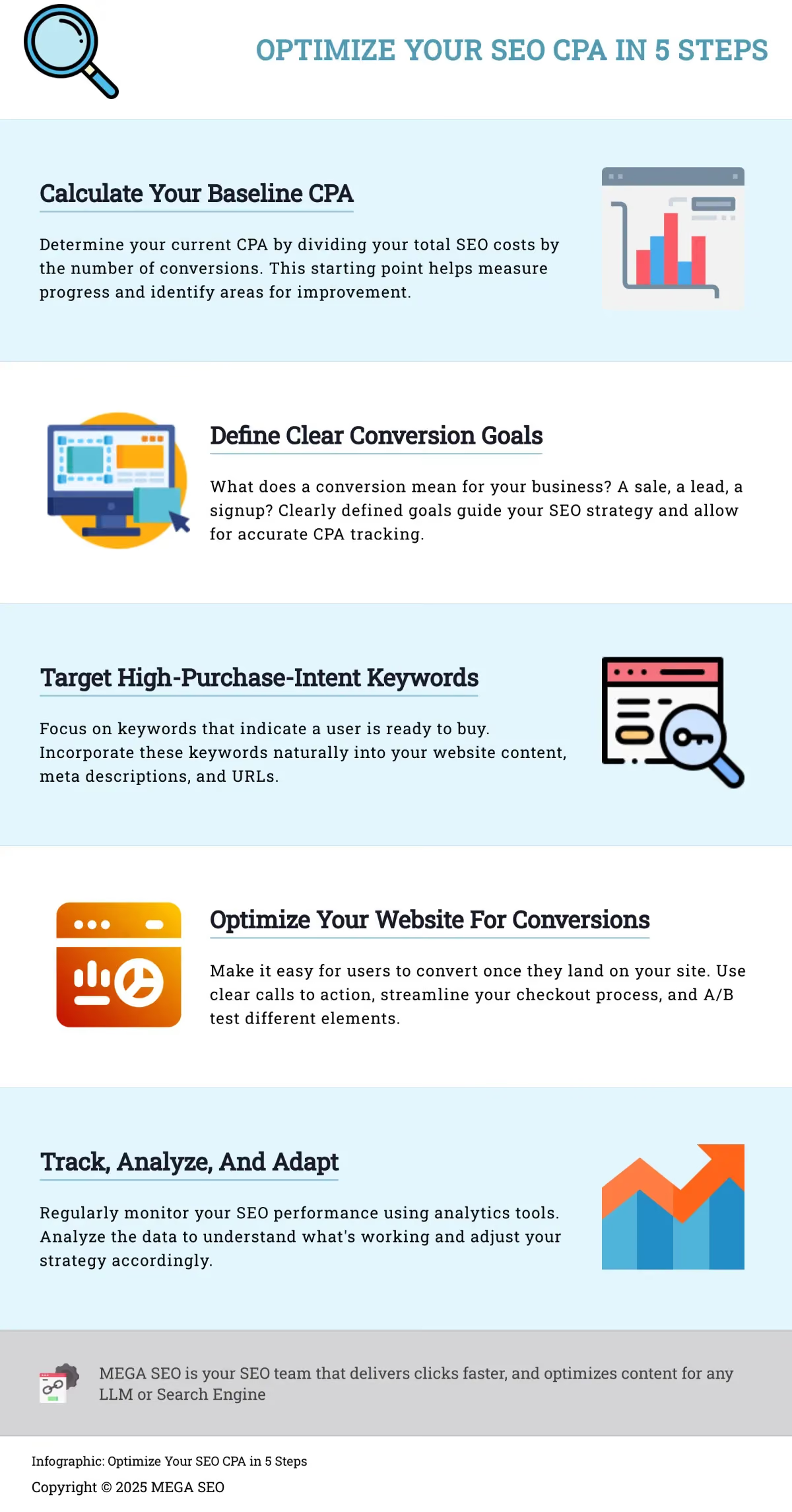
Defining Your Conversion Goals
Before you can optimize your CPA, you need to define what a conversion actually means for your business. Is it a sale, a lead form submission, a newsletter signup, or something else entirely? Clearly defining your conversion goals is the first step. For an ecommerce store, a conversion might be a completed purchase. For a SaaS company, it could be a free trial signup. Once you know what you’re aiming for, you can tailor your SEO strategy accordingly. Consider exploring MEGA SEO’s customized posts to help you achieve your specific conversion goals.
Tracking Conversions Effectively
You can’t improve what you don’t measure. Implementing robust tracking is essential for understanding how your SEO efforts impact your CPA. Use tools like Google Analytics to monitor your organic traffic and identify which keywords are driving conversions. Track the entire customer journey from click to conversion. This data provides valuable insights into what’s working and what needs adjustment. Consider using MEGA SEO’s free tools to streamline your tracking and analysis.
Optimizing Content for Conversions
Content is king in SEO, and optimizing your content plays a crucial role in lowering your CPA. Focus on creating high-quality, engaging content that resonates with your target audience and addresses their search intent. Conduct thorough keyword research to identify the terms your potential customers are using, and incorporate those keywords naturally into your content. Make sure your website is technically sound, with fast loading speeds and a mobile-friendly design.
Boosting Conversions with CRO
Driving traffic to your website is only half the battle. Once users arrive, you need to optimize your website for conversions. This involves creating clear calls to action, streamlining your checkout process, and A/B testing different elements of your website, such as headlines, images, and button placement. By improving your conversion rate, you can generate more conversions from the same amount of traffic, effectively lowering your CPA. MEGA SEO can help you re-optimize your existing content for any platform, ensuring it’s aligned with current best practices and optimized for conversions.
Choosing the Right Conversion Actions
Before you can optimize your CPA, you need to define what a conversion actually means for your business. Is it a sale, a lead form submission, a newsletter signup, or something else entirely? As highlighted in MEGA SEO's guide on optimizing CPA in your SEO strategy, clearly defining your conversion goals is the first step. For an e-commerce business, a conversion is likely a purchase. For a SaaS company, it might be a free trial signup or demo request. For a content publisher, it might be a newsletter signup. Aligning your SEO strategy with the right conversion actions ensures you're focusing on activities that directly impact your bottom line.
Protecting Against Invalid Traffic
While focusing on organic search, it's still crucial to be aware of practices that can inflate your overall marketing costs. Invalid traffic, such as bot activity or click fraud, can skew your analytics data and make it difficult to accurately measure your SEO CPA. While more prevalent in paid campaigns, being mindful of invalid traffic in your organic data helps ensure a cleaner data set for analysis and more accurate CPA calculations. Using tools and strategies to identify and filter out invalid traffic helps ensure your marketing budget is used effectively and your CPA data is reliable.
Targeting the Right Audience
Reaching the right audience is crucial for optimizing your SEO CPA. Targeting the right people with your SEO efforts means focusing on keywords and content that resonate with your ideal customer profile. This involves understanding their search intent, demographics, and interests. By tailoring your content to a specific audience, you increase the likelihood of conversions and lower your CPA. MEGA AI's automated keyword research can help you identify the terms your target audience is using and create content that attracts qualified leads.
Creating Compelling Content
Attracting the right audience is just the first step. Your content needs to be compelling enough to drive conversions. Your organic content should resonate with your target audience and guide them toward the desired action. This involves creating high-quality, informative, and engaging content that addresses their search intent and provides value. Think beyond simple keyword optimization and focus on crafting a compelling narrative that encourages conversions. Consider using MEGA AI’s content generation tools to create high-quality, engaging content tailored to your target audience.
Improving Content Quality
Improving your content quality is crucial for SEO success. In the context of SEO, this means ensuring your content is relevant to what people are searching for, provides valuable information, and is well-optimized for readability and user experience. High-quality content not only improves your search engine rankings but also increases user engagement and drives conversions, ultimately lowering your CPA. MEGA AI’s automated content optimization features can help you improve the quality of your existing content and ensure it's aligned with current SEO best practices.
Testing and Refining Your Approach
Continuous testing and refinement are essential for optimizing your SEO CPA. Testing different approaches to your SEO strategy is crucial. This includes experimenting with different content formats, keyword targeting strategies, and internal linking structures. By analyzing the results of your tests, you can identify what works best for your target audience and refine your approach to maximize conversions and lower your CPA. Book a demo with MEGA AI to see how our platform can help you test and refine your SEO strategy.
Optimizing Content for Cost-Effectiveness
Optimizing your content creation and promotion processes for maximum efficiency is key to lowering your CPA. This might involve using MEGA AI's content generation tools to streamline content creation or leveraging automation to improve content distribution and promotion. By maximizing the impact of your SEO efforts with minimal resources, you effectively lower your CPA. Explore MEGA AI’s pricing to find the plan that best suits your needs.
Re-engaging Existing Customers
Re-engaging valuable customers is a smart strategy for lowering your CPA. While acquiring new customers is important, nurturing existing relationships can often lead to more cost-effective conversions. In SEO, this might involve creating targeted content for existing customers, offering exclusive deals to subscribers, or implementing personalized email marketing campaigns. By re-engaging your existing audience, you can drive repeat business and lower your overall CPA. MEGA AI can help you identify your most valuable customers and create targeted content to re-engage them.
Using Data to Optimize Your SEO Strategy
Data-driven decision-making is crucial for optimizing your SEO CPA. Using data from tools like Google Analytics, MEGA AI, and other SEO platforms, you can gain valuable insights into user behavior, keyword performance, and content effectiveness. This data allows you to identify areas for improvement, refine your keyword targeting, optimize your content strategy, and ultimately lower your CPA. Regularly analyzing your SEO data and making data-backed adjustments is essential for continuous improvement and maximizing your ROI. MEGA AI’s SEO services provide you with the data and insights you need to optimize your strategy and lower your CPA.
Balancing CPA and Overall SEO
Focusing solely on lowering your cost per acquisition (CPA) can sometimes hurt your overall SEO performance. It’s a balancing act. You need to consider the bigger picture of organic search visibility, traffic volume, and brand building alongside your CPA goals.
CPA's Impact on Marketing ROI
Businesses use CPA to understand their return on investment (ROI) for marketing and to improve their strategies. Lowering your CPA is good, but if you achieve that by drastically cutting your overall marketing budget, you might see a decrease in website traffic and leads. This can negatively impact your long-term ROI, even if your CPA looks good in the short term. Think of it like cutting off your nose to spite your face. You might save money on tissues, but you’ve created a much bigger problem. Similarly, overly aggressive CPA optimization can stifle growth and limit your reach. By tracking CPA, companies can save money by focusing on the most effective approaches. Remember that a balanced approach is key. Some companies, like CPA Site Solutions, claim an average client ROI of 300%, demonstrating the potential of a well-rounded SEO strategy. MEGA SEO can help you strike this balance by automating key aspects of your SEO, from keyword research and content generation to technical SEO improvements and performance tracking. This frees you to focus on the strategic elements of your campaigns while ensuring efficient CPA management.
Using CPA with Other SEO Metrics
Don’t view CPA in isolation. Integrate it with other key SEO metrics for a comprehensive understanding of your performance. By tracking organic traffic, you can identify the keywords driving visitors to your website and optimize accordingly. Look at metrics like keyword rankings, organic traffic growth, and conversion rates alongside your CPA. This holistic view helps you identify areas for improvement and make informed decisions. Tracking CPA performance with SEO analytics is essential for optimizing your digital marketing campaigns. For example, if your CPA is low, but your organic traffic is also low, you might be missing potential customers. Consider expanding your keyword targeting or creating more content to attract a wider audience. This is especially important for affiliate marketers who need to track and optimize CPA campaigns to maximize profits and improve performance. MEGA SEO’s automated platform helps manage these various metrics, providing a clear picture of your SEO performance and enabling data-driven decisions. Our platform can even automatically update your content to improve CTR and rankings, ensuring your CPA and other SEO metrics are consistently optimized.
Holistic Approach to Metrics for a Complete Performance Picture
Looking at just one or two metrics won’t give you the full picture of your SEO performance. Think of it like trying to understand a symphony by only listening to the violins. You’re missing the richness and complexity of the full orchestra. Similarly, a holistic approach to metrics is essential for a complete understanding of your marketing ROI. This means considering a range of factors, including CPA, organic traffic, conversion rates, keyword rankings, and brand awareness. A holistic approach, as noted by Booyah Advertising, provides a more accurate assessment. By considering these metrics together, you can gain a more nuanced understanding of your SEO performance and identify areas for improvement.
Interconnectedness of Metrics and Their Combined Impact
SEO metrics are like pieces of a puzzle. They fit together to form a complete picture of your online presence. For example, a high click-through rate (CTR) might not always translate to a low CPA if your landing page experience is poor. High keyword rankings are meaningless if they don’t drive relevant traffic and conversions. Understanding the interconnectedness of these metrics is crucial for effective SEO. Almond Solutions points out that these metrics should be considered together. While industry averages are useful, your specific goals should guide your interpretation.
Industry Averages as Benchmarks for Contextual Evaluation
Knowing the average CPA for your industry provides valuable context. If your CPA is significantly higher than the industry average, it might indicate areas for improvement. However, don’t get too caught up in chasing averages. Your specific business goals and target audience should always be your primary focus. Almond Solutions notes that a good conversion rate (CR) is 10% or higher, while the average is 2.35%. The average CTR for Google search ads is 3.17%, but this varies widely by industry. Use these averages as benchmarks, but tailor your strategy to your unique circumstances.
Linking Metric Tracking to Budget Planning and Strategy Adjustments
Tracking your SEO metrics isn’t just about collecting data; it’s about using that data to inform your budget planning and strategy adjustments. If your CPA is too high, you might need to adjust your keyword targeting, optimize your landing pages, or refine your content strategy. Brolik highlights the importance of understanding the interplay of various factors—like CPC, conversion rate, and close rate—for effective ROI prediction. They also emphasize understanding your business economics (cost of goods sold, gross margin, and customer lifetime value) for setting realistic targets. Regularly review your metrics, identify trends, and make data-driven decisions to optimize your SEO campaigns and maximize your ROI. MEGA AI can help streamline this process. Our platform automates data collection, analysis, and even content updates, allowing you to focus on strategy and optimization. Book a demo to learn more.
Common CPA Challenges and Solutions
Optimizing your cost per acquisition (CPA) in SEO isn’t always straightforward. Two common hurdles you might encounter are long conversion cycles and complex attribution in multi-channel marketing. Let’s explore how to tackle these challenges.
Managing Long Conversion Cycles
In industries like professional services, the sales cycle can be lengthy. For example, a potential client might take weeks or even months to decide on hiring a CPA firm. This extended timeframe can make it tricky to connect SEO efforts directly to conversions. One effective strategy is to nurture leads through valuable content and targeted communication. Think email sequences, retargeting campaigns, and providing helpful resources that keep your firm top-of-mind throughout the decision-making process. Also, ensure your website is optimized for local search. Each page should have custom meta descriptions that clearly communicate the value you offer.
Attribution in Multi-Channel Marketing
Most businesses use a combination of marketing channels—social media, paid ads, email marketing, and organic search—to reach their target audience. This makes it difficult to accurately attribute conversions to a single source. Did the customer convert because of your latest Facebook ad or because they found your website through organic search? Understanding the customer journey and how each channel contributes is key. Implement robust tracking mechanisms, like UTM parameters and analytics dashboards, to monitor the effectiveness of each channel and how they interact. This data will give you a clearer picture of how SEO contributes to the overall marketing mix and allows you to refine your strategy for optimal CPA. Tools like Google Analytics can help you analyze SEO performance by tracking metrics like organic traffic, keyword rankings, and user behavior. By understanding how users interact with your content across different channels, you can make data-driven decisions to improve your CPA and overall marketing ROI.
Advanced CPA Optimization for SEO
As search engine algorithms and user behaviors constantly shift, staying ahead requires adopting cutting-edge techniques. This section explores advanced strategies to optimize your CPA and maximize your SEO ROI.
MEGA AI's Automated SEO Platform for Streamlined Optimization
Tired of juggling multiple SEO tools and struggling to keep up with the latest algorithm updates? MEGA AI offers a comprehensive SEO automation platform designed to streamline your optimization efforts and improve your bottom line. Our platform tackles the complexities of SEO, from keyword research and content generation to technical SEO improvements and performance tracking, so you can focus on strategy and achieving your business goals. This automation is particularly valuable for small businesses and startups, which are often constrained by limited resources and need to improve their SEO.
One of the key benefits of MEGA AI is its automated CPA tracking and analysis. By integrating with tools like Google Analytics, our platform provides a comprehensive view of your SEO CPA and overall campaign performance. This allows you to identify high-performing keywords and content, optimize your spending, and demonstrate the ROI of your SEO efforts. Accurate CPA measurement relies on robust tracking, and MEGA AI makes this process seamless.
Beyond CPA tracking, MEGA AI offers features to optimize your overall SEO strategy. Our automated keyword research helps you identify the terms your target audience uses, while our content generation creates high-quality, engaging content optimized for conversions. We also handle technical SEO improvements, ensuring your website is technically sound and loads quickly, which is crucial for both user experience and search engine rankings. Balancing CPA with a holistic SEO strategy is essential, and MEGA AI empowers you to do just that.
For businesses with existing content, MEGA AI's Maintenance Agent offers a unique solution. It analyzes your content, identifies opportunities for improvement, and automatically updates your articles to enhance click-through rates and rankings. It can even re-optimize your content for different platforms, ensuring it's aligned with current best practices and optimized for conversions. Whether you're looking to create custom posts or optimize existing content, MEGA AI provides the tools you need to succeed.
AI and Machine Learning for CPA
Artificial intelligence and machine learning are transforming SEO, offering powerful tools to refine campaigns and achieve better results. AI-powered platforms like MEGA SEO automate tasks such as keyword research and content generation, freeing up your time to focus on strategy. These tools can analyze vast amounts of data to identify patterns and insights that would be impossible to uncover manually. For example, AI can predict which keywords are most likely to convert, allowing you to target your content creation efforts more effectively. Conversational AI tools like ChatGPT can even assist in creating compelling ad copy and other marketing materials, further enhancing your SEO efforts. By integrating AI and machine learning into your SEO strategy, you can gain a competitive edge and drive down your CPA.
Adapting to Algorithm Updates
Search engine algorithms are constantly evolving, so your SEO strategies must adapt. Regularly analyze search engine results pages (SERPs) to understand how algorithm updates impact keyword rankings and identify areas for improvement. Keeping your content fresh and relevant is crucial. Regularly updating existing articles with new information and adding internal and external links can signal to search engines that your website is a valuable resource. MEGA SEO’s Maintenance Agent helps automate this process, identifying opportunities to enhance your content and improve its ranking potential. This proactive approach ensures your website remains optimized, regardless of algorithm changes, ultimately contributing to a lower CPA.
CPA and SEO Strategies by Business Type
Successfully leveraging SEO to lower your CPA depends heavily on your business type. A startup’s approach will differ significantly from an established enterprise. Let’s explore some tailored strategies:
CPA for Startups and Small Businesses
Startups and small businesses often face resource constraints when it comes to SEO. Limited budgets and in-house SEO expertise can make competing with larger players challenging. However, focusing on a few key areas can yield significant results. First, master the fundamentals of keyword research. Understanding how customers search for your services is crucial. MEGA SEO’s tools can automate keyword research, helping you identify valuable search terms without extensive manual effort. Then, create high-quality content targeting those keywords. This includes optimizing website copy, meta descriptions, and URLs. As Taxaroo points out, strategically using keywords throughout your website impacts search engine rankings.
Another common hurdle for small businesses is keeping up with Google’s algorithm updates. These updates can drastically affect your search visibility, directly impacting your CPA. MEGA SEO’s automated article updates address this by dynamically adjusting your content to align with the latest algorithm changes, ensuring consistent performance. Finally, focus on building local SEO. Claiming and optimizing your Google Business Profile is a free and effective way to attract local customers. This includes adding accurate business information, encouraging customer reviews, and regularly posting updates. Addressing these core areas can help startups and small businesses establish a strong online presence and lower their CPA.
Leveraging MEGA AI for Affordable and Effective SEO
Balancing SEO effectiveness and affordability is a constant challenge for startups, small businesses, and agencies. MEGA AI offers a solution, automating key SEO tasks—from keyword research and content generation to technical SEO improvements and performance tracking. This automation frees up your team to focus on strategy and high-level work, maximizing your return on investment.
Keyword research is one of the most time-consuming aspects of SEO. MEGA AI streamlines this by automatically identifying relevant keywords based on your industry and target audience. This data-driven approach ensures you’re targeting the terms potential customers use, improving your chances of ranking higher in search results and leading to a lower CPA. See how MEGA AI can improve your SEO performance.
Content creation is another area where MEGA AI excels. The platform generates high-quality, engaging content optimized for your chosen keywords, including blog posts, website copy, and meta descriptions. This automation speeds up content creation and ensures your content aligns with current SEO best practices. MEGA AI can even update existing content to improve click-through rates (CTR) and rankings, keeping your website fresh and relevant for search engines. This is crucial for adapting to algorithm updates and maintaining a strong online presence.
Beyond content, MEGA AI tackles technical SEO. The platform identifies and addresses technical issues that could hinder website performance, such as broken links, slow loading speeds, and mobile-friendliness issues. Resolving these technical hurdles ensures your website is accessible to users and search engines, improving your ranking chances and lowering your CPA. Book a demo to see how MEGA AI can transform your SEO strategy.
CPA for Enterprises
Established companies and enterprises typically have more resources, allowing for a more comprehensive SEO strategy. While the fundamentals of keyword research and content creation still apply, the focus shifts towards more advanced tactics. For example, established businesses should prioritize technical SEO. This includes optimizing website speed, ensuring mobile-friendliness, and implementing structured data. These technical improvements can significantly impact search rankings and user experience, ultimately lowering CPA. MEGA SEO offers solutions that automate these often complex tasks.
Another key area for established businesses is content optimization. This goes beyond simply incorporating keywords. It involves creating in-depth, authoritative content that answers user queries comprehensively. As Intuit highlights, increasing your content’s visibility in search results correlates with higher click-through rates, driving more website traffic and potentially lowering your CPA. Furthermore, established businesses should build high-quality backlinks. Backlinks from reputable websites signal authority to search engines, further improving rankings and driving targeted traffic. MEGA SEO automates internal and external linking, helping you efficiently build a strong backlink profile. Finally, regularly auditing and refining your SEO strategy is crucial. This includes monitoring keyword performance, analyzing website traffic, and adapting your approach based on data-driven insights. By focusing on these advanced tactics, established companies can maximize their SEO efforts and achieve a lower CPA.
Improve Your CPA with SEO: Actionable Steps
Optimizing your SEO strategy to lower your cost per acquisition (CPA) involves a blend of quick wins and long-term strategies. Let’s explore some actionable steps you can take to see immediate improvements and build a foundation for sustained success.
Quick SEO Wins for CPA Improvement
These tactics can deliver noticeable improvements to your CPA relatively quickly:
-
Optimize for the right keywords. Don’t just focus on any keywords; prioritize those with high purchase intent. Think about the terms potential clients use when actively searching for the services you offer. Intentionally using these keywords in your content, meta descriptions, and URLs can significantly impact your website’s ranking on search engines, attracting more qualified leads. A higher ranking translates to increased visibility and a greater chance of converting prospects into paying customers.
-
Claim and optimize your Google Business Profile. For local businesses, especially service providers, your Google Business Profile is a must-have. A complete and optimized profile increases your visibility in local search results. This includes providing accurate business information, adding photos, encouraging client reviews, and selecting relevant categories. A strong Google Business presence builds credibility and strengthens your local SEO, driving more targeted traffic to your website and potentially lowering your CPA.
-
Target long-tail keywords. These are longer, more specific keyword phrases that often have lower competition but higher conversion rates. For example, instead of targeting “accounting services,” consider “tax preparation for small businesses in Austin.” Long-tail keywords attract a more qualified audience actively searching for your specific services, increasing the likelihood of conversions and ultimately lowering your CPA. Tools like the Google Ads Keyword Planner can help you discover valuable long-tail keywords relevant to your business.
Long-Term SEO Strategies for CPA
While quick wins offer immediate benefits, long-term strategies are essential for sustainable CPA improvement:
-
Develop a realistic SEO budget. SEO is an ongoing investment, and understanding your budget limitations is crucial, especially for small businesses. A well-defined budget allows you to allocate resources effectively across different SEO activities, from content creation to technical optimization. Planning for SEO expenses ensures you can maintain consistent efforts and achieve long-term results without overspending. Consider exploring MEGA SEO’s pricing plans to find an option that aligns with your budget and business needs.
-
Track and analyze your performance. Regularly monitoring your SEO performance using analytics tools is essential for understanding what’s working and what’s not. Tracking key metrics like organic traffic, keyword rankings, and conversion rates provides valuable insights into the effectiveness of your SEO efforts. Analyzing this data allows you to make informed decisions, refine your strategy, and optimize your campaigns for better ROI. Don’t just track metrics; analyze them to understand the “why” behind the numbers. MEGA SEO’s automated reporting features can streamline this process and provide you with actionable insights.
-
Commit to continuous optimization. SEO is not a one-time fix; it requires ongoing effort and adaptation. Search engine algorithms change, competitor strategies evolve, and user behavior shifts. Continuously optimizing your website content, technical SEO, and link-building efforts ensures your site remains competitive and continues to attract qualified traffic. This long-term approach is essential for sustained success and consistently lowering your CPA. MEGA SEO’s Maintenance Agent can automate many of these optimization tasks, saving you time and resources.