
If you want to build a high-performance race car, you have two options. You can source every part individually—the engine, chassis, and transmission—and assemble it yourself for total control. Or, you could buy a fully engineered car straight from the factory, ready to hit the track. Approaching programmatic SEO presents a similar choice. You can build a custom tech stack from individual components or use a single, all-in-one platform. Both paths get you to the finish line, but they require different levels of skill, time, and investment. This guide reviews the best programmatic SEO tool for each approach so you can decide which path is right for your business.
Key Takeaways
- Select your approach based on your resources: A multi-tool tech stack offers deep customization for teams with technical expertise, while an all-in-one platform provides speed and simplicity for businesses that need an efficient, hands-off solution.
- Focus on targeted, long-tail keywords: Programmatic SEO allows you to efficiently create hundreds of pages that answer specific user queries. This strategy helps you connect with high-intent customers and compete in niche areas that larger competitors might ignore.
- Prioritize content quality over sheer volume: The success of your programmatic SEO efforts depends on creating valuable, relevant content for each page. A thoughtful strategy that combines unique data with well-structured templates will outperform mass-produced, generic pages.
What is Programmatic SEO and Why Does It Matter?
Imagine you could create hundreds or even thousands of specific, optimized web pages without writing each one by hand. That’s the core idea behind programmatic SEO. It’s a method for scaling your content creation by using data and templates to automatically generate pages. This approach allows you to target a massive number of keywords that would be impossible to cover manually.
Instead of writing every page from scratch, programmatic SEO uses a template—a consistent page layout—and a database filled with information. By combining the template with different data points like services, locations, or product features, you can generate unique pages at scale. For example, a real estate company could create a page for every neighborhood it serves, each targeting a specific search term like "three-bedroom homes for sale in Greenpoint."
For small and local businesses, this is a powerful strategy. You may not have the resources to compete with large corporations on broad, high-traffic keywords. Programmatic SEO levels the playing field by letting you target thousands of specific, long-tail search terms that your customers are actually using. This method saves a considerable amount of time and money, helping you expand your online presence efficiently and connect with highly motivated buyers.
Programmatic SEO in the Broader SEO Landscape
Programmatic SEO isn't a magic bullet that replaces fundamental SEO practices. Instead, it’s a powerful technique that amplifies your efforts across the four main pillars of search engine optimization. A successful strategy requires a holistic approach, where programmatic content generation works in harmony with on-page, off-page, technical, and local SEO. When you integrate this method correctly, it acts as a force multiplier, allowing you to scale your presence in ways that would be impossible with manual efforts alone. Think of it as the engine that powers your SEO vehicle, while the four pillars provide the chassis, wheels, and steering to guide you toward your destination.
On-Page SEO
On-page SEO is all about optimizing individual web pages to rank higher and earn more relevant traffic. Programmatic SEO directly fuels this by enabling you to create hundreds of highly optimized pages targeting specific, long-tail keywords. Each page generated from your template should still follow on-page best practices, including unique title tags, meta descriptions, and well-structured content with relevant headings. The goal is to use your data to create pages that feel custom-made for a user's query, providing a direct and valuable answer. This strategy helps you connect with high-intent customers and carve out a space in niche areas your competitors might overlook.
Off-Page SEO
Off-page SEO refers to actions taken outside of your own website to impact your rankings, primarily through building authority and trust. While programmatic SEO focuses on content creation, the quality of that content can significantly influence your off-page signals. Creating thousands of genuinely useful pages—like detailed service pages for every city you operate in—turns your website into a valuable resource that others are more likely to link to. A strong SEO plan uses all four types of SEO together; your programmatic pages become assets you can promote to earn backlinks, mentions, and social shares, strengthening your site's overall authority.
Technical SEO
Technical SEO ensures that a website can be crawled and indexed by search engines without any issues. This foundation is absolutely critical for programmatic SEO to succeed. When you're generating thousands of pages, your site architecture, internal linking, and page speed must be flawless. A well-structured template and a clean database are the core components. You need to ensure your site map is updated, there are no crawl errors, and the pages load quickly. Proper technical setup allows search engines to efficiently discover and understand the value of every single page you create, ensuring your scaling efforts don't go to waste.
Local SEO
For local businesses, programmatic SEO can be a game-changer. It allows you to create hyper-specific landing pages for every service you offer in every neighborhood, city, or region you serve. For example, a plumber could generate pages for "emergency pipe repair in Brooklyn" and "drain cleaning in Queens," capturing thousands of high-intent local searches. This approach levels the playing field, allowing small businesses to compete with larger companies by dominating long-tail local keywords. By combining location-specific data with your service offerings, you can build a comprehensive local presence that speaks directly to customers in their area.
How AI is Reshaping SEO
The rise of AI has fundamentally shifted the SEO landscape, but it hasn't made it obsolete. If anything, AI has made SEO more complex and dynamic. Search engines are now using sophisticated AI to better understand user intent and deliver more nuanced results, such as through Google's Search Generative Experience (SGE). This means the old tricks of keyword stuffing and churning out low-quality content are less effective than ever. Instead, the focus has shifted toward creating genuinely helpful, high-quality content that satisfies user queries completely. AI tools can be a powerful ally in this new era, helping you analyze data, generate content, and optimize your strategy at a scale that was previously unimaginable.
Understanding the New Rules of AI-Powered Search
Despite the dramatic changes, SEO is not dead. In fact, most of the core principles still apply. You still need a technically sound website, a strong backlink profile, and content that answers the user's search intent. What has changed is the standard for content quality and the way search results are presented. AI-powered search engines are better at identifying expertise and rewarding content that is truly helpful. AI tools can help you meet this higher standard by automating keyword research, generating well-structured drafts, and identifying content gaps, allowing you to focus on adding the human touch of genuine experience and expertise.
Building EEAT Across All Digital Platforms
In the age of AI, Experience, Expertise, Authoritativeness, and Trustworthiness (EEAT) are your most valuable assets. With so much AI-generated content available, search engines are placing a higher premium on signals that prove you are a credible source. This isn't something you can fake. You need to consistently build trust across all your digital touchpoints, from your website content and author bios to your social media profiles and public relations efforts. Every piece of content, whether created manually or programmatically, must be accurate, well-researched, and reflective of your genuine expertise to build and maintain the trust of both users and search engines.
Using AI for Detailed SEO Audits
One of the most practical applications of AI in SEO is its ability to conduct deep, comprehensive audits of your website. AI tools can quickly analyze thousands of pages to identify technical issues, find broken links, check for duplicate content, and uncover optimization opportunities you might have missed. For instance, platforms like MEGA AI can go a step further by not just identifying problems but actively fixing them. Our Maintenance Agent can analyze existing content to find ways to improve its click-through rate (CTR) from search results or identify new information to add to an article to make it more comprehensive and help it rank higher.
Two Core Approaches to Programmatic SEO
Programmatic SEO is a powerful strategy, but getting started can feel like standing at a fork in the road. On one path, you have the do-it-yourself approach, where you assemble a collection of specialized tools to build your own system. This is the multi-tool tech stack. On the other path, you have a single, integrated solution that handles the entire process for you—the all-in-one automated platform.
Choosing between these two isn't about right or wrong; it's about what fits your business's resources, goals, and technical comfort level. The tech stack gives you granular control over every step, from data sourcing to page design, allowing for deep customization. However, it also requires you to manage multiple subscriptions, connect different tools, and oversee a more complex workflow. The all-in-one platform simplifies everything by bundling all the necessary functions into one service, often using AI to automate the heavy lifting. This path is designed for efficiency and ease of use, making it a great fit for teams that need to move quickly without getting bogged down in technical details.
The DIY Approach: A Multi-Tool Tech Stack
The multi-tool tech stack is the classic, hands-on way to execute a programmatic SEO project. This approach involves selecting and combining several different tools, each one specializing in a specific part of the process. For example, you might use one tool for keyword research, another for scraping data, a third for generating content with AI, and a fourth for publishing the pages on your website. A typical programmatic SEO toolbox can include nearly a dozen different applications working together. This method offers maximum flexibility and control, but it also means you're responsible for making all the pieces work together seamlessly.
The Streamlined Approach: An All-in-One Platform
If managing a dozen different tools sounds overwhelming, the all-in-one automated platform is the alternative. These platforms are designed to act as a complete, autonomous system for your SEO. Instead of you piecing together a workflow, the platform handles everything from keyword discovery and content creation to technical optimization and performance tracking. For instance, an end-to-end SEO platform can generate expert-level articles daily and optimize them for any search engine without your direct involvement. This approach is built for small businesses and teams who want the results of programmatic SEO without the steep learning curve or time commitment required to manage a complex tech stack.
How to Choose a Programmatic SEO Tool
Choosing the right tools for programmatic SEO depends on your goals, budget, and technical comfort level. Whether you’re building a custom tech stack from individual tools or opting for a unified platform, certain features are non-negotiable. Your main goal is to find a solution that can scale your content creation without creating a massive operational headache. The whole point of programmatic SEO is efficiency, so the last thing you want is a clunky process that requires constant manual intervention. A solid toolset should feel like an extension of your team, handling repetitive tasks so you can focus on strategy and quality control.
When you start comparing options, it's easy to get lost in long feature lists. Instead, concentrate on the core functions that drive results. Think about the entire lifecycle of a programmatic page: from data sourcing and content generation to publishing, indexing, and performance analysis. A weakness in any one of these areas can create a bottleneck that undermines the entire strategy. The best tools offer a seamless experience across this lifecycle, either as a single integrated platform or as a set of tools designed to work well together. Below, we’ll break down the four most important areas to evaluate so you can make an informed choice for your business.
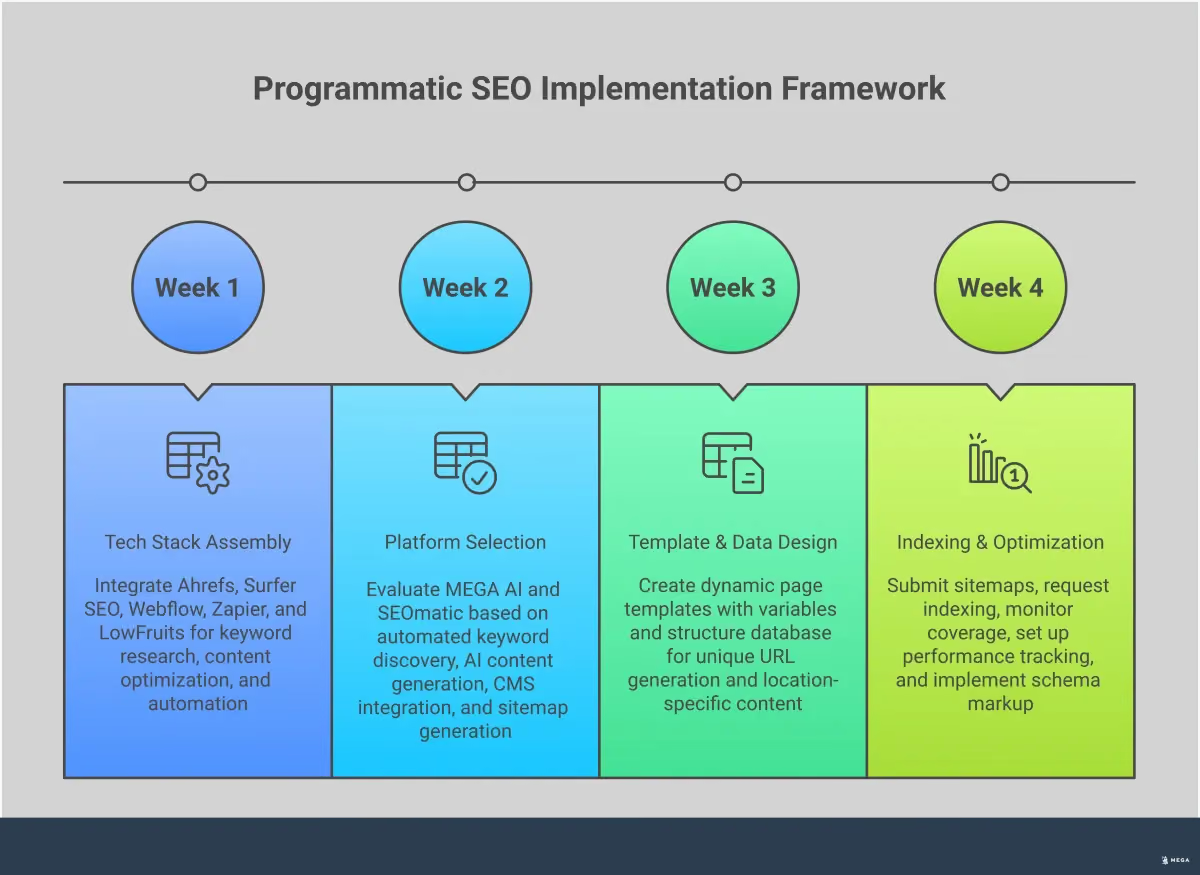
Content and Automation Capabilities
At its core, programmatic SEO is about creating content at scale. Your tools should automate the most time-consuming parts of this process. Look for features that can generate hundreds or even thousands of unique pages from a single template and data source. A strong tool will offer ways to rewrite or vary content to avoid duplication issues, which is critical for SEO success. It should also provide pre-built page templates to speed up the design and launch process. The key is to find a balance between automation and quality, ensuring each page offers real value to the reader and isn't just a thin, data-filled shell.
Data Integration and Workflow Management
Effective programmatic SEO runs on data. The best tools can connect to various data sources—like spreadsheets, APIs, or internal databases—to pull in the information needed to create your pages. Consider how a tool fits into your existing workflow. Does it integrate with your current Content Management System (CMS), such as WordPress or Webflow? A seamless SEO automation process allows for auto-posting, which eliminates the manual work of uploading each page. This connection is crucial for maintaining efficiency as you scale your efforts from dozens to thousands of pages.
Indexing Support and Performance Tracking
Creating pages is just the first step; getting them seen by Google is what matters. A good programmatic SEO tool should help with discoverability and indexing. Features like automatic sitemap generation are essential for signaling to search engines that you have new content ready to be crawled, especially when you're publishing in bulk. Once your pages are live, you need to know how they’re performing. Look for built-in analytics or easy integration with tools like Google Analytics to track key metrics such as traffic, clicks, and user engagement. This data closes the loop, helping you refine your strategy over time.
Compatibility with Your CMS and Tech Stack
Before you commit to any tool, confirm that it works with your website’s platform. Compatibility issues can stop a project in its tracks and lead to wasted time and money. Most modern programmatic SEO tools are designed to work with popular platforms like WordPress, Shopify, and Webflow, but it’s always best to double-check. If you’re using a less common or custom-built CMS, you may need a tool with a flexible API to create a custom connection. This simple check is a critical step that will save you significant technical headaches down the road.
Top All-in-One Programmatic SEO Platforms
If managing multiple tools sounds like a headache, an all-in-one platform might be the right fit for your business. These solutions bundle the core functions of programmatic SEO—from keyword research and content creation to publishing and optimization—into a single, integrated system. The main advantage is simplicity. Instead of piecing together a workflow from different software, you get a unified dashboard designed to handle the entire process. This approach can save significant time and reduce the technical complexity involved in scaling your content. For small businesses or teams without a dedicated SEO expert, a platform can provide the structure and automation needed to get a programmatic strategy off the ground quickly.
MEGA AI for End-to-End Automation
MEGA AI is built to function as an autonomous SEO team in a box. It handles the entire programmatic workflow, from automated keyword research and daily content generation to internal and external linking. The platform is designed for businesses that want to generate traffic automatically without getting bogged down in the details. A key feature is its ability to perform ongoing content maintenance and optimization, which helps keep articles ranking high even as search engine algorithms change. By automating the full process, MEGA AI allows you to focus on running your business while your SEO strategy runs on its own. It’s a true "Service-as-a-Software" model that delivers agency-level work without the agency price tag.
SEOmatic for Streamlined Content Creation
SEOmatic is another platform that aims to simplify programmatic SEO, with a strong focus on the content creation and indexing phases. It combines AI writing with indexing features, which can save you from needing separate tools for those specific tasks. The platform helps users automatically generate hundreds or even thousands of web pages based on a core set of keywords. If your primary bottleneck is producing a large volume of pages and getting them indexed by Google, SEOmatic offers a programmatic SEO toolbox to streamline that part of the process. It’s a solid option for users who want to manage the overall strategy but need a powerful engine for content production.
Other All-in-One Tools to Consider
While many platforms offer robust features, it’s rare to find one that does absolutely everything a business might need. Most successful programmatic SEO campaigns rely on a primary platform supplemented by a few specialized tools. A comprehensive approach typically requires capabilities across five key areas: programmatic SEO software for page generation, keyword research tools for finding opportunities, content paraphrasers or writers for creating unique copy, indexing tools to get pages recognized by Google, and analytics tools to track performance. When evaluating all-in-one solutions, consider which of these functions are included and whether you might still need to integrate other tools to fill any gaps in your strategy.
The Best Tools for a Custom Programmatic SEO Stack
If you prefer a hands-on approach and want to customize every step of your programmatic SEO process, building a multi-tool tech stack is a popular route. This method involves selecting and integrating several specialized tools, each designed to handle a specific part of the workflow, from keyword research to page creation and content optimization. While this approach offers flexibility and control, it also means managing multiple subscriptions, learning different interfaces, and ensuring all the pieces work together smoothly.
For businesses with the time and technical know-how, a custom stack allows you to pick the best-in-class tool for each job. You might use one service for deep keyword analysis, another for AI-powered content writing, and a third for building and publishing pages at scale. This can be powerful, but it requires a clear strategy and the resources to manage the complexity. You'll be responsible for creating the entire workflow, from pulling data into a spreadsheet to pushing final content live through your CMS. Let's look at some of the top tools you might include in your stack.
Ahrefs for Keyword and Competitive Research
When it comes to understanding what people are searching for, Ahrefs is a powerhouse. It’s a go-to tool for in-depth keyword research, allowing you to find thousands of potential topics and analyze their ranking difficulty. You can also use it to see what keywords your competitors are ranking for, giving you a clear roadmap for your own strategy. While it comes with a higher price tag, starting at around $99 per month, many SEO professionals consider it an essential investment for building a data-driven content plan. Its ability to uncover keyword opportunities and provide detailed suggestions is critical for the foundation of any programmatic SEO project.
SEMrush for All-Around SEO Management
Similar to Ahrefs, SEMrush offers a robust suite of features that cover nearly every aspect of SEO. It’s another excellent option for finding and analyzing keywords, tracking your rankings, and auditing your site's technical health. Many businesses choose SEMrush for its versatility, as it combines keyword research tools with features for content marketing, competitor analysis, and even paid advertising insights. This makes it a solid centerpiece for a programmatic SEO stack, helping you manage multiple facets of your strategy from a single, comprehensive dashboard. Its all-around capabilities can help streamline your workflow when you're juggling different tasks.
Surfer SEO for Content Optimization
Once you have your keywords, you need to create content that ranks. Surfer SEO specializes in this part of the process, helping you write articles that are perfectly optimized for your target search terms. The tool analyzes top-ranking pages and provides a detailed brief with suggestions on structure, keyword usage, and word count. It also includes an AI writer and a keyword planner. With plans starting at a more accessible price point and a free Chrome extension available, Surfer SEO is a popular choice for teams looking to scale content creation without sacrificing quality.
LowFruits for Finding Target Keywords
Finding the right keywords is half the battle, and LowFruits is designed to help you find the easy wins. This tool specializes in identifying low-competition keywords that are often overlooked by larger competitors. It helps you find search queries with weak or user-generated content on the first page of Google, signaling an opportunity for you to rank more easily. For small businesses or those just starting with programmatic SEO, using a tool like LowFruits can be a smart way to gain traction quickly by targeting achievable keywords before taking on more competitive terms.
Webflow for Creating Pages Quickly
Your programmatic SEO strategy needs a content management system (CMS) that can handle publishing hundreds or thousands of pages efficiently. Webflow is a top recommendation for this task because of its powerful templating capabilities and seamless integrations. It connects well with tools like Airtable and Zapier, allowing you to automatically create and populate pages from a database. This is the engine that brings your programmatic project to life. With a flexible CMS, you can design a template once and use it to generate unique pages for all your target keywords, saving an immense amount of time and effort.
Data Scraping Tools
To create pages at scale, you first need data. Data scraping tools help you gather this information from websites automatically, saving you from endless hours of manual copy-pasting. For example, you could collect product specifications, business locations, or user reviews to populate your pages. A great starting point is Web Scraper, a free Chrome extension that lets you point and click to extract thousands of records from a site. For more complex projects, a tool like Octoparse can turn entire web pages into structured, organized data that’s ready to be used in your database. These tools are the foundation of your project, providing the raw material for your content.
Database and Data Organization Tools
Once you've collected your data, you need a central place to store and organize it. This is where a database or a powerful spreadsheet comes in. The most accessible option for most people is Google Sheets. It's free, familiar, and surprisingly powerful for managing the data that will fuel your programmatic pages. You can easily clean, sort, and prepare your information before connecting it to your website. Another popular choice is Airtable, which acts as a hybrid between a spreadsheet and a database, offering more advanced features for relating different types of data. Your database is the single source of truth for your project, so keeping it clean and well-organized is key.
Programmatic Image Generation Tools
Unique images can make your programmatically generated pages feel more custom and engaging. Instead of using the same stock photo on hundreds of pages, you can use tools to create distinct visuals for each one. This helps with both user experience and SEO. A free tool like Tailgraph can generate unique images for every post, often by overlaying text or data onto a template. Other services allow you to use AI to create images that match your brand and content. This step adds a layer of polish that separates high-quality programmatic sites from low-effort ones, making your content more appealing to both users and search engines.
Page Design and Data Connection Tools
After organizing your data and designing your page templates, you need a way to connect the two. This is where data connection tools become essential. They act as the bridge between your database and your website, automatically populating your templates with the right information. A tool like Whalesync is built specifically for this purpose, creating a two-way sync between platforms like Airtable, Webflow, and WordPress. This ensures that any updates you make in your database are automatically reflected on your live pages. This automation is what makes programmatic SEO scalable, eliminating the need to manually update hundreds or thousands of pages.
WordPress-Specific Plugins
If your website runs on WordPress, several plugins are designed to help you execute a programmatic SEO strategy. These tools simplify the process of importing data and creating pages in bulk directly within your WordPress dashboard. One of the most popular options is WP All Import. It allows you to take a CSV or XML file from your database and map the data to different fields in your WordPress posts or pages using a simple drag-and-drop interface. This makes it easy to create hundreds of pages from a single spreadsheet without writing any code, making it a go-to solution for many WordPress users.
Indexing Tools
Creating thousands of pages is only half the job; you also need to ensure search engines can find and index them. Indexing tools help you monitor this process and can even speed it up. The most important tool here is the free Google Search Console, which shows you how many of your pages have been indexed, what keywords they rank for, and how many clicks they receive. For a more proactive approach, you can use a service that leverages the IndexNow protocol, which automatically notifies search engines like Bing and Yandex as soon as you publish or update a page. Proper indexing is the final, critical step to making sure your programmatic content actually drives traffic.
How Do Multi-Tool Stacks Compare to All-in-One Platforms?
Choosing between a multi-tool stack and an all-in-one platform is a major decision that shapes your entire programmatic SEO strategy. A multi-tool approach gives you the freedom to pick and choose software for each step of the process, from keyword research to content publishing. It’s like building a custom media center from separate components—you get to pick the best screen and speakers, but you have to wire everything yourself.
On the other hand, an all-in-one platform is like buying a smart TV with everything built-in. These platforms bundle all the necessary features into a single, unified system, simplifying the process from start to finish. The right choice depends on your team’s resources, technical comfort level, and long-term goals. Let's break down how these two approaches stack up when it comes to your budget, time, and ability to scale.
Cost and Budget
With a multi-tool stack, costs can add up unexpectedly. While a single tool might seem affordable, you’ll likely need separate subscriptions for keyword research, data sourcing, content generation, and performance analytics. These individual fees can quickly lead to a high monthly bill. While some tools combine several features, you’ll still need to patch together a complete solution, which can make budgeting unpredictable for a small business.
An all-in-one platform simplifies your expenses into a single, predictable monthly fee. This approach often provides better value, especially for startups that need to keep a close eye on spending. Platforms are designed to deliver the power of an entire marketing team at a fraction of the cost, bundling strategy, creation, and optimization into one package.
Time Commitment and Learning Curve
A multi-tool stack demands a significant time investment. Each tool has its own interface and workflow, and you’ll need to learn how to operate them all effectively. More importantly, you have to figure out how to connect them, moving data from your keyword tool to your content generator and finally to your CMS. This manual process can be time-consuming and prone to errors, especially for those new to programmatic SEO.
All-in-one platforms are built to reduce this friction. With a single interface and a unified workflow, the learning curve is much shorter. Many platforms also offer a high degree of automation, taking the strategic and executional burden off your shoulders. For example, an autonomous SEO agent can handle everything from planning to publishing, freeing you to focus on other parts of your business.
Scalability and Long-Term Maintenance
As your business grows, so will your programmatic SEO needs. With a multi-tool stack, scaling can become complicated. You might need to add new tools, manage more complex integrations, and dedicate more time to maintenance, like fixing broken links or updating outdated content across thousands of pages. This manual upkeep can quickly become a full-time job.
An all-in-one platform is designed with scalability in mind. The infrastructure is built to handle growth, allowing you to publish thousands of pages without worrying about the underlying tech. A platform that handles the maintenance for you is a huge advantage. Some systems automatically update existing content, improve click-through rates, and re-optimize pages after algorithm updates, ensuring your content continues to perform well long after it's published.
What Challenges to Expect with Each Approach
Every strategy has its trade-offs, and programmatic SEO is no different. Whether you choose a multi-tool tech stack or an all-in-one platform, you’ll encounter specific challenges. Knowing what to expect can help you prepare and choose the path that best aligns with your resources, skills, and business goals.
The multi-tool approach offers incredible flexibility but demands more technical skill and time to manage. You become the architect, responsible for connecting different systems and ensuring they work together smoothly. On the other hand, an all-in-one platform provides a streamlined, guided experience but may have certain limitations or a specific way of operating. Understanding these potential hurdles is the first step toward building a successful and sustainable programmatic SEO engine.
Managing the Complexity of a Multi-Tool Stack
Assembling a tech stack means you are the project manager for your programmatic SEO efforts. To run a successful campaign, you often need a set of different tools to cover the entire workflow, from keyword research to content generation and publishing. This can quickly become complex, as you’ll need to learn how each tool works and figure out how to pass data between them.
This complexity also extends to your budget and time. Managing multiple subscriptions adds up, and the time spent troubleshooting integrations is time not spent on strategy. For small businesses and startups, this can be a significant drain on resources. A successful programmatic SEO campaign requires a cohesive system, and building one from scratch takes dedication.
Working Within Platform Limitations
While all-in-one platforms simplify the process, they come with their own set of considerations. These platforms are designed to streamline workflows, which means they often have a specific, built-in way of doing things. For example, some platforms may work best with a particular CMS, like Webflow, because of its powerful features and integrations.
This isn't necessarily a downside, but it's something to be aware of. You trade some of the granular control of a multi-tool stack for ease of use and speed. Before committing to a platform, it’s important to understand its capabilities and limitations to ensure it aligns with your existing website and long-term goals. The key is to find a platform whose workflow automation matches your business needs.
Maintaining Content Quality at Scale
Regardless of your approach, maintaining content quality is the most critical challenge in programmatic SEO. It’s easy to get caught up in the idea of creating thousands of pages quickly, but mass-producing content without focusing on quality often leads to low traffic. Search engines and users reward relevance and value, not just volume.
Over-relying on AI without a human touch can result in generic or inaccurate content that fails to rank. Your strategy should always prioritize quality over quantity. This means carefully planning your content templates, using unique data, and implementing a review process. The goal is to create pages that are genuinely helpful to your audience, which requires a thoughtful content strategy from the start.
Avoiding Template-Like Pages and Ensuring Uniqueness
The biggest pitfall in programmatic SEO is producing thousands of pages that look and sound almost identical. To avoid this, treat your template as a framework, not a finished product. The real value comes from the unique data and content variations you introduce on each page. A thoughtful strategy that combines unique data with well-structured templates will always outperform mass-produced, generic pages. You can create valuable content by using multiple data points—like combining a service with a specific neighborhood and price point—to make each page highly relevant. Strong tools also help by offering ways to rewrite or vary text, ensuring that while the structure is consistent, the content itself is distinct enough to avoid duplication issues and serve a specific user need.
Which Programmatic SEO Approach Fits Your Business?
Choosing the right programmatic SEO strategy comes down to your team’s resources, technical expertise, and business goals. Are you a small business owner who needs an efficient, hands-off solution, or an experienced marketer who wants granular control over every variable? Each path offers distinct advantages. One prioritizes simplicity and speed, while the other provides deep customization and flexibility. Understanding which approach aligns with your needs is the first step toward scaling your content successfully.
When to Choose an All-in-One Platform
If you’re a startup founder, a small business owner, or part of a team without a dedicated SEO expert, an all-in-one automated platform is your best bet. This approach is designed for efficiency, removing the technical barriers and steep learning curves associated with building a multi-tool stack. An automated solution like MEGA AI acts as an autonomous SEO team, handling the entire workflow from keyword discovery and content creation to optimization and technical improvements.
Platforms like this are ideal because they offer end-to-end automation, generating expert-level content daily and keeping existing articles updated with the latest search trends. With deep CMS integration and no complex setup required, you can focus on running your business while the platform manages your SEO growth in the background.
When to Build a Custom Multi-Tool Stack
A multi-tool tech stack is better suited for seasoned SEO professionals or businesses with highly specific needs and the resources to manage complexity. This approach gives you complete control to mix and match best-in-class tools for each step of the process, from keyword research with Ahrefs to content optimization with Surfer SEO. If your strategy relies on leveraging unique, proprietary data, the flexibility of a custom stack can be a significant advantage.
However, this path requires a deeper understanding of SEO and the time to manage multiple subscriptions, integrations, and workflows. As one discussion highlights, using a company's own unique data can be a great source for programmatic content, but it demands careful execution and the right combination of tools.
How to Get Started with Programmatic SEO
Launching a programmatic SEO project is a structured process that breaks down into a few key phases: planning your strategy, building your assets, and launching your pages. While it might sound technical, the core idea is to create a repeatable system for generating valuable, targeted content at scale. Whether you use a collection of different tools or an all-in-one platform, the fundamental steps remain the same. It starts with understanding what your audience is searching for and ends with delivering a page that perfectly matches their intent.
Step 1: Define Your Strategy and Data Sources
Before you create a single page, you need a solid plan. This begins with keyword research to identify the core terms and modifiers your audience uses. For example, a local cleaning service might target "[service] in [city]." Next, you'll design a page template, which is the blueprint for how every generated page will look and what information it will contain. Finally, you'll collect the data to populate these templates. This could be a list of cities, services, or product specifications. This foundational stage is critical, as the quality of your data and strategy will directly impact your results.
Step 2: Build Your Content Templates and Pages
With your plan in place, it’s time to build the components. First, organize your collected information into a structured database, which can be as simple as a Google Sheet or Airtable. Each row represents a future page, and each column holds a piece of data. Then, you'll create the content that will fill your template, either by writing it yourself or using AI to generate unique text for each variation. The final step in this phase is to build the page template in your CMS, like WordPress or Webflow, and connect it to your database so the system knows how to pull the data for each page.
Step 3: Launch and Track Your Performance
Once your database is connected to your template, you can generate the pages. But your work isn't done yet. The next crucial step is ensuring search engines can find and index your new pages. You can monitor this process using Google Search Console. After your pages are live, you’ll need to track their performance with analytics tools to see which ones are driving traffic and conversions. This entire workflow, from research to tracking, can be managed with individual tools or handled by an autonomous platform that offers end-to-end SEO services.
Step 1: Gather Data and Keywords
The foundation of any programmatic SEO project is understanding what your customers are looking for. This process allows you to create hundreds of pages that answer specific user queries, helping you connect with high-intent customers in niche areas. Start by identifying a "head term," which is a broad topic related to your business, like "home cleaning." Then, find "modifiers," which are the specific terms people add to that search, such as locations ("in Austin"), services ("deep cleaning"), or qualifiers ("for apartments"). Combining these creates long-tail keywords like "apartment deep cleaning in Austin." Your goal is to build a comprehensive list of all the combinations that are relevant to your business and have real search demand.
Step 2: Design Your Page Template
Once you have your keywords, you need a blueprint for your pages. Programmatic SEO uses a template—a consistent page layout—and a database filled with information to generate unique pages at scale. This template will define the structure for every page you create, ensuring a consistent user experience. It should include placeholders for the unique data points you gathered, such as the city name, service type, or product feature. A good template includes a clear headline, engaging body copy, relevant images, and a strong call-to-action. Think of it as creating one perfect page that can be adapted hundreds of times without losing its quality or relevance.
Step 3: Organize Your Data in a Database
Effective programmatic SEO runs on well-organized data. The best tools can connect to various data sources, like spreadsheets or APIs, to pull in the information needed to create your pages. You can start with something as simple as a Google Sheet or an Airtable base. Create columns for each data point you identified in step one, such as "Service," "City," and "Price." Each row in your spreadsheet will correspond to a unique page on your website. This structured approach is what allows you to manage your data efficiently and scale your page creation process from a few dozen to thousands of pages.
Step 4: Generate Unique Content and Images
To succeed with programmatic SEO, each page must offer unique value. Your tools should automate the most time-consuming parts of this process, generating thousands of unique pages from a single template and data source. This means going beyond simply swapping out a city name. Use your database to pull in unique snippets of text, customer reviews, or specific details for each variation. For images, you can create unique graphics by programmatically adding text overlays, like the service and location, to a base image. The goal is to avoid creating thin, duplicate pages that search engines might penalize, ensuring each page is a distinct and helpful resource.
Step 5: Build and Publish Your Pages
With your data organized and your template designed, it's time to bring your pages to life. This step involves connecting your database to your website's content management system (CMS). Creating pages is just the first step; getting them seen by Google is what matters. Platforms like Webflow and WordPress are well-suited for this, especially when paired with automation tools like Zapier or Whalesync. These tools act as a bridge, pulling the data from each row of your spreadsheet and using it to automatically create and publish a new page on your site based on your template. This is where the "programmatic" part happens, turning your static data into a dynamic, growing collection of web pages.
Step 6: Submit Your Pages for Indexing
Your new pages won't attract visitors until search engines know they exist. This process is called indexing. Features like automatic sitemap generation are essential for signaling to search engines that you have new content ready to be crawled, especially when you're publishing in bulk. An XML sitemap is a file that lists all the pages on your website, making it easier for Google to find and index them. You can generate this file and submit it through Google Search Console. Some all-in-one platforms like MEGA AI handle this step automatically, ensuring your new pages get discovered as quickly as possible without any manual work.
Step 7: Launch and Track Performance
Once your pages are live and indexed, you need to know how they’re performing. Look for built-in analytics or easy integration with tools like Google Analytics to track key metrics such as traffic, clicks, and user engagement. Monitoring your pages in Google Search Console will show you which keywords they are ranking for and what their click-through rate is. This data is invaluable. It tells you what’s working and what isn’t, allowing you to refine your templates, add new data points, and continuously improve your strategy. This feedback loop is what turns a one-time project into a sustainable engine for organic growth.