
Most pay-per-click software acts as a copilot. It gives you data, automates some tasks, and offers recommendations, but you are still flying the plane. You make the final decisions, implement the changes, and monitor the results. But a new category of tools is emerging that works on autopilot. These AI agents don't just assist you; they autonomously plan, launch, and optimize your campaigns to hit your goals. When searching for the right PPC management software, it's crucial to understand this distinction. This guide will compare both approaches to help you decide which is right for your business.
Key Takeaways
- Focus on strategy by automating manual work: The right software handles repetitive tasks like bid adjustments and reporting, giving you time to analyze performance and plan your next move.
- Decide between a DIY tool and a managed solution: DIY platforms give you full control but require time and expertise, while autonomous AI agents offer a full-service approach that handles strategy and execution for you.
- Evaluate your internal needs before choosing a tool: Consider your budget, team's expertise, and required platform integrations to find a solution that solves your specific challenges and can scale with your business.
Should You Use PPC Management Software?
Managing pay-per-click (PPC) campaigns across multiple platforms can feel like a full-time job. Between tracking bids on Google Ads, testing creative on Meta, and analyzing performance data, it’s easy to get lost in the details. Without the right systems, you might find yourself making decisions based on guesswork rather than clear data, which can lead to wasted ad spend and missed opportunities. This is where PPC management software comes in.
At its core, this software is designed to streamline and optimize your advertising efforts. It acts as a central command center for your campaigns, automating repetitive tasks and providing the insights you need to make smarter decisions. Instead of manually adjusting bids or compiling reports from different sources, the software handles the heavy lifting. This allows you to save a significant amount of time that can be reinvested into the bigger picture, like your overall marketing strategy.
Beyond efficiency, the primary goal of these tools is to improve your return on investment (ROI). PPC software helps you maximize your ad performance by using data to identify what’s working and what isn’t. It can automate bid strategies to get the most value from your budget, help you discover new keywords, and provide competitive insights. By giving you a clearer view of your campaign data, these platforms make it easier to allocate your budget effectively and ensure your money is working as hard as possible to grow your business.
Types of PPC Management Software
PPC management software isn’t a one-size-fits-all solution. The tools available range from highly specialized applications that solve a single problem to comprehensive platforms that manage your entire advertising workflow. Generally, they fall into a few main categories: competitor research, reporting and analytics, and campaign management. Some tools focus exclusively on one of these areas, providing deep functionality for a specific task. For example, one tool might excel at showing you every keyword your competitor is bidding on, while another is built solely for creating automated performance reports.
Other platforms aim to be an all-in-one command center, combining these different functions into a single interface. For small businesses, starting with a few specialized tools can be a great way to address immediate needs. However, as your campaigns grow in complexity, an integrated platform can save you from juggling multiple subscriptions. The most advanced solutions, like MEGA AI's Paid Ads platform, use AI to not only combine these features but also to automate the strategic decisions involved. These systems can handle everything from initial research and ad creation to ongoing optimization and budget allocation across platforms, acting as a true autopilot for your campaigns.
Competitor Research Tools
Competitor research tools are your secret weapon for understanding the advertising landscape in your market. Instead of starting from scratch, these platforms allow you to analyze what your competitors are doing, giving you a solid foundation to build your own strategy. They provide critical insights into the keywords your rivals are bidding on, the ad copy they’re using to attract customers, and the landing pages they’re sending traffic to. This information helps you identify gaps in their strategies that you can capitalize on and avoid making the same mistakes they did. Think of it as getting a peek at their playbook, which can inform your own campaign strategies and save you a significant amount of time and money on testing.
Reporting Tools
If you’ve ever spent hours manually pulling data from Google Ads and Meta into a spreadsheet, you already understand the value of reporting tools. These platforms play a crucial role in automating the tedious process of data collection, connecting to your various ad accounts and compiling the information into clear, easy-to-understand dashboards. This automation frees you from manual data entry and allows you to spend your time on what actually matters: analyzing performance and making strategic decisions. By consolidating all your metrics in one place, these tools give you a holistic view of your campaign performance, making it much easier to track your return on investment and identify which channels are driving the best results for your business.
Free Campaign Management Tools
You don’t always need a big budget to access powerful PPC tools. Free platforms like Google Ads Editor and Microsoft Advertising Editor are invaluable for managing your campaigns without adding to your costs. Their primary advantage is allowing you to download your campaigns and make bulk changes offline. Whether you need to update hundreds of keywords, pause multiple ad groups, or launch a new set of ads, you can do it all quickly without a slow internet connection getting in your way. Once you’re done, you can upload the changes in a single step. For any business, but especially those just starting out, these editors are essential for improving your workflow efficiently.
The Top PPC Management Tools Reviewed
Choosing the right software depends on your business size, budget, and how hands-on you want to be. Some tools offer a suite of features for you to manage, while others provide more automated, full-service solutions. Here’s a look at some of the top options available.
1. MEGA AI: For Autonomous PPC Management
MEGA AI offers a different approach with its Paid Ads Agent, Erle. Instead of a DIY tool, it provides an autonomous AI agent that plans, launches, and optimizes your campaigns for you. This "service-as-a-software" model is designed for small businesses and founders who need expert-level results without hiring an expensive agency or spending hours inside a complex tool. Erle handles everything from budget allocation and audience targeting to creative testing across all major ad platforms, including Google, Meta, and TikTok. With transparent pricing, it’s a compelling option if you want to set your goals and let an AI agent handle the day-to-day execution.
2. Optmyzr: An Advanced PPC Optimization Platform
Optmyzr acts as a co-pilot for advertisers, helping them optimize campaigns faster and maximize their return on ad spend. It supports major platforms like Google, Microsoft, and Amazon Ads, using automation to monitor campaigns and suggest improvements. The platform is great for advertisers who are comfortable managing their accounts but want to speed up the process of analyzing data and making adjustments. It provides tools for A/B testing ads, managing bids, and creating automated reports, making a skilled PPC manager more efficient.
User Ratings and Performance
Optmyzr holds a strong reputation among users, with an average rating of 4.7 out of 5 stars on review sites like G2. This high score reflects its effectiveness in delivering real-world results for advertisers. For instance, one customer reported a 28% increase in revenue and a 52% reduction in cost-per-click (CPC) after implementing the platform. Beyond direct financial returns, Optmyzr also excels at giving time back to its users. Another customer, Click Pilot, saved 40 hours each month on manual campaign management. This efficiency allows teams to shift their focus from routine tasks to more strategic planning, which is a huge advantage for any business looking to scale its advertising efforts without scaling its headcount.
Key Features
The platform's strength lies in its comprehensive suite of tools designed to make campaign management more efficient. Optmyzr provides features for A/B testing ads, managing bids, and creating automated reports, which are all essential for fine-tuning performance. Instead of manually sifting through data to find winning ad copy or the right bid amount, the software automates these processes and surfaces key insights. This helps skilled PPC managers work faster and more accurately. The automated reporting feature is particularly useful for keeping stakeholders informed without spending hours building presentations, making it easier to demonstrate the value of your ad campaigns.
3. Semrush: Your All-in-One Digital Marketing Suite
Semrush is an all-in-one digital marketing platform that includes a powerful set of PPC tools. While not exclusively a PPC management tool, its features for keyword research, competitor analysis, and ad tracking are top-notch. The Keyword Magic Tool is particularly useful for discovering new campaign ideas and expanding your reach. Semrush is a solid choice for marketers who want a single platform to manage their SEO, content marketing, and PPC efforts. It provides the data and insights needed to build a holistic advertising strategy from the ground up.
4. Adalysis: For Data-Driven Campaign Analysis
Adalysis focuses on automating the performance analysis of your Google Ads and Microsoft Advertising campaigns. Its core strength lies in A/B testing ad copy at scale to identify the best-performing headlines and descriptions. The tool also provides recommendations for improving quality scores and highlights potential issues within your account, like keyword conflicts or underperforming ads. Adalysis is ideal for performance-driven advertisers who want to use data to make incremental but significant improvements to their campaigns. It helps you find statistical winners in your ad tests without manual spreadsheet work, making it one of the more effective PPC management services for pure optimization.
User Ratings and Performance
With a rating of 4.7 out of 5 stars from over 200 reviews, Adalysis has earned a reputation for strong user satisfaction. This high score indicates that users find the tool effective for its primary purpose of digging into campaign data to find optimization opportunities. Its performance is often praised for automating detailed A/B tests and performance checks that would otherwise be very time-consuming. For advertisers focused on making incremental, data-backed improvements, Adalysis consistently delivers the insights needed to refine ad copy and improve Quality Scores, making it a reliable choice for their toolkit.
User Interface Considerations
Adalysis is designed to help advertisers transition from manual spreadsheet analysis to automated, dashboard-driven workflows. While users appreciate how it simplifies complex performance checks, some have mentioned that the user interface can be confusing at first. There is a learning curve to understanding where to find all the features and how to interpret the data it presents. Once you are comfortable with the layout, the platform’s design helps streamline your optimization process, making it much faster to identify and act on performance insights without getting stuck in manual data pulls.
5. AdEspresso: A Focus on Social Media Advertising
If your advertising efforts are concentrated on social media, AdEspresso is a tool worth considering. It simplifies the process of creating, managing, and analyzing campaigns on Facebook and Instagram. The platform is known for its user-friendly interface and robust A/B testing capabilities, allowing you to test numerous variations of your ads to find what resonates with your audience. AdEspresso also offers automated optimization, shifting your budget toward the best-performing ads. It’s a great starting point for beginners and a time-saver for experienced social media advertisers who need to manage campaigns efficiently.
6. WordStream: For Simplified PPC Management
WordStream is designed to make pay-per-click advertising more accessible, especially for small businesses. The platform provides tools to manage Google and Facebook Ads from one place, offering recommendations to help you optimize your spend and improve results. Its "20-Minute Work Week" feature guides you through a series of quick optimizations to keep your campaigns on track without a huge time commitment. WordStream is a good fit for business owners who are managing their own ads and need a straightforward tool to help them make smarter decisions and save time.
7. Marin Software: An Enterprise-Grade Platform
Marin Software is an enterprise-level platform built for large advertisers with complex, multi-channel campaigns. It allows you to manage ads across search, social, and e-commerce platforms like Google, Facebook, and Amazon from a single dashboard. Marin offers advanced bidding algorithms, detailed reporting, and tools for managing massive keyword lists and creative assets. Due to its complexity and cost, it’s best suited for large enterprises with dedicated marketing teams that need a centralized system to manage significant ad budgets and drive performance at scale. It's a powerful solution for e-commerce PPC management on a global level.
8. Opteo: For Smooth Ad Account Management
Opteo is a tool that helps you manage ad accounts more smoothly by automating many of the routine tasks involved in campaign maintenance. Instead of getting bogged down in manual work, it allows you to focus more on high-level strategy. The software provides a steady stream of insights and recommendations designed to improve your campaign performance, making it a solid choice for advertisers looking to streamline their PPC efforts. It acts as an intelligent assistant, flagging opportunities for improvement and helping you make quick, data-backed adjustments to your accounts without needing to dig through endless reports yourself.
9. Search Ads 360 (SA360): For Cross-Platform Campaigns
Part of the Google Marketing Platform, Search Ads 360 is designed for managing large-scale search campaigns across multiple ad platforms, including Google Ads, Microsoft Advertising, and Yahoo Japan. It offers robust features for tracking performance and automating bid strategies, making it suitable for advertisers who need to manage complex campaigns across different channels from one central hub. While powerful, it may not be the most cost-effective solution for small businesses or those who only advertise on Google Ads, as its feature set is built for enterprise-level complexity and scale.
10. TrueClicks: For Monitoring and Improving Ads
TrueClicks is a specialized platform that monitors and helps improve your Google Ads and Microsoft Advertising campaigns by auditing your account against best practices. It provides tools for performance tracking and optimization, helping you make data-driven decisions to enhance your ad effectiveness. The platform scores your account health and gives you a prioritized list of tasks to work on, making it easier to identify areas for improvement. With a user-friendly interface, it’s a practical tool for advertisers who want a clear, actionable path to simplifying their PPC management and improving their results.
What to Look for in PPC Management Software
Choosing the right PPC software can feel overwhelming with all the options available. To simplify your search, it helps to focus on the core features that make the biggest difference in managing successful campaigns and saving you time. The best tools go beyond basic scheduling and offer intelligent ways to optimize your ads, manage your budget, and understand your performance. Look for a platform that not only automates tasks but also provides the insights you need to grow your business effectively.
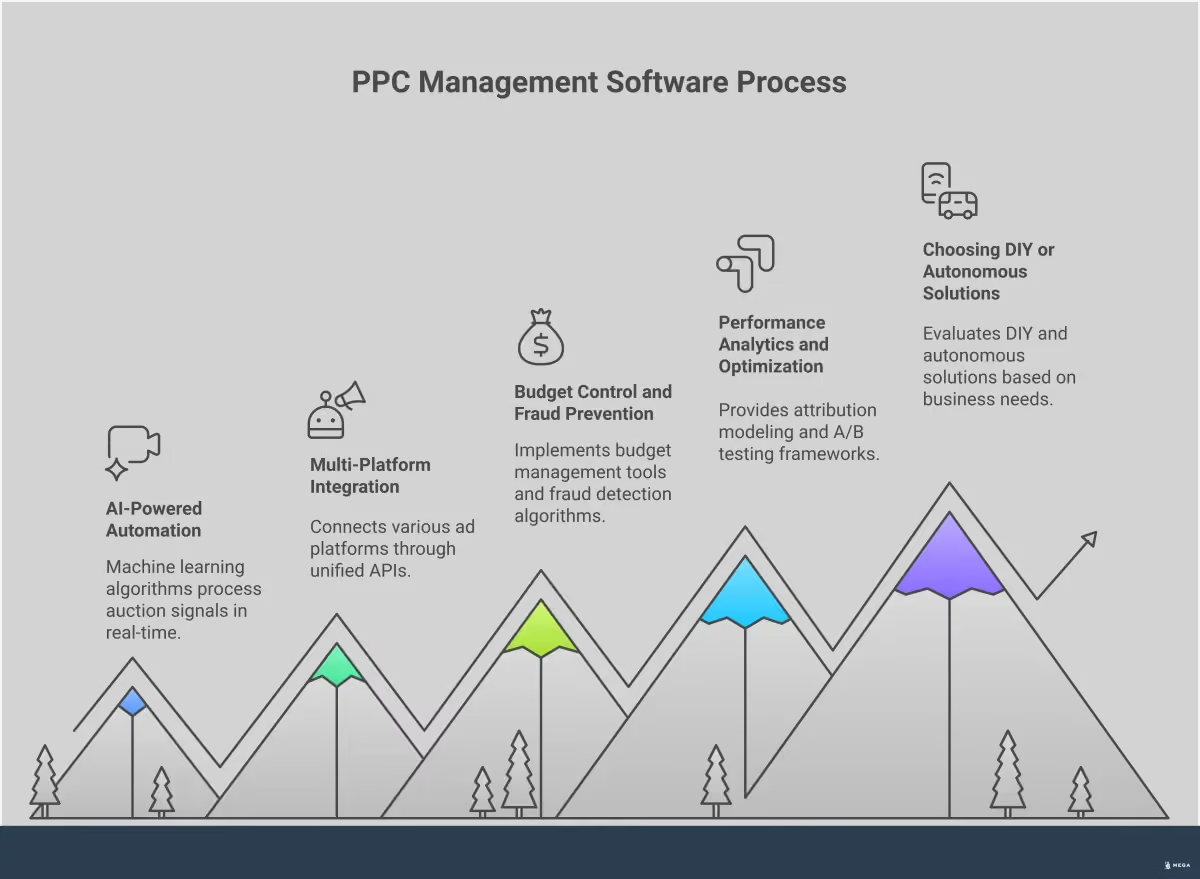
AI-Powered Campaign Automation
The most powerful PPC tools use automation and AI to handle the time-consuming parts of campaign management. This isn't just about scheduling ads. It's about having a system that can monitor performance, identify opportunities, and even implement changes for you. As Optmyzr notes, top software uses automation to "keep an eye on campaigns, find ways to improve them, and set up safety measures." This allows you to focus on strategy instead of getting lost in manual adjustments. A platform with a reliable AI marketing engine can act as a co-pilot, ensuring your campaigns are always running efficiently.
Support for All Your Ad Channels
Your customers are active on more than just one platform, and your advertising should reflect that. A key feature of effective PPC software is the ability to manage campaigns across multiple channels from a single dashboard. Whether you're running ads on Google, Meta, LinkedIn, or TikTok, a centralized platform saves you from having to learn and manage several different ad managers. Optmyzr, for example, helps advertisers manage spend on "Google Ads, Microsoft Ads, Amazon Ads, Meta Ads, and LinkedIn Ads." This integration is crucial for creating a cohesive omnichannel marketing strategy and getting a clear view of your overall performance.
Smart Bidding and Budget Controls
For small businesses, managing a PPC budget is one of the most critical and challenging tasks. The right software provides robust tools to control your spending and maximize your return. Look for features like automated budget allocation, which shifts funds to your best-performing campaigns, and smart bidding controls that adjust bids in real time based on the likelihood of a conversion. As one expert points out, "budget management is one of the most challenging aspects of PPC advertising" for small businesses. Good software removes the guesswork and helps prevent costly mistakes, ensuring your ad spend is always working as hard as possible.
Tools for Ad Testing and Optimization
Finding the right ad copy and imagery is essential for a successful campaign, but it often requires experimentation. PPC management software should include tools that simplify A/B testing for headlines, descriptions, and visuals. Instead of manually creating and tracking dozens of ad variations, the software can automate the process and provide clear data on which versions perform best. Tools like Adalysis are often recommended because they offer strong features for data-driven analysis and optimization. This allows you to continuously refine your messaging and improve your click-through and conversion rates without a massive time investment.
Clear Performance Analytics and Reporting
Data is only useful if you can understand it. A top-tier PPC platform will translate raw performance numbers into clear, actionable insights. Instead of just showing you clicks and impressions, it should offer customizable dashboards and automated reports that highlight key trends and opportunities. Optmyzr, for instance, provides tools for "creating reports fast" and "quickly checking account health." This feature is vital for business owners who need to understand their return on ad spend (ROAS) and make informed decisions without needing to be a data analyst. Clear reporting helps you see what’s working and where you can improve.
Click Fraud Prevention and Quality Control
Click fraud can drain your advertising budget by charging you for clicks from bots or other invalid sources. It's a significant problem that can quietly undermine your campaign's effectiveness. Quality PPC management software often includes built-in fraud prevention features to protect your investment. As TrafficGuard explains, using specialized software "can stop this fraud and make your ads more effective." These tools monitor your traffic for suspicious activity and block invalid clicks before they cost you money. This ensures your budget is spent reaching real, potential customers, which is especially important for businesses with limited ad spend.
How AI and Automation Are Reshaping PPC Management
The role of artificial intelligence in pay-per-click advertising has moved far beyond simple task automation. While early tools focused on automating repetitive work, modern platforms now use AI to handle complex strategy, creative development, and real-time optimization. This shift is fundamentally changing how businesses approach paid ads, making high-level campaign management more accessible.
Instead of just setting rules for bids, marketers can now use systems that analyze market trends, predict user behavior, and make strategic decisions on their own. This allows for a more dynamic and responsive approach to PPC. For small businesses and startups, this means gaining access to a level of optimization that was once only possible with large teams and budgets. The focus is shifting from manual campaign tweaks to overseeing an intelligent system that executes a growth strategy for you.
The Role of Automation in Modern PPC
Modern automation is about more than just scheduling ads or pausing underperforming keywords. The most effective PPC tools now use AI to handle the time-consuming parts of campaign management, freeing you to concentrate on your overall business strategy. Instead of spending hours on manual bid adjustments and compiling performance reports, you can rely on an intelligent system to manage these repetitive tasks. This shift allows you to move from being a hands-on campaign technician to a strategic overseer. The software analyzes market trends and performance data in real time, making smarter decisions faster than a human ever could. This means your campaigns are continuously optimized, even when you're focused on other areas of your business.
Autonomous Execution vs. Manual Control
The biggest change in PPC management is the move from manual control to autonomous execution. Traditional software often acts as a copilot, where AI provides suggestions and automates specific tasks, but the marketer remains in the driver's seat. For example, a tool might recommend new keywords or flag a low-performing ad, but you still have to approve and implement the changes. This approach helps experienced marketers work more efficiently but still requires significant hands-on management.
In contrast, autonomous platforms act as the pilot. They don't just offer suggestions; they develop a strategy and execute it. An autonomous agent can identify an opportunity, reallocate the budget, launch a new campaign, and create the ads without needing manual input for each step. This is a true "set it and forget it" model, where the AI handles the day-to-day operations to achieve the goals you've defined.
Automating Bids and Optimizing Budgets
One of the most powerful applications of AI in PPC is in bidding and budget allocation. AI algorithms can analyze thousands of signals in real time—like device, location, time of day, and user intent—to determine the optimal bid for every single auction. This process, often called smart bidding, is far more precise than a human could ever be.
This automation saves an incredible amount of time, but its real value is in performance. By constantly adjusting bids based on the likelihood of a conversion, AI ensures your budget is spent as effectively as possible. It can automatically shift funds away from underperforming campaigns and toward those delivering the best return on ad spend (ROAS), maximizing your overall results without constant monitoring.
Generating and Testing Ad Creative with AI
AI is also transforming the creative side of advertising. Instead of relying on a team to brainstorm and design every ad variation, AI-powered tools can generate compelling ad copy, headlines, and even images. These platforms can analyze top-performing ads across your industry to identify patterns and create new assets that are likely to resonate with your audience.
This capability allows for A/B testing at a massive scale. An AI system can create hundreds of ad variations and test them across different audience segments to find the winning combinations of text, visuals, and calls to action. Based on performance data, the AI provides actionable insights and automatically directs more budget toward the ads that drive the best results, continuously refining your campaign's creative effectiveness.
Limitations and Considerations for Automation
The biggest change in PPC management is the shift from manual control to autonomous execution. Traditional software often acts as a copilot, where AI provides suggestions and automates specific tasks, but the marketer remains in the driver's seat. This model is designed to make an experienced advertiser more efficient by handling repetitive work and flagging opportunities. However, it still requires significant hands-on management to analyze the data, approve recommendations, and implement changes. While this approach is helpful, it assumes you have the time and expertise to actively manage your campaigns and make the final strategic calls.
In contrast, autonomous platforms act as the pilot. They don't just offer suggestions; they develop a strategy and execute it to meet your business goals. An autonomous agent can identify an opportunity, reallocate the budget, launch a new campaign, and create the ads without needing manual input for each step. This form of marketing automation is ideal for small business owners who need expert-level results without the time commitment. You define the high-level objectives, and the AI handles the complex, day-to-day execution, effectively acting as your dedicated campaign manager.
Using Native Platform Automation
Ad platforms like Google and Meta offer their own powerful automation tools, such as Performance Max and Advantage+ campaigns. These native solutions are effective at optimizing your spend within their own ecosystem because they have direct access to user data. However, their primary goal is to keep your ad budget on their platform. This creates a siloed approach where Google’s AI has no insight into what’s performing well on Meta, and vice versa. This can lead to a fragmented strategy and inefficient spending, as you can't see the complete picture of your marketing efforts.
Your customers are active on more than just one platform, and your advertising should reflect that. A key feature of effective PPC software is the ability to manage campaigns across multiple channels from a single dashboard. This integration is crucial for creating a cohesive omnichannel strategy and getting a clear view of your overall performance. It allows you to allocate your budget based on what’s driving results across your entire marketing mix, not just within one platform. This prevents costly mistakes and ensures your ad spend is always working as hard as possible to grow your business.
Understanding PPC Software Pricing and Value
The price tag on a PPC tool is just the starting point. True value comes from understanding what you get for your money and how it aligns with your business goals and resources. A cheap tool that requires hours of your time every week might be more "expensive" in the long run than a higher-priced solution that runs on its own. This section breaks down the different pricing models and factors to consider so you can find a tool that fits your budget and delivers real results.
Subscription vs. Percentage-of-Spend Pricing
Most software platforms use a subscription model, offering a predictable flat fee each month or year. This makes budgeting straightforward, which is a huge plus for small businesses. On the other hand, many traditional marketing agencies use a percentage-based model, where their fee is a cut of your total ad spend. While this can seem aligned with performance, costs can quickly spiral as your campaigns scale. The dynamic nature of PPC pricing means that as competition increases, a percentage-based fee can eat into your returns. For most startups and SMBs, a transparent, flat-rate subscription provides more stability and control over marketing expenses.
Finding a Plan That Scales With You
When you're looking at subscription tools, you'll almost always find different pricing tiers. A basic plan might seem like a bargain, but it could be missing the essential features you need to actually succeed, like advanced automation or detailed reporting. Before you commit, look closely at what each tier includes. Think about your future needs, not just your current ones. Will this tool be able to support you as your business grows, or will you be forced into an expensive upgrade just to access a critical function? Many PPC tools help businesses save time by automating tasks, but sometimes the most impactful automation features are reserved for the highest-priced plans. Look for a solution that provides the core functionality you need without forcing you up a steep pricing ladder.
Calculating the Total Cost of Ownership
The monthly subscription fee is only one part of the equation. To understand the true cost of a PPC tool, you need to consider the Total Cost of Ownership (TCO). This includes the time you or your team will spend learning the platform and managing campaigns. If a tool is complex, that's hours of work that could have been spent on other parts of your business. Other factors that influence the overall cost include campaign complexity and the need for specialized expertise. A lower-priced DIY tool might require you to hire a specialist to run it effectively, completely changing the cost calculation. A platform with a clear, all-inclusive price gives you a much more accurate picture of your investment from day one.
Typical Costs for PPC Management
The cost of PPC management can range from a few hundred dollars to tens of thousands per month. This wide spectrum exists because your total cost is a mix of your actual ad spend and the fee for the software or service managing it. According to industry data, companies typically spend between $500 and $20,000 monthly, with the final number depending on campaign volume and management fees. For a small business, this variability can make budgeting difficult. A flat-rate subscription model, common with software platforms, offers predictable monthly costs. In contrast, an agency that charges a percentage of your ad spend can become more expensive as your budget grows, creating a less stable financial picture and making it harder to calculate your true return on investment.
DIY Software vs. Full-Service Solutions
Your choice in PPC management often comes down to two paths: do-it-yourself (DIY) tools or full-service solutions. DIY platforms give you the features to manage campaigns, but you are in the driver's seat. This requires time, expertise, and a willingness to stay on top of constant platform changes. Full-service solutions, like a traditional agency or an autonomous AI agent, handle the strategy and execution for you. Agencies can deliver great results but often come with a high price tag. This is where a new model emerges. Platforms like MEGA AI offer a "service-as-a-software" approach, using AI-driven recommendations and autonomous execution to deliver agency-level management at a predictable software price. This hybrid model gives you the best of both worlds: expert-level management without the agency overhead.
How to Find the Right PPC Software for Your Business
Choosing the right PPC software isn't about finding the single "best" platform; it's about finding the one that best fits your business's unique needs. A startup founder with a small team has different priorities than a marketing manager at an established e-commerce brand. Your budget, team size, technical expertise, and growth goals all play a role in determining the ideal solution.
The market is generally split between three categories. First, you have DIY tools, which are affordable but require you to have the time and knowledge to manage campaigns yourself. On the other end are traditional marketing agencies, which offer full-service management but come with a high price tag and often opaque pricing. A third category has emerged to fill the gap: AI-powered platforms that offer autonomous, full-service execution without the agency overhead. Understanding where your business fits helps you narrow down the options and find a tool that will support your growth instead of creating more work. Before you start comparing features, take a moment to assess your internal resources. How much time can you realistically dedicate to managing campaigns each week? What is your team's current level of PPC expertise? Answering these questions will point you toward the right category of software for your specific situation.
Choosing a Tool for Startups
If you're a founder or part of a small startup team, your most valuable resource is time. You need a solution that delivers results quickly without a steep learning curve. While your existing marketing platform might have basic ad features, specialized PPC tools offer the advanced capabilities needed for real growth. Look for software that automates the heavy lifting—like campaign setup, bidding, and optimization. The ideal tool for a startup acts less like software you have to manage and more like an extension of your team, allowing you to focus on your core business while your ad campaigns run efficiently in the background.
Choosing a Tool for Small to Medium Businesses
For SMBs, effective budget management is critical. You need to make every dollar of your ad spend count, but you may not have the resources for a dedicated PPC specialist. The right software can help you overcome common PPC management challenges by providing clear insights into what's working and what isn't. Look for platforms with strong reporting features, automated budget allocation, and performance-based bid adjustments. These features ensure your money is directed toward your most profitable campaigns, helping you achieve a higher return on investment without the high cost of a traditional agency.
Choosing a Tool for Local Service Businesses
Local businesses need to attract customers in a specific geographic area, and their marketing budgets are often tight. Running a successful small business PPC campaign requires constant attention, which is a challenge when you're also running the day-to-day operations. The best software for a local business simplifies campaign management and protects your investment. Features like automated ad scheduling for business hours, location-based targeting, and click fraud detection are essential. A reliable tool can help you compete with larger companies in your area by ensuring your ads are seen by the right local customers at the right time.
Choosing a Tool for E-commerce and Retail
Managing PPC for an e-commerce store or a business with multiple locations introduces a new level of complexity. You might be dealing with thousands of products, different promotions for each location, and intense competition. This is where AI-powered e-commerce PPC management tools become invaluable. Look for platforms that can automate ad creation for your entire product catalog, manage bids at a granular level, and optimize campaigns across different channels and locations. The right software should be able to handle this scale, allowing you to efficiently manage complex campaigns that drive sales both online and in-store.
What Are the Benefits of PPC Management Software?
Pay-per-click (PPC) advertising is a powerful way to reach new customers, but managing campaigns can quickly become complex and time-consuming. This is where PPC management software comes in. These tools are designed to streamline your workflow, provide deeper insights, and help you get more from your ad spend. For small businesses and startups, using the right software can be the difference between a campaign that breaks even and one that drives significant growth. By handling the heavy lifting of campaign monitoring, bidding, and reporting, these platforms allow you to focus on the bigger picture: your business strategy. The core advantages generally fall into four main areas: saving time, improving results, controlling your budget, and making smarter decisions.
Save Time Through Campaign Automation
One of the most immediate benefits of PPC software is the amount of time it saves. Manually adjusting bids, pausing underperforming ads, and generating reports across multiple platforms can consume your entire day. PPC automation tools handle these repetitive tasks for you. You can set up rules to automatically adjust bids based on performance, get alerts for significant changes, and schedule reports to be sent directly to your inbox. This frees you and your team to concentrate on strategic planning, creative development, and analyzing the results, rather than getting bogged down in the day-to-day mechanics of campaign management.
Get Better Performance and ROI
PPC management software is built to help you get better results from your advertising budget. By providing advanced analytics and optimization suggestions, these tools move you beyond guesswork and toward data-driven decisions. They help you identify your most profitable keywords, target audiences, and ad creatives, allowing you to focus your resources where they will have the greatest impact. Many platforms use algorithms to suggest bid adjustments and other optimizations that can lead to higher click-through rates, more conversions, and a lower cost per acquisition. Ultimately, these improvements contribute directly to a stronger return on investment (ROI) for your campaigns.
Maintain Full Control Over Your Budget
For many small businesses, budget management is one of the most stressful parts of running PPC campaigns. PPC software offers greater control and visibility over your ad spend. You can set daily or monthly budget caps, automatically pause campaigns that are overspending, and reallocate funds from low-performing ads to your top performers. Some tools also offer features like click fraud detection, which helps ensure your budget is being spent on real, potential customers, not bots. This level of control prevents costly mistakes and helps you make every dollar in your advertising budget count.
Make Data-Driven Decisions with Confidence
Ad platforms like Google and Meta provide a massive amount of data, but it can be difficult to sort through and find actionable insights. PPC management software consolidates data from all your channels into a single, easy-to-use dashboard. It visualizes trends and performance metrics in a way that makes sense, helping you understand what’s working and why. With clearer reporting, you can identify opportunities for growth, diagnose problems in your campaigns, and make strategic adjustments with confidence. Reviewing PPC case studies shows how businesses use these insights to overcome challenges and achieve their marketing goals.
What Do User Reviews and Performance Data Reveal?
Choosing the right PPC software involves more than just comparing feature lists. You need to understand how a platform performs in the real world for businesses like yours. User reviews, case studies, and performance data provide a clearer picture of what you can expect. While one tool might look great on paper, feedback from actual customers reveals its true strengths and weaknesses, from ease of use to the quality of customer support. Looking at this data helps you move beyond marketing claims and assess whether a tool will genuinely save you time and improve your campaign results.
Common Themes in User Feedback
User reviews are an invaluable resource for understanding the day-to-day experience of a PPC platform. They often highlight specific features that make a real difference. For instance, users frequently praise tools for their ability to automate repetitive tasks, which frees up time for more strategic work. This feedback can also reveal a tool’s learning curve. Some platforms are designed for simplicity and are great for beginners, while others offer deep customization that appeals to experienced PPC managers. Reading through this common feedback helps you find a tool that matches your team's skill level and workflow.
Reported Impact on Performance
Ultimately, you’re investing in PPC software to get better results. Look for platforms that can point to concrete performance improvements for their customers. Many companies share PPC case studies that detail how they helped a business overcome challenges and achieve goals like a higher return on ad spend (ROAS) or a lower cost per acquisition. Pay attention to tools that use AI and machine learning to provide actionable recommendations for optimizing your campaigns. This data-driven approach is often what separates a good tool from a great one, as it helps you make smarter decisions that directly impact your bottom line.
The Quality of Customer Support and Training
When you’re managing a significant ad budget, you can’t afford to have your questions go unanswered. The quality of a platform’s customer support is critical. Check if a provider offers responsive support through channels that work for you, whether it's live chat, email, or phone. Beyond direct support, look at the available learning resources. A comprehensive knowledge base, video tutorials, and webinars can help you get the most out of the software. Some solutions, like MEGA AI's Paid Ads agent, offer a fully managed service, giving you access to expertise without the steep learning curve.
How Reliable Are These Platforms?
Your PPC software needs to integrate smoothly with the ad platforms you use and operate without technical issues. Before committing, verify that the tool supports all the channels central to your strategy, such as Google Ads, Meta, TikTok, and LinkedIn. Platform reliability is also key; you need a system that is stable and won't cause disruptions to your live campaigns. The complexity of your campaigns and the size of your business can also influence which tool is the right fit. A platform built for a large enterprise may be overly complicated for a small local business, so find one that aligns with your operational needs.
Questions to Ask Before Choosing Your PPC Software
Choosing the right PPC software is a critical decision that impacts your budget, time, and results. Before you commit to a platform, it’s important to look inward at your own business needs and goals. Answering a few key questions can provide the clarity you need to select a tool that not only solves your current problems but also supports your future growth. Here’s what to consider.
What Are Your Biggest PPC Challenges?
First, get specific about what isn’t working with your current PPC process. Are you struggling to manage your budget effectively across different campaigns? Is the time commitment of daily monitoring and optimization pulling you away from other business priorities? For many small businesses, the biggest hurdles are a lack of time and the specialized expertise needed to drive results. Pinpointing your primary challenges—whether it's budget, time, or performance—helps you focus on software that offers a direct solution, such as better automation or more hands-on management.
Which Platforms Do You Need to Integrate?
Your PPC software should work where you work. Make a list of all the ad platforms you currently use, like Google, Meta, and LinkedIn, as well as any you plan to test in the future. A truly effective tool needs to integrate seamlessly with all of them. Without broad support for different digital advertising platforms, you risk creating data silos and adding complexity to your workflow. Ensure any potential software can centralize your campaigns, providing a single source of truth for performance data and making cross-channel management much simpler.
How Much Support and Training Will You Need?
A powerful platform is only valuable if your team can use it confidently. Be realistic about your capacity for learning a new system. Do you have team members who can dedicate time to self-service knowledge bases and video tutorials, or would you benefit more from personalized onboarding and responsive customer support? Some tools are designed for experts, while others prioritize a simple user experience and hands-on help. Your choice should align with your team’s technical comfort level and the amount of customer support you anticipate needing to get the most out of your investment.
Will This Software Support Your Future Growth?
The right software shouldn't just solve today's problems; it should be a partner for future growth. As your business expands, your campaign complexity and ad spend will likely increase. Can the software you're considering scale with you? Examine the different pricing tiers and feature sets to understand how the tool accommodates larger budgets and more sophisticated strategies. Choosing a scalable PPC management solution from the start saves you from a disruptive and costly migration process later on, ensuring your tool can support your ambitions for years to come.