
Running a scan with an SEO tool can feel productive, but it often leaves you with a long, intimidating to-do list and no extra time to tackle it. An automated SEO audit is excellent at identifying problems—like slow page speeds or broken links—but the report itself doesn’t fix them. For a busy business owner, the real challenge isn’t just finding the issues; it’s getting them resolved without derailing your entire week. This guide explores the top tools for diagnosing your website’s health. We’ll also look beyond simple reports to discuss solutions that actively help you solve them.
Key Takeaways
- Get a clear SEO roadmap without the guesswork: An automated audit is the fastest way for a small business to understand its website’s health, identifying specific technical errors and content opportunities so you can stop guessing and start improving.
- Focus on actionable reports over raw data: A useful audit doesn’t just list problems; it explains them and provides a prioritized to-do list. Look for solutions that translate complex data into clear, step-by-step instructions you can follow.
- Choose execution over simple diagnosis: While tools can identify issues, the real value comes from getting the work done. Consider a solution that not only runs the audit but also autonomously implements the fixes, turning your report into tangible results without adding to your workload.
What Is an Automated SEO Audit?
Think of an automated SEO audit as a comprehensive health checkup for your website. It uses software to systematically scan your site and identify technical issues, content gaps, and other problems that could prevent you from showing up in search engine results. An audit gives you a clear picture of your website’s current performance and provides a starting point for making improvements.
Instead of manually checking hundreds of pages for dozens of potential issues, an automated audit does the heavy lifting for you. It analyzes your site against established search engine optimization (SEO) best practices to find what’s working and what needs to be fixed. For a small business owner, this process is the most efficient way to understand how search engines like Google see your website and what you can do to improve your visibility.
How Do Automated SEO Audits Work?
An automated SEO audit works by using a program called a “crawler” or “bot” to explore your website, much like Google’s own bots do. You typically start by entering your website’s URL into the audit tool. The crawler then navigates through all your pages, following links to discover every piece of content on your site.
As it moves through your website, the crawler collects data on hundreds of different SEO factors. It checks your site’s technical foundation, analyzes your content, and examines how your pages are structured and linked together. Once the scan is complete, the software compiles this data into a detailed report that highlights errors, warnings, and opportunities for improvement. This report serves as a roadmap, showing you exactly where to focus your efforts.
What Does an Automated Audit Actually Check?
A thorough automated audit examines your website from multiple angles to get a complete view of its SEO health. While every tool is different, most will analyze four critical areas. The first is technical health, which includes checking for issues like slow page load speed, broken links, and problems that might prevent search engines from crawling your site correctly.
Next, it looks at on-page SEO, which involves evaluating the content on your actual pages. The audit checks for optimized title tags, meta descriptions, proper heading structure, and relevant keyword usage. It also assesses your site structure, making sure your website is easy for both users and search engines to follow. Finally, many audits provide insight into off-page signals, such as the number and quality of other websites linking back to yours.
Technical Health and Site Speed
The first area an audit investigates is your site's technical foundation. This involves checking for anything that could make it difficult for search engines to find, crawl, and index your pages. Common issues include slow page load speeds, which can frustrate visitors and cause them to leave, and broken links that lead to dead ends. The audit also looks for problems with your site’s crawlability, such as incorrect settings in your robots.txt file or a missing sitemap. A technically sound website provides a smooth experience for both users and search engine bots, which is the first step toward better visibility.
On-Page Content and Keywords
Next, an audit evaluates your on-page SEO, which is all about the content on your website. It checks if your pages have clear, descriptive title tags and meta descriptions that accurately summarize what the page is about. It also analyzes your use of headings (like H1s and H2s) to ensure your content is well-structured and easy to read. A key part of this analysis is checking for relevant keyword usage, making sure the terms your customers are searching for are present in your content. This helps search engines understand the purpose of each page and match it to the right search queries.
Backlink Profile Health
An audit also provides a look at your off-page signals, primarily your backlink profile. Backlinks are links from other websites to yours, and search engines view them as votes of confidence. However, not all votes are equal. An audit examines the number and, more importantly, the quality of the sites linking to you. It helps identify valuable links from authoritative sources while also flagging potentially harmful or "toxic" links from spammy websites. A strong, clean backlink profile signals to search engines that your site is a trustworthy resource, which can significantly influence your rankings.
Off-Page Factors like Google Business Profile
For local businesses, an automated audit often extends beyond the website itself to look at your broader online presence. A critical piece of this is your Google Business Profile (GBP). The audit can check for consistency in your business name, address, and phone number (NAP) across the web, which is a key local ranking factor. It can also identify opportunities to improve your profile, such as adding photos, responding to reviews, or using Google Posts. Optimizing your GBP is one of the most effective ways to appear in local map results and attract nearby customers.
Compliance with Search Engine Guidelines
Finally, a good audit ensures your website adheres to the latest search engine guidelines. Search engines like Google are constantly updating their algorithms to provide better results, and tactics that worked years ago may now be ineffective or even harmful. An audit checks that your site follows current best practices, such as demonstrating Experience, Expertise, Authoritativeness, and Trustworthiness (E-E-A-T). This is where an AI-driven platform like MEGA AI becomes invaluable, as its SEO tools are continuously updated to re-optimize content after a Google update, keeping your strategy aligned with what works now.
Automated SEO Audits: Fact vs. Fiction
One common myth is that an automated audit is a one-and-done fix for your SEO. In reality, an audit is a diagnostic tool, not the cure itself. It tells you what’s wrong, but the real work comes from implementing the recommended fixes and continuously monitoring your site’s health. SEO is an ongoing process, not a single project.
Another misconception is that automation can completely replace human strategy. While an audit can identify a technical error, it lacks the strategic thinking needed to prioritize fixes or develop a competitive content plan. The most effective SEO strategies use automated tools to gather data and insights, which then inform a thoughtful, human-guided plan of action. An audit shows you the problems; a strategy tells you which ones to solve first and how to do it. For more details, see our guide on AI SEO tools guide.
Why Your Small Business Needs an Automated SEO Audit
As a small business owner, you’re already wearing multiple hats. Acting as your own marketer, salesperson, and accountant doesn’t leave much time for becoming a technical SEO expert. Yet, a healthy website is the foundation of your online presence. An automated SEO audit acts as your digital mechanic, running a complete diagnostic on your site to find issues that could be hurting your search engine rankings and turning away potential customers.
Instead of spending weeks trying to manually check every link, image, and line of code, an automated audit gives you a comprehensive report in minutes. It pinpoints problems with site speed, mobile-friendliness, broken pages, and more. This isn’t just about finding errors; it’s about getting a clear, prioritized roadmap for improvements that will have the biggest impact. For a small business, this efficiency is a game-changer, allowing you to focus your limited time and resources on fixes that actually drive growth. It’s the first step toward a more strategic and less stressful approach to search engine optimization.
Free Up Your Time and Budget
Manually auditing a website is a massive undertaking. It involves checking hundreds of pages for dozens of potential issues, a process that can take days or even weeks. For a small business, that’s time you simply don’t have. An automated audit condenses this entire process into a few minutes. As the team at SEOptimer notes, these tools help you “save a lot of time by doing website audits automatically that would otherwise take many hours to do by hand.” This frees you up to work on other critical parts of your business, confident that your website’s health is being monitored without draining your most valuable resource: your time.
Agency-Level SEO Without the Agency Price Tag
Hiring an SEO agency for a full technical audit can be a significant investment, often costing thousands of dollars. Automated audit tools put that same power in your hands for a fraction of the price. They crawl your site just like a search engine would, identifying technical issues and providing the kind of in-depth analysis that was once only available to large companies with big marketing budgets. Many tools offer a free version to give you a quick health check, with paid options for a more complete analysis. This makes it possible for any small business to access powerful data and make informed decisions to improve their online performance without breaking the bank. For more details, see our guide on technical SEO agency vs AI.
You Don't Need to Be an SEO Pro
The thought of digging into site structure, meta tags, and crawl errors can be intimidating if you’re not a developer. Thankfully, automated SEO audit tools are designed for everyone, not just experts. They translate complex technical data into easy-to-understand reports, often using scores and color-coded lists to highlight what needs attention. According to Semrush, their tool is “useful for both beginners and small business owners who want a simple assessment, as well as more experienced marketers.” These platforms provide clear, actionable recommendations for each issue they find, telling you not only what’s wrong but also how to fix it, empowering you to improve your site’s health on your own.
What to Look For in an Automated SEO Audit Tool
Choosing the right automated SEO audit solution can feel overwhelming, but it comes down to a few key features. The goal isn’t just to find a tool that spits out data; it’s to find a partner that helps you understand your website’s health and gives you a clear path to improve it. A great solution should feel less like a complex piece of software and more like an expert on your team, guiding you through the process.
As you evaluate your options, think about what you actually need to get results. For most small businesses, that means getting a deep analysis without the technical jargon, clear instructions on what to do next, and a system that works with the tools you already use. The best solutions save you time by not only identifying problems but also helping you prioritize and solve them efficiently. Instead of just flagging issues, a top-tier system will show you the importance of each fix so you know where to focus your efforts. Look for a system that provides ongoing value, keeping an eye on your site’s performance so you can focus on running your business.
Go Beyond Surface-Level Checks
A solid automated audit goes far beyond basic keyword tracking. It should perform a deep dive into your website’s technical SEO, which is the foundation of how search engines see your site. This includes checking for issues with site speed, mobile-friendliness, crawl errors that stop search engines from indexing your pages, and broken links. A comprehensive tool will scan every page to find these hidden problems that could be holding you back. The analysis should be thorough enough to give you a complete picture of your site’s health, ensuring no critical issue goes unnoticed.
Demand Clear Reports, Not Just Data
Data is useless without direction. A good audit tool won’t just hand you a long list of errors; it will generate clear reports that explain what the problems are and why they matter. Most importantly, it should provide actionable steps to fix them. Look for a solution that prioritizes issues, telling you what to tackle first for the biggest impact. This turns a confusing technical audit into a straightforward to-do list, empowering you to make meaningful improvements without needing to be an SEO expert. You should be able to understand the report and know exactly what your next steps are.
Make Sure It Connects with Your Existing Tools
Your SEO solution should work seamlessly with your existing website. The best systems offer easy platform integration with popular content management systems like WordPress, Shopify, or Webflow. This is crucial because it allows for a smoother workflow, from implementing technical fixes to updating content. A well-integrated tool can save you hours of manual work and prevent the technical headaches that come with trying to connect incompatible systems. Before committing to a tool, make sure it connects easily with the platform your business relies on every day.
Get Real-Time Monitoring and Alerts
SEO is not a one-and-done task. Your website’s health can change as you add new content, or as search engines update their algorithms. That’s why continuous, 24/7 monitoring is so important. An effective automated solution will constantly watch your site for new issues and send you alerts when something needs your attention. This proactive approach helps you fix problems before they can seriously impact your rankings. It acts as a security guard for your SEO, giving you peace of mind that your site remains in good technical shape over the long term.
Check for AI Search Readiness
The landscape of search is changing. It's no longer just about ranking on Google; people are increasingly turning to AI engines for answers, which means your website needs to be visible there, too. A traditional SEO audit might show you're doing well on Google, but you could be completely invisible to AI search. These new platforms look for different signals in your content, prioritizing clarity, factual accuracy, and well-structured information that can be easily cited. A forward-thinking audit tool should assess your site’s readiness for this new era of search, showing you what’s missing in your content that prevents AI from using it as a source.
Go Beyond a Simple Tool with MEGA AI
While standalone audit tools can give you a snapshot of your site’s health, they often leave you with a long to-do list and no clear way to get it done. For small businesses, that can mean more work, not less. MEGA AI offers a different approach. Instead of just another tool, you get an AI agent that handles your SEO from start to finish.
Our AI-driven SEO agent, Lindsay, doesn’t just run a report and walk away. She performs a comprehensive audit, identifies a strategy, and then gets to work executing the tasks needed to hit your goals. This is a fully managed solution designed for business owners who need agency-level results without the high cost or complexity. Lindsay integrates directly with your CMS, whether it’s WordPress, Shopify, or Webflow, to implement technical fixes, generate new content, and optimize existing pages. It’s an end-to-end system that covers everything from keyword research and technical audits to content maintenance and performance tracking, all running autonomously to grow your online presence.
How Lindsay Conducts a Full Technical Audit
Lindsay’s process begins with a deep technical audit to set a baseline for your website’s performance. This isn’t a surface-level scan. She dives into the critical elements that search engines use to rank your site, including site speed, crawl errors, indexability issues, and mobile-friendliness. Lindsay checks for problems like broken internal links, incorrect canonical tags, and missing XML sitemaps. Based on this analysis, she creates a prioritized task list. The key difference is that she doesn’t just hand you the list. Lindsay automatically starts implementing the fixes, working through the issues to build a stronger technical foundation for your website from day one.
Move Past Audits with Autonomous Optimization
An audit is just a starting point. True growth comes from continuous optimization, and that’s where Lindsay’s autonomous capabilities shine. After the initial audit and fixes, she works daily to improve your site. This includes generating new, keyword-optimized blog posts, updating existing content to improve its click-through rate, and building internal links to strengthen your site architecture. With Autopilot mode enabled, Lindsay functions like a dedicated member of your team, constantly finding and acting on opportunities for improvement. This moves you from a static, one-time audit to a dynamic, ongoing growth strategy. You can book a demo to see how this autonomous optimization works in real time.
Prepare for AI Search with LLM Placement
The way people find information online is changing. Search is moving beyond a list of blue links and into conversational AI answers and generative overviews. MEGA AI prepares your business for this shift with LLM Placement. This feature focuses on optimizing your content so your business shows up in answers from tools like ChatGPT and Google’s AI Overviews. Lindsay structures your content and data to be easily understood and cited by large language models. This ensures your business remains visible as search evolves, capturing traffic from these new zero-click search results. It’s a forward-thinking approach that goes beyond traditional SEO to future-proof your online presence.
How Do Other SEO Audit Tools Compare?
While an AI agent provides a complete, hands-off solution, many small businesses begin their SEO journey with standalone tools. These platforms can help you get a baseline understanding of your site’s health. Each tool offers a different approach, from simple, free reports to complex data analysis for marketing professionals. Here are a few popular options that businesses often consider when they need to run an initial website check.
SEOptimer: A Simple Start for Small Businesses
SEOptimer is a great starting point if you’re new to SEO. The platform is designed to be straightforward, allowing you to get a free website analysis just by entering your URL. It scans your site for common issues that could be holding back your search rankings and gives you a simple score. The report provides clear, step-by-step recommendations that are easy to follow, making it a useful tool for identifying quick fixes without overwhelming you with technical jargon. It’s a solid choice for a first look at your website’s performance.
Customizable Reporting and Lead Generation
SEOptimer also offers features designed to help you grow your business. You can create professional, white-label SEO reports that include your own company’s logo and colors, which is perfect for presenting findings to clients or stakeholders. Beyond reporting, the platform provides a powerful lead generation tool. You can embed an SEO audit form directly on your website, offering visitors a free site checkup. When a potential customer uses the tool, you capture their contact details, turning your website into a machine for attracting new business leads. This transforms the audit from a simple diagnostic check into an active part of your sales funnel.
Semrush: For All-in-One Marketing
For businesses looking for a tool that does more than just audits, Semrush is a comprehensive marketing platform. Its SEO Checker tool analyzes your website and provides an overall SEO score along with a prioritized list of issues to address. Because Semrush also includes features for keyword research, competitor analysis, and content marketing, it’s a solid choice for users who want to manage multiple aspects of their digital marketing strategy from a single dashboard. This all-in-one approach helps you see the bigger picture of your online presence beyond just technical fixes.
Free Checks and Social Media Integration
For businesses that want a quick, no-cost way to monitor their website, SEO Site Checkup offers a valuable starting point. The platform allows you to run a free checkup for your site once a day, giving you a regular snapshot of your SEO health without any financial commitment. This is perfect for identifying immediate issues or tracking the impact of recent changes. Beyond the standard technical checks, the tool also provides insight into your social media presence, analyzing how your brand is represented on major platforms. While social signals aren't a direct ranking factor, a strong social presence drives traffic and builds brand authority, which are key components of a healthy online ecosystem. This combination of free, regular audits and social media analysis makes it a practical tool for business owners who need a broad overview of their digital footprint.
Ahrefs: For Deep Technical and Backlink Analysis
Ahrefs is a powerful platform favored by many SEO experts for its in-depth data and advanced features. Its site audit tool is particularly strong at deep technical analysis, crawling your site to find a wide range of issues. Ahrefs excels at backlink analysis, which is a critical part of any thorough SEO audit. Its ability to check your site by its structure can help uncover problems that other, simpler tools might miss. This makes it ideal for those who are comfortable with data and want to perform a more granular investigation.
Moz Pro: For a User-Friendly, Comprehensive Suite
Moz Pro strikes a balance between powerful features and a user-friendly interface. It offers a comprehensive suite of tools that includes a site crawler to identify technical SEO issues, track keyword rankings, and analyze your backlink profile. Moz is also known for its educational resources, which help users understand the “why” behind its recommendations. This makes it a good fit for business owners who want to learn more about SEO as they work to improve their site. It empowers you to make informed decisions without needing to be a technical expert.
SEO Site Checkup: For AI Search Visibility
SEO Site Checkup is a tool built to help your business adapt to the rise of AI-driven search. It’s designed to improve your rankings on traditional search engines while also preparing you for newer AI platforms like ChatGPT and Gemini. The tool runs a deep technical audit, checking over 70 factors to find problems like slow page speeds or broken links. A key feature is its ability to track your visibility across six different AI engines, showing you how your brand appears in these new search environments. This is particularly useful for small business owners who need to stay current without becoming AI experts. You can get started with a free daily checkup to monitor your site’s health, making it an accessible way to keep up with changes in search.
What Fixes Can an Automated Audit Help You Make?
An automated SEO audit does more than just point out what’s broken. It gives you a clear, prioritized roadmap to improve your website’s health and performance. Think of it as a diagnostic check-up that not only identifies issues but also prescribes the exact fixes needed to get your site in top shape. From behind-the-scenes technical errors to on-page content improvements, a good audit provides the insights you need to make meaningful changes that attract more visitors from search engines. These fixes are foundational for building a strong online presence.
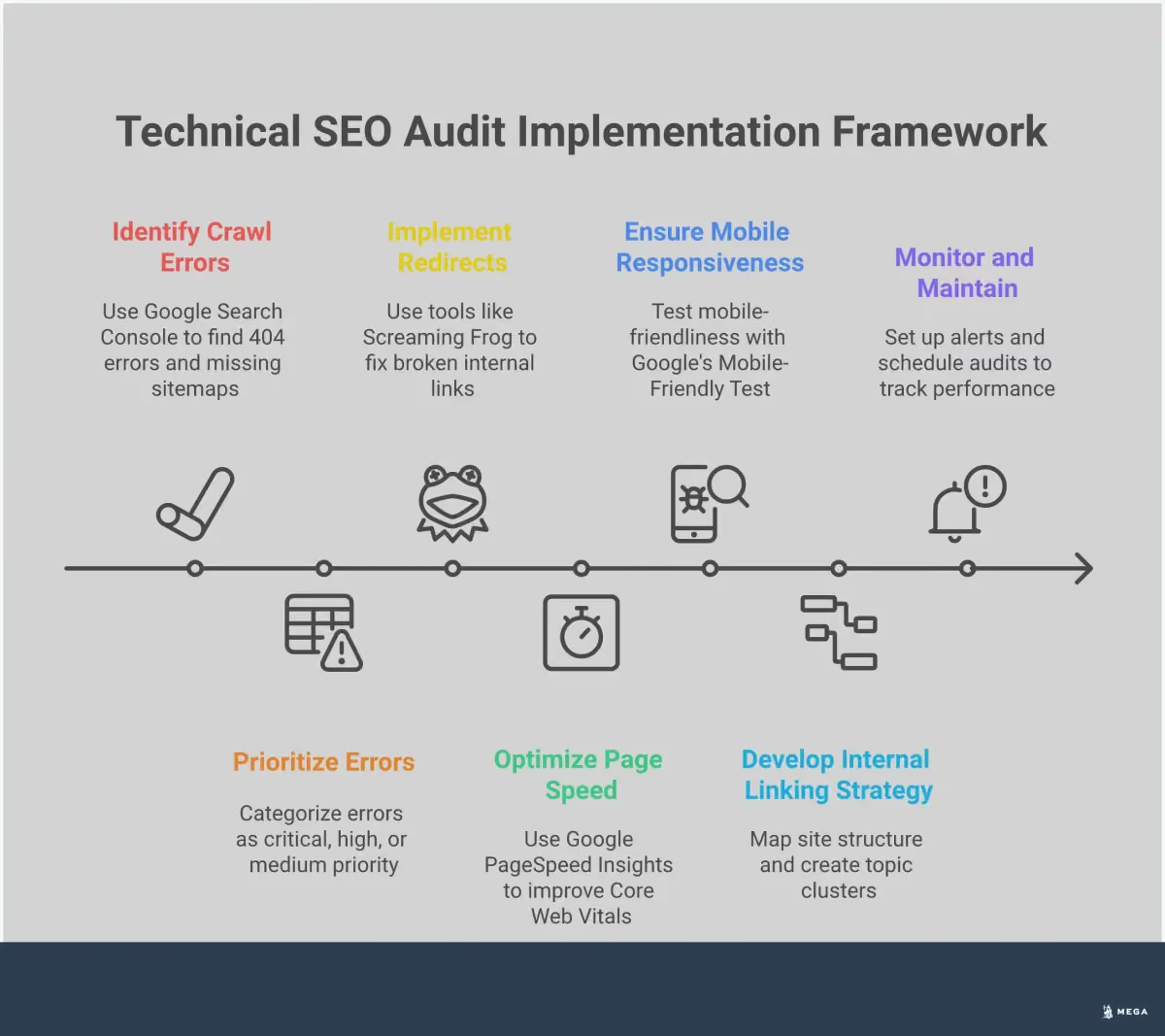
Speed Up Your Site and Resolve Technical Issues
One of the first things an automated audit examines is your website’s technical foundation. This includes crucial factors like your site’s loading speed, which heavily influences both user experience and search rankings. A slow site can frustrate visitors and cause them to leave before they even see what you offer. The audit will also check for crawlability issues, which are problems that prevent search engines from properly reading and indexing your pages. By identifying and fixing broken links, redirect errors, and other technical glitches, you ensure that both users and search engine bots can access your content without any trouble.
Optimize Your Content with Data-Driven Insights
A quality audit doesn’t just flag problems; it provides clear, step-by-step instructions on how to solve them. Instead of getting a confusing list of technical jargon, you receive actionable recommendations tailored to your site. For example, an audit might identify pages with thin content, missing meta descriptions, or titles that aren’t optimized for your target keywords. The report will then suggest specific improvements, like adding more relevant information or rewriting titles to be more compelling. This guidance makes it much easier to enhance your content in a way that directly supports your SEO goals.
Improve Your Mobile User Experience
With more people browsing on their phones than ever before, having a mobile-friendly website is non-negotiable. An automated audit will test how well your site performs on different devices, checking for issues like text that’s too small to read, buttons that are too close together, or content that doesn’t resize properly for smaller screens. Since Google prioritizes mobile-friendly sites in its search results, addressing these issues is essential for your visibility. The audit will pinpoint exactly where your mobile experience is falling short, allowing you to make the necessary adjustments to serve your on-the-go customers better. You can even run a quick check yourself with Google’s Mobile-Friendly Test.
Improve Your Site Structure and Internal Linking
How your pages are linked together plays a big role in how search engines understand your site’s hierarchy and importance. An automated audit analyzes your site’s structure and internal linking strategy. It can find “orphan pages” with no internal links pointing to them, making them nearly impossible for search engines to discover. It also helps you optimize how ranking power is distributed across your site. By creating a logical and strong internal linking structure, you guide both users and search engines to your most important content, which can improve your rankings for key topics.
Clean Up Your Backlink Profile
An automated audit acts like a background check for your website's reputation online. It examines your backlink profile—the collection of other websites that link to yours. Not all links are created equal. A link from a reputable industry blog is a great vote of confidence, but links from spammy or low-quality sites can actually hurt your credibility with search engines. An audit helps you check your backlinks to make sure they are helpful, not harmful. It flags these potentially toxic links, giving you a clear list of sites that could be dragging your rankings down. This allows you to clean up your profile by disavowing the harmful links, which is essentially telling Google to ignore them when evaluating your site.
Optimize for AI Search Engines
The landscape of search is changing quickly. It's no longer just about ranking on a list of Google results. With the rise of AI-powered search engines like ChatGPT and Google's AI Overviews, your business needs to be visible in conversational answers, not just on a results page. A modern SEO audit should check your readiness for this new environment. Even if your website ranks well on Google, it might be completely invisible to these AI tools if your content isn't structured correctly. An advanced audit can identify these gaps, ensuring your information is formatted in a way that large language models can easily digest and cite. This is crucial for future-proofing your online presence. For example, MEGA AI’s LLM Placement feature specifically optimizes your content to appear in these AI-generated answers, helping you capture traffic from the next generation of search.
Your First Automated Audit: What to Expect
Running your first automated SEO audit can feel a bit like getting a report card for your website. You’ll likely see a mix of good grades and areas that need improvement, and that’s completely normal. Very few websites are technically perfect. The goal isn’t to chase a flawless score but to get a clear, actionable roadmap for making your site more visible to search engines and friendlier for your visitors. An audit provides a crucial baseline, showing you exactly where your website stands right now in terms of technical health, on-page optimization, and overall performance.
From there, you can start making targeted improvements that help more customers find you. Instead of guessing what might be wrong, you get a data-driven list of opportunities. The report will likely highlight a few common issues that are easy to address, help you figure out which problems are most critical to tackle first, and give you all the information you need to create a sensible plan for moving forward. It transforms the abstract concept of “doing SEO” into a concrete set of tasks, giving you a clear starting point and a way to measure progress.
What Common Technical Issues Will You Find?
Your initial audit report will likely uncover a few common technical hiccups. Don’t be alarmed; most websites have them. You might see issues like slow page load speeds, which can cause visitors to leave before your content even appears. Other typical findings include broken internal links, missing page titles, or images without descriptive alt text. These elements might seem small, but they are important signals that help search engines understand and rank your content. A good audit tool will check for these on-page SEO factors and more, giving you a comprehensive list of what’s working and what needs a little attention.
How to Prioritize What to Fix First
Seeing a long list of issues can feel overwhelming, but you don’t have to fix everything at once. A quality audit report will categorize problems by severity, usually flagging them as critical errors, warnings, or notices. Start with the critical errors. These are often the most significant roadblocks preventing search engines from properly crawling and indexing your site. Things like crawl errors or incorrect uses of “noindex” tags can make your pages invisible to search. By focusing on these high-impact fixes first, you ensure your efforts are spent where they’ll make the biggest difference. This is where an AI-powered SEO agent excels, automatically identifying, prioritizing, and executing tasks for you.
How to Create a Realistic Timeline for Fixes
Once you know what to fix, the next step is to create a realistic timeline. SEO is a long-term strategy, not a one-and-done task. Some fixes, like updating a meta description, can be done in minutes. Others, such as a major site speed overhaul, might require more time and resources. Break the audit’s recommendations into a manageable action plan. You could group tasks by week or month, depending on your team’s capacity. The key is to make consistent progress. Tracking your SEO performance metrics over time will show you how these changes are positively impacting your traffic and rankings, turning your audit from a simple report into a powerful growth tool.
How Often Should You Run an Audit?
SEO isn’t a one-time project, so your audits shouldn’t be either. Your website is a living entity; you add new blog posts, update product pages, and make small design changes. At the same time, search engines are constantly refining their algorithms. An audit performed today could be outdated in a few months. Instead of thinking about a single, major audit, it’s more effective to adopt a mindset of continuous monitoring. An effective automated solution will constantly watch your site for new issues and send you alerts when something needs your attention. While a deep strategic review every quarter is a good practice, real-time monitoring helps you fix problems before they can seriously impact your rankings, making your SEO efforts proactive rather than reactive.
Automated vs. Manual Audits: What’s the Difference?
Understanding the distinction between an automated and a manual SEO audit helps you choose the right approach for your business. While both aim to improve your site’s performance, they get there in very different ways. A manual audit involves an SEO expert meticulously combing through your website, while an automated audit uses software to quickly scan for issues. For small businesses, automation offers a powerful starting point, but it’s important to know its limits and where human insight becomes essential. Let’s break down the key differences.
How Automation Delivers Speed and Scale
The biggest advantage of an automated audit is its efficiency. These tools can perform a comprehensive website analysis in minutes, a task that would take a person many hours to complete by hand. They crawl your entire site, checking for hundreds of potential SEO problems across technical health, content, and mobile-friendliness. This speed allows you to get a quick, high-level overview of your site’s performance without a significant investment of time or money. For a busy business owner, this means you can identify critical issues like slow load times or broken links almost instantly and start working on fixes right away.
What an Automated Audit Can't Tell You
Despite their speed, automated audits have limitations. They are excellent at identifying what is wrong but often fall short of explaining why it matters for your specific business or how to prioritize the fixes. These tools can follow a checklist, but they lack the strategic thinking to understand your unique audience, competitive landscape, or business goals. This can lead to generic, one-size-fits-all recommendations. A tool might flag a page for having a low word count, but it can’t tell you if that page is a simple contact form that doesn’t need more text. Relying solely on automation can miss the crucial context that drives real results.
Why Human Expertise Still Matters
This is where human expertise, or advanced AI that can replicate it, makes a difference. A seasoned SEO professional understands that SEO is ultimately about creating a better experience for people, not just checking boxes for a search engine. They bring strategic thinking, creativity, and a deep understanding of search intent to the table. An expert can look at the data from an audit and build a prioritized action plan that aligns with your business objectives. They can distinguish a critical error from a minor issue and find opportunities that a purely automated scan would overlook, ensuring your efforts are focused on what will truly move the needle.
Deep Analysis vs. Automated Reports
The core difference between a deep analysis and an automated report comes down to strategy versus data. An automated tool is fantastic at gathering data—it can quickly tell you that you have 50 broken links or that your page speed is slow. A deep analysis, however, tells you which of those 50 broken links are costing you the most valuable traffic and outlines a plan to improve page speed based on your specific website platform. It adds a layer of business context that a simple data report lacks, helping you understand not just what is broken, but what is most important to fix to achieve your goals.
Using AI Chatbots as a Middle Ground
If a basic automated report feels too shallow but a full manual audit is out of reach, AI chatbots offer a compelling middle ground. Using tools like ChatGPT, Perplexity, or Gemini, you can conduct a surprisingly effective SEO audit in under 30 minutes. Instead of just getting a static report, you can interact with the AI, ask follow-up questions, and request analysis on specific areas of your site. This approach combines the speed of automation with a layer of conversational analysis, allowing you to dig deeper into the data without needing to be a technical expert. It’s a practical way to get more context and build a more strategic to-do list.
Comparing ChatGPT, Perplexity, and Gemini
If you have access to multiple chatbots, it’s a good idea to run the same audit on each one. Each tool provides information in a different format, and using all three allows you to combine their strengths. ChatGPT typically gives a very detailed and extensive report, covering key areas like keyword strategy, meta tags, and content quality. Perplexity offers a much shorter, more concise summary, which is useful for a quick overview. Gemini’s report is similar in scope but not quite as detailed as ChatGPT’s, though it includes a handy feature that lets you export the results directly to your workspace, making it easier to create an action plan.
How to Measure Your Success After an Audit
An SEO audit is your roadmap for improvement, but the journey doesn’t end once you have the map. The real value comes from implementing the recommended fixes and then measuring the impact. Without tracking your progress, you’re essentially driving in the dark. Measuring success shows you what’s working, what isn’t, and proves the return on your investment of time and resources.
Think of it this way: the audit identifies the problems, the fixes are the solution, and the metrics are your report card. These numbers tell a clear story about how search engines and users are responding to the changes you’ve made. By focusing on a few key performance indicators (KPIs), you can see tangible proof that your efforts are leading to better visibility, more traffic, and ultimately, more business. Consistent monitoring helps you build on your successes and make smarter decisions for your website’s future. It turns SEO from a guessing game into a predictable growth strategy.
Monitor Changes in Organic Traffic and Rankings
The most direct way to see if your SEO efforts are paying off is by looking at your organic traffic. This metric tells you how many people are finding your website through search engines like Google, without clicking on an ad. After you’ve implemented fixes from your audit, you should see a steady, upward trend in visitors. You can easily track this in Google Analytics.
Alongside traffic, keep a close eye on your keyword rankings. An audit helps you refine your content and technical setup to better target specific search terms. As your site’s health improves, you should see your pages climb higher in the search results for your most important keywords. This increased visibility is what drives more organic traffic to your site.
Watch Your Technical SEO Health Score Improve
Many SEO platforms provide an overall health score that summarizes your site’s technical performance. This score is calculated by scanning for issues like broken links, slow page speeds, crawl errors, and missing meta tags. It’s a simple, high-level metric that gives you a quick snapshot of your website’s condition from a search engine’s perspective.
After your initial audit, this score serves as your baseline. As you work through the list of recommended fixes, you should run follow-up scans and watch this number improve. Seeing your score go from 60 to 90 is a clear, motivating indicator that you’re successfully resolving the technical problems that were holding your site back. This improved website health is a strong foundation for better rankings.
Watch Click-Through and User Engagement Rates
Getting to the first page of Google is a huge win, but you also need people to click on your listing. That’s where click-through rate (CTR) comes in. This metric measures the percentage of people who see your site in the search results and actually click on it. An audit often suggests improvements for your page titles and meta descriptions to make them more compelling. A rising CTR is a sign that these changes are working.
Once visitors are on your site, you want them to stick around. User engagement metrics like bounce rate and time on page tell you if your content is meeting their needs. By fixing issues like poor site navigation or slow load times, you create a better user experience, which encourages people to stay longer and explore more of your site.
Measure Page Load Speed and Mobile Performance
How quickly your website loads is more important than ever. It’s a direct ranking factor for Google and has a massive impact on user experience. If a page takes too long to load, most visitors will simply leave. An automated audit will almost always check your site speed and provide specific recommendations for improvement. You can use tools like Google’s PageSpeed Insights to check your performance.
Since most online searches now happen on mobile devices, your site must also be mobile-friendly. An audit will verify that your site is responsive and easy to use on a smaller screen. Improving both page speed and mobile performance creates a better experience for all users, which helps your site rank better and keeps potential customers engaged.
How to Choose the Right Automated SEO Solution
Picking the right automated SEO solution is about more than just finding a tool that spits out a report. It’s about finding a partner that fits your business goals, technical comfort level, and budget. For a small business owner, the right solution saves you time and provides clear, actionable direction—or even better, handles the actions for you.
When you start looking, you’ll find a wide range of options, from simple, low-cost site checkers to comprehensive platforms that cover every aspect of digital marketing. The key is to look past the feature list and think about what you actually need to get results. Do you have the time and expertise to implement the recommendations yourself, or do you need a solution that does the heavy lifting for you?
To make the right choice, focus on three key areas: the real cost and potential return, how well it works with your existing website, and whether it supports your long-term growth. Thinking through these points will help you find a solution that not only identifies problems but actively helps you solve them.
Align the Cost with Your Budget and ROI Goals
When evaluating any SEO solution, it’s easy to focus on the monthly price tag. Some tools are designed to be affordable for small businesses, while others are part of enterprise-level marketing suites with a much higher cost. But the sticker price is only part of the story. The real question to ask is what value you’re getting for your money. A cheap tool that gives you a list of problems you don’t have time to fix won’t deliver a positive return on investment.
Instead, think about the total cost in both money and time. A more comprehensive solution might have a higher monthly fee but could save you dozens of hours by automating fixes and content updates, leading to faster growth and more revenue.
Ensure It's Compatible with Your Platform
An SEO audit is only useful if you can easily implement its recommendations. That’s why platform compatibility is so important. Before you commit to a solution, make sure it integrates smoothly with your Content Management System (CMS), whether you use WordPress, Shopify, Webflow, or another platform. A solution that connects directly to your site can often apply technical fixes or post new content automatically, saving you from having to make manual updates.
The goal is to find a system that works with your existing setup, not one that forces you to become a part-time developer. Effortless integration, like the kind offered by MEGA AI’s SEO agent, means you can focus on your business while the technical details are handled for you.
Look for Reliable Support and Maintenance
An SEO audit isn’t a one-time event; it’s a snapshot of your site’s health at a specific moment. Search engine algorithms change, competitors update their strategies, and new content gets added to your site. Because of this, ongoing monitoring and maintenance are essential for long-term success. When choosing a solution, think about what happens after the initial audit.
Does the tool provide continuous monitoring and alerts for new issues? Or is it a one-and-done report? Many audit tools are part of larger SEO software packages, which can be useful if you plan to manage other SEO tasks yourself. Alternatively, a fully autonomous solution handles the ongoing maintenance for you, turning a single audit into a continuous cycle of improvement.