
AI tools are everywhere, creating a race to the bottom on price. This leaves agencies with a tough choice: be a strategic partner or a low-cost commodity producer. Trying to compete on volume with unrefined AI output is a losing game. This approach just creates AI slop content, eroding your profit margins and the trust you've built with clients. Your value isn't measured by word count; it's measured by the results you deliver. This article shows you how to use AI to enhance your strategic work and deliver outcomes that win better clients.
Key Takeaways
- Recognize That Low-Quality AI Creates Hidden Costs: Relying on unrefined AI output leads to endless revision cycles, poor campaign performance, and client dissatisfaction, which directly erodes your agency's profitability and reputation.
- Implement a Human-in-the-Loop Strategy: Use AI as a powerful assistant for first drafts and data analysis, but ensure your team provides the essential strategic direction, critical thinking, and final quality review for every deliverable.
- Shift Client Conversations to Strategic Value: Proactively educate clients on how you use AI to enhance results, not just cut costs. Frame your pricing around the strategic outcomes you deliver to avoid competing on volume and price alone.
What is AI Slop Content, and Why Should Your Agency Pay Attention?
If you’ve ever searched for an answer online only to find a handful of articles that look and sound almost identical, you’ve likely encountered AI slop. The term refers to low-effort, mass-produced content generated by artificial intelligence with the primary goal of filling pages and trying to rank on search engines. It’s the digital equivalent of junk mail—high in volume but low in value, quality, and originality. This content often lacks a distinct brand voice and the critical thinking a human expert provides.
For marketing agencies, the rise of AI slop presents a serious challenge. Clients hire you for your strategic expertise, not just your ability to produce content at scale. When agencies rely on basic AI tools to churn out generic blog posts or ad copy, they risk damaging the very thing that makes them valuable: their credibility. Audiences are becoming better at recognizing robotic, soulless content, which can lead to a decrease in brand trust for your clients.
Beyond reputation, AI slop can actively harm marketing results. Search engines like Google are continuously updating their algorithms to penalize low-quality, unhelpful content. What seems like a shortcut to quick rankings can lead to long-term SEO damage. Furthermore, as AI-generated content floods digital spaces, it’s altering audience behavior and making it harder to measure campaign performance accurately. In a world saturated with generic content, the new battleground for brands is about staying real and authentic. Ignoring the quality issue isn’t just a missed opportunity; it’s a direct threat to your agency’s profitability and your clients’ success.
The Cultural Impact and Terminology
The rapid increase in AI-generated content has sparked a significant cultural conversation. Audiences are not just passive consumers; they are actively reacting to the quality of information they encounter online, and their sentiment is shaping a new digital landscape. This reaction has given rise to a specific vocabulary used to identify and critique low-effort material. For any agency using AI, understanding this terminology is crucial. It’s not just about keeping up with slang; it’s about recognizing the line between helpful automation and content that alienates the very audience you’re trying to reach.
The Rise of "Slop" as a Concept
The term "slop" perfectly captures the essence of this issue. It refers to digital content—text, images, or videos—that is mass-produced by AI and feels devoid of any real effort or human insight. Think of it as content created to fill a space rather than to communicate a meaningful idea. According to Wikipedia, the primary goal is often just to generate clicks or ad revenue. The problem isn't the AI itself, but the lack of human guidance behind it. When content lacks genuine thought, audiences perceive it as having no real value, which can quickly erode trust in a brand.
Negative Sentiment and New Slang
The general feeling toward AI slop is overwhelmingly negative. One analysis found that many online mentions of the term were highly critical, showing a clear public distaste for low-quality automated content. This sentiment has even created new slang. For instance, the term "slopper" has emerged to describe creators who rely too heavily on AI tools without adding their own expertise or critical thought. For an agency, being associated with this kind of output is a significant risk. It positions you not as a strategic partner, but as a producer of the very digital noise that clients are paying you to cut through.
The Alarming Scale of AI Slop
The rise of AI-generated content isn't a future trend; it's a present-day reality that is fundamentally reshaping the digital landscape. What started as a novelty has quickly scaled into a deluge, affecting everything from search engine results to internal company workflows. For agencies, understanding the sheer volume and pervasiveness of AI slop is the first step in developing a strategy to rise above it. The problem isn't just that low-quality content exists; it's that it's being produced and distributed at a rate that threatens to drown out genuine, valuable communication from brands.
The State of Online Content
The internet is becoming saturated with content that lacks originality and human insight. The term AI slop perfectly captures this phenomenon: digital content created by AI that is often meaningless, low-effort, and produced in massive quantities to capture attention or clicks. This isn't a minor issue on the fringes of the web. Some reports suggest that AI-generated articles are on track to constitute more than half of all English-language content online. This flood of generic material makes it incredibly difficult for your clients' high-quality, strategic content to get noticed, turning SEO into a battle against a rising tide of mediocrity.
AI Slop on Social and Streaming Platforms
The problem extends far beyond blog posts and articles. Social and streaming platforms are also grappling with an explosion of AI-generated content. For example, AI-driven YouTube channels have managed to attract billions of views by churning out simple, formulaic videos with minimal human oversight. The platform's own recommendation algorithms can inadvertently amplify this content, pushing it to a massive audience. This creates a noisy and unpredictable environment for brands. When your agency is trying to build an authentic connection with an audience on video, you're now competing with channels that can produce content at a scale and speed that is impossible to match manually.
"Workslop" in the Professional World
The impact of low-effort AI output is also being felt within professional settings, giving rise to the term "workslop." This refers to AI-generated work passed off by colleagues that requires significant time and effort to fix. One study found that 40% of employees have received workslop, with each instance taking about two hours to correct. For an agency, this creates massive hidden costs. When team members use basic AI tools to generate first drafts without critical oversight, it can lead to more revision cycles, client frustration, and wasted billable hours. This undermines efficiency and erodes the trust that clients place in your agency's expertise and quality control.
How AI Slop Content Can Hurt Your Agency's Bottom Line
While AI tools promise unprecedented efficiency, they also introduce a new risk: AI slop. This low-quality, mass-produced content might seem like a shortcut, but it creates hidden costs that can quietly eat away at your agency's profitability and reputation. Instead of saving time and money, relying on unrefined AI output can trap your team in cycles of rework, damage client relationships, and deliver marketing campaigns that simply don't perform. The true cost of AI isn't the software subscription; it's the business you lose when quality is sacrificed for speed.
What Are the Hidden Costs of Low-Quality AI?
At first glance, generating content in seconds feels like a massive win. But the hidden costs of low-quality AI quickly add up. AI slop is low-effort, mass-produced content that often lacks the depth, accuracy, and brand voice necessary to actually connect with an audience. When you deliver this kind of work, you're not just handing over a subpar asset; you're risking client trust and your agency's reputation. The time you thought you saved is spent on damage control, explaining poor results, and redoing the work. Ultimately, content that fails to engage or convert is a sunk cost, turning a potential efficiency gain into a direct hit to your bottom line.
How to Manage Client Expectations About AI
Clients are excited about AI, but they often expect miraculous results without understanding the process. When an agency delivers generic, obviously AI-generated content, it creates a jarring disconnect. Audiences are becoming better at spotting low-effort content, and when they do, it reflects poorly on your client’s brand. This can lead to difficult conversations and client dissatisfaction, as the promised value of AI fails to materialize. Managing this gap means educating clients on the difference between using AI as a strategic tool for tasks like SEO and simply using it to produce volume. True value comes from quality, not quantity.
How to Escape the Endless Revision Cycle
The biggest drain on an agency's resources is the endless revision cycle, and AI slop is its primary fuel. When you prioritize speed over strategy, you generate content that misses the mark on tone, accuracy, or client objectives. This kicks off a frustrating back-and-forth of edits that negates any initial time savings. Worse, this low-quality output can skew performance signals and complicate your strategy, making it harder to understand why a campaign is failing. Investing time upfront to guide AI and refine its output is far more profitable than cleaning up a mess later. A "right the first time" approach breaks the cycle and protects your margins.
What's the Difference Between Good AI Content and AI Slop?
AI-generated content isn't inherently "slop." The distinction between a valuable asset and a worthless piece of digital noise comes down to the process and intent behind its creation. When used thoughtfully, AI can be a powerful tool for brainstorming, drafting, and data analysis. However, it crosses the line into slop when the technology is used as a shortcut to bypass essential marketing principles. This typically happens when one of three critical elements is missing from the equation.
The first is a lack of critical thinking, where the AI's output is accepted as final without any human analysis or unique insight. The second is when the demand for speed completely overshadows strategy, leading to a high volume of generic content that serves no real purpose. Finally, and most importantly, slop is the inevitable result of removing human oversight from the process. When there's no expert to review, refine, and fact-check the output, the content fails to connect with audiences, align with brand identity, or drive meaningful results. Understanding these failure points is the first step to ensuring your agency uses AI to create value, not just volume.
Key Characteristics of AI Slop
AI slop is easy to spot once you know what to look for. The most obvious sign is a generic, robotic tone that feels disconnected from a human author. This type of content often lacks a distinct personality or brand voice, making it sound like a dozen other articles on the same topic. You might notice repetitive sentence structures or the overuse of certain buzzwords without any real substance behind them. Because it's generated without human oversight, it can also contain factual inaccuracies or outdated information. This happens when the AI's output is accepted as final, without any human analysis or unique insight. It's the result of a process where there is no expert to review and refine the content, ensuring it aligns with brand identity and provides real value to the reader.
The Missing Piece: A Lack of Critical Thinking
AI models generate text by predicting the next most likely word based on patterns in their training data. They don’t possess understanding, experience, or the ability to form original opinions. The critical thinking gap appears when human users treat the AI as a source of knowledge rather than a tool for execution. Relying on an LLM to form the entire basis of an argument or strategy leads to derivative work that lacks depth and nuance. True expertise involves questioning assumptions, connecting disparate ideas, and adding a unique perspective—tasks that AI cannot perform. Without this human layer of analysis, AI-generated content remains superficial, often repeating common knowledge without providing any real insight or value to the reader. This bypasses the cognitive struggle needed for deep analysis.
Prioritizing Speed Over a Solid Strategy
One of the biggest temptations of AI is its incredible speed. The ability to generate a blog post or a dozen ad variations in minutes can feel like a superpower. However, this advantage becomes a liability when speed becomes the only goal. Client pressure to "do more with less" can push agencies to prioritize volume over quality, churning out content simply to fill a calendar. This is where strategy gets lost. Effective content is created with a clear purpose: to speak to a specific audience, address their pain points, and guide them toward a goal. When speed trumps strategy, content becomes generic and untargeted. It may check a box on a to-do list, but it fails to build a connection with customers or contribute to a coherent marketing plan.
Forgetting the Importance of Human Oversight
Perhaps the most significant factor that turns AI output into slop is the absence of meaningful human oversight. Treating AI as a fully autonomous employee that can operate without review is a recipe for disaster. An AI model can’t fact-check itself against real-world changes, understand the subtle nuances of a brand’s voice, or catch awkward phrasing that a human reader would immediately spot. Leaving the final output untouched means you are publishing content that is, at best, robotic and, at worst, contains factual errors that can damage your client’s credibility. A human-in-the-loop model, where an expert reviews, edits, and enhances the AI-generated draft, is essential. This ensures the final product is accurate, polished, and strategically sound, transforming a generic draft into a valuable piece of SEO content.
Examples of AI Slop Across Different Industries
AI slop isn't confined to poorly written blog posts or spammy emails. It has started to appear in nearly every industry, creating real-world consequences that range from public confusion to a breakdown in trust. These examples highlight how the misuse of AI for mass production over quality can undermine credibility in politics, science, and even live entertainment. Seeing how this plays out in different fields makes it clear that the problem isn't the technology itself, but the lack of strategy and human oversight behind it. For any business, these cases serve as a cautionary tale about the risks of prioritizing volume above all else.
Politics and Propaganda
In the political arena, AI is being used to generate low-quality but attention-grabbing content at an unprecedented scale. This includes everything from nonsensical social media posts to AI-generated images used in campaign messaging. The goal is often not to inform but to overwhelm and distract, a practice sometimes referred to as "shitposting." For example, some political figures have used AI-generated images to create provocative or misleading visuals for their supporters. This approach pollutes the information ecosystem, making it harder for voters to distinguish between genuine discourse and automated propaganda, ultimately eroding trust in the political process.
Science and Knowledge
The academic world is also facing a deluge of AI slop. Researchers have discovered entire scientific papers that were clearly generated by AI, complete with nonsensical phrases and fabricated data. This phenomenon has been called an "epistemic carcinogen"—a cancer on our system of knowledge. When fake or low-quality studies are published, they pollute databases and can be cited by other researchers, spreading misinformation throughout the scientific community. This not only wastes the time of legitimate scientists who have to sift through the noise but also threatens the integrity of fields that rely on a foundation of trustworthy, peer-reviewed research.
Live Events and Promotion
The gap between AI-generated hype and reality was perfectly captured by the "Willy's Chocolate Experience" in Scotland. Promoters used fantastical, AI-generated images to advertise an immersive event that, in reality, was a sparsely decorated warehouse. The resulting backlash from disappointed families became a viral story. Similarly, a fake Halloween parade in Dublin was promoted with AI-generated content, causing confusion among residents. These incidents show how AI slop in marketing can create false expectations and lead to public relations disasters. When promotional materials don't reflect the actual product or experience, it breaks consumer trust.
Technology and Software
Even the world of software development isn't immune to AI slop. Open-source projects, which rely on community contributions, have been targeted with fake, AI-generated bug reports. For instance, the cURL project, a critical piece of internet infrastructure, received numerous nonsensical reports about software problems that were clearly written by an AI. These fake reports waste valuable time and resources as developers must investigate and dismiss them. This malicious use of automation clogs communication channels and makes it more difficult for maintainers to address real issues, disrupting the collaborative process that keeps essential software running.
Creative Industries
Creative fields are being flooded with low-quality, AI-generated content, particularly in self-publishing. Platforms like Amazon Kindle have seen a surge of AI-written books, often published under fake author names or even using the names of real authors without permission. These books typically lack coherence, originality, and the human touch that makes a story compelling. This influx of slop devalues the work of human writers and makes it harder for readers to discover quality literature. It creates a content landscape where volume is prioritized over artistry, forcing consumers to wade through a sea of generic material to find something of genuine value.
Why Do Agencies Fall into the AI Slop Trap?
It’s easy to point fingers at low-quality AI content, but the reality is that even well-intentioned agencies can find themselves producing it. The slide into "AI slop" is often a gradual response to intense market pressures, not a deliberate choice to compromise on quality. The modern agency landscape is a perfect storm of demanding clients, fierce price competition, and the rapid, often chaotic, adoption of new technology. This combination creates an environment where the path of least resistance leads directly to generic, uninspired work that fails to deliver meaningful results for clients.
When clients hear that AI is part of the process, their expectations for speed and volume can skyrocket, putting immense pressure on agencies to accelerate timelines. Simultaneously, the market is flooded with low-cost providers who leverage AI to churn out content at an industrial scale, forcing a race to the bottom on price that devalues strategic thinking and creative expertise. Caught between these two forces, many agencies adopt AI tools without a clear and thoughtful plan for how to integrate them effectively. Instead of becoming a strategic partner that enhances human capabilities, AI defaults to being a simple content mill. These three pressures—speed, price, and a lack of strategy—create a trap that is difficult for any agency to avoid without a conscious effort to prioritize quality over quantity.
The Constant Pressure for Faster Turnarounds
Clients hear "AI" and often translate it to "instantaneous." This creates an expectation that agencies should now be able to produce more work, in less time, for the same or even lower cost. The pressure to meet these accelerated demands can lead agencies to cut corners. Instead of using AI to deepen research or refine creative angles, it gets used to generate first drafts that are pushed through with minimal editing.
This approach prioritizes speed over substance. The result is generic content that lacks a unique point of view and fails to connect with the target audience. Agencies get caught in a difficult position, trying to manage client expectations while still delivering work that drives real results. When speed is the only metric that matters, quality is almost always the first casualty.
Joining the Race to the Bottom on Price
The democratization of AI tools has flooded the market with freelancers and agencies offering incredibly low-cost content packages. This intense competition creates a "race to the bottom," where price, not value, becomes the primary differentiator. To stay competitive, many agencies feel they have no choice but to lower their rates, which in turn squeezes their profit margins and resources.
This environment makes it difficult to justify spending the necessary time on strategy, editing, and human oversight. When you’re competing on volume, the business model incentivizes producing as much content as possible, as quickly as possible. This is the very definition of AI slop. Shifting the focus to a value-based pricing model is essential, but it's a significant challenge in a market that has been conditioned to expect more for less.
Operating Without a Clear AI Implementation Strategy
Adopting AI without a plan is like giving a powerful tool to someone without instructions. Many agencies invest in AI software but fail to develop a clear strategy for how it will integrate into their existing workflows. They don't establish new quality control processes, train their teams on prompt engineering and critical editing, or define where the line between AI assistance and human expertise lies.
Without a guiding strategy, AI often bypasses the deep thinking required for truly effective marketing. It can generate text that is grammatically correct but strategically hollow. A proper AI implementation strategy ensures that technology enhances human creativity and critical analysis rather than replacing it. When there's no plan, AI becomes a shortcut to mediocrity, producing content that ticks a box but fails to make a meaningful impact.
The Impact of AI Slop Content on Your Marketing Results
AI slop isn’t just a theoretical problem; it creates tangible, negative outcomes that can undermine your marketing efforts and damage client relationships. When low-quality, unrefined AI output makes its way into campaigns, it directly impacts performance across every channel, from organic search to paid media. The initial time saved by rushing content out the door is quickly lost to poor engagement, wasted ad spend, and a diluted brand message. This happens because "slop" is fundamentally unstrategic. It's content created for the sake of volume, not value. It lacks the critical thinking, audience understanding, and brand alignment that turn a piece of content into a genuine business asset.
For agencies, relying on this type of output is a risky proposition. It not only delivers subpar results for clients but also positions the agency as a low-value commodity producer rather than a strategic partner. The pressure to deliver faster and cheaper can lead to cutting corners, but these shortcuts have long-term consequences. When campaigns fail to perform, trust erodes, and clients start looking elsewhere. Understanding the specific ways AI slop degrades campaign performance is the first step toward building a process that uses AI for what it's best at—enhancing human strategy, not replacing it.
How AI Slop Affects SEO and Search Rankings
In the world of SEO, AI slop often appears as low-effort, mass-produced content designed to rank without providing real value. This content typically lacks depth, originality, and a genuine understanding of user intent. While it might check a few keyword boxes, it fails to engage readers. This leads to poor user signals, like high bounce rates and low time on page, which tells search engines that your content isn't helpful. Over time, this can seriously harm a website's SEO performance and authority, making it harder to rank for the terms that matter most to your clients. True growth requires a more strategic approach to content.
Diminishing the Effectiveness of Your Paid Ads
When AI slop floods digital platforms, it creates a noisy and unreliable environment for advertisers. Running campaigns alongside a sea of low-quality content makes it incredibly difficult to gauge the true impact of your ads. Performance signals get skewed, and ensuring brand safety becomes a constant challenge. You might see clicks and impressions, but are they coming from genuinely interested prospects or from users scrolling past a wall of generic content? This uncertainty complicates optimization and can lead to wasted ad spend on platforms where your message gets lost in the clutter. Effective paid advertising depends on reaching the right audience in a quality environment.
Losing Your Brand Voice on Social Media
A brand’s voice is its personality, and it’s built on nuance, tone, and a deep understanding of its audience. Generic AI tools often struggle with these subtleties, producing posts that feel flat, impersonal, or slightly off-brand. As audiences become more skilled at identifying AI-generated content, this lack of authenticity can erode trust. When followers feel they are interacting with a robot instead of a brand they connect with, engagement drops. This dilution of brand voice can undo the hard work of building a loyal community, turning a vibrant social presence into a forgettable one.
Finding the Balance: AI Efficiency vs. High-Quality Work
The promise of AI is speed and scale, but those benefits mean nothing if the quality of your work suffers. Rushing to produce AI-generated content without proper oversight can lead to generic, inaccurate, or off-brand results that damage client relationships and your agency's reputation. The goal isn't to choose between efficiency and quality; it's to build a system where they support each other. This requires a deliberate approach that integrates AI as a powerful tool, not a replacement for human expertise. When agencies skip this step, they end up with "AI slop"—content that technically exists but fails to connect with an audience or achieve business goals.
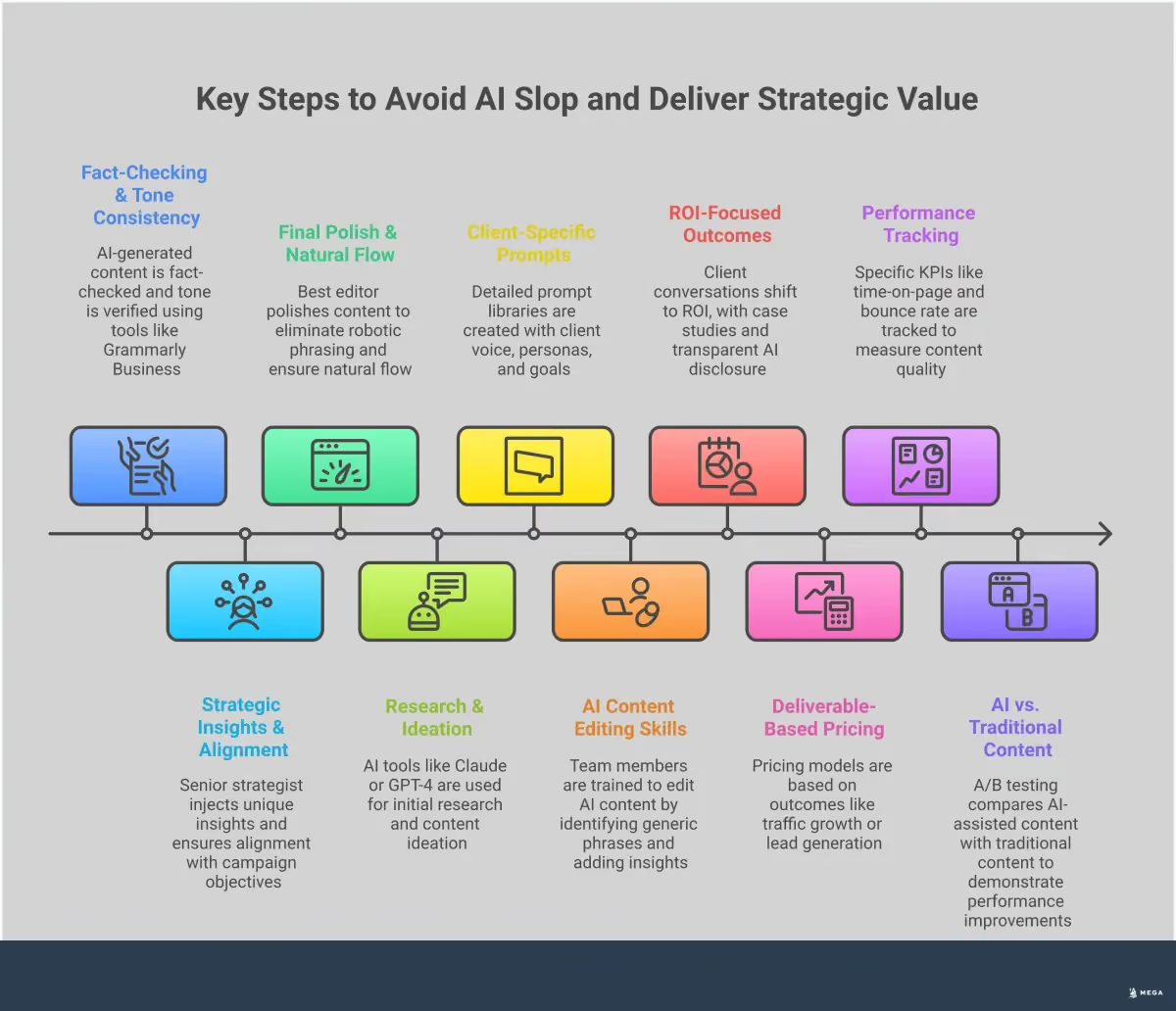
Achieving this balance comes down to three core practices: keeping humans in the strategic driver's seat, implementing a rigorous review process, and training your team to be skilled AI collaborators. By focusing on these areas, you can leverage AI to handle the heavy lifting while your team focuses on the high-value strategic and creative work that clients pay for. Platforms like MEGA AI are built on this principle, offering both autonomous AI agents to execute tasks and the transparency needed for human-in-the-loop oversight. This ensures you never have to sacrifice quality for speed and can confidently deliver work that drives real results for your clients.
Why You Need a Human-in-the-Loop Model
The most effective way to use AI is to treat it as a highly capable assistant, not the strategist. Your team’s expertise, creativity, and understanding of the client’s business are your agency's greatest assets. A human-in-the-loop model ensures these assets remain central to your work. In this framework, your team sets the strategy, defines the campaign goals, and provides the creative direction. The AI then acts as the "doer," executing tasks like generating content drafts, analyzing data sets, or creating ad variations based on the strategy you’ve defined. This approach allows you to scale production without losing the critical thinking and strategic insight that only humans can provide.
Creating a Bulletproof Quality Review Process
AI-generated content should always be considered a first draft. Pushing content directly from an AI tool to a client without review is a recipe for producing slop. If your final deliverable is 90% untouched AI output, you're risking errors, diluting your client's brand voice, and undermining your value. Instead, establish a non-negotiable quality review process for everything AI produces. This should include a checklist to verify factual accuracy, align the tone with the brand’s style guide, check for originality, and ensure the content serves its strategic purpose. This step is your agency's most important defense against low-quality work and is essential for maintaining client trust.
How to Train Your Team to Edit AI-Generated Content
Working with AI is a new skill, and it requires more than just writing good prompts. Your team needs to be trained to think critically about AI-generated output. Over-reliance on AI can weaken critical thinking, especially if team members start accepting its output as fact without question. Agency leaders should model thoughtful AI use and establish clear guardrails for its application. Training should focus on enhancing editing skills, teaching team members how to spot subtle inaccuracies, refine generic language, and inject unique insights into AI drafts. The real value comes from your team’s ability to refine a good AI draft into a great, client-ready piece of work.
Talking to Clients About AI Content Quality
Effectively integrating AI into your agency requires more than just new software; it demands a new way of communicating with clients. The rise of AI has created a wave of assumptions about speed, cost, and quality. If you don't guide the conversation, clients might expect you to produce twice the work for half the price, without understanding the risks of low-quality output. Proactively educating them is the best way to protect your agency’s profitability and reinforce your value.
The goal is to frame AI as a powerful tool that enhances your team’s strategic capabilities, not a magic button that replaces them. This conversation builds trust and positions your agency as a forward-thinking partner invested in their long-term success, not just a vendor chasing efficiencies. By setting clear expectations around AI’s role, being transparent about its limitations, and focusing on the strategic value you provide, you can successfully align with clients and avoid the pitfalls of the AI slop trap. This approach ensures everyone is focused on what truly matters: delivering marketing results that drive business growth.
Setting Realistic Expectations for AI
Many clients hear "AI" and immediately think "faster and cheaper." It's your job to reframe that expectation. Explain that AI is an incredible accelerator for certain tasks, like initial research, data analysis, and first drafts. However, it doesn't replace the strategic oversight, creativity, and deep industry knowledge that your team provides. Communicate that your agency uses AI to free up your experts to focus on higher-value work—like refining campaign strategy, analyzing performance data, and creating truly original ideas. This helps clients understand that AI is part of a sophisticated content creation process, not a shortcut that compromises the quality of the final product.
How to Be Transparent About AI's Limitations
Building trust requires honesty about what AI can and cannot do. Be upfront that AI-generated content, without significant human review, lacks the nuance and critical thinking necessary for effective marketing. AI models don't understand a client's brand voice, their specific business goals, or the subtle emotional triggers that connect with an audience. Explain that your team’s role is to provide this essential human layer of critical analysis and strategic direction. By being transparent about the need for human oversight, you demonstrate a commitment to quality and prevent clients from thinking that a 90% AI-generated deliverable is an acceptable standard.
Moving the Conversation From Price to Strategic Value
When clients push for lower prices because you’re using AI, it’s a sign that the conversation is focused on the wrong thing. Steer the discussion away from cost-per-word or hourly rates and toward the value and outcomes you deliver. Your agency isn't selling words; it's selling increased search rankings, higher conversion rates, and a stronger brand presence. Frame your AI-enhanced services around the strategic results they help achieve. Explain that your investment in advanced tools allows you to deliver those results more effectively. This value-based pricing model positions your agency as a strategic partner whose worth is measured by ROI, not by the tools used to achieve it.
How Should You Price Your AI-Enhanced Services?
Pricing your services in the age of AI can feel like walking a tightrope. Clients hear "AI" and often think "cheaper and faster," which puts immediate pressure on agencies to lower their rates. This expectation, however, overlooks the most important part of the equation: the strategic thinking, editing, and expertise required to turn a raw AI draft into a high-performing asset. When you compete on price alone, you risk commoditizing your services and falling into the trap of producing low-quality AI slop just to keep up with volume demands.
Instead of getting caught in a race to the bottom, the key is to reframe the conversation around the value you deliver. Effective pricing isn't about charging for the time a tool runs; it's about the results you generate. This requires a shift from traditional hourly or per-project models to frameworks that reflect the strategic outcomes you provide for your clients. By focusing on the return on investment—whether it's increased traffic, better leads, or higher conversion rates—you can build a sustainable business model that leverages AI's efficiency without sacrificing your profitability or the quality of your work.
Focus on Strategy, Not Just Volume
When clients expect AI to mean more for less, it’s easy to fall into the trap of offering high-volume packages. But competing on quantity is a losing game that often leads to producing low-effort AI slop. The real value an agency provides isn't in the number of articles or ads it can generate, but in the strategic direction, critical thinking, and quality control that ensures the content actually performs. Your pricing should reflect this expertise. Frame your proposals around the outcomes you deliver—like increased organic traffic or higher ad conversion rates—not the number of deliverables. This shifts the focus from cost-per-word to the return on investment you provide, justifying a price point based on strategic value-based pricing.
Develop Sustainable Pricing Models for AI-Assisted Work
To align your pricing with strategic value, you need a model that supports quality. Instead of hourly rates, consider retainers that cover ongoing strategy and optimization, or project-based fees for well-defined scopes. This approach allows you to incorporate AI as an efficiency tool without devaluing your service. It’s crucial to set clear expectations with clients about how AI fits into your workflow. Be transparent that you use it to accelerate research and first drafts, freeing up your team to focus on higher-value tasks like strategy, editing, and performance analysis. This honesty builds trust and reinforces that your agency’s worth comes from human expertise, which is something a tool can’t replicate.
What Happens When You Ignore AI Slop Content?
Choosing to ignore the rise of AI slop isn't a neutral decision; it's a strategic choice with significant consequences for your agency's reputation and profitability. In the short term, churning out low-quality, AI-generated content might feel like an easy way to meet tight deadlines and cut costs. But this approach quickly accumulates a debt that your agency—and your clients—will eventually have to pay. The digital landscape is becoming saturated, and audiences are growing more discerning. Relying on generic, uninspired content is a fast track to becoming irrelevant.
The core issue is that AI slop fundamentally undermines the value an agency provides. Clients hire you for your strategic thinking, creativity, and ability to generate results, not just to press a button on a content generator. When you deliver work that lacks nuance and human insight, you erode trust and position your services as a commodity. This opens the door to constant price negotiations and client churn. The agencies that thrive will be those that learn to use AI as a tool to enhance human expertise, not replace it. By focusing on quality, you protect your clients' brands and secure your agency's future.
The Long-Term Risks of Compromising on Quality
The immediate appeal of fast, cheap content can mask the serious long-term risks that come with it. When you rely on unrefined AI output, you begin to dilute your client's unique brand voice, making them sound generic and forgettable. Over time, this erodes the connection they have with their audience. Today's consumers are savvy; they can often spot low-effort content, which leads to a significant loss of trust.
This isn't just a branding issue; it has a direct impact on performance. The flood of low-quality content contributes to audience fatigue, where potential customers become disengaged and simply tune out. This can skew your analytics, making it difficult to understand what’s truly resonating with people. Ultimately, compromising on quality harms the very foundation of your client relationships: their brand loyalty and reputation.
Eroding Trust with Your Audience and Clients
When you deliver generic content, you're not just handing over a subpar asset; you're risking your client's relationship with their audience. Today's consumers are adept at recognizing robotic, soulless content, and when they encounter it, their perception of the brand suffers. This erosion of trust happens quietly at first but has a significant impact. When agencies rely on basic AI tools to produce generic blog posts or ad copy, they risk damaging the very thing that makes them valuable: their credibility. This loss of audience trust inevitably leads to a loss of client trust when the promised results fail to materialize because the content simply doesn't connect.
The Impact on Human Creators and Industries
The flood of AI slop does more than just annoy readers; it actively devalues the work of human experts. The internet is becoming a crowded space where low-effort, mass-produced content designed to rank without providing real value pushes out thoughtful, original work. This content often lacks depth and a genuine understanding of what the user actually needs. For skilled writers, strategists, and creatives, this shifts the focus from craft and expertise to speed and volume. It creates an environment where it's harder for quality to be discovered, making it more difficult for businesses to connect with the genuine talent they need to build a meaningful brand presence.
Environmental and Societal Concerns
The consequences of AI slop extend far beyond marketing metrics. This low-quality content is showing up everywhere online, from social media feeds and product reviews to political campaigns and scientific papers. This digital pollution makes it harder for everyone to find reliable information and contributes to the spread of misinformation. On a broader scale, the constant generation of disposable content requires immense computational power, which carries a significant environmental cost. As AI-generated noise continues to fill our digital spaces, it degrades the quality of our shared information ecosystem and presents challenges to societal trust and communication.
Turning High-Quality Standards into a Competitive Edge
In a market flooded with AI-generated noise, maintaining high-quality standards is no longer just good practice—it's a powerful competitive advantage. As other agencies race to the bottom on price by churning out volume, you can set your business apart by delivering strategic, polished, and genuinely valuable content. This commitment to excellence is what will attract and retain high-value clients who understand the difference between presence and impact.
Brands that prioritize quality will see better engagement and stronger customer loyalty. By establishing a reputation for thoughtful, human-guided work, you can build stronger relationships with clients based on trust and measurable results. This allows you to shift the conversation from cost to value, positioning your agency as a strategic partner. An effective AI-powered SEO plan, for instance, should be measured by its strategic impact, not just the number of articles produced.
How Platforms and Society are Responding
The explosion of AI-generated content hasn't gone unnoticed. As digital spaces become cluttered with low-effort material, users, platforms, and even governments are beginning to react. This response is unfolding on two main fronts: tech companies are scrambling to update their policies, while a broader societal push for transparency and control is gaining momentum. Both reactions signal a growing awareness that the quality of our online information environment is at stake.
New Policies from Tech Platforms
Major tech platforms are in a difficult position, trying to manage the sheer volume of AI-generated content while upholding quality standards. For example, YouTube's recommendation system has been observed promoting AI-generated videos, even when it contradicts the platform's stated goal of highlighting high-quality material. This shows the challenge of aligning algorithmic behavior with content policies. On a smaller scale, online communities, from hobbyist forums to social media groups, are attempting to self-regulate by banning AI-generated posts. However, these efforts often struggle to control the tide of automated bots, making manual content moderation an uphill battle for administrators.
The Growing Call for Regulation and User Control
The frustration with AI slop extends beyond platform policies and into public discourse. Users are becoming more vocal about the declining quality of their online experience, with a majority of online mentions of the term now carrying a negative sentiment. This widespread dissatisfaction is fueling a broader conversation about the need for new rules. The central question is whether there should be laws to govern how AI is used to create and distribute content online. As people seek more control over the information they consume, the demand for greater transparency and accountability from both AI developers and the platforms that host their output is likely to increase.
How to Use AI for Sustainable Agency Growth
Avoiding AI slop doesn’t mean avoiding AI altogether. The key to long-term success is to use AI not as a shortcut to replace human expertise, but as a powerful tool to augment it. When implemented thoughtfully, AI can handle the repetitive, time-consuming tasks that often bog down your team, freeing them to focus on what truly drives client results: strategy, creativity, and building relationships. This approach allows your agency to scale its operations without sacrificing the quality that defines your brand.
Sustainable growth is about finding the right balance. It’s about integrating AI into your workflows in a way that enhances efficiency while elevating the strategic value you provide. Instead of getting caught in a cycle of endless revisions on low-quality content, you can build systems that produce better work, faster. This positions your agency as a forward-thinking partner that leverages technology to deliver superior outcomes, moving the conversation away from hourly rates and toward strategic impact. By doing this, you build a more resilient, profitable, and valuable business.
Prioritizing High-Value Strategy and Critical Thinking
The true value of an agency lies in its strategic thinking and creative problem-solving, not in its ability to manually pull data or write first drafts. AI is exceptionally good at processing information and executing rule-based tasks, but it lacks the critical thinking to develop a nuanced brand voice or a clever campaign angle. By letting an AI-powered growth agent handle the initial research and content generation, your team can dedicate their time to higher-value activities. This includes refining campaign strategy, analyzing performance data for deep insights, and ensuring every piece of content perfectly aligns with the client’s unique goals and creative essence.
How to Build Systems That Scale Quality with Efficiency
As you increase your output with AI, you must also build systems to maintain quality control. Producing content that is 90% AI-generated without a thorough human review is a recipe for mediocrity and client dissatisfaction. The goal is to create a scalable workflow where AI provides the initial leverage, but humans provide the final polish and strategic validation. This involves establishing clear quality benchmarks, implementing a multi-stage review process, and training your team to be expert editors of AI content. An effective human-in-the-loop model ensures that every deliverable meets your agency’s high standards, allowing you to scale efficiently without compromising on quality.
Leveraging End-to-End AI Platforms
Building a cohesive system is much simpler when you use a single, end-to-end platform instead of juggling multiple disconnected AI tools. When your keyword research, content creation, and ad management tools don't communicate, you create opportunities for inconsistency and strategic drift. An integrated platform provides a unified workflow where every step, from initial SEO analysis to launching a paid campaign, is part of the same strategic process. This ensures brand voice remains consistent and allows for built-in quality control at every stage. Platforms like MEGA AI are designed to provide this unified experience, combining SEO and Paid Ads tools to help small businesses manage their entire digital marketing strategy efficiently. This approach makes it easier to implement a human-in-the-loop model, as your team can oversee and refine AI-assisted work within one streamlined environment.