
Artificial intelligence is forming an opinion about your business right now. It learns from your website, customer reviews, social media presence, and local articles to build a picture of your brand’s authority. When a potential customer asks a question, AI uses this picture to decide who to recommend. Optimizing for AI search is about actively shaping that narrative. It requires a strategy that goes beyond your website to build a consistent, trustworthy identity across the web. This ai optimisation guide is your plan for managing your brand’s representation so AI sees you as the definitive expert in your field.
Key Takeaways
- Become the source material for AI answers: Instead of only targeting the top rank, create comprehensive, authoritative content that AI systems will use to build their generated summaries, positioning your brand as the expert.
- Structure your website for AI comprehension: Implement technical SEO fundamentals like schema markup and a logical site architecture. This removes ambiguity and makes it easy for AI to accurately understand and feature your content.
- Manage your brand's story everywhere online: AI forms its understanding of your business from your website, reviews, and social media. Ensure your brand information is consistent and positive across all platforms to influence how you are represented in search results.
What is AI Optimization for Search?
AI optimization for search is the practice of aligning your SEO strategy with how artificial intelligence is changing search engines. For years, SEO was primarily about signaling relevance to algorithms through keywords and backlinks. While those elements still matter, AI has given search engines a major upgrade. They no longer just match keywords; they now work to understand the context and intent behind every search query, much like a human would.
This means the goal of SEO is shifting. Instead of just trying to rank for a specific term, you need to create content that establishes your authority and provides the best, most comprehensive answer to a user's question. AI-powered search engines, like Google with its Search Generative Experience (SGE), are designed to find and synthesize this high-quality information to give users direct answers. For your business, this presents a new opportunity. By optimizing for AI, you position your content to be the source material for these AI-generated results, placing your brand directly in front of potential customers. This requires a focus on creating genuinely helpful, well-structured, and authoritative content that AI can easily understand and trust. Tools like MEGA AI's SEO platform are built to help businesses adapt by automating the process of creating and updating content for this new search landscape.
Understanding AI-Driven Search Technologies
AI-driven search technologies are the advanced systems that allow search engines to think more like people. They use complex processes like machine learning and natural language processing (NLP) to go beyond simple keyword matching. Instead of just seeing the words in your search, these technologies analyze the relationships between them to understand your actual goal. This is why you can ask a long, conversational question and get a surprisingly accurate answer. These systems are constantly learning from trillions of data points to improve their understanding of language and user behavior, making search more intuitive and the results more relevant.
From Traditional to AI Search: What's Changed?
The move to AI marks a fundamental change from how search engines used to work. Traditional search operated like a digital librarian, finding web pages that contained the exact keywords you typed in and presenting them as a list of links. AI search, on the other hand, acts more like an expert researcher. It doesn't just find sources; it reads and understands them. As a result, it can synthesize information from multiple websites to create a brand new, direct answer to your query. This means the search results page is evolving from a simple list of links into a dynamic, information-rich experience tailored to each user.
The Shift from Backlinks to Brand Mentions
For years, backlinks were the currency of SEO, acting as votes of confidence from one site to another. While they still have a place, AI is changing how search engines measure authority. The focus is now expanding to include brand mentions. AI models value earned media, like mentions in news articles or other trusted online sources, because they are seen as genuine endorsements. This shift means that building a strong reputation across the web is becoming just as important as building a strong backlink profile. AI interprets these mentions as proof that your business is a legitimate and respected entity in its field.
This new approach goes beyond traditional media. AI synthesizes information from a wide range of sources to understand your brand, including customer reviews and discussions on community forums. This aligns with Google's emphasis on creating helpful, reliable content that demonstrates real-world experience. This means your online reputation is now a direct ranking factor. The goal is to ensure that whenever your brand is mentioned online, it consistently tells a story of expertise and trustworthiness that AI can easily recognize and recommend.
What is Search Generative Experience (SGE)?
Search Generative Experience (SGE) is Google's name for the AI-powered answers that now appear at the top of many search results. When you ask a question, SGE generates a conversational, snapshot summary that directly addresses your query. This summary is created by pulling and combining information from several high-quality web pages. For businesses, SGE is a game-changer. Getting your content featured in an SGE result can provide incredible visibility. It also means that creating clear, authoritative, and well-structured content is more important than ever, as you are now competing to become a trusted source for Google's AI.
How is AI Changing Search Results?
The classic search results page—a simple list of ten blue links—is quickly becoming a thing of the past. AI is reshaping how search engines work, turning them from digital directories into sophisticated answer engines. Instead of just pointing you to a website, search engines now use AI to understand the context and intent behind your query. The goal is to deliver a direct, comprehensive answer right on the results page.
This fundamental shift means your approach to online visibility has to change, too. It’s no longer just about securing the top spot in the rankings. The new goal is to become the trusted source of information that AI models use to construct their answers. This change impacts every aspect of your digital strategy, from the content you create to how potential customers discover your business. Understanding these new dynamics is the first step toward adapting and thriving in an AI-driven search landscape.
The Growth of AI Search and Its Impact on Traffic
AI search is rapidly changing how customers find your business, and the effects on website traffic are already significant. The most noticeable change is the rise of AI-generated summaries, or "AI Overviews," which appear at the very top of the search results page. These summaries aim to answer a user's question directly, which means people may not need to click through to individual websites to find what they're looking for. For small businesses, this shift presents both a challenge and an opportunity. While it could mean fewer clicks overall, the traffic that does come from an AI-generated result is often from users who are more informed and further along in their decision-making process. The key is to adapt your strategy to ensure your business is seen as a primary source for these AI answers.
Key Statistics on AI Search Adoption
The data shows just how quickly this change is happening. In 2024 alone, traffic from AI sources saw a staggering 2200% increase compared to the previous year. This explosive growth comes at the expense of traditional search traffic. For example, LinkedIn reported a traffic drop of up to 60% from general searches after AI overviews were introduced. This happens because AI Overviews can push the familiar blue links further down the page, making them less visible even if you have a high ranking. With experts predicting that traditional search engine use could drop by half by 2028, ignoring this trend isn't an option. However, there's a silver lining: Google has noted that clicks from AI-generated results are often of higher quality, leading to more engaged visitors who spend more time on your site.
The Impact of AI on SERP Features
The look and feel of the search engine results page (SERP) are evolving. AI is powering more dynamic and interactive features designed to give users answers faster. Search engines now pull AI-summarized information from websites to provide answers directly in the SERPs. This means features like "People Also Ask" boxes, detailed knowledge panels, and AI-powered snippets are more prominent than ever. For a small business, this presents a new opportunity. If your content provides clear, authoritative answers to common questions, you have a strong chance of being featured, placing your brand in front of users without them ever needing to click away from the results page.
How AI Presents Content in New Ways
With features like Google's Search Generative Experience (SGE), content is being presented in entirely new ways. Instead of just showing a list of links, SGE uses generative AI to create "short essay-style answers to a search query, with suggested sources for more information," as noted by seoClarity. These AI overviews pull information from multiple websites to give the user a complete answer. The results often include links to the original sources, suggested follow-up questions, and even product carousels for commercial searches. This changes the objective for content creators. Your goal is now to produce content so well-structured and valuable that it becomes a primary source for these AI-powered summaries.
How AI Changes the Way People Search
As people get more comfortable interacting with AI chatbots, their search habits are changing. Users are moving away from short, fragmented keywords and toward more natural, conversational questions. For example, instead of searching for "SEO tips," someone might now ask, "What’s the best way to optimize my website for AI-driven search?" This shift means your SEO strategy must focus on understanding and answering these specific, intent-driven queries. Creating content that directly addresses the detailed questions your customers are asking will help you stay relevant and visible in this new search environment.
What Are AI-Generated Summaries?
AI-generated summaries are quickly becoming a central part of the search experience. They aren't just a small addition; for many queries, they are the main event. Research shows that a large majority of searches in SGE display these AI-generated results, making them the first thing many users see. Getting your business's information featured in these summaries is crucial for modern visibility. This requires a commitment to creating high-quality, factual, and authoritative content that AI systems can easily understand and trust. Using tools to continuously maintain and optimize your existing content ensures your articles are always ready to be selected by these AI models.
What Matters for AI Search Optimization?
Optimizing for AI search means refining your existing SEO strategy to align with how large language models process information. It’s less about learning new tricks and more about strengthening the fundamentals of good content and technical health. The goal is to make it as easy as possible for AI systems to understand who you are, what you do, and why you’re a credible source. By focusing on the core elements of quality, context, and authority, you can position your business to be visible and relevant in this new search landscape. This approach helps ensure that when AI generates an answer, your business is part of the conversation.
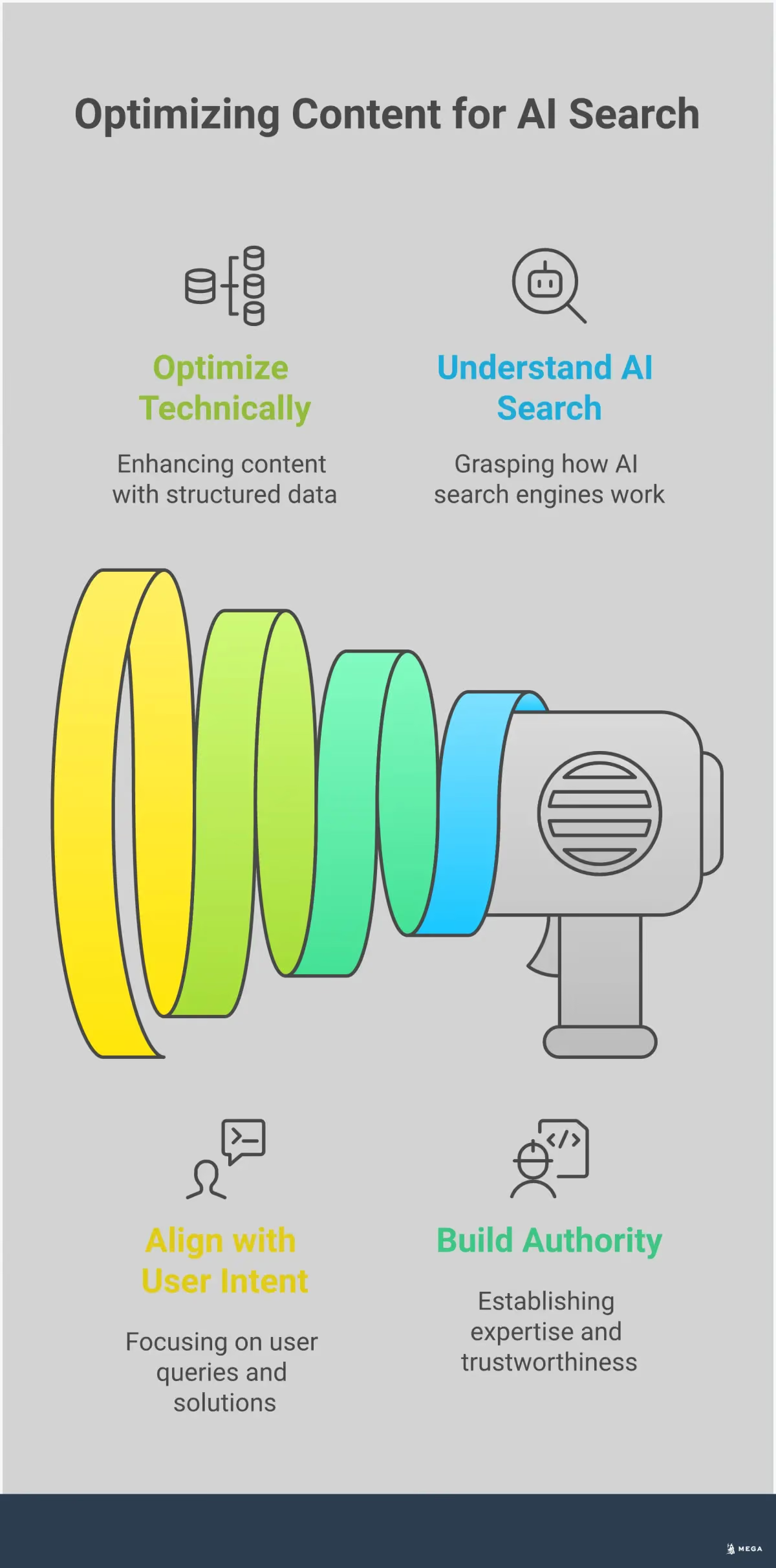
Why Quality and Authenticity Matter More Than Ever
AI models learn by analyzing huge amounts of web content, and they are getting better at distinguishing high-quality, original information from low-effort filler. Content that is genuinely useful and authentic is more likely to be referenced by AI-powered search results. To achieve this, focus on creating content that demonstrates strong E-E-A-T (Experience, Expertise, Authoritativeness, and Trustworthiness). Write from a place of genuine knowledge, share unique insights, and back up your claims. This not only helps build trust with your human audience but also signals to AI that your content is a reliable source worth citing, improving your visibility in AI-generated answers.
Understanding the Quality of AI-Driven Traffic
AI-driven search changes the nature of the traffic that arrives on your website. Because AI summaries provide direct answers, the users who click through to your site are often more qualified and have a higher intent. They aren't just starting their research; they've already received a concise answer and are now looking for the authority behind that information. Think of it this way: the AI has already done some of the work for you by presenting your content as a credible source. A click from an AI-generated result is a strong signal that the user trusts the information and wants to learn more, purchase a product, or engage with your brand directly. This means you may see fewer casual browsers and more visitors who are further along in their decision-making process.
The "Reverse Customer Journey"
This shift in traffic quality is best understood through the concept of the "reverse customer journey." Traditionally, a customer starts with a broad search, discovers your brand, and then finds the specific answer they need on your site. With AI search, this process is flipped. The customer gets the answer first, directly in the search results, synthesized from trusted sources. Their journey then works backward as they seek to identify and connect with the expert brands that supplied that information. This makes it essential for your content to not only be accurate but also to build brand recognition. The goal is to become the trusted source that AI models consistently reference, so when a user sees your name, they associate it with reliable answers.
How to Optimize for Semantic Search
AI doesn't just match keywords; it understands the meaning and relationships between words and concepts. This is the core of semantic search. Instead of focusing on a single keyword, think about the entire topic. What related questions do your customers have? What subtopics are essential for a complete understanding? By creating comprehensive content that covers a topic from multiple angles, you provide the rich context AI needs to see your page as an authoritative resource. This helps your content appear in results for a wider range of conversational queries, which are becoming more common as users interact with AI assistants.
Why You Need to Understand User Intent
Large language models are designed to understand the why behind a search query. Is the user looking for information, trying to find a specific website, or ready to make a purchase? Aligning your content with user intent is more critical than ever. For example, a blog post is great for informational queries, while a clear, concise product page serves transactional intent. By creating distinct content for each stage of the customer journey, you provide direct answers to the user's underlying needs. This makes it more likely that an AI system will surface your page as the most relevant solution for their query.
Using Entity Recognition to Your Advantage
In the world of AI, your brand is an "entity"—a distinct concept that the system can identify and understand. AI connects entities to build a knowledge graph, understanding how your business relates to its location, industry, products, and reviews. You can help this process by ensuring your brand information is consistent everywhere online, especially your name, address, and phone number (NAP). Using structured data, or schema markup, on your website also helps explicitly define what your business is. This clarity helps AI systems confidently and accurately represent your brand in search results.
How to Build Authority for AI Search
AI models determine credibility by looking at how your brand is represented across the web. Building authority means establishing your business as a trusted voice in your field. This goes beyond your own website. Positive mentions in local news, glowing customer reviews on third-party sites, and features on industry blogs all contribute to your digital authority. Each of these signals reinforces to AI that your brand is legitimate and respected. A strong SEO strategy that includes digital PR and reputation management is essential for influencing how generative AI models perceive and present your business.
How to Create Content for AI Systems
Creating content for AI systems means shifting your focus from just targeting keywords to building information that is clear, structured, and easy for machines to understand. Think of it as organizing your website's information so an AI can read it like a well-written instruction manual. The goal is to make your content so unambiguous that an AI can confidently pull from it to answer a user's question. This involves writing clearly, structuring your data, and providing deep context around your topics.
When you optimize for AI, you’re not leaving traditional SEO behind. In fact, these practices often improve your standing in classic search results, too. Clear, authoritative, and well-organized content is valuable to both algorithms and human readers. By focusing on creating content that AI can easily process, you position your brand as a reliable source of information, increasing your visibility in AI-generated summaries and conversational search results. This is about making your expertise machine-readable, ensuring your brand shows up wherever your customers are looking for answers.
Why Structured Data is Crucial for AI
Structured data, often implemented using Schema markup, is a standardized format for providing information about a page and classifying its content. It’s like adding labels to your content that tell search engines exactly what each piece of information is—for example, this is a product name, this is a price, and these are customer reviews. Optimizing for large language models in SEO isn’t just about writing; it also requires advanced tools, structured data, and continuous content updates. By adding these labels, you remove any guesswork for AI systems, making it simple for them to pull accurate data for rich snippets and AI-generated answers.
How to Write for Natural Language Processing (NLP)
Natural Language Processing (NLP) is the technology that allows AI to understand human language, with all its nuances and complexities. To write for NLP, you should use a clear, direct, and conversational style. Use simple sentence structures and answer questions explicitly. SGE's advanced natural language processing capabilities allow it to deliver more accurate, context-aware results than traditional keyword-based searches. Instead of stuffing your content with keywords, focus on writing naturally for your audience. This approach helps AI models correctly interpret your content's meaning and intent, making it more likely that your information will be used to answer relevant queries.
Write with Extreme Clarity
AI models thrive on clarity. To ensure your content is understood correctly, use direct language, simple sentence structures, and avoid ambiguous phrasing. Think of your content as a detailed instruction manual for the AI; every statement should be factual and easy to interpret. This means defining acronyms, explaining industry-specific jargon, and presenting information in a logical flow. When you create content that is clear, structured, and easy for machines to understand, you remove the risk of misinterpretation. This practice doesn't just benefit algorithms. It also improves the experience for your human readers, making your information more accessible and trustworthy for everyone.
Use "Answer Blocks" for Quick Summaries
A great way to make your content AI-friendly is to get straight to the point. Start main sections with a short summary, or an "answer block," that gives the most important information upfront in about 30 to 80 words. This technique allows AI systems to quickly grasp the core message of each section, making it easier for them to pull your content for AI-generated summaries. After providing the initial summary, you can then expand on the topic with more detail, examples, and context. This structure makes your content highly scannable for both AI and human readers, ensuring your key points are never missed.
Creating Content with Context and Relevance in Mind
AI models thrive on context. They don't just look at individual keywords; they analyze the relationships between words, topics, and ideas to understand the bigger picture. To build context, create comprehensive content that covers a topic in depth. Use related terminology, address common questions, and link to other relevant articles on your site. SGE narrows down results based on user queries, creating a more contextually relevant search experience. This strategy signals to AI that your website is an authority on the subject, making your content a go-to source for generating answers.
Address the Full Buyer Journey
AI search is designed to understand what a user truly wants, whether they are just starting their research or are ready to make a purchase. To meet this need, your content strategy must address every stage of the buyer journey. This means creating different types of content tailored to specific intentions. For example, a detailed blog post can answer the broad, informational questions someone might have at the beginning of their search. A comparison guide can help those in the consideration phase, while a clear, direct product or service page is essential for users with transactional intent. By building a content ecosystem that supports the entire journey, you signal to AI that you are a comprehensive resource, capable of guiding a customer from start to finish.
Add a Unique Human Touch
As AI becomes more sophisticated, it gets better at identifying generic, unoriginal content. This is why authenticity is now a critical ranking factor. To stand out, your content needs a unique human touch that demonstrates real experience and expertise. Share firsthand stories, include original data, or offer a perspective that can only come from someone deeply involved in your industry. This approach directly supports the principles of E-E-A-T (Experience, Expertise, Authoritativeness, and Trustworthiness). When you write from a place of genuine knowledge, you create content that is not only more valuable to your audience but also more likely to be cited as a credible source in AI-generated search results.
Find and Answer Real User Questions
People are increasingly using search engines to ask specific, conversational questions. Your content strategy should be built around answering them. Go beyond broad keywords and focus on the detailed queries your customers are actually typing into the search bar. You can find these questions in your customer service logs, on social media, or in the "People Also Ask" section of Google results. Creating content that directly addresses these questions helps you stay relevant in an environment where conversational search is becoming the norm. This positions your website as a helpful resource that provides clear, direct answers, making it a prime candidate for being featured in AI summaries.
Keep Your Content Genuinely Fresh
In the context of AI search, content freshness is about more than just updating the publication date on a blog post. AI systems prioritize information that is current, accurate, and truly relevant. This means you need to perform genuine updates. Revisit your existing articles to add new information, update outdated statistics, replace broken links, or expand sections to cover new developments in your industry. This process signals to search engines that your content is actively maintained and reliable. For small businesses, this can be time-consuming, which is why platforms like MEGA AI offer a Maintenance Agent that automates these crucial updates, ensuring your content remains competitive and authoritative over time.
The Importance of True Content Updates
Regularly updating your content is a proactive way to prepare your business for the future of search. As AI-powered search becomes standard, the algorithms will increasingly rely on signals that prove your content is trustworthy and up-to-date. Making substantive changes to your articles—like adding new insights or data—does more than just keep the information accurate. It demonstrates a commitment to quality that both users and AI systems value. This ongoing effort helps build your site's authority and increases the likelihood that your content will be selected as a source for AI-generated answers. Making these changes now will help your brand be ready as AI search becomes the norm.
Why a Diverse Content Portfolio Matters
A strong content strategy for AI involves more than just blog posts. By creating a variety of content types, you demonstrate your expertise across different formats and user needs. Think about creating detailed how-to guides, in-depth case studies, comprehensive FAQ pages, and clear product descriptions. By prioritizing LLM SEO strategies, you not only improve brand visibility in LLMs but also build long-term authority that could influence how AI tools perceive your brand in future model updates. A diverse content portfolio establishes your brand as a well-rounded authority, increasing the chances that an AI will reference your material when answering a wide range of user questions.
How to Optimize Content Across Different Formats
AI systems gather information from all types of content, not just text. To maximize your visibility, make sure all your content formats are optimized for machine readability. This means writing descriptive alt text for images, providing transcripts for videos and podcasts, and ensuring data in tables or charts is clearly labeled. Search engines pull AI-generated information from websites to provide answers directly in the SERPs. By making every piece of content on your site accessible to AI, you create more opportunities for your brand to be featured in generated summaries and answers, regardless of the original format.
Is Your Technical SEO Ready for AI?
While creating high-quality content is essential, the technical foundation of your website is what allows AI systems to find, understand, and feature it. Think of technical SEO as the well-organized library where your brilliant books (your content) are stored. If the library is messy, dark, or hard to get around in, no one will find the books, no matter how great they are. For AI, a clean, fast, and logically structured website is a signal of trustworthiness and authority.
AI-powered search engines need to process information with incredible speed and accuracy. A strong technical setup ensures they can crawl your site efficiently, grasp the context of your content, and confidently present it to users in AI-generated summaries like Google's AI Overviews. Neglecting the technical side means your content might never get the visibility it deserves in this new search landscape. Fortunately, tools like MEGA AI's SEO platform can automate many of these technical improvements, ensuring your site is always optimized for both users and AI. Below, we’ll cover four key areas to focus on: site architecture, performance, schema markup, and data organization. Getting these right will make a significant difference in how AI perceives and promotes your brand.
Structuring Your Site for AI Crawlers
Your site architecture is simply how your website's pages are structured and linked together. A good structure acts like a clear roadmap for search engines and AI. When your pages are organized logically, with a strong internal linking strategy connecting related content, you make it easy for AI to understand your areas of expertise. For example, if you have a main page about "small business accounting," it should link out to more specific pages on "bookkeeping tips," "tax preparation," and "invoicing software." This clear hierarchy helps AI systems pull relevant content quickly and see you as an authority on the overall topic.
Ensure Your Site is Accessible to AI Crawlers
For AI to use your content, it first needs to be able to find and read it. This is where your site’s accessibility comes in. Think of your website’s `robots.txt` file as a set of instructions for visiting search engine crawlers, telling them which pages they can and cannot access. If this file is set up incorrectly, you might be unintentionally blocking AI from seeing your most valuable content. Make sure your website meets Google's technical rules so that Google can find, read, and understand your pages. This means ensuring that the main AI crawlers, like Googlebot, are not blocked and that your pages load correctly with content that can be indexed.
Control How Your Content Appears in AI Results
While you want AI to access your site, you also have some say in how it uses your content. You can use special instructions in your page's code, known as meta tags, to set boundaries. For example, you can use tags like `nosnippet` to prevent AI from showing a text snippet of your page in a summary, or `noindex` to keep a page out of search results entirely. As Google notes, using more restrictive tags means your content might show up less in AI experiences. This creates a strategic choice: do you allow AI to summarize your content for maximum visibility, or do you restrict it to encourage users to click through to your website for the full story?
Why Site Speed and Performance are Key
Site performance refers to how quickly your website loads and how well it functions, especially on mobile devices. AI-powered search is all about delivering immediate, helpful answers. If a user clicks a link from an AI summary and lands on a page that takes forever to load, it creates a frustrating experience. Search engines notice this. A fast-loading and mobile-friendly website is a fundamental sign of quality. You can use tools like Google’s PageSpeed Insights to check your performance and find areas for improvement. Prioritizing speed ensures you meet user expectations and signal to AI that your site is a reliable source.
Using Schema Markup to Communicate with AI
Schema markup is a type of code you add to your website to help search engines understand your content more precisely. Think of it as adding descriptive labels to your information. For instance, you can use schema to label your business address, phone number, opening hours, or product reviews. This provides clear, unambiguous context that is perfect for AI. When an AI model is generating an answer, it can pull this structured data with confidence, knowing the information is accurate. Implementing schema markup is a powerful way to feed AI systems the exact details you want them to share about your business.
Follow Google's Structured Data Rules
To get the most out of schema markup, you need to play by the rules. Google provides clear guidelines on how to implement structured data, and following them is non-negotiable. The main principle is to use markup that accurately reflects the content on your page. For example, don't add review schema to a product page if there are no actual customer reviews visible to the user. Using structured data incorrectly can not only be ineffective but could also lead to a manual action from Google. By adhering to Google's guidelines, you ensure that you're providing clear and honest signals to search engines and AI systems, which builds the trust needed to be featured in search results.
How to Organize Your Data for Better Indexing
Organizing your data is about ensuring your information is accurate, consistent, and well-structured everywhere it appears. AI models rely on structured data and continuous content updates to learn and provide reliable answers. This starts with your website, where you should use clear headings, bullet points, and logical formatting to make your content easy to scan. It also extends to your entire online presence. Make sure your business name, address, and phone number are identical across all platforms, from your website to your social media profiles and local directories. This consistency builds trust and makes it easier for AI to verify your information.
Optimize for Multimodal Search
Search is no longer limited to just typing words into a box. People are increasingly using a mix of text, images, and voice to find what they need. This is called multimodal search. For example, someone might upload a photo of a chair and ask, "Where can I buy a similar one for under $200?" To show up in these results, your content needs to be optimized for this new reality. As Google notes, this means ensuring your pages have high-quality, relevant images and videos that directly support your text. It’s about creating a rich, contextual experience that AI can understand from every angle, not just from the words on the page.
Enhance Your Visual Content
To prepare for multimodal search, you need to make your visual content as machine-readable as your text. This means giving AI clear signals about what your images and videos contain. Use descriptive filenames (e.g., "blue-velvet-armchair.jpg" instead of "IMG_1234.jpg") and write detailed alt text that explains the image's content and context. For videos, provide transcripts and use structured data to highlight key moments. According to LinkedIn's marketing experts, adding helpful images and videos with detailed metadata is essential for AI discovery. These details provide the context AI needs to connect your visual content with relevant user queries.
Leverage Vector Embeddings
This is a more advanced concept, but it’s at the heart of how AI understands content. Vector embeddings are numerical representations of words, images, and other data that capture their meaning and context. Instead of just matching keywords, AI uses these embeddings to understand the relationships between concepts. For example, it can understand that a picture of a "sofa" is semantically similar to the word "couch." While you don't need to be a data scientist to benefit from this, understanding the principle is useful. Creating high-quality, contextually rich content gives the AI better data to work with, improving how well it can match your content to user questions, whether they're asked with text, images, or both.
How to Adapt Your Brand Strategy for AI
Adapting your brand strategy for AI search means thinking beyond traditional keywords. It’s about shaping how AI models understand and talk about your business. These systems gather information from all over the web to form a picture of your brand, which they then present to users in search results and chat-based answers. This shift requires a more holistic approach to your online presence. You need to actively manage your brand’s narrative across multiple platforms to ensure AI interprets your expertise and reputation correctly. By focusing on building authority, managing your representation, and distributing content strategically, you can influence how AI perceives and recommends your brand. This isn't just about feeding an algorithm keywords. It's about building a consistent, trustworthy identity that AI systems can confidently reference. Every piece of content, every review, and every social media post contributes to this digital identity. The goal is to make your brand the most reliable and authoritative source in your niche, so when AI looks for an answer, it turns to you. This proactive approach ensures that the story AI tells about your business is the one you want your customers to hear.
Establishing Your Brand's Digital Authority
In the AI era, digital authority is your brand’s credibility. AI models prioritize information from sources they deem trustworthy and expert. To build this authority, you need to consistently prove your expertise and reliability. By prioritizing strategies for Large Language Models (LLMs), you not only improve brand visibility but also build long-term authority that could influence how AI tools perceive your brand in future model updates. This means creating high-quality, in-depth content that demonstrates your knowledge. Think of it as building a comprehensive library of resources that establishes your business as the go-to expert in your field. A strong backlink profile from other reputable websites also signals to AI that your content is valuable and trustworthy.
How to Control Your Brand's Narrative in AI Search
You can’t control what AI models say, but you can influence the information they learn from. AI constructs your brand’s identity by analyzing data from your website, customer reviews, news articles, and social media. To effectively manage your brand’s reputation, your marketing, content, and customer service efforts must present a unified message. This collaboration is imperative to influencing how your brand is represented across generative models. Regularly monitor what people are saying about your business online and encourage satisfied customers to leave positive reviews. A consistent and positive online presence helps ensure AI models accurately reflect your brand’s value.
Monitor and Correct Your Brand's AI Narrative
Actively managing your brand's story means regularly checking how AI systems portray your business. You can do this by periodically searching for your brand in AI-powered search engines and asking chatbots direct questions about your company and its services. If you find inaccuracies or a negative portrayal, the next step is to correct the record. This involves updating your website content to be clearer, creating new articles that address the misinformation, and using tools for brand monitoring to stay on top of online conversations. This process of continuous content maintenance is crucial. Platforms like MEGA AI automate this by using a Maintenance Agent to update existing articles and identify new content opportunities, ensuring AI models always have access to the most accurate and positive information about your brand.
Why a Cross-Platform Presence is Essential
Your website is just one piece of the puzzle. AI assistants learn about your brand from a wide range of sources, including forums, social media, and online directories. With hundreds of AI models ingesting content from the web, your brand's reputation is being constructed and echoed by these systems daily. To build a complete picture for AI, you need a presence on the platforms where your customers are active. For local businesses, this means ensuring your listings on platforms like Google Business Profile and Yelp are accurate and up-to-date. A consistent presence across multiple channels reinforces your brand’s identity and makes it easier for AI to understand who you are and what you do.
Engage in Relevant Online Communities
AI models learn about your brand's authority by observing how you interact within your industry's ecosystem. Your expertise becomes more visible when you actively participate in discussions on platforms where your customers seek advice, such as industry-specific subreddits or LinkedIn groups. It’s not about self-promotion; it’s about contributing genuine value. By sharing high-quality insights, answering questions, and publishing thought leadership, you create public proof of your expertise. These contributions serve as signals to AI systems that your brand is a knowledgeable and trusted resource, which can influence how you are represented in AI-generated search results.
Encourage Third-Party Reviews
What others say about your business carries significant weight with AI. Unbiased, third-party validation in the form of reviews and media mentions is a powerful signal of trustworthiness. AI models value this "earned media"—like news articles or mentions from other credible sources—because it's seen as an authentic endorsement. Make it a priority to encourage detailed customer reviews on platforms relevant to your business, such as Google Business Profile, Yelp, or G2. Positive, consistent feedback across these sites helps build a strong reputation that AI can easily recognize, reinforcing your brand's authority and credibility in its generated answers.
Developing a Smart Content Distribution Strategy
Creating great content is only half the battle; you also need a plan to get it in front of both people and AI systems. Customers are increasingly turning to LLMs like ChatGPT to research products and services, and these models pull information from websites to provide direct answers. Your goal is to make your content a primary source for these AI-generated summaries. A smart content distribution plan involves sharing your articles, videos, and other resources across multiple channels, including social media, email newsletters, and industry publications. Repurposing content into different formats helps you reach a broader audience and provides more data points for AI to learn from.
Submit Your Products to AI Programs
Beyond creating content, you can take a more direct role in how AI models learn about what you sell. Submitting your product catalog or service information directly to AI platforms and data aggregators ensures they have accurate, first-party data. This is a powerful way to control your brand's narrative, as AI models determine credibility by looking at how your brand is represented across the web. When you provide the source material, you reduce the risk of AI pulling incorrect details from outdated third-party sites. While this landscape is still developing, the principle is similar to using a product feed for Google Shopping, which gives the platform structured data about your inventory.
How to Measure Success in AI Search
Optimizing for AI search is one thing, but knowing if your efforts are paying off is another. As search engines evolve, so must our methods for measuring success. Traditional metrics still have their place, but you’ll need to look at them through a new lens to understand your performance in an AI-driven landscape. The key is to connect your SEO activities to tangible business outcomes. This means moving beyond simple traffic numbers and focusing on how your visibility in AI-powered results translates into new customers and revenue for your business. By adapting your measurement strategy, you can get a clear picture of your return on investment and make smarter decisions about where to focus your efforts.
Choosing the Right KPIs for AI Search
To effectively measure success in AI search, it is important to define clear Key Performance Indicators (KPIs). These metrics should directly align with your business goals and show how well your AI search strategy is performing. While you’ll still want to track rankings and organic traffic, consider adding KPIs that reflect visibility within AI-generated results. This could include tracking how often your brand is mentioned in AI summaries, your click-through rate from AI-powered SERP features, and the conversion rates of that traffic. The goal is to move beyond simple visibility and measure how AI search contributes to your bottom line. By setting clear business goals first, you can choose the KPIs that truly matter.
Track AI Referral Traffic and Branded Search Volume
Two of the most important metrics for understanding your performance are AI referral traffic and branded search volume. AI referral traffic, which has seen a staggering increase of over 2200% in a single year, measures how many visitors are coming to your site from AI-generated answers. This is a direct indicator of how often AI systems are citing your business as a source. What’s more, this traffic is often considered higher quality. People who click from AI results tend to be more engaged, spending more time on your site because they’ve already received a summarized answer and are looking for deeper information.
Branded search volume—the number of people searching directly for your business name—is another critical indicator. As user behavior shifts and traditional search engine use declines, a direct search for your brand becomes a powerful signal of trust and awareness. It shows that your brand has built enough authority to be remembered and sought out directly. Monitoring this metric tells you if your efforts to build a strong brand narrative are working. Together, tracking AI referrals and branded searches provides a clear view of how your business is adapting to and succeeding in the new landscape of AI-driven search.
How to Set Up Your Analytics for AI Tracking
Implementing robust analytics and tracking is essential for gathering the data you need. With a high percentage of searches now displaying AI-generated results, precise tracking is necessary to understand how users are interacting with your content. Start with the tools you already know, like Google Analytics and Google Search Console, but look at the data differently. Pay close attention to referral traffic, user engagement metrics, and conversion paths. While these platforms don't yet have a specific "AI search" filter, you can look for changes in user behavior that correlate with your AI optimization efforts. Setting up custom event tracking in Google Analytics can also help you monitor specific interactions on your site, giving you a clearer picture of how visitors from different sources engage with your content.
Essential Tools for Monitoring AI Search Performance
Using performance monitoring tools can help you assess the effectiveness of your AI-optimized content. These platforms can track your visibility across a wider range of SERP features, including the AI-generated snapshots that are becoming more common. They can help you see where your content is being sourced for AI answers and how your brand is being represented. This is especially helpful for small businesses that don't have the resources to manually track these changes. An automated platform can monitor your performance and provide insights into what’s working. For example, MEGA AI’s SEO tools can help you track your visibility in AI-driven search results and identify opportunities for improvement without adding more to your to-do list.
Using AI to Evaluate Your Content
You can use AI to get a sense of how your content measures up. Think of it as a quality check before the main evaluation. AI models are trained on massive datasets and are becoming adept at spotting the difference between genuinely helpful information and generic filler. To see how your content might be perceived, you can use AI tools to analyze its clarity and structure. The goal is to create content for AI systems that is so clear and authoritative that it becomes a reliable source. This means writing from a place of real experience, providing unique insights, and organizing your information logically so it's easy for machines to process. Tools like MEGA AI's Maintenance Agent are designed to help with this by identifying areas where your content can be improved to better meet these standards.
Building a Feedback Loop for Continuous Optimization
Creating an optimization feedback loop is vital for continuous improvement. The world of AI search is not static; it’s constantly changing. A feedback loop is a simple process: you analyze your performance data, use those insights to refine your content and strategy, and then measure the results to see what worked. This cycle ensures you’re always adapting. As Google's Search Generative Experience reshapes search results, your strategy needs to be flexible. If you notice a competitor is frequently cited in AI summaries for a key topic, analyze their content to understand why. Then, update your own content to be more comprehensive and authoritative. This iterative process of testing, learning, and refining is the key to long-term success in AI search.
How to Future-Proof Your AI Strategy
The world of AI and search is constantly evolving. What works today might not be as effective tomorrow. Building a strategy that can withstand these changes is essential for long-term success. Instead of reacting to every new update, a future-proof approach helps you anticipate shifts and stay ahead of the competition. This means focusing on foundational principles that remain relevant while staying flexible enough to adopt new technologies and tactics. It’s about creating a resilient digital presence that continues to grow, no matter how the algorithms change. Here’s how you can build a forward-thinking AI strategy for your business.
Staying Ahead of Emerging AI Technologies
As AI continues to reshape the search space, understanding new developments like large language models (LLMs) is crucial. A prime example is Google's Search Generative Experience (SGE), which uses generative AI to create detailed, summary-style answers directly within search results. For your business, this means potential customers might get answers to their questions without ever clicking on a specific website link. Staying informed about these technologies allows you to adjust your content strategy so your brand can be featured as a trusted source within these new AI-driven formats. It’s about being part of the conversation, wherever it’s happening.
Prepare Your Long-Term Strategy
The focus is shifting from traditional SEO to a more holistic approach centered on AI optimization. This means creating content so that AI systems view your brand as a credible and authoritative source of information. When you prioritize this, you’re not just aiming for a top spot on a results page; you’re building long-term authority that influences how AI tools perceive and recommend your brand. This marks a new era of discovery where AI plays a major role in which businesses get seen. A long-term strategy focused on authority ensures your brand remains visible and trusted as these systems evolve.
Why Continuous Adaptation is Non-Negotiable
An effective AI strategy requires ongoing attention. Optimizing for AI isn’t just about writing great content once; it involves using structured data and making continuous updates to keep your information fresh and relevant. As search engines integrate new features, content creators must adapt their strategies to maintain visibility. This is where automation can be a huge help. For example, MEGA AI’s Maintenance Agent can automatically update articles to improve their performance, ensuring your content stays optimized without constant manual effort. This continuous adaptation is key to staying relevant in a changing search landscape.
How to Plan Your Resources for AI Initiatives
Successfully influencing how your brand is represented across generative AI requires a coordinated effort. For small businesses, this might mean your marketing, content, and customer service efforts all need to be aligned. With hundreds of AI models constantly ingesting content from across the web, your brand’s reputation is being shaped every day. Managing this requires a clear plan. You need to decide who is responsible for creating and updating content and monitoring performance. Using an end-to-end platform can help streamline these tasks and ensure your resources are used effectively to maintain a strong and consistent brand representation in generative search.
How to Implement Your AI SEO Strategy
Putting an AI SEO strategy into action requires a structured approach. It’s about more than just tweaking a few keywords; it involves a methodical process of planning, collaboration, quality assurance, and consistent upkeep. By breaking the implementation down into clear, manageable steps, you can build a solid foundation for your brand's visibility in AI-driven search. This process ensures your efforts are targeted, effective, and sustainable over the long term. Each phase builds on the last, creating a comprehensive strategy that adapts to the evolving search landscape and positions your business for success.
Start with an Assessment and a Clear Plan
Before you make any changes, you need a clear picture of where you stand. Start by auditing your current SEO performance, content library, and technical setup. This assessment helps you identify strengths to build on and weaknesses to address. Once you have your baseline, you can create a strategic plan with specific, measurable goals. Your plan should outline how you will adapt your strategies to align with new best practices for AI search. A well-defined plan acts as your roadmap, guiding your efforts to enhance your search performance and keep you ahead of the curve.
Get Your Team on the Same Page
A successful AI SEO strategy relies on a unified effort across your team. For small businesses, this might mean ensuring the person who manages your social media, the one who writes your blog posts, and the one who analyzes your website data are all working together. Each role contributes a piece of your brand's digital identity. When these efforts are coordinated, you present a consistent and authoritative brand story to search engines. This kind of collaboration is essential for influencing brand representation across the generative models that power AI search, ensuring they understand who you are and what you offer.
Put Quality Control Measures in Place
AI search engines are designed to recognize and reward high-quality, authoritative content. This means your standards for content and technical execution need to be higher than ever. Establish a quality control process to review all content for accuracy, originality, and helpfulness before it goes live. On the technical side, optimizing for AI isn’t just about writing. It also requires the correct use of structured data and a commitment to continuous content updates. Using automated SEO tools can help you consistently apply these technical elements and maintain content quality without adding hours to your workload.
Commit to Regular Maintenance and Updates
AI SEO is not a one-time project; it’s an ongoing commitment. The digital landscape is constantly changing, with AI models and search algorithms receiving regular updates. To stay relevant, you must continuously monitor your performance, analyze results, and refine your strategy. This means keeping your content fresh, updating technical elements as standards evolve, and staying informed about the latest trends. By prioritizing your AI SEO strategy, you not only improve visibility in the short term but also build long-term authority that will influence how AI systems perceive and present your brand in the future.