
The goal of search optimization has always been to connect with customers. For years, that meant ranking high in search results. Now, with AI-powered answers and chatbots, connecting means something different. It means being the source the AI trusts. This is the core idea behind a new strategy, leading many to ask, what is generative seo? It is the practice of optimizing your content so AI models can use it to form direct answers for users. This guide will explain how it works, how it differs from traditional SEO, and how you can use it to build authority and reach customers.
Key Takeaways
- Optimize for citation, not just clicks: Shift your strategy from simply ranking in search results to having your content featured directly in AI-generated answers. This means creating authoritative, well-structured information that AI models will use as a primary source.
- Structure content for machine readability: AI prioritizes information that is well-organized and factually dense. Use clear headings, lists, and schema markup to make your content easy for AI models to process and present in their answers.
- Treat generative SEO as an extension of traditional SEO: Don't abandon core SEO principles. A fast, technically sound website and a deep understanding of user intent are the foundation. Generative SEO adds a new layer of optimization on top of these essential practices.
What is Generative SEO?
Generative SEO is the process of optimizing your website’s content so it can be found, understood, and used by AI-powered search engines. Instead of only trying to rank in a list of blue links, the goal is for your information to appear directly within AI-generated summaries and conversational answers. You’ve likely seen these in Google’s AI Overviews or when you ask a chatbot a question.
Think of it this way: traditional SEO helps a search engine recommend your webpage to a user. Generative SEO helps an AI engine understand your content well enough to use it as a source for its own answer. This practice, also known as Generative Engine Optimization (GEO), is about making your content a reliable source for AI. When your content is structured clearly and packed with factual information, AI models are more likely to cite it.
By optimizing for generative AI, you position your business to be the authority that answers a potential customer's question directly within the search results. It’s a fundamental shift from just earning a click to becoming part of the answer itself. This is crucial as search behavior changes and users expect more direct, conversational responses from search engines.
How Does Generative SEO Work?
At its core, generative SEO is a systematic process that uses artificial intelligence to create and optimize content that other AI systems—like Google’s AI Overviews or ChatGPT—can easily understand and use. Think of it as teaching one AI how to talk to another. Instead of just focusing on keywords, this approach helps AI grasp the meaning, context, and relationships within your content. This ensures your information is seen as a valuable source worthy of being included in AI-generated answers.
The process isn't magic; it’s a logical workflow. It starts with a deep analysis of existing information, uses powerful algorithms to generate new and comprehensive content, and then applies these principles at scale to build your site's authority. For example, MEGA AI’s SEO Agent automates this entire pipeline. It researches topics across the web, writes content designed for AI search, and handles the technical coding to make sure your site is perfectly optimized. This end-to-end process allows businesses to create high-quality, relevant content much faster than traditional methods.
Analyzing Content with AI
The first step in generative SEO is analysis. Before any content is created, AI systems read and process huge amounts of information from top-ranking articles, forums, and academic papers to understand a topic inside and out. The goal is to make your content easy for AI tools to digest and use in their responses. This involves structuring information clearly, defining key terms, and answering common questions directly. By understanding the landscape, the AI can identify gaps and opportunities to create content that is more thorough and helpful than what currently exists. This foundational research ensures the final output is both accurate and comprehensive.
Using Machine Learning Algorithms
Once the analysis is complete, machine learning algorithms step in to do the "generative" work. These models are trained on massive datasets, allowing them to understand the nuances of human language and search intent. They don't just string keywords together; they synthesize information from various sources to create a clear, conversational, and original piece of content. This is where MEGA AI’s proprietary models, trained on over 450 million Google Search data points, come into play. They use this deep understanding to craft content that directly addresses what a user is looking for, making it a prime candidate for AI-powered search results.
Processing Data at Scale
Generative SEO truly shines when applied at scale. It’s not about creating a single perfect article but about building a comprehensive library of authoritative content across your entire website. This is where strategies like programmatic SEO are used to automatically generate thousands of data-driven pages. The process focuses on strengthening signals that AI values, such as semantic completeness and information quality, to ensure your content is consistently referenced in AI responses. An AI SEO Agent can manage this entire operation, from creating new pages to updating existing ones, ensuring your whole site is optimized to perform in the new era of search.
Generative SEO vs. Traditional SEO: What's the Difference?
Think of traditional SEO as building a library and creating a great card catalog so people can find your books. You focus on keywords, backlinks, and technical health to make sure your website shows up when someone searches. It’s a proven method that has helped businesses get discovered on search engines for years.
Generative SEO doesn't throw that library away. Instead, it teaches the librarian—in this case, an AI—how to read your books and give people direct answers. It’s an evolution that adapts to a world where users get information from AI Overviews and chatbots, not just a list of blue links.
While traditional SEO aims to get your webpage to the top of the search results, generative SEO aims to get your information featured directly in an AI-generated response. The core goal is the same: connect with your audience. But the strategy shifts from optimizing for clicks to optimizing for direct answers and becoming a trusted source for AI models. This is where an AI SEO Agent can help by creating and structuring content specifically for this new landscape.
Approach to Content Creation
In traditional SEO, the focus has often been on creating comprehensive articles that rank for specific keywords. The idea was to cover a topic thoroughly to signal authority to search engines. While quality has always mattered, the structure was built around keywords and search volume.
Generative SEO changes the approach. It prioritizes creating content that AI can easily understand and use to form a direct answer. This means focusing on clear, concise, and fact-dense information. Instead of just targeting keywords, you’re building content that directly addresses user intent. The goal is to provide such a clear and authoritative answer that an AI model chooses your information to present to the user.
Primary Optimization Focus
The main focus of traditional SEO has long been on-page keywords and building a strong backlink profile. These signals helped search engines understand what a page was about and how authoritative it was. While still important, they are no longer the only pieces of the puzzle.
Generative SEO shifts the primary focus to semantic comprehensiveness and demonstrating strong E-E-A-T (Experience, Expertise, Authoritativeness, and Trustworthiness) signals. It’s less about how many times a keyword appears and more about how well your content covers a topic in a structured, factual way. The optimization goal is to ensure your content is recognized as a reliable source that can be directly referenced in AI-powered search responses.
Key Performance Metrics
Success in traditional SEO is typically measured by metrics like keyword rankings, organic traffic, and click-through rates. These KPIs tell you how visible your website is in search results and how many people are clicking through to your pages.
With generative SEO, the definition of success expands. While traffic is still important, new metrics come into play. You’ll start tracking your visibility in AI Overviews and how often your brand or content is cited in AI-generated answers. Success is measured less by raw traffic and more by your brand’s ability to become an authoritative voice that AI models trust and reference. This means tracking your semantic footprint and how well your content aligns with your audience’s core questions.
Why Your Business Needs Generative SEO
The way people find information online is undergoing a massive shift. For years, the goal was simple: get your business to the top of Google’s list of blue links. But now, search is becoming more conversational and answer-driven. Instead of just getting a list of websites, users are getting direct answers synthesized by AI, whether it's through a chatbot or right at the top of the search results page. This new landscape is powered by generative AI, and it requires a new approach to optimization.
Generative SEO is about structuring your website’s content so that AI models see it as a trustworthy and authoritative source. When they do, they’ll cite your business and feature your information in their answers. For small and local businesses, this is a huge opportunity. It’s a chance to get in front of customers at the exact moment they’re looking for answers, building credibility and driving traffic in a whole new way. While larger competitors might have bigger budgets for traditional ads, generative SEO levels the playing field by prioritizing expertise and high-quality information. Adapting your strategy now ensures you remain visible as search continues to evolve.
The Shift to AI-Powered Search
People are no longer just "Googling it." They're asking questions to AI tools like ChatGPT, Perplexity, and Google's own AI Overviews to get immediate, summarized answers. This is the new frontier of search. Instead of users sifting through multiple websites, an AI does the work and presents a single, consolidated response. Your goal is to make sure your business is a primary source for that response. This is the core of generative engine optimization (GEO). It’s about creating and structuring your content specifically to be understood, trusted, and referenced by these AI systems. By doing so, you position your business to be found where your future customers are already looking.
How User Search Habits Are Changing
As search tools evolve, so do user behaviors. People are moving away from short, keyword-based queries and toward more natural, conversational questions. They expect direct answers, not just a list of links to investigate. Because of this, some experts predict that traffic from traditional search results will decline as users increasingly rely on AI-generated summaries. This shift means that simply ranking for a keyword is no longer the only goal. The new objective is to become a cited source within an AI-generated answer. This requires a change in content strategy—moving from keyword-stuffing to creating clear, authoritative content that directly addresses user intent and provides real value.
Getting Seen in AI Overviews and Chatbots
So, how do you get your business featured in these AI-powered answers? Success in this new environment is less about keyword density and more about the quality and structure of your information. AI models prioritize content that is fact-dense, well-organized, and clearly aligned with what the audience is asking. Think of it as becoming the go-to expert in your niche. When you provide authoritative, structured insights, you increase the likelihood that AI tools will cite your brand in their responses. This means focusing on creating comprehensive, accurate content that is easy for both humans and AI to understand, ensuring your business gets the visibility it deserves.
The Core Components of a Generative SEO Strategy
A successful generative SEO strategy isn't about flipping a single switch. It’s about building a comprehensive approach that combines proven SEO principles with new tactics designed for an AI-driven world. Think of it as upgrading your foundation to support a new kind of structure. Each component works together to make your content more understandable, authoritative, and useful to both human readers and the AI models that are increasingly shaping search results.
This involves a shift in focus from simply matching keywords to providing deep, well-structured information that directly answers user questions. It’s about creating content that is so clear and valuable that AI-powered search engines choose to cite it as a trusted source. At MEGA, our AI SEO Agent is designed to execute these core components automatically, building a robust strategy that adapts to the changing search landscape.
Keyword and Intent Research
In generative SEO, the "why" behind a search is more important than ever. Instead of just focusing on high-volume keywords, the goal is to understand the user's underlying intent. Are they looking for information, comparing products, or ready to make a purchase? Success in this new landscape depends less on keyword repetition and more on creating fact-dense content that aligns with what the audience truly needs. When you deliver authoritative, insightful answers, you increase the chances of your brand being cited directly in AI-generated search results. This means your research process must go deeper to capture the nuances of user queries.
Content Structuring and Schema
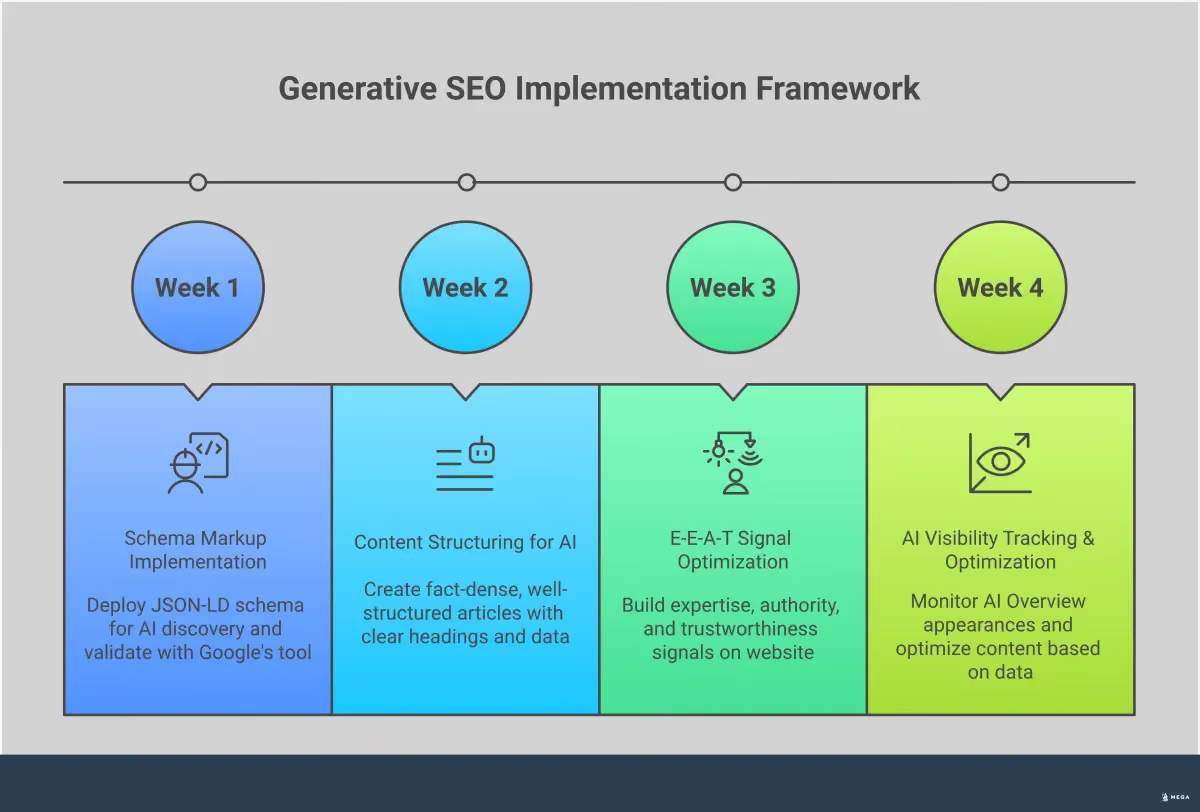
For AI to understand and use your content, it needs to be well-organized. Generative Engine Optimization (GEO) is about making your content easily digestible for machines. This means using clear headings, bullet points, and logical flows to present information. Beyond clean formatting, you can use structured data, also known as schema markup, to explicitly label parts of your content. By adding schema for things like FAQs, products, or events, you are essentially giving AI a roadmap to your information. This helps it pull context and provide direct, accurate answers, making your site a more reliable source for AI-powered overviews.
Technical SEO Foundation
Your generative SEO efforts will only go as far as your technical foundation allows. All the high-quality, well-structured content in the world won't perform well if your website is slow, difficult to navigate, or not optimized for mobile devices. A strong technical SEO base ensures that search engines can efficiently crawl, index, and understand your site. This includes optimizing site speed, ensuring mobile-friendliness, and fixing any crawl errors. Think of it as the essential groundwork that makes all your other content and structuring efforts possible. Without it, you’re building on unstable ground.
Scaling Content with Programmatic SEO
Creating high-quality content consistently is a major challenge, and that's where programmatic SEO comes in. This approach uses data and automation to generate large volumes of targeted pages, which is ideal for businesses looking to cover a wide range of specific topics or locations. In the context of generative SEO, this means you can create hundreds of citation-friendly articles or landing pages that are optimized for AI discovery. By focusing on formats that are easy for AI to cite and distributing content across multiple platforms, you can position your business to win in the new era of AI-powered search.
Common Generative SEO Misconceptions
As with any new approach in marketing, a few myths have started to circulate about generative SEO. It’s easy to get the wrong idea when technology is moving so quickly. Let's clear up some of the most common misunderstandings so you can move forward with a clear and effective strategy. Understanding what generative SEO is—and what it isn’t—is the first step toward using it correctly to grow your business.
It Doesn't Replace Traditional SEO
One of the biggest misconceptions is that generative SEO is here to replace everything we know about traditional search optimization. Think of it more as an evolution than a revolution. Generative SEO builds upon the solid foundation of traditional SEO, it doesn't discard it. Core principles like creating helpful, people-first content, a fast website, and a strong backlink profile are still essential. These practices make your site trustworthy and authoritative for all search algorithms, including AI. Generative SEO simply adds a new layer, optimizing that strong foundation for AI-driven search results.
Quality Is Still More Important Than Quantity
The idea of generating hundreds of articles with a single click is tempting, but it's a common pitfall. Generative SEO is not about flooding the internet with low-effort content. In fact, quality has become even more critical. AI-powered search engines and chatbots are designed to find and present the most accurate, authoritative information. Success now depends less on keyword density and more on what some experts call “fact-density”. Your goal is to create content so insightful and reliable that AI models use it as a source for their answers. This means focusing on depth, accuracy, and providing genuine value.
Human Oversight Is Crucial
While AI can automate many tasks, generative SEO is not a "set it and forget it" strategy. These powerful tools are assistants, not replacements for human expertise and strategic direction. Human oversight is necessary to guide the strategy, review content for accuracy and brand voice, and ensure everything aligns with your business goals. You still need to track performance and make adjustments based on data. An effective approach combines the scale and efficiency of AI with the critical thinking of a human marketer to ensure the final output is both effective and authentic.
Potential Challenges of Generative SEO
Adopting generative SEO can significantly improve your online presence, but it’s not a magic wand. Like any powerful strategy, it comes with a unique set of challenges. The digital landscape is always in motion, and staying ahead requires awareness and adaptability. The key is to understand these hurdles so you can plan for them. From keeping pace with ever-changing search engine rules to ensuring your content remains top-notch, navigating this new frontier requires a thoughtful approach.
The good news is that these challenges are entirely manageable with the right strategy and tools. For small businesses, the goal isn’t to become a technical SEO expert overnight. Instead, it’s about understanding the principles and leveraging technology to handle the heavy lifting. By anticipating potential issues like maintaining content quality at scale and managing the technical backend, you can build a generative SEO strategy that is both effective and sustainable for long-term growth.
Keeping Up with Algorithm Changes
Search engines like Google are constantly refining their systems. The biggest challenge for any SEO strategy is adapting to these increasingly sophisticated, AI-driven search algorithms. These updates prioritize user intent and high-quality content more than ever before, meaning tactics that worked yesterday might not work tomorrow. For a small business owner, trying to keep up with every minor and major algorithm shift can feel like a full-time job. A generative SEO strategy must be agile enough to pivot quickly when search engines change the rules of the game.
Maintaining High-Quality Content
Generative SEO makes it possible to create content at an incredible scale, but quantity should never come at the expense of quality. Success in this new era depends less on keyword stuffing and more on what experts call "fact-density" and audience alignment. Your content needs to be authoritative, well-structured, and genuinely helpful to be cited in AI-generated answers. The challenge is ensuring that every article, blog post, or landing page you produce meets this high standard. It requires a robust process for research and fact-checking to ensure your brand’s content is a reliable source of information.
Managing the Technical Setup
While content is king, the technical foundation of your website is the castle it lives in. Generative SEO requires a solid technical setup to work effectively. This includes things like structured data (Schema markup), which helps search engines understand the context of your content, and managing your site’s crawl budget so search engines can efficiently index your pages. As you scale content creation, you need to ensure your site can handle the load without slowing down. This focus on technical SEO ensures that your high-quality content is actually discoverable by both users and AI.
How to Succeed with Generative SEO
A generative SEO strategy refines your approach to align with how AI models process information. Success comes from a commitment to quality, understanding your audience, and having the right technical foundation. By focusing on a few key areas, you can position your content as the go-to source for search engines and the AI tools they power.
Focus on User Intent
You need to understand the "why" behind a search query. AI-driven search prioritizes content that directly answers a user's question, not just content that matches keywords. Before creating anything, ask what a person searching for this topic truly needs—a guide, a definition, or a comparison? Aligning your content with this user intent is the most important first step.
Create Fact-Dense, Well-Structured Content
AI models value clarity and authority. To become a trusted source, your content needs to be rich with facts, data, and well-explained concepts. Success depends less on keyword density and more on "fact-density." Use clear headings and lists to structure your information logically, making it easier for AI to parse. An AI agent like MEGA's SEO Agent researches topics to build this kind of authoritative content that search models favor.
Optimize for AI-Generated Answers
The goal is to have your content featured directly in AI-generated answers, like Google’s AI Overviews. This requires a focus on semantic comprehensiveness and strong E-E-A-T signals. Clearly define key terms and entities related to your business. For example, a local plumber’s content should state their location, services, and credentials. This helps AI understand who you are and what you do, making it more likely to cite you as a source.
Monitor and Adapt Your Strategy Continuously
The world of AI and search is changing quickly, so a successful strategy requires ongoing monitoring. You’ll need to implement comprehensive analytics to track your performance and visibility in AI-powered search features. This continuous learning is critical. An autonomous platform can handle this for you by automatically updating content based on performance data, ensuring your strategy stays effective without constant manual effort.
How to Measure Your Generative SEO Performance
Measuring the success of generative SEO involves looking at a few new metrics alongside some familiar ones. While you’ll still track traditional results like website traffic, the goal is also to see how visible your content is within AI-powered search results. This means shifting your focus from just keyword rankings to how often your brand is cited as an authoritative source.
AI Search Visibility
AI search visibility measures how often your content appears in AI-generated answers, like Google’s AI Overviews or chatbot responses. Success here depends less on keyword density and more on creating fact-dense, well-structured content that AI models can easily understand and quote. When your brand delivers authoritative insights, you are more likely to be cited in AI answers. Think of it as becoming a trusted source for the AI. You can track this by searching for your target topics and seeing if your brand is mentioned in the generated summaries. This is a key part of a modern AI SEO strategy that focuses on getting your business seen in these new formats.
Organic Traffic and Engagement
While visibility in AI answers is important, you still need to drive people to your website. Organic traffic remains a fundamental metric for any SEO effort. A successful generative SEO strategy should increase your organic traffic by creating high-quality, semantically rich content at scale. This approach helps you not only sustain your traditional search rankings but also capture referral traffic from AI assistants. As search engines get stricter about content quality, focusing on well-researched, helpful articles is more important than ever. Keep an eye on your analytics for a steady increase in visitors and watch engagement metrics like time on page to ensure the content is resonating with your audience.
Content Citation and Mentions
In the world of generative SEO, brand mentions and content citations are the new backlinks. Some studies have found that brand mentions can correlate more strongly with AI visibility than traditional links. When an AI model cites your content, it’s a powerful signal that your information is credible and authoritative. To get your content referenced directly, focus on building your E-E-A-T (Experience, Expertise, Authoritativeness, and Trustworthiness) signals and ensuring your information is accurate and comprehensive. You can monitor this by setting up alerts for your brand name or by using tools that track where your content is being cited across the web.
How to Get Started with Generative SEO
Adopting generative SEO doesn't mean you have to discard everything you've learned about search. Instead, it’s about enhancing your current efforts with smarter, more scalable processes. The goal is to create high-quality, authoritative content that satisfies both human searchers and the AI models powering new search experiences. Getting started is a matter of taking a structured approach: first, understanding your current position, then choosing the right technology, and finally, building a content plan that’s designed for the future of search.
For many small businesses, this can sound like a lot of work. The good news is that you don’t have to manage it all manually. Platforms with autonomous AI agents are designed to handle the heavy lifting, from research and content creation to technical implementation. An end-to-end system can execute a generative SEO strategy for you, allowing you to focus on running your business while your online presence grows. The key is to start with a clear foundation. By breaking down the process into a few manageable steps, you can begin to prepare your website for the next evolution of search.
Evaluate Your Current SEO Strategy
Before you dive into AI-powered content, take stock of your existing SEO efforts. A strong strategy requires a multifaceted approach, so it’s important to know what’s working and where the gaps are. Look at your top-performing pages, the keywords you currently rank for, and your site’s overall technical health. Are you creating content that truly answers your audience's questions, or are you just targeting keywords? Understanding your baseline helps you set clear goals for what you want to achieve with generative SEO, whether it's increasing traffic, improving your visibility in AI-generated answers, or driving more qualified leads.
Select the Right AI Tools
Choosing the right technology is critical. Generative SEO isn't about using simple AI writers to produce content in bulk. It’s about leveraging sophisticated tools that can perform deep semantic analysis, understand user intent, and structure information in a way that AI models can easily process. A powerful generative SEO tool focuses on creating comprehensive, high-quality content that establishes your authority. Instead of just another chat interface, look for a solution that can autonomously manage the entire process, from research to execution, ensuring your content is optimized to be referenced directly in AI responses.
Build Your Content Plan
With generative SEO, your content plan should shift from a keyword-first to a topic-first approach. Success depends less on keyword density and more on fact-density and audience alignment. Think about the core questions and problems your customers have. Your goal is to build a library of authoritative content that covers these topics completely. Plan to create content clusters around your main products or services, with detailed articles that answer specific questions. This approach helps establish your site as a trusted resource, making it more likely that search engines and AI models will cite your brand as the definitive source.