
You spend hours creating content for your website, but it doesn't seem to bring in new customers. This is a common frustration for small business owners. The problem often isn't the quality of your content, but its alignment with what people are actually looking for. This is where understanding user intent comes in. It’s the difference between attracting a casual browser and a motivated buyer. Focusing on the "why" behind a search query allows you to create content that solves a specific problem or answers a direct question, building trust and guiding potential customers toward a sale. This guide explains how to shift your focus from just keywords to user intent.
Key Takeaways
- Look beyond keywords to uncover the real question: Analyze long-tail searches and user sentiment to understand the specific problem or emotion behind a query. This allows you to create content that provides a direct solution instead of just matching words.
- Map your content to the customer's decision-making process: Develop different content for each stage of the buyer's journey—informational articles for awareness, comparison guides for consideration, and case studies for the final decision—to guide potential customers effectively.
- Use engagement data to refine your content: Track metrics like time on page, bounce rate, and conversion rates to see if your content truly satisfies user intent. This data provides clear signals on what to improve or what to create next.
What is user intent and why does it matter?
User intent, often called search intent, is simply the "why" behind a person's search query. When someone types a phrase into Google, they have a specific goal. Are they looking for an answer, trying to find a particular website, or are they ready to buy something? Understanding this purpose is fundamental to creating content that meets your audience's needs and performs well in search results.
Imagine someone searches for "how to fix a leaky faucet." A product page selling new faucets doesn't match their immediate need. They want a step-by-step guide or a video tutorial. By creating content that directly addresses their goal, you provide genuine value. Google’s primary job is to give users the most relevant results, so it rewards websites that excel at matching user intent. Focusing on this helps you attract the right visitors—people who are actually interested in what you offer—and builds the foundation for a successful SEO strategy. It’s about quality over quantity, ensuring the traffic you get is more likely to engage with your business.
The main types of search intent
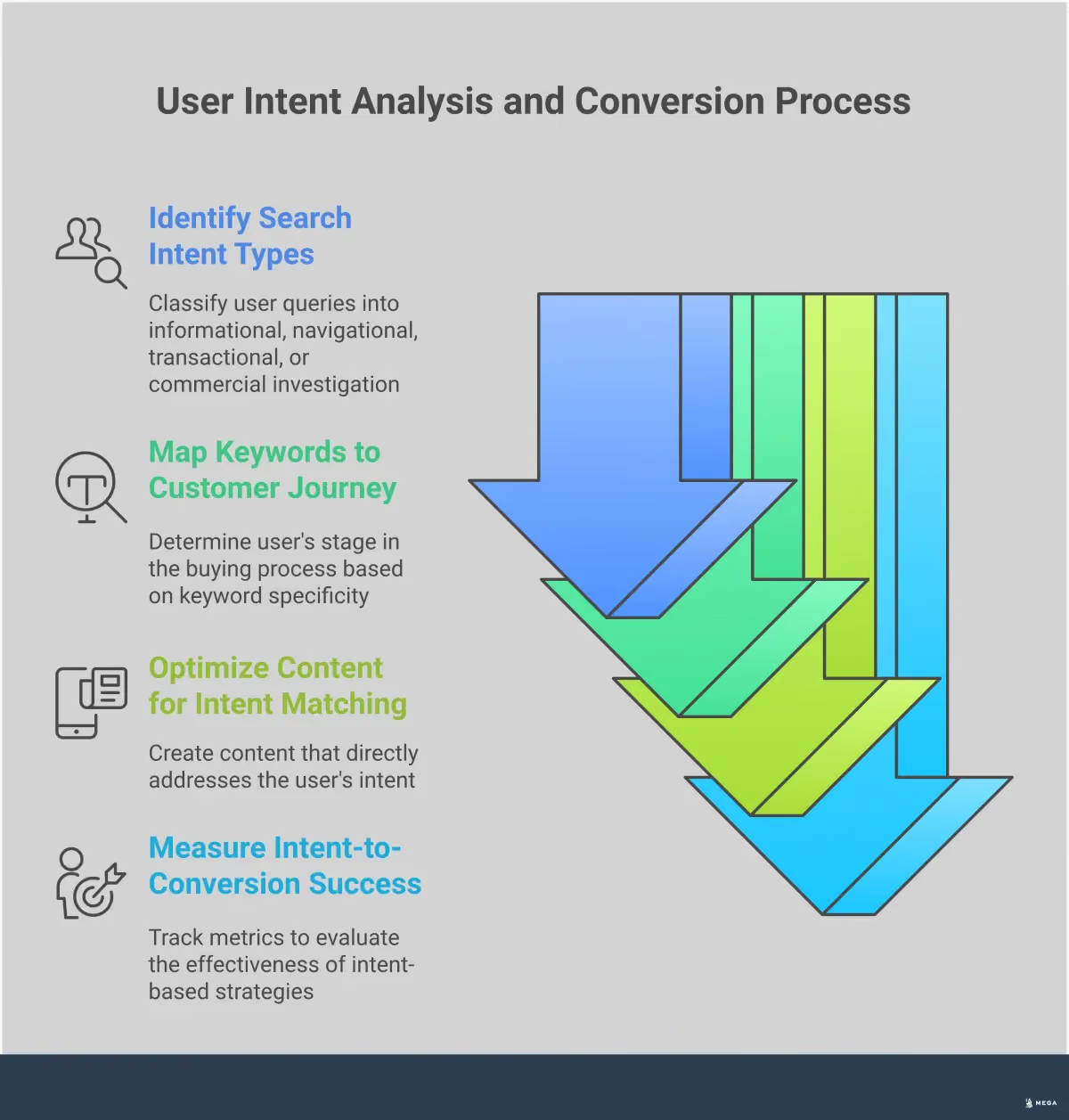
To create content that connects, you first need to understand the different goals users have. Search intent generally falls into four main categories. Each one represents a different point in a customer's journey and requires a tailored content strategy.
- Informational: The user wants to learn something. Their query might be a question like, "what is content marketing?" or a broader topic like "small business accounting tips."
- Navigational: The user is trying to get to a specific website. They already know their destination. Examples include "MEGA AI login" or "YouTube."
- Transactional: The user is ready to make a purchase. These searches often include words like "buy," "price," or "for sale," such as "buy black running shoes size 8."
- Commercial Investigation: The user plans to buy soon but is still researching. They might compare products with queries like "best CRM for small business" or "MEGA AI vs Jasper."
How user intent impacts your business
Aligning your content with user intent has a direct impact on your business goals. When you provide the exact information a user is looking for, they are more likely to stay on your site, read your content, and see your business as a credible authority. This increased engagement sends positive signals to search engines, which can improve your rankings over time.
More importantly, understanding user intent helps you build a more effective marketing funnel. You can write blog posts for informational queries to build awareness, create comparison guides for commercial investigations, and design clear product pages for transactional searches. By focusing on user intent, you create a better experience for potential customers, which builds trust and naturally leads to higher conversion rates. It shifts your strategy from just getting traffic to attracting the right traffic.
How to use sentiment analysis in your content strategy
Understanding user intent goes beyond just the words in a search bar. It’s about grasping the underlying emotion, opinion, and motivation. This is where sentiment analysis comes in. It helps you categorize the feelings behind text data, whether it's from search queries, reviews, or social media comments. By analyzing this sentiment, you can move past simply answering a question and start creating content that truly connects with your audience on an emotional level.
Think of it as listening not just to what your customers say, but how they say it. Are they frustrated, excited, confused, or curious? Knowing this allows you to build a more effective content strategy that addresses their needs more directly, builds trust, and guides them toward a solution. It’s a powerful way to make your content more relevant and impactful. For small businesses, this means you can compete by being more attuned to customer needs than larger, less personal brands. Instead of just targeting keywords, you start targeting feelings, which can lead to stronger customer loyalty and better engagement with your brand. This approach transforms your content from a simple marketing asset into a genuine conversation with your audience.
Find emotional triggers in search queries
Every search query has an emotional component, even if it’s subtle. Someone searching for "emergency plumber near me" is likely feeling stressed, while a search for "best vacation spots for families" is driven by excitement and anticipation. Sentiment analysis helps you identify these emotional triggers in the language your audience uses.
By understanding these feelings, you can create content that speaks directly to them. For a query driven by anxiety, your content should be reassuring and straightforward. For a query based on aspiration, it can be more inspirational and detailed. This approach allows you to tailor your message to resonate with the user's state of mind, making your content feel more personal and helpful.
Match your content's tone to user emotions
Once you understand the emotion behind a search, you can align your content's tone to match it. Sentiment analysis uses AI-driven natural language processing (NLP) to classify the tone and intent of a piece of text. This insight is critical for ensuring your message lands correctly. For example, if potential customers are expressing frustration with a common industry problem, a blog post with an overly cheerful or salesy tone will feel out of touch.
Instead, adopt an empathetic and solution-oriented brand voice. Acknowledge the user's frustration and clearly present a path to a solution. This alignment shows that you understand their problem on a deeper level, which builds trust and credibility. Matching your tone to the user's emotion makes your brand feel more human and approachable.
Use sentiment data to find trending topics
Sentiment analysis is also a fantastic tool for content discovery. By using social listening technology, you can track sentiment around keywords, brands, and topics across social media, forums, and review sites. A sudden spike in positive sentiment around a new product in your industry could signal a great topic for a supportive blog post. Likewise, a wave of negative sentiment around a competitor’s policy change presents an opportunity.
This data helps you create timely and relevant content that taps into ongoing conversations. You can address common concerns, celebrate industry wins, or provide clarity on confusing topics. By monitoring what your audience feels strongly about, you can find a steady stream of content ideas that are almost guaranteed to get a reaction.
What are long-tail keywords and how do they show user intent?
Think about the last time you searched for something online. Did you type a single word, like "shoes"? Or was it something more specific, like "comfortable black flats for work"? That second phrase is a perfect example of a long-tail keyword. Long-tail keywords are longer, more detailed search phrases that users type when they have a clearer idea of what they want. Because they are so specific, they usually have lower search volume than broad terms, but they reveal a much stronger user intent.
Someone searching for "shoes" is probably just browsing. But a person searching for "comfortable black flats for work" is likely looking to make a purchase soon. By targeting these phrases, you attract visitors who are further along in their buying journey. This is a huge advantage for small businesses. Instead of competing with major retailers for broad, expensive keywords, you can focus on these niche queries to connect with highly motivated customers. A solid keyword strategy built around long-tail terms allows you to meet users exactly where they are with the precise information or product they need. These specific searches often have a higher conversion rate because the searcher's need is so well-defined, making them a cost-effective focus for your marketing efforts.
The value of question-based searches
Many long-tail keywords are phrased as questions. Searches like "how much does it cost to replace a roof" or "what is the best dog food for sensitive stomachs" are direct cries for help. These question-based searches are incredibly valuable because they tell you the exact problem a user is trying to solve. When you create content that directly answers these questions, you position your business as a helpful expert. This builds trust and authority with potential customers before they even think about making a purchase. Answering these queries effectively in your content can also help you get featured in Google's "People Also Ask" sections, giving your business more visibility.
Find content gaps with specific queries
Listening to the specific, long-tail questions your audience asks is one of the best ways to find gaps in your content. If you’re a local electrician and you notice people are searching for "how to install a dimmer switch safely," but you don't have a blog post or video on that topic, you've just found a content gap. By creating a piece of content that addresses this specific query, you can attract qualified local traffic to your site. You can uncover these opportunities by looking at your site's search data, browsing forums like Reddit, or using keyword research tools that highlight question-based queries. Filling these gaps ensures your website becomes a comprehensive resource for your target audience.
How to analyze user intent with modern tools
Understanding what your customers are truly looking for doesn't have to be a guessing game. Modern tools can help you move past simple keyword matching and get to the heart of user intent. Instead of just knowing what people search for, you can start to understand why they search for it. This shift in perspective is what separates content that gets ignored from content that converts.
The right tools can automate much of this analysis, which is a huge advantage for small businesses where time is always in short supply. They can process large amounts of data to spot trends, identify the questions your audience is asking, and show you how your competitors are meeting those needs. By using technology to handle the heavy lifting, you can focus on creating content that genuinely helps your audience and aligns with your business goals. This data-driven approach allows you to make more informed decisions about your SEO strategy, ensuring your efforts are focused where they will have the most impact.
Analyze search behavior patterns
To understand intent, you need to look at how people search. Examining search behavior patterns helps you identify the motivations behind different queries. This means looking at the specific words people use, the questions they ask, and the journey they take through different searches. For example, a search for "plumbers near me" shows an immediate, transactional need, while "how to fix a leaky faucet" indicates an informational need. By recognizing these patterns, you can create content that directly addresses the user's specific situation. This approach helps you understand user intent and deliver more relevant results.
Look beyond basic keyword data
Keywords are a starting point, but they don't tell the whole story. To really grasp user intent, you have to look beyond basic metrics like search volume. While a keyword might have high traffic, it doesn't reveal the true purpose behind the search. Deeper insights come from analyzing things like click-through rates and user engagement on your pages. A low click-through rate on a high-ranking page might mean your title and description don't match what the user expected to find. Effective keyword research involves digging into these secondary metrics to understand if you are truly satisfying the searcher's needs.
Combine insights from multiple platforms
Your website isn't the only place your customers are talking. To get a complete picture of user intent, you should combine insights from different platforms. Data from your social media channels, customer service inquiries, and product reviews can reveal pain points and questions that might not show up in traditional keyword research. For instance, if you see a lot of questions about a specific product feature on Facebook, that's a clear signal to create detailed content addressing it. This multi-channel approach gives you a more comprehensive view of user behavior and helps you create a content strategy that meets your audience where they are.
Common challenges for small businesses with intent-based SEO
Understanding user intent is a major step forward, but putting it into practice can be tough, especially for small businesses. You're often working with constraints that larger companies don't face. The most common hurdles usually fall into three main categories: limited resources, technical knowledge gaps, and the constant pressure of competing priorities. Recognizing these challenges is the first step toward building a strategy that works for you.
Working with limited resources
Small businesses typically operate on a tight budget, which makes investing in SEO a careful balancing act. You may not have the funds to hire a dedicated SEO specialist or subscribe to multiple high-end analytics tools. This can make it difficult to keep up with the latest trends and implement a comprehensive strategy. Time is another critical resource. When you and your team are already stretched thin, dedicating enough hours to keyword research, content creation, and performance analysis feels like a luxury. Creating an effective marketing budget that allocates specific funds for SEO tools and content can help you make the most of what you have.
Overcoming technical knowledge gaps
You're an expert in your industry, but you might not be an expert in technical SEO—and that's perfectly fine. Many small business owners find the technical side of SEO intimidating. Aspects like site speed optimization, schema markup, and mobile-friendliness are crucial for signaling intent to search engines, but they require specific knowledge to implement correctly. Without a technical background, it can be hard to know where to start or how to fix issues that arise. This knowledge gap can make it challenging to build a strong technical SEO foundation for your content, preventing it from reaching the right audience even if it perfectly matches their intent.
Managing time and competing priorities
As a small business owner, you juggle countless responsibilities every day. From managing inventory and helping customers to handling finances and marketing, your to-do list is endless. Intent-based SEO isn't a "set it and forget it" task; it requires ongoing effort. You need to consistently analyze performance, update old content, and create new articles to meet evolving search trends. Finding the time to dedicate to these activities can be a major challenge when you have so many other competing priorities. This often leads to SEO taking a backseat, which can slow down your long-term growth.
Create content that matches user intent at every stage
Creating content that resonates with your audience means meeting them where they are. A potential customer who is just realizing they have a problem needs different information than someone who is ready to make a purchase. By mapping your content to the different stages of the customer journey, you can guide people from initial curiosity to a final sale. This isn't just about making a sale; it's about building a relationship based on trust and value.
This process involves creating distinct types of content for the awareness, consideration, and decision stages. At the awareness stage, you educate and become a trusted resource. In the consideration stage, you help them evaluate solutions and position your business as a viable option. And at the decision stage, you provide the final proof points they need to choose you. This strategic approach ensures your marketing efforts are efficient, as you're delivering the right message at the right time. It also improves the user experience, making it more likely that a searcher will not only convert but also become a loyal customer.
Content for the awareness stage
During the awareness stage, people are looking for answers, resources, and education. They have a problem or a question, but they aren’t necessarily thinking about products or brands yet. Your goal here is to provide helpful, informational content that addresses their pain points. Think blog posts, how-to guides, checklists, and informational articles.
To succeed at this stage, you need to understand what questions your audience is asking. What are their biggest challenges? What topics are they searching for? Your content should answer these questions directly. For example, a local bakery might write a post titled, “How to Choose the Perfect Cake for a Wedding.” This content establishes your expertise and builds initial trust without a hard sell.
Content for the consideration and decision stages
Once someone moves into the consideration and decision stages, their intent becomes more commercial. They understand their problem and are now actively researching and comparing potential solutions. This is where you introduce your products or services more directly. Your content should focus on helping them evaluate their options and demonstrating why you are the right choice.
Effective content for these later stages includes detailed product pages, case studies, customer testimonials, and video demonstrations. These assets show your solution in action and provide the social proof needed to build confidence. For instance, a software company could create a detailed landing page showing how its SEO agent solves specific marketing challenges for small businesses, complete with user reviews and a clear call to action.
Build comparison pages to fill visibility gaps
A powerful strategy for capturing high-intent users in the decision stage is building comparison pages. When customers are close to buying, they often search for terms like "[Your Brand] vs. [Competitor Brand]" or "best [product type] for [use case]." Creating pages that directly address these queries allows you to control the conversation and highlight your unique strengths.
These pages should offer an honest, balanced look at the options, but naturally, you’ll frame your own product as the superior solution for your target audience. By directly comparing features, pricing, and benefits, you provide immense value to searchers and position your brand as a transparent, helpful resource. This tactic is excellent for capturing traffic from people who are ready to make a decision.
How to adapt to changes in search
The way people look for information is always changing. Search engines are moving beyond simple keyword matching to understand the context and intent behind every query. For your business, staying visible means adapting to these shifts. This involves thinking less about specific keywords and more about the questions your customers are asking, no matter how they ask them or on what platform. By focusing on providing clear, direct answers, you can meet your audience where they are and build trust.
Voice search and conversational queries
More people are using voice assistants like Siri and Alexa to search, which means they're asking questions in full sentences. Instead of typing "pizza delivery," they might ask, "Where can I get a pizza delivered near me?" This shift requires a new approach to keyword research that focuses on natural language. To capture this traffic, think about the "why" behind a query. Create content that directly answers common questions your customers have. FAQ pages, how-to guides, and blog posts with question-based headings are great ways to align your content with the conversational style of voice search.
AI-powered search and featured snippets
AI is changing the look of search results pages. With features like Google's AI Overviews and featured snippets, search engines are trying to provide direct answers at the top of the page. This means your goal isn't just to rank number one but to be the answer. Search volume alone doesn't tell you who your customers are or what they need. To appear in these prominent spots, your content needs to be clear, well-structured, and authoritative. Use headings, lists, and concise paragraphs to make it easy for search engines to pull information from your page and feature it as a snippet.
Optimize content for multiple platforms
Your customers don't just use one platform to find information. Their journey might start on a social media app, move to a search engine for research, and end on a shopping site. Your content strategy should reflect this reality. As expert Neil Patel notes, modern search brings "AI, search, social, and shopping all in one place." You need to understand the unique user intent on each platform and tailor your content accordingly. A visual post might work best for Instagram, while a detailed comparison guide is better for your blog. A consistent brand message across all channels helps you build a strong online presence and connect with customers at every touchpoint.
What are the best tools for analyzing user intent?
Understanding what your audience is thinking is the key to effective SEO, but you don't have to guess. A variety of tools can help you analyze search data and customer conversations to get a clearer picture of the intent behind the keywords. While you can learn a lot from manually reviewing search results, these tools give you the power to analyze data at a much larger scale, uncovering patterns you might otherwise miss. They work by processing huge amounts of text from reviews, social media, and support tickets to classify the language used. This gives you direct insight into what customers want, what problems they face, and how they feel about potential solutions.
Using these tools helps you move beyond basic keyword matching and start creating content that truly resonates with your audience's needs and emotions. This data-driven approach allows you to build a more effective content strategy that answers questions, solves problems, and builds trust. For small businesses, this means you can compete by being smarter with your content, not just by having a bigger budget. Instead of creating content you think people want, you can create content you know they need, based on real conversations and search behavior.
Specialized sentiment analysis platforms
Sentiment analysis platforms are designed to figure out the emotion and intent behind written text. Think of them as a way to listen to the collective voice of your customers. These tools analyze customer interactions from all your channels—like reviews, emails, and support chats—to tell you if the sentiment is positive, negative, or neutral. This is incredibly useful for understanding how people feel about your industry, products, or competitors. For example, platforms like Qualtrics XM Discover use natural language processing to interpret sentiment, emotion, and intent from customer support conversations. By analyzing this data, you can identify common pain points or discover what features customers love most, giving you powerful ideas for content that addresses their real-world concerns.
Natural language processing tools
Natural language processing, or NLP, is the core technology that makes sentiment analysis possible. NLP tools are what allow a computer to read, understand, and interpret human language. While some platforms are built specifically for sentiment analysis, many broader marketing tools now include NLP features. These tools can analyze unstructured data from sources like social media posts and survey responses to give you a clear view of public opinion. As Meltwater explains, this technology uses AI-driven NLP to classify text from sources like social comments and reviews into positive, negative, or neutral sentiment. This helps you understand the context around brand mentions and tailor your content's tone and messaging to match what your audience is feeling.
Cross-platform monitoring solutions
Your audience isn't just on Google. They're talking about their needs and problems on social media, forums, and review sites. Cross-platform monitoring solutions help you listen in on these conversations across the web. These tools track mentions of your brand, products, or relevant keywords, and many include built-in sentiment analysis to help you make sense of the data you collect. A specialized brand monitoring tool like Awario helps you track mentions across social media and identify the sentiment in each comment or review. This gives you a holistic view of your brand's reputation and what your target audience is talking about, helping you discover emerging trends and find new content ideas.
How MEGA AI helps you master user intent
Understanding and acting on user intent can feel like a full-time job, especially when you're running a small business. Manual research is time-consuming, and creating perfectly aligned content requires a deep understanding of your audience. This is where automation can make a significant difference. MEGA AI’s platform is designed to handle the heavy lifting of intent analysis and content creation, so you can focus on other parts of your business. Our AI agents work autonomously to research, write, and optimize your content, ensuring every piece connects with your audience's needs.
Uncover true intent with automated keyword research
Guessing what your customers want is a risky strategy. MEGA AI’s SEO Agent moves beyond basic keyword matching to find the real motivation behind a search. Using advanced natural language processing, the agent analyzes the sentiment and emotional triggers within search queries. It helps you understand whether a user is frustrated, curious, or ready to buy. This process classifies search terms based on their underlying feeling—positive, negative, or neutral—giving you a much clearer picture of what your audience is looking for. This automated research provides the foundation for a content strategy that truly resonates with potential customers.
Generate content that aligns with user needs
Once you understand the intent, the next step is creating content that meets those needs. MEGA AI generates high-quality articles, blog posts, and landing pages that are tailored to specific user queries. By categorizing customer opinions and emotions from search data, the platform ensures the tone and information in the content match what the user expects to find. If the intent is informational, the AI creates a comprehensive guide. If it's transactional, it produces a compelling product page. This alignment helps you build trust and guide users effectively through their customer journey.
Optimize for every platform to expand your reach
User intent isn't limited to Google. People are now searching for information on social media, through voice assistants, and directly within AI chatbots. Your content needs to be visible on all of them. MEGA AI’s Maintenance Agent constantly works to re-optimize your existing content for different platforms. It can update an article to perform better in Google’s AI Overviews or reformat it to answer questions on a platform like ChatGPT. This ensures your business stays relevant and accessible, reaching customers wherever they are looking for answers and expanding your digital footprint beyond traditional search engines.
Measure the success of your intent-driven content
Creating content that aligns with user intent is a huge step, but your work isn't finished once you hit publish. The next critical phase is measuring its performance. By tracking the right data, you can see what’s resonating with your audience and what isn’t. This information is essential for refining your approach and ensuring your efforts translate into real business growth. Think of it as a feedback loop: you create, you measure, you adjust, and you improve.
Key metrics to track
To understand if your content truly matches user intent, you need to look beyond simple page views. Focus on key performance indicators (KPIs) that reveal how people interact with your pages. A low bounce rate, for instance, suggests that visitors found what they were looking for and didn't immediately leave. Similarly, a long time on page indicates that your content is engaging and holds their attention. The most important metric is your conversion rate. Are users taking the next step you want them to, like signing up for a newsletter or contacting you for a quote? These engagement metrics tell a much richer story about whether you’re successfully meeting user needs.
Adjust your strategy with performance data
The data you collect is only valuable if you use it to make informed decisions. Regularly review your analytics to spot patterns. If a blog post gets a lot of traffic but has a high bounce rate and low time on page, the content might not be aligning with the search query that brought users there. This is your cue to refine your content strategy. You might need to rewrite the introduction, add more relevant information, or adjust the page title and meta description to set clearer expectations. Don't be afraid to test different approaches. Small, data-driven adjustments over time can lead to significant improvements in performance and a better experience for your audience.