
Think of a social media algorithm as a very busy librarian with millions of pieces of content to sort every second. To do its job, it needs clear signals to understand what your content is about and who it’s for. Structure provides those signals. When your content is well-organized, it’s not just easier for your audience to read; it’s also easier for algorithms to categorize and distribute. Simple formatting choices like headlines, bullet points, and captions can make a significant difference in whether your content reaches the right people or gets lost in the noise. This guide breaks down those structural elements.
Key Takeaways
- Prioritize clear structure to help algorithms find your audience: Use elements like headlines, on-screen text, and short paragraphs to give algorithms the signals they need to understand your content and show it to the right people.
- Adapt your content format for each social platform: A single post structure won't work everywhere. Adjust your video length, caption style, and visual layout to match the specific expectations of each platform’s algorithm and audience.
- Test and optimize your content based on performance data: Don't just post and forget. A/B test different formats, analyze engagement patterns like watch time, and use the insights to consistently improve your content structure.
Why Your Social Media Content Structure Matters
You can create the most insightful video or write the most compelling caption, but if it’s not structured correctly, it might never reach the right audience. In the past, creativity alone could make a post go viral. Now, success depends just as much on how well you package your content for the platform’s algorithm.
Think of social media algorithms as incredibly fast, but very literal, readers. They don't appreciate nuance the way a human does. Instead, they scan for clear signals to understand what your content is about and who it’s for. An algorithm can't rank what it can't understand, and it relies on elements like headlines, on-screen text, and distinct sections to categorize your post and serve it to interested users.
If your content isn't easily skimmable at a glance, the platform has no way to classify it or match it to the right audience. This is why a wall of text in a caption gets less engagement than one with short paragraphs and bullet points. It’s also why a video with clear on-screen text performs better than one without. Each structural element acts as a signpost, guiding both the algorithm and the user.
Furthermore, treating all social platforms the same is one of the biggest mistakes you can make. The structure that works for a 15-second TikTok won't translate to a LinkedIn article. Each algorithm looks for slightly different cues, from technical details like video quality to the way you use captions and hashtags. By focusing on a clear and intentional structure, you give the algorithm a roadmap to your content, ensuring your hard work gets seen by the people who will find it most valuable.
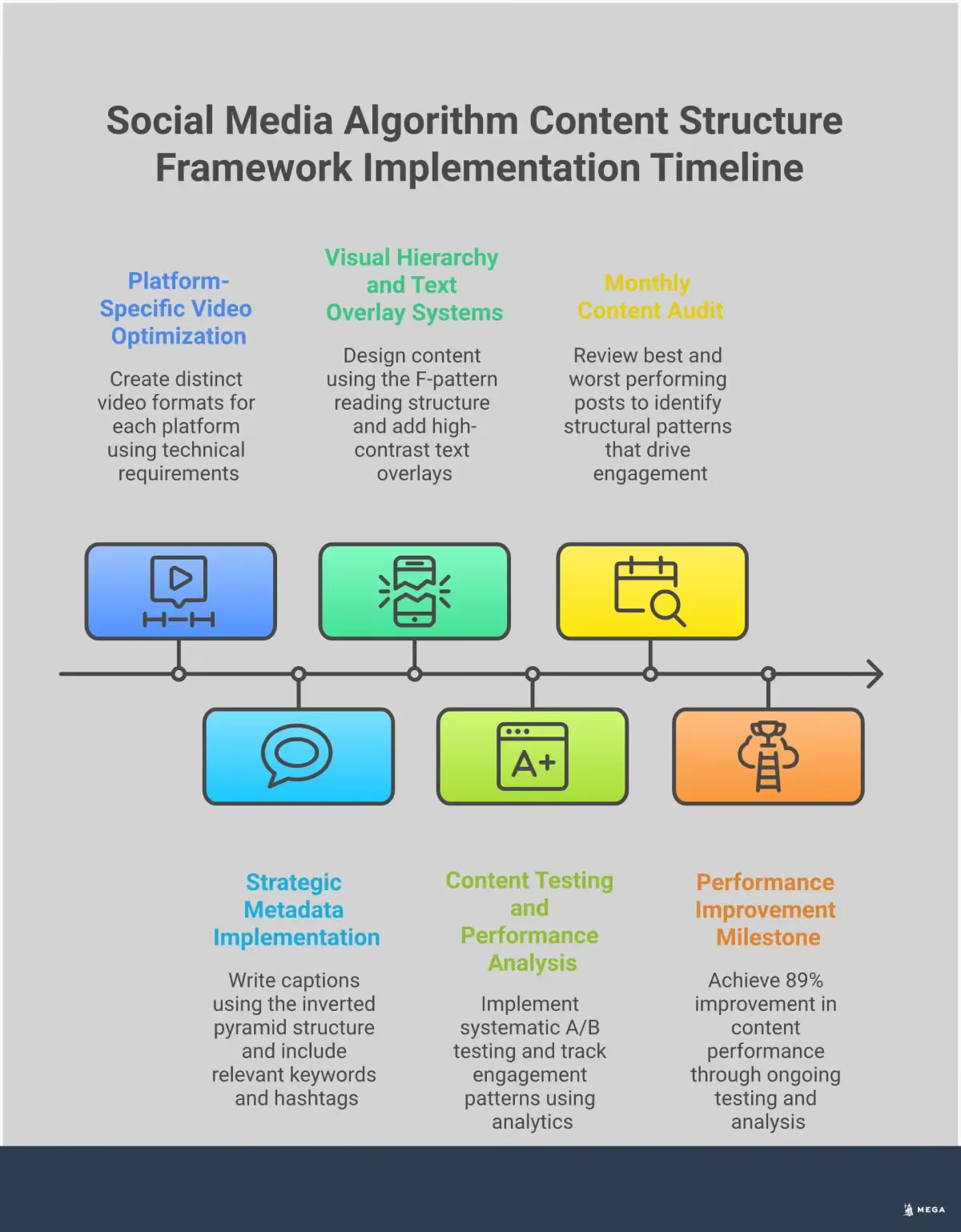
How Social Media Algorithms Have Changed
Not long ago, social media feeds were mostly chronological. Success was a numbers game of posting frequently and collecting likes. Today, the landscape is entirely different. Algorithms have evolved from simple counters into sophisticated AI systems that analyze and rank content based on its substance and relevance to each user. They are less interested in vanity metrics and more focused on understanding what your content is actually about.
This shift means the structure of your content is no longer just a stylistic choice; it’s a technical requirement for success. Think of social media platforms as search engines for visual content. Just as Google scans a blog post for headings and keywords to understand its topic, social media algorithms now scan your videos and images for similar clues. They are designed to reward clarity. When you structure your content in a way that is easy for the algorithm to interpret, you make it easier for the platform to serve it to the right audience—the people most likely to engage and convert.
How Algorithms Learn to "Read" Content
An algorithm can't rank what it can't understand. Modern platforms use advanced AI, including natural language processing (NLP) and computer vision, to interpret content much like a human does. They scan captions for keywords, read text overlays on videos, and even analyze the objects and context within an image. This process allows the algorithm to categorize your content and determine its topic with incredible accuracy. A well-structured post provides clear, unambiguous signals that help the algorithm do its job. Without that structure, your content is essentially invisible, no matter how great it looks.
Why Clarity Now Matters More Than Aesthetics
Because algorithms now "read" your content, clarity has become more important than pure aesthetics. A visually stunning video with a vague, unhelpful caption will often underperform a simpler video that uses clear on-screen text and a descriptive caption. Creators who use structured formats—like bullet points, numbered lists, and clear section breaks—give the algorithm exactly what it needs to understand and distribute their content effectively. This is also why you can't treat all platforms the same. Each algorithm has its own preferences and nuances. A content strategy that works on Instagram may not translate to TikTok without adjustments to its structure and formatting.
What Makes Content Easy for Algorithms to Understand?
Think of a social media algorithm as a very busy librarian. It has millions of pieces of content to sort and recommend every second. To do its job effectively, it needs clear signals to understand what your content is about and who it’s for. Structure provides those signals. When your content is well-organized, it’s not just easier for your audience to read; it’s also easier for algorithms to categorize and distribute. Simple formatting choices like headlines, bullet points, and captions can make a significant difference in whether your content reaches the right people or gets lost in the noise.
Use Clear Headlines and Section Breaks
Algorithms scan content for structure to understand its core message, much like a person skims a document. Clear headlines and section breaks act as signposts that highlight the most important topics. The algorithm can’t rank what it can’t understand, and it looks for this kind of organization to find context. For a multi-image carousel on Instagram or a long description on YouTube, breaking up your content into logical sections with bolded headlines helps the system identify key themes. This simple step helps ensure your content is categorized correctly and shown to users who are actively interested in that subject.
Add Text Overlays and Captions
Text on screen is one of the most direct ways to tell an algorithm what your video or image is about. When a video uses text overlays to present key points or information, the system can extract that meaning instantly. This is far more efficient for the algorithm than trying to interpret the visuals alone. Similarly, adding closed captions to your videos serves two key functions. First, it makes your content accessible to a broader audience. Second, it provides the algorithm with a full, word-for-word transcript, which is a rich source of keywords and context that helps it understand and rank your content more accurately.
Use Bullet Points and Short Paragraphs
Long, dense blocks of text are difficult for both humans and algorithms to process. Just as your followers are more likely to skim for key takeaways, algorithms also look for digestible information. Breaking your captions and descriptions into short paragraphs makes them more approachable. Using bullet points or numbered lists is an even better way to structure information. This formatting creates clear, scannable points that an algorithm can easily parse to identify the main ideas. It’s a simple change that improves readability for your audience and provides a clean, organized data structure for the platform’s algorithm.
Create a Clear Visual Hierarchy
A strong visual hierarchy guides the viewer’s attention to the most important elements of your content first. This applies to everything from a single graphic to a video. Algorithms pay close attention to user behavior signals like watch time and engagement. When your content is visually organized, it keeps users engaged longer, sending a positive signal to the algorithm. It’s also important to remember that visual best practices are not universal. One of the biggest mistakes you can make is treating all platforms the same. A visual structure that works on TikTok may not be effective on LinkedIn, so adapt your design to fit each platform’s unique environment.
How Do Algorithms Process Your Content?
Think of a social media algorithm as a super-fast librarian. Its job is to categorize every piece of content and deliver it to the right person at the right time. To do this, it needs to quickly understand what your post is about, who it's for, and why it’s valuable. If your content is a jumbled mess, the algorithm can’t classify it correctly, and it won't get shown to the people you want to reach.
Algorithms can't rank what they can't understand. They process information by looking for structure, clarity, and context, much like a human reader would. By providing clear signals through your content’s structure, you’re essentially giving the algorithm a roadmap to follow. This helps it match your content with users who are most likely to engage with it, which is the key to expanding your reach.
How Algorithms Scan Content Like a Human
Just as you might skim a blog post for headlines and bullet points to get the main idea, algorithms scan your content for similar structural clues. They don't "watch" a video or "read" a caption for pleasure; they analyze it for data points. A well-structured post with clear headings, on-screen text, and a descriptive caption is easy for an algorithm to process. This initial content analysis helps the platform quickly determine the topic and relevance of your post, which is the first step in getting it into the right feeds. Without that scannable structure, your content is essentially invisible.
What Context Clues Do Algorithms Look For?
Algorithms rely on specific context clues to figure out what your content is about. These clues include the words in your caption, the hashtags you use, any text overlays on your images or videos, and even the words spoken in your audio. If your video isn't skimmable at a glance, the platform has no way to classify it or match it to the right audience. Each element should work together to tell a cohesive story. For example, a video about baking sourdough bread should have captions mentioning "sourdough," on-screen text highlighting key steps, and relevant hashtags like #sourdoughbaking to confirm the topic for the algorithm.
How Algorithms Recognize Content Patterns
Algorithms look for patterns to understand your account's niche over time. When you consistently use a clear structure—like starting videos with a headline or using similar formatting in your captions—you train the algorithm to recognize your content. It learns what topics you cover and who your target audience is. This is why a scattershot approach rarely works. By establishing recognizable patterns, you help the algorithm build a profile of your account, making it more likely to serve your future content to an engaged audience. Tools that help you with creative testing can also uncover which patterns perform best for your specific audience.
How to Use Metadata for Better Discoverability
Think of metadata as the signposts you leave for social media algorithms. It’s the extra information—like captions, keywords, and tags—that tells the platform what your content is about and who should see it. When you structure your metadata thoughtfully, you make it incredibly easy for algorithms to categorize your posts and deliver them to the right audience. This simple step can dramatically improve your content's reach and impact without any extra design work. By optimizing these small details, you give your content a much better chance of being discovered by the people who matter most to your business.
Write Captions That Act as a Map
Your caption is more than just an afterthought; it’s a map for both your audience and the algorithm. A well-written caption provides essential context, guiding viewers through your post's message and helping the algorithm understand its purpose. Instead of a one-liner, try crafting a caption that explains the "what" and "why" behind your visual. This guidance helps the algorithm classify your content and match it with users who will find it valuable. A clear, descriptive caption turns a simple post into a well-structured piece of content that algorithms can easily process and promote, ensuring your message lands as intended.
Integrate Keywords Strategically
Every social media platform is also a search engine. Users are constantly searching for solutions, products, and inspiration, and algorithms are working to provide the most relevant results. To make sure your content shows up, you need to integrate relevant keywords into your posts. Think about the terms your ideal customer would use to find you and weave them naturally into your captions, on-screen text, and even your video scripts. This isn’t about stuffing your posts with keywords; it’s about providing clear context that helps the algorithm connect your content with the right audience. When an algorithm understands your topic, it can serve your post to users actively looking for what you offer.
Use Hashtags to Add Structure
Hashtags are one of the most direct ways to add structure to your social media posts. They function like file folders, neatly categorizing your content so algorithms can quickly understand its topic and intended audience. When you use relevant hashtags, you’re essentially telling the platform, "Show this post to people interested in these specific subjects." This simple action can significantly enhance discoverability. For best results, use a mix of broad hashtags to reach a wider audience, niche hashtags to connect with a more targeted community, and a branded hashtag to build recognition for your business. This layered approach helps algorithms distribute your content effectively.
Write Alt Text for Accessibility
Alternative text, or alt text, is a written description of an image that helps screen readers describe visuals to users with visual impairments. While its primary role is to make content more accessible, it also offers a significant benefit for discoverability. By writing descriptive alt text, you provide another layer of context for algorithms. This text helps the platform’s AI understand exactly what is in your image, which can improve its ranking in search results and feeds. Overlooking details like alt text is a common mistake, as it serves both accessibility and SEO. Taking a moment to write clear alt text is a simple way to make your content more inclusive and algorithm-friendly.
How to Structure Videos for Better Performance
Just like written content, your videos need a clear structure to perform well on social media. Algorithms are built to promote content that keeps users watching, and a well-organized video is much easier for viewers to follow. When a video has a logical flow with a clear beginning, middle, and end, it signals to the algorithm that the content is high-quality and provides a good user experience. This structure also helps the algorithm understand the video's topic, making it more likely to show it to the right audience.
Think of it this way: an algorithm processes information in a way that mimics human understanding. It looks for context, clarity, and patterns. A video that jumps between topics without a clear narrative is confusing for both people and machines. By structuring your videos with intention, you’re not just making them more enjoyable for your audience; you’re also giving the algorithm the data it needs to categorize and distribute your content effectively. This means breaking down your message into digestible parts, using visual cues to guide the viewer, and ensuring the technical quality is solid.
Start with a Clear Headline and Intro
Your video’s headline and the first few seconds of its introduction are your most important assets. A strong, descriptive headline immediately tells both viewers and algorithms what your video is about. It sets expectations and provides crucial context. The algorithm can't rank what it can't understand, so a vague title can hurt your video’s discoverability. Your intro should then deliver on the headline's promise, hooking the viewer and confirming they’re in the right place. This initial clarity helps reduce drop-off rates, a key metric that platforms use to measure engagement. A strong start signals that your content is relevant, encouraging the algorithm to show it to more people.
Break Your Video into Sections
Organizing your video into distinct sections makes your content easier to consume and helps algorithms map out its structure. Just as an algorithm looks for subheadings in a blog post, it looks for clear divisions in a video. You can create these sections using on-screen text titles, visual transitions, or even by verbally announcing a new topic. This approach guides your audience through the information, preventing them from feeling overwhelmed. For the algorithm, these section breaks act as signposts, highlighting the key themes and subtopics you cover. This detailed understanding allows the platform to recommend your video in more specific contexts, improving its chances of reaching a highly interested audience.
Add On-Screen Text for Key Points
Many people watch social media videos with the sound off, making on-screen text essential for communication. Adding text overlays or captions for key points ensures your message gets across regardless of how someone is watching. For algorithms, this text provides another layer of valuable data. When a video uses bullet points or short blocks of text, the system can extract meaning instantly and verify that the visual content aligns with the topic. This practice also improves video accessibility, which is a positive signal for platforms that prioritize inclusive content. Use text to emphasize important statistics, define key terms, or summarize main ideas to make your video more effective.
Use Simple and Direct Language
Clarity is crucial for algorithmic success. Using simple, direct language in your script and on-screen text helps ensure your message is understood by the widest possible audience. Complex jargon or overly academic language can confuse viewers and make it harder for algorithms to categorize your content accurately. Remember, the algorithm is trying to match your video with users who will find it relevant. When you speak clearly and concisely, you provide clean, unambiguous data for the algorithm to work with. This doesn't mean you have to simplify your core message; it just means you should focus on communicating your ideas in the most straightforward way possible.
Check Your Technical Quality
Poor technical quality can stop a great video in its tracks. Issues like bad lighting, muffled audio, or incorrect video settings can cause viewers to click away, signaling to the algorithm that your content provides a poor user experience. For example, a common mistake is shooting at the wrong frame rate, which can result in choppy or unnatural-looking motion. Before you post, review your video for technical issues. Ensure your subject is well-lit, your audio is crisp, and your video is exported in a high resolution. Investing in a basic video production setup, even just a simple ring light and an external microphone, can make a significant difference in how your content is perceived.
What Content Structuring Mistakes Should You Avoid?
Creating content that algorithms favor is as much about avoiding common pitfalls as it is about following best practices. Even the most compelling message can get lost if it’s packaged incorrectly. For busy founders and small business owners, steering clear of these mistakes saves time and ensures your hard work pays off. By understanding what can trip up an algorithm, you can create content that is clear, discoverable, and effective from the start.
Forgetting Platform-Specific Rules
One of the most frequent mistakes is treating all social media platforms as if they are the same. Each network has a distinct culture, audience, and set of algorithmic preferences. A professional case study that performs well on LinkedIn will likely fall flat as a 60-second TikTok video. Instead of a one-size-fits-all approach, you need to tailor your content to the environment. Pay attention to video length requirements, image dimensions, and the type of content that resonates with each platform’s user base. This shows the algorithm, and your audience, that you understand the rules of the road.
Leaving Out a Clear Call to Action
Your content might be engaging and informative, but what do you want your audience to do after they’ve seen it? Without a clear call to action (CTA), you leave viewers wondering what the next step is. An effective CTA guides your audience and can significantly improve your content’s performance. It doesn’t have to be complex; simple prompts like “Visit our website to learn more,” “Shop the collection now,” or “Leave a comment below” are direct and effective. Make sure every piece of content has a purpose and a clear directive that encourages further engagement with your brand.
Using Poor Lighting or Audio
You don’t need a professional film studio to create great social media content, but technical quality matters. Unstable camerawork, poor lighting, and muffled audio can make your content look unprofessional and cause viewers to scroll away instantly. These issues signal low quality to both users and algorithms. Simple fixes can make a huge difference. Film in a well-lit area, use a tripod or stabilize your phone, and consider an inexpensive microphone to ensure your audio is crisp and clear. High-quality production helps maintain viewer attention and signals to algorithms that your content is worth promoting.
Posting the Same Content Everywhere
While it’s tempting to save time by posting the exact same message across all your channels, this strategy often backfires. Failing to adapt your content for each platform’s unique audience can lead to poor engagement. A better approach is to repurpose your core message for each network. For example, a single customer testimonial could become a polished video for Instagram, a text-based post with a professional headshot for LinkedIn, and a casual, behind-the-scenes story for Facebook. This ensures your content feels native to the platform and resonates more deeply with its specific audience.
Writing Dense, Unstructured Content
Algorithms, much like people, have a hard time processing large, unbroken blocks of text. If a system can’t quickly understand the topic and structure of your content, it will struggle to rank and distribute it effectively. Dense paragraphs are overwhelming for users scrolling on a mobile device and make it difficult for algorithms to extract key information. Break up your captions and on-screen text with short sentences, bullet points, and plenty of white space. This simple formatting makes your content more readable for your audience and easier for algorithms to scan and categorize.
How to Build Content That Algorithms Understand
Building content that algorithms favor isn’t about finding secret loopholes. It’s about clarity. Think of an algorithm as a very literal reader trying to understand your content so it can show it to the right audience. If your message is buried in confusing visuals or dense text, the algorithm simply won’t know who to show it to. The goal is to make your content as easy to process as possible by using clear sections, consistent formatting, and a logical flow. When you structure your content logically, you provide the signals that algorithms need to categorize and distribute your work effectively. This approach also makes your content more enjoyable for your human audience, which is always the ultimate goal.
Create Clear Content Sections
Algorithms can't rank what they can't understand, and they understand content by looking for structure and context. Just like a person skimming an article, an algorithm looks for clear sections to quickly grasp the main points. For a video, this could mean having a distinct introduction, a middle section that explains the core idea, and a conclusion with a call to action. For a text post, it means using short paragraphs with clear topic sentences. This organization helps the algorithm categorize your content accurately and shows that you’re delivering value in a digestible way, which can improve its visibility.
Use Consistent Visual Formatting
When your content has a consistent look and feel, it becomes instantly recognizable to both your audience and the algorithms. This includes using the same fonts, color palette, and on-screen graphic styles across your posts. When a video uses consistent formatting like text overlays or bullet points, the system can extract meaning more efficiently. This visual predictability helps algorithms learn your content’s signature style, making it easier for them to identify and distribute your posts. A strong brand identity not only looks professional but also provides a clear structural signal to the platforms you use.
Ensure a Logical Flow of Information
Algorithms look for a logical progression of ideas. Your content should tell a coherent story, starting with a headline or hook that grabs attention and accurately reflects the topic. From there, the information should unfold in a way that’s easy to follow, guiding the viewer or reader from one point to the next without confusion. This logical flow helps the algorithm understand the context and relevance of your content. When a post is well-organized, it signals quality and authority, which are key factors that algorithms use to determine what content to promote to a wider audience.
Optimize for Each Platform
One of the biggest mistakes businesses make is treating all social media platforms the same. Each platform has its own algorithm, audience expectations, and preferred content formats. A long, detailed caption might perform well on LinkedIn, but it would likely be ignored on TikTok, where short, punchy text is standard. You need to tailor your content to fit the environment. This means adjusting video lengths, caption styles, and even the tone of your message. AI-powered tools can help you test creative variations and adapt content across platforms to find the optimal structure for each one.
How to Test and Optimize Your Content Structure
Creating a solid content structure is just the starting point. To truly succeed, you need to treat your content strategy as a living document, constantly testing, measuring, and refining your approach based on real-world performance. Algorithms and audience preferences change, so the structure that works today might need adjustments tomorrow. This optimization cycle is where you turn good content into content that consistently performs. By paying close attention to your data, you can make informed decisions that keep your content relevant and visible.
Measure How Each Element Performs
To understand what’s working, you need to look at your content piece by piece. Think of your posts as a collection of individual elements: the headline, the visual, the caption, and the call to action. Each one plays a distinct role in capturing attention and driving engagement. When a post performs well, try to identify which part was the hero. Did the headline stop the scroll? Did the visual earn a lot of shares? Tracking key performance metrics for each component helps you pinpoint what resonates with your audience, allowing you to replicate that success in future content.
A/B Test Different Content Formats
You shouldn't treat all social media platforms the same, and A/B testing is how you figure out the unique preferences of each audience. This process involves creating two variations of a post to see which one performs better. You could test a short video against a carousel of images, a long caption against a short one, or a direct call to action against a softer question. By changing only one variable at a time, you can gather clear data on what your audience prefers. This kind of systematic creative testing removes the guesswork and helps you build a content strategy based on evidence, not assumptions.
Track Engagement Patterns
Your analytics dashboard tells a story about how users interact with your content structure. Look beyond simple likes and followers to find deeper engagement patterns. For videos, what’s the average watch time? A high drop-off rate in the first three seconds suggests your hook needs work. For carousels, which slide gets the most engagement? This can inform the order and type of content you include. Consistently tracking these patterns helps you understand how your content’s flow and clarity affect user behavior. Over time, you’ll see which structures hold attention and encourage interaction.
Adapt to Algorithm Changes
Social media algorithms are always evolving. A change on one platform can shift which content formats get prioritized, making it essential to stay flexible. While you don’t need to overhaul your entire strategy with every minor update, it’s important to stay informed about major shifts. When an algorithm changes, return to your testing process. See how the update affects your content’s performance and be prepared to adjust your structure accordingly. The creators who succeed long-term are the ones who can adapt their content to meet the new demands of the platforms and their audiences.
How Can AI Tools Help Structure Your Content for Success?
Keeping up with the unique algorithmic demands of each social media platform is a full-time job. For small business owners, it’s an overwhelming task that often falls to the bottom of the to-do list. This is where AI tools can step in as a strategic partner. Instead of just generating content, AI can analyze massive amounts of data to understand what content structures perform best and automate the optimization process for you.
Think of it as having an expert on your team who knows the ins and outs of every platform. AI can identify patterns in engagement, audience behavior, and algorithmic preferences that would be impossible for a human to spot. It then uses these insights to help you build and refine your content for maximum visibility. Platforms like MEGA AI use this same principle for Paid Ads, where AI agents autonomously test creative and optimize campaigns. By applying this data-driven approach to your organic social media, you can move from guessing what works to knowing what works.
Automate Content Optimization
AI tools can analyze your audience data and engagement metrics to tailor content structures for specific demographics. Instead of manually tracking what works, AI can identify the best times to post, the most engaging formats, and the types of captions that resonate with your followers. This level of automation allows you to focus on your core business strategy rather than getting lost in the details of content tweaks. As experts at Hootsuite suggest, you can use AI tools to dig into audience data and craft hyper-personalized content that captures attention. This removes the guesswork and helps you consistently create content that the algorithm favors.
Test Creative Variations
One of the most effective ways to understand what an algorithm wants is through testing. However, manually creating and tracking A/B tests for different headlines, images, and calls to action is incredibly time-consuming. AI excels at this by generating multiple versions of your posts to identify the most effective combinations. For example, MEGA AI’s agents create variations of best-performing creative to test automatically. This iterative process is key for optimizing engagement. By using AI social media content creation tools, you can quickly learn which structures drive the best results and apply those learnings to future content.
Adapt Content Across Platforms
A video structure that works on TikTok won't necessarily perform well on LinkedIn. AI tools streamline the process of adapting your content for different platforms, ensuring each piece is optimized for its specific format and audience. AI can automatically resize images, adjust text length for captions, and even modify the tone to fit the unique characteristics of each channel. This capability is essential for maintaining brand consistency while maximizing your reach. A key part of a successful AI content strategy is identifying which repetitive tasks, like reformatting, can be automated, freeing you up to focus on bigger-picture ideas.
Get Performance Tracking and Insights
AI tools provide robust performance tracking that goes beyond simple vanity metrics. They analyze engagement, reach, and audience interactions in real time to offer actionable insights that can inform your future content strategy. Instead of just showing you numbers, AI can explain why a certain post structure performed well and offer clear recommendations for improvement. These AI-powered content creation tools can analyze your content and generate optimized titles, descriptions, and tags that improve performance. This data-driven feedback loop helps you continuously refine your approach and stay ahead of algorithm changes.