
What if you learned that creating new content should only be 20% of your SEO strategy? For most small businesses, this idea is a game-changer. We’re often told that a constant stream of blog posts is the key to ranking, but that’s an inefficient and outdated approach. The other 80% of your effort—spent on building authority, earning trust, and optimizing your site’s structure—is what truly drives results. This article rethinks the traditional content-heavy plan. We’ll explore what to focus on instead of the content mill and how to build a system that delivers sustainable growth.
Key Takeaways
- Prioritize Authority Over Volume: Dedicate only 20% of your SEO efforts to creating new content. Spend the other 80% on high-impact tasks like earning backlinks, getting customer reviews, and strengthening your internal linking to ensure your content actually gets seen.
- Focus on Commercial Intent Keywords: Attract buyers, not just browsers, by creating content around keywords that signal a user is ready to make a purchase. This shifts your SEO from a traffic-generating activity to a revenue-driving one.
- Automate Your Workflow with an AI Agent: Implement the 80/20 rule by using an AI agent to handle time-consuming tasks. Let it manage keyword research, content updates, and technical SEO so you can focus on strategic growth activities.
Why Traditional SEO Content Fails Small Businesses
For years, the prevailing SEO advice has been simple: create more content. The idea was that a constant stream of blog posts would eventually win Google’s favor. But for most small businesses, this approach is a fast track to burnout with little to show for it. The reality is that simply publishing content doesn't guarantee visibility. In fact, an estimated 97% of content gets no traffic from Google at all.
The "more is better" mindset often leads to a volume trap, where quality and strategy are sacrificed for quantity. Without proper keyword research, businesses create articles that target terms no one is searching for or are impossible to rank for. This results in a significant investment of time and money into assets that produce zero return. It’s like building a beautiful storefront on a street no one ever walks down.
Many small businesses also suffer from disjointed SEO efforts. Without a clear plan, content creation becomes random. One week you might write about a service, the next about a company update. These one-off pieces fail to build topical authority or guide potential customers through a journey. This is one of the most common SEO mistakes, as it creates a collection of articles that don't support each other or contribute to larger business goals.
Finally, the search landscape itself is changing. With AI-powered answers appearing directly in Google's search results, the competition for clicks is fiercer than ever. One study showed that click-through rates can drop by as much as 70% when an AI answer is present. This means that even if your content ranks, it may not drive traffic. For small businesses with limited resources, continuing with an outdated, volume-focused content strategy is no longer a viable path to growth.
What Are Commercial Keywords (and Why They Matter)?
If you’ve ever felt frustrated by seeing your website traffic go up while your sales stay flat, the problem might not be your content volume but your content’s focus. The key is understanding why someone is searching. Not all keywords are created equal, and for a small business, attracting the right visitor is far more valuable than attracting a hundred casual browsers. This is where commercial keywords come in.
Commercial intent keywords are the search terms people use when they are actively looking to buy a product or hire a service. Someone searching with commercial intent is much further along in the buying journey than someone just looking for information. Targeting these keywords means you’re putting your business directly in front of people who are ready to make a decision. For local and small businesses, focusing on these high-value terms is the difference between an SEO strategy that just generates clicks and one that generates customers. It’s about attracting qualified leads, not just anonymous traffic.
Informational vs. Commercial Intent
Search intent generally falls into two main categories: informational and commercial. Informational intent is about learning. Think of searches like “how to fix a leaky pipe” or “what is programmatic SEO.” While creating content for these queries can build brand awareness, it rarely leads to an immediate sale. The user is in research mode, not buying mode.
Commercial intent, on the other hand, signals a desire to transact. These searches include modifiers like “buy,” “best,” “review,” “price,” or location-specific terms like “near me.” A search for “best emergency plumber in Denver” shows a user with an urgent need and a high likelihood of converting. For small businesses with limited resources, prioritizing content that targets commercial intent ensures your efforts are focused on driving revenue.
Find High-Value Commercial Keywords
Finding the right commercial keywords requires thinking like your customer. What specific phrases would they use when they need your services immediately? While standard keyword research is a good start, you need to dig deeper for terms that show a clear intent to purchase. Look for long-tail keywords—longer, more specific phrases—that contain those commercial modifiers. For example, instead of targeting the broad term “roofer,” focus on “roof repair cost estimate Dallas.”
This process can be time-consuming, which is why automation is so powerful. MEGA AI’s SEO agent is built to autonomously identify these high-leverage growth opportunities. It sifts through the data to find the commercial keywords that will connect you with ready-to-buy customers, taking the guesswork out of your strategy.
The 80/20 Rule of SEO: Why Only 20% Is Content Creation
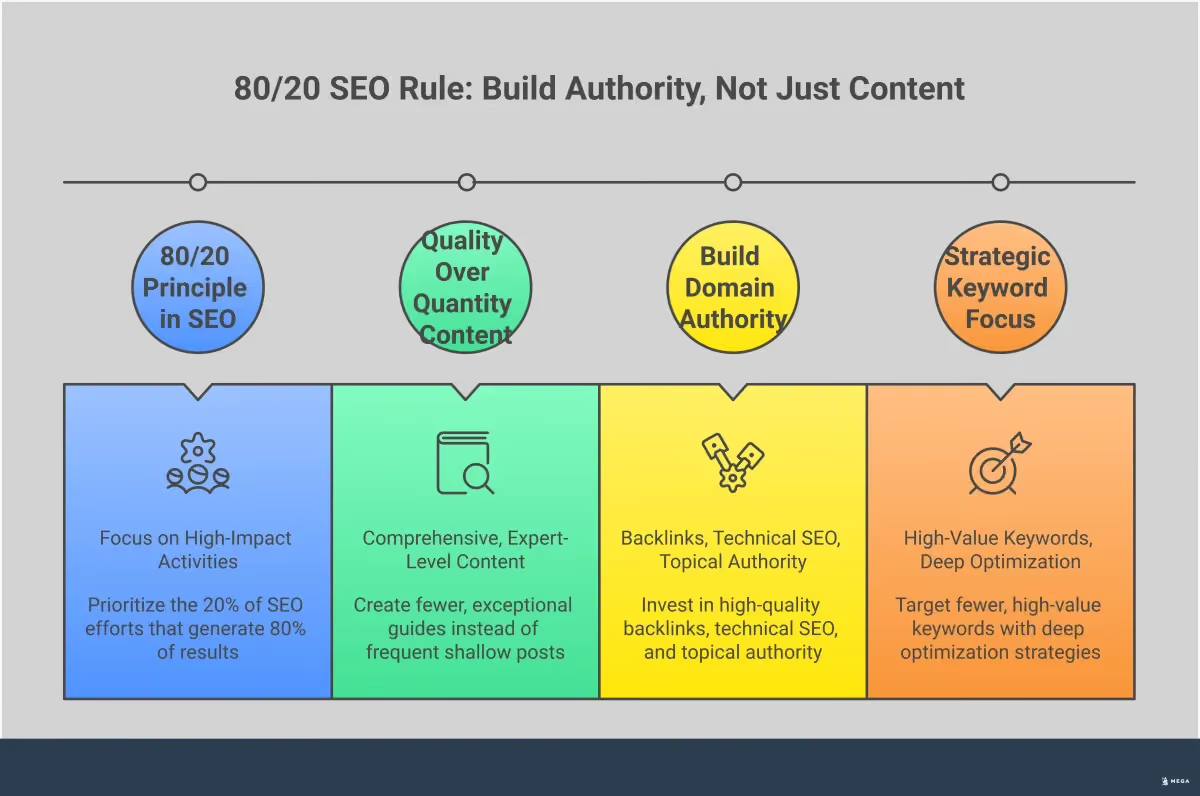
It’s easy to fall into the trap of thinking that more content equals better SEO. While fresh, relevant content is a cornerstone of any strategy, it’s only a small part of the equation. For small and local businesses, where time and resources are limited, focusing solely on content creation is an inefficient path to growth. The reality is that a successful SEO strategy follows the 80/20 rule: only 20% of your time should be spent creating new content.
The other 80% should be dedicated to activities that build your site's authority and help search engines understand the value you provide. This includes tasks like building high-quality backlinks, managing your online reputation through reviews, and optimizing your site’s internal structure. Many businesses make the common SEO mistake of pouring all their energy into the content mill, only to see minimal returns. Shifting your focus from a content-heavy approach to a more balanced strategy ensures that the content you do create has the best possible chance to rank and attract the right customers. It’s about working smarter, not just harder, to achieve tangible results.
The Common Content Mistake
The biggest mistake businesses make is producing content for the sake of it. Many fall into a cycle of publishing low-quality articles stuffed with keywords, hoping something will stick. This approach rarely works. In fact, some studies show that over 90% of content gets no traffic from Google. The problem isn't the act of creating content; it's creating the wrong content without a broader strategy to support it.
When you spend all your time on the content creation treadmill, you neglect the foundational work that actually gets your pages seen. Without authority-building signals like backlinks and brand mentions, even the best article is unlikely to rank for competitive commercial keywords. This leads to wasted effort and a portfolio of content that generates little to no return.
SEO Activities That Actually Drive Results
To make your content effective, you need to spend the other 80% of your time on tasks that build authority and relevance. Start by encouraging customer reviews and securing brand mentions on trusted local websites. For local businesses, a great way to get backlinks is by sponsoring community events or getting featured in local publications.
Internally, focus on your site’s architecture. A strong internal linking strategy is crucial because it helps Google understand the relationships between your pages and identifies which ones are most important. These off-page and on-page activities send powerful signals to search engines, giving your content the authority it needs to rank and drive conversions.
How to Avoid Common SEO Content Mistakes
It’s easy to fall into the trap of thinking that more content equals better SEO. This pressure leads many small businesses to churn out blog posts and articles without a clear purpose, hoping something will stick. The reality is that unfocused content creation is one of the biggest drains on a marketing budget. You end up with a library of articles that nobody reads, and your rankings remain stagnant. The key isn't to create more; it's to create smarter.
Avoiding common SEO mistakes starts with shifting your mindset from a content factory to a strategic operator. Every piece of content should have a specific job, whether it's attracting a potential customer, supporting a main service page, or building your authority in a local market. By understanding the most frequent missteps, you can sidestep the wasted effort and focus your resources on activities that actually move the needle. Let's look at three of the most common mistakes and how you can build a more effective content plan.
Stop Targeting the Wrong Keywords
If you feel like you're creating content that goes nowhere, you're not alone. A staggering 97% of content gets no traffic from Google. Often, the problem isn't the quality of the writing but the choice of keywords. Many businesses target informational keywords that attract casual browsers, not paying customers. Instead, focus your efforts on commercial keywords—phrases that signal a user is ready to make a purchase. For example, a local law firm should target "car accident lawyer in Chicago" over a general topic like "what to do after a car accident." The first attracts qualified leads, while the second attracts researchers.
Develop a Cohesive Content Strategy
Publishing content randomly without a plan is like throwing darts in the dark. A successful SEO approach relies on a cohesive content strategy where every article, page, and post works together to achieve a specific business goal. Disjointed efforts lead to inconsistent results and a confusing user experience. Your strategy should map out how your content supports your core services. Instead of stuffing keywords into a page, you should integrate them naturally to create a helpful resource that guides users toward a solution. This transforms your website from a collection of random posts into an authoritative hub that both users and search engines trust.
Prioritize Local SEO and Business Consistency
For small and local businesses, your geographic location is your biggest advantage. Yet, many overlook the power of local SEO. Optimizing your website with local keywords helps you appear in searches from people in your area who are ready to buy. Beyond your website, off-page factors play a huge role. This includes building a consistent presence across online directories and acquiring backlinks from other local businesses. Ensuring your business name, address, and phone number are identical everywhere sends strong trust signals to Google, making it more likely to recommend your business in local search results.
How AI Changes Content Strategy
The rise of AI in search engines is more than just a new trend; it’s a fundamental shift in how content is discovered and consumed. The old SEO playbook of answering simple questions in blog posts is quickly becoming obsolete. AI-powered search results, like Google’s AI Overviews, now answer these basic queries directly on the results page, meaning users have no reason to click through to your website.
This change forces small businesses to rethink their entire content approach. Instead of focusing on volume and answering every possible question, the new strategy is about depth, authority, and targeting the right user intent. It’s no longer enough to just have an answer. You need to provide the best, most comprehensive answer to a question that AI can’t easily summarize. This means moving away from generic content and toward creating valuable resources that solve complex problems for your specific audience.
Why Generic FAQs Don't Rank Anymore
If your content strategy relies on answering simple "what is" or "how to" questions, you're likely creating content that will never be seen. With AI directly answering these queries in search results, the click-through rate for pages that rank for these terms has plummeted. One study showed that CTR drops by 70% when an AI answer appears in Google.
This means that even if you manage to rank for a generic informational keyword, you’re competing directly with the search engine itself. For a small business with limited resources, spending time and money creating content for these low-value keywords is an inefficient use of your budget. The focus must shift from broad, easily answered questions to topics that require real expertise and unique insight.
Create Research-Driven Content
The key to succeeding in this new landscape is to create content that AI can't easily replicate. This means focusing on research-driven articles that offer unique perspectives, data, and in-depth analysis. Instead of targeting a keyword like "what is a roofer," a local roofing company should target a commercial keyword like "best roofing contractor for storm damage in Austin." This type of content requires more than a simple definition; it requires local knowledge, customer testimonials, and specific expertise.
Truly effective research goes beyond summarizing the top search results. It involves analyzing data, checking forums like Reddit for real user conversations, and understanding the nuances of your industry. An advanced AI agent can perform this deep research at scale, reading news, forums, and search results to build content with genuine topical authority.
The Role of AI Agents in Modern SEO
This is where AI agents become a strategic partner rather than just a writing tool. A modern SEO strategy involves identifying high-value commercial keywords and building authoritative content around them. For example, a pet supply store might target a commercial intent keyword like "best natural dog food for sensitive stomachs." A user searching this is close to making a purchase, making this a highly valuable query to rank for.
An AI agent can autonomously identify these opportunities, conduct the necessary deep research, and create content that addresses the user's specific needs. This allows you to shift from the manual work of content creation to the strategic work of growing your business. Instead of spending hours writing, you can oversee a system that consistently produces high-impact, research-first content.
What to Focus on Instead of Content Creation
If you follow the 80/20 rule for SEO, content creation should only take up about 20% of your time. The other 80% is where you build the trust and authority that actually convinces search engines to rank your pages. Instead of getting stuck on a content treadmill, you can shift your energy to activities that deliver more significant results. These tasks signal to Google that your business is legitimate, trusted by customers, and a valuable part of your local community.
Build Authority with Reviews and Mentions
Search engines want to recommend businesses that are credible and well-regarded. Positive reviews and mentions on other websites are powerful signals of that trust. Make it a regular practice to ask satisfied customers for reviews on your Google Business Profile and other relevant industry sites. Beyond reviews, focus on getting your business name mentioned on local news sites, community forums, and blogs. These brand mentions act as digital word-of-mouth, reinforcing your authority and relevance even without a direct link.
Use Internal Links to Drive Conversions
Internal links are the pathways you create between pages on your own website. A smart internal linking strategy does more than just help search engines understand your site structure; it guides visitors toward your most important pages. For example, you can link from an informational blog post to a relevant service or product page. This simple action helps distribute authority across your site and makes it easier for potential customers to find the commercial pages that lead to a sale or inquiry. It's a simple way to make your existing content work harder for you.
Acquire Quality Backlinks
Backlinks are links from other websites to yours, and they function like votes of confidence in the eyes of search engines. For a local business, acquiring quality backlinks doesn't have to be complicated. You can earn valuable links by sponsoring a local charity event, partnering with a complementary business for a promotion, or offering a quote to a local journalist. The key is to focus on relevance and community. A link from a respected local organization is often more valuable than dozens of links from irrelevant, low-quality websites.
How to Balance Content with Other SEO Tasks
Finding the right balance between creating new content and managing all the other parts of SEO can feel like a juggling act. Content is the foundation, but without the right support structure, it won’t perform. The key isn’t to create more content, but to make the content you have work harder by focusing your energy on the tasks that deliver the biggest impact.
This means shifting your mindset from being a content creator to being a strategic operator. Instead of spending all your time on the 20% that is content creation, you can dedicate your efforts to the 80% of activities that drive authority, trust, and conversions. By prioritizing high-impact work and automating the rest, you can build a more efficient and sustainable SEO system.
Prioritize High-Impact Tasks
Once you have a solid piece of content, your work has just begun. The next steps are what separate pages that get lost on the internet from those that rank and drive business. Your priority should be to focus on activities that build your site's authority and relevance. This includes optimizing your on-page strategy with keywords that match what your ideal customers are searching for.
Other critical tasks include acquiring quality backlinks from reputable sites, which act as endorsements for your content. You should also encourage customer reviews and seek out brand mentions to build trust with both search engines and potential buyers. Finally, an effective internal linking structure guides visitors through your site and helps search engines understand the relationship between your pages, making your entire website stronger.
Automate Repetitive Work
Many high-impact SEO tasks involve repetitive, time-consuming work. Manually building an internal linking strategy, for example, is crucial for distributing authority across your site, but it becomes incredibly tedious as your site grows. The same goes for refreshing old content, running technical audits, and continuously researching new keyword opportunities. These are exactly the kinds of jobs that are perfect for automation.
This is where an AI agent can transform your workflow. Instead of spending hours manually updating articles or finding linking opportunities, an SEO agent can handle it for you. It can perform technical checks, update content to improve its ranking, and build a logical internal linking structure automatically. By offloading these tasks, you free up your time to focus on business-building activities like creating partnerships and improving your customer experience.
How to Measure SEO Success Beyond Traffic
It’s easy to get caught up in tracking website traffic. Seeing that number go up feels like a win, but for a small business, traffic alone doesn’t pay the bills. If thousands of people visit your site but none of them buy anything, schedule a service, or fill out a contact form, your SEO efforts aren't delivering real value. True success isn't measured by the volume of visitors, but by the impact on your bottom line.
Instead of focusing on vanity metrics, it's time to shift your perspective to what truly matters: attracting the right audience and turning them into customers. This means tracking metrics that are directly tied to revenue and business growth. By understanding which keywords lead to sales and which activities guide users toward a purchase, you can build an SEO strategy that delivers a measurable return on investment. It’s about quality over quantity, and strategy over sheer volume.
Track Commercial Keywords and Conversions
Not all keywords are created equal. Some are informational, used by people looking for answers (e.g., "how to fix a leaky pipe"). Others are commercial, used by people ready to take action (e.g., "plumber near me"). While informational content can build awareness, commercial intent keywords are what drive sales. These terms may have lower search volumes, but they attract users who are much further along in the buying process.
Focusing on these high-value keywords allows you to measure success by the quality of your traffic, not just the quantity. Instead of just tracking overall visitors, monitor your conversion rates for pages optimized for commercial terms. Are people who land on your "emergency repair service" page filling out your contact form? That’s a far more valuable metric than your site's total traffic.
Identify Which Activities Drive Growth
A successful SEO strategy is more than just content. It’s a system of interconnected activities that work together to guide potential customers to your business. Effective keyword research helps you understand your audience's needs, allowing you to create content that speaks directly to them. From there, a thoughtful internal linking strategy can lead visitors from an informational blog post to a high-converting service page.
By analyzing user behavior and conversion paths, you can identify which specific actions are driving growth. Perhaps you notice that visitors who read a particular case study are more likely to request a quote. This insight tells you that creating more content like that case study is a high-impact activity. Measuring which content and links contribute to conversions helps you refine your strategy and focus your resources on what works.
How AI Agents Revolutionize SEO Strategy
AI is more than just a tool for writing blog posts faster. When used correctly, it changes the entire approach to SEO. Instead of simply scaling up content production, AI agents act as strategic operators that can plan, execute, and optimize your complete SEO workflow. This shift allows you to move away from the content hamster wheel and focus on high-impact activities that drive real business growth.
An AI agent can handle the complex, time-consuming tasks that bog down small business owners. It’s like having a dedicated SEO expert on your team who works around the clock to find opportunities, create research-backed content, and ensure your site is technically sound. This transition from manual execution to automated strategy is what allows businesses to implement the 80/20 rule effectively, dedicating their limited time to the activities that matter most.
Create Research-First Content at Scale
Most SEO content fails because it’s created in a vacuum. With studies showing that 97% of content gets no traffic from Google, simply publishing more articles isn’t a winning strategy. The key is to create content grounded in deep research that genuinely answers user questions and establishes topical authority. This is where an AI agent excels.
Instead of just generating text based on a prompt, a true SEO agent like MEGA AI's Lindsay performs extensive research before writing. It analyzes top search results, news articles, forums like Reddit, and even YouTube videos to understand the topic from every angle. This research-first process ensures the final article is comprehensive, accurate, and aligned with what both search engines and users want to see. It allows you to produce high-quality, authoritative content at a scale that would be impossible to manage manually.
Shift from Manual Tasks to Automated Strategy
Effective SEO involves more than just writing. It requires constant attention to keyword research, technical audits, backlink acquisition, and internal linking. These are critical tasks, but they are also repetitive and time-consuming. An AI agent automates this work, freeing you to focus on strategy.
For example, building a strong internal linking structure is essential for guiding users and search engines through your site, but doing it manually across hundreds of pages is a drain on resources. An AI agent can analyze your entire site and automatically create logical internal links. It can also perform continuous keyword research to find new commercial opportunities and update existing content to improve its rank and click-through rate. By offloading these tasks, you can shift your focus from execution to oversight and strategic planning.
Shift Your Focus from Content Volume to Strategic Impact
The old SEO playbook is broken. For years, the advice was to publish as much content as possible, but this volume-based approach no longer works. According to industry research, a staggering 97% of content gets zero traffic from Google. For small business owners, spending countless hours writing articles that no one will ever see is a recipe for burnout, not growth. The key isn't to work harder on content creation; it's to work smarter on your entire SEO strategy.
Instead of getting stuck on a content treadmill, it's time to adopt the 80/20 rule for SEO. This means you should spend only about 20% of your time creating new content. The other 80% should be dedicated to high-impact activities that actually move the needle, like earning reviews, building brand mentions, and acquiring quality backlinks. By automating the content creation and optimization process with an AI agent, you can free up your time to focus on the strategic work that drives real business results. This shift allows you to build a growth engine that works for you, not the other way around.
Set Up Autonomous SEO Workflows
An autonomous workflow is a system that handles essential SEO tasks for you in the background. Think about internal linking—a critical but time-consuming process. Effective internal linking helps search engines understand your site’s structure and guides visitors to relevant pages, keeping them engaged. Instead of manually finding and adding these links every time you publish, an AI agent can build these connections automatically.
This creates a powerful, self-optimizing ecosystem on your website. An AI agent can perform keyword research, generate articles, and intelligently link them together, ensuring every piece of content supports your broader goals. MEGA AI’s SEO agent, Lindsay, is designed to manage these workflows, turning disconnected blog posts into a cohesive network that consistently builds authority and drives conversions.
Build a Sustainable System for Long-Term Growth
A sustainable SEO system delivers predictable results over the long term. It starts with a solid foundation of keyword research that targets terms your ideal customers are actually searching for. For local businesses, this is especially important. Optimizing your site with local keywords helps you appear in front of people in your area who are ready to make a purchase.
Beyond initial creation, a sustainable system also involves maintaining and updating your existing content. An AI agent can identify articles with declining performance, find new information to add, and re-optimize them to improve their rankings. This continuous improvement cycle ensures your content remains relevant and valuable. By combining smart automation with a clear strategy, you build a growth system that adapts to market changes and consistently attracts qualified leads.