
Is your marketing budget an expense line item or a growth investment? The difference comes down to strategy. When you treat marketing as an expense, you focus on cutting costs. When you treat it as an investment, you focus on maximizing returns. For many small businesses, making that shift feels out of reach without clear data or a repeatable process. A marketing spend framework provides that process. It’s a system that helps you measure what’s working, understand the return on every dollar, and confidently reallocate funds to your most profitable activities. This article will walk you through building that system, turning your marketing budget into a predictable engine for growth.
Key Takeaways
- Prioritize proven channels first: Secure your budget for core revenue drivers like SEO and paid search that consistently deliver results. Then, allocate a smaller, separate fund for testing new platforms or strategies without putting your main income streams at risk.
- Make flexible, data-informed decisions: Move away from a rigid annual budget. Instead, use key metrics like Customer Acquisition Cost (CAC) and Return on Ad Spend (ROAS) to regularly reallocate funds toward your most successful campaigns and channels.
- Create a balanced marketing mix: An effective strategy combines different channels to achieve both immediate and long-term goals. Build a plan that includes tactics for quick results, such as PPC ads, alongside investments for sustainable growth, like SEO and email marketing.
What Is a Marketing Spend Optimization Framework?
A marketing spend optimization framework is your strategic plan for deciding where and how to invest your marketing dollars. Think of it as more than just a budget spreadsheet. It’s a system that guides your decisions, helping you allocate resources effectively to get the best possible return on every dollar spent. For small businesses with limited funds, this kind of strategic approach is critical. It shifts your marketing from guesswork to a data-driven operation.
The goal of a framework is to create a balanced approach to spending. It ensures you continue to fund your most reliable, revenue-generating activities while also leaving room to explore new opportunities. A good framework isn’t set in stone. Instead, it’s a flexible guide that helps you adapt to performance data and market changes. It provides clear rules for when to protect your budget for proven marketing channels and when it’s safe to experiment with new ones.
Ultimately, this framework gives you a repeatable process for making smarter financial decisions. It helps you answer key questions like: Which channels are performing best? Where should we invest our next dollar for maximum impact? And how can we test new ideas without risking our core budget? By establishing this system, you can build a more resilient and effective marketing program that consistently drives business growth.
Why It's Hard to Allocate a Marketing Budget
If you’re a small business owner, you know you need to market your company, but figuring out where to put your money can feel like a guessing game. You have a limited budget, and every dollar has to count. This pressure makes creating a marketing budget one of the most stressful parts of running a business. You’re not alone in feeling this way. Most founders and marketing managers struggle to find the right balance between spending enough to see results and not overspending on channels that don’t deliver. It's a constant balancing act between paying for inventory, covering payroll, and investing in future growth.
The challenge usually comes down to three main hurdles: the high price of expert help, the complexity of doing it yourself, and the difficulty of getting clear data to justify your decisions. Traditional agencies often come with retainers that are out of reach for a growing business. On the other hand, the do-it-yourself route requires you to become an expert in a dozen different tools, which takes time you don’t have. Even when you do get campaigns running, it’s tough to connect the dots and see which efforts are actually bringing in customers. These obstacles make it incredibly difficult to allocate your budget with confidence.
High Agency Costs
For many small businesses, hiring a traditional marketing agency is simply not an option. With monthly retainers often starting in the thousands, the cost can be prohibitive. This forces you into a difficult position where you have to make a tough budget allocation choice between funding core business operations and investing in growth. When you’re trying to manage payroll and inventory, a five-figure marketing contract is a non-starter. This high barrier to entry means many businesses are left to figure out marketing on their own, without the guidance of seasoned experts. While an agency can provide strategy and execution, its price tag puts that expertise out of reach, leaving a significant gap for businesses ready to grow but unable to afford the traditional path.
Complex DIY Tools
When agencies are too expensive, the default alternative is to manage marketing yourself using various online tools. While many of these platforms are powerful, they often come with a steep learning curve. You’re expected to become a pro at Google Analytics, a master of ad platforms, and an SEO specialist overnight. This requires a huge investment of time and energy, two resources that are already scarce when you're running a business. Even if you follow a small business guide and set up tracking for key metrics, interpreting the data is another challenge. Knowing your click-through rate is one thing; knowing how to improve it is another. This complexity can lead to wasted spend and frustration.
Missing Performance Data
The biggest obstacle to effective budget allocation is often a lack of clear, connected data. Your marketing efforts are spread across different channels, each with its own reporting dashboard. This siloed information makes it nearly impossible to get a complete picture of what’s working. You might see that a social media campaign got a lot of clicks, but did those clicks turn into sales? Without proper attribution, you can’t be sure. This data gap makes it difficult to justify your spending and forces you to rely on gut feelings. It also makes it risky to try new things, since even your experimentation budgets can feel like a shot in the dark. When you can’t prove the return on your investment, allocating funds confidently is a significant challenge.
A 4-Step Framework for Optimizing Your Spend
Making smart decisions about your marketing budget can feel like a constant balancing act. You want to invest in channels that deliver reliable results, but you also need to explore new opportunities to stay ahead. Without a clear plan, it’s easy to spread your budget too thin or keep funding strategies that no longer work. This is especially true for small businesses, where every dollar counts. A structured framework helps you move from guessing to making strategic, data-driven choices.
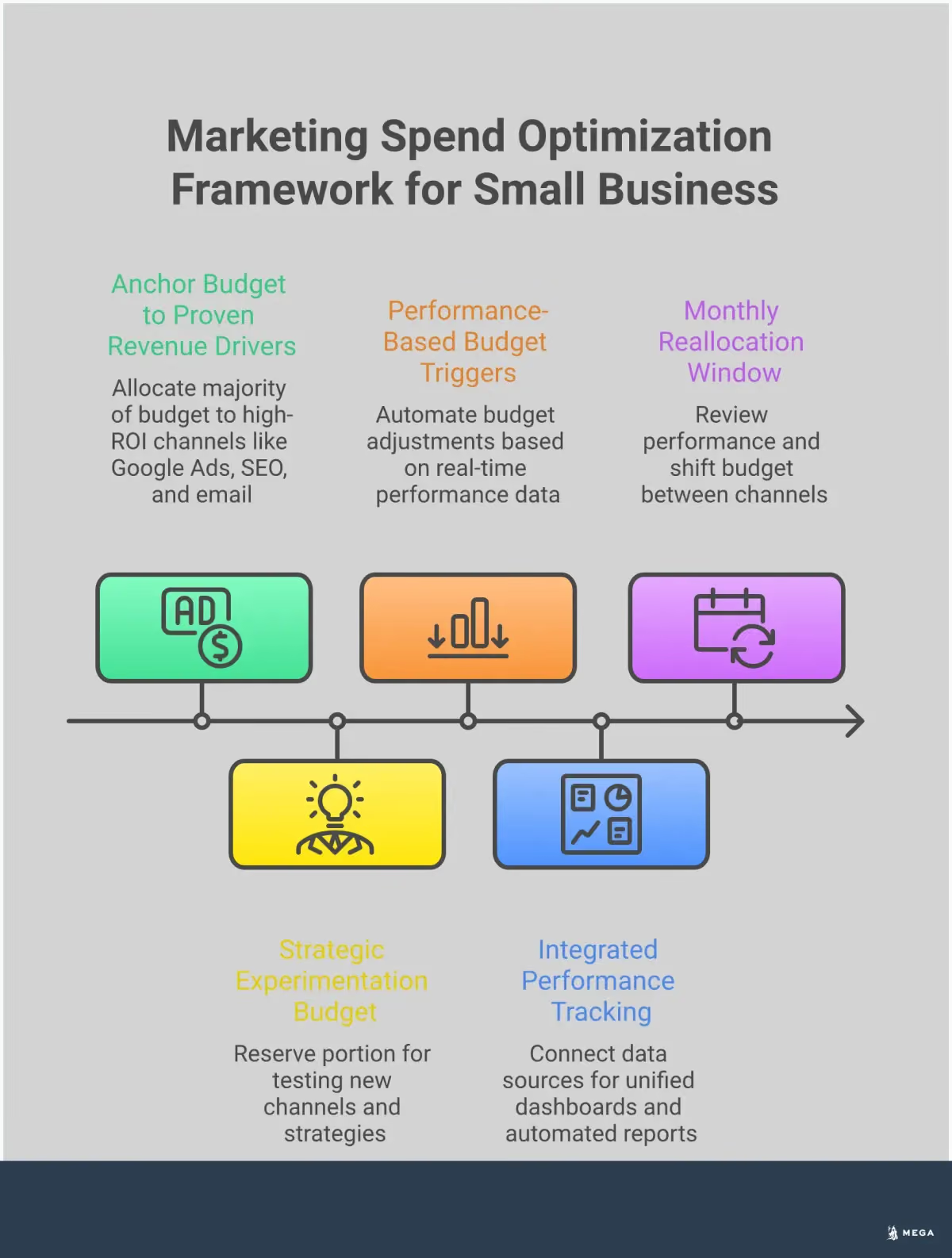
This four-step approach provides a simple yet powerful way to manage your marketing spend. It’s designed to help you protect your core revenue drivers while creating space for innovation and adaptation. By anchoring your budget to proven channels, building in flexibility, setting aside funds for experiments, and reallocating based on real-time performance, you can create a resilient marketing strategy. This method ensures your budget works harder for you, helping you achieve sustainable growth without the guesswork.
Step 1: Anchor Your Budget to What Works
Before you explore new marketing ideas, it’s essential to protect the channels that are already bringing in business. These are your foundational activities, the ones that consistently generate revenue and high-quality leads. For many small businesses, this could be local SEO that drives foot traffic, targeted Google Ads campaigns, or an email list that nurtures repeat customers. Identify these core channels by looking at your marketing analytics and allocate a dedicated portion of your budget to them first. This approach ensures that your most reliable sources of income are always supported, creating a stable base from which you can grow.
Step 2: Build in Flexibility to Adapt
The marketing world moves quickly, and a rigid annual budget can hold you back. What worked last quarter might not be as effective today. Building flexibility into your spending plan allows you to respond to performance signals and market shifts. This means you should regularly review your results and be prepared to move funds from underperforming campaigns to those that are gaining traction. An agile marketing mindset allows you to capitalize on new opportunities as they appear, rather than waiting for the next budget cycle. This adaptability is key to maintaining momentum and maximizing your return on investment over time.
Step 3: Create a Separate Budget for Experiments
Innovation is crucial for growth, but it’s risky to bet your entire marketing budget on unproven channels. A smarter approach is to create a separate, smaller budget specifically for experiments. This fund gives you the freedom to test new platforms, ad formats, or messaging without jeopardizing your core marketing efforts. You could try a new social media channel, invest in video content, or run a small campaign on a platform you haven't used before. The goal of marketing experimentation is to gather data and identify new growth levers. If an experiment proves successful, you can then make a case for allocating more significant funds to it in the future.
Step 4: Reallocate Budget Based on Real-Time Data
The final step ties everything together: using real-time data to make fast and informed decisions. Your performance metrics are your guide to what’s working and what isn’t. When you see a channel delivering a strong return, you can confidently shift more budget toward it to scale your success. Conversely, if a campaign is failing to meet its goals, you can pull back funding and reallocate it elsewhere. In today’s market, the ability to adjust your strategy quickly is a major competitive advantage. Using a centralized dashboard to monitor your campaigns helps you spot trends and make these adjustments efficiently, ensuring your budget is always optimized for the best possible results.
What Marketing Channels Should You Prioritize?
Deciding where to spend your marketing budget can feel overwhelming. The truth is, there isn't a single "best" channel for every business. The right mix depends on your specific goals, whether you need immediate sales or are building a long-term brand. A balanced approach often works best, combining channels that deliver quick wins with those that build sustainable growth over time. Think of your marketing strategy as a portfolio; some investments are for immediate returns, while others are for steady, long-term value.
For small and local businesses, this means being strategic about where every dollar goes. You need to identify the channels that will reach your ideal customer most effectively and deliver a measurable return. It's not about being everywhere at once. It's about being in the right places at the right time. This section will cover four key channels to consider when planning your budget: email for retention, SEO for long-term growth, PPC for quick results, and social media for targeted reach. Each plays a distinct role in a well-rounded marketing plan, and understanding their strengths will help you allocate your funds more effectively.
Email Marketing for Retention
Email marketing is one of the most powerful tools for keeping the customers you already have. It’s a direct line to an audience that has already shown interest in your business. By focusing on personalized content and targeted campaigns, you can significantly enhance customer loyalty. Instead of constantly chasing new leads, you can nurture existing relationships with newsletters, exclusive offers, and helpful content. This approach builds a loyal community around your brand and encourages repeat business, which is often more cost-effective than acquiring a new customer. It's a reliable channel for driving consistent revenue from your most valuable audience segment.
SEO for Long-Term Growth
Investing in search engine optimization is a strategy for sustainable, long-term growth. While it takes time to see results, SEO helps you build organic traffic that doesn't disappear when you turn off your ad spend. By ranking for keywords relevant to your business, you create a steady stream of potential customers who are actively searching for what you offer. For small and local businesses, this is especially important. A solid SEO foundation ensures your business remains visible and competitive in the long run, establishing your credibility and authority in your market without ongoing advertising costs.
PPC Ads for Quick Results
When you need to generate traffic and leads quickly, pay-per-click (PPC) advertising is an effective option. Unlike SEO, which can take months to show results, PPC campaigns can drive visitors to your site almost immediately. This makes it ideal for testing new offers, promoting seasonal sales, or getting traction while your long-term SEO strategy builds momentum. The key is to allocate your budget to campaigns with a positive return on investment. By closely monitoring performance, you can quickly scale what works and pause what doesn’t, making it a flexible tool for growth.
Social Media Ads for Targeted Reach
Social media advertising offers a unique opportunity to connect with your audience on a more personal level. Platforms like Meta and LinkedIn allow you to reach specific demographics, interests, and behaviors, ensuring your message reaches the people most likely to become customers. This precision is invaluable for small businesses with a defined niche. You can use social ads to highlight what makes your business unique, share customer stories, and build a community. It’s a powerful way to stand out and create meaningful engagement in a crowded digital space, turning passive scrollers into active customers.
How to Build a Flexible Marketing Budget
A static, annual marketing budget is a relic of the past. In a market that changes quickly, locking your funds into specific channels for a full year can mean missing huge opportunities or wasting money on tactics that stop working. A flexible budget, on the other hand, allows you to operate like a savvy investor, moving your resources to where they will generate the highest return. This approach is especially critical for small businesses, where every dollar counts.
Building flexibility into your budget means you can react to performance data, competitor moves, and new market trends without waiting for the next fiscal year. It’s about creating a system that lets you double down on successful campaigns and pull back from underperforming ones. This requires a shift from a "set it and forget it" mindset to one of continuous, data-informed management. The goal is to create a structure that supports agility, allowing you to make smart, timely adjustments that drive growth. With the right framework, your budget becomes a dynamic tool for achieving your business goals, not just a list of expenses.
Set Performance-Based Triggers
Performance-based triggers are pre-defined rules that automatically guide your spending decisions. Instead of guessing when to adjust your budget, you let the data do the work. For example, you might set a trigger to increase the budget for a Google Ads campaign by 20% if its return on ad spend (ROAS) stays above 4:1 for seven consecutive days. Conversely, you could have a trigger that pauses a campaign if its cost per acquisition (CPA) rises above a certain threshold. This approach helps you shift dollars based on real outcomes and removes emotion from the decision-making process, ensuring your money consistently flows toward what’s proven to work.
Create Monthly Reallocation Windows
While real-time triggers are great for tactical adjustments, you also need a structured time to review the bigger picture. This is where monthly or quarterly reallocation windows come in. These are scheduled periods where you and your team assess the performance of all marketing channels and decide how to distribute the budget for the upcoming period. This regular cadence gives you the chance to make strategic shifts, like moving funds from a mature channel to test a new one. In today’s market, the speed of adjustment is a competitive advantage, and these planned windows provide the perfect opportunity to adapt your strategy without causing constant disruption.
Use Real-Time Analytics to Make Decisions
To make effective use of performance triggers and reallocation windows, you need access to accurate, up-to-date information. Relying on last month's reports to make today's decisions is like driving while looking in the rearview mirror. You need to track important metrics like conversion rates, click-through rates, and customer acquisition costs as they happen. An integrated platform that pulls data from all your channels into one dashboard is essential. This unified view allows you to see the complete picture of your marketing performance, identify trends, and make informed decisions quickly. Tools like MEGA AI’s Paid Ads agent are designed to provide this clarity, helping you optimize your spend with confidence.
Key Metrics for Optimizing Your Spend
To make smart decisions about your marketing budget, you need to follow the data. But you don’t need to track every single number to get a clear picture of what’s working. Focusing on a few key performance indicators (KPIs) will tell you where your money is having the greatest impact and where you can afford to pull back. These metrics act as your guide, helping you move from guessing what works to knowing what works.
Think of these metrics as the vital signs of your marketing health. They show you the direct relationship between your spending and your results. When you understand them, you can confidently reallocate your budget to the channels and campaigns that are actually growing your business. This data-driven approach is the foundation of any successful optimization strategy. It removes emotion from the equation and allows you to build a marketing plan that is both efficient and effective. An integrated platform that offers a single marketing dashboard can make tracking these numbers much simpler.
Customer Acquisition Cost (CAC)
Your Customer Acquisition Cost, or CAC, is the total amount you spend to gain a single new customer. To calculate it, you simply divide your total marketing and sales expenses over a specific period by the number of new customers you acquired in that same period. This metric is incredibly important because it tells you if your business model is sustainable. If it costs you more to acquire a customer than you earn from them, you have a problem. By keeping a close eye on your CAC, you can make sure your marketing efforts are not just bringing in customers, but bringing them in profitably.
Return on Ad Spend (ROAS)
Return on Ad Spend measures the revenue generated for every dollar you spend on advertising. It’s a straightforward metric that directly answers the question: are my ads making money? A high ROAS means your campaigns are efficient and profitable, while a low ROAS signals that you may need to adjust your strategy, targeting, or ad creative. For small businesses, tracking ROAS is essential for justifying ad spend and scaling campaigns responsibly. Tools like MEGA AI’s Paid Ads agent are designed to continuously optimize campaigns to improve this exact metric, ensuring your budget is always working as hard as possible.
Conversion Rate and Attribution
Your conversion rate is the percentage of people who complete a desired action, like making a purchase or signing up for a newsletter, after clicking on your ad or visiting your site. While a high conversion rate is great, it’s equally important to understand attribution, which is the process of identifying which touchpoints led to that conversion. Did a customer find you through a Google search, a Facebook ad, or an email? Understanding the customer journey helps you assign proper credit and invest more in the channels that are truly driving results, rather than just getting clicks.
How to Safely Experiment with Your Budget
Experimentation is essential for growth, but it shouldn't feel like gambling with your marketing budget. A smart approach allows you to test new ideas and discover untapped opportunities without putting your core business at risk. The key is to create a structured process for experimentation, one that treats new channels and campaigns as calculated tests rather than all-or-nothing bets. By protecting what already works, setting aside a dedicated budget for learning, and making new channels earn their keep, you can build a sustainable growth engine. This method ensures that even if an experiment doesn't produce immediate returns, you gain valuable data to inform your next move.
Protect Your Core Revenue Channels
Before you explore new marketing channels, you need to secure your foundation. Your core revenue channels are the proven performers that consistently bring in customers and sales. For most small businesses, this includes activities like paid search ads that capture high-intent customers, SEO that drives organic traffic, and email marketing that nurtures existing leads. These channels have a track record of success and should receive their budget allocation first. Think of this as protecting your primary revenue streams. Once these foundational channels are fully funded and optimized, you can confidently allocate the remaining budget to new experiments without threatening your business's stability.
Set a Realistic Experimentation Budget
Once your core channels are secure, you can create a separate budget specifically for experimentation. A common guideline is to set aside 10% to 15% of your total marketing spend for this purpose. This amount is significant enough to run meaningful tests but small enough that it won’t destabilize your overall marketing efforts if a test fails. Treat this as your "learning budget." Its primary goal isn't immediate ROI but rather to gather data on what might work next. This dedicated fund gives you the freedom to test new platforms, messaging, or audiences without the pressure of immediate returns, fostering a culture of smart, controlled risk-taking.
Test New Channels with a Safety Net
One of the most common mistakes is giving a new, trendy channel a large budget before it has proven its worth. A new channel should earn its budget, not receive it by default. Start with a small, controlled test to see if the channel can deliver results for your specific business. Define what success looks like beforehand, whether it's generating leads, driving sales, or reaching a new audience segment. By using an integrated platform to track performance across all your channels, you can directly compare the results of your experiment against your established benchmarks. If the new channel proves its value, you can gradually increase its budget.
Common Challenges When Optimizing Spend
Optimizing your marketing budget involves more than just moving numbers around on a spreadsheet. It’s a strategic process that often requires shifting priorities, trying new things, and getting your team aligned. Even with a solid framework, you might run into a few common hurdles. These challenges often revolve around people, strategy, and communication. Understanding them ahead of time can help you prepare and keep your optimization efforts on track. The main obstacles usually fall into three categories: managing team dynamics, finding the right strategic balance, and securing approval for new ideas.
Overcoming Team Resistance
Any change to the budget can feel threatening to the people whose projects are affected. Moving forward with experimentation is often a question of both resources and support. You not only need the funds to try a new channel, but you also need your team’s backing. Resistance often comes from a fear of the unknown or a concern that a new focus will pull resources from proven methods. The best way to handle this is with clear communication. Explain the reasoning behind the budget shifts, present the data that supports your decisions, and frame it as a collective effort to help the company grow. When your team understands the "why," they are more likely to get on board.
Balancing Quick Wins and Long-Term Strategy
There’s a constant tension between generating immediate results and investing in long-term growth. Focusing entirely on quick wins, like performance ads, can deliver fast returns but may not build a sustainable foundation. On the other hand, focusing only on long-term plays like SEO means you might miss out on short-term revenue. The key is to find the right budget allocation between core operations and innovation. Your marketing plan should include a mix of strategies: some that deliver immediate gains and others that build momentum over time. This balanced approach ensures you’re hitting current targets while setting yourself up for future success.
Getting Buy-In for Experiments
Proposing a budget for an unproven channel or a new creative experiment can be a tough sell. Stakeholders naturally want to invest in what’s already working. To get buy-in, you need to build a strong case grounded in data and a clear hypothesis. Instead of asking for a large budget upfront, propose a small-scale pilot test with specific, measurable goals. Keeping other departments involved in your budget implementation also ensures everyone stays aligned. By defining what success looks like and presenting a clear plan for tracking results, you can reduce the perceived risk and make it easier for decision-makers to say yes.
Tools to Help You Optimize Your Marketing Spend
A solid framework gives you a roadmap for your marketing budget, but the right tools are the vehicle that gets you where you need to go. Manually tracking performance across multiple channels, calculating ROI, and shifting funds is a full-time job. For small business owners, it’s often an impossible one. This is where technology, specifically marketing automation, becomes a critical partner. Instead of adding another complex system to your plate, the right tools simplify your workflow and give you back valuable time.
Modern platforms are designed to execute the flexible, data-driven budget strategy we’ve been discussing. They handle the heavy lifting of data collection and analysis, so you can focus on the big picture. Instead of getting lost in spreadsheets, you can see a clear, unified view of your marketing performance. This allows you to make smart, timely decisions about where your money is best spent. The most effective solutions use AI to automate budget management, integrate all your data sources for a single source of truth, and provide real-time dashboards for at-a-glance monitoring. These tools level the playing field, giving small businesses the power to optimize their spend with the same precision as large corporations.
AI for Automated Budget Management
Artificial intelligence can take the manual work and guesswork out of managing your marketing budget. Instead of you having to constantly check campaign performance and reallocate funds, AI-powered platforms can do it for you. These systems analyze real-time data from your ad campaigns, identify which channels and creatives are delivering the best results, and automatically shift your budget to capitalize on what’s working. This process of continuous optimization ensures your money is always working as hard as it can. For small businesses, this is a game-changer. It means you can run highly efficient paid ad campaigns without needing a dedicated analyst to watch over them every hour.
Why You Need Integrated Tools for Tracking
Your marketing data often lives in different places: Google Analytics, your social media ad managers, your email platform, and your website’s backend. When data is siloed like this, it’s nearly impossible to get a complete picture of your customer’s journey and accurately attribute conversions. Brands are increasingly turning to integrated marketing platforms to solve this problem. These tools connect all your data sources, pulling everything into one place. This unified view allows you to see how different channels work together to drive sales, helping you make much smarter decisions about where to invest your budget for the highest impact.
Dashboards for Real-Time Monitoring
Once your data is integrated, you need an easy way to see what’s happening. Real-time dashboards provide a visual, at-a-glance summary of your most important metrics. Instead of waiting for end-of-month reports to see how your campaigns performed, you can track key metrics like conversion rates, cost per acquisition, and return on ad spend as they happen. This immediate feedback loop is essential for a flexible budget. It allows you to spot underperforming campaigns early, identify opportunities for growth, and confidently reallocate your spend based on what the data is telling you right now, not what it said last month.
Start Optimizing Your Marketing Spend Today
To effectively optimize your marketing spend, it's essential to begin with a solid foundation. First, focus on anchoring your budget to proven demand and high-intent activities. Channels like paid search, email, and SEO are often your most reliable performers because they are tied directly to revenue. By protecting the budget for these core areas, you ensure your resources are consistently allocated where they deliver measurable results. This isn't about cutting costs everywhere; it's about investing smartly where it counts the most.
Next, embrace flexibility in your marketing strategy. Locking yourself into annual commitments for channels that aren't delivering can be a major drain on resources. Instead, you should shift dollars based on real outcomes. Regularly reviewing your marketing performance is crucial for this. By monitoring key performance marketing KPIs, you can make data-driven decisions that enhance your effectiveness and allow you to adapt to market changes. This adaptability is what turns a good budget into a great one.
Finally, consider your overall budget allocation. For small businesses, a good starting point is to allocate an average of 3% to 12% of revenue to marketing, depending on your industry and growth goals. Setting a realistic small business marketing budget ensures your funds are used effectively and align with your business objectives. By implementing these strategies, you can start optimizing your marketing spend today and drive better results for your business. If you're ready to see how an AI agent can manage this for you, you can book a demo with our team.