
The rapid growth in AI marketing is not just a trend; it's a practical response to a more complex digital world. The global AI marketing market is projected to grow from $27.83 billion in 2024 to $220.1 billion by 2030, and that investment is coming from businesses of all sizes. For small business owners, this isn't about chasing hype. It's about finding more efficient ways to get results without needing a huge team. AI has become a core part of the marketing toolkit, reshaping everything from SEO to paid ad management and making sophisticated campaigns accessible to smaller budgets.
Key Takeaways
- Shift your spending toward performance: With rising media costs, prioritize channels like paid search and SEO that offer clear, measurable results over those with less certain returns, such as organic social media.
- Use AI to make your budget work harder: Integrate AI tools into your core strategy to automate time-consuming tasks like ad optimization and content updates, allowing you to run more sophisticated campaigns efficiently without needing a larger team.
- Build long-term assets to reduce ad dependency: Invest in a strategic mix of channels that create lasting value, such as SEO for sustainable organic traffic and community-building through influencer partnerships, to create a more stable foundation for growth.
What Does Marketing Spend Look Like in 2026?
As we look ahead, the marketing budget landscape is shaped by two major forces: rising costs and economic uncertainty. While many businesses are ready to invest more in growth, they’re also demanding greater accountability for every dollar spent. This isn’t about cutting budgets across the board; it’s about making smarter, more strategic decisions. The focus has shifted from simply spending more to investing in channels and technologies that deliver predictable, measurable returns. For small businesses, this means prioritizing efficiency and proving the value of their marketing efforts is more critical than ever.
Dealing with Rising Media Costs and Tighter Budgets
It’s no secret that the cost to reach customers is going up. Year after year, the price of digital advertising on major platforms increases, putting a squeeze on marketing budgets. But this doesn’t mean businesses are pulling back. Instead, they are reallocating funds with a laser focus on return on investment (ROI). The conversation is shifting from "how much did we spend?" to "what results did we get?". Every campaign is under scrutiny to ensure it contributes directly to the bottom line. This environment favors strategies that are not only effective but also highly efficient, making every dollar work harder to achieve business goals.
How Economic Factors Influence Spending
The current economic climate is a mixed bag. While there are signs of recovery that encourage businesses to increase their marketing spend, a lingering sense of instability pushes them toward caution. This uncertainty means companies are favoring marketing channels that offer more predictable outcomes. Budgets are moving away from experimental campaigns and toward proven strategies like performance-based paid advertising and long-term SEO. Businesses are looking for stability in their marketing plans, investing in tactics that have a track record of delivering consistent results, even when the broader economic picture is unclear.
How Are Marketers Reallocating Budgets?
As marketing costs rise and economic uncertainty continues, businesses are taking a closer look at where their dollars are going. The old approach of being everywhere at once is giving way to a more strategic allocation of resources. Instead of spreading budgets thin across dozens of channels, marketers are doubling down on what works and cutting what doesn’t. This isn't about spending less, but about spending smarter.
The core theme is a shift toward channels with a clear and measurable return on investment. This means moving funds away from activities with fuzzy metrics and toward strategies that directly impact sales and lead generation. It’s a pragmatic response to a challenging environment, forcing a disciplined focus on efficiency and performance. We’re seeing three major trends emerge from this reallocation: a move from organic social to paid ads, a deeper appreciation for multi-channel journeys, and a laser focus on conversions.
Shifting from Organic Social to Paid Ads
For years, organic social media was a key growth driver. Today, its role is changing. With algorithmic shifts consistently reducing organic reach, many businesses find it difficult to get results without paying. As marketing expert Neil Patel notes, organic social is now treated more as a "support channel" than a primary engine for growth. The investment is consolidating around platforms that offer a clearer payoff.
This is why budgets are moving toward paid advertising. Paid campaigns on platforms like Google and Meta provide predictable traffic and detailed analytics, making it easier to track ROI. For small businesses, knowing exactly what you get for your spend is critical. Instead of posting into the void, you can target specific audiences, test different creatives, and directly attribute sales to your campaigns.
The Need for a Multi-Channel Strategy
While it’s tempting to pour your entire budget into one high-performing channel, the modern customer journey is rarely that simple. Research shows that over 94% of people interact with multiple channels before making a purchase. A customer might discover your brand through a paid ad, research your products via a Google search, and read a few of your blog posts before they decide to buy.
This means every channel plays a role, even if it doesn't lead to a direct conversion. A channel that assists a conversion is just as important as the one that closes it. A successful strategy requires a mix of channels, like SEO and paid ads, working together to guide customers from awareness to purchase. Understanding this interplay helps you build a resilient marketing plan where each channel supports the others, creating a stronger overall impact.
Prioritizing Conversion-Focused Channels
Ultimately, the goal of reallocating your budget is to drive more conversions. The biggest theme in budget allocation is an "increased focus on channels tied specifically to conversions." This means prioritizing activities that have a direct and measurable impact on your bottom line, such as search engine optimization, paid search, and email marketing. These channels are often closer to the point of purchase and provide clearer data on performance.
This focus also extends to building a community around your brand. An engaged community can become a powerful source of evangelism and repeat business, reducing your long-term reliance on paid advertising. For small and local businesses, every dollar has to work hard. By concentrating your budget on strategies that reliably turn prospects into customers, you can build a more efficient and sustainable growth model.
Why Is AI Investment Growing So Quickly?
The rapid growth in AI marketing isn't just hype. It's a practical response to a changing digital landscape. The global AI marketing market is on track to grow from $27.83 billion in 2024 to an estimated $220.1 billion by 2030, and that money is coming from businesses of all sizes. For small business owners and startups, this isn't about chasing trends. It's about finding smarter, more efficient ways to get results without needing a huge team.
This shift is happening for a few key reasons. First, AI has moved from a nice-to-have experiment to a core part of the marketing toolkit. Second, the world of SEO is being reshaped by AI, making it a necessary investment to stay visible. Finally, automation is making it possible to run sophisticated campaigns that were once out of reach for smaller budgets. Platforms like MEGA AI are built on this principle, offering autonomous agents that handle the complex work so you can focus on your business.
Moving Beyond One-Off AI Experiments
For years, AI felt like something reserved for large companies with dedicated innovation teams. That’s no longer the case. As marketing expert Neil Patel notes, AI investment has moved into the core marketing budget because it directly impacts efficiency.
This means businesses are seeing real, measurable returns from AI tools. Instead of being a side project, AI has become a line item in the main marketing budget. For small businesses, this is crucial. When you can directly connect an investment to improved efficiency—like saving hours on content creation or ad management—it becomes a smart business decision, not just a tech experiment.
The Rise of AI SEO and LLM Optimization
Search engine optimization is one of the areas where AI is having the biggest impact. Nearly all brands are planning to increase their spending on AI-driven SEO and tools for large language model (LLM) optimization. This trend is a direct response to how search engines like Google are evolving. With the introduction of AI-powered search results, your strategy needs to adapt.
Investing in AI SEO is no longer optional if you want to compete for organic traffic. These tools help with everything from identifying content gaps to automatically updating articles to perform better. They also help optimize your content for new platforms like ChatGPT and Google's AI Overviews, ensuring your business shows up wherever your customers are searching.
How Automation Makes Budgets More Efficient
One of the most practical benefits of AI is its ability to automate complex and time-consuming tasks. AI can optimize campaigns faster and more accurately than manual adjustments ever could. This is especially true for paid advertising, where AI can manage bids, test different ad creatives, and shift budgets to the best-performing channels automatically.
This level of automation makes marketing budgets more efficient. Instead of paying for hours of manual campaign management, you can invest in a system that optimizes itself. For small businesses, this means you can run sophisticated paid ad campaigns that deliver better results without the high overhead. It frees up both your time and your budget to focus on strategic growth.
What's Driving the Recovery in SEO Budgets?
After a period of uncertainty, confidence in SEO is making a strong comeback. Marketers are planning significant budget increases, recognizing organic search as a stable, long-term channel. This is a strategic move to build a sustainable growth engine that isn't entirely dependent on fluctuating ad costs. The renewed investment is driven by strong growth projections, the need to adapt to rapid search algorithm changes, and intense competition for visibility. It now takes more effort and a smarter SEO strategy to secure top rankings, and budgets are expanding to meet that challenge.
Understanding the 44% to 61% Growth Projection
Recent industry analysis shows a sharp rebound in SEO spending, with budgets projected to increase by around 44% in 2025 and as much as 61% in 2026. This growth signals renewed confidence in SEO's effectiveness as a primary driver of leads and sales. It’s a deliberate decision to invest in a marketing channel that builds a lasting digital asset. A well-optimized website consistently attracts qualified visitors, creating a more predictable and cost-effective pipeline over time.
Adapting to Search Algorithm Changes
The world of search is constantly evolving. With major algorithm updates and the integration of AI into search results, staying visible requires a proactive approach. The old "set it and forget it" mindset for SEO no longer works. Strategies must adapt to this new landscape, which means investing in technical SEO, creating high-authority content, and optimizing for how businesses appear in AI tools like ChatGPT and Google's AI Overviews. This need for continuous adaptation is a major reason businesses are allocating more resources to their SEO efforts.
The Growing Competition for Organic Traffic
Gaining visibility in organic search is more challenging than ever. Organic results are often pushed down the page by ads, AI-generated summaries, and other SERP features. This increased competition for a smaller slice of digital real estate is forcing businesses to invest more just to stay in the game. The year-over-year volatility in rankings is also rising, meaning a top spot today isn't guaranteed tomorrow. This reality is driving marketers to fund more robust SEO campaigns that can withstand competitive pressure and secure a lasting presence.
How Is Influencer Marketing Changing Budget Priorities?
Influencer marketing is maturing beyond celebrity endorsements and one-off sponsored posts. As brands look for more authentic ways to connect with customers, budgets are shifting toward strategic partnerships that deliver measurable results. Instead of simply paying for exposure, businesses are investing in creators who can build genuine trust with a target audience. This means prioritizing long-term relationships and performance-based campaigns over short-term visibility.
For small businesses, this change presents a major opportunity. You can work with creators in a way that directly supports your growth goals, making every dollar in the marketing budget work harder. The focus is now on building relationships, not just buying reach. This strategic shift allows you to compete with larger brands by leveraging the power of authentic voices and dedicated communities. It’s less about the size of an influencer’s follower count and more about the quality of their engagement and their alignment with your brand values. As we look toward 2026, successful influencer programs will be those that are deeply integrated into the overall marketing strategy, not treated as a separate, experimental channel.
Investing in the Creator Economy
The creator economy is all about authentic connections, and marketing budgets are adapting to this reality. Instead of allocating large sums to a single celebrity, brands are finding more value in partnerships with niche and micro-influencers. As Adintors notes, "In 2026, brands are going to prioritize niche-based and micro influencers for high engagement." These creators have built highly dedicated communities around specific interests, from local food scenes to sustainable fashion. For small businesses, this is a strategic advantage. Partnering with a micro-influencer often costs less and results in more meaningful engagement because their audience trusts their recommendations implicitly. Your budget goes further, and your message reaches people who are genuinely interested in what you offer.
Focusing on Performance-Based Campaigns
Gone are the days of paying a flat fee for an Instagram post and hoping for the best. Today, the emphasis is on ROI. Brands want to see a direct link between their spending and results, whether that’s website traffic, leads, or sales. According to Shopify, "brands earn an average of $6.50 for every dollar spent on influencer marketing." To achieve that return, you need a clear influencer marketing strategy that outlines goals and tracks key metrics. This could involve affiliate links, unique discount codes, or conversion tracking to measure a campaign’s impact. By focusing on performance, you can optimize your spending and reinvest in the partnerships that deliver the most value for your business.
Choosing Long-Term Partnerships Over One-Offs
Trust is the foundation of effective influencer marketing, and it’s something that develops over time. One-off campaigns can feel transactional to audiences, but long-term partnerships allow a creator to become a genuine brand advocate. As author Neal Schaffer explains, "Influencer marketing is a partnership between a brand and a creator who has built trust with a specific audience." When an influencer features your product or service multiple times in different contexts, their endorsement feels more authentic and integrated into their content. This sustained exposure builds familiarity and credibility with their followers, leading to deeper loyalty and a stronger impact than a single sponsored post ever could.
Which Marketing Channels Are Losing Budget?
As marketers plan for the future, they're taking a hard look at where their money goes. The result is a strategic shift: budgets are moving away from some traditional mainstays and toward channels that offer clearer returns. This isn't about abandoning platforms but reallocating resources for more efficient and targeted execution. Small businesses and startups, in particular, feel the pressure to make every dollar count. They're trimming spending in areas with murky ROI or where new technologies have driven down costs, allowing them to invest more strategically in growth. This change reflects a broader move toward performance-focused marketing, where data, not just habit, dictates spending. It’s about being smarter with the resources you have and ensuring your marketing efforts directly support your business goals. The channels losing budget are often those that are either becoming more efficient to run or are being outpaced by more measurable, high-impact alternatives.
Why Organic Social Spending Is Down 64%
It might be surprising to see that 64% of brands plan to reduce their organic social media budgets. This isn't because social media is becoming less important. Instead, it's a reflection of improved efficiency. As one expert noted, "AI and other modalities that have come about have driven the cost down so they don't have to spend as much to create all the content that they used to." With AI tools, a small team can now generate a high volume of quality content, schedule posts, and analyze performance without the large budget previously required for content creation and management. This allows businesses to maintain a strong organic presence while freeing up funds for other high-impact activities.
Cutting Back on Traditional Advertising
The move away from traditional advertising continues as businesses prioritize channels with better tracking and targeting capabilities. Marketers are reducing their investment in print, broadcast, and other traditional media in favor of more precise digital strategies. The focus is shifting from "broad content volume towards more targeted execution." For small businesses, this change is critical. Instead of spending money on ads that reach a wide but largely irrelevant audience, they can invest in platforms that connect them directly with their ideal customers. This is why channels like paid search and social ads are gaining budget; they offer clear metrics and a direct path to conversions.
The Challenge of Rising Ad Costs
One of the persistent challenges for marketers is that "media costs are continually rising." Nearly every year, the price of getting your message in front of customers goes up, squeezing your return on investment. This makes efficiency more important than ever. Simply increasing your ad spend isn't a sustainable solution. Instead, businesses must find ways to optimize their campaigns to make every dollar work harder. This involves continuous creative testing, precise audience targeting, and intelligent budget allocation. The goal is to counteract rising costs with smarter strategies that improve performance and protect your ROI.
What Challenges Come with Reallocating Budgets?
Shifting your marketing budget around sounds straightforward, but it’s rarely as simple as moving funds from one line item to another. Every change introduces new variables and potential roadblocks that can derail even the best-laid plans. As you adapt your strategy to focus on high-performing channels, you’ll likely face a few common hurdles that can complicate your plans and impact your results. The goal is to be proactive, anticipating these issues so you can build a more resilient and effective marketing plan for the year ahead.
For small businesses and startups, these challenges are often magnified. With limited resources and smaller teams, there’s less room for error. The pressure is on to make every dollar count, which means navigating rising media costs, effectively implementing new technology, and adapting to a changing data landscape. Successfully managing these factors is the key to turning a budget reallocation into a genuine growth driver instead of just a reaction to market trends. It’s about making smart, informed decisions that protect your bottom line while still pushing for growth. Understanding these obstacles is the first step toward overcoming them and ensuring your marketing spend delivers the results you need.
Proving ROI with Higher Media Costs
As media costs on platforms like Google and Meta continue to climb, the pressure to justify your marketing spend intensifies. It’s no longer enough to simply report on clicks and impressions; you need to connect every dollar to tangible business outcomes. This is especially true for small businesses where budgets are tight and every investment is scrutinized. When the cost per acquisition rises, you have to work harder to prove that your campaigns are still profitable.
This environment demands a sharp focus on efficiency and optimization. You need systems that can not only track performance but also actively improve it. An automated paid ads platform can help by continuously testing creative, refining targeting, and allocating your budget to the most effective placements, ensuring you get the best possible return.
Putting New Technologies into Practice
AI adoption has moved incredibly fast, but many teams are struggling to keep up. It’s one thing to invest in a new AI tool; it’s another to integrate it into your daily workflow to get the efficiencies you were promised. Many businesses find themselves with powerful software that nobody has the time to learn or manage properly. This gap between adoption and operationalization means that the expected cost savings and performance gains never materialize.
The challenge isn't a lack of technology, but a lack of time and expertise to put it to work. Instead of adding another complex tool to your plate, consider solutions that operate more autonomously. An AI agent that can develop a strategy and execute the necessary tasks removes the implementation burden, allowing your team to focus on other priorities while still benefiting from the technology.
Losing Data Due to Privacy Changes
Recent privacy updates from Apple and Google have fundamentally changed the digital advertising landscape. With the decline of third-party cookies and stricter tracking permissions, the data signals marketers have relied on for years are becoming weaker and less reliable. This makes it much harder to target specific audiences, personalize ads, and accurately measure campaign performance. As a result, proving ROI becomes even more difficult.
To adapt, businesses must find new ways to understand their customers and optimize campaigns with less data. This often means investing more in channels you own, like your website’s organic presence. A strong SEO strategy builds a durable asset that is less dependent on third-party data, helping you attract a high-intent audience directly and reliably.
How Can Small Businesses Maximize ROI on a Tight Budget?
For small businesses, every dollar in the marketing budget has to work hard. With rising media costs and fierce competition, getting the most out of your investment is critical. The key isn’t to spend more, but to spend smarter. By focusing on high-impact channels, using automation to create efficiencies, and building a loyal community, you can stretch a tight budget and still achieve significant growth. This approach helps you build a sustainable marketing engine that delivers results without requiring a massive team or endless resources.
Select Strategic Channels for High Impact
You don’t need to be on every platform. Instead, focus your energy on the channels where your target audience is most active and engaged. For many small businesses, this means prioritizing partnerships with niche-based or micro-influencers who have a dedicated following. These collaborations often yield higher engagement and build more trust than campaigns with larger, more generalized influencers. At the same time, short-form video content continues to be a powerful tool for capturing attention and telling your brand’s story. By selecting a few strategic channels and executing well, you can make a bigger impact with a smaller spend.
Use Automation to Lower Costs
Automation is one of the most effective ways for small businesses to level the playing field. AI-powered tools can handle the time-consuming tasks that often bog down a small team, from optimizing ad bids to updating website content. As marketing platforms apply more automation by default to control bidding and targeting, you can save resources while improving campaign efficiency. An AI-powered growth agent can autonomously plan and execute your SEO and paid ad campaigns, acting as a full-time marketing expert without the agency price tag. This frees you up to focus on other critical areas of your business.
Build a Community to Rely Less on Paid Ads
Paid ads are great for reaching new customers, but building a community creates long-term value. An engaged community of loyal customers becomes a powerful source of organic growth, word-of-mouth referrals, and repeat business. Brands are increasingly investing in community building because it fosters trust and deeper relationships, reducing the long-term reliance on paid advertising. Think of your community as a sustainable asset. By providing value and fostering connection, you create brand advocates who will support your business for years to come, offering a much higher return than a one-time ad click.
How to Plan Your 2026 Marketing Budget
Planning your marketing budget can feel like trying to hit a moving target, but a clear strategy makes all the difference. The way you create your foundation at the start of the year will shape your results for the next twelve months. Instead of just carrying over last year’s numbers, take a fresh look at your goals and the channels that will get you there. Most businesses are planning to either maintain or increase their marketing spend, so cutting back could put you at a competitive disadvantage. A thoughtful plan ensures every dollar you spend is working toward growing your business.
Set a Strong Foundation for the Year
Before you allocate a single dollar, define what success looks like for your business. Are you focused on generating more leads, increasing online sales, or building brand awareness in your local community? Your primary objectives will determine which channels deserve the most investment. Once your goals are clear, revisit your understanding of your ideal customer. Where do they spend their time online? What kind of content do they engage with? A solid foundation is built on clear goals and a deep understanding of your audience, which prevents you from wasting money on platforms where your customers aren't active.
Follow Best Practices for Budget Allocation
Very few customers make a purchase after seeing just one ad or reading one blog post. Research shows that most people interact with a brand across multiple channels before they decide to buy. This means a multi-channel strategy is essential. As you plan, consider a mix of channels that work together. For example, paid advertising can deliver quick results and clear attribution, while SEO builds a sustainable source of organic traffic over time. With SEO budgets expected to rebound sharply, dedicating funds to improve your search ranking is a smart long-term play that can pay dividends for years to come.
Measure Success and Adjust Your Plan
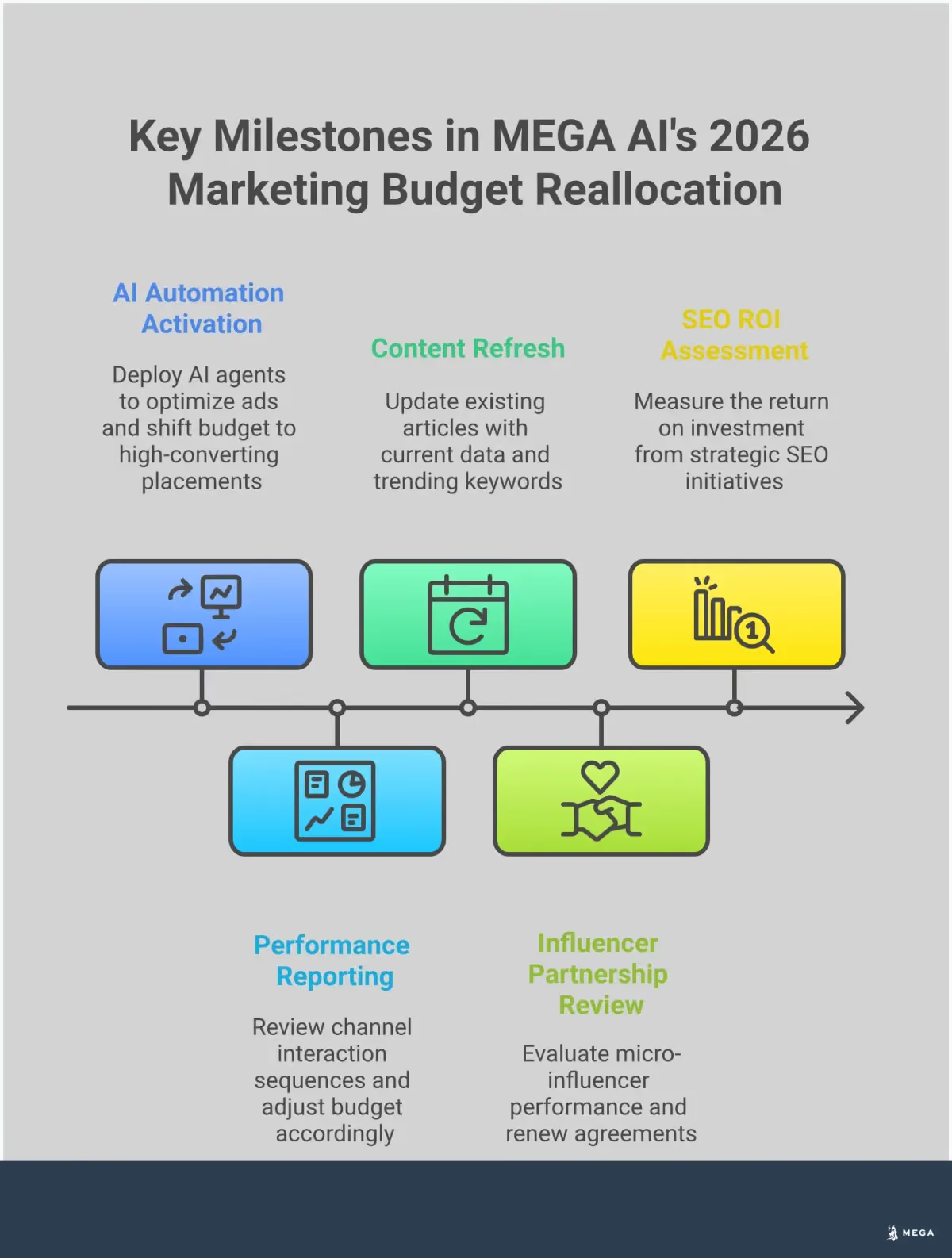
The modern marketing landscape requires you to learn and adapt quickly. The goal is to scale what works without having to scale your headcount at the same rate. This is where tracking and automation become critical. Set key performance indicators (KPIs) for each channel so you can measure what’s driving results. Don’t be afraid to shift your budget based on performance. If one channel isn’t delivering, reallocate those funds to one that is. Using an AI-powered growth agent can help you autonomously optimize your campaigns, ensuring your budget is always being spent in the most efficient way to hit your goals.