
Many small businesses approach app marketing as a checklist: run some ads, update a few keywords, and hope for the best. This disconnected strategy often leads to inefficient ad spend and missed opportunities. A better approach is to build a single, integrated system where your organic ASO and paid user acquisition work in tandem. Insights from your paid campaigns can inform your organic keyword strategy, while a well-optimized store page can dramatically improve the performance of your ads. This guide will show you how to connect these efforts to create a powerful growth loop for your app.
Key Takeaways
- Unify Your Paid and Organic Strategies: Use paid ad campaigns as a testing ground to discover high-converting keywords and creative assets. Apply these insights directly to your organic app store listing to improve its performance and create a feedback loop that makes your overall marketing spend more efficient.
- Recognize That App Quality Is an ASO Factor: App store algorithms prioritize a positive user experience. Your app's stability, user ratings, and engagement metrics are critical ranking signals, making a high-quality product the essential foundation for any successful optimization effort.
- Implement a Continuous Optimization Process: ASO is not a one-time setup but an ongoing cycle of refinement. Regularly test your app's icon, screenshots, and descriptions, and maintain consistent messaging across all channels to build a sustainable system for growth.
What Is App Store Optimization (ASO)?
App Store Optimization, or ASO, is the process of improving an app's visibility within an app store and increasing its conversion rate for downloads. You can think of it as Search Engine Optimization (SEO), but specifically for platforms like the Apple App Store and Google Play Store. The core goal is twofold: first, to make sure potential users can find your app when they search for relevant terms, and second, to convince them to install it once they land on your listing.
A solid ASO strategy involves a mix of keyword research, creative asset optimization, and ongoing performance analysis. Just like with website SEO, you can’t just set it and forget it. The app marketplace is competitive, and user behavior changes. A successful approach requires you to continuously refine your app’s title, description, screenshots, and other elements to stay relevant and appealing. This process of ongoing optimization is similar to how an AI agent works to improve a website's ranking and performance over time by making consistent, data-driven updates.
How Users Discover Your App
The primary way users find new apps is by searching the app store. This makes your keyword strategy the foundation of your app’s visibility. When a user types a query into the search bar, the store’s algorithm scans apps for relevant keywords to decide which ones to display. The most important places to include these keywords are your app’s title, subtitle, and keyword field (for Apple), or the title, short description, and long description (for Google).
Effective keyword research involves identifying terms your target audience uses to find apps like yours. You need to balance high-traffic keywords with less competitive, more specific phrases where you have a better chance to rank. Placing your most important keywords in the title can have a significant impact on your visibility, helping your app appear in more searches and attract qualified users.
Why ASO Is More Than Just Keywords
Getting your app discovered is only half the battle. Once a user lands on your app store page, you have just a few seconds to persuade them to tap the "Install" button. This is where the conversion-focused elements of ASO come into play. Your app icon, screenshots, preview video, and user reviews all work together to tell a compelling story about what your app does and why someone should download it. High-quality, engaging visuals are critical for making a strong first impression.
ASO is an ongoing process of testing and refinement. Top-performing apps frequently update their store listings to reflect new features or test different creative assets. You should regularly A/B test your icon, screenshots, and descriptions to see what resonates most with your audience. This continuous improvement loop helps you steadily increase your conversion rate and build a sustainable growth engine for your app.
How Do Paid Ads and Organic ASO Work Together?
Thinking of paid ads and organic ASO as separate strategies is a common mistake. In reality, they are two parts of a single growth engine. When managed correctly, they complement each other, creating a powerful system that improves visibility and drives downloads more efficiently. Paid ads can provide an immediate lift and valuable data, while a strong organic foundation ensures long-term, sustainable growth.
For small businesses, integrating these efforts is especially important. A coordinated approach helps you make the most of every dollar spent on advertising and every hour invested in optimization. By letting paid and organic channels inform one another, you can find high-intent users, lower acquisition costs, and build a stronger presence in the app stores.
How Paid Ads Influence Organic Rankings
Paid advertising can have a direct, positive effect on your organic rankings. When you run a paid campaign, you drive more traffic to your app store listing, which often leads to an increase in downloads and user engagement. App store algorithms see this activity as a positive signal, indicating that your app is relevant and popular. As a result, your app may start to rank higher for organic keywords.
A smart strategy is to use paid ads to defend your position or attack a competitor’s. For example, if you already rank number one organically for a keyword and no one else is bidding on it, you can pause your paid ads for that term to save money. If a competitor starts bidding, you can reactivate your ads to maintain top visibility. This dynamic approach helps you manage your ad spend effectively while supporting your organic presence.
Build a Sustainable Growth Loop
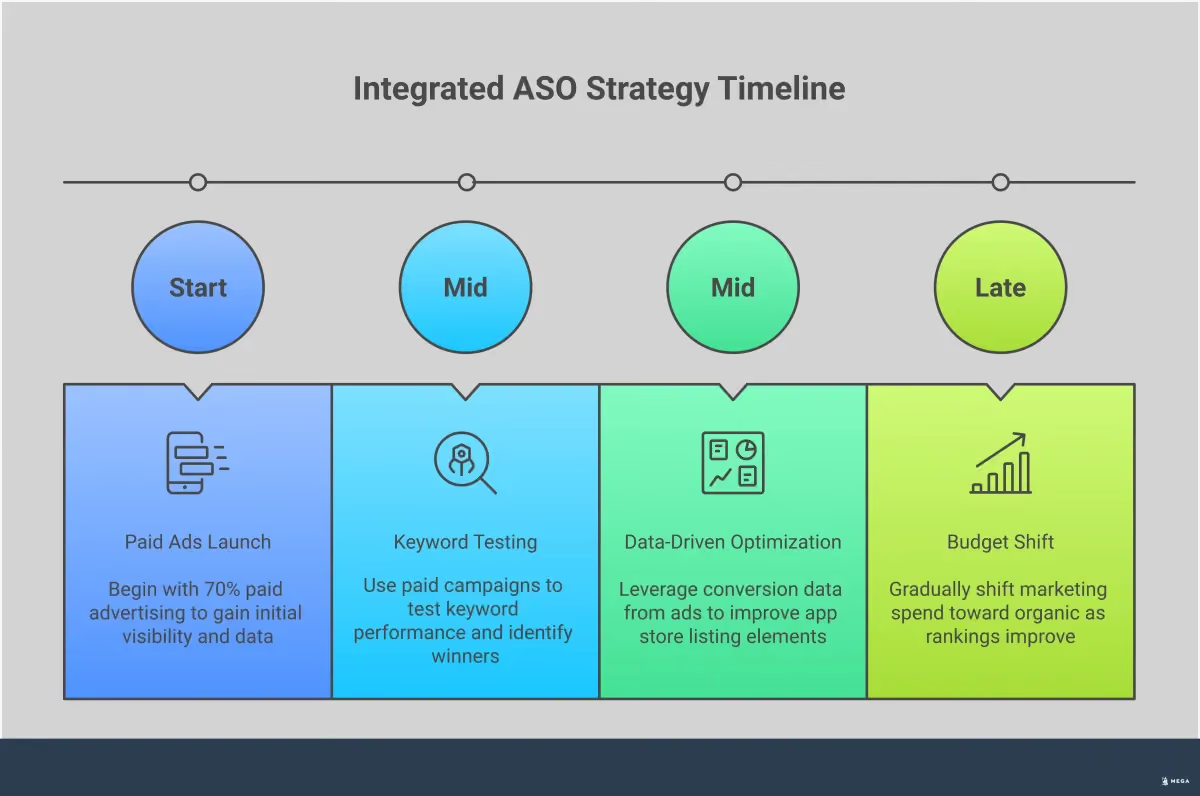
An effective ASO strategy creates a sustainable growth loop where each part of your marketing effort feeds the next. You can use paid channels, like Apple Search Ads, as a testing ground for new keywords. By running small campaigns, you can quickly see which keywords convert into downloads and which ones don’t. This data is incredibly valuable.
Once you identify high-performing keywords from your paid campaigns, you can incorporate them into your organic ASO. Update your app’s metadata—the title, subtitle, and keyword field—to include these proven terms. This process turns your ad spend into a long-term asset. The insights from paid ads strengthen your organic visibility, which in turn can reduce your reliance on paid user acquisition over time and build a more cost-effective growth strategy.
Prevent Your Channels from Competing
Without a coordinated plan, your paid and organic channels can end up competing against each other, a problem often called cannibalization. For instance, spending money on ads for a keyword where you already hold the top organic spot is often an inefficient use of your budget. The users who would have clicked your organic listing might click the paid one instead, meaning you paid for a download you would have gotten for free.
To avoid this, regularly assess the performance of your most expensive paid keywords. If a term is costing you a lot in ads, check your organic rank for it. If you’re not ranking well, make it a priority in your organic ASO efforts. Building organic authority for valuable keywords takes time, but it’s a sustainable approach that can significantly lower your average cost per install and create a more stable foundation for growth.
What Are the Costs of a Disconnected Strategy?
When you’re running a small business, it’s easy to treat marketing tasks as a checklist. You run paid ads, you work on your app store page, and you hope both contribute to the bottom line. But treating App Store Optimization (ASO) and paid advertising as separate channels is a common and costly mistake. When these efforts don't communicate, they don't just fail to support each other; they actively work against one another. Think of it like two people in a rowboat paddling out of sync. You don’t just move slowly—you waste energy going in circles.
A disconnected strategy creates a fractured experience for potential users. Someone might see a compelling ad that highlights a specific feature, click through to your app store page, and find generic messaging that doesn't continue the conversation. That disconnect is enough to make them leave. For a small business, the costs aren't just financial. You lose momentum, your team’s efforts feel less impactful, and you miss the chance to build a strong foundation in a competitive market. Instead of creating a growth engine where each part makes the others stronger, you end up with a system that leaks time, money, and opportunities.
Wasted Team Resources
For a small team where every person wears multiple hats, time is the most valuable resource. A disconnected strategy forces your team to work in silos, which is incredibly inefficient. Your paid ads manager might spend weeks testing ad copy to find the perfect message, while the person updating your app store page is left guessing what resonates with users. Without a shared feedback loop, key insights get lost and work gets duplicated. This isn't just about inefficiency; it's about morale. When your team pours their energy into campaigns that underperform because of a weak link elsewhere in the chain, it leads to frustration and burnout.
Missed Growth Opportunities
When your paid and organic strategies aren't aligned, you miss out on powerful growth loops. A cohesive strategy prevents your channels from competing with each other, a problem known as marketing cannibalization. For example, you might run ads targeting keywords you already rank for organically, essentially paying for downloads you would have gotten for free. More importantly, you miss the chance for synergy. Insights from your paid campaigns—like which ad creative gets the most clicks—should directly inform your ASO. That data can help you choose better screenshots for your app store page, improving your organic conversion rate and creating a sustainable growth cycle.
Inefficient Ad Spend
A disconnected strategy almost always leads to overspending on ads. When your ASO and paid user acquisition efforts are in sync, they create a positive feedback loop that can lower your overall customer acquisition costs. Strong organic rankings and high conversion rates on your app store page signal quality and relevance to ad platforms. This can lead to better ad performance and lower costs. When your channels are misaligned, you lose that advantage and are forced to pay more for visibility. A well-integrated approach ensures every dollar you spend is maximized, helping you improve your return on investment and build a more sustainable growth model for your app.
How to Build Your Holistic ASO Foundation
Before you spend a single dollar on paid advertising, you need a solid foundation. A holistic App Store Optimization (ASO) strategy ensures your app is discoverable and compelling enough to convert visitors into users. Think of your app store page as your digital storefront. If it’s messy, confusing, or uninviting, even the best advertising won’t convince people to come inside. A strong foundation integrates three core pillars: a smart keyword strategy to attract the right audience, an optimized listing to persuade them, and refined creative assets to capture their attention.
When these elements work in harmony, they create a powerful engine for organic growth. A well-researched keyword in your title can improve your search ranking, while compelling screenshots can significantly lift your conversion rate. Getting this foundation right means every user you drive to your page—whether from organic search or a paid campaign—has the highest possible chance of downloading your app. This approach doesn't just attract more users; it attracts the right users, leading to better engagement, higher retention, and a more efficient marketing spend overall. Building this foundation is a core part of any successful growth strategy and sets the stage for all future marketing efforts.
Align Your Keyword Strategy
Keywords are the bedrock of app discovery. As marketing expert Neil Patel notes, discovery is driven by "the usage of the keywords that sit within the app store listing itself." Your goal is to identify the terms your target audience uses when searching for a solution like yours. The most critical places for these keywords are your app’s title, subtitle, and description, with the title carrying the most weight in search algorithms. A well-aligned strategy means your most important keyword should feature prominently in your title, helping users and the app store algorithm understand what your app does at a glance. Effective keyword research is an ongoing process of finding and prioritizing these terms.
Optimize Your App Store Listing
Once a potential user lands on your page, your listing has one job: convince them to tap "Download." According to marketing expert Neil Patel, optimizing your store page can increase your conversion rate by 150% or more. Your app description should clearly articulate your value proposition, explain key features, and speak directly to your audience's pain points. It’s not just a space for keywords; it’s your primary sales pitch. Use this space to build trust by incorporating social proof, such as positive mentions or awards. The principles of conversion rate optimization are key here—every element should guide the user toward taking action.
Refine Your Creative Assets
Users make snap judgments. As Neil Patel points out, "It takes maybe 10 seconds for a user to make a decision before they download your app." Your creative assets—your icon, screenshots, and preview video—do most of the talking in that short window. Your app icon is the first visual they’ll see, so it needs to be memorable and clear. Your screenshots and video should do more than just show your app’s interface; they should tell a story. Use them to highlight the most valuable features and demonstrate the core user benefit. A data-informed creative strategy, supported by testing different visuals and messages, ensures your assets resonate with your audience and drive downloads.
What Do App Store Algorithms Reward?
App store algorithms are much more sophisticated than simple search engines. They don’t just scan for keywords; they analyze a wide range of signals to determine which apps offer the best user experience. Think of them as curators whose main goal is to recommend high-quality, engaging, and reliable apps. To do this, they look at your app’s performance holistically, rewarding products that users genuinely love and use. This means factors like user ratings, engagement metrics, and overall app stability are just as important as your title and description.
A high star rating is a powerful signal of quality. For example, apps with a four-star rating or higher are likely to rank for significantly more keywords. The algorithms also consider how many people download your app and, more importantly, how often they return to use it. High retention and engagement tell the platforms that your app is valuable. Ultimately, Apple and Google want to feature products that perform well and contribute positively to their ecosystem. A great product is the foundation of any successful ASO strategy because it naturally generates the positive signals that algorithms are designed to find.
Strategies to Improve Ratings and Reviews
Your app’s rating is one of the most visible indicators of its quality, and algorithms take it very seriously. Aiming for a 4.5-star rating or higher should be a priority, as this is often considered the gold standard for unlocking better visibility. To encourage positive feedback, time your review prompts carefully. Instead of interrupting a user, present the native in-app review prompt during a moment of success or delight, like after they’ve completed a level or achieved a goal.
Responding to reviews is another critical practice. When you reply to negative feedback, you show users that you are listening and committed to improving their experience. This can sometimes even persuade a user to update their rating. Acknowledging positive reviews also helps build a loyal community around your product. This two-way communication demonstrates active maintenance and customer care, which both users and app store platforms value.
The Importance of Download and Engagement Signals
While downloads are a key metric, app store algorithms look much deeper to understand your app's true value. They analyze post-install behavior to see if users are actually engaging with your app over time. Key signals include user retention rates, session length, and in-app revenue. An app that is downloaded but quickly deleted sends a negative signal, while one that users return to day after day is seen as a high-quality product.
Because the app stores want to promote apps that drive revenue and keep users on their platforms, these engagement metrics have a direct impact on your discoverability. This is also where paid and organic efforts can work together. If you notice a keyword from a paid campaign is driving highly engaged users, you can incorporate it into your organic ASO strategy. This creates a sustainable growth loop where your channels inform and support each other.
How App Quality Affects Your Rank
At the end of the day, no ASO strategy can make up for a poor-quality app. Technical performance is a fundamental ranking factor because it directly impacts the user experience. If your app is slow, buggy, or crashes frequently, it sends powerful negative signals to the app store algorithms. Users will quickly become frustrated, leading to negative reviews and high uninstall rates, creating a downward spiral for your visibility.
Conversely, a stable and responsive app provides a smooth experience, which encourages positive reviews and long-term engagement. The algorithms are designed to detect these quality indicators. A well-built product is the bedrock of good ASO because it naturally produces the positive signals that lead to higher rankings. Before you invest heavily in keywords and creative assets, ensure your app provides a reliable and enjoyable user experience.
What Are the Biggest ASO Mistakes to Avoid?
Building a holistic strategy means knowing which pitfalls to sidestep. Many teams undermine their own efforts by working in silos, losing the synergy that drives sustainable growth. Here are four of the most common mistakes to watch out for.
Inconsistent Messaging Across Channels
When your paid ads and app store page tell different stories, you create a confusing experience for users. This siloed approach misses the point of building a cohesive brand. As marketing expert Neil Patel notes, the key is an "integrated joined up solution." Your value proposition, tone, and visuals should be consistent everywhere. This builds trust and clarifies what your app does, making a user more likely to download. A strong, consistent message is fundamental to effective brand management.
Ignoring the User Experience
A perfectly optimized app store page won’t matter if the app itself is flawed. A poor user experience leads to negative reviews and high uninstall rates—both powerful negative signals to app store algorithms. As one expert puts it, "if your app actually sucks, it sends negative signals." ASO gets users in the door, but a quality product makes them stay. Focus on building a stable, intuitive app. A great user experience is the foundation of positive reviews and strong user retention.
Overlooking Key Data Integrations
A fragmented approach to analytics is costly. If your ad platform data, app store analytics, and in-app user data are in separate silos, you cannot see the full picture. You won't know which campaigns drive high-value users versus which just bring in low-quality downloads. This lack of insight leads to wasted ad spend. Connecting your data sources is essential for making informed decisions. A unified view allows you to attribute success accurately and allocate your budget effectively.
Focusing Only on New User Acquisition
Focusing only on total downloads is a classic leaky bucket problem. If you’re pouring new users in while existing ones are leaving, you’re not actually growing. With app retention often around 10% after 30 days, an acquisition-only focus is rarely profitable. A successful ASO strategy attracts the right users who will find value and stick around. This means optimizing your listing to target users whose problems your app solves. This approach leads to higher engagement and better long-term value.
How to Measure the Success of Your ASO Strategy
A successful ASO strategy isn’t built on guesswork. To know if your efforts are paying off, you need a clear way to measure your results. Tracking performance helps you understand what’s working, what isn’t, and where to focus your resources. When you treat organic ASO and paid user acquisition as parts of a single, integrated system, measurement becomes even more important. You need to see how a change in your app’s description affects your paid campaign’s conversion rate, or how a new set of keywords impacts your organic visibility. This holistic view prevents you from optimizing one channel at the expense of another.
By establishing a measurement framework, you can make informed decisions that create a sustainable growth loop. You’ll be able to justify your marketing spend, demonstrate progress to stakeholders, and continuously refine your approach. The right metrics give you a complete picture of your app’s health in the app stores and provide a roadmap for future optimizations. It’s about moving from simply doing ASO to strategically managing it for long-term growth. Without clear data, you're essentially flying blind, making it impossible to know if your budget and time are being spent effectively.
Define Your Key Performance Indicators (KPIs)
Before you can measure success, you have to define what it looks like. Key Performance Indicators (KPIs) are the specific metrics you’ll use to track progress toward your goals. For ASO, these often include keyword rankings, organic downloads, and app store impressions. Another critical KPI is your app’s rating. App store algorithms reward quality, and a 4.5-star rating is often considered the “gold standard” for unlocking better visibility.
Start by identifying a handful of primary KPIs that align with your business objectives. Are you focused on increasing visibility, driving more installs, or improving user engagement? Your chosen KPIs should directly reflect these priorities. This focus helps you avoid getting lost in data and allows you to concentrate on the metrics that truly matter for your app’s growth.
Track and Analyze Conversion Rates
Your app store conversion rate—the percentage of visitors who install your app after viewing its page—is one of the most direct measures of your listing’s effectiveness. It tells you how well your icon, screenshots, preview video, and description persuade potential users to tap the “Get” or “Install” button. A low conversion rate might indicate that your messaging is unclear or your creative assets aren’t compelling enough.
Optimizing your app store page can have a massive impact. Some analyses show that a strong ASO strategy can increase conversion rates by 150% or more. Regularly A/B testing different elements of your listing is a practical way to find out what resonates with your audience. By systematically tracking these changes, you can make data-driven improvements that lead to more downloads.
Choose the Right Attribution Model
Understanding where your installs come from is fundamental to building an effective strategy. An attribution model is the framework you use to credit different marketing channels for driving downloads. However, tracking has become more complex. With privacy changes like Apple’s App Tracking Transparency, a significant portion of attribution data for iOS devices can be restricted, making it harder to connect installs to specific campaigns.
Despite these challenges, choosing a clear attribution model is essential. It helps you understand the relationship between your paid and organic efforts. For example, you can see if a paid campaign is creating a “halo effect” that lifts organic installs. Without proper attribution, you risk misallocating your budget and failing to recognize which channels are providing the most value for your business.
Optimize Your Cost Per Acquisition (CPA)
Your organic ASO efforts have a direct impact on the efficiency of your paid advertising. A strong organic presence can significantly lower your overall Cost Per Acquisition (CPA), which is the average amount you spend to get one new user. When your app ranks highly for important keywords, you don’t have to rely as heavily on paid ads to get noticed. This allows you to be more strategic with your ad spend.
If you find that the cost to acquire users through a specific keyword is too high, look at its organic performance. By focusing your ASO efforts on improving your organic rank for that term, you can capture more of that traffic for free. This integrated approach allows your organic and paid channels to work together, creating a more cost-effective and sustainable user acquisition strategy.
How to Create Campaigns That Drive Results
With a solid ASO foundation in place, you can launch campaigns that attract the right users and drive sustainable growth. An effective campaign isn’t just about spending money on ads; it’s about making strategic decisions that ensure your organic and paid efforts support each other. This involves smart coordination, precise timing, and efficient budget management to turn your app into a top performer in its category. By aligning every element of your campaigns, you create a powerful engine for user acquisition that delivers a strong return on investment.
Coordinate Paid Ads with Organic Efforts
One of the biggest challenges in a holistic strategy is ensuring your paid and organic channels work together, not against each other. You don’t want to pay for clicks you would have gotten for free. As Neil Patel explains, "When no one else is bidding on your ad and you're number one organically, we turn off the paid ads." This dynamic approach prevents you from cannibalizing your organic traffic. The goal is to use paid advertising to defend your brand against competitors or capture traffic when your organic rank isn't at the top. This requires real-time monitoring and adjustments to ensure you’re only spending when it provides a clear advantage, maximizing your visibility without wasting your budget.
Time Your Campaigns for Maximum Impact
Driving traffic to an unoptimized app store page is like pouring water into a leaky bucket. Before you launch a major paid campaign, your listing must be ready to convert visitors into users. A fully optimized page—with compelling visuals, a clear value proposition, and strong keywords—can dramatically improve your results. According to industry experts, optimizing your app store presence can increase your conversion rate by as much as 150-200%. By timing your campaigns to coincide with a polished and persuasive app store listing, you ensure that your ad spend generates the highest possible number of downloads. First, perfect your page, then open the floodgates.
Allocate Your Budget Effectively
Acquiring new app users is getting more expensive. With costs ranging from $1.55 to over $5.50 per user depending on the platform, every dollar in your ad budget needs to work hard. A disconnected strategy often leads to inefficient spending, but a holistic approach gives you the data to make smarter choices. By understanding which keywords are driving strong organic traffic, you can allocate your paid budget to target new opportunities or different audience segments. An automated system can help by shifting funds in real-time to the best-performing ads and platforms, ensuring your budget is always placed where it will have the greatest impact on your growth.
Use Top Keywords Across All Channels
Consistency is key to a successful ASO strategy. The high-value keywords you identified during your research should be the foundation of all your marketing efforts. These terms need to appear everywhere: your app’s title and subtitle, its long description, and the back-end keyword fields. But it doesn’t stop there. Those same keywords should also be integrated into your paid ad copy and any related landing pages. This consistent keyword strategy reinforces your app’s relevance to both app store algorithms and ad networks. It also creates a seamless experience for users, assuring them they’ve found the right solution from the moment they see your ad to the moment they tap "Install."
What Tools Do You Need for Integrated ASO?
Executing a holistic ASO strategy requires more than just a plan; it demands the right set of tools to connect your efforts and measure what works. Without a solid tech stack, your teams can end up working in silos, your data will be fragmented, and you’ll struggle to scale your campaigns effectively. The goal is to build a system that supports coordination, provides clear insights, and automates repetitive work.
This allows your team to focus on high-level strategy instead of getting bogged down in manual tasks. The right tools help you see the complete picture of your user acquisition funnel, from the first ad impression to the final app store download. Let's look at the three key categories of tools that form the foundation of an integrated ASO workflow.
Platforms for Coordination and Tracking
An integrated strategy starts with an integrated team. To ensure your paid media, organic search, and content teams are all aligned, you need a central platform for coordination. This is where you can manage your keyword lists, share creative assets, and track campaign timelines. When everyone works from a single source of truth, you eliminate inconsistencies in messaging and strategy.
A shared project management tool can serve as a command center for your entire ASO plan. It allows you to assign tasks, set deadlines, and maintain a calendar of all marketing activities. This level of organization is critical for timing your campaigns effectively, such as coordinating a paid ad push with the launch of a new app feature mentioned in your updated store listing.
Tools for Cross-Channel Analytics
To understand the true impact of your efforts, you need tools that can pull data from multiple sources and connect the dots. Your app store listing doesn't exist in a vacuum. Its performance is influenced by your website traffic, social media campaigns, and paid advertising. Strong analytics tools help you see how these channels work together to drive downloads and engagement.
Platforms like Google Analytics for Firebase provide a comprehensive view of how users find and interact with your app. By tracking events and conversions, you can attribute downloads to specific campaigns and understand which channels deliver the most valuable users. This data is essential for making informed decisions, like reallocating your budget to the channels that provide the best return on investment.
How Automation Helps You Scale
Managing a holistic ASO strategy involves many moving parts, from testing different app icons to updating custom product pages for various audience segments. Doing this work manually is time-consuming and limits your ability to experiment. This is where automation becomes a powerful asset, allowing you to execute complex strategies at scale.
AI-powered tools can handle repetitive tasks like generating keyword-optimized descriptions or creating hundreds of ad variations for testing. For instance, an AI agent can manage your paid ads, automatically testing different creatives and copy to find the combinations that drive the most downloads. This frees up your team to focus on strategy while the technology handles the day-to-day execution, helping you grow more efficiently.
Start Your Integrated ASO Strategy
Building a holistic App Store Optimization strategy moves you from guessing what works to creating a repeatable system for growth. It’s about connecting the dots between your paid campaigns, your organic presence, and your product itself. When these elements work in harmony, they create a powerful growth loop where each part strengthens the others. For example, a successful paid campaign can drive downloads that, in turn, signal to the app store algorithms to improve your organic ranking.
An integrated strategy doesn't have to be complicated. It starts with establishing a clear foundation built on three key pillars: a defined workflow, accurate measurement, and consistent execution. By focusing on these areas, you can ensure your teams are aligned, your budget is spent efficiently, and your app gains the visibility it deserves. This approach turns ASO into a core driver of your business, rather than a checklist of isolated tasks. It’s how you build a sustainable presence in a crowded marketplace, ensuring your paid ads and organic efforts are always working toward the same goal.
Define Your Optimization Workflow
Your optimization workflow is the blueprint for how you manage and improve your app’s presence. It outlines who is responsible for what, the tools you’ll use, and the cadence for updates. A strong workflow ensures that your keyword research informs your ad copy, your ad creatives are consistent with your app store screenshots, and your product updates are reflected in your listing’s description. This alignment is critical for effective app growth marketing. Without a defined process, teams can end up working in silos, leading to mixed messaging and wasted effort. Map out each step, from initial research to campaign launch and performance analysis, to create a cohesive and efficient system.
Set Up Your Measurement and Tracking
You can’t optimize what you don’t measure. While tracking campaign performance has become more challenging with privacy changes, establishing a robust measurement system is non-negotiable. This means setting up attribution models that help you understand where your most valuable users are coming from. You need to connect the dots between a user seeing a paid ad, visiting your app store page, and completing an install. With up to 65% of attribution data for iOS devices being restricted, it's important to use the tools at your disposal to get the clearest picture possible. This data allows you to make informed decisions about budget allocation and strategic focus.
Maintain Consistency Across All Channels
Consistency builds trust with both users and app store algorithms. The top apps frequently update their listings because it signals that the app is active and well-maintained. Research shows that 50% of leading apps update their screenshots at least twice a year, while 30% do the same for their descriptions. Imagine the impact of updating your assets every month or even every two weeks. This regular maintenance helps you stay relevant and competitive. Your messaging, branding, and visuals should be consistent across your ads, your app store page, and your app’s user interface. This creates a seamless user journey and reinforces your brand identity, making your app more discoverable and appealing.