
While fixed-fee projects offer budget predictability, the hourly retainer model is gaining ground for situations where flexibility is more valuable. This model isn't about writing a blank check; it's about creating a partnership that can adapt to real-world business needs. Think of it as reserving a block of an expert's time each month to work on your business. You get dedicated support and the ability to pivot strategy without the friction of renegotiating a contract every time a new opportunity appears. An hourly retainer works best when the path forward isn't a straight line, providing a structure for collaboration in dynamic environments.
Key Takeaways
- Adapt to market changes in real time: An hourly retainer provides the agility to pivot your strategy in response to algorithm updates or competitor moves, ensuring your marketing efforts stay effective.
- Secure consistent, expert support: This model gives you priority access to a dedicated team that understands your business, offering proactive guidance instead of just completing one-off tasks.
- Set clear boundaries to control costs: A successful retainer requires a detailed scope of work, regular communication, and budget caps to prevent unexpected expenses and keep the work focused on your goals.
Why Are Hourly Retainers Making a Comeback?
After years of fixed-fee projects and value-based pricing dominating the conversation, the classic hourly retainer is making a notable return. This isn't about going back in time; it's a direct response to a marketing landscape that has become more complex and less predictable. For both agencies and the small businesses they serve, the search is on for a model that balances expertise with flexibility.
The shift away from rigid, long-term contracts is driven by a few key factors: the rising cost of specialized talent, the unpredictable nature of technology, and a growing demand from clients for more transparency and control. The old way of locking in a scope of work for six months struggles to keep up when a major platform algorithm changes overnight. The hourly retainer, once seen as outdated, is re-emerging as a practical solution for navigating this new reality. It offers a way to access expert help exactly when and where it's needed, building a partnership that can adapt to new challenges and opportunities as they arise. This model acknowledges that modern marketing is an ongoing, iterative process, not a one-and-done project. It’s about ensuring that every dollar spent is tied directly to tangible work and strategic adjustments in real time.
The Hunt for Specialized (and Expensive) Talent
A modern marketing strategy requires a team of specialists. You don't just need a "marketing person"; you need an SEO analyst who understands Google's latest updates, a paid ads manager who can optimize campaigns across multiple platforms, and a data expert who can make sense of it all. This level of specialized marketing talent is expensive to hire full-time. An hourly retainer gives businesses access to this expertise on-demand, allowing an agency to bill for a specialist's time only when their specific skills are required for a project. This approach makes top-tier talent accessible without the long-term commitment of a salary.
How Tech Changes Create Unpredictable Workflows
Imagine you’ve just agreed to a six-month fixed SEO project, and then Google rolls out a major core algorithm update. Suddenly, the original plan is obsolete, and your entire content strategy needs a complete overhaul. Under a rigid contract, this creates a difficult situation. An hourly model provides the built-in flexibility to adapt. The agency can immediately pivot to address the new challenge, tracking their hours as they work to get your strategy back on track without needing to halt everything to renegotiate a new contract. This responsiveness is critical in a field where the rules can change overnight.
Why Clients Want More Flexibility and Transparency
Small business owners need to know their marketing dollars are being spent effectively. One of the biggest appeals of the hourly retainer is the transparency it offers. With detailed invoices and time-tracking reports, you can see exactly what tasks were completed and how long they took. This model also provides the flexibility to align your services with expectations and scale your marketing efforts up or down. You can increase hours to support a new product launch or reduce them during a slower period, ensuring the service always matches your immediate business needs and budget.
What's Driving the Shift in Agency Pricing?
The way marketing agencies charge for their work is changing, and for good reason. For years, the standard was often a fixed price for a specific project. You’d agree on a set of deliverables for a flat fee, and that was that. But the digital marketing world has become far more complex and unpredictable. Sticking to rigid, project-based pricing is becoming difficult for agencies and often less effective for clients.
This shift isn't happening in a vacuum. It's a direct response to a few key pressures that are reshaping the industry. The demand for highly specialized talent has skyrocketed, technology is evolving at a breakneck pace, and clients are looking for more than just a one-off service—they want a true partner. These factors combined are making more flexible models, like hourly retainers, an increasingly practical choice for getting consistent, high-quality results. Understanding these drivers can help you see why a predictable monthly engagement might be the smartest move for your business.
The Hunt for Specialized (and Expensive) Talent
Gone are the days when one marketing generalist could do it all. Today, achieving real results requires a team of specialists with deep expertise in areas like data science, conversion rate optimization, and AI-driven advertising. As one industry expert noted, the only way to keep up is to hire people with higher levels of skill, and those professionals are in huge demand. This creates a fierce competition for talent that drives up salaries and agency costs.
For an agency, covering the cost of this top-tier talent within a fixed-project fee is a gamble. If a campaign requires more strategic oversight or troubleshooting than planned, the project can quickly become unprofitable. An hourly retainer solves this by allowing agencies to bill for their experts' time accurately, ensuring you get the senior-level attention your business deserves without the agency having to cut corners.
How Tech Changes Create Unpredictable Workflows
The digital landscape is in a constant state of flux. A major Google algorithm update can happen overnight, new AI tools can emerge that change best practices, and social media platforms can alter their features without warning. These technological shifts are "very disruptive to your way of doing things," often making carefully planned project scopes obsolete in an instant. A strategy that was solid one week might need a complete overhaul the next.
This unpredictability makes fixed-fee projects risky. An agency might budget 20 hours for a task that suddenly requires 40 hours of research and re-implementation due to an unforeseen update. An hourly retainer builds in the flexibility needed to adapt. It allows your agency partner to pivot, test new approaches, and respond to changes in real-time, ensuring your marketing efforts remain effective and aren't tied to an outdated plan. This is why having an agile SEO strategy is so critical.
Why Clients Want More Flexibility and Transparency
Business owners today are looking for more than just a service provider; they want a strategic partner invested in their long-term success. The old model of paying for one-off deliverables can feel transactional and short-sighted. Clients are increasingly seeking relationships built on trust, transparency, and shared goals. A retainer model naturally fosters this kind of partnership by creating a stable and predictable framework for both sides.
With a retainer, you know exactly what your marketing budget is each month, which helps with financial planning. For the agency, it creates predictable revenue, allowing them to dedicate consistent resources to your account. This structure encourages open communication about how time is being spent and why certain tasks are prioritized. It shifts the focus from simply checking boxes on a task list to achieving meaningful business outcomes together, building a stronger client-agency relationship over time.
How Are Hourly Retainers Different?
Understanding the structure of an hourly retainer helps clarify why it’s a compelling option for both businesses and agencies. Unlike a one-off project with a fixed price, a retainer is built for an ongoing relationship. It’s a commitment from both sides: the client agrees to pay a recurring fee, and the agency dedicates resources and time to that client each month. This model shifts the focus from completing a single task to achieving long-term goals.
The key is that you’re not just buying a block of hours. You’re securing a strategic partner who is consistently invested in your business. This structure allows for more proactive work, as the agency can plan ahead, respond to market changes, and continuously optimize your campaigns without needing a new contract for every small adjustment. It’s a framework built on trust, predictability, and a shared vision for growth.
Hourly Retainers vs. Fixed-Fee Projects
The main difference between hourly retainers and fixed-fee projects is predictability and scope. A fixed-fee project has a clear beginning and end with a set price for specific deliverables, like building a new landing page. It’s straightforward but can be rigid if your needs change. An hourly retainer, however, involves paying a recurring monthly fee in advance for a set number of hours. This retainer pricing model gives the agency predictable revenue and you consistent access to their team. It helps create a stable budget for ongoing marketing efforts like SEO or content management.
The Rise of Hybrid Models
Many agencies now offer hybrid models that blend the best of both worlds. A common approach is a fixed monthly retainer for core services, with an agreed-upon hourly rate for work outside that scope. This gives you the financial predictability of a retainer while maintaining flexibility to tackle new opportunities. This structure encourages a focus on long-term client success rather than just checking off deliverables. It allows the relationship to evolve, ensuring the agency can adapt its strategy to meet your changing business goals.
How Retainers Can Guarantee You Priority Support
A significant advantage of a retainer is gaining priority access to your agency’s team. Agencies juggle multiple clients, and when urgent tasks pop up, they often prioritize retainer clients over one-off project work. This means your requests move to the front of the line. A retainer ensures you have a team that is not only available but also deeply familiar with your brand and goals. They can respond faster and more effectively because they are already immersed in your world. You’re not just another project; you’re a consistent partner with dedicated attention.
When Does an Hourly Retainer Make Sense?
While fixed-fee projects offer budget predictability, the hourly retainer model is gaining ground for specific situations where flexibility is more valuable than a fixed price tag. This model isn't about writing a blank check; it's about creating a partnership that can adapt to real-world business needs. Think of it as reserving a block of an expert's time each month to work on your business. You get dedicated support and the ability to pivot strategy without the friction of renegotiating a contract every time a new opportunity or challenge appears.
An hourly retainer works best when the path forward isn't a straight line. It’s designed for dynamic environments where goals might evolve, technical issues can pop up unexpectedly, or the market itself is in flux. For businesses that need a responsive, agile marketing partner, this model provides a structure for collaboration. It allows you to tap into specialized expertise precisely when you need it, whether that’s for a few hours of strategic consulting or a deep dive into a complex technical problem. The key is aligning the pricing model with the nature of the work.
For Fast-Changing Projects and Markets
Digital marketing moves quickly. A strategy that was effective six months ago might be obsolete today due to a search engine algorithm update or the rise of a new social platform. In these fast-paced environments, a rigid project scope can hold you back. An hourly retainer provides the marketing agility needed to adapt. If a competitor launches a new campaign or a new technology emerges, your agency can immediately allocate hours to analyze the situation and adjust your plan. This allows your strategy to evolve with the market, ensuring your efforts remain relevant and effective without being constrained by an outdated agreement.
For Complex Technical Work
Some tasks are inherently unpredictable. Think of a major website migration, a deep-dive technical SEO audit, or integrating multiple complex software systems. You can plan for the expected, but unforeseen issues often surface during execution. An hourly retainer is well-suited for this kind of work because it fairly compensates experts for the actual time it takes to solve these problems. Instead of forcing an agency to stick to a fixed budget when unexpected challenges arise, this model allows them to dedicate the necessary hours to get the job done right. This is especially true for intricate technical SEO fixes that can have a major impact on your site's performance.
For Continuous Support and Maintenance
Not every business needs a massive project every month, but most need consistent, reliable support. An hourly retainer is perfect for ongoing maintenance, small updates, and having an expert on call. This model ensures you have priority access to your agency for tasks like updating website content, monitoring ad campaigns, or getting strategic advice when you need it. Agencies often prioritize their retainer clients over one-off projects, so your requests won't be pushed to the bottom of the list. It’s a practical way to secure continuous support and keep your marketing efforts running smoothly without committing to a large-scale project.
Common Misconceptions About Hourly Retainers
Hourly retainers often get a bad rap, usually because of a few persistent myths. If you're exploring different ways to work with a marketing partner, it’s helpful to separate the fiction from the facts. Understanding these common misconceptions can help you make a more informed decision about what’s right for your business, whether it’s an hourly model, a fixed-project fee, or a subscription service. Let's clear up a few things.
Myth 1: They Always Cost More
The biggest fear with hourly billing is an unpredictable, ever-growing invoice. It’s easy to imagine the costs spiraling out of control. However, a well-structured hourly retainer is designed to prevent this. It’s about paying for the actual time and expertise dedicated to your business, not a bundled price that might include services you don’t need. This model ensures you're compensated fairly for the work you deliver. When you pay for a block of hours, you get a dedicated partner focused on your goals for that specific amount of time, which can be more cost-effective than a large project fee that pads for unforeseen issues.
Myth 2: The Scope is Unpredictable
Another common concern is that without a fixed scope, the work will lack direction. While it's true that retainers don’t work well on things that are unpredictable, a good retainer agreement actually builds in predictability. It does this through a clear initial scope, regular communication, and budget caps. Unlike a fixed project where unexpected problems can derail the entire timeline, an hourly retainer allows for pivots. If a new Google algorithm update requires a shift in your SEO strategy, your partner can adjust their focus immediately without needing to renegotiate a whole new contract. This flexibility keeps the work aligned with your real-time business needs.
Myth 3: Project-Based Work Offers Better Value
Many businesses default to project-based work, thinking a one-time fee for a defined deliverable is the best value. This approach can be very transactional. An hourly retainer, on the other hand, encourages a long-term partnership. As one agency expert notes, retainer pricing isn’t just about creating predictable revenue—it’s about transforming your entire business model to focus on long-term client success. Instead of just completing a task and moving on, a retainer-based partner becomes an extension of your team. They gain a deeper understanding of your business over time, allowing them to provide more strategic and proactive support that drives sustained growth.
Why a Good Retainer Isn't Cheap
When you’re shopping for marketing services, it’s tempting to go with the lowest price. But a good retainer, whether it’s hourly or fixed, comes with a price tag that reflects the value you’re actually getting. Understanding what goes into that cost helps you see why a higher price often means better, more reliable results for your business. A cheap retainer might save you money upfront, but it can lead to missed opportunities, slow growth, and wasted budget down the line.
The cost of a quality retainer isn't arbitrary. It’s a calculated figure that covers the essential components needed to grow a business: deep expertise, a skilled team, and the powerful technology required to compete. When an agency or service provider sets their price, they’re factoring in the resources needed to deliver on their promises. Cutting corners on any of these elements can compromise the quality of the work. This is why platforms that offer an alternative, like MEGA AI's AI-powered agents, focus on delivering that agency-level value through technology at a more accessible price point.
You're Paying for Expertise, Not Just Hours
When you sign a retainer, you're not just buying a block of time; you're investing in your partner's expertise. The marketing world is in constant flux. With frequent algorithm updates and disruptive new technologies, what worked last month might not work today. You’re paying for a team that stays ahead of these changes and knows how to adapt your strategy accordingly. This means you get proactive problem-solving and strategic guidance, not just someone checking tasks off a list. This is especially true for complex areas like search engine optimization, where deep knowledge is critical for success.
Factoring in the Cost of a Senior Team
To deliver high-quality work, an agency needs a team of experienced professionals. Senior strategists, copywriters, and technical specialists are in high demand, and their salaries reflect their skill level. A retainer fee directly covers the cost of having these experts work on your account. A lower-priced retainer often means your work is being handled by junior staff who may lack the experience to handle complex challenges. This can lead to slower progress and costly mistakes. The goal is to have a team that can drive results, and that requires investing in top talent.
The Price of Advanced Tools and Tech
Modern marketing runs on sophisticated technology. Professional agencies rely on a suite of expensive tools for everything from keyword research and competitive analysis to ad management and performance analytics. These software subscriptions can easily add up to thousands of dollars per month. A portion of your retainer fee goes toward covering the cost of this essential tech stack. Without these tools, it’s nearly impossible to gather the data needed to make informed decisions and effectively optimize campaigns, especially for competitive channels like paid advertising.
Potential Downsides of the Hourly Model
While the hourly retainer model offers flexibility, it’s not without its challenges for both clients and agencies. Understanding these potential hurdles can help you decide if this model is the right fit for your business and how to structure an agreement that avoids common pitfalls. For an agency, unpredictable client demands can make it difficult to plan resources, while for a client, the lack of a fixed price can lead to budget uncertainty. It’s a balancing act that requires clear communication and a solid framework to succeed.
Juggling Agency Resources
One of the biggest operational headaches for an agency on an hourly model is resource management. When client work ebbs and flows without a predictable scope, it becomes incredibly difficult for the agency to scale its team effectively. If several clients have urgent needs at once, the agency’s team can be stretched thin, potentially impacting the quality or speed of your work. This can lead to an agency limiting the number of new clients it takes on or assigning less-experienced team members to your account to handle the overflow. This struggle to manage capacity means that while you have access to the team, their availability might not always match your timeline.
Keeping Up with Constant Tech Changes
The marketing landscape changes at a dizzying pace. New tools, platform updates, and algorithm shifts can disrupt an agency's established workflows overnight. For an agency billing by the hour, this creates a dilemma. They have to invest non-billable time in training their team, or they might end up billing you for the time it takes them to learn and adapt to new technology. As one agency owner noted, these constant changes can make operations feel unstable, as standard procedures go out the window in real time. This can lead to inconsistent project management and makes it harder for the agency to deliver predictable results on a consistent timeline.
Preventing Scope Creep
Scope creep is a classic project management problem that can easily surface in an hourly retainer model. It happens when the project's requirements gradually expand beyond the original agreement. From the agency's side, they might feel pressured to go above and beyond to keep a client happy, sometimes doing extra work without billing for it, which hurts their profitability. From the client's perspective, small requests and "quick questions" can add up, leading to a surprisingly high invoice at the end of the month. To avoid this, it's essential to have a crystal-clear scope of work and a process for handling out-of-scope requests to prevent scope creep before it impacts your budget and timeline.
How to Set Up a Successful Hourly Retainer
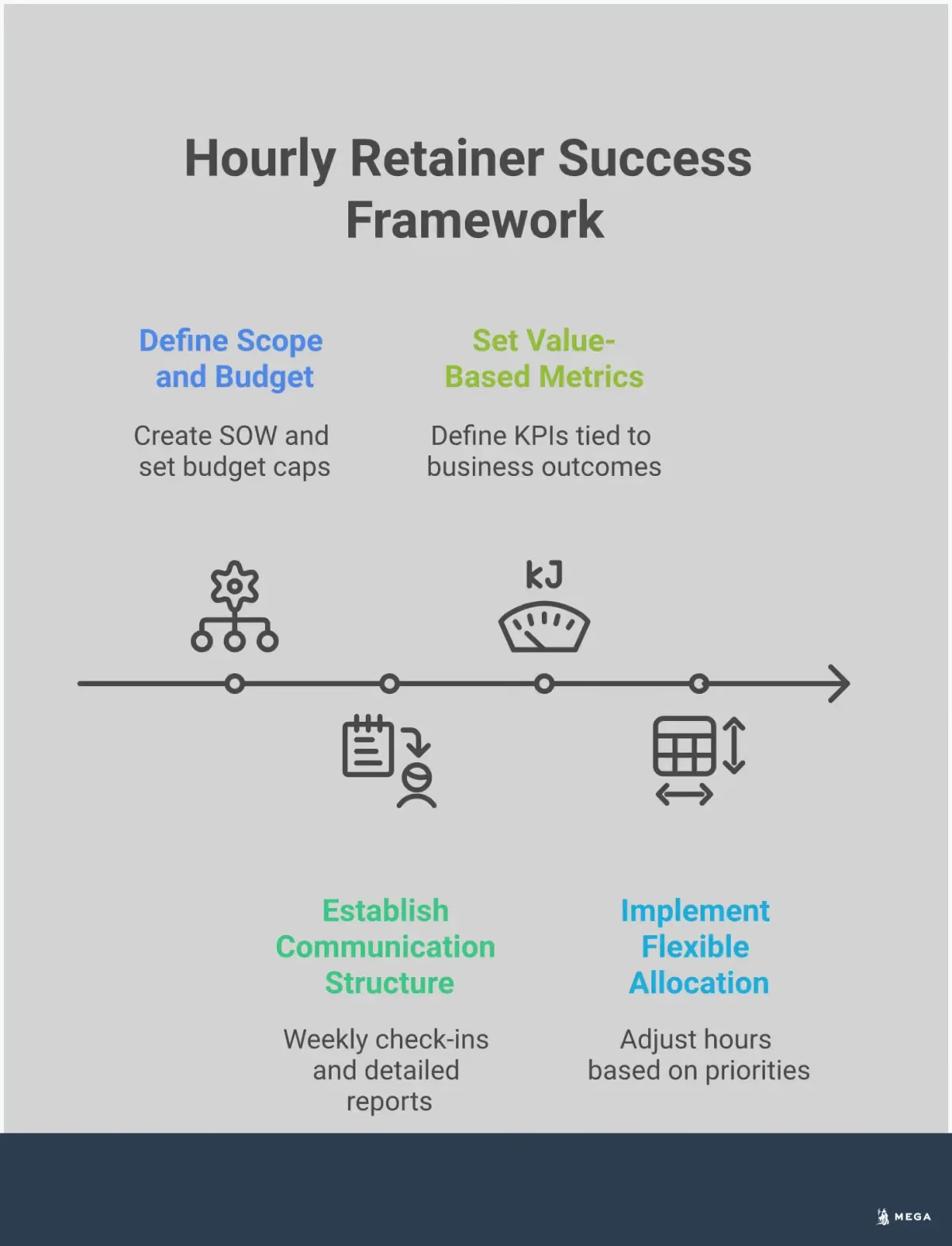
An hourly retainer offers flexibility, but it needs a solid framework to be effective for both you and the agency. Without clear guidelines, you risk scope creep, budget overruns, and misaligned expectations. A successful retainer relationship is built on mutual understanding and transparency from day one. It’s less about tracking every minute and more about creating a partnership focused on achieving your goals within an agreed-upon structure. The following steps are essential for building that foundation.
Define a Clear Scope of Work
Before any work begins, you need a detailed agreement that outlines what the agency will do. This document, often called a Statement of Work (SOW), should specify the types of tasks included in the retainer, such as content creation, technical SEO audits, or campaign management. It’s just as important to define what is out of scope. A well-defined scope of work is your best defense against misunderstandings. It ensures that the hours you pay for are dedicated to the priorities you’ve agreed on, keeping the work focused and efficient.
Establish Communication and Reporting Rules
Clear communication is the backbone of any successful agency partnership. Agree on how and when you’ll connect. Will you use a shared Slack channel, rely on email, or have a standing weekly call? Setting up a clear communication plan ensures everyone stays aligned without causing unnecessary interruptions. You should also set expectations for reporting. A good agency will provide regular updates on hours used, tasks completed, and progress toward your key performance indicators (KPIs). This transparency builds trust and helps you see the direct value of your investment.
Agree on Payment Terms and Budget Caps
Your agreement should leave no room for financial surprises. It needs to clearly state the hourly rate, the number of hours included in the monthly retainer fee, and the process for billing. Most retainers are paid in advance for a set block of hours. Discuss what happens if you don’t use all the hours—do they roll over? More importantly, establish a protocol for when you need more time. A monthly budget cap or a requirement for written approval before exceeding the retainer hours protects your budget and ensures you are always in control of your spending.
How Do Agencies Price Their Retainers?
Understanding how an agency arrives at its monthly retainer fee can feel like trying to solve a puzzle. The final number isn't arbitrary; it’s a calculated figure based on the agency's costs, the value it provides, and its position in the market. Agencies factor in everything from the seniority of the team members working on your account to the cost of the software they use to manage your campaigns. This approach is designed to create a predictable financial relationship, but it often requires a close look at the fine print to understand what you’re truly paying for.
Unlike a simple subscription, a retainer is a commitment to a partnership. The price reflects the agency's promise to reserve a portion of its team's time and resources for your business each month. For small businesses, this means you get consistent access to expertise without the overhead of hiring a full-time team. However, this model's complexity is why many founders now explore more straightforward, productized services that offer clear deliverables for a flat monthly fee, like MEGA AI's SEO and Paid Ads agents.
Pricing Based on Value, Not Just Time
Many modern agencies have shifted to a value-based pricing model. This means they "price retainers based on value delivered to clients, not just hours worked." Instead of billing you for every minute an employee spends on your account, the agency sets a fee that reflects the potential return on your investment. For example, if their work is projected to generate a significant increase in leads or sales, the retainer will be higher. This approach aligns the agency’s success with your own, as their compensation is tied to the results they produce for your business.
Positioning Against Competitors
An agency’s retainer fee is also a statement about its place in the market. A premium agency with a portfolio of well-known clients and a long track record will naturally charge more than a boutique firm that’s just starting out. As one expert notes, when agencies have clients on retainer, they "receive a set chunk of cash each month, regardless of how many hours you work." This financial stability allows them to be more selective with clients and invest more deeply in the ones they have, ensuring a higher quality of service and dedicated attention.
Understanding What's Included in the Rate
A clear scope of work is the backbone of any successful retainer agreement. It’s essential to know exactly what services your monthly fee covers. This includes the number of articles to be written, ads to be managed, or reports to be delivered. "Managing finances under a retainer model requires more than just setting a fixed monthly fee — it’s about ensuring your business remains profitable and efficient while delivering value to clients." For you, the client, this means demanding transparency. Before signing, make sure you have a detailed list of deliverables so there are no surprises down the line.
Should You Switch to an Hourly Retainer?
Deciding to move to an hourly retainer is a significant step that can reshape your marketing efforts and your budget. It’s a shift from paying for individual projects to investing in a long-term partnership. Before making the change, it’s important to look at your current situation, understand the new model completely, and prepare for the transition. This will help you determine if a retainer is the right move for your business.
Evaluate Your Current Agency Relationship
Start by assessing your current marketing partnership. Are you getting the consistent attention and proactive strategy you need, or does it feel like you’re always fighting for a spot on the calendar? Agencies often prioritize retainer clients over one-off projects, which means a retainer can secure you a more stable and predictable workflow. Consider if your needs are ongoing. If you require continuous optimization, content creation, and strategic guidance, a retainer model aligns better with those goals than starting a new project every month. This kind of long-term relationship allows an agency to deeply understand your business and deliver better results over time.
Understand the New Pricing Model
An hourly retainer isn’t just about paying for time; it’s about securing expertise. With this model, you pay a recurring monthly fee in advance for a dedicated block of hours. This approach helps both you and your agency manage budgets more effectively by creating predictable costs and revenue. The fee is often based on the value the agency provides, not just the hours worked. For example, if their work typically generates $10,000 in monthly revenue for your business, a $3,000 retainer is a reasonable investment. This contrasts with fixed-fee projects that cover a single deliverable or purely hourly work that can lead to fluctuating monthly bills. For a simpler approach, some platforms offer fixed monthly pricing for specific services.
Know What to Expect During the Transition
Switching to a retainer requires more than a new contract; it demands a new way of working together. You’ll need to establish clear communication channels, reporting cadences, and a process for prioritizing tasks to fit within your allotted hours. Unlike a project with a defined end, a retainer is ongoing, so a clear scope of work is essential to prevent scope creep and manage expectations. Be prepared for more collaboration. You’ll work closely with your agency to plan how hours are used each month, ensuring their efforts align with your most pressing business goals. This transition is about building a partnership focused on continuous improvement and shared success.