
Running an agency is a thrilling mix of creative energy and client partnerships. But let's be real, strong client relationships don't always translate to healthy profits. Many agencies operate on thin margins, a challenge that can feel like a constant balancing act. This post offers practical strategies to improve agency profit, focusing on optimizing operations and building a resilient business model. We'll explore value-based pricing, client profitability analysis, and smart ways to use technology. Ready to take control of your agency's financial health and move beyond just surviving? Let's get started.
Key Takeaways
- Thin margins demand proactive management: High revenue isn’t enough. Manage operational costs by optimizing efficiency, using value-based pricing, and knowing which clients are truly profitable.
- Financial health fuels agency success: Implement strong financial practices, including budgeting, cash flow management, and building reserves. Regularly review your agency’s financials to spot opportunities and ensure stability.
- Prioritize your team’s well-being: A supportive culture and work-life balance are essential in demanding agency environments. Addressing stress and burnout creates a healthier, more productive, and more profitable team.
What Are Thin-Margin Agencies?
Running an agency can feel like a constant balancing act. You’re juggling client demands, managing a team, and trying to keep the lights on—all while striving for profitability. For many agencies, this translates to operating with thin margins, a challenging reality that can impact everything from growth potential to employee well-being. This section explores the dynamics of thin-margin agencies and why understanding this precarious financial state is crucial for long-term success.
Thin-Margin Agency Definition
Thin-margin agencies operate in highly competitive environments. The difference between the revenue they generate and their operating costs is minimal, often creating significant financial strain. Think of it like walking a tightrope—one wrong step, an unexpected expense, or a client delaying payment, and the agency’s financial stability can be jeopardized. This constant pressure to maintain profitability while managing rising costs is a defining characteristic of a thin-margin agency. In such a landscape, even seemingly successful agencies, with a steady stream of clients, can find themselves struggling. Understanding this delicate balance is the first step toward building a more resilient and profitable agency model.
High Revenue, High Costs: An Agency Reality
The irony of thin-margin agencies is that they can often be generating substantial revenue while simultaneously struggling financially. This isn’t a paradox; it’s the reality of high operational costs. Agencies typically invest heavily in skilled employees, specialized software, marketing efforts, and office space. These expenses can quickly eat into revenue, leaving only a small percentage as profit. This delicate relationship between revenue and costs is what makes these agencies financially vulnerable. Even with a full client roster and successful campaigns, high overhead can mean the difference between thriving and barely surviving. This precarious situation requires careful financial management and strategic decision-making to ensure the agency remains viable and can weather unexpected market fluctuations.
Common Agency Owner Struggles
Running an agency can be rewarding, but it’s not without its hurdles. Agency owners often face a unique set of pressures that can impact their business’s bottom line and their own well-being. Let’s explore some of these common challenges.
Financial Stress & Agency Burnout
Financial strain is a significant concern for many agency owners. The pressure to secure new clients, manage fluctuating project revenue, and cover overhead costs can lead to sleepless nights and chronic stress. This financial instability can have a ripple effect, impacting personal relationships and overall health. As researchers have noted, financial strain increases the risk of depression, anxiety, and other health-damaging behaviors. The parallels between healthcare organizations facing unprecedented margin pressures and agencies struggling with thin margins are striking; both require leaders to take decisive action to maintain financial health. Finding strategies to mitigate these financial pressures is crucial for both the agency’s success and the owner’s well-being.
Balancing Growth and Profit
Another common challenge is balancing growth with profitability. The desire to expand the agency, take on bigger projects, and hire more talent is natural. However, rapid growth without a corresponding increase in profit can be detrimental. Successfully managing margins requires a strategic approach to cost-cutting, encompassing both structural and operational changes within the agency. It’s not enough to simply chase new clients; agencies need to implement systems that ensure each project contributes positively to the bottom line. This requires careful planning, efficient resource allocation, and a focus on delivering value that justifies pricing. Explore proven strategies to increase your web agency’s profitability, including optimizing pricing, streamlining operations, and improving client retention for long-term success.
Managing Client Expectations
Managing client expectations is an ongoing challenge for agency owners. Clients often have ambitious goals for their campaigns, but unrealistic expectations regarding budget, timelines, and results can strain the agency-client relationship and impact profitability. Aligning expectations from the outset is essential. Just as in the early stages of dating, both the client and the agency need to determine if they’re a good fit for each other. Clear communication, transparent reporting, and a proactive approach to addressing potential issues can help build trust and ensure a successful partnership. Ultimately, a strong client relationship built on realistic expectations contributes to client retention and the agency’s long-term success. Remember, an agency’s profitability hinges on several factors, including client acquisition and retention, project profitability, and a deep understanding of its margins.
Why is Profit Important for Agencies?
Profit isn’t just about taking home a bigger paycheck; it’s the lifeblood of any agency, fueling its ability to thrive and achieve long-term success. For agencies operating with thin margins, prioritizing profit isn't a good idea—it's essential for survival and future growth. Let's explore why.
Sustainability and Growth
Profitability is the cornerstone of sustainability and growth for any agency. It provides the financial resources to weather economic downturns, invest in new technologies, and expand service offerings. As Business Queensland points out, improving profitability requires a multi-pronged approach aligned with your business plan. It emphasizes understanding and managing both financial and non-financial factors. Without consistent profits, agencies become vulnerable to market fluctuations and struggle to invest in the resources necessary for long-term success. This can stifle innovation, limit growth opportunities, and ultimately jeopardize the agency's future. A profitable agency, on the other hand, can reinvest earnings, attract and retain top talent, and adapt to the ever-evolving demands of the industry.
Investing in Resources and Talent
Attracting and retaining top talent is crucial for any agency, but especially those operating with thin margins. Skilled employees are the backbone of a successful agency, driving creativity, innovation, and client satisfaction. However, agencies typically invest heavily in skilled employees, specialized software, marketing efforts, and office space. These expenses can quickly eat into revenue, leaving only a small percentage as profit. Profit enables agencies to offer competitive salaries and benefits, invest in training and development programs, and create a positive work environment. This fosters employee loyalty, reduces turnover, and ultimately contributes to higher quality work and increased client retention. Without adequate profit, agencies risk losing their best employees to competitors who can offer better compensation and opportunities, further hindering their ability to deliver exceptional results.
Competitive Advantage
In today’s competitive landscape, profit provides agencies with the crucial edge they need to stand out. It allows them to invest in research and development, explore new marketing strategies, and adopt cutting-edge technologies. Focusing on cost control and process optimization is crucial for boosting profits. Effective sales are key to increasing revenue and profit margins. This focus on efficiency and innovation improves the quality of services offered and enhances the agency's reputation, attracting new clients. Moreover, profit empowers agencies to adapt quickly to market changes, invest in emerging trends, and stay ahead of the competition. Consider leveraging AI-powered tools like MEGA AI to automate SEO and paid ad campaigns, optimizing your spend and maximizing your return on investment.
Strategies to Improve Agency Profit Margins
Running a profitable agency requires a keen eye on your margins. Let’s explore some key strategies to help you widen those margins and achieve sustainable financial health.
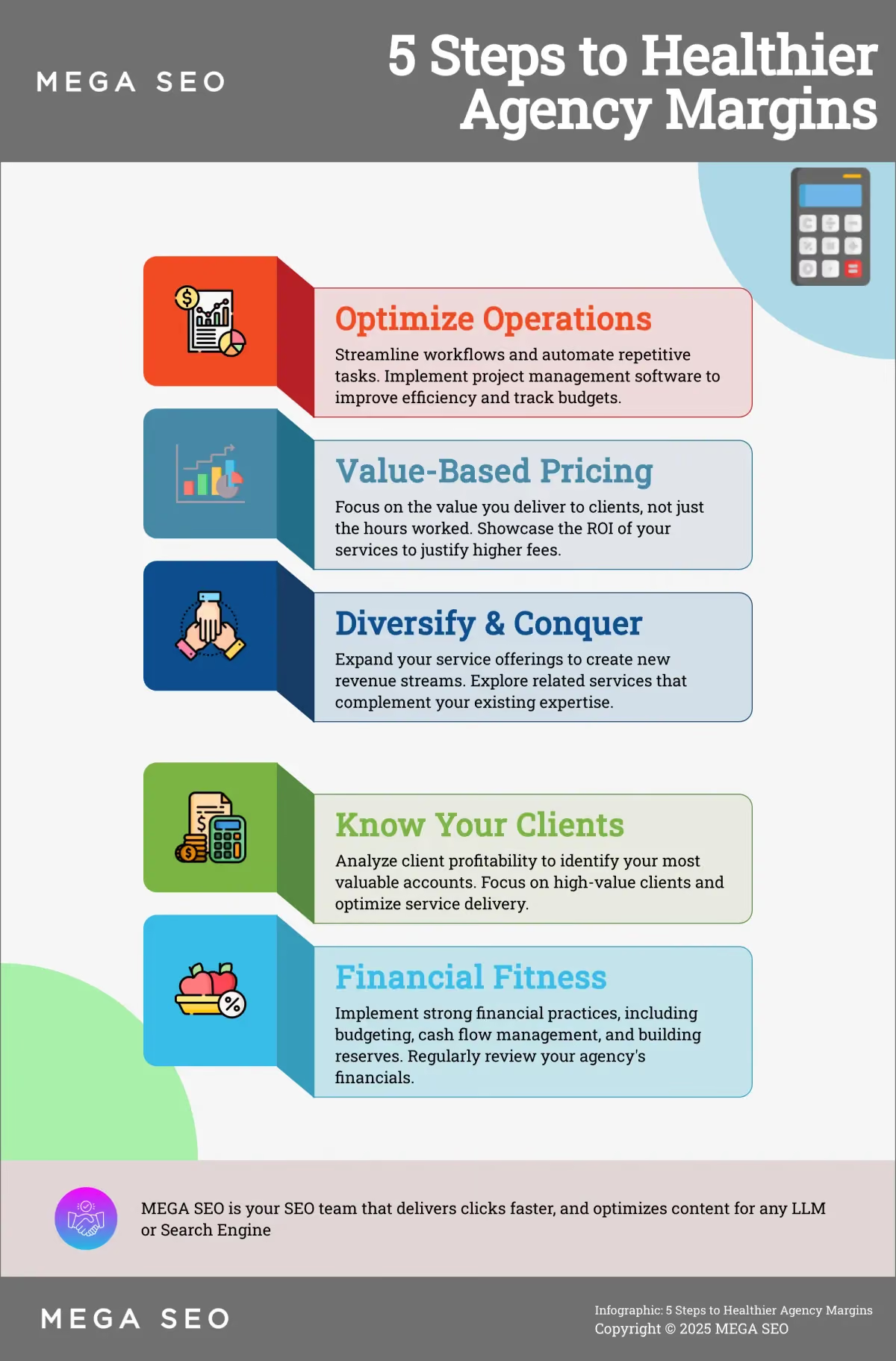
Optimizing Operational Efficiency
Improving your agency’s operational efficiency is the first step toward better margins. High revenue doesn’t mean much if your costs are equally high. Take a strategic approach to cost reduction, examining both structural changes and day-to-day operations. Are there tasks you can automate? Can you streamline your workflows with better project management tools? Even small changes can add up to significant savings. By carefully managing delivery costs and overheads, you’ll free up more of your revenue to contribute to your bottom line. Consider using MEGA SEO to automate time-consuming SEO tasks, freeing up your team to focus on higher-value activities.
Streamlining Workflows
Improving your agency’s operational efficiency is the first step toward better margins. High revenue doesn’t mean much if your costs are equally high. Take a strategic approach to cost reduction, examining both structural changes and day-to-day operations. Ask yourself some key questions: Are there tasks you can automate? Can you streamline your workflows with better project management tools? Are there redundancies in your processes? Even small changes can add up to significant savings. For example, look for tasks that are repetitive and time-consuming, such as content formatting or social media scheduling. These are prime candidates for automation.
Think about how your team currently operates. Are there bottlenecks in your project delivery process? Do projects often get delayed due to miscommunication or a lack of clear roles? Implementing clear processes, using collaborative tools, and establishing efficient communication channels can significantly improve how your team works together. This not only saves time but also reduces the likelihood of errors and rework, further contributing to cost savings. A well-defined workflow ensures that everyone understands their responsibilities and how their work contributes to the overall project goals.
Automating Tasks with AI Tools Like MEGA AI
By carefully managing delivery costs and overheads, you’ll free up more of your revenue to contribute to your bottom line. Consider using MEGA SEO to automate time-consuming SEO tasks, freeing up your team to focus on higher-value activities. MEGA AI can handle tasks like keyword research, content generation, and link building, allowing your team to dedicate more time to client strategy and relationship management. This strategic use of AI not only improves efficiency but also allows your agency to deliver better results for clients, further enhancing your value proposition. With MEGA AI, you can scale your SEO efforts without necessarily increasing your team size.
Beyond SEO, consider other areas where AI can streamline your agency operations. Tools exist for automating social media posting, email marketing, and even client reporting. By integrating these technologies into your workflows, you can significantly reduce the manual effort required for repetitive tasks. This frees up your team to focus on strategic initiatives, creative development, and building stronger client relationships—all of which contribute to a healthier and more profitable agency. Automating routine tasks allows your team to focus on the work that requires their unique skills and expertise, ultimately leading to better client outcomes and increased job satisfaction.
Implementing Value-Based Pricing
Moving away from hourly billing and toward value-based pricing can significantly impact your agency’s profitability. Focus on the value you deliver to clients, not just the time you spend. Strong client relationships are key here. When clients understand the tangible results you achieve for them, they’re more willing to pay for the value you provide. This shift not only improves margins but also positions your agency as a strategic partner, not just a vendor. By showcasing the ROI of your services, you can justify higher prices and build a stronger case for your agency’s worth.
Diversifying Your Service Offerings
If you’re finding your current services are yielding thin margins, consider expanding your offerings. Explore related services that complement your existing expertise and appeal to your client base. Perhaps you could add content strategy to your SEO services, or offer social media management alongside your paid advertising campaigns. Diversification creates new revenue streams and can attract new clients, strengthening your agency’s financial stability. MEGA SEO’s suite of tools can help you efficiently manage a wider range of services, from content generation to technical SEO improvements.
Expanding into Related Services
If your current service offerings are yielding thin margins, consider diversifying. Explore related services that complement your existing expertise and appeal to your client base. For example, if you specialize in SEO, consider adding content strategy services. This natural extension can create a more comprehensive offering for your existing clients. Similarly, if paid advertising is your core service, think about incorporating social media management. This allows you to offer a more integrated approach to digital marketing, attracting new clients while providing more value to existing ones. Diversification not only creates new revenue streams but also positions your agency as a one-stop shop for clients’ marketing needs, strengthening your agency’s financial stability and making you a more valuable partner. MEGA AI's SEO and Paid Ads tools can support this diversification by streamlining content creation and campaign management across multiple platforms.
Offering Specialized Packages
Another effective strategy for improving profitability is to develop specialized service packages. Instead of a one-size-fits-all approach, create packages tailored to specific client needs and budgets. This allows you to clearly define the scope of work and the value you provide. For instance, you could offer a "Startup SEO Launch Package" or an "E-commerce Paid Ads Growth Package." Packaging your services makes it easier for clients to understand what they're getting and how it aligns with their goals. This targeted approach can also command higher prices, as clients are willing to pay for specialized expertise and tailored solutions. By moving away from strictly hourly billing and focusing on the value you deliver, you can significantly improve your agency's profit margins and foster stronger client relationships. Value-based pricing, focusing on the results you achieve for clients, is often more appealing than hourly rates, which can seem opaque and unpredictable. Consider using MEGA AI to track and demonstrate the value of your packaged services, showcasing the ROI to clients and justifying the price point.
Focusing on Client Profitability
Not all clients are created equal. Some are simply more profitable than others. Understanding client profitability—the profit each client generates after accounting for all associated costs—is crucial. This analysis helps you identify your most valuable clients and those who may be draining your resources. By focusing on high-value clients and optimizing your service delivery for them, you can improve your overall profit margins and build a more sustainable business. Analyzing client profitability also allows you to identify areas where you might need to adjust pricing or refine your service offerings to ensure each client contributes positively to your bottom line. This data-driven approach empowers you to make informed decisions about which clients to prioritize and how to allocate your resources effectively.
Identifying High-Value Clients
Not all clients are created equal. Some are simply more profitable than others. Understanding client profitability—the profit each client generates after accounting for all associated costs—is crucial. This analysis helps you identify your most valuable clients and those who may be draining your resources. By focusing on high-value clients and optimizing service delivery for them, you can improve your overall profit margins and build a more sustainable business. Consider factors like the client’s lifetime value, the potential for upselling or cross-selling services, and the resources required to service the account. Tools like MEGA AI can help you track key metrics and automate reporting, making client profitability analysis more efficient.
Managing Client Relationships Effectively
Managing client expectations is an ongoing challenge for agency owners. Clients often have ambitious goals for their campaigns, but unrealistic expectations regarding budget, timelines, and results can strain the agency-client relationship and impact profitability. Aligning expectations from the outset is essential. Clear communication, transparent reporting, and a proactive approach to addressing potential issues can help build trust and ensure a successful partnership. Ultimately, a strong client relationship built on realistic expectations contributes to client retention and the agency’s long-term success. Leveraging tools like MEGA AI can streamline communication and reporting, freeing up your team to focus on building stronger client relationships.
Effective Financial Management for Agencies
Running a profitable agency requires more than just closing deals; you need a solid grasp of your finances. These core financial management techniques can help you take control of your agency’s financial health:
Budgeting and Forecasting
Creating a realistic budget is the cornerstone of financial management. Start by forecasting your agency’s revenue based on existing clients and projected sales. Then, meticulously outline your expected expenses, including salaries, software subscriptions, marketing costs, and office rent. This budget acts as your financial roadmap, guiding your spending and helping you anticipate potential shortfalls. Regularly compare your actual performance against your budget to identify areas for improvement and ensure you stay on track. A strategic approach to budgeting, encompassing both structural and operational levers, is crucial for sustainable margin management.
Managing Cash Flow
Positive cash flow is the lifeblood of any agency. Even if your agency is profitable on paper, a lack of available cash can hinder your operations. Closely monitor your incoming and outgoing cash flow to ensure you have enough funds to cover immediate expenses like payroll and vendor payments. Implement strategies to improve cash flow, such as invoicing promptly, offering early payment discounts, and negotiating favorable payment terms with your vendors. Agile financial planning and lean operations are essential for controlling costs and ensuring profitability.
Building Financial Reserves
Unexpected events, like economic downturns or client churn, can significantly impact your agency’s finances. Building a financial reserve acts as a safety net, providing a cushion to weather these storms. Aim to set aside a portion of your profits each month into a dedicated savings account. This reserve will give you peace of mind and the financial flexibility to handle unforeseen challenges without jeopardizing your agency’s stability. Streamlining processes and automating tasks can free up resources to contribute to your reserves.
Regular Financial Reviews
Don’t just set it and forget it. Regularly reviewing your financial statements, including your profit and loss statement and balance sheet, is essential for understanding your agency’s performance. This review should go beyond simply checking your bank balance. Analyze key metrics like your profit margins, operating expenses, and client profitability. Regular reviews help you identify trends, spot potential problems early on, and make informed decisions to improve your agency’s financial health. Consistently hitting target profit margins requires careful management of delivery costs and overheads. This consistent review also allows you to understand the relationship between profitability and pricing and how it affects client satisfaction and your bottom line.
Leveraging Technology to Improve Agency Profit
Technology offers incredible opportunities to streamline operations, gain valuable insights, and ultimately boost your bottom line. Here’s how you can leverage it to improve your agency’s profitability:
Automating for Efficiency
Automation is key to freeing up your team’s time and reducing operational costs. Think about the repetitive tasks that eat into your day: report generation, social media posting, even some aspects of client communication. These are prime candidates for automation. Tools like robotic process automation (RPA) and intelligent automation can handle these tasks efficiently and accurately, allowing your team to focus on higher-value work. Automating these processes minimizes errors and accelerates workflows, contributing to overall operational efficiency. This translates directly to cost savings and improved profitability. Consider exploring MEGA SEO’s automation features to see how you can streamline your content creation and SEO processes.
Using MEGA AI for Content Creation and SEO Automation
Content creation and SEO are often the most time-consuming tasks for agencies. Automating these processes with MEGA AI can significantly improve your team's efficiency and, consequently, your bottom line. MEGA AI offers a suite of tools to streamline your content and SEO workflows, from automated keyword research and content generation to technical SEO improvements and link building. Think about how much time your team currently spends on keyword research, writing articles, and optimizing content. Now imagine reclaiming that time with MEGA AI's automation. Your team can then focus on higher-value activities, like client strategy and relationship building, leading to better client outcomes and increased profitability. Automating these tasks minimizes errors and accelerates workflows, further contributing to operational efficiency and cost savings, as highlighted in this AgencyAnalytics article on maximizing agency profitability.
Beyond creating new content, MEGA AI can also optimize and maintain your existing content. Our Maintenance Agent product improves the clickthrough rate (CTR) of existing articles, identifies opportunities to add new content to existing pieces for better ranking, and can even re-optimize content for any platform or search engine. This means you can continuously improve your SEO performance without constantly dedicating team resources to manual updates.
Leveraging Paid Ads Automation Tools Like MEGA AI
Similar to content and SEO, paid advertising campaigns can be incredibly time-intensive. MEGA AI offers powerful automation tools to streamline your paid ads workflows across various platforms, including Meta, Google, and LinkedIn. With MEGA AI, you can upload content in bulk, automatically generate hundreds of variations (including translated voiceovers and captions), and dynamically allocate budget for optimal spend. This level of automation frees up your team to focus on strategic campaign planning and analysis, rather than getting bogged down in manual tasks. As AgencyAnalytics points out, improving operational efficiency through automation is a critical first step toward better margins. By automating your paid ads management with MEGA AI, you can reduce operational costs and improve your overall profitability.
Data-Driven Decisions
Data is a goldmine of insights, but only if you can effectively analyze it. Breaking down data silos and using analytics tools can reveal critical information about your agency’s performance, client profitability, and campaign effectiveness. This data-driven approach empowers you to make informed decisions about resource allocation, pricing strategies, and future service offerings. Understanding customer profitability, in particular, is crucial. By calculating the profit generated by each client after accounting for all associated service costs, you can identify your most valuable clients and tailor your services accordingly. This granular understanding of your business is essential for maximizing profitability.
Streamlining with Project Management Software
Project management software is no longer a nice-to-have; it’s a necessity for profitable agencies. These tools help you manage projects effectively, track timelines, allocate resources, and collaborate with your team. This streamlined approach to project management ensures that projects stay on track and within budget, preventing costly overruns and delays. Implementing effective strategies to enhance profitability in web agencies often hinges on optimizing pricing, streamlining operations, and improving client retention—all of which can be facilitated by project management software. By centralizing communication and providing a clear overview of all ongoing projects, you can improve team efficiency and client satisfaction, contributing to a healthier bottom line.
Build a Resilient Agency Model
A resilient agency model thrives on strong client relationships, predictable revenue, and a balanced team. It’s about creating a sustainable business that can weather market fluctuations and consistently deliver value.
Developing a Strong Client Base
A strong client base provides more than just revenue; it offers stability and growth potential. Nurturing long-term client relationships improves profit margins by creating a steady and guaranteed revenue stream. This also reduces new client acquisition and onboarding costs. As trust and familiarity grow, you’ll uncover opportunities to upsell services and expand your work with existing clients. Focus on delivering exceptional results and proactive communication to build the foundation for lasting partnerships.
Creating Recurring Revenue
Recurring revenue is the lifeblood of a profitable agency. Instead of constantly chasing new projects, implement strategies that generate consistent income. Retainer agreements for ongoing services, subscription-based packages, and automated billing systems are all effective ways to create predictable revenue streams. This financial stability allows you to invest in your team, explore new opportunities, and optimize your pricing for long-term growth.
Balancing Talent
Finding the right balance between full-time employees and freelance talent is crucial for managing agency margins. Full-time employees provide stability and institutional knowledge, while freelancers offer specialized skills and flexibility. This blended approach allows you to scale your team up or down based on project needs, optimizing your costs without sacrificing quality. Clearly define roles, responsibilities, and communication channels to ensure smooth collaboration.
Enhancing Client Relationships
Client relationships are the cornerstone of a successful agency. Effective relationship management goes beyond simply meeting deadlines; it involves understanding each client’s unique needs and building a genuine connection. Regular communication, proactive problem-solving, and a commitment to exceeding expectations are key to fostering strong client relationships. This focus on client satisfaction not only improves retention but also fuels positive word-of-mouth referrals, contributing significantly to your agency’s long-term profitability and growth. Remember, a happy client is your best advocate. By prioritizing client relationships, you’re investing in the future of your agency.
Niche Specialization for Increased Profitability
One of the most effective strategies for boosting profitability is niche specialization. Think of it like this: would you rather be a general practitioner or a renowned specialist? In the agency world, specializing allows you to command higher fees and attract ideal clients.
Identifying a Profitable Niche
Start by examining your existing client base. Which clients are the most profitable, and what do they have in common? Look for patterns in their industries, business models, or marketing challenges. Understanding client profitability—the profit each client generates after accounting for all associated costs—is crucial. This analysis helps you identify your most valuable clients and those who may be draining your resources. Market research is also key. Identify niches with growth potential and a willingness to invest in marketing services. Don't be afraid to explore underserved markets; sometimes, the less crowded niches offer the greatest opportunities. For example, instead of targeting all businesses with SEO, you could specialize in SEO for e-commerce companies or SaaS startups.
Developing Expertise in Your Niche
Once you've identified a promising niche, focus on becoming an expert. This involves more than just understanding the industry; it's about developing specialized skills and knowledge that set you apart. Invest in training, attend industry events, and stay up-to-date on the latest trends and best practices. Moving away from hourly billing and toward value-based pricing is essential for niche agencies. Focus on the value you deliver to clients, not just the time you spend. This expertise will not only attract clients but also justify premium pricing. Consider developing proprietary processes or tools that further enhance your value proposition within your chosen niche. MEGA AI can be a valuable asset here, allowing you to automate time-consuming tasks like keyword research and content generation, freeing up your team to focus on strategy and client relationships. Strong client relationships, built on trust and demonstrated expertise, are essential for long-term success in a niche market.
Targeting Your Niche Effectively
Finally, tailor your marketing efforts to precisely reach your target niche. This might involve creating specialized content, attending niche-specific conferences, or partnering with relevant influencers. Diversification within your niche can also create new revenue streams. For example, if you specialize in SEO for e-commerce, you could expand to offer paid advertising or email marketing services specifically for e-commerce clients. Explore related services that complement your existing expertise and appeal to your client base. A targeted approach is far more effective than a broad, generic marketing strategy. Showcase your expertise through case studies, testimonials, and thought leadership content. By positioning yourself as a specialist, you'll attract the right clients and command higher fees, ultimately leading to increased profitability and a more sustainable agency model. Remember, specialization is not about limiting your options; it's about focusing your expertise to achieve greater success and build a thriving business.
Optimizing Client Campaigns & Resources
As an agency owner, you’re juggling multiple client campaigns, each with its own set of goals, budgets, and timelines. Optimizing these campaigns and allocating resources effectively is crucial for both client success and your agency’s profitability.
Effective CRM Strategies
Client relationships are at the heart of any successful agency. A strong CRM strategy helps you understand each client’s individual needs and build a network of connections that foster satisfaction and profitability. Remember, each client interaction can influence retention and your bottom line. This personalized approach strengthens client relationships and drives long-term growth. A robust CRM system can help you track communication, manage client data, and identify opportunities to upsell or cross-sell services.
Streamlined Campaign Management
Managing campaigns efficiently means maximizing your resources and minimizing wasted time and effort. A strategic approach to cost-cutting, encompassing both structural and operational improvements, is essential for sustainable margin management. Start by clearly defining campaign objectives, setting realistic budgets, and establishing key performance indicators (KPIs). Regularly monitor campaign performance, identify areas for improvement, and make data-driven adjustments. Tools like MEGA SEO can automate many aspects of campaign management, from keyword research and content generation to performance tracking and reporting, freeing up your team to focus on strategic initiatives.
Efficient Resource Allocation
Efficient resource allocation ensures that you’re investing your team’s time and budget where they’ll have the greatest impact. This requires a keen understanding of your team’s strengths and weaknesses, as well as the specific demands of each client campaign. Prioritize tasks based on their importance and potential return on investment (ROI). Adopt strategies like tight cost controls, strategic pricing, and continuous improvement (Kaizen) to maximize efficiency and control costs. By carefully managing delivery costs and overheads, you can consistently hit your target profit margins and ensure your agency’s financial health. Consider exploring resources like the articles on cost management strategies for more in-depth information.
Scaling Your Agency Profitably
Scaling an agency profitably requires a strategic approach. It’s not just about taking on more clients; it’s about identifying the right growth opportunities, maintaining quality during expansion, and reinvesting wisely to build a sustainable business.
Identifying Growth Opportunities
One of the first steps to scaling without sacrificing your margins is to pinpoint areas ripe for growth. Start by analyzing your current client base. Are there service areas where you excel and clients see significant value? Perhaps you’ve mastered local SEO or have a knack for PPC campaigns. Focus on expanding within these profitable niches. Look for opportunities to offer additional services to existing clients, increasing the value of each account. This is often more efficient than constantly acquiring new clients. Explore partnerships. Could collaborating with other businesses expand your reach and introduce you to new markets? Consider how automation can help you streamline operations and free up your team to focus on higher-value tasks. Tools like MEGA SEO can automate time-consuming SEO processes, from keyword research to content generation and optimization, allowing you to manage more clients without adding significant overhead. Learn more about proven strategies to increase profitability.
Maintaining Quality While Scaling
As you grow, maintaining quality is paramount. Clients choose your agency for your expertise and the results you deliver. Don’t let quality slip as you take on more work. Document your processes. Creating clear workflows and standard operating procedures ensures consistency across all client accounts, even as your team grows. Invest in training. Equipping your team with the skills and knowledge they need to handle increased workloads and maintain quality is essential. Consider using project management software to keep projects organized and on track. This helps prevent costly mistakes and ensures that clients receive the attention they deserve. Don’t be afraid to say no. It’s better to turn down a client than to overextend yourself and compromise the quality of your work. Learn how to manage margins better with strategic cost-cutting. Remember, a strong reputation for quality is crucial for long-term success. Implementing MEGA SEO’s automated solutions can help you manage margins effectively without compromising quality. Building strong client relationships is also key for driving profitability.
Strategic Reinvestment
Scaling requires reinvestment. Think carefully about where to allocate resources for the biggest impact. Consider upgrading your tools and technology. Investing in software that automates tasks, improves communication, or enhances client reporting can significantly improve efficiency and profitability. Focus on professional development. Providing opportunities for your team to enhance their skills can improve the quality of their work and increase client satisfaction. Explore expanding your team strategically. Hiring experienced professionals or freelancers can help you handle increased workloads without overstretching your existing team. Learn how to measure and improve agency profitability. Finally, consider reinvesting in marketing and sales. Attracting new, high-value clients is essential for continued growth. By reinvesting profits wisely, you can build a more resilient and profitable agency. Understanding customer profitability is key to making informed reinvestment decisions. MEGA SEO offers resources to help you optimize client campaigns and resource allocation.
The Human Side of Agency Management
Running a thin-margin agency isn’t just about numbers; it’s about people. Leading a team through the challenges of tight budgets and demanding clients requires a focus on well-being as much as profitability. Ignoring the human element can lead to burnout, high turnover, and ultimately, a less successful agency.
Dealing with Stress and Burnout
Financial strain is a significant stressor. As highlighted in research on community intervention strategies, financial pressures can negatively impact mental and physical health, increasing the risk of anxiety, depression, and even health-damaging behaviors. In the agency world, this translates to lost productivity, decreased creativity, and difficulty retaining talented employees. Addressing burnout requires a multi-pronged approach. Encourage open communication about stress and offer flexible work arrangements where possible. Promote healthy habits like taking breaks and using vacation time. Consider providing resources like access to mental health apps or employee assistance programs. Sometimes, simply acknowledging the pressures the team faces can make a big difference.
Building a Supportive Team
A collaborative and supportive team environment is essential, especially when margins are thin. The core purpose of an agency is teamwork and delivering excellent results for clients, as discussed in this article on agency misconceptions. When your team feels supported, they’re more likely to handle stress effectively, brainstorm creative solutions, and go the extra mile. Foster this culture by encouraging open communication, recognizing accomplishments, and providing opportunities for professional development. Regular team-building activities, even something as simple as a casual lunch together, can strengthen bonds and improve morale.
Achieving Work-Life Balance
While client demands and deadlines can make work-life balance seem impossible, it’s crucial for long-term well-being and agency success. Just as a proactive approach to operational cost management is key to profitability, a proactive approach to work-life balance is key to a healthy and productive team. Encourage employees to set boundaries, disconnect after work hours, and prioritize their personal lives. Lead by example; demonstrate healthy work habits and make it clear that taking breaks and using vacation time is encouraged. A well-rested and balanced team is ultimately a more creative, efficient, and profitable team.