
Let's get one thing straight: Google doesn't charge for SEO. So, if you're wondering about the cost, you're asking the right question—just of the wrong company. The real conversation is about the investment required to earn top rankings. The actual SEO cost depends on your goals, your industry, and how quickly you want to see results. This guide breaks down the factors that shape SEO pricing. We'll help you understand what you're paying for, how to budget effectively, and how to build sustainable organic traffic for a powerful online presence.
Key Takeaways
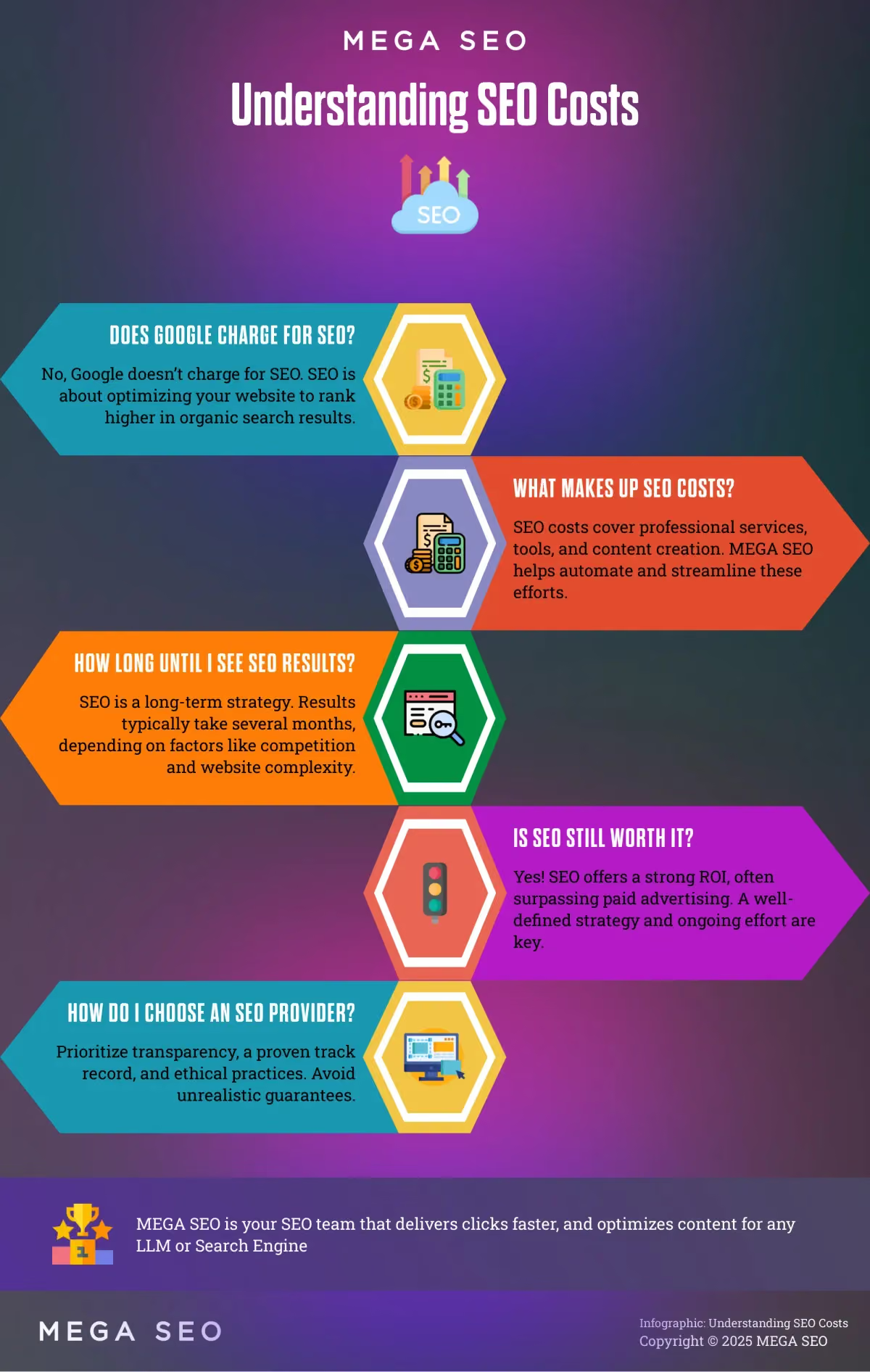
- SEO isn’t a Google fee; it’s an investment in your website. You’re investing in improving your site’s visibility in organic search results, not paying Google for rankings. Costs cover resources like professional services, tools, and content creation. MEGA SEO helps automate and streamline these efforts.
- SEO delivers long-term value. While factors like website complexity and industry competition influence costs, SEO offers a strong ROI, often surpassing paid advertising. A well-defined strategy, ongoing effort, and the right tools are key to maximizing returns.
- Finding the right SEO partner is essential. Prioritize transparency, a proven track record, and ethical practices. Steer clear of agencies making unrealistic guarantees or focusing solely on keywords. Ask potential partners about their approach, how they measure success, and examples of their past work to ensure they align with your business needs.
Does Google Charge for SEO?
No, Google doesn’t charge for SEO services. It’s a common misconception. Google’s primary function is as a search engine, and its algorithms determine organic search rankings. Selling SEO services would create a conflict of interest, potentially compromising the integrity of its search results. Think of it this way: Google provides the playing field (the search engine), but it doesn’t coach the players (your website). MEGA SEO can help you optimize your website for Google’s search algorithm.
Free vs. Paid: What Google Actually Controls
So, if Google doesn’t charge for SEO, where do the costs come from? SEO costs arise from the investment you make in improving your website’s visibility. This often involves hiring SEO professionals or agencies, purchasing SEO tools like MEGA SEO, and dedicating internal resources to the task. These experts work to optimize your website, aligning it with Google’s best practices to enhance organic search performance. The actual cost can range from a few hundred dollars per month for small businesses to tens of thousands for larger enterprises, depending on the scope of work. A more detailed breakdown of SEO costs is discussed later in this post. You can also explore our customized posts for more information.
Why Does This Misconception Exist?
The confusion often stems from mixing up organic SEO with paid advertising on Google. While you can’t pay Google to directly boost your organic rankings, you can pay for Google Ads, which places your website at the top of search results as sponsored listings. These are clearly marked as “Ads.” This distinction is key: organic SEO focuses on earning high rankings through website optimization, while paid advertising involves paying for visibility. Another reason for the confusion is the general lack of understanding about how search engines work. Many people simply aren’t clear on the difference between organic and paid search, leading to misconceptions about Google’s role in SEO. For more information, visit our resources page.
What Is SEO and Why Is It Important?
Search engine optimization (SEO) is the practice of enhancing your website to improve its visibility and ranking on search engines like Google. When your site ranks higher, more people find you, leading to increased organic traffic and business growth. This section breaks down the core components of SEO, its role in digital marketing, and the tangible benefits it offers businesses.
Breaking Down the Core Components of SEO
SEO involves a combination of techniques that focus on improving how search engines understand and rank your website. It’s about making your website more attractive to search engines. Think of it as speaking the same language as Google. By using specific techniques and strategies, SEO helps websites climb up the ladder in search results, making them visible to more people looking for information or products online. These techniques include optimizing your website’s content, structure, and technical aspects to align with what search engines consider valuable and relevant to users’ searches. MEGA SEO automates many of these tasks, simplifying the process and making SEO accessible to everyone. Check out our free SEO tools to get started.
How SEO Fits Into Your Overall Marketing Plan
SEO is a cornerstone of any successful digital marketing strategy. It’s the engine that drives organic traffic to your website, complementing other marketing efforts like paid advertising and social media. By focusing on organic search results, SEO builds a sustainable online presence that attracts qualified leads actively searching for products or services like yours. This targeted approach makes SEO a cost-effective way to reach your ideal customers. MEGA SEO‘s automation features streamline this process, allowing you to focus on other aspects of your business. Consider exploring our customized posts to further enhance your strategy.
What Can Good SEO Do for Your Business?
Effective SEO strategies offer a range of benefits, from increased visibility and organic traffic to improved user experience. It’s not just about getting more visitors; it’s about getting the right visitors—those actively searching for what you offer. This translates to higher conversion rates and a stronger bottom line. Moreover, SEO remains highly valuable, offering a substantial return on investment. Investing in SEO is a long-term strategy that builds brand authority, establishes trust with your audience, and positions your business for sustainable growth. MEGA SEO helps you maximize these benefits through its automated tools and comprehensive platform.
The Value of Organic Traffic
Organic traffic represents more than just website visitors; it signifies a direct connection with potential customers actively seeking your solutions. SEO is the engine that drives this high-intent traffic, working alongside other marketing efforts like paid ads and social media. By focusing on organic search, you build a sustainable online presence that attracts qualified leads who are already looking for what you offer. This targeted approach makes SEO a cost-effective way to reach your ideal customers. Unlike paid campaigns that stop when the budget runs out, a strong organic ranking is a long-term asset that can continue to deliver valuable traffic and leads for your business over time.
Calculating Return on Investment (ROI)
SEO delivers significant long-term value, but measuring its impact is crucial. While factors like your industry and the complexity of your website influence costs, SEO consistently offers a strong ROI that can surpass paid advertising. To calculate it, you must connect your SEO efforts to tangible business outcomes. Track the growth in organic traffic, the conversion rate of those visitors, and the average value of each conversion. By comparing the revenue generated from your organic channel to your total SEO investment—including tools and services—you can determine a clear ROI. A well-defined strategy and the right tools are essential for maximizing returns. Using a platform like MEGA SEO can help automate these efforts and track the performance improvements that contribute directly to your bottom line.
What Does SEO Cost?
So, how much should you budget for your search engine optimization (SEO)? SEO pricing varies significantly, depending on several factors we’ll discuss below. It’s not a one-size-fits-all model.
What to Expect for a Monthly SEO Retainer
Most businesses invest between $500 and $5,000 per month on SEO services, with the average around $2,917. Smaller businesses with tighter budgets and simpler websites might be closer to the lower end of that range. Larger companies with more complex sites and ambitious SEO goals often spend considerably more, sometimes upwards of $30,000 to $50,000 or more monthly. Your specific needs and the scope of your SEO strategy will determine where you fall within this range.
Average Costs by Business Size
The size and complexity of your business are major drivers of SEO costs. For small businesses with simple websites and local targets, monthly investments might be on the lower end of the typical $500 to $5,000 range. These campaigns often focus on local SEO and a core set of keywords. In contrast, larger companies with complex e-commerce sites and national or international ambitions will see costs climb significantly, sometimes exceeding $10,000 per month. Their strategies require more extensive keyword research, content creation, and technical optimization to compete on a larger scale. This is where automated platforms can level the playing field. Tools like MEGA SEO help startups and small businesses manage comprehensive SEO campaigns without the enterprise-level price tag by automating tasks that would otherwise require a large team.
Average Costs by Provider Type
The type of provider you choose also impacts your budget. Freelancers are often the most affordable option, with average monthly costs around $1,349, but they typically specialize in one or two areas of SEO. An SEO agency brings a full team of experts, offering a comprehensive strategy for an average of $3,209 per month, with many starting their retainers at $2,000 or more. For businesses seeking a balance of expertise and affordability, an AI-powered platform offers a third way. It provides the end-to-end tools of an agency—from automated keyword research to content optimization—while giving you the control and cost-effectiveness of an in-house approach. This empowers your team to execute a powerful SEO strategy efficiently, regardless of their prior experience.
What Determines Your Final SEO Cost?
Several key factors influence SEO costs. Website complexity plays a significant role. A larger website with more pages and a more intricate architecture requires more extensive SEO work. The competitiveness of your target keywords also matters. Highly competitive keywords demand more resources and specialized expertise to rank well. Finally, the specific services offered by your SEO provider will affect the overall cost. Some providers offer comprehensive packages, while others focus on specific areas like content creation or technical SEO. It’s important to understand what services you’re receiving for your investment. One common misconception is that Google charges for SEO. This isn’t the case. SEO involves optimizing your website to perform better in organic search results. Costs associated with improving SEO, like creating content or acquiring backlinks, are expenses you pay, not charges from Google.
Viewing SEO as an Investment, Not an Expense
Even with the rise of AI and shifts in search behavior, SEO remains a valuable investment. Studies show that SEO offers a substantial return on investment (ROI), often exceeding 550% on average—considerably higher than the 200% ROI typically seen with search ads. To maximize your SEO ROI, define your goals upfront. What are you hoping to achieve with SEO? Track your results consistently using analytics tools to measure progress and spot areas for improvement. And be ready to adapt your strategy as needed. The SEO world is always changing, so flexibility is essential for sustained success. MEGA SEO offers resources and tools to help you define and reach your SEO goals. You can explore our free tools or book a demo to learn more about our automated platform.
Current SEO Spending Trends
So, what are businesses actually spending on SEO? The data shows a wide range. Most companies invest between $500 and $5,000 per month, with the average sitting near $2,917. Smaller businesses with simpler websites and local objectives typically fall on the lower end of that scale. On the other hand, large enterprises with complex digital footprints and ambitious goals often have budgets that exceed $30,000 or more each month. This budget covers the continuous effort required for content development, technical optimization, and building authority—all critical components for improving your search ranking and maintaining a competitive edge.
How Spending Correlates with Satisfaction
Does spending more guarantee better results? While not a guarantee, there is a strong correlation. Research shows that businesses that invested more in their SEO efforts were 50% more likely to be very satisfied with their outcomes. This makes sense, as a larger budget allows for more comprehensive strategies and consistent execution. It’s about funding the activities that drive real growth. When you consider that SEO can deliver an average ROI of over 550%, it highlights the value of a well-resourced strategy. Using tools to automate parts of the process can help you achieve better results, making every dollar of your budget work harder to improve your online presence.
Breaking Down Common SEO Pricing Models
Understanding how SEO services are priced is the first step in budgeting effectively and selecting the right provider. Let’s break down the most common pricing structures.
Hourly vs. Retainer: Which Model Fits Your Needs?
Many SEO professionals and agencies offer services based on hourly rates or monthly retainers. Hourly rates provide flexibility for smaller projects or one-time consultations. You pay for the exact time spent on your SEO efforts. Monthly retainers are more common for ongoing SEO campaigns, offering predictable pricing and a consistent level of service. Ahrefs’ research indicates that monthly retainers are the most prevalent model (78.2%), with a popular range between $500 and $1,000. Hourly rates are also common (34.8%), giving you options depending on your needs and budget.
When to Use Project-Based or Performance-Based Pricing
Project-based pricing involves a fixed fee for a defined scope of work, such as a website audit or keyword research for a new product launch. This model offers clear expectations and cost control. Performance-based pricing ties costs to specific results, like achieving a certain ranking or driving a set amount of traffic. While this might seem appealing, it carries inherent risks. SEO results can be influenced by various factors outside a provider’s control. Bliss Drive points out that performance-based pricing can be unpredictable and potentially lead to disagreements.
Typical Costs for One-Time Projects
One-time projects are ideal for addressing specific SEO needs without committing to a long-term contract. Think of tasks like a comprehensive website audit, in-depth keyword research, or creating a foundational set of blog posts. According to industry data, costs for one-time SEO projects for small businesses generally fall between $1,000 and $5,000. For specific services like a website audit, pricing can start around $500 for a basic check and extend upwards of $7,500 for a more detailed analysis. Some agencies may even charge up to $30,000 for a full review of a large, complex site. This model gives you a clear, upfront cost for a defined deliverable.
How to Choose the Right SEO Pricing Model
The best pricing model depends on your business goals, budget, and the nature of your SEO needs. If you have ongoing SEO requirements, a monthly retainer offers stability and consistent effort. For short-term projects, hourly rates or project-based pricing might be more suitable. When making your decision, prioritize transparency in how your potential provider explains their services and associated costs. A proven track record and ethical practices are essential. Look for providers who clearly outline their strategies and avoid those who make unrealistic promises or use questionable tactics. You can learn more about choosing a provider and vetting SEO agencies on our resources page.
Key Variables That Impact Your SEO Cost
Several factors influence SEO costs, making it difficult to give a precise number without a thorough needs assessment. Think of it like building a house—a simple cabin costs less than a multi-story mansion. Similarly, a basic website with a few pages will require less SEO work than a complex e-commerce site with thousands of products. Let’s break down the key elements:
Your Website's Size and Complexity
Website complexity plays a significant role in SEO pricing. A straightforward website with minimal technical issues is easier and less expensive to optimize than a complex one. Think about the information architecture—how well organized is your site’s content? A clear structure makes it easier for search engines to understand and index your pages. Technical SEO, which addresses things like site speed, mobile-friendliness, and broken links, is crucial for a good user experience and higher rankings. If your site has many pages, it naturally requires more effort to optimize. E-commerce sites, for example, often have extensive product catalogs and numerous category pages, increasing the scope of SEO work.
Your Industry's Competitiveness and Target Area
The competitiveness of your industry significantly impacts SEO costs. If you’re in a highly competitive market, like insurance or finance, ranking well requires more specialized knowledge, advanced strategies, and ongoing effort. This translates to higher SEO costs. Geographic targeting also influences pricing. Local SEO, which focuses on ranking in specific geographic areas, can be less expensive than national or international campaigns. If you’re targeting multiple locations, the cost will naturally increase. The cost of paid advertising, which often goes hand-in-hand with SEO, also depends on the competitiveness of your keywords. Highly sought-after keywords will cost more per click, as explained in this Reddit discussion.
Local SEO Pricing Tiers
Local SEO is typically more budget-friendly than national campaigns since it focuses on a specific geographic area. The pricing tiers directly reflect the depth of service you receive. For a foundational approach, expect to spend $300 to $500 per month on automated services that ensure your business information is consistent across online directories. A more active, small-scale local campaign often costs between $1,500 and $2,500 monthly and includes targeted ads and social media management. For a full-service strategy covering everything from on-page and off-page SEO to content strategy and Google Business Profile management, the investment is usually between $3,000 and $5,000 per month. Platforms like MEGA SEO can help streamline these efforts, making comprehensive strategies more accessible. To see tangible results, small businesses should plan to budget at least $500 to $1,500 monthly.
Your Starting Point and Your Ultimate Goals
Your website’s current SEO status is another important factor. If your site has pre-existing technical issues, penalty recovery, thin content, or a lack of backlinks, more work is needed to bring it up to par. This impacts the overall cost. Your SEO goals also play a role. Are you aiming for a few top rankings for specific keywords, or do you need a comprehensive strategy to improve overall visibility? Ambitious goals require more resources and time, affecting the total cost. Your current website authority and desired timelines influence SEO pricing, as discussed by Digital Position in their analysis of SEO costs and ROI. Remember, SEO is an ongoing process. The costs associated with SEO often come from hiring SEO professionals or agencies to improve your website’s ranking, according to Bliss Drive.
The Impact of Google's EEAT Guidelines
Google's algorithms prioritize content that demonstrates Experience, Expertise, Authoritativeness, and Trustworthiness (EEAT). This means your content must be more than just keyword-optimized; it needs to be genuinely helpful, accurate, and written by or reviewed by someone with credible experience on the topic. Meeting these standards requires a significant investment in quality. Creating in-depth articles, citing reputable sources, and showcasing real-world experience takes more time and resources than producing generic content. As a result, the cost to develop content that satisfies EEAT guidelines is higher, directly influencing your overall SEO budget.
How Urgency Affects Pricing
While SEO is a long-term strategy, sometimes you need to see results more quickly. This sense of urgency will almost always increase your costs. To accelerate progress, an SEO provider must allocate more resources upfront. This could involve dedicating a larger team to your project, fast-tracking a technical audit, or ramping up content production and outreach efforts immediately. Essentially, you are paying a premium to condense a multi-month effort into a shorter timeframe. If you have a critical launch or a competitive deadline, be prepared for a higher price tag to match the intensified workload required to meet your goals.
Agency Location and Overhead
A factor that many businesses overlook is the physical location of their SEO agency. An agency operating in a major metropolitan area like New York City or Los Angeles faces higher overhead costs, including rent and competitive salaries. These expenses are often reflected in their pricing. Furthermore, the concentration of businesses in these cities increases local competition, which can also drive up the cost of services. This is where leveraging a platform-based solution can be a significant advantage. Tools like MEGA SEO provide access to sophisticated, end-to-end automation without the geographical markup, offering a more scalable and cost-effective path to achieving your SEO goals.
What Do Professional SEO Services Include?
Professional SEO services involve a range of activities designed to improve a website’s visibility in search engine results pages (SERPs). These services typically fall into three core areas: on-page optimization, content creation and strategy, and link building. Let’s explore each of these.
On-Page and Technical SEO: The Essentials
On-page optimization focuses on refining the technical and structural elements of your website to make it more appealing to search engines. This includes optimizing your website’s code, structure, and content to ensure search engine bots can easily crawl and index it. Technical SEO delves deeper into the technical aspects, addressing issues like site speed, mobile-friendliness, and site architecture. A simple website with few technical issues will typically require less extensive optimization than a more complex one, impacting the overall cost. SEO Marketing Case Study
Key on-page optimization tasks include keyword research and integration, optimizing title tags and meta descriptions, improving site structure, and ensuring your website is accessible to both users and search engines. Technical SEO often involves fixing broken links, improving page load times, implementing HTTPS, and creating an XML sitemap. These technical improvements create a better user experience and contribute to higher search engine rankings.
Content Strategy and Creation
Content is a cornerstone of SEO. A solid content strategy is essential for attracting and engaging your target audience while demonstrating relevance to search engines. Professional SEO services often involve developing high-quality, keyword-rich content that resonates with your audience and supports your business goals. This could include blog posts, articles, guides, videos, or any other format that effectively communicates your message. Effective content strategies enhance website visibility and drive organic traffic.
Content strategy involves more than just creating content. It includes researching relevant keywords, understanding user intent, and developing a content calendar for consistent publishing. A well-defined content strategy helps position your website as an authority in your industry, driving organic traffic and improving user engagement. Startups can use SEO services to create this type of content.
Off-Page SEO and Link Building
Link building, a crucial part of off-page SEO, focuses on acquiring high-quality backlinks from other reputable websites. These links act as endorsements from other sites, signaling to search engines that your website is a trustworthy source of information. Link building helps search engines understand the relevance and authority of your site.
Off-page SEO also encompasses activities like social media marketing, brand mentions, and online reputation management. These efforts build brand awareness and credibility, further strengthening your website’s authority. Strategic implementation of these techniques helps businesses expand their reach and increase online traffic, ultimately improving business outcomes. Learn more about successful SEO campaigns.
What a Comprehensive SEO Plan Includes
Business Goal Alignment and Competitor Research
A solid SEO plan is never one-size-fits-all; it’s custom-built around your business objectives. Before any work begins, a provider should work with you to define what success looks like. Your specific goals will shape the entire strategy. For instance, aiming for a few top rankings for high-intent keywords requires a different approach than a broad strategy designed to improve overall brand visibility. More ambitious goals naturally demand more resources and time, which directly influences the scope and cost of your SEO investment. This initial alignment ensures that every action taken is a step toward a meaningful business outcome, not just a vanity metric.
Alongside goal setting, understanding the competitive landscape is critical. A thorough competitor analysis involves identifying who you’re up against in search results and dissecting their online strategies. By examining their strengths, weaknesses, and the keywords they target, you can uncover opportunities to differentiate your brand and find gaps in the market. This research informs your own SEO approach, helping you create a more effective plan to compete in your specific market. It allows you to make strategic decisions instead of just guessing what might work, ensuring your efforts are focused and efficient from the start.
Regular Reporting and Strategy Meetings
SEO is an ongoing process, not a one-time task. That’s why regular reporting is a non-negotiable part of any professional SEO service. These reports provide the transparency needed to track progress and understand the results of your investment. A good provider will deliver clear, data-driven updates on key performance indicators (KPIs) like organic traffic, keyword rankings, and conversion rates. This allows you to see exactly how SEO efforts are impacting your bottom line and helps you make informed decisions about your strategy moving forward.
Beyond static reports, scheduled strategy meetings are essential for turning data into action. These conversations are where you and your SEO partner can review performance, discuss what’s working, and collaboratively decide on the next steps. When vetting a provider, prioritize transparency and a clear process for measuring success. Be wary of anyone who makes unrealistic guarantees or is vague about their methods. A true partner will be open about their approach and focused on aligning their work with your business needs, ensuring you're always on the same page.
DIY SEO vs. Hiring a Professional
Tackling SEO yourself or bringing in a pro? It’s a common question, and the answer depends on your resources, goals, and comfort level. Let’s break down the pros and cons of each approach.
The Pros and Cons of a DIY Approach
DIY SEO offers several advantages. First, you’ll save money on agency fees, as SEO costs are indirect, covering expenses like content creation and link building, not direct charges from Google. This hands-on approach gives you direct control over your SEO strategy and the flexibility to adjust it as needed. Plus, it’s a fantastic learning opportunity to deepen your understanding of SEO. Start small, experiment, and gradually build your SEO skills.
However, DIY SEO has its drawbacks. It’s time-consuming, requiring significant effort to research, implement, and monitor. SEO isn’t a quick fix; it’s a long-term digital marketing strategy that requires ongoing attention. You’ll need to stay updated on algorithm changes and best practices, which can be challenging. If you’re short on time or prefer to focus on other aspects of your business, DIY might not be the best fit.
Factoring in the Cost of SEO Tools
Whether you handle SEO in-house or hire an agency, you'll need to account for the cost of SEO tools. These platforms are essential for everything from keyword research and rank tracking to technical site audits and competitor analysis. Individual tools can cost around $100 to $130 per month, and professionals often use a suite of them, which adds to the total investment. A solid content strategy, which is vital for attracting your audience, relies heavily on the data these tools provide. Instead of juggling multiple subscriptions, a comprehensive platform like MEGA SEO can automate these core functions, consolidating your investment and streamlining your workflow. This makes it a cost-effective solution for businesses looking to make a significant impact without a massive software budget.
When to Hire an SEO Professional
An SEO professional brings expertise and experience, developing and implementing effective strategies to improve your organic rankings. They understand the complexities of SEO, from keyword research and technical optimization to content strategy and link building. This can be especially valuable if your website has complex technical issues or you’re in a highly competitive industry. Factors like website complexity and keyword competitiveness influence SEO costs. If you need help with these tasks, consider MEGA SEO’s Free Tools to get started.
A professional also provides ongoing performance monitoring, tracking key metrics and making data-driven adjustments to your strategy. They can identify areas for improvement and address any issues that may arise, ensuring your SEO efforts stay on track. Finally, an SEO professional develops a long-term SEO strategy aligned with your business goals. They understand that SEO takes time and focus on sustainable growth, not quick wins. If you’re looking for expert guidance, ongoing support, and a comprehensive approach, hiring an SEO professional is a smart investment or consider using MEGA SEO for customized posts.
Strategic Approach: On-Page vs. Off-Page Priorities
A successful SEO strategy balances both on-page and off-page efforts, but the priority often starts with your website itself. Think of on-page SEO as getting your house in order before inviting guests. It focuses on refining the technical and structural elements of your site, from site speed to content quality, ensuring search engines can easily crawl and understand your pages. Without a solid on-page foundation, off-page activities like building links are less impactful. You first need to ensure your website provides a great experience and is technically sound. This is where tools that automate technical fixes and content updates can provide a significant advantage, setting the stage for broader promotional efforts.
How to Budget for SEO and Measure ROI
Successfully incorporating SEO into your business strategy involves understanding both the costs involved and how to measure the return on your investment. Let’s break down how to effectively budget for SEO and track its success.
How to Define Your Needs and Set a Budget
Understanding SEO costs is crucial. These costs often come from hiring SEO professionals or agencies specializing in website optimization. Your investment will vary based on project complexity and expertise required. Some businesses opt for a DIY approach, using free or low-cost tools, while others invest in comprehensive SEO platforms like MEGA SEO to automate and streamline their efforts. Consider your in-house capabilities, industry competitiveness, and overall marketing budget when determining your SEO needs and budget. Explore MEGA SEO’s pricing options to see how an automated platform fits your budget.
General Budgeting Rules for Marketing and SEO
A common rule of thumb is to dedicate a specific portion of your marketing budget to SEO. While there isn't a single correct number, most businesses invest between $500 and $5,000 per month for SEO services, with the average monthly spend sitting around $2,917. If you're a smaller business with a straightforward website and local focus, you'll likely be on the lower end of this range. In contrast, larger companies with complex e-commerce sites and aggressive growth targets might budget anywhere from $30,000 to over $50,000 each month. Your final budget should align with your specific goals, industry competition, and available resources.
Understanding Minimum Spending for Effective SEO
It's tempting to look for the cheapest SEO option, but there is a minimum spending level required for SEO to be effective. It helps to view SEO as an investment rather than an expense. The potential return is significant—studies show an average ROI of over 550%, which is much higher than the 200% typically seen with search ads. But getting those results takes consistent effort. If you spend too little, your efforts might be too spread out to make a real impact, which means that budget is wasted. The minimum effective spend will depend on factors like your website's complexity. A basic site with a few pages requires less work than a large e-commerce platform, much like a simple cabin costs less to build than a mansion.
Connecting Your SEO Spend to Business Goals
Before committing to an SEO strategy, evaluate your industry’s search volume and competition. If there’s significant search volume and manageable competition, along with a clear budget and timeline for a long-term strategy, investing in SEO makes sense. Your SEO budget should align with your business objectives. Are you aiming to increase brand awareness, drive website traffic, or generate leads and sales? Clearly defined goals will help you determine the appropriate SEO investment and the right tools. Request a MEGA SEO demo to see how it can achieve your business goals.
Metrics That Matter: How to Track Your SEO Performance
To maximize SEO ROI, define clear goals—like increasing website traffic or boosting sales—and track results using analytics tools. This helps measure your SEO efforts’ effectiveness and adjust your strategy. Key performance indicators (KPIs) like organic traffic, keyword rankings, conversion rates, and bounce rate provide valuable insights. Leverage tools like Google Analytics and Google Search Console to monitor these metrics and understand how SEO impacts your bottom line. MEGA SEO integrates with popular analytics platforms, providing a seamless way to track and measure SEO ROI. Use our free SEO tools to start tracking your progress.
How to Choose the Right SEO Provider
Finding the right SEO partner can feel like searching for a needle in a haystack. With so many providers out there, how do you select one that truly understands your business needs and can deliver results? This section breaks down the key qualities to look for, red flags to avoid, and essential questions to ask potential SEO partners. Choosing wisely can make all the difference in your online success.
What to Look For in an SEO Agency
A great SEO agency isn’t just about rankings; it’s about building a long-term partnership that helps your business grow. Look for these essential qualities:
- Transparency: Open communication is key to a successful partnership. Your chosen agency should clearly explain their SEO approach and pricing structure upfront. You should understand exactly what they’re doing, why they’re doing it, and how much it will cost.
- Proven Track Record: A solid track record speaks volumes. Don’t hesitate to request case studies or references. Seeing how an agency has helped other businesses achieve their SEO goals will give you valuable insights into their capabilities.
- Ethical Practices: Sustainable SEO relies on ethical, white-hat practices. Avoid agencies that promise unrealistic results or use shady tactics. A good agency will prioritize strategies that comply with search engine guidelines, ensuring long-term success without jeopardizing your website’s reputation.
- Realistic Expectations: SEO is a long-term game. A reputable agency will set realistic expectations, acknowledging that SEO takes time and consistent effort. Be wary of anyone promising overnight rankings, as this is rarely achievable or sustainable.
The Importance of Transparency
When you partner with an SEO provider, transparency is non-negotiable. This means your provider should openly share their strategies, processes, and pricing. You should know exactly what services you’re paying for and how those actions connect to your business goals. This level of clarity helps you manage your budget effectively and builds the foundation for a successful partnership. This transparency builds trust and gives you the confidence to ask questions, ensuring their methods are ethical and designed for long-term success. As we've discussed in other posts, it's wise to avoid agencies that promise unrealistic results or use questionable tactics that could put your site at risk.
SEO Red Flags
Just as important as knowing what to look for is knowing what to avoid. Here are some red flags that should give you pause:
- Guaranteed Rankings: No one can guarantee specific rankings. Search engine algorithms are constantly evolving, and rankings can fluctuate. An agency that makes such guarantees is likely overpromising and may be using unsustainable tactics.
- Lack of Reporting: Regular reporting is essential for tracking progress and demonstrating the value of SEO efforts. An agency that doesn’t provide transparent and consistent reports is a major red flag. You should have a clear understanding of what they’re doing and the results they’re achieving.
- Overemphasis on Keywords: While keywords are important for SEO, they aren’t the only factor. An agency that fixates solely on keyword rankings without considering other crucial elements like user experience and content quality may have a flawed strategy. A holistic approach that considers overall traffic and conversions is essential.
The Problem with "Too Good to Be True" Pricing
If an SEO offer seems too good to be true, it almost certainly is. Be cautious of providers offering services for extremely low prices, as many experts suggest that services under $500 a month are likely not legitimate. While the low cost might be tempting for a startup or small business, these deals often lead to poor results or, worse, harmful practices that can get your site penalized by Google. Quality SEO requires time, expertise, and resources for things like content creation and technical analysis. Reputable SEO services are an investment, with costs varying based on your needs. A rock-bottom price usually means corners are being cut, which puts your website's long-term health at risk.
Contract Flexibility
Pay close attention to the contract terms before signing with any SEO provider. A major green flag is an agency that offers month-to-month contracts. This shows they are confident in their ability to deliver results and don't need to lock you into a long-term commitment to prove their value. This flexibility protects you, allowing you to part ways if the partnership isn't working out. A good provider knows that their success is tied to yours. They focus on delivering tangible business outcomes, like more leads and sales, because that’s what encourages you to continue their service month after month.
Questions to Ask Potential SEO Partners
Before making a decision, ask potential SEO partners these key questions:
- What is your approach to SEO? Understanding their strategy will help you determine if it aligns with your business goals and values. A good agency will tailor their approach to your specific needs and explain it clearly.
- Can you provide case studies or references? Examining real-world examples of their work will give you a better sense of their capabilities and experience.
- How do you measure success? A clear understanding of their key performance indicators (KPIs) will ensure you’re on the same page regarding expectations. Measuring success should encompass various metrics, including traffic, conversions, and lead generation, not just rankings.