
Let's face it, SEO can feel like a never-ending chase, constantly adapting to Google's algorithm updates. Now, with the rise of artificial intelligence in search, the game has changed again. Google AI SEO isn't just a buzzword; it's the new reality. It's about understanding how AI-powered search engines, like Google's Search Generative Experience (SGE), process information and how you can optimize your content to be seen and understood in this evolving landscape. This guide will demystify Google AI SEO, providing clear explanations and practical steps to help you adapt your content strategy, keyword research, and technical SEO for a future where AI reigns supreme.
Key Takeaways
- AI is reshaping search: Google's AI prioritizes high-quality, structured content that directly answers user queries. Think comprehensive, well-organized information that satisfies user intent.
- Keyword research needs a new approach: Focus on topics and natural language, targeting long-tail keywords and optimizing for voice search. Understand how people search and create content that aligns with their needs.
- Technical SEO is fundamental: A fast, mobile-friendly website with structured data is essential for Google's AI. MEGA SEO can automate technical improvements, allowing you to focus on content strategy.
What is Google AI SEO?
Google AI SEO is a new way to think about search engine optimization. It’s about optimizing your website and content for AI-powered search engines, like Google’s Search Generative Experience (SGE). This shift changes how we optimize websites and how users find information online. Instead of just focusing on keywords, Google AI SEO considers how artificial intelligence understands and interprets content.
Defining Google AI SEO
Google AI SEO uses artificial intelligence (AI) to evaluate content and optimize search results. This impacts how websites are optimized for search engines and how users find information. It's no longer enough to simply target keywords; you also need to consider how AI interprets the meaning and context of your content. This means focusing on creating high-quality, comprehensive content that answers user queries thoroughly.
How AI Powers Google Search
AI is changing how Google Search works. AI Overviews are summaries Google creates that appear in search results. They aim to give users a quick understanding of a topic by pulling information from various sources, including websites and Google's Knowledge Graph. These overviews can impact which websites users click on, making it important to optimize your content for inclusion.
Key Components of Google AI SEO
Google's AI, particularly its Search Generative Experience (SGE), significantly impacts SEO and organic traffic. It provides direct answers and summaries in search results, sometimes reducing the need for users to click through to websites. This makes it crucial for websites to optimize their content to be featured in these AI-generated summaries. High-quality, relevant content is crucial for AI to select a website for inclusion in the overview. Website structure and user-friendliness are also key factors for success. Additionally, using structured data helps search engines understand the context of your content, increasing the chances of being featured in AI-driven search results. This means marking up key elements like articles, reviews, and events to provide context and improve visibility.
How Google AI Impacts Search and UX
Google's advancements in AI are transforming how we search and experience the web. Understanding these changes is crucial for staying ahead in SEO. Let's explore how AI is reshaping search results, user behavior, and the overall search experience.
How AI Presents Search Results
AI is changing how Google presents search results, moving beyond simply listing links. Google now uses AI to create "AI Overviews"—concise summaries appearing directly in search results. These overviews aim to give users a quick grasp of a topic by synthesizing information from multiple websites and Google's Knowledge Graph. This shift impacts how users interact with search results, as they can often find answers without clicking through to a website.
Zero-Click Searches and Featured Snippets
Google's AI, especially its Search Generative Experience (SGE), significantly impacts SEO and organic traffic. By delivering direct answers and summaries in search results, SGE reduces the need for users to visit websites. This leads to more "zero-click searches," where users find what they need directly on the search results page. While featured snippets have existed for a while, AI-powered summaries take this concept further, potentially impacting website traffic and the traditional role of SEO.
Personalization and Understanding User Intent
Google's AI Overviews personalize search results more effectively. AI synthesizes information from various sources to directly address user queries, creating a more tailored and efficient search experience. This personalization relies on AI's enhanced ability to understand user intent, going beyond keywords to grasp the true meaning and context behind each search. This shift requires a reevaluation of traditional SEO strategies, emphasizing content that truly satisfies user needs and provides comprehensive answers.
Key Google AI Features Influencing SEO
These key Google AI features are reshaping the SEO landscape:
AI Overviews: Summarizing Information
AI Overviews are concise summaries appearing at the top of Google's search results. These AI-generated summaries aim to give users a quick understanding of a topic by pulling information from multiple sources, including websites and Google's Knowledge Graph. While convenient for users, AI Overviews can potentially reduce clicks to individual websites, as users might find the information they need directly in the overview. This shift requires a change in SEO strategy, focusing on optimizing content for visibility within these summaries. Think of it as competing for a spot in the overview itself, rather than just aiming for the top organic ranking. Finch suggests that mastering AI Overview SEO involves strategies like creating clear, concise content that directly answers common user queries.
Natural Language Processing (NLP)
Google's AI, powered by natural language processing (NLP), transforms search engines into "answer engines." This means Google is getting better at understanding the nuances of human language and user intent. Instead of simply matching keywords, Google now prioritizes delivering direct answers to user questions. This makes high-quality, authoritative content that directly addresses user queries even more critical for SEO success. NoGood emphasizes the importance of creating content that satisfies user intent, effectively turning your website into a reliable source of answers. This also means adapting your SEO strategies to focus on overall search result visibility, not just driving website traffic, a point also made by SEO.AI.
Image and Video Search
With Google's increasing emphasis on visual content, optimizing images and videos is no longer optional. SEO.AI recommends using images, videos, and infographics to make your content more engaging and easier for Google's AI to process. Visuals not only enhance the user experience but also provide additional opportunities to rank in image and video search results. Video is playing a key role in AI Overviews, especially for "how-to" searches and troubleshooting. Optimizing video content for these specific use cases can significantly improve your chances of appearing in AI-driven search features.
Optimizing Content for Google AI
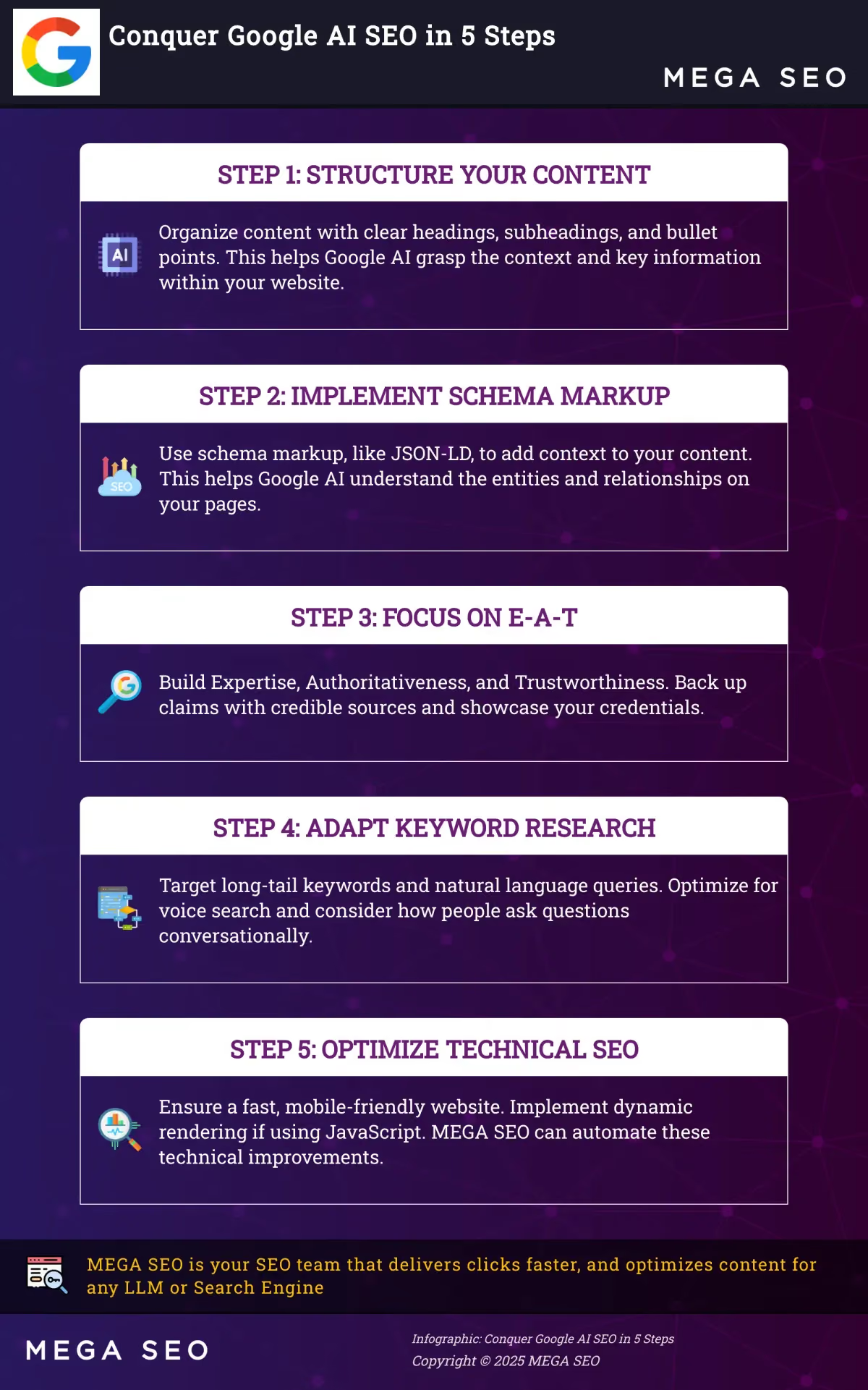
Optimizing your content for Google AI involves creating content that not only appeals to humans but also makes it easy for search engine algorithms to understand and rank. This means structuring your content strategically, using schema markup, and focusing on expertise, authoritativeness, and trustworthiness.
Create High-Quality, Structured Content
Google's AI thrives on well-structured, in-depth content. Focus on providing comprehensive information on a single topic within each piece of content. Think clear headings, subheadings, bullet points, and visuals to break up large blocks of text and improve readability. This structured approach makes it easier for Google's AI to understand and categorize your content, ultimately improving its visibility in search results. Regularly updating your content with fresh perspectives and information also signals relevance to Google's AI. Consider using MEGA SEO's Content Generation features to create high-quality, structured content efficiently.
Implement Schema and Structured Data
Schema markup, such as JSON-LD, provides context to your content, helping Google AI understand the entities and relationships within your website. Think of it as adding labels to your content so Google can easily identify what it's about. This structured data enhances the search engine's understanding, leading to richer search results and potentially boosting your website's visibility in AI-driven features like overviews and knowledge panels. Schema.org offers a comprehensive vocabulary to mark up various content types, from products and services to articles and events. MEGA SEO can help you implement schema markup seamlessly, simplifying the process and ensuring your content is optimized for Google AI. Book a demo to learn more.
Focus on E-A-T
Expertise, Authoritativeness, and Trustworthiness (E-A-T) are crucial for ranking well in Google's AI-driven search landscape. High-quality content that demonstrates expertise and authority on a subject builds trust with both users and search engines. Back up your claims with credible sources, cite your research, and showcase your credentials to establish your website as a reliable source of information. This focus on E-A-T not only improves your ranking but also builds credibility with your audience, leading to increased engagement and conversions. Learn more about E-A-T and how to improve it.
Adapt Content Strategy for AI-Driven Search
With the rise of AI, SEO is evolving. Google's AI is transforming search engines into "answer engines," prioritizing content that directly addresses user intent. This shift requires a content strategy focused on providing concise, clear answers to user queries. Incorporate long-tail keywords naturally within your content and conduct thorough keyword research to understand what questions your target audience is asking. By adapting your content strategy to this AI-driven approach, you can position your website to capture valuable search traffic and establish your brand as a go-to resource in your industry. MEGA SEO's keyword research tools can help you identify valuable long-tail keywords and optimize your content for AI-driven search.
Keyword Research in the AI Era
Keyword research has always been the bedrock of effective SEO. However, with the rise of AI in search, the strategies we use are transforming. It's no longer enough to simply target individual keywords. We need to think about topics, context, and how people naturally search.
Semantic Search and Topic Clusters
Search engines, powered by AI, now understand the relationships between words and concepts. This is called semantic search. Instead of matching exact keywords, Google’s AI delves into the meaning behind a query to deliver relevant results. This shift requires a move towards topic clusters. Instead of focusing on single keywords, build comprehensive content around core topics, creating interconnected pages that explore different facets of the subject. This approach establishes your site as an authority and improves your chances of ranking for related searches. Resources like HubSpot’s guide on topic clusters offer valuable insights.
Long-Tail Keywords and Natural Language Queries
As AI gets better at understanding complex language, long-tail keywords are becoming increasingly important. These are longer, more specific phrases that reflect how people naturally speak and search. For example, instead of "shoes," a long-tail keyword might be "best running shoes for flat feet women." These niche queries often have less competition and higher conversion rates. Think about how people ask questions in everyday conversation and incorporate those natural language queries into your keyword research. Free tools like AnswerThePublic can help you discover these long-tail keywords.
Optimize for Voice Search
With the proliferation of smart speakers and voice assistants, optimizing for voice search is essential. People use different language when speaking compared to typing. Voice searches tend to be longer, more conversational, and often phrased as questions. When conducting keyword research, consider how people would ask questions verbally. Focus on question-based keywords like "how to," "what is," and "where can I find." Ensure your content provides clear, concise answers to these questions in a natural, conversational tone. Consider adding an FAQ section to your pages to directly address common voice search queries. Schema markup can further enhance visibility for voice search.
Technical SEO for Google AI
Technical SEO is always important, but the shift toward AI-driven search adds new wrinkles. Optimizing your site’s technical foundation ensures Google’s AI can easily crawl, understand, and present your content in AI Overviews and other rich results. This is where MEGA SEO excels, automating technical SEO improvements so you can focus on other aspects of your business. Book a demo to see how MEGA SEO can transform your technical SEO.
Site Speed and Core Web Vitals
Page speed is crucial for ranking. Google’s algorithms prioritize sites that load quickly, especially on mobile devices. AI-driven search further emphasizes speed, as users expect instant answers. Slow loading times negatively impact user experience and can decrease your visibility in AI-driven features. Focus on optimizing images, leveraging browser caching, and minimizing HTTP requests to improve your Core Web Vitals. MEGA SEO helps automate these optimizations, ensuring your site loads quickly and efficiently.
Mobile-First Indexing and Responsive Design
Most websites see a majority of their traffic from mobile devices. Google uses mobile-first indexing, meaning it primarily crawls and indexes the mobile version of your website. A responsive design ensures your website adapts seamlessly to different screen sizes, providing a consistent user experience. This is essential for both traditional SEO and ranking in AI Overviews, which are often displayed on mobile.
JavaScript SEO and Dynamic Rendering
Many modern websites rely heavily on JavaScript. While Google has become better at processing JavaScript, it can still pose challenges for crawling and indexing. Dynamic rendering serves a simplified, static version of your content to search engine crawlers, ensuring they can easily access and understand your site’s information. This is particularly important for AI-driven search, as Google’s AI relies on structured data and clean code to synthesize information for AI Overviews. If your site uses JavaScript, test your pages to ensure Google can fully render the content. Consider using MEGA SEO’s automated tools to simplify JavaScript SEO and ensure your content is accessible to search engines.
Measuring SEO Success in the AI Age
As search engines become more sophisticated, so too must our methods for measuring SEO success. While traditional metrics still hold value, we need to consider the impact of AI and adjust our approach. This means looking beyond simple keyword rankings and considering how AI influences user behavior and search results.
KPIs for AI-Driven SEO
Key performance indicators (KPIs) remain essential for tracking progress. With AI-driven SEO, we need to focus on metrics that reflect the nuances of AI's influence. Instead of solely fixating on keyword rankings, consider these KPIs:
- Organic traffic growth: While always important, organic traffic becomes even more crucial in the age of AI. Track not just the volume of traffic, but also its source and behavior. Are you attracting the right audience? Are they engaging with your content?
- Engagement metrics: AI prioritizes content that resonates with users. Metrics like time on page, bounce rate, and click-through rate (CTR) become even more significant. These indicators reveal how users interact with your content and whether it satisfies their search intent. MEGA SEO's Maintenance Agent can help improve your existing content's CTR and overall engagement.
- Conversion rates: Ultimately, SEO aims to drive conversions. Track how AI-influenced traffic translates into leads, sales, or other desired actions. This helps determine the effectiveness of your AI-driven SEO strategy in achieving business objectives.
Track AI-Influenced Rankings
AI is changing how search engines rank content. It's no longer enough to simply target keywords; you need to understand how AI interprets search queries and how it surfaces relevant results. Consider these factors:
- AI-generated content performance: If you're using AI tools for content creation, carefully monitor how this content performs in search rankings compared to human-written content. This will help you refine your AI content strategy and ensure it aligns with search engine algorithms.
- Featured snippets and rich results: AI is increasingly powering featured snippets, knowledge panels, and other rich results. Track your visibility in these areas, as they can significantly impact organic traffic.
- Position zero rankings: Earning the coveted "position zero" spot in search results is a major win in the AI era. Monitor your progress towards achieving this top ranking and analyze the factors that contribute to its attainment. MEGA SEO offers tools to help you optimize content effectively.
Adapt Analytics to AI User Behavior
AI is transforming how users search and interact with online content. To succeed in AI-driven SEO, you must adapt your analytics to understand these evolving behaviors.
- Analyze search patterns: Pay attention to changes in search queries, including the rise of natural language and voice search. This will help you optimize your content for how people are actually searching.
- Understand user intent: AI is getting better at deciphering user intent. Go beyond keywords and focus on understanding the underlying needs and motivations behind search queries. This will allow you to create content that truly resonates with your target audience. Request a demo to learn how MEGA SEO can help.
- Monitor user engagement with AI-powered features: Track how users interact with AI-driven search features like featured snippets and related questions. This data can provide valuable insights into user behavior and preferences.
Future of AI-Driven SEO
Search engine optimization is always changing. AI is rapidly transforming how we search and how Google delivers results. Understanding these shifts is key to future-proofing your SEO strategy. Let’s explore some predictions for the future of AI-driven SEO:
Predictive Search and Intent Anticipation
AI is getting better at predicting what users want before they even finish typing. Think about how Google auto-completes your search queries or suggests related searches. This predictive power will become even more sophisticated, requiring SEO professionals to anticipate user intent more accurately. We'll need to optimize content for the questions users are likely to ask, not just the ones they're currently asking. This means understanding the context behind searches and creating content that addresses the full scope of a user's needs.
AI-Generated Content and SEO
The rise of AI-generated content presents both opportunities and challenges. While some fear that AI content will flood search results with low-quality articles, studies show that domain authority and backlinks still reign supreme. AI-generated content can be a valuable tool for creating large volumes of content quickly. However, it's unlikely to replace the nuance and creativity of human writers entirely. The key is to use AI strategically, perhaps for generating initial drafts or handling repetitive tasks, while reserving human expertise for refining the content and ensuring quality. Optimizing content for both AI and human audiences will be a crucial balancing act. Tools like MEGA SEO can help you strike this balance, leveraging AI for efficiency while maintaining the quality standards required for top rankings. You can learn more about how to create customized posts using MEGA SEO on our website.
Continuous Learning and Adaptation
The future of SEO is all about continuous learning. Google's algorithms are constantly evolving, and AI is accelerating this pace of change. Staying informed about the latest AI advancements and best practices is no longer optional—it's essential. AI-driven SEO offers incredible potential, but only for those willing to adapt. Embrace experimentation, analyze your results, and refine your strategies based on what works. Platforms like MEGA SEO can help you stay ahead of the curve by automating many of these tasks, freeing up your time to focus on the strategic aspects of your SEO. Book a demo to see how MEGA SEO can transform your SEO strategy.
Prepare for the AI-Driven SEO Future
The SEO landscape is constantly evolving, and the rise of AI in search is transforming how we optimize content. To stay ahead, you need to prepare for a future where AI plays an even bigger role. This means understanding how AI interacts with content, prioritizing user experience, and continuously learning about Google's latest AI advancements.
Invest in AI-Ready Content
AI algorithms prioritize high-quality, relevant content. Think in-depth articles, authoritative guides, and well-structured information. This type of content helps AI understand your website's expertise and recommend it in overviews and featured snippets. Experts suggest creating authoritative content and using expert quotes to build credibility, while avoiding robotic, AI-generated text that lacks genuine insight. MEGA SEO's customized posts can help you craft compelling, AI-ready content.
Balance AI Optimization with User Focus
While optimizing for AI is crucial, remember that search engines ultimately serve users. Google's AI is shifting search toward an "answer engine" model, prioritizing user intent and direct answers. Focus on creating content that's easily understood and usable by both AI and humans. This means clear formatting, concise language, and a focus on answering user queries effectively. Analyze your content's user-friendliness and identify areas for improvement with MEGA SEO's free tools.
Stay Informed on Google AI
Google's AI is constantly evolving. While adhering to standard SEO best practices is important, it's no longer enough to excel in this new AI-driven environment. Staying informed about Google's latest AI updates, algorithm changes, and best practices is essential. Continuously learning and adapting your SEO strategy will ensure your website remains visible and competitive. Explore MEGA SEO's resources to stay up-to-date on the latest Google AI developments and learn how to adapt your SEO strategy. Book a demo to see how MEGA SEO can help you navigate the changing SEO landscape.