
Search as we know it is evolving. With AI platforms like ChatGPT and Perplexity becoming go-to sources for answers, the old rules of traditional SEO are changing, too. This is where generative engine optimization (GEO) comes in. GEO is a new strategy focused on making your content a primary source for these AI search engines. It's less about ranking on a results page and more about being part of the AI's answer. This guide breaks down the essentials of GEO, how it compares to SEO, and why it's critical for your content AI search strategy.
Key Takeaways
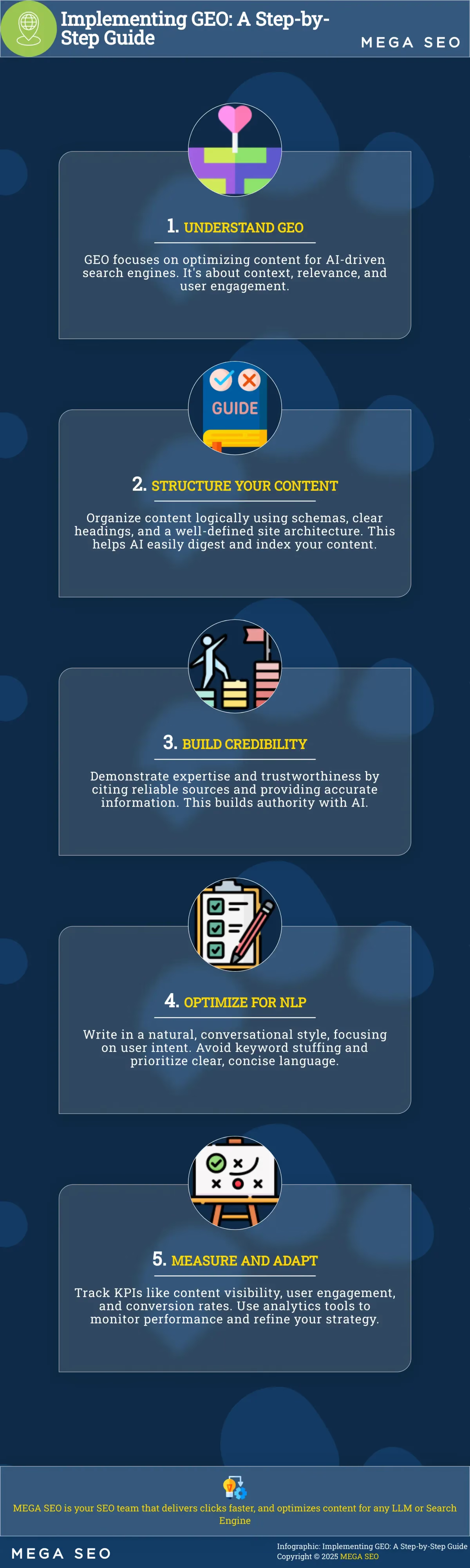
- Optimize for AI-driven search: AI is changing how users find information. GEO focuses on creating content that resonates with AI algorithms, emphasizing context, relevance, and user experience.
- Structure content for AI comprehension: Organize your content logically using schemas, clear headings, and a well-defined site architecture. This helps AI easily digest and index your content, improving its visibility in search results.
- Build credibility with AI: Demonstrate expertise and trustworthiness by citing reliable sources and providing accurate, in-depth information. This builds authority with AI systems and positions your content as a valuable resource.
What is Generative Engine Optimization (GEO)?
Generative Engine Optimization (GEO) is a new approach to optimizing online content. Unlike traditional SEO, which focuses on ranking in search engine results pages (SERPs) like Google, GEO is designed for AI-driven search engines. These generative engines use large language models (LLMs) to understand and respond to user queries. Think ChatGPT, Perplexity AI, and You.com, or even the AI-driven overviews you sometimes see at the top of Google Search results. These overviews are powered by LLMs.
Breaking Down the Core Concepts of GEO
At its core, GEO aims to make your content easily understood and retrieved by these LLMs. It’s about anticipating the nuances of user intent and crafting content that aligns with how generative AI processes information. This shift represents a fundamental change in how we think about search optimization. GEO isn’t just about keywords anymore; it’s about context, relevance, and user engagement within the rapidly evolving landscape of AI-driven search. Generative models are central to GEO, influencing everything from how content is delivered to how websites are designed. This means effectively using GEO strategies to enhance content visibility and user engagement.
How AI Is Changing the Search Landscape
AI is transforming how we search for and consume information online. Instead of simply matching keywords, AI-powered search engines try to understand the meaning and context behind a user’s query. They then generate comprehensive, nuanced responses, often pulling from multiple sources. This means your content needs to be optimized not just for traditional search engine algorithms, but also for the way AI interprets and synthesizes information. AI-driven platforms are changing the game, and GEO is the key to ensuring your content remains visible and engaging in this new era of search. It’s about making sure your content is included in the AI’s generated responses, which requires a different approach than traditional SEO. This includes understanding core concepts like interpreting user intent and creating content optimized for AI.
Addressing the Frustrations of Traditional Search
Let's be honest, traditional search can be a real headache. You type in a question and get a long list of links, many of which are cluttered with ads or lead to low-quality pages. Sifting through these results to find a straightforward answer often feels like a chore. This is a key reason why users are turning to AI-powered search. They want direct, synthesized answers, not just a directory of websites. As the internet becomes more crowded with content, the challenge is to create material that stands out for its quality and clarity. The goal is to produce content that is so helpful and well-structured that it becomes a primary source for these AI search engines, directly addressing user needs without the usual friction.
How GEO Differs from Traditional SEO
GEO vs. SEO: Key Differences
Traditional SEO targets search engines like Google and Bing. It focuses on keywords, metadata, and backlinks to improve search engine results page (SERP) rankings and click-through rates. It’s about optimizing content to be easily discoverable by these traditional search engines. GEO, on the other hand, optimizes content for AI-driven platforms like ChatGPT, Perplexity, and Google Gemini. Instead of aiming for high SERP rankings, GEO ensures your content is included in AI-generated responses. This shift in focus requires a different approach to content creation and optimization. GEO prioritizes contextual relevance, structured data, and citations within AI outputs, which contrasts with traditional SEO’s emphasis on more technical elements. As AI search engines become more prevalent, traditional SEO methods, such as keyword stuffing, will become less effective, while GEO will become increasingly important. Essentially, GEO is about creating content that AI search engines can readily use in their answers, focusing on providing complete and helpful answers to user questions. You can learn more about BizWisdom.
Adapting to New Search Behaviors
Generative AI is transforming how people find information. Millions of queries are posed to ChatGPT daily, highlighting the growing reliance on AI for information retrieval. GEO helps brands maintain visibility in this evolving landscape, complementing traditional SEO efforts. As AI platforms like ChatGPT become central to user decisions, optimizing your brand for these tools is crucial for enhancing visibility and user engagement. Unlike traditional optimization practices, GEO centers on generative processes that predict and meet user intentions. This creates a symbiotic relationship between content and search queries, driving relevance and value for users. The stronger your brand’s position within its industry, the more relevant it appears to both users and AI tools like ChatGPT. Wodo offers further insights into these evolving trends.
Why GEO Is Essential for Your Content Strategy
As AI rapidly transforms the digital world, search engine optimization (SEO) is evolving. Generative AI is changing how users find information, making Generative Engine Optimization (GEO) a critical strategy for businesses to maintain online visibility and reach their target audience.
The Rise of AI-Powered Search Engines
The rise of AI-powered search engines marks a significant shift in the digital landscape. Users are no longer limited to traditional keyword searches. Generative AI platforms like ChatGPT, Perplexity, and Google AI Overviews provide more conversational and nuanced search experiences. These platforms use natural language processing to understand user intent and deliver more relevant results. This shift requires a new approach to optimization—one that focuses on how AI processes and delivers information. Generative Engine Optimization (GEO) addresses this need, ensuring content is optimized for these increasingly popular AI-driven search tools. As these technologies evolve, understanding GEO becomes essential for staying ahead of the curve.
Exploring Top AI Search Tools
Beyond Google's AI Overviews, several other platforms are shaping the future of search. Perplexity AI, for example, functions like a conversational chatbot. You can ask follow-up questions, and it retains the context of your conversation, making it easy to explore topics in depth. Another innovative tool is Arc Search, which combines a browser, search engine, and AI into one app. Its 'Browse for Me' feature is particularly interesting; it scours multiple sources and compiles the information into a brand-new, detailed webpage for you. These tools demonstrate how AI is moving beyond simple link lists to provide direct, synthesized answers, which is exactly what GEO prepares your content for.
Understanding Google's AI Mode and Its Limitations
Google's AI Overviews are perhaps the most visible example of generative search, placing a summarized answer directly at the top of your results. While this feature is powerful, it's important to remember its limitations. AI Mode is still a developing technology and can make mistakes. It might misunderstand the content on a webpage or miss crucial details, leading to inaccurate or incomplete summaries. For this reason, you should always verify important information. Google encourages this by providing links to its sources within the overview. It's a good practice to review these sources and consult the traditional search results to get a complete picture.
What This Means for Businesses and Content Creators
The implications of GEO are far-reaching for both businesses and content creators. With AI platforms like ChatGPT becoming central to how users make decisions, optimizing your brand for these tools is crucial for enhancing visibility and engagement. Businesses that adapt to GEO will likely see improved performance in their digital marketing efforts. Content creators need to understand how to create content that resonates with AI algorithms, focusing on factors like context, relevance, and user experience. Tracking user engagement is essential for evaluating content effectiveness in this new era of search. Tools like Google Analytics can provide valuable insights into how users interact with AI-generated content, helping creators refine their strategies and maximize impact.
How to Create an Effective GEO Strategy
As AI reshapes the search landscape, optimizing your content for these intelligent systems is no longer optional—it’s essential. Effective GEO strategies hinge on understanding how AI interprets and ranks content. This involves creating content that caters to AI’s analytical capabilities, structuring it for easy comprehension, and building authority that resonates with these advanced algorithms.
How to Create Content for an AI Search Audience
Generative Engine Optimization (GEO) prioritizes high-quality, detailed content that thoroughly answers user questions. Unlike traditional SEO, which often focuses on specific keywords, GEO is about providing comprehensive and helpful answers. Think of it as having a conversation with a highly intelligent reader—your content should anticipate follow-up questions and provide all the necessary information in a clear, concise manner. This approach shifts the focus from keyword density to genuine user value. By addressing user queries completely, you position your content as a trusted resource, which is crucial for AI-driven search results.
Following Google's Guidance on AI-Generated Content
A common question is whether using AI to create content will result in a penalty from Google. The short answer is no, as long as the content is high-quality. Google has been clear that its focus is on the quality and helpfulness of content, not the method of its creation. Their guidance about AI-generated content states that rewarding high-quality content is the priority, whether it's produced by a human, AI, or a combination of both. The key is to produce original, helpful content for people, not to simply manipulate search rankings. This means the old tactics of creating spammy, low-value articles won't work, regardless of who or what writes them. The goal remains the same: provide real value to your audience.
Applying the E-E-A-T Framework
To create content that both users and AI systems trust, you need to focus on E-E-A-T: Experience, Expertise, Authoritativeness, and Trustworthiness. This framework is Google's way of measuring content quality and credibility. For your content to perform well in generative search, it must clearly demonstrate E-E-A-T. This means backing up claims with data, citing reputable sources, showcasing firsthand experience, and ensuring your information is accurate and up-to-date. For businesses, this also involves building a strong brand reputation. Keeping your content current is a major part of maintaining trustworthiness. AI-powered tools can help with this; for instance, MEGA AI's Maintenance Agent can identify and add new information to existing articles, ensuring they remain accurate and relevant over time.
Maintaining Transparency with Your Audience
While Google doesn’t require you to disclose the use of AI in your content creation process, being transparent with your audience is a good practice. A simple disclaimer can build trust and manage reader expectations. It shows that you are confident in the quality of your information, regardless of the tools used to produce it. This transparency can be particularly important when AI plays a significant role in generating content. Even when using sophisticated platforms like MEGA AI to automate your SEO and content workflows, a brief note about AI's involvement can reinforce your brand's commitment to honesty. Ultimately, your audience values useful and reliable information, and being open about your process can strengthen that relationship.
Structuring Your Data for AI Systems
AI thrives on structure. To make your content easily digestible for AI, you need to organize it logically. This involves using schemas like Article, Organization, and Breadcrumb. These schemas act as signposts for AI, clarifying the structure and context of your content. A well-organized site architecture, with clear navigation and internal linking, further enhances AI’s ability to understand and index your content. Think of it as creating a well-organized library—the easier it is for AI to find information, the higher your content is likely to rank.
How to Build Authority for AI Systems
Just like human readers, AI systems value credibility. Building authority in the age of GEO involves demonstrating expertise and trustworthiness. One effective way to do this is by citing reliable sources. Whether it’s academic research, industry reports, or credible news outlets, backing up your claims with evidence strengthens your content’s authority. By showcasing your knowledge and providing verifiable information, you build trust with both AI and your audience, ultimately improving your search performance.
The Technical Side of Generative Engine Optimization
Getting the technical aspects of GEO right is key to making your content easily understood and ranked by AI-powered search engines. This involves structuring your
Using AI-Friendly Markup and Schema
Think of schema markup as a translator between your website and search engines. It helps search engines understand the context and structure of your content, making it easier for them to categorize and surface it in relevant searches. Using schema like Article, Organization, and Breadcrumb helps AI grasp the relationships between different parts of your content. This structured data clarifies what your content is about, who created it, and how it fits within your website’s overall structure. For example, using Article schema can signal to a search engine that a particular page is a blog post, providing information about the author, publishing date, and main topic. This clarity helps AI systems understand and rank your content more effectively.
Optimizing for Natural Language Processing
Unlike traditional SEO, where keyword density often dominated content strategies, GEO prioritizes clear, concise, and well-structured content. AI uses natural language processing (NLP) to understand the meaning and intent behind search queries and web pages. By writing in a natural, conversational style and focusing on user intent, you make it easier for AI to understand and rank your content. This means moving away from keyword stuffing and focusing on creating content that reads well and provides genuine value to the reader. For example, focus on answering a specific question thoroughly and comprehensively, rather than simply repeating keywords. This approach not only improves your content’s ranking in AI-powered search results but also enhances the user experience.
Using Machine Learning Insights to Inform Your Strategy
Machine learning is the engine behind AI-powered search. By understanding how these algorithms work, you can optimize your content more effectively. Generative AI research provides valuable insights into what AI looks for when ranking content. Use these insights to inform your content strategy, focusing on topics and formats that resonate with AI. This might involve analyzing search trends and understanding user behavior. Experiment with different content structures to see what performs best with AI. Tools that provide data on AI search performance can be invaluable for making data-driven decisions.
Integrating AI Search for Business Applications
Beyond optimizing your content for external AI search engines, you can also bring the power of AI search directly into your business operations. Integrating AI search capabilities can transform how your applications function, offering more dynamic and intelligent features to both your internal teams and your customers. This involves leveraging specialized tools and considering the technical requirements for security and scale to ensure a successful implementation. By building with AI search, you move from being a participant in the search ecosystem to an architect of your own intelligent information retrieval systems. This creates a significant competitive advantage by enabling you to deliver highly customized and relevant experiences that generic search engines can't match.
Using an AI Search API
An AI Search API acts as a bridge, allowing your business applications to connect with and use an AI search engine's power. This means you can build features that search the web in real-time, crawl specific websites for information, and receive clean, structured data in return. For example, a marketing agency could use an API to build a tool that automatically monitors competitor content and summarizes their strategies. An e-commerce platform could enhance its internal search to provide more relevant, context-aware product recommendations. The key benefit is control; instead of just hoping to be found on other platforms, you can design and deploy custom search functions tailored precisely to your business needs and user journeys.
Enterprise-Level Features for Security and Scale
When you integrate a third-party service into your business, performance and security are non-negotiable. An API that can't handle your traffic or provides inaccurate results will create a poor user experience and undermine trust in your application. As you evaluate potential AI search providers, look for enterprise-grade features that ensure your application is not only innovative but also robust and scalable enough to support your business as it grows. Key features to look for include:
- High Throughput: The ability to handle a large volume of queries, often thousands per second, to ensure your application remains responsive even during peak usage.
- Low Latency: Fast response times are critical for a seamless user experience. Delays in search results can lead to user frustration and abandonment.
- High Accuracy: The search results must be reliable and relevant. Inaccurate information can damage your brand's credibility and lead to poor business outcomes.
- Robust Security: Ensure the provider has strong security protocols to protect your data and your users' privacy during API calls.
How to Measure the Success of Your GEO Strategy
Measuring the success of your generative engine optimization (GEO) efforts is crucial for understanding what’s working and what needs improvement. Just like traditional SEO, GEO relies on data-driven insights to refine your approach and maximize impact. Let’s explore how to define the right key performance indicators (KPIs) and which tools can help you track progress.
What GEO Metrics Should You Track?
KPIs for GEO go beyond simple metrics like keyword rankings. Because AI-powered search engines prioritize user experience and engagement, your KPIs should reflect these factors. Consider tracking these metrics:
- Content Visibility: How easily can AI search engines discover and index your content? This metric measures how effectively your content reaches its target audience. BrodNeil emphasizes the importance of user engagement in GEO.
- User Engagement: How are users interacting with your content? Track metrics like time spent on page, bounce rate, and click-through rate (CTR) to understand what resonates with your audience. Tools like Google Analytics offer comprehensive insights into user behavior.
- Conversion Rates: How effectively does your content drive desired actions, such as signing up for a newsletter or making a purchase? This metric connects your GEO efforts to tangible business outcomes.
- Content Quality: Assess the quality of your AI-generated content by tracking metrics like grammar, style, and factual accuracy. Ensure your content meets the highest standards. ReputationX highlights content quality as a key KPI for GEO.
- User Feedback: Gather direct feedback from users through surveys or comments to understand their experience with your content. This qualitative data can provide valuable insights.
By focusing on these KPIs, you can gain a holistic view of your GEO performance and identify areas for improvement.
Understanding Performance Benchmarks
To effectively measure your GEO strategy, you need to understand the benchmarks that define success in an AI-driven search environment. Performance benchmarks give context to your KPIs, helping you set realistic goals and evaluate your content against the capabilities of generative engines. It’s not just about tracking your own metrics in a vacuum; it’s about knowing the standards for speed, accuracy, and quality that these advanced systems operate on. By understanding these benchmarks, you can better tailor your content to meet the technical requirements of AI while also satisfying the expectations of your audience. This knowledge helps you refine your strategy and stay competitive.
Key Statistics for Evaluating AI Search Engines
When evaluating AI search engines, specific statistics can reveal their power and efficiency. For instance, leading platforms demonstrate impressive search quality, achieving an accuracy rate of 89.77% on certain test queries. They are also incredibly fast, capable of delivering results in as little as 500 milliseconds and handling thousands of searches per second. This speed and scale mean your content must be optimized for rapid retrieval. Beyond technical performance, user engagement remains a critical benchmark. Tracking metrics like time on page and click-through rate (CTR) shows how well your content resonates with users, and automated tools can even help maintain your content to improve these scores over time. Ultimately, gathering direct user feedback provides invaluable insight into the real-world effectiveness of your GEO efforts.
Tools and Techniques for Tracking AI Search Performance
Tracking GEO performance requires a combination of familiar tools and new, AI-specific platforms. Here’s how to effectively measure your success:
- Traditional Analytics Platforms: Platforms like Google Analytics remain valuable for tracking user behavior on your website, even with the rise of AI-driven search. Monitor metrics like traffic sources, bounce rates, and conversion rates to understand how users are finding and interacting with your content. Link-able discusses using Google Analytics in the context of GEO.
- AI-Specific Tracking Tools: As AI search evolves, specialized tracking tools are emerging to provide deeper insights into AI-driven platform performance. These tools can help you understand how your content ranks in AI-generated search results and how users engage with it. Wodo emphasizes the importance of using analytics tools specifically designed for AI-driven platforms.
- A/B Testing: Experiment with different versions of your content to see what resonates best with AI search engines and users. Test variations in tone, style, and structure to optimize for both AI comprehension and user engagement.
- Platform-Specific Insights: Different AI platforms may offer their own analytics dashboards. Leverage these dashboards to understand how your content performs within each specific environment. For example, platforms like ChatGPT or Perplexity might provide data on user interactions and content visibility within their own ecosystems.
- LLM-Based SEO Tools: New tools are emerging that leverage large language models (LLMs) to analyze content and provide SEO recommendations. These tools can help you optimize your content for AI comprehension and improve your chances of ranking well in AI-driven search results. Consider exploring MEGA SEO’s suite of tools for customized posts and other resources to enhance your GEO strategy.
By combining these tools and techniques, you can gain a comprehensive understanding of your GEO performance and continuously refine your strategy. Remember, GEO is an evolving field, so staying up-to-date with the latest tools and best practices is essential for success.
Common Challenges in GEO Adoption
As with any emerging technology, adopting Generative Engine Optimization (GEO) comes with its own set of challenges. Successfully integrating GEO means finding the right balance between leveraging AI’s power and upholding ethical content creation practices.
How to Balance Creativity with AI Optimization
While AI can undoubtedly enhance content creation, it shouldn’t come at the expense of human creativity. AI writing tools excel at optimizing content for search engines, ensuring readability, and even generating new ideas. However, they can sometimes produce generic-sounding content. Think of AI as a powerful assistant that can help refine and optimize your ideas, but not replace the unique voice and perspective that you, as a human creator, bring. Maintaining this balance ensures your content resonates with your audience while also meeting the technical requirements of AI-driven search engines.
Understanding Ethical Implications and AI Bias
AI models learn from vast amounts of data, and this data can sometimes reflect societal biases. As a result, AI-generated content can inadvertently perpetuate or even amplify these biases. It’s crucial to review and edit AI-generated content carefully, ensuring it aligns with your brand values and promotes fairness and inclusivity. Transparency is also key. Be open about your use of AI in content creation, and be prepared to address any concerns about potential biases. Approaching GEO with a focus on ethics ensures responsible use and builds trust with your audience.
The Future of GEO and AI Search
As AI rapidly transforms the digital world, search engine optimization (SEO) is evolving into Generative Engine Optimization (GEO). To stay ahead, understanding and preparing for the future of GEO is no longer optional, but essential. Let’s explore emerging technologies and how to prepare for the next generation of search engines.
Emerging Technologies in AI Search
Generative AI models are revolutionizing how we interact with online information. These sophisticated AI systems are becoming deeply embedded in content delivery networks and web design, impacting everything from content creation and delivery to how users discover and consume it. Platforms like ChatGPT are increasingly central to user decisions, making it essential for brands to optimize their content for these AI-powered tools to maintain visibility and engagement. This shift requires a fundamental change in how businesses approach SEO, moving beyond traditional keyword research and focusing on creating content that resonates with both users and AI. As generative models advance, so too will the capabilities of AI search engines, impacting how businesses connect with their target audiences. Businesses that adapt to these changes will be best positioned for success in the evolving digital landscape.
The Expanding Capabilities of AI Tools
As AI continues to advance, its ability to process and deliver information is becoming more sophisticated. AI-powered search engines are moving beyond simple keyword matching to understand the context and intent behind user queries. This allows them to synthesize information from multiple sources to generate a single, comprehensive answer. Instead of getting a list of links, users get a direct response. This shift means content needs to be optimized not just for discovery, but for comprehension by these AI systems. The goal is to create content so clear and authoritative that an AI will recognize it as a primary source for its generated answers.
Potential Issues for Content Publishers
While the rise of AI tools presents exciting opportunities, it also introduces significant challenges for content publishers. The primary concern revolves around the potential for AI-generated summaries to disrupt traditional online business models. As AI search engines become more adept at providing direct answers, they may reduce the need for users to click through to the original content sources. This shift threatens to decrease website traffic, which is the lifeblood for many online publishers who rely on it for ad revenue, lead generation, and brand visibility. Adapting to this new reality requires a strategic focus on building authority and creating content that provides unique value beyond what an AI summary can offer.
The Challenge of AI Summaries and Website Traffic
The core challenge for publishers is that AI-generated summaries can satisfy a user's query directly within the search results page. When a user gets a complete answer without leaving the AI interface, the incentive to visit the source website diminishes significantly. This can lead to a sharp decline in website traffic, even if your content is being used to generate the AI's response. This issue is compounded by inconsistent source attribution, as some AI tools don't always credit their sources clearly. For publishers, this means re-evaluating how they measure success and finding new ways to encourage click-throughs. The key is to create indispensable, in-depth content that an AI summary can't fully replicate, which involves continuously updating articles with new information to ensure they remain the most comprehensive resource available. This process can be streamlined with AI-powered SEO tools that help maintain and enrich existing content.
How to Prepare for the Next Generation of Search
The next generation of search engines will be AI-driven. Tools like ChatGPT, Perplexity, and Google AI Overviews are at the forefront of this transformation, processing and delivering search results in response to user queries in innovative ways. This means content optimization needs to adapt to how generative AI operates. GEO focuses on creating content that aligns with these AI-driven methodologies, ensuring relevance and value for users. This symbiotic relationship between content and search queries will be key to successful GEO. As generative engines become the primary method for online searches, businesses must embrace GEO strategies to remain competitive. This involves understanding how AI interprets information, structures data, and identifies authoritative sources. Preparing for this shift now will be critical for future success as generative engines become the common way to search for information.
How to Integrate GEO into Your Marketing Strategy
Aligning GEO with Your Overall Marketing Goals
Generative Engine Optimization (GEO) is about optimizing your website and content so AI platforms (like ChatGPT, Perplexity, and Gemini) accurately represent your brand. It’s different from traditional SEO, which focuses on search engines like Google. As Walker Sands explains in their guide to GEO, GEO helps brands stay visible in this new landscape, complementing traditional SEO efforts. This approach can even lead to higher conversion rates by ensuring your brand message resonates effectively with AI-powered search tools. Start by identifying how GEO fits into your broader marketing goals. Are you aiming to increase brand awareness, drive more website traffic, or generate leads? Understanding these objectives will shape your GEO strategy and ensure it contributes to your overall success. Once you’ve defined your objectives, allocate resources and budget accordingly. GEO, like any other marketing initiative, requires investment to yield positive results.
Applying GEO to Your Content Strategy
A robust GEO strategy involves several key elements: research, high-quality content, clear structure, strategic distribution, building authority, and technical SEO. Search Engine Land offers a comprehensive look at how to implement these GEO strategies. Begin by researching relevant topics and keywords that align with your target audience and industry. Then, create content that informs and provides value, answering user queries and demonstrating expertise. Showing AI systems your content is authoritative involves including citations, quotations, and statistics. Structuring your content logically with clear headings, subheadings, and bullet points makes it easier for AI to understand. Finally, distribute your content across relevant channels to reach a wider audience and build backlinks, which strengthens your online presence.
How MEGA SEO Supports Your GEO Efforts
MEGA SEO streamlines and automates many aspects of GEO, making it easier to optimize your content for both search engines and large language models (LLMs). The platform optimizes content for any search engine or LLM, ensuring that your content ranks where desired. This is crucial for GEO, given its focus on AI-driven search. MEGA SEO also automates content updates, improving clickthrough rates and helping content rank higher in search results. This aligns with GEO’s emphasis on maintaining content relevance and performance. Features like automated keyword research, content generation, and technical SEO improvements further simplify the process, allowing you to focus on your overall marketing strategy. Explore MEGA SEO’s free tools to get started or book a demo for a personalized walkthrough. You can also learn more about customized posts and explore additional resources to further enhance your GEO strategy.
Automating Content Updates and Optimization
Keeping your content fresh is vital for GEO. AI models prioritize current and relevant information, so outdated articles can quickly lose visibility. Manually updating every piece of content is a huge time commitment, especially for small teams. This is where automation becomes a game-changer. Tools can automatically refresh your existing articles to improve click-through rates (CTR) and identify new information to add, keeping your content comprehensive and competitive. For instance, a platform like MEGA SEO automates these updates, ensuring your content is consistently optimized for any search engine or LLM. This process helps your content rank higher and maintains its relevance over time without constant manual effort.
Simplifying Technical SEO for GEO
Technical SEO can sound complex, but for GEO, it’s about making your content easy for AI to read and understand. Getting the technical details right is key to helping AI systems properly index and rank your content. This involves structuring your content logically using schemas like Article, Organization, and Breadcrumb, which act as signposts for AI. A well-organized site architecture with clear navigation and internal linking also helps AI understand the context and hierarchy of your information. Platforms with automated SEO features can handle these technical improvements for you, simplifying the process and making advanced GEO strategies accessible even if you don’t have a dedicated technical expert on your team.