
Creating content for fintech is like walking a tightrope. On one side, you have complex financial topics that can easily overwhelm your audience. On the other, a web of strict regulations where a single misstep can erode trust instantly. Your job is to act as a translator—making intricate subjects accessible while ensuring every claim is accurate and compliant. It's a difficult balance to strike. This guide is designed to help you master it. We’ll provide a clear framework for simplifying jargon, addressing compliance, and building a content strategy that educates users and establishes your brand as a credible authority.
Key Takeaways
- Make compliance the foundation of your content: Build customer confidence by ensuring every article and guide is transparent, accurate, and adheres to financial regulations.
- Solve problems instead of just selling products: Focus on simplifying complex financial topics and providing actionable solutions to establish your brand as a helpful, authoritative resource.
- Connect your content to your audience with SEO: Use targeted keyword research and a smart distribution strategy to make sure your content is found by people actively looking for financial answers.
Why Creating Content for Fintech is a Must
For a fintech company, content isn't just a marketing nice-to-have; it's a core business function. You're not just selling a product; you're asking customers to trust you with their financial well-being, a decision that requires confidence and clarity. A solid content strategy is your primary tool for building that confidence. It allows you to demystify complex financial topics, demonstrate your expertise, and create a direct line of communication with your audience, answering their questions before they even have to ask.
More than just acquiring customers, a great content strategy helps you educate them, turning users into advocates. By consistently providing value, you move beyond being a simple service provider and become an indispensable resource. This approach is fundamental to creating a durable brand in an industry where trust is the most valuable currency. A well-executed strategy ensures your message is clear, consistent, and directly addresses the needs of your audience, laying the groundwork for sustainable growth. It's the difference between a transactional relationship and a long-term partnership with your customers. This foundation of educational, transparent content supports every other part of your business, from customer support to sales.
Overcome High Customer Acquisition Costs
Getting a new customer in the fintech space can be expensive. With fierce competition for ad space and user attention, costs add up quickly. In fact, some reports show the average cost to acquire a single fintech customer is as high as around $784. Relying solely on paid advertising means you are constantly paying to fill your pipeline. A strategic content plan offers a more sustainable path. Instead of renting attention, you build an asset that attracts and nurtures potential customers over the long term. By creating helpful articles, guides, and tools, you draw in an audience organically, reducing your dependence on costly ad campaigns and lowering your overall customer acquisition cost over time.
The Proven ROI of Fintech Content
A strong content strategy does more than just save money; it actively generates high-quality leads. The return on investment is well-documented. One payment company, for example, saw its sales-qualified leads from its blog grow by an incredible 466%. This happens because educational content is essential in finance, a sector Google classifies as "Your Money or Your Life." When you consistently publish accurate, helpful information, you build authority and trust. This positions your brand as a reliable expert, attracting serious users who are actively seeking solutions. This is how content becomes a powerful engine for business growth, turning your expertise into a steady stream of qualified leads.
Earn Customer Trust Through Content
In the financial world, trust is everything. Your customers need to feel secure, and a thoughtful content strategy is one of the most effective ways to build that security. Use your content to be transparent about your products, services, and how you handle customer data. When you consistently publish helpful, accurate information, your brand becomes known as a reliable and credible expert.
This isn't about one-off blog posts. It's about creating a consistent presence that answers questions and addresses concerns head-on. By sharing content across different platforms, you create more touchpoints for customers to connect with your brand and build stronger relationships. An effective SEO plan ensures this valuable content reaches the people who need it most, reinforcing your commitment to transparency and customer education.
Position Your Brand as an Industry Expert
Beyond building trust, your content should position your company as a leader in the financial tech space. When you simplify complex topics and help people make better financial decisions, you're not just selling a service—you're providing genuine value. This is how you establish thought leadership. Your goal is to become the go-to resource for insights and education in your specific niche.
Focus on creating "evergreen" content that remains useful over time, like guides on financial planning or explainers on new technologies. This approach provides a steady stream of value to your audience and can generate leads long after publication. By sharing your expertise freely, you demonstrate a deep understanding of the market and a commitment to your customers' success. This strategy helps you stand out and builds a loyal following that sees you as more than just a platform, but as a true partner.
Setting Your High-Level Fintech Content Strategy
A successful fintech content plan doesn't happen by accident. It starts with a clear, high-level strategy that guides every piece of content you create. Before you write a single blog post or whitepaper, you need to define what you want to achieve, who you’re talking to, and what you want your brand to represent. This strategic foundation ensures your efforts are focused and your content consistently aligns with your business objectives. Without it, you risk creating content that is disconnected and fails to make an impact in a crowded market.
Your strategy should act as a blueprint, outlining the core components of your content operations. This includes setting measurable goals to track your progress, understanding the distinct needs of your audience—whether they are individual consumers or businesses—and carving out a unique brand position. Thinking through these elements upfront will help you create content that not only attracts attention but also builds lasting trust and authority. It’s the difference between publishing content randomly and executing a plan that drives real growth for your company.
Define SMART Goals for Your Content
To ensure your content is actually working for you, your goals need to be specific and measurable. The SMART framework is a straightforward way to do this. It stands for Specific, Measurable, Achievable, Relevant, and Time-bound. Instead of a vague goal like "get more traffic," a SMART goal would be "increase organic website visits by 20% in the next six months." This gives you a clear target to work toward and a way to measure your success. Your goals should directly connect to business outcomes, such as generating a certain number of qualified leads or increasing new user sign-ups through your blog within a specific quarter.
Differentiate Between B2B and B2C Strategies
The way you communicate with individual consumers is fundamentally different from how you approach business clients. A one-size-fits-all content strategy won't be effective because these two audiences have different motivations, challenges, and decision-making processes. B2C fintech content often focuses on personal empowerment and convenience, while B2B content needs to build a business case based on efficiency and return on investment. Recognizing this distinction is the first step toward creating content that truly resonates with your intended audience and guides them effectively through their unique buyer's journey.
Marketing to Consumers (B2C)
When your audience is individual consumers, your content should be relatable, easy to understand, and focused on solving everyday financial problems. The goal is often to build brand awareness and drive actions like app downloads or account sign-ups. Your messaging should highlight convenience and simplicity. Think educational blog posts, engaging social media content, and partnerships with influencers who can build trust with a broad audience. The sales cycle is typically short, so your content needs to quickly demonstrate value and provide a clear, simple call to action.
Marketing to Businesses (B2B)
Marketing to other businesses requires a more detailed and authoritative approach. Your content needs to build a strong business case, focusing on how your solution can save money, improve efficiency, or enhance security. The sales cycle is much longer, so the goal is to generate qualified leads and nurture them over time. Effective formats include in-depth whitepapers, detailed case studies, webinars, and insightful articles on platforms like LinkedIn. This content establishes your expertise and builds the trust needed for a significant investment decision.
Establish Brand-Led Cultural Positioning
In a market filled with similar products, your brand’s identity is what sets you apart. Your content strategy should be built around a clear cultural position that defines what you stand for beyond just your features. Are you the most secure platform for businesses, the most accessible tool for first-time investors, or the most transparent partner in personal finance? This positioning should inform the tone, voice, and topics of all your content. It’s about creating an emotional connection with your audience through storytelling and a consistent message that reflects your core values.
This brand-led approach helps you build a loyal community, not just a customer base. When your audience believes in what your brand represents, they become advocates. For small businesses, creating this content consistently can be a challenge, but it's essential for long-term growth. Using an AI-powered SEO platform can help you maintain a consistent voice and generate content that reinforces your brand positioning across all your channels, ensuring your message remains clear and impactful as you scale.
What Content Formats Work Best for Fintech?
In fintech, you’re often dealing with topics that can feel complex or intimidating to your audience, from investment strategies to payment processing. The right content format does more than just share information; it builds trust by making complicated subjects clear and accessible. There isn’t a single format that works for every situation. A strong content marketing strategy relies on a mix of formats to connect with customers at different stages of their journey.
Your goal is to choose the format that best serves the topic and your audience’s needs. For a deep dive into a regulatory change, a detailed guide might be best. To show how your app simplifies budgeting, a quick video tutorial is more effective. By diversifying your content, you can establish your brand as a go-to resource that is both knowledgeable and helpful. We’ll cover four essential formats that are particularly effective for fintech companies: educational blog posts, video tutorials, interactive tools, and infographics. Each one plays a distinct role in guiding a potential customer from awareness to action.
Break Down Complex Topics with Blogs and Guides
Educational content is the foundation of fintech marketing because it directly addresses the user’s need for clarity and confidence. Good, educational financial articles help you get people interested, grab their attention, and find new customers. These posts allow you to break down complex financial topics, explain industry jargon, and offer actionable advice. Think of guides like "How to Choose Your First Robo-Advisor" or "A Small Business Guide to Understanding Merchant Fees." Consistently publishing high-quality articles helps you build authority and is a cornerstone of any successful SEO plan, allowing you to rank for the questions your ideal customers are asking.
Engage Your Audience with Video Content
Sometimes, it’s easier to show than to tell. Video is a powerful format for demonstrating your product’s value and building user confidence. You can create tutorials and guides with lots of visuals to help people who are ready to buy feel confident and understand your product's benefits. Use short, focused videos to walk users through specific features of your app, or host in-depth webinars to explore broader topics like market trends or financial planning strategies. This visual approach makes your solution feel more tangible and less abstract, helping potential customers see exactly how it can solve their problems.
Offer Hands-On Value with Tools and Calculators
Interactive tools like calculators and quizzes offer immediate, personalized value to your audience. Instead of just reading about retirement planning, a user can input their own data into a calculator and get a tangible projection. For B2B fintech, an ROI calculator can demonstrate the financial impact of your service. These tools are highly effective because they move the user from a passive reader to an active participant. They also serve as excellent lead generation assets, capturing information from engaged prospects who are actively exploring a financial decision. This kind of utility helps convince people to take the next step with your product.
Make Complex Data Easy to Understand
Finance is full of data, and infographics are the perfect format to make that data digestible and engaging. They help you make complex financial ideas easy to understand with charts and images. Use them to illustrate market trends, compare different financial products, or visualize the steps in a complex process like securing a loan. Infographics are highly shareable on social media and can make your blog posts more visually appealing, breaking up long blocks of text. Remember to optimize these visuals with descriptive file names and alt text so more people can find them through Google Images.
How to Identify Your Fintech Audience
Before you write a single word, you need to know exactly who you’re writing for. In fintech, this is especially important because you’re dealing with people’s money and their future. Your content will fail if it tries to speak to everyone at once. A college student opening their first investment account has different questions than a small business owner looking for a better payment processing system. The key is to move from a vague idea of your customer to a sharp, detailed picture of the person you want to help.
Identifying your audience isn't a one-time task. It’s an ongoing process of listening, learning, and refining. As your company grows and the market shifts, your audience may evolve, too. Getting this right is the foundation of a content strategy that not only attracts readers but also converts them into loyal customers. The following steps will help you define your audience so you can create content that truly connects with their needs and solves their specific financial problems.
First, Pinpoint Your Customer Segments
The first step is to group your potential customers into distinct segments. Think about who your product is built for and what problems it solves. You can segment your audience based on demographics like age and income, or psychographics like financial goals and risk tolerance. For B2B fintechs, segments might be based on company size, industry, or the specific financial role of the user, such as a CFO or a freelance bookkeeper. Figure out who your customers are and what they need help with. This process ensures your content speaks directly to the right group instead of getting lost in generalities.
Pinpoint Your Audience's Biggest Challenges
Once you have your customer segments, you need to understand their specific challenges. Your content should directly answer their questions and help them with their financial hurdles. What keeps them up at night? A small business owner might struggle with unpredictable cash flow, while a recent graduate may feel overwhelmed by student loan debt. To uncover these pain points, you can survey your existing customers, monitor conversations on social media and forums like Reddit, or talk to your sales and customer service teams. They have direct insight into the most common questions and frustrations your audience faces every day.
Bring Your Audience to Life with Personas
With your segments and pain points defined, you can create detailed buyer personas. These are semi-fictional profiles that represent your ideal customers. Give them a name, a job title, goals, and challenges. For example, you might create "Startup Sarah," a 30-year-old founder who needs a simple way to manage company expenses, or "Freelancer Frank," who is looking for a better way to handle invoicing and get paid on time. Creating these customer profiles helps humanize your audience, making it easier for your team to write content that feels personal and relevant to their specific situation.
Proven Strategies for Engaging Fintech Content
Effective content in the fintech space does more than just describe your product. It builds trust, educates users, and guides them toward making better financial decisions. Because you’re dealing with people’s money, your content strategy must be built on a foundation of clarity, authority, and genuine helpfulness. A successful approach isn’t about chasing trends; it’s about consistently delivering value that addresses your audience’s specific needs and concerns. This means creating a resource that people return to, not just a sales pitch they see once.
To do this, you need to move beyond feature lists and marketing jargon. Your strategy should focus on four key pillars: simplifying complex ideas, using data to create compelling narratives, addressing the regulatory landscape with transparency, and solving the real-world problems your customers face. Each of these elements works together to establish your brand as a credible and essential resource in a competitive industry. By mastering these strategies, you can create content that not only attracts new users but also fosters long-term loyalty and turns customers into advocates for your brand.
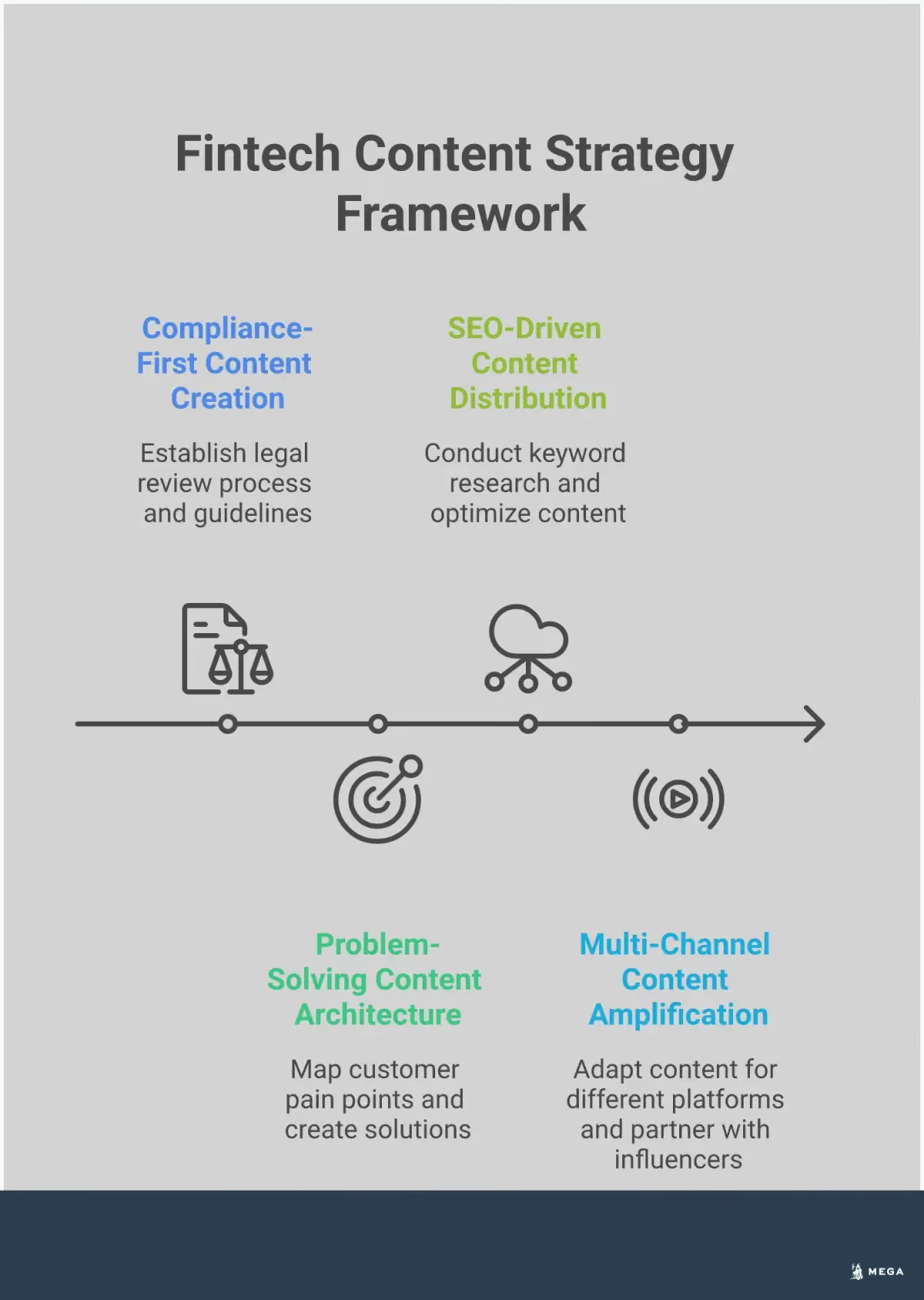
Translate Financial Jargon into Plain English
Finance is often filled with jargon that can intimidate or confuse your audience. Your content’s primary job is to act as a translator, breaking down complicated subjects like investing, credit, or blockchain into simple, digestible information. Good content makes it easier for people to understand their options and feel confident in their financial choices. Think about creating glossaries of financial terms, step-by-step guides, or short videos that explain a single concept clearly. By making finance more accessible, you empower your users and build a foundation of trust. This approach positions your brand as a helpful guide rather than just a service provider.
Use Data to Tell a Story
Data is powerful, but raw numbers rarely inspire action. The most effective fintech content uses data to tell a compelling story. Instead of just stating statistics, frame them within a narrative that resonates with your audience’s goals and challenges. For example, you can create a case study showing how a customer saved for a down payment or use industry data to illustrate a trend in personal finance. This practice of data storytelling helps make abstract information concrete and relatable. It provides proof of your product’s value while connecting with customers on an emotional level, showing them what’s possible and how you can help them get there.
Showcase Social Proof to Build Credibility
When potential customers evaluate a financial product, they look for evidence that others trust you with their money. This is where you can leverage social proof. Highlighting testimonials, customer reviews, and detailed case studies demonstrates that your service delivers tangible results for real people. Instead of simply telling your audience that your platform is secure and effective, you let satisfied customers provide the validation. This is especially powerful in an industry where trust is the most important asset. Integrate these stories directly onto your product pages, feature them in blog posts, and create in-depth case studies that walk through a specific problem and your solution. This approach builds credibility and helps potential users feel more secure in their decision.
Talk Openly About Compliance
The fintech industry is highly regulated, and your content must reflect that reality. Trust is your most valuable asset, and it can be instantly lost if you ignore compliance. Make sure your marketing materials are transparent, accurate, and adhere to all relevant financial regulations and data privacy laws like GDPR. This includes using clear disclaimers, avoiding exaggerated claims, and being upfront about risks. Addressing compliance directly in your content isn’t just about avoiding legal trouble; it’s a way to show your audience that you are a serious, trustworthy partner committed to protecting their interests. This transparency builds credibility and sets you apart from less scrupulous competitors.
Shift from Selling Features to Solving Problems
Ultimately, your content should be useful. Every article, video, or tool you create should aim to solve a specific problem or answer a question for your target audience. Start by identifying their biggest financial challenges and customer pain points through feedback and keyword research. From there, you can develop content that provides practical, actionable solutions. Whether it’s a guide on managing debt or a calculator that helps plan for retirement, problem-solving content demonstrates your expertise and value. This approach helps attract new users who are actively searching for answers and guides them naturally toward becoming loyal customers.
How to Overcome Common Fintech Content Hurdles
Creating content in the fintech space comes with a unique set of hurdles. Unlike other industries, you’re often dealing with complex financial concepts, strict regulations, and a high need for customer trust. Many founders and marketers find it difficult to produce content that is not only accurate and compliant but also engaging enough to capture attention in a noisy market. Getting this balance right is the key to an effective content strategy.
Successfully addressing these challenges means you can build a strong brand, earn customer loyalty, and drive real growth. Let’s look at the four most common obstacles fintech companies face and how you can approach them.
Making Technical Topics Easy to Grasp
Financial topics can be dense and intimidating for the average person. The core challenge is to break down intricate subjects like blockchain, algorithmic trading, or loan amortization into content that is easy to understand without sacrificing accuracy. Your goal is to empower your audience, not overwhelm them with jargon. When you simplify complex ideas, you make your brand more approachable and demonstrate a genuine desire to help your customers.
Focus on translating features into benefits. Instead of explaining the technical mechanics of a feature, show what it helps the customer achieve. Use analogies, real-world examples, and clear, simple language. A great way to test your content is to ask someone outside your industry to read it. If they can grasp the main points, you’re on the right track.
Earning Trust When Discussing Sensitive Topics
Trust is the currency of the financial industry. When you’re asking people to manage their money with your product, you need to earn their confidence. This means your content must be transparent, authoritative, and impeccably accurate. Any mistake or lack of clarity can damage your reputation. Building credibility requires a consistent effort to demonstrate your expertise and commitment to your customers' financial well-being.
Be open about your products, services, and how you handle customer data. Always cite credible sources for any statistics or claims you make. Showcasing the expertise of your team through author bylines and thought leadership pieces can also help. This focus on E-E-A-T (Experience, Expertise, Authoritativeness, and Trustworthiness) is essential for both your audience and search engine performance.
Stand Out in a Crowded Market
The fintech sector is incredibly competitive. From established banks to nimble startups, everyone is vying for the same audience’s attention. Simply publishing content isn’t enough; you need to create something that cuts through the noise. Many companies struggle to differentiate themselves, often ending up with content that looks and sounds like everyone else’s. Your challenge is to find a unique angle or voice that resonates with your specific target audience.
Start by conducting a thorough competitive analysis to identify gaps in the market. What topics are your competitors ignoring? Can you provide a more in-depth perspective or a different format? Developing a distinct brand voice—whether it’s witty, academic, or deeply empathetic—can also make your content more memorable and help you build a loyal following.
How to Educate Without Sounding Salesy
Your content should provide value first and foremost. A common mistake is to create content that is too self-promotional, which can alienate potential customers. The challenge lies in finding the right balance between educating your audience and gently guiding them toward your product. The most effective fintech content solves a problem or answers a question for the reader, establishing your brand as a helpful resource.
Structure your content to address a specific customer pain point. Explain the issue in detail, offer actionable advice, and then introduce your product as a natural solution. This educational approach builds trust and positions your company as an expert. When the time comes to make a purchase decision, customers will remember the value you provided and be more likely to choose your solution.
How to Handle Fintech Compliance in Content
Fintech operates in a space built on trust. When you're dealing with people's finances, every piece of content you publish is under scrutiny, not just by customers but by regulators. Handling compliance isn't just about avoiding legal trouble; it's a fundamental part of building a credible brand that people feel safe doing business with. Your content strategy must have a compliance framework baked in from the start, ensuring that what you say is not only compelling but also accurate, transparent, and legally sound.
This means every blog post, social media update, and video tutorial needs to be created with a clear understanding of the rules. It requires a proactive approach where you don't just create content and ask for a legal review later. Instead, your content creators and legal advisors should work together to establish clear guidelines. This process protects your business and reinforces the message that you are a trustworthy partner for your customers' financial lives. It turns a potential obstacle into a competitive advantage.
Get Your Disclaimers and Warnings Right
Because fintech involves sensitive financial information, clarity about your products and services is non-negotiable. Disclaimers and risk warnings are essential tools for managing customer expectations and building trust. These shouldn't be buried in tiny font at the bottom of a page. Instead, they should be clear, concise, and easy for a non-expert to understand. For example, if you're writing about investment opportunities, your content must clearly state the associated risks. This transparency shows you respect your audience and are committed to their financial well-being, turning a legal requirement into a positive brand attribute.
Know the Specific Rules for Your Niche
The fintech landscape is governed by a complex web of regulations. Depending on where you operate and what services you offer, you may need to adhere to rules like the GDPR for data privacy or specific financial advertising standards. It's critical to ensure your content and data practices comply with all relevant laws to maintain customer trust and avoid significant penalties. This isn't something to guess at. Work with legal counsel to understand the specific guidelines that apply to your business and create a checklist for all marketing content before it goes live. This proactive step saves you from costly mistakes down the road.
Maintaining Transparency in Your Marketing
Being open and honest in your content is the most effective way to build brand trust. While the goal of marketing is to attract customers, in fintech, this can't come at the expense of transparency. Instead of viewing compliance as a barrier, treat it as a core part of your brand's story. Use your content to explain complex financial topics simply and honestly, including the potential risks or downsides. This approach doesn't just satisfy regulators; it creates a loyal customer base that values your integrity and sees you as a reliable guide in their financial journey.
Why SEO Matters for Your Fintech Content
Creating insightful fintech content is only half the battle; you also need to ensure it reaches the right audience. Search engine optimization (SEO) is the bridge between your valuable information and the people searching for it. For fintech companies, a solid SEO strategy builds authority and drives organic growth by making your content discoverable when potential customers have questions about complex financial topics. For a broader framework, see this finance SEO growth strategy. It involves understanding your audience, structuring your site correctly, and adapting to new search technologies. By focusing on SEO, you turn your content from a simple resource into a powerful customer acquisition tool.
Finding the Keywords Your Audience Searches For
Effective SEO starts with knowing the language of your customers. Keyword research helps you uncover the specific terms and questions people use when searching for financial solutions. The goal is to find what your audience is searching for. Automated keyword research finds low-competition, high-impact keywords, helping fintech brands dominate their niche. Instead of targeting broad, competitive terms, focus on long-tail keywords that signal specific intent. For example, instead of "investing," you might target "how to start investing with a small amount." This approach attracts a more qualified audience that is closer to making a decision and helps you create content that directly answers their most pressing questions.
Getting the Technical SEO Details Right
Technical SEO is the foundation that your content rests on. It involves optimizing your website's infrastructure to help search engines crawl and index your pages more effectively. If your site has technical issues like slow load times, broken links, or duplicate content, even the best articles may struggle to rank. For fintech, where trust and professionalism are paramount, a technically sound website is non-negotiable. An AI-driven platform can deduplicate content and refresh internal links, ensuring content quality and technical SEO health. Taking care of these behind-the-scenes details creates a better user experience and signals to search engines that your site is a high-quality, reliable resource.
Optimize Existing Content for Continuous Growth
Your content library is a valuable asset, but it needs regular maintenance. Publishing an article is just the first step. Over time, information becomes outdated and top-performing posts can lose traffic. Instead of letting old content sit, you should regularly update and improve it. A data-driven approach is key here. By checking your analytics, you can find articles with high traffic but low conversions, or posts that are close to ranking on the first page of Google. Focusing on these opportunities turns your existing content into a steady source of leads and ensures it remains accurate and authoritative.
This continuous optimization process can be time-consuming. Manually tracking performance and rewriting sections for dozens of articles is a significant task for any team. This is where automation can streamline the workflow. For instance, MEGA AI’s Maintenance Agent automatically analyzes your content, finds ways to improve click-through rates, and adds new, relevant information to keep your articles competitive. This ensures your content stays fresh and effective without constant manual effort, allowing you to focus on other parts of your business.
Prepare Your Content for AI and Voice Search
The way people find information is changing. More users are turning to voice assistants and AI-powered search tools like ChatGPT for answers, and they often ask questions in a conversational way. To stay relevant, your fintech content must be prepared for this shift. This means structuring articles to provide clear, direct answers and using natural language. Your content can be re-optimized for any platform, including after major Google updates or for LLM-based search engines. By anticipating these trends, you can position your content to be the go-to source not just on traditional search engines, but also on the emerging platforms where your future customers are seeking financial guidance.
Building Your Fintech Content Operations
A great content strategy is only as good as the system you have to execute it. Without a clear operational plan, even the best ideas can get lost in disorganized workflows, missed deadlines, and inconsistent messaging. Building a solid content operation means defining roles, aligning teams, choosing the right tools, and creating repeatable processes that turn your content from a series of one-off projects into a predictable, scalable engine for growth. This structure is what ensures that every piece of content is created efficiently, meets compliance standards, and contributes directly to your business objectives.
To get there, you need to think like an operations manager. Start by mapping out your entire content lifecycle, from the initial idea to post-publication analysis. Who is responsible for each step? What are the approval workflows, especially for compliance-heavy fintech topics? How do you measure success and use those insights to inform your next steps? Establishing these processes upfront prevents chaos down the line and empowers your team to work creatively within a reliable framework. A well-oiled content machine doesn't just produce more content; it produces better, more effective content that consistently delivers results.
Appoint a Content Leader
To keep your content efforts on track, you need a single person in charge. This content leader is responsible for owning the strategy, from planning the editorial calendar to measuring performance. They act as the central point of contact, working with subject matter experts, legal teams, and designers to ensure every piece of content is accurate, compliant, and on-brand. This person doesn't need to be a master of everything, but they should have a strong understanding of your audience, SEO, and how to track data to make informed decisions. Having a designated leader brings accountability and focus to your content program, preventing it from becoming a side project that never gets the attention it deserves.
Align Your Sales and Marketing Teams
Your content will be most effective when your sales and marketing teams are working together. Misalignment between these two groups is a common problem that leads to content that doesn't resonate with potential customers. Your sales team is on the front lines, hearing objections and questions directly from prospects every day. This feedback is gold for your marketing team. By creating a formal process for sales to share these insights, marketing can produce content that addresses real-world challenges and helps drive actual sales opportunities. This collaboration ensures your content is not just attracting traffic but is actively helping to close deals and generate revenue.
Choose the Right Tools for Your Tech Stack
The right technology can make your content operations significantly more efficient. Your tech stack doesn't need to be complicated, but it should support your entire workflow, from ideation to analysis. Key tools include a project management system like Asana or Trello to keep tasks organized, a reliable CMS like WordPress for publishing, and design tools like Canva for creating visuals. For SEO, you'll need tools for keyword research and performance tracking. An end-to-end platform can simplify this by combining several functions into one. For example, MEGA AI’s SEO tools automate keyword research and content generation, reducing the need to juggle multiple subscriptions and streamlining your process.
Automate Reporting and Operations with AI
For small teams, manual tasks like reporting and content optimization can consume a huge amount of time. This is where AI-powered automation becomes a game-changer. AI tools can analyze performance data, generate reports, and identify opportunities for improvement without manual effort. This allows your team to focus on strategy rather than getting bogged down in spreadsheets. Platforms like MEGA AI take this a step further by automating content maintenance. Our Maintenance Agent can automatically update existing articles to improve their click-through rate or add new sections to keep them relevant, helping you get more value from the content you've already created and improve your marketing without a lot of extra work.
How to Distribute Your Fintech Content
Creating great content is only half the battle. The other half is getting it in front of the right people. A thoughtful distribution strategy ensures your hard work translates into traffic, leads, and brand authority. The key is to meet your audience where they already are, using a mix of channels to build momentum and extend your reach. Think of it less as a checklist and more as a flywheel; each channel can feed the others, creating a self-sustaining system for audience growth.
Leverage Social Media and Professional Networks
Choosing the right social platforms is crucial. Instead of trying to be everywhere at once, focus your energy where your target audience spends their time. For B2B fintech, LinkedIn is often the most effective channel for sharing in-depth articles, company news, and connecting with industry professionals. Platforms like X (formerly Twitter) are great for real-time commentary on market trends and engaging with the broader finance community. The goal is to build a community on one or two core platforms first. Once you have a solid footing, you can expand your presence. Share your content consistently, engage in relevant conversations, and use each platform’s unique format to your advantage.
Nurture Leads with Email Marketing
Email is one of the most powerful channels you own. It’s a direct line to your most engaged audience members—people who have explicitly asked to hear from you. Use a newsletter to share your latest blog posts, guides, and company updates. This not only drives traffic back to your site but also nurtures leads through the sales funnel. Content for subscribers who are close to making a decision often performs exceptionally well. By segmenting your email list based on user behavior or interests, you can deliver highly relevant content that builds trust and encourages action. This direct relationship is invaluable for turning readers into loyal customers.
Industry Publications and Partnerships
Getting your content featured in respected industry publications is an excellent way to build credibility and reach a wider, more targeted audience. Look for opportunities to write guest posts for well-known fintech blogs or news sites. This places your brand in front of an established readership and provides valuable backlinks for SEO. Another approach is to form partnerships with non-competing companies that serve a similar audience. You can co-create webinars, research reports, or other content assets. This allows you to pool resources and cross-promote to each other’s networks, effectively doubling your promotional reach and lending your brand authority.
Partner with Influencers and Experts
Partnering with financial influencers, or "finfluencers," can help you connect with specific demographics, particularly younger audiences. These creators have built trust with their followers and can explain complex financial topics in a relatable way. Collaborations can range from sponsored posts to featuring an expert in a video or webinar. Working with established industry experts also adds a layer of credibility to your content. An expert interview or a co-authored whitepaper can make your content more authoritative and appealing. These partnerships allow you to tap into a pre-built, engaged audience and borrow the trust that influencers and experts have already cultivated.
Amplify Reach with Paid Advertising
While a strong SEO foundation is essential for long-term growth, paid advertising allows you to reach highly specific audience segments with precision and speed. Platforms like Google, Meta, and LinkedIn offer powerful targeting tools, but fintech advertising comes with strict rules. Your campaigns should focus on driving meaningful actions, such as funded accounts or completed applications, rather than just generating clicks. For small businesses, managing these complex campaigns across multiple platforms can be a significant drain on resources. This is where automation can help. An AI-driven platform can simplify the process, allowing you to manage ads in one place, automatically create hundreds of variations, and shift your budget to the best-performing channels without constant manual oversight.
Build a Community Around Your Brand
Your relationship with customers should extend beyond transactions. Building a community creates a space where users can connect with your brand and each other, fostering a sense of loyalty that is difficult for competitors to replicate. This could be a dedicated forum, a private Slack group, or a series of educational webinars. The goal is to create a hub for conversation and support. The educational content you’re already creating is the perfect fuel for these communities. Sharing an insightful article can spark a discussion, answer common questions, and reinforce your brand’s position as a helpful expert, making your users feel like they are part of something bigger.
Implement Strategic Referral Programs
Referral programs can be a powerful engine for growth, but their success depends on smart design. The most effective programs reward users for meaningful actions, not just vanity metrics. Instead of offering a reward when a friend signs up, structure your program to pay out when that friend completes a key action, like funding their account or making their first transaction. This approach ensures you are acquiring engaged, high-quality users who are more likely to become long-term customers. It aligns your marketing spend directly with tangible business growth and improves the overall health of your user base by focusing on quality over quantity.
Use Event-Triggered Marketing for Timely Outreach
Event-triggered marketing allows you to send automated, highly relevant messages based on specific user actions—or inactions. This makes your communication feel personal and timely instead of generic. For example, if a user funds their account but doesn’t make a trade within a week, you can automatically send them an email with a helpful guide on getting started or a link to a tutorial video. This proactive outreach helps users overcome common hurdles and get more value from your platform. By providing the right information at the exact moment it’s needed, you can guide users through their journey and build a stronger, more engaged relationship.
Encourage Cross-Product Expansion
Your existing customers are often your best source of new revenue. By analyzing user behavior, you can identify opportunities to introduce them to other products or services that fit their needs. For instance, if a customer is consistently holding a large balance in a savings product, you can send them targeted content about your investment options. This strategy is about more than just increasing revenue; it’s about deepening the customer relationship by acting as a comprehensive financial partner. By anticipating their evolving needs, you can guide them toward solutions that help them achieve their goals, all within your brand’s ecosystem.
How to Measure Your Content's Success
Creating great content is just the start. To know if your efforts are growing the business, you need to measure what’s working. For a fintech founder, every article should tie back to a clear objective, like generating leads or building brand authority. Tracking performance transforms content from a creative exercise into a predictable growth engine. It allows you to make informed decisions based on data, so you can double down on what resonates with your audience and adjust your strategy when needed.
What Does Success Look Like? Define Your KPIs
First, you need to define what success looks like. Key Performance Indicators (KPIs) are the specific metrics you’ll use to track progress. Rather than getting lost in data, focus on a few KPIs that show your content’s direct impact. For a fintech, this might be organic traffic, conversion rates on demo request forms, or qualified leads from a whitepaper. Schedule a demo to discuss how to connect these measures to an SEO program. It's important to regularly review data across your channels to ensure you're hitting these targets. The right KPIs offer a clear picture of performance.
Choose an Attribution Model That Works for You
Attribution shows you which content influences a customer’s decision to convert. A customer might read a blog post, see a social media update, and click an email link before signing up. An attribution model is the framework for assigning credit to these touchpoints. Common models include first-touch, crediting the first interaction, or last-touch, crediting the final one. Selecting a model helps you understand how content performs at each stage of the customer journey. This insight is critical for optimizing your strategy and allocating resources effectively.
Unify Your Marketing Analytics
Your marketing data often lives in different places: website analytics, social media insights, and your email platform. When these sources are separate, it's difficult to see how your efforts connect. A customer might discover your brand through an SEO-optimized blog post, follow you on LinkedIn, and then convert from an email newsletter. A unified analytics approach brings all this data into one place, giving you a complete view of the customer journey. This allows you to understand which channels are most effective at each stage, from initial awareness to final conversion. By connecting these dots, you can make smarter decisions about where to invest your time and budget, ensuring your entire strategy works together seamlessly.
Use Real-time Dashboards for Agile Decisions
The fintech market moves quickly, and your marketing strategy should too. Relying on monthly reports means you’re always looking in the rearview mirror. Real-time dashboards give you an up-to-the-minute view of your content's performance, allowing you to make agile decisions. If you see a particular article is driving a high number of demo sign-ups, you can immediately put more promotional effort behind it. This data-driven approach allows you to capitalize on what’s working right now, not what worked last month. It also helps you spot underperforming content early, so you can update it to improve its click-through rate or re-optimize it before it becomes a wasted effort.
Calculate and Report Your Content ROI
Your content strategy must deliver a positive return on investment (ROI). Measuring ROI demonstrates the financial impact of your work and justifies the resources spent. Unlike paid ads, quality content is a long-term asset that continually attracts customers. To calculate a basic ROI, compare the revenue generated from content against its production cost. An effective SEO strategy is fundamental here, ensuring your content consistently reaches the right audience and builds sustainable, long-term value for your business.