
An investor wants to see market potential. An engineer needs technical specs. A sustainability officer is focused on ESG goals. Your company speaks to all of them, but a one-size-fits-all message will fail to connect. You have to tailor your content to address the unique questions and motivations of each group. This is the core challenge of creating content for EnergyTech. This guide will show you exactly how to do it. We'll cover how to segment your audience and create targeted content that builds a strategy for every stage of the buyer’s journey.
Key Takeaways
- Speak directly to each audience segment: Your audience isn't one-size-fits-all. Create targeted content that addresses the unique goals of investors, engineers, and sustainability officers to build trust and relevance with each group.
- Translate technical details into clear benefits: Instead of only describing complex features, focus on explaining the value they deliver. Use straightforward formats like product demos and case studies to show how your technology solves real-world problems for your customers.
- Systematize your content creation process: Overcome resource constraints by establishing a repeatable workflow. A clear plan for topic research, production, technical review, and performance tracking is essential for producing accurate and effective content consistently.
Why Should EnergyTech Companies Focus on Content?
EnergyTech refers to the intersection of technology and the energy sector, covering everything from renewable energy sources and smart grids to energy storage and efficiency software. For companies in this space, content isn't just a marketing tactic; it's a fundamental tool for explaining complex products, building credibility, and connecting with a highly specialized audience. A strong content strategy helps you translate technical innovations into clear value for customers, investors, and partners.
Defining the EnergyTech Landscape
EnergyTech companies often face unique content marketing challenges. The industry is technical and can be heavily regulated, which makes creating accurate and compliant content a significant hurdle. Many businesses in this sector struggle with content creation because they lack the time or dedicated staff to do it consistently. However, this challenge also presents an opportunity. Because the subject matter is so complex, energy companies can attract more customers by creating 'high-value' content that educates their audience and simplifies difficult topics. This approach helps you stand out and draw in targeted traffic.
Examples of Energy Technology
Energy technology covers a broad spectrum of innovations used to generate, store, and distribute power. It’s not just about massive power plants; it includes technologies that impact everything from individual homes to entire cities. Some of the most recognizable examples are in renewable energy, like solar panels that convert sunlight into electricity and wind turbines that capture kinetic energy. Other examples include hydropower, geothermal systems, and advancements in battery storage. The field also includes smart grid technology, which modernizes electricity delivery for better efficiency and reliability. Each of these areas represents a distinct market with its own set of customers, investors, and regulatory considerations.
How to Build Trust and Authority with Content
In a field built on innovation and long-term investment, trust is everything. Content marketing allows your business to become a thought leader in its category, which builds consumer respect and loyalty. By providing valuable information on a consistent basis, you can build strong connections with your audience long before they are ready to make a purchase. Educational articles, technical guides, and data-driven insights demonstrate your expertise and show that you understand your customers' problems. This positions your brand as a reliable resource, making it easier to earn the trust required to sell sophisticated and high-value technology solutions.
Capitalize on Industry Growth and Trends
The EnergyTech sector is expanding quickly, driven by a growing demand for clean energy and new technology. According to the Universal Technical Institute, the number of energy technician jobs in the U.S. is projected to grow 17% by 2033—a rate much faster than the average occupation. This surge points to a healthy market with a growing audience of investors, engineers, and customers who are actively searching for information. A focused content strategy allows you to meet this demand, capturing the attention of a motivated audience and positioning your company as a key player.
As the industry evolves, the push toward clean energy sources like wind, solar, and hydropower creates new opportunities. These technologies are not only essential for environmental sustainability but are also becoming more cost-effective. This shift allows EnergyTech companies to lead the conversation about the future of energy. By creating targeted content that explains the benefits of these innovations, you can engage directly with stakeholders—from investors looking for the next big thing to sustainability officers focused on meeting ESG goals. Your content can showcase your role in this important transition.
The technical nature of the EnergyTech landscape means there's a high demand for content that simplifies complex topics. By translating intricate details into clear, tangible benefits, you build trust and establish your authority. This educational approach helps you connect with your audience and sets your brand apart as a go-to resource. For small teams, consistently producing this type of high-value content can be a challenge. An AI-powered platform can streamline the process, from identifying relevant topics to generating accurate articles, making it easier to educate your audience and grow your online presence.
What Types of Content Work Best for EnergyTech?
The EnergyTech sector is complex, but your content doesn't have to be. The key is choosing the right format to communicate your message clearly to a specific audience. Whether you're explaining a new solar panel technology or detailing the ROI of an energy management system, different types of content will serve you better. Focusing on a mix of formats helps you build trust, educate potential customers, and establish your company as a leader in the field. A strong content strategy is not just about what you say, but how you say it.
Creating a diverse content portfolio allows you to meet your audience where they are. Some stakeholders, like investors, might want a deep-dive analysis found in a white paper. A facility manager, on the other hand, might prefer a quick video demo showing your product in action. By providing valuable information in multiple formats, you cater to different learning styles and levels of technical expertise. This approach not only broadens your reach but also strengthens your brand's authority. It shows you understand the varied needs of your audience and are committed to providing them with the resources they need to make informed decisions. The goal is to create a library of resources that supports every stage of the buyer's journey, from initial awareness to final purchase.
Share Your Expertise with Blog Posts and Articles
Blog posts are the foundation of a strong content strategy. They are perfect for breaking down complicated topics, from the science behind renewable energy sources to the financial benefits of energy efficiency. Good content marketing allows you to identify your consumer's pain points and explain how your products solve those issues, which can lead directly to sales. By consistently publishing high-quality articles, you can improve your search engine rankings and attract customers who are actively looking for solutions. This is a straightforward way to build authority and become a go-to resource in the industry.
Simplify Complex Products with Video Demos
Some EnergyTech products are best shown, not just described. Videos are an incredibly effective tool for demonstrating how complex hardware or software works in the real world. A short, clear demo can answer questions and overcome objections much faster than a lengthy text document. A well-rounded marketing strategy that incorporates education and personalized engagement helps companies build trust and establish themselves as sustainability leaders. Use videos to showcase your product's features, walk through the user experience, or share customer success stories. This visual approach makes your technology more accessible and relatable.
Use an Outline Instead of a Script for Videos
While it might feel safer to write a full script for your videos, reading word-for-word can make you sound robotic and unnatural. Instead, try working from a detailed outline. An outline gives you structure and ensures you cover all your key points, but it also allows for a more conversational and authentic delivery. This approach helps you connect with your audience and build trust, as you come across as a knowledgeable expert rather than someone just reading lines. When you’re explaining complex technology, a natural tone makes the information feel more accessible and easier to understand. The goal is to create a video outline that guides you through the content, giving you the freedom to speak genuinely about your product’s value.
Make Data Digestible with Infographics
The energy sector runs on data—efficiency metrics, cost savings, carbon reduction, and market trends. Infographics are the perfect format for turning these numbers into a compelling visual story. They make complex data easy to digest, share, and remember. Since different audience segments have a different perception of clean energy technology, visuals can help you tailor your message effectively. Use infographics to compare different technologies, illustrate a process, or highlight key statistics from a research report. They are highly shareable on social media and can help you reach a broader audience with a clear, impactful data visualization.
Demonstrate Authority with White Papers and Guides
For audiences who need to dig into the details—like engineers, investors, or corporate sustainability officers—white papers and technical guides are essential. This long-form content allows you to explore a specific problem in depth and position your company as the expert with the solution. Because they offer so much value, white papers are often used as gated content to generate leads. To assess the effectiveness of your marketing efforts, it's crucial to have a measurable approach. By tracking downloads, you can see exactly who is interested in your technology and follow up with them directly.
Leverage Technical Formats like Manuscripts and Abstracts
While white papers offer a deep dive, some of your most critical stakeholders—like R&D partners or academic collaborators—require an even higher level of detail. This is where formats like scientific manuscripts and abstracts come into play. These documents present your research, methodologies, and findings in a format that the scientific and engineering communities recognize and respect. Publishing a manuscript or sharing a detailed abstract shows that your work is grounded in rigorous research and can withstand peer scrutiny. This level of transparency is invaluable for building credibility and can be a deciding factor for technical evaluators or potential investors who need to validate your claims. It proves you're not just marketing a product; you're contributing to the industry's body of knowledge.
Common Challenges in Creating Content for EnergyTech
Creating content in the EnergyTech space comes with a unique set of hurdles. If you find yourself struggling to balance technical accuracy with engaging storytelling, or if you’re short on the resources to do it all, you’re not alone. The industry’s complexity, combined with strict regulations and the fast pace of innovation, makes content creation a significant challenge for many small businesses. It’s not just about writing a blog post; it’s about communicating highly technical information to diverse audiences—from engineers to investors—while staying compliant and relevant.
Many companies find it difficult to produce content consistently because their teams are stretched thin. The experts who understand the technology often don't have the time or writing skills to create compelling articles, and traditional marketers may lack the deep industry knowledge required. This often leads to a content strategy that is reactive rather than planned. Overcoming these obstacles requires a clear process, a deep understanding of your audience, and the right tools to make your workflow more efficient. By acknowledging these challenges upfront, you can build a more resilient and effective content strategy.
Working with Regulations and Compliance
The energy sector is one of the most heavily regulated industries in the world. This creates a significant challenge for content marketers who must ensure every piece of content—from a blog post to a white paper—is accurate and compliant. Navigating these complex rules requires a meticulous review process and a deep understanding of legal and industry standards. A single misstep can lead to serious consequences, making many companies hesitant to publish content at all. To manage this, it’s essential to have a clear internal workflow where legal or technical experts review content before it goes live, ensuring you can share valuable information without crossing any regulatory lines.
Making Technical Topics Easy to Understand
One of the biggest tests in EnergyTech content creation is making highly technical topics accessible and interesting to a non-expert audience. It’s a delicate balance; you need to provide enough detail to demonstrate expertise and build trust with industry professionals, but not so much that you alienate potential customers, investors, or the general public. The key is to translate complex features into clear benefits. Instead of focusing only on the what, explain the why. Using analogies, infographics, and video demonstrations can help visualize data and make abstract concepts more concrete, allowing you to educate your audience while effectively promoting your brand.
Creating Great Content on a Budget
For many small businesses in the EnergyTech sector, the most significant barrier to a successful content strategy is a lack of resources. Finding the time, budget, and specialized staff to consistently produce high-quality, technical content can feel impossible. Your subject matter experts are busy with product development, and hiring dedicated content creators with the right industry knowledge is expensive. This is where efficiency becomes critical. Building a content calendar helps you plan ahead and use your time wisely. Leveraging tools that automate parts of the process, like research and optimization, can also help your team do more with less, ensuring your content efforts deliver a measurable return.
Who is Your EnergyTech Audience?
The EnergyTech sector isn't a single market. Your audience includes everyone from C-suite executives focused on sustainability goals to engineers who need to understand the technical specs of your product. Each of these groups has a different perception of clean energy technology, and to market effectively, you have to understand this perception and tailor your messaging accordingly. Creating content without a clear audience in mind is like trying to hit a target in the dark. You might get lucky, but you'll waste a lot of resources.
This is where a clear strategy comes in. Effective audience segmentation allows you to provide more tailored and effective messaging. Instead of a one-size-fits-all approach, you can create specific content that addresses the unique pain points, questions, and motivations of each group. This targeted strategy is essential for building trust and guiding different stakeholders through their decision-making process. By understanding what drives each segment, you can craft content that speaks their language and positions your company as a knowledgeable partner. This is the foundation of a successful content strategy that not only attracts but also converts the right people.
Connecting with Corporate Sustainability Officers
Corporate Sustainability Officers (CSOs) and other executives with ESG (Environmental, Social, and Governance) responsibilities are focused on the big picture. They need to meet regulatory requirements, hit ambitious sustainability targets, and report on their company's environmental impact. Their primary concern is how your technology helps them achieve these strategic goals efficiently and cost-effectively. When creating content for this audience, focus on business outcomes. They want to see case studies, ROI calculations, and data on carbon reduction. Your content should clearly articulate the long-term value and competitive advantage your solution provides. Avoid getting lost in technical jargon; instead, frame your messaging around compliance, risk management, and corporate reputation.
Engaging Investors and Financial Stakeholders
Investors and financial stakeholders are evaluating your company's potential for growth and profitability. They are less interested in the day-to-day operational benefits and more focused on market size, scalability, and the strength of your business model. Your content needs to build a strong case for why your EnergyTech solution is a sound investment. To engage this group, provide content that demonstrates market viability and a clear path to revenue. This includes market analysis reports, competitive landscape breakdowns, and detailed financial projections. White papers discussing your technology's disruptive potential and thought leadership articles on industry trends can also capture their attention. Your goal is to provide the data and insights they need to feel confident in your company's future.
Appealing to Technical Professionals and Experts
This audience includes engineers, project managers, and R&D specialists who have a deep understanding of the energy sector. They are the ones who will evaluate, implement, and work with your technology daily. They need detailed, accurate, and transparent information to do their jobs effectively. Vague marketing claims won't work here; they need proof. Your content for technical professionals should be rich with data and specifications. Think in-depth technical guides, peer-reviewed studies, and product documentation. It's also important to revisit and update your content to align with their evolving interests, which shows you’re on top of industry developments and helps build credibility with the experts who can become your biggest advocates.
Reaching Commercial and Industrial End-Users
Commercial clients and end-users are the practical implementers of your technology. This group could include facility managers, operations directors, or even small business owners looking for energy solutions. Their main concerns are reliability, ease of use, and immediate cost savings. They need to understand how your product will solve their specific problems without creating new ones. Content for this segment should be straightforward and benefit-driven. Create simple product demos, clear installation guides, and customer testimonials that highlight tangible results. The key is to understand your audience's needs and show them exactly how your solution makes their work easier and their operations more efficient.
How to Build Your EnergyTech Content Strategy
Start with Audience Research and Personas
A solid content strategy starts with knowing who you’re talking to. In a technical field like EnergyTech, your audience is diverse, including investors, engineers, and corporate sustainability officers. Audience segmentation is the process of dividing this broad group into smaller, more focused segments based on their needs. This allows you to create targeted content that speaks directly to their specific interests and challenges.
Once you have your segments, create detailed buyer personas for each one. Give them a name, a job title, goals, and common problems. What questions are they asking? What information do they need to make a decision? Answering these questions helps you craft content that resonates and builds a genuine connection.
Use the "Book Method" to Generate Ideas
Coming up with fresh content ideas can feel daunting, but a structured approach makes it manageable. Think of your core area of expertise as a book. Your main topic—for example, "Commercial Solar Panel Integration"—is the title. From there, break it down into ten key sub-topics, which become your chapters. These could be "Calculating ROI," "Navigating Rebates and Incentives," or "Maintenance Best Practices." Finally, turn each chapter into ten individual blog posts, articles, or videos. This simple framework gives you a roadmap for 100 pieces of interconnected content that systematically builds your authority and creates a comprehensive resource for potential customers.
Turn Sales Objections into Content
Your best content ideas are often hiding in your sales calls, specifically in the objections you hear from potential customers. Think about the common reasons a deal might stall or fall through. Is it cost? Implementation time? Perceived complexity? Each of these concerns is a topic for a powerful piece of content. By creating articles, case studies, or FAQs that directly address these objections, you show prospects that you understand their challenges. This builds trust before they even speak to a salesperson and equips your team with resources to handle tough questions, making the entire sales process smoother.
Focus on One Platform First
It’s tempting to try and establish a presence on every platform at once—a blog, a YouTube channel, LinkedIn, and more. However, for most small businesses, this approach spreads resources too thin and leads to inconsistent, low-quality content. Instead, pick one marketing channel where your target audience is most active and focus on mastering it. Whether it's writing in-depth articles for your blog or creating technical demos for YouTube, dedicating your energy to one channel allows you to build a strong foundation and a loyal following. Once you have a solid process, you can use tools to help you re-optimize existing content and expand your reach to other platforms without starting from scratch.
Map Out Your Content Calendar and Workflow
Great ideas need a solid plan for execution. A content calendar is your roadmap for what you’ll publish and when. It’s a good practice to plan your content in quarterly sprints, which keeps you agile while maintaining a consistent schedule. Your calendar should track topics, content formats, target keywords, authors, and publication dates. This keeps your team aligned and ensures a steady flow of valuable content.
An editorial workflow is just as important, especially for technical topics. This process is critical for maintaining accuracy and credibility. Your workflow should clearly define who is responsible for each stage: writing the draft, reviewing for technical accuracy, editing for clarity and style, and giving the final approval. A clear process prevents bottlenecks and ensures every piece is polished before it goes live.
Establish a Consistent Publishing Cadence
Consistency is more important than frequency. Publishing one high-quality article on the same day each month is more effective than posting four articles in one week and then going silent. A regular publishing schedule builds anticipation with your audience and signals to search engines that your site is a reliable source of fresh information. For small teams in a technical field, maintaining this rhythm can be a major challenge. This is why establishing a repeatable workflow is so important. When you systematize topic research, writing, and technical reviews, you reduce the friction in your content creation process. Using AI-powered tools can also help you maintain your cadence by automating tasks like keyword research and content optimization, allowing your team to focus on producing accurate, high-value information without getting stretched too thin.
Define What Success Looks Like with KPIs
Your content needs a purpose. To understand the effectiveness of your work, you need to set clear objectives and track the right Key Performance Indicators (KPIs). Are you trying to generate qualified leads, establish your company as an industry authority, or educate customers about a new technology? Each goal will have different success metrics.
For example, if your goal is lead generation, you’ll track KPIs like form submissions on white paper downloads and demo requests. If you’re focused on building authority, you might measure organic keyword rankings and website traffic. Using a measurable approach allows you to see what’s working, identify your audience’s pain points, and refine your strategy to drive better results.
Establishing Your Content Creation Workflow
A repeatable process is the key to consistently creating high-quality content without getting overwhelmed. For a technical field like EnergyTech, having a structured approach ensures your content is not only well-written but also accurate, relevant, and aligned with your business goals. This process doesn't need to be complicated. It just needs to cover how you find ideas, how you produce the content, and how you guarantee its quality. By breaking it down into these three core stages, you can create a workflow that saves time, reduces stress, and produces content that resonates with your audience. This system allows you to focus your energy on creating valuable information rather than reinventing your process with every new article or video.
How to Find and Validate Your Topics
Your content process starts with finding the right topics. A solid content creation framework provides a repeatable plan for generating ideas that align with your audience's needs. Brainstorm questions your customers ask, look at what competitors are covering, and use topic generation tools to explore new angles. Once you have a list of ideas, validate them with keyword research. This step ensures you’re targeting subjects people are actively searching for. AI-powered tools can streamline this entire phase by automatically identifying high-potential keywords and content gaps, giving you a data-backed list of topics to build your content calendar around.
Interview Experts to Capture Knowledge Efficiently
Your company’s subject matter experts—the engineers and scientists who know your technology inside and out—are your greatest content asset. They are often too busy to write, and it may not be their primary skill. Instead of asking them to write a blog post from scratch, schedule a short 15-minute interview. This approach respects their time and allows you to capture their authentic insights efficiently. A brief, focused conversation is often all it takes to gather the core information needed for a technically accurate and valuable piece of content.
During the interview, ask targeted questions that address your audience's specific pain points. Record the conversation and use the transcript as the foundation for your article. This raw material is invaluable because it contains the precise language and deep knowledge that builds trust with a technical audience. From there, a writer can shape the transcript into a polished post. Platforms like MEGA AI can also automate this process, using expert insights to generate optimized content that maintains technical accuracy while meeting SEO best practices.
Create a Smooth Production and Review Process
With your topics validated, the next step is to map out your production process. A clear workflow prevents bottlenecks and keeps everyone on the same page. Create a simple project plan that outlines each stage, from the initial draft to editing, formatting, and final review before publishing. Assign clear roles and realistic timelines for each step. It’s also helpful to provide reviewers with specific instructions on what to look for, whether it’s technical accuracy, brand voice, or grammatical errors. A well-defined editorial workflow ensures a smooth and efficient journey from idea to published content, maintaining quality and consistency along the way.
Ensure Quality and Technical Accuracy
In the EnergyTech sector, accuracy is non-negotiable. Your content must be technically sound to build trust and establish authority. Incorporate a review stage with a subject matter expert (SME) to verify all technical details, data, and claims. Beyond the initial publication, it’s important to revisit your content periodically to ensure it remains current. Technology and regulations in the energy industry change quickly. Adopting a measurable approach and regularly updating your articles not only keeps them accurate but also helps improve their search performance over time. Platforms like MEGA AI can automate this by identifying opportunities to add new information to existing articles, helping them rank higher and stay relevant.
How to Use AI Tools Responsibly
AI tools can be a game-changer for generating content ideas and first drafts, but they are not a substitute for human expertise. In the EnergyTech sector, accuracy is non-negotiable. Your content must be technically sound to build trust and establish authority. To use AI responsibly, treat it as an assistant, not an author. Always incorporate a review stage with a subject matter expert (SME) to verify all technical details, data, and claims. This human oversight is critical for maintaining credibility. Additionally, since technology and regulations in the energy industry change quickly, you must revisit your content periodically to ensure it remains current and accurate. Platforms like MEGA AI can help by automatically identifying when articles need updates to stay relevant and continue performing well in search.
Manage Your Time to Avoid Burnout
For many small businesses in the EnergyTech sector, the most significant barrier to a successful content strategy is a lack of resources. When your team is already stretched thin, adding content creation to the mix can lead to burnout. The key to avoiding this is to systematize your process. Building a content calendar helps you plan ahead and use your time wisely, turning a reactive scramble into a predictable workflow. Leveraging tools that automate parts of the process, like keyword research and content optimization, can also help your team do more with less. This ensures your content efforts are sustainable and deliver a measurable return without overwhelming your staff.
How to Optimize Your Content for Search
Creating excellent content is only half the battle. The next step is making sure your target audience can find it. Search engine optimization (SEO) is the process of making your content more visible to people searching for terms related to your products and services. For EnergyTech companies, this means connecting your innovative solutions with the corporate sustainability officers, investors, and engineers who are actively looking for them.
Optimizing your content isn't about trying to trick an algorithm. It’s about structuring your information in a way that search engines can easily understand and present to users. When you align your content with what your audience is searching for, you build a reliable channel for attracting qualified leads. A solid SEO strategy ensures your hard work pays off by driving consistent, relevant traffic to your site. This process involves researching the right terms, applying on-page best practices, and distributing your content effectively.
Prioritize Search Over Social Media
While social media can be useful for brand awareness, it shouldn't be the primary focus for an EnergyTech company. The real value lies in search. Think about your audience: an engineer troubleshooting a technical issue or an investor researching market trends isn't scrolling through social feeds. They are typing specific queries into a search engine. This is where you need to be. By focusing on search engine optimization, you meet potential customers at the exact moment they are looking for solutions, which makes your content far more impactful.
Content created for search engines also has a much longer lifespan. A tweet or a LinkedIn post is visible for a few hours, maybe a day. A well-optimized article, however, can attract consistent, relevant traffic for months or even years. This creates a durable asset for your business, continuously generating leads without constant effort. A well-executed SEO strategy not only enhances visibility but also builds a foundation for long-term engagement with your audience, offering a much higher return on your content investment compared to the often fleeting nature of social media interactions.
Conducting Keyword Research for Technical Topics
Keyword research in a technical field like EnergyTech requires a specific approach. You need to find the terms your niche audience is actually using, which can range from broad industry concepts to highly specific technical queries. The goal is to identify keywords that have a healthy search volume but aren't impossible to rank for. Focusing on low-competition, high-impact keywords helps you dominate your niche with less effort. Think about the problems your customers face and the language they use to describe them. Tools that automate this process can uncover opportunities you might otherwise miss, saving you valuable time.
Putting On-Page SEO into Practice
Once you have your keywords, you need to incorporate them into your content. This is where on-page SEO comes in. It involves optimizing elements like your page titles, headers, meta descriptions, and image alt text. For EnergyTech companies, this is crucial for making complex topics more accessible. Ensuring your content is well-structured helps search engines understand its relevance, making your resources easier to find for audiences searching for information on renewable energy or ESG topics. Good on-page SEO also improves the reader's experience, keeping them on your page longer.
Create a Smart Content Distribution Plan
Publishing your content is just the beginning. To maximize its reach, you need a thoughtful distribution plan. Simply posting an article on your blog and hoping for the best isn’t enough. You need to figure out the best channels to share your content so it reaches the right people. For EnergyTech, this could include professional networks like LinkedIn, relevant industry forums, or email newsletters to your subscribers. A strategic content distribution plan ensures your valuable insights get in front of the stakeholders and technical professionals who can act on them.
Publish in Industry Magazines
One of the most effective ways to establish authority is to get your content published where your audience already looks for credible information. Trade and industry magazines are trusted resources for technical professionals and decision-makers. Getting your articles featured in these publications places your brand directly in front of a highly relevant audience. Many firms specialize in this; for example, some agencies help energy companies create technical articles and then work to get them published in major industry magazines. You can repurpose a detailed blog post or a section of a white paper into a pitch for these publications, extending the life and reach of your original content.
Use Targeted Ads on LinkedIn
LinkedIn is the primary social network for B2B professionals, making it an ideal channel for distributing your content. Beyond sharing posts on your company page, you can use LinkedIn's powerful advertising tools to ensure your content reaches specific decision-makers. You can use targeted ads to show your expert posts to employees at specific companies, in certain roles, or with particular interests. This is especially effective for promoting high-value content like white papers or webinar registrations, allowing you to generate leads from the exact audience you want to reach. Platforms like MEGA AI can further streamline this by helping you manage and optimize your paid ad campaigns across multiple channels from a single place.
Launch an Employee Advocacy Program
Your employees are your most credible advocates. An employee advocacy program encourages your team to share company content on their personal social media profiles, turning them into powerful messengers for your brand. Content shared by individuals often receives higher engagement and is perceived as more trustworthy than content posted by a company page. You can make it easy for them by providing pre-written posts and links in a shared channel or document. This approach amplifies your reach organically and leverages the professional networks of your internal experts to build credibility and drive traffic.
Collaborate with Industry Influencers
In the EnergyTech space, influencers are often respected engineers, industry analysts, or academics rather than typical social media personalities. Collaborating with these experts can lend significant credibility to your brand. You could co-author a white paper, host a joint webinar, or invite them to contribute to a blog post. This gives you access to their established audience and associates your company with their expertise. Partnering with trusted voices is a fundamental building block for a successful marketing plan that attracts new customers and builds a strong reputation in the industry.
Repurposing and Scaling Your Content
For small teams, the idea of consistently producing high-quality content across multiple channels can feel daunting. The key isn’t to work harder; it’s to work smarter by making every piece of content do more for you. Scaling your content strategy is about maximizing the value of your initial effort. Instead of creating something new for every platform, you can build a system where one core idea is transformed into many different assets. This approach not only saves time and resources but also reinforces your message across different touchpoints, creating a more cohesive brand experience for your audience.
Turn One Piece of Content into Many
A single piece of long-form content can be the foundation for weeks of material. For example, a one-hour interview with an industry expert can be repurposed into a full-length blog post, several short video clips for social media, a series of LinkedIn articles, and a summary for your email newsletter. This method allows you to get the most out of the time you invest in creating that initial piece. By building a repeatable content creation framework, you can systematically break down your core content into smaller, platform-specific formats. This ensures you’re efficiently reaching different audience segments where they are most active, without having to constantly generate brand-new ideas from scratch.
Adopt a Dual Video and Blog Strategy
Pairing video with written content is a powerful way to connect with different learning styles and improve your online visibility. Creating both a video and a blog post for each topic helps you reach a wider audience. Some people prefer to watch a demonstration, while others would rather read a detailed explanation. For technical products in the EnergyTech space, a short video demo can explain complex functions much more effectively than text alone. Embedding that video within a blog post that provides additional context and technical details creates a comprehensive resource that appeals to everyone and gives search engines more information to rank.
Is Your Content Working? How to Measure Performance
Creating great content is a solid first step, but understanding its impact is what truly drives growth. Without measuring performance, you’re essentially guessing what works. By tracking the right metrics, you can see exactly how your content contributes to your business goals, from building brand awareness to generating qualified leads. This data-driven approach allows you to double down on successful strategies and refine those that aren't hitting the mark.
Choose the Right Metrics to Track
To assess your marketing effectiveness, you need a measurable approach. Key Performance Indicators (KPIs) are the specific metrics you track to gauge progress toward your goals. For EnergyTech content, this could include organic traffic, keyword rankings for technical terms, and conversion rates on demo requests or white paper downloads. Tools like Google Search Console and Google Analytics are essential for monitoring these figures. By identifying the right KPIs, you can stop guessing and start making informed decisions based on real data, ensuring your content efforts are always moving you forward.
Monitor Audience Engagement and Leads
Beyond traffic, you need to know if your audience finds your content valuable. Track engagement metrics like time on page, social shares, and comments to see how people are interacting with your work. A great way to measure success is by creating lead generation resources, or "lead magnets," like in-depth technical guides or webinar recordings. When a percentage of your audience provides their contact information to access these resources, you can directly gauge the effectiveness of your content. This tells you not only that people are reading, but that they trust your expertise enough to take the next step.
How to Use Analytics to Improve Your Content
Your analytics are more than just numbers; they're a roadmap for improvement. Regularly review your data to see which articles and topics perform best. Are your posts on solar panel efficiency driving more traffic than those on grid management? This insight helps you create more of what your audience wants. Utilizing analytics tools allows you to refine your strategy based on what works. An AI-powered SEO agent can take this a step further by automatically identifying underperforming articles to update or finding opportunities to add new, relevant information to existing posts, helping you continuously optimize your content for better results.
Building Your Content Creation Team
Essential Skills for EnergyTech Content Creators
Creating content in the EnergyTech space requires a unique mix of abilities. Your writers need to be more than just good with words; they need to be part translator, part journalist, and part technical expert. The ideal creator can take dense, complex information about grid modernization or photovoltaic cell efficiency and make it clear and compelling for different audiences. This means they must be skilled in storytelling to connect with investors on a business level, while also having the technical precision to earn the trust of engineers. It’s a rare combination, but it’s essential for creating content that educates, persuades, and builds authority in a highly specialized field.
Hiring In-House vs. Freelance Creators
Deciding whether to hire a full-time content creator or work with freelancers is a common challenge for small businesses. An in-house team member becomes deeply embedded in your company culture and develops a rich understanding of your products and long-term goals. This can lead to more consistent and brand-aligned content over time. On the other hand, freelancers offer flexibility and access to a wide range of specialized skills without the overhead of a full-time salary. You can hire a technical writer for a specific white paper or a video producer for a product demo. The right choice depends on your budget, content volume, and how much industry-specific knowledge is required for your day-to-day content needs.
Essential Tools for Your Content Toolkit
To create content efficiently, your team needs a solid set of tools. A project management platform like Asana or Trello is essential for building and managing your content calendar, keeping everyone on track. For the content itself, SEO tools are non-negotiable for finding the right keywords and analyzing competitors. However, managing these different platforms can be time-consuming, especially for a small team. This is where an end-to-end solution can make a significant difference. An AI-powered platform like MEGA AI can streamline your entire SEO workflow, from automated keyword research and content generation to optimizing existing articles. This allows your team to focus on creating high-quality, accurate content while the technology handles the heavy lifting of optimization.
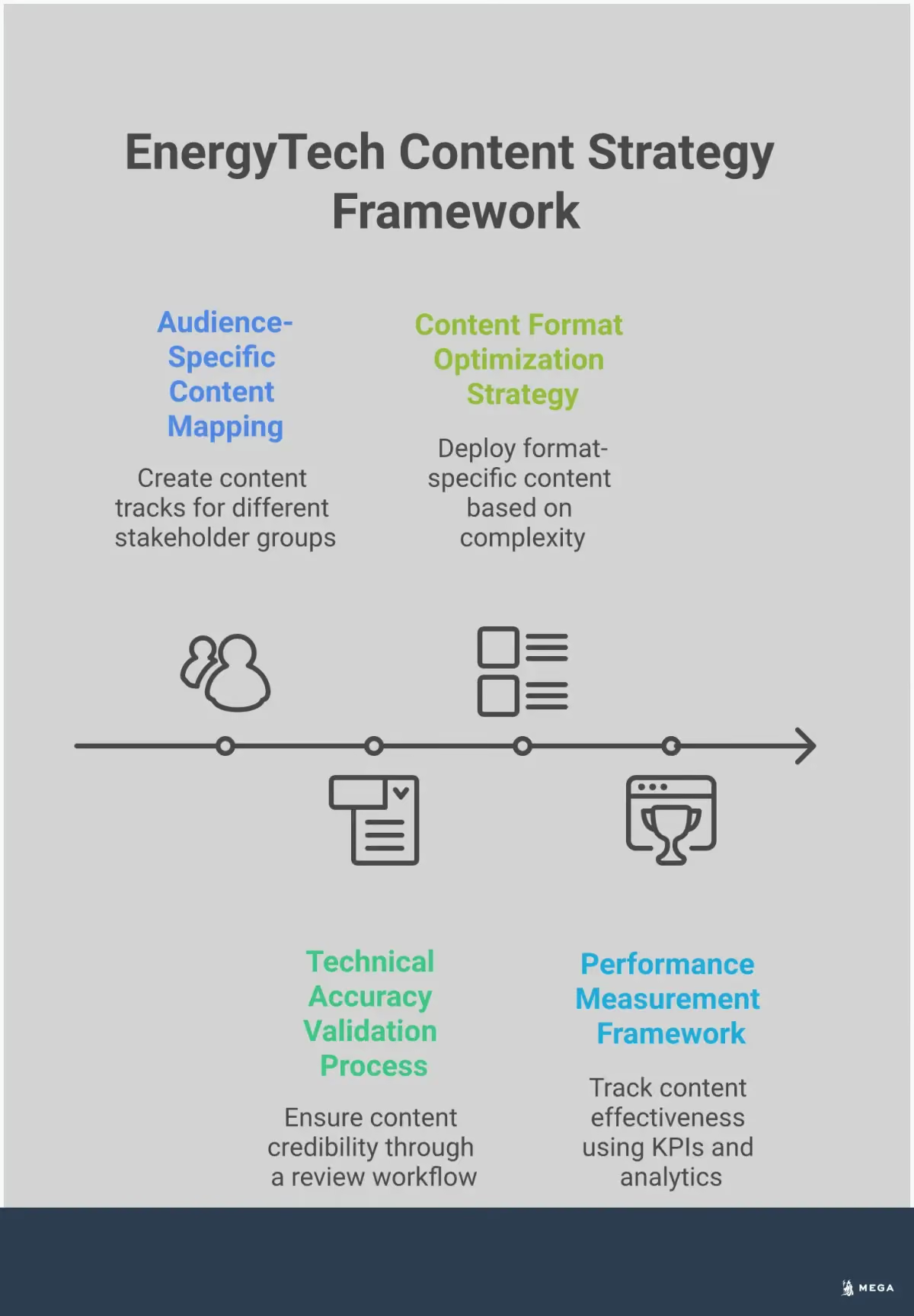
Build Your EnergyTech Content Framework
A content plan is your roadmap for turning sporadic blog posts into a consistent, growth-driving engine. It helps you systematically build authority, attract qualified leads, and educate your market. The goal is to create a clear, repeatable process that aligns every piece of content with your business objectives, ensuring your efforts are focused and measurable. A solid plan defines your core topics, the types of content you’ll create, and the workflow for getting it done.
Establish Your Core Content Pillars
Content pillars are the main themes your brand will own. Think of them as three to five core subjects directly related to your expertise and your audience’s needs. For an EnergyTech company, these could be Renewable Energy Innovation, Grid Modernization, or Sustainable Business Practices. Every piece of content should support one of these pillars. Your pillars should be guided by a value-first approach that prioritizes your audience. Focus on topics where you can provide unique insights and establish your company as a thought leader. This helps you build a deep and authoritative library of content.
Select the Right Mix of Content Formats
Once you have your pillars, decide on the formats you’ll use. Different formats serve different purposes and appeal to different audience preferences. A good strategy uses a mix of content types to keep your audience engaged. Consider organizing your work into three categories of high-value content:
- Actionable Content: Practical, how-to guides that help your audience solve a specific problem, like checklists for improving energy efficiency.
- Aspirational Content: Inspiring pieces that show what’s possible, such as case studies or thought-leadership articles.
- Analytical Content: Data-driven content that provides deep insights, like white papers or industry reports.
Create a Process You Can Scale
Consistency is key, and a framework makes it achievable. A content creation framework is a repeatable plan that outlines how you produce content from idea to publication. It should cover four key stages:
- Ideation: Document how you’ll find and validate topics, using keyword research and customer questions.
- Production: Define roles and responsibilities for writing, visuals, and final approval.
- Distribution: Plan how you’ll promote each piece of content.
- Measurement: To ensure your efforts are effective, you need a measurable approach. Decide which metrics matter most, whether it’s website traffic, lead generation, or engagement.