
Writing clear, concise, and engaging content is essential for connecting with your audience and ranking well in search engines. One of the most effective ways to achieve this is by mastering the use of active voice. Active voice makes your writing more direct and dynamic, while passive voice can sometimes sound clunky and indirect. Understanding the difference between the two is key to writing impactful content. This post will guide you through the nuances of active and passive voice, explain why active voice is generally preferred, and provide practical tips to change sentence from passive to active. We'll also explore the impact of active voice on SEO and readability, helping you create content that both readers and search engines will love.
Key Takeaways
- Write with impact using active voice: Direct, action-oriented sentences make your content clearer and more engaging for readers.
- Understand when passive voice is appropriate: While active voice is generally preferred, passive voice can be effective in specific situations, such as scientific writing or when emphasizing the action receiver.
- Refine your writing through practice: Regularly reviewing and editing your work, focusing on voice, will help you develop a stronger, clearer writing style.
What Is Active Voice vs. Passive Voice?
Understanding the difference between active and passive voice is key to writing clear, engaging content. It’s a fundamental concept that impacts readability and, as a result, your SEO. Let’s break down each voice and explore why active voice is generally preferred.
What is Active Voice?
In active voice, the subject performs the action. Think "The cat sat on the mat." The cat (subject) is doing the sitting (action). This direct, subject-verb-object structure creates natural, engaging sentences, making your writing easier to understand. Active voice is generally preferred for most writing, from blog posts to marketing copy. It creates a clear connection between the actor and the action.
What is Passive Voice?
Passive voice shifts the focus. The subject becomes the recipient of the action. Using our earlier example, the passive version would be, "The mat was sat on by the cat." The mat (subject) is having the sitting done to it. Notice how the action itself ("was sat on") becomes the focus, while the actor (the cat) is tucked away at the end. Passive voice can sound clunky and less direct. It adds unnecessary words and can make your writing feel less impactful.
Key Characteristics of Active and Passive Voice
Here's a quick comparison:
- Active: Subject performs the action. Example: "The dog chased the ball." The structure is clear: subject (dog), verb (chased), object (ball). The sentence is concise and easy to visualize.
- Passive: Subject receives the action. Example: "The ball was chased by the dog." The structure changes: object (ball), verb ("was chased"), subject (dog). Passive sentences often use a form of "to be" (is, are, was, were) plus a past participle. This structure emphasizes what happened to the subject, not who did it. Sometimes, the actor isn't even mentioned: "The ball was chased." This can create ambiguity and make your writing less engaging.
How to Find Passive Sentences
Identifying passive voice is the first step in making your writing clearer and more engaging. Look for sentences where the subject receives the action instead of performing it. For example, in "The ball was thrown by the pitcher," the ball (the subject) receives the action. In the active voice, the subject performs the action: "The pitcher threw the ball." This seemingly small shift makes a big difference in how readers experience your content.
Common Passive Voice Indicators
A key indicator of passive voice is a form of the verb "to be" (is, are, was, were, been) combined with a past participle (e.g., thrown, eaten, written). "The cake was eaten" is passive; "Someone ate the cake" is active. Another common sign is the "by" phrase, often indicating the actor in a passive sentence, like "The ball was thrown by the pitcher." Recognizing these common passive voice indicators helps you spot passive voice and begin revising. MEGA SEO's automated content analysis tools can also help identify areas where passive voice might be weakening your writing. Schedule a demo to see how it works.
Tricky Passive Constructions
Sometimes, passive voice is harder to spot. The actor might be missing entirely ("Mistakes were made"), or the verb form might be irregular. Be mindful of sentences where the action receiver appears to be doing something, but the true action is unclear. For example, "The report was reviewed" is passive. Who reviewed it? Keeping the subject clear is crucial for direct and impactful writing. Also, watch out for situations where changing to active voice could unintentionally alter the meaning. If the original emphasis is on the action receiver, passive voice might be the better choice. Consider using MEGA SEO's free tools to analyze your content and identify areas for improvement.
Why Use Active Voice?
Active voice offers several benefits that can significantly improve your writing. It makes your content clearer, more engaging, and easier for readers to understand. Let's explore the key reasons why you should make active voice your go-to choice.
Write Clearly and Directly
Active voice presents information in a straightforward way. The subject performs the action, creating a direct connection between the actor and the verb. This clarity makes your writing more natural and engaging, as highlighted in Professor Scott's guide to active and passive voice. Readers can quickly grasp the meaning of your sentences without having to mentally rearrange the information. This directness is especially valuable in online content, where readers often skim and scan for information. Clear writing also improves accessibility for people using screen readers or those with cognitive differences.
Engage Readers
Active voice brings your writing to life. When the subject actively performs the action, it creates a sense of movement and immediacy. This dynamic style keeps readers interested and encourages them to continue reading. Conversely, passive voice can sometimes feel distant and impersonal, potentially leading to reader disengagement. As our own MEGA SEO guide explains, active voice is generally the more engaging choice. Think of it like a conversation: active voice is direct and personal, while passive voice can feel like someone talking around the subject.
Write Strong, Concise Prose
Active voice naturally leads to more concise writing. By directly stating who does what, you eliminate unnecessary words and phrases that often clutter passive constructions. This conciseness strengthens your prose and makes your writing more impactful. The Montana State University Writing Center emphasizes this benefit, noting that active voice is generally clearer and easier to understand. Shorter, more direct sentences are also easier to read and process, which is crucial for online content consumption. Concise writing helps readers quickly find the information they need, improving their overall experience with your content.
Change Passive to Active Voice: A Step-by-Step Guide
Let's break down how to rewrite passive voice sentences into active voice.
Find the True Subject
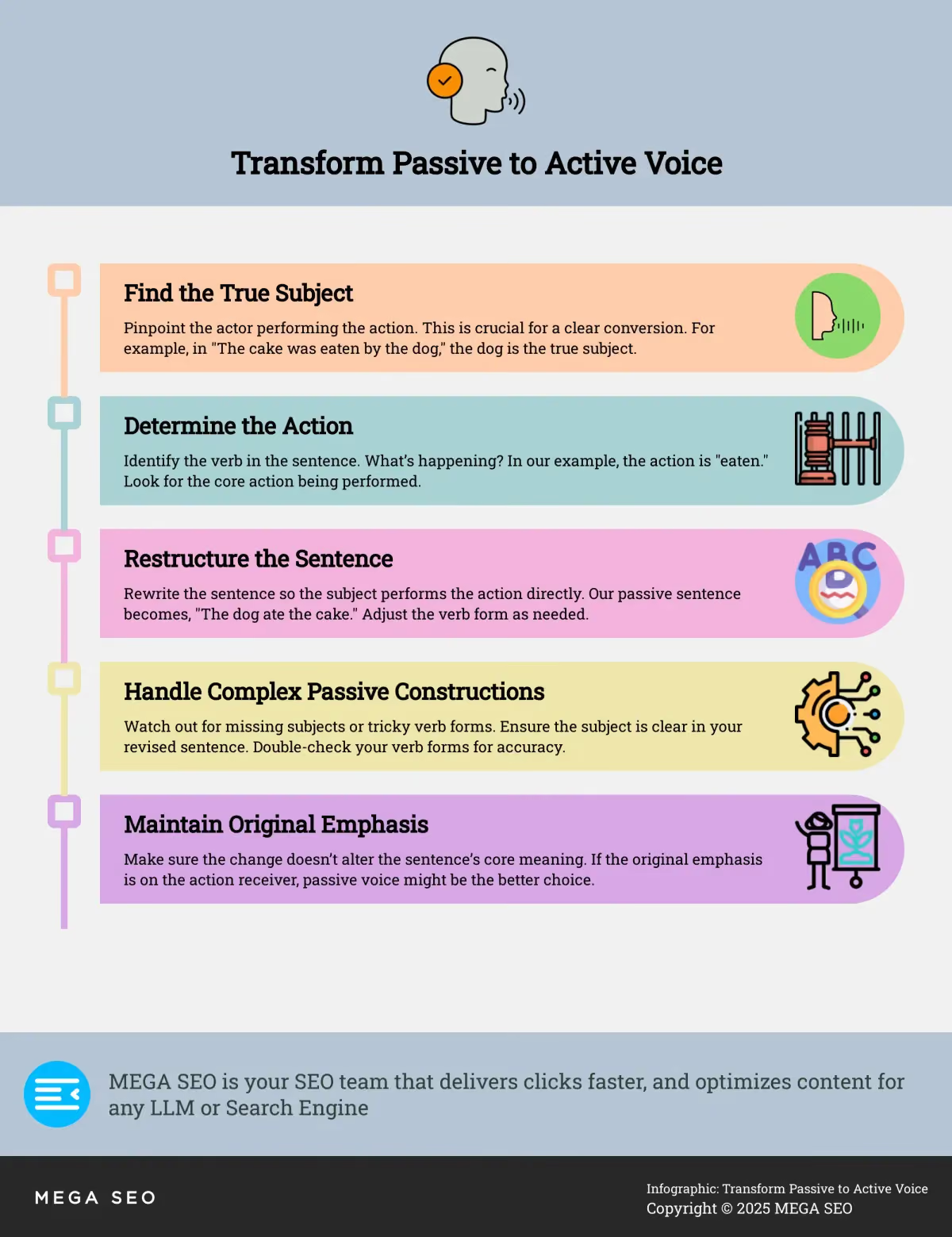
First, pinpoint the true subject of the sentence—the entity performing the action. One common mistake is misidentifying the subject, so make sure you've found the actor. For example, in "The cake was eaten by the dog," the dog is the true subject. Accurately identifying the subject is crucial for a clear, concise conversion.
Determine the Action
Next, identify the action or verb in the sentence. What's happening? In our example, the action is "eaten." Sometimes, the action might be hidden within a more complex verb phrase. Look for the core action being performed. This identification is your second step.
Restructure the Sentence
Now, rewrite the sentence so the subject performs the action directly. Our passive sentence becomes, "The dog ate the cake." Notice how much more direct the active voice is. You'll often need to adjust the verb form as you rewrite the sentence. Active voice keeps your writing concise.
Handle Complex Passive Constructions
More complex passive constructions might have a missing subject or tricky verb forms. Watch out for these. Always ensure the subject is clear in your revised sentence. Double-check your verb forms for accuracy. And, most importantly, make sure your changes don't alter the original meaning. Keep it clear. Reviewing these rules will help you avoid common pitfalls.
Common Voice Challenges
Changing sentences from passive to active voice can sometimes be tricky. Here are a few common challenges and how to overcome them:
Deal with Unknown or Unimportant Actors
When converting from passive to active voice, the object of the sentence becomes the subject. This can be challenging when the actor is unknown or unimportant. For example, "The cake was eaten." Who ate the cake? We don't know. In these cases, you might need to rephrase. You could write, "Someone ate the cake," or if the actor truly is irrelevant, you can keep the sentence passive. Sometimes, maintaining clarity is more important than forcing active voice. For more information on passive to active voice conversions, check out this resource.
Maintain Original Emphasis
Make sure the change doesn't alter the sentence's core meaning. It's important to keep the focus of the sentence intact when converting. For example, "The ball was thrown by John" emphasizes the ball, while "John threw the ball" emphasizes John. If you want to highlight the ball, keeping the passive voice might be the better choice. This guide to active and passive voice rules might be helpful.
Address Style
Active voice helps your sentences sound more natural, engaging, and direct. However, overuse can lead to a monotonous style. Think of it like using too much salt in a recipe—a little enhances the flavor, but too much ruins the dish. It's essential to balance the use of both voices to enhance the overall quality of your writing. Varying your sentence structure keeps your writing fresh and dynamic. This resource offers guidance on converting passive to active voice.
Practice Voice Conversion: Tools and Techniques
Switching from passive to active voice takes practice. Luckily, several tools and techniques can help you hone your skills.
Use Grammar Checkers and Writing Assistants
Grammar checkers and writing assistants, like those from MEGA SEO, can be invaluable for flagging passive voice and suggesting revisions. Many word processors also have built-in grammar checkers that identify passive voice. While these tools are helpful, remember that they aren't perfect. Sometimes, passive voice is the best choice, so use your judgment when deciding whether to accept a suggested change. Consider MEGA SEO's Maintenance Agent for automated content improvements, including checks for passive voice.
Strengthen Active Voice Skills with Exercises
The best way to master active voice is to practice converting passive sentences to active voice. You can find exercises online or create your own using sentences from your writing. Pay attention to common pitfalls like unclear subjects and incorrect verb forms. As you practice, you'll develop a stronger sense of when and how to use active voice effectively.
When to Use Passive Voice
While active voice is generally preferred for clear and engaging content, passive voice has its place. Understanding these nuances will help you make informed decisions about voice and write effectively for different situations.
Scientific and Academic Writing
In scientific writing, the passive voice is sometimes used to emphasize the research process over the researcher. For example, "The experiment was conducted over three months" places the focus on the experiment itself. Historically, passive voice was more common in scientific fields to maintain a sense of objectivity, but many journals now prefer active voice. Always check the specific guidelines of the publication you’re submitting to.
Emphasize the Action Receiver
Passive voice is also useful when the person or thing performing the action is unknown or unimportant. If you want to highlight the action's recipient, the passive voice can help shift the sentence's focus. For instance, "The building was demolished" emphasizes the building's fate, not who demolished it. This can be particularly effective in news reports or when discussing sensitive topics. Consider passive voice when the actor is truly irrelevant to the information you're conveying.
Diplomatic and Political Language
Diplomatic and political contexts often require a neutral tone, and passive voice can help achieve this. Phrases like "Mistakes were made" avoid assigning direct blame, allowing for a more diplomatic approach. Passive voice can also smooth sentence flow and create conciseness when the actor is irrelevant. Review diplomatic language examples to see how passive voice contributes to a neutral tone.
Tips for Writing in Active Voice
Switching from passive to active voice strengthens your writing. These tips make it easier to identify areas for improvement and polish your prose.
Choose Action Verbs
Active voice relies on strong action verbs. Instead of saying "The cake was eaten by the dog," use a more direct verb like “devoured”: "The dog devoured the cake." Adjusting the verb form to fit active voice energizes your sentences.
Mind Your Sentence Structure
Pay attention to sentence structure. Clearly identify the subject—the one performing the action. One common mistake when converting passive sentences to active voice is failing to correctly identify the subject. Practicing this conversion is one of the best ways to master active voice.
Self-Edit Regularly
Review your writing specifically looking for passive voice. Even experienced writers can slip into passive voice, so regular self-editing is key. Watch out for sentences using forms of "to be" with past participles. Keep your subject clear and double-check your verb forms. Most importantly, ensure your edits don't change the meaning of your sentences.
How Active Voice Impacts SEO and Readability
Active Voice and SEO
Active voice significantly improves the clarity and engagement of your writing, which positively affects SEO. Search engines appreciate content that's easy for people to read and understand. As Google’s documentation explains, search quality raters consider “clear writing” a key factor when evaluating content. Active voice contributes to this clarity by presenting information directly. This directness helps search engines quickly grasp the meaning of your content, potentially improving your search ranking. Additionally, active voice can make your content more shareable. When readers find your content engaging and easy to digest, they're more likely to share it on social media and link back to your site. These social signals and backlinks are valuable ranking factors that search engines use to determine the authority and relevance of your content. Learn more about converting passive voice to active voice in our comprehensive guide.
Improve UX Through Clear Writing
Active voice improves user experience (UX) by making your content more concise and easier to understand. When you use active voice, you directly state who is performing the action. This eliminates ambiguity and reduces the mental effort required for readers to process information. Clear writing, facilitated by active voice, allows readers to quickly find the information they need and understand your message. This positive UX can lead to increased time spent on your site, lower bounce rates, and higher conversion rates. By making your content more accessible and enjoyable to read, you create a better experience for your users, which can indirectly benefit your SEO. For beginners looking to improve their English writing skills, practicing the conversion of passive sentences into active voice is a valuable exercise. Purdue OWL® also offers helpful information on switching from passive to active voice.
Frequently Asked Questions
Why is active voice preferred for SEO? Active voice makes your writing clearer and more engaging, which search engines value. Readers can quickly understand your content, leading to a better user experience and potentially higher search rankings. Clear content also tends to be more concise, which improves readability.
How can I identify passive voice in my writing? Look for sentences where the subject receives the action rather than performing it. Watch for forms of "to be" (is, are, was, were) combined with past participles (e.g., eaten, written). Phrases like "by the" can also indicate passive voice. Consider using grammar checkers or MEGA SEO's tools to help identify passive voice.
Is passive voice always bad? Not necessarily. Passive voice can be effective in scientific writing to emphasize the research process, or when the actor is unknown or unimportant. It can also create a more neutral or diplomatic tone. Use your judgment and consider the specific context of your writing.
What's the easiest way to change passive voice to active voice? Identify the actor performing the action, determine the action itself, and then restructure the sentence so the actor directly performs the action. For example, "The ball was thrown by John" becomes "John threw the ball."
How can MEGA SEO help me improve my writing and SEO? MEGA SEO offers tools to analyze your content, identify areas for improvement (including passive voice), and even automate content updates. Our platform can help you create clear, engaging content that ranks well in search results. Check out our free tools or schedule a demo to learn more.