
Stagnant website traffic and social media posts that fall flat are frustrating symptoms. But they aren't the real problem. They are signs of a deeper issue: poor brand visibility. Your business might be blending into the digital noise, making it easy for potential customers to scroll right past. This happens when your strategy isn't built for how people actually discover and trust brands today. This article breaks down the root causes of this invisibility and provides a clear, actionable plan to ensure your marketing efforts start delivering real results.
Key Takeaways
- Show up where your customers are: The path to a purchase is no longer a straight line, so your brand needs a consistent presence across multiple channels to build the familiarity required for a sale.
- Unify your organic and paid strategies: SEO builds long-term trust while paid ads provide immediate visibility. Using them together ensures your brand is present and helpful throughout the entire customer journey.
- Let AI handle the heavy lifting: AI agents can manage the time-consuming tasks of content creation and ad optimization, allowing small businesses to maintain an effective online presence without a huge budget or time commitment.
What is Brand Visibility? (And What It's Not)
Before we can fix the problem of being invisible, we need to be clear on what we're aiming for. Brand visibility is, in its simplest form, how often your target audience sees your brand. It’s about showing up in the places they look, whether that’s on a Google search results page, in their social media feed, or on a local directory. Think of it as the digital equivalent of having a storefront on a busy street versus being tucked away in a quiet alley. It’s the foundational step you must get right before anything else in your marketing can work effectively.
However, being seen is only part of the equation. A true online presence is built on three distinct pillars: visibility, awareness, and perception. While they are all connected, they are not the same thing. Confusing them can lead you to focus on the wrong metrics and miss key opportunities to build a brand that people not only see but also know, like, and trust. Understanding the difference is the first step toward creating a marketing strategy that builds a lasting connection with your customers.
Brand Visibility vs. Brand Awareness: Seeing vs. Knowing
The easiest way to separate these two concepts is to think of it as seeing versus knowing. Brand visibility is purely about exposure. It’s a measure of how frequently your brand appears in front of potential customers. You can directly influence this through SEO, paid advertising, and social media activity. When your website ranks on the first page of Google for a relevant keyword, that’s visibility. Brand awareness is the next step; it’s what happens when that visibility leads to recognition. It’s when a customer sees your logo and not only recognizes it but associates it with what you do or sell. Visibility is the cause; awareness is the effect.
Don't Forget Brand Perception: How People Feel About You
If visibility is being seen and awareness is being known, then brand perception is about how people feel about you. This is the most nuanced and arguably the most important of the three. Perception is shaped by every single interaction a customer has with your business—from the quality of your products to the helpfulness of your customer service. While you can buy visibility with ad spend, you have to earn a positive perception. A strong, positive perception means customers trust you and are more likely to choose you over a competitor, even if that competitor has similar visibility.
Why Your Brand Is Invisible Online (And It's Not What You Think)
If you feel like you’re creating content and launching campaigns into a void, you’re not alone. Many small businesses struggle to get noticed online, but the reason often isn't a lack of effort. The problem is that the digital landscape has fundamentally changed, and the old rules for gaining visibility no longer apply. Customer behavior has evolved, attention has become the most valuable currency, and the algorithms that control what people see are in constant flux.
Understanding why brands become invisible starts with accepting a new reality about how customers discover and connect with businesses. It’s not a simple, linear path anymore. It’s a complex web of interactions, and to become visible, you need to show up consistently and meaningfully at every turn. This section will break down the core reasons your brand might be getting lost and why traditional approaches often fall short.
What Does Modern Online Shopping Look Like?
The first step to becoming more visible is to understand how potential customers are actually making decisions. The idea of a straightforward path from discovery to purchase is a relic of the past. Today’s buyer's journey is fragmented across multiple channels and devices, requiring a more sophisticated approach to marketing. People gather information from a wide variety of sources before they even consider making a purchase. They might see an ad on social media, search for reviews on Google, ask for recommendations in a community forum, and visit your website multiple times. Your brand needs to be present and consistent across these different touchpoints to build the trust necessary to win a customer.
Understanding the 94.4% Rule in E-commerce
Think about the last time you bought something that wasn't an impulse purchase. You likely didn't see a single post and immediately click "buy." Instead, you probably saw the brand in a few different places. Research shows that 94.4% of purchase journeys involve multiple touchpoints. A customer might first discover you through a Google search, see a retargeting ad on Instagram a few days later, and then read a blog post before finally deciding to make a purchase. If your brand only exists on one platform or your efforts are sporadic, you’re missing out on the vast majority of potential customers who need to see you multiple times before they trust you enough to buy.
Mapping the Twists and Turns of the Buyer's Journey
The modern customer journey is less like a funnel and more like a maze. A potential buyer might move forward by visiting your pricing page, then step back to read third-party reviews, and then move sideways to compare you with a competitor. They are in complete control, gathering information at their own pace. This non-linear path means your brand must provide value at every stage, not just when you think someone is ready to buy. Your content needs to answer questions, solve problems, and build credibility, ensuring that whenever a potential customer is looking for information, your brand is there with a helpful answer.
Why Even Great Brands Get Lost in the Noise
The internet is crowded. Every day, millions of blog posts, social media updates, and videos are published, all competing for a limited amount of audience attention. In this environment, it’s incredibly easy for a brand’s message to get lost. Invisibility isn't just about not producing content; it's about producing content that doesn't connect, doesn't stand out, and doesn't adapt to the platforms where it's being shared. Many businesses fall into common traps that render their marketing efforts ineffective, making them just another drop in an ocean of digital content. Understanding these pitfalls is the first step toward correcting your course and making your brand heard.
When Your Content Becomes Part of the Clutter
It sounds counterintuitive, but simply creating more content isn't the answer to invisibility. The internet is already saturated with low-quality, generic articles and posts. This content overload means that audiences have become highly selective about what they consume. If your content doesn't offer a unique perspective, solve a specific problem, or provide genuine value, it will be ignored. The key isn't volume; it's relevance and quality. A single, well-researched blog post that perfectly addresses a customer's pain point is far more valuable than ten generic articles that say nothing new. Focusing on quality over quantity ensures your content has a better chance of cutting through the noise.
Are You Shouting into the Void with "Billboard" Marketing?
Many brands treat their online platforms like digital billboards. They broadcast promotional messages, talk about their products, and then wonder why no one is engaging. This "post and pray" approach fails because it ignores the social nature of these platforms. People are there to connect, learn, and be entertained, not to be sold to constantly. Effective marketing involves a two-way conversation. It means creating and engaging with content to build relationships. Ask questions, respond to comments, and share content that is genuinely helpful or interesting to your audience, even if it doesn't directly promote your product. This shifts the dynamic from a monologue to a dialogue, which is essential for building a loyal community.
How Social Media Algorithms Can Hide Your Brand
The platforms you use to reach your audience, like Google and Meta, are controlled by complex algorithms that decide what content gets seen. These algorithms are constantly changing, and strategies that worked six months ago might be ineffective today. For example, a platform might shift its focus to prioritize video content or favor posts that generate meaningful conversations. Brands that don't adapt to these changes quickly become invisible. Staying visible requires you to be agile, pay attention to what's working on each platform, and adjust your strategy accordingly. This means you can't just set your marketing on autopilot and expect consistent results.
Is Your Brand Invisible? Here Are the Warning Signs
It can be difficult to objectively assess your own brand's visibility. You see the effort you're putting in, but that doesn't always translate to what your audience sees. Fortunately, there are clear warning signs that indicate your message isn't reaching or resonating with your target customers. These signals go beyond simple vanity metrics like follower counts. They are about genuine engagement, traffic, and the impact your online presence is having on your business goals. Recognizing these signs early allows you to diagnose the problem and make the necessary changes before you waste more time and resources on a failing strategy.
The 59% Problem: Why Your Key Messages Aren't Landing
According to research, 59% of people state that most of the marketing messages they receive are not relevant to them. If your engagement rates are low, your emails go unopened, and your ads have poor click-through rates, you are likely part of this statistic. This is a clear sign that your messaging is not aligned with your audience's needs or interests. Invisibility isn't just about not being seen; it's about being seen and then immediately dismissed as irrelevant. To fix this, you need to gain a deeper understanding of your audience and tailor your content to address their specific challenges and desires, ensuring your message is one they actually want to receive.
Red Flags That Your Content Strategy Needs a Rethink
Beyond low engagement, there are other clear indicators that your brand is invisible. A stagnant or declining number of website visitors from organic search is a major red flag for your SEO efforts. If your social media follower count isn't growing or your posts receive minimal comments and shares, your content isn't resonating. Another sign is a lack of unprompted customer feedback or online reviews; if people aren't talking about you, they likely aren't thinking about you. Finally, if you're failing to track results, you're flying blind. Without data, you have no way of knowing what's working and what's not, making it impossible to improve.
Where Old-School Marketing Tactics Fall Short Online
For small businesses, the traditional approaches to marketing are often a poor fit for the modern digital landscape. The methods that once worked, or that seem to work for large corporations, can quickly drain resources without delivering meaningful results. Whether it's the high cost of entry, the inconsistency born from a lack of time, or the impersonal nature of outdated automation, these conventional strategies frequently fail to build the authentic connections needed to become visible online. Recognizing the limitations of these approaches is crucial for any business looking to make a real impact without a massive marketing budget.
The Dangers of Impersonal, Robotic Automation
Marketing automation can be a powerful tool, but it can also make a brand feel robotic and impersonal if not used correctly. Many older or simpler automation tools focus on broadcasting generic messages to large segments of an audience. This approach lacks the personalization that modern consumers expect. Customers want to feel seen and understood, not like they are just another number on an email list. Effective marketing requires a balance between the efficiency of automation and the authenticity of a human touch. Your strategy should allow for genuine, one-on-one interactions and personalized content that speaks directly to the individual needs of your customers.
Why a "Sometimes" Marketing Strategy Doesn't Work
For a small business owner, marketing is often just one of many hats you have to wear. It's easy for it to get pushed to the back burner when more urgent tasks come up. The knowledge base for MEGA AI notes this pain point, stating, "Everyone is overloaded and marketing keeps getting deprioritized." This leads to inconsistent efforts, like posting on social media for a week and then going silent for a month. In the fast-paced digital world, inconsistency is a recipe for invisibility. Algorithms favor active accounts, and audiences forget brands that don't show up regularly. To stay top-of-mind, you need a consistent presence, which can feel impossible when you're already stretched thin.
Is Your Traditional Agency Delivering Real Value?
Many small businesses know they need help with marketing but are priced out of the traditional agency model. As noted in our research, "Traditional agencies charge $5,000-$20,000/month," making them inaccessible for most startups and local businesses. This cost barrier often forces business owners to either attempt a DIY approach they don't have time for or to do nothing at all. This leaves a significant gap in the market, where businesses need expert-level strategy and execution but cannot afford the high retainers of a conventional agency. This financial roadblock is one of the biggest contributors to brand invisibility for small businesses.
A Deep Dive into Modern Shopping Habits
If getting a new customer were as simple as them seeing one ad and immediately clicking "buy," you probably wouldn't be reading this. The reality is that the path from discovery to purchase has become incredibly complex. People no longer follow a straight line; they wander, research, and interact with brands across dozens of different platforms and moments before ever making a decision.
Understanding this new digital landscape is the first step to becoming more visible. Your brand needs to show up consistently wherever your potential customers are spending their time. If you’re only focused on one channel, like your Instagram profile or your website’s blog, you’re missing the vast majority of opportunities to connect with people and guide them toward a sale. This scattered journey is precisely why so many small businesses feel like they’re shouting into the void.
What Is the 94.4% Rule and Why Does It Matter?
Let’s start with a powerful statistic: 94.4% of all purchase journeys involve multiple touchpoints. This means that almost every single customer interacts with your brand in several different ways before they decide to buy. They might first discover you through a Google search, see a targeted ad on Facebook a few days later, read a few online reviews, and then finally visit your website directly to make a purchase.
Each of these interactions is a "touchpoint." Relying on just one is like expecting someone to find your store with only one landmark for guidance. To become visible, you need to create a map of touchpoints that lead customers to you, ensuring your brand is present at each critical step of their decision-making process.
The Modern Buyer's Journey: A Winding Path
The modern buyer's journey is anything but linear. It’s a winding path where customers are constantly browsing, evaluating options, and switching between platforms. Someone might see your product on their phone during their lunch break, get distracted, and then pick up their search again a week later on their laptop. If your brand isn't there when they resume their search, a competitor will be.
This is where so many businesses become invisible. They fail to maintain a presence across the entire journey. To stay top-of-mind, you need a strategy that combines consistent organic visibility from SEO with the targeted reach of Paid Ads. This ensures that no matter which detour a potential customer takes, your brand is there to meet them.
Common Pitfalls That Reduce Brand Visibility
It’s easy to feel like you’re shouting into a void. You create content, post on social media, and maybe even run a few ads, but the response is minimal. This isn't a sign of failure; it's a symptom of a crowded and complex digital world. The old playbook of simply having a website and a social media profile is no longer enough to guarantee visibility. The internet has become incredibly noisy, and the way people discover and interact with brands has fundamentally changed. For small businesses and local shops, this means the effort required to get noticed has grown exponentially.
Brands often become invisible for a few key reasons that have little to do with the quality of their products or services. First, the sheer volume of content makes it difficult for any single message to stand out. Your potential customers are constantly bombarded with information. Second, many businesses still use an outdated, one-way communication style that doesn't resonate with modern audiences who expect interaction. Finally, the algorithms that control what gets seen are designed to reward specific types of engagement, leaving many brands behind. Understanding these challenges is the first step toward building a presence that actually connects with customers.
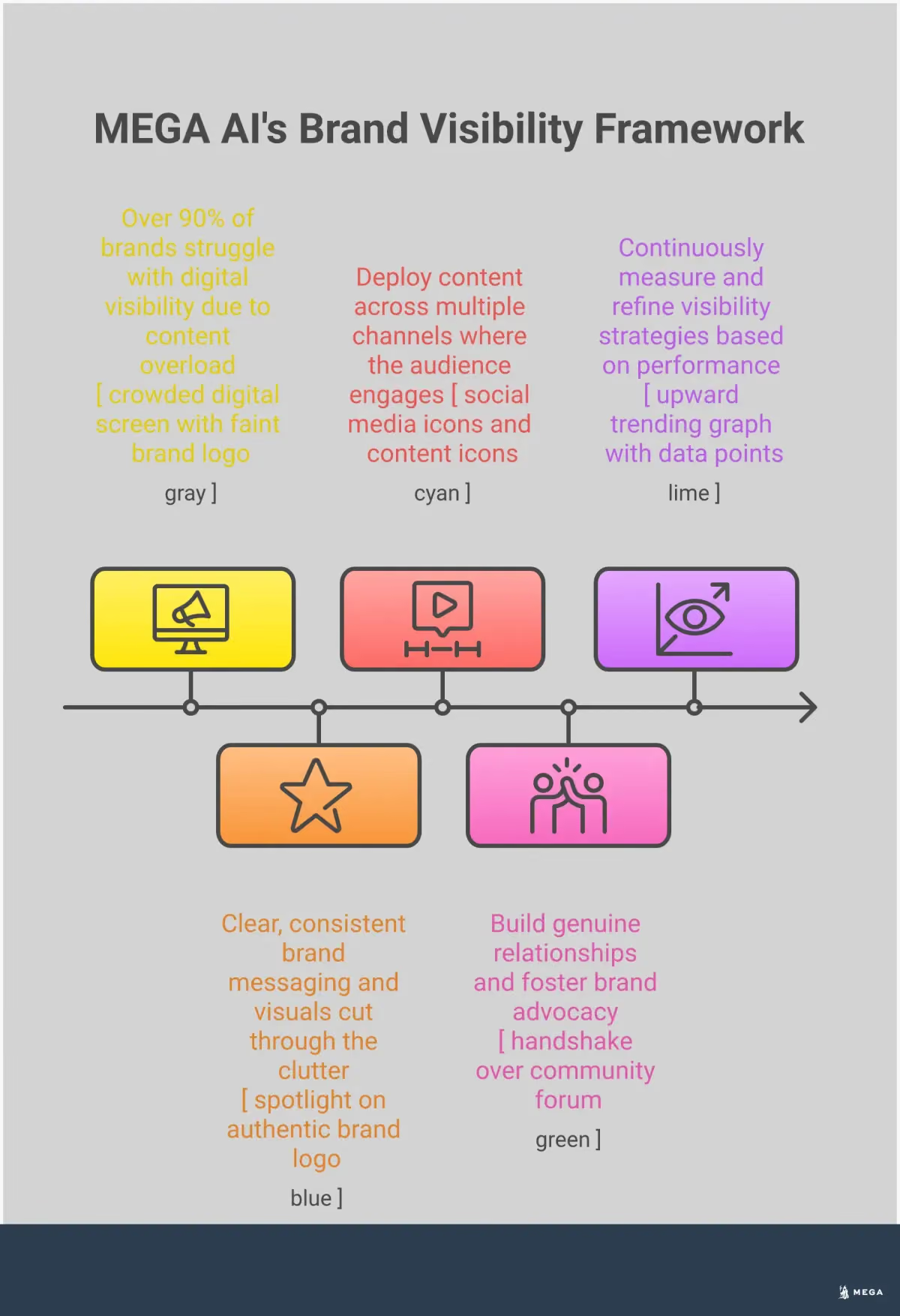
How Content Overload Can Hurt Your Brand
People are tired. They face a constant stream of information from emails, social media feeds, and search results. This has led to a kind of digital exhaustion, where audiences are overwhelmed by the sheer volume of content available. As marketing expert Neil Patel explains, this environment means that simply producing more content isn't the answer. Adding to the noise only makes your brand part of the problem.
To get noticed, your content needs to be a solution, not just more information. It must be genuinely helpful, interesting, or entertaining. The goal is to create something that offers real value and earns a person's attention, rather than just asking for it.
Moving Beyond the "Billboard" Approach to Marketing
Many brands treat their online presence like a digital billboard. They post an image, write a caption about their product, and hope for the best. This approach fails because it’s a one-way broadcast in a world that demands a two-way conversation. Social media and search are interactive spaces where people look for connection and answers, not just advertisements.
If your strategy is limited to showing up in one place with a single, sales-focused message, you will remain invisible. This billboard mentality ignores the user’s needs and context. Instead of just talking at your audience, you need to create content that invites them into a conversation and builds a relationship based on more than just a transaction.
Working With (Not Against) Social Media Algorithms
The platforms you rely on, from Google to Instagram, use complex algorithms to decide what content to show users. These systems prioritize one thing above all else: engagement. Content that gets likes, comments, shares, and clicks is shown to more people. Content that doesn't is quickly buried. This creates a challenging cycle for many small businesses. Without initial engagement, your visibility drops, making it even harder to get future engagement.
To succeed, you need a strategy that consistently creates content that truly engages. This means understanding your audience, experimenting with different formats, and adapting quickly to what works. It requires a deep understanding of how search and social platforms operate, which can be a full-time job in itself.
A Checklist to Assess Your Online Brand Visibility
You’re putting in the work. You’ve set up social media profiles, maybe you’ve written a few blog posts, and you’re trying to get your name out there. But when you look at your analytics, the numbers are flat. You’re not getting the calls, clicks, or customers you expected. It’s a frustrating feeling, and it often leaves business owners wondering if they’re just shouting into the void. The truth is, online invisibility isn't just about having zero traffic. It’s about being present but not seen. It’s about blending into the background noise so well that potential customers scroll right past you without a second thought.
The digital landscape has changed. The old methods of simply posting content and hoping for the best no longer cut it. Attention has become the most valuable currency online, and algorithms are constantly shifting the goalposts. This means that even if you're creating high-quality content, it might not reach the right people at the right time. The challenge isn't just about being found on Google; it's about being remembered in a sea of endless posts, videos, and ads. So, how can you tell if your efforts are falling flat? It starts with recognizing the subtle signs that your brand isn't connecting with your audience. Your message might be getting delivered, but that doesn't mean it's being received. Let's look at a few key indicators that your brand might be invisible to the people you want to reach.
Decoding the 59% Problem in Audience Engagement
One of the clearest signs of invisibility is when your audience tunes you out because they mistake your content for a generic ad. Research shows that 59% of people have deleted or ignored an important message because they thought it was an advertisement. Think about that for a moment. Even if you’re sharing helpful advice or a genuinely valuable offer, your audience may dismiss it before they even read it. This happens when your content follows predictable marketing formulas that people have been trained to ignore. If your messages aren't breaking through the noise, you’re not just invisible; you’re actively being disregarded.
Is Your Content Strategy Working? Key Metrics to Watch
A failing content strategy is a direct path to online invisibility. If you’re not sure whether your approach is working, here are a few warning signs to look for. First, if you’re only showing up in one place with one type of message, you’re easy to miss. A strong online presence requires being active across multiple platforms where your audience spends their time. Second, if your strategy is to "post and pray," you’re likely falling behind. Simply publishing content without a plan for distribution or engagement is no longer effective. Finally, look at your engagement. Content is meant to build relationships, so if no one is commenting, sharing, or responding, it’s a clear sign your message isn't resonating.
The Limitations of Traditional Marketing in a Digital World
If you feel like you’re putting effort into marketing with little to show for it, you’re not alone. Many small businesses find that traditional playbooks no longer deliver the results they once did. The digital landscape has shifted, and strategies that used to work now struggle to cut through the noise. The issue isn't a lack of effort; it's that the rules of the game have fundamentally changed.
Common approaches often fall short for a few key reasons. They can lack a personal connection, suffer from inconsistency, or simply be too expensive for a small business to sustain. Understanding these pitfalls is the first step toward building a marketing strategy that actually gets you seen by the right people.
Finding the Balance Between Automation and Authenticity
Automation can be a powerful tool, but when it’s used to simply blast generic messages, it contributes to the digital noise that customers are trying to tune out. People are tired of seeing the same templated posts and sales pitches. As marketing expert Neil Patel notes, "People are emotionally exhausted... your cute product post isn't cutting through." Your audience craves genuine connection and content that speaks to their actual needs, not just your sales goals. Effective marketing requires a level of brand authenticity that generic automation simply can't replicate. It’s about providing real value and building a relationship, not just scheduling another post.
Why Consistency Is Key to Brand Recognition
Showing up sporadically is almost as bad as not showing up at all. A potential customer might find your blog, then check your social media only to see it hasn't been updated in months. This inconsistency breaks the journey and erodes trust. According to research, "94.4% of purchase journeys are multiple touch points." People interact with your brand across different channels before making a decision. If you’re only active on one platform or post content infrequently, you become invisible for most of that journey. For small business owners who are already stretched thin, maintaining this consistent presence feels nearly impossible, which is why marketing efforts often get deprioritized.
Rethinking the Value of Traditional Marketing Agencies
Hiring a marketing agency can solve the problems of time and consistency, but it comes at a steep price. Quality agencies that focus on building real connections often charge fees that are out of reach for most small businesses. As the team at Atak Interactive explains, a good plan "is like laying the foundation for strong relationships between brands and their audience." This strategic, relationship-focused work is exactly what makes agencies so expensive. When you see agency pricing ranging from $5,000 to $20,000 per month, it’s clear why many entrepreneurs decide to go it alone, leaving them stuck trying to manage a complex marketing strategy with limited resources.
What Does Meaningful Engagement Actually Look Like?
Meaningful engagement is more than just getting likes or views. It’s about building a real connection with your audience. When people feel connected to your brand, they are more likely to trust you, buy from you, and recommend you to others. This kind of engagement turns passive followers into loyal customers and advocates.
Instead of just broadcasting your message, the goal is to start a conversation. It involves creating content that resonates with people on a personal level, addresses their needs, and makes them feel seen and heard. True engagement is a two-way street where you provide value first, long before you ask for a sale. This approach builds a strong foundation for sustainable growth, helping your brand stand out in a crowded digital space.
How to Connect with Your Audience Beyond the Sale
To build a strong relationship with your audience, your content needs to do more than just advertise your products. Think of it as building a friendship. You wouldn't only talk about things you want your friends to buy. Instead, you share stories, offer help, and connect over shared interests. Your brand's content should do the same. Focus on creating posts that entertain, educate, or inspire. When you consistently provide value without asking for anything in return, you build goodwill and trust, making customers more receptive when you do present an offer. This strategy helps you foster strong relationships rather than just pushing for transactions.
The Power of Creating Truly Helpful Content
Understanding what your audience truly needs is the first step to creating content they’ll care about. What are their biggest challenges? What questions do they ask? Your content should provide the answers. By focusing on being genuinely helpful, you position your brand as a trusted expert in your field. For example, a local accounting firm could share tips on managing small business finances, or a hardware store could create short videos on simple home repairs. This type of quality content directly addresses their needs and shows that you care about more than just making a sale.
Why Honesty and Transparency Build Lasting Trust
Trust is the cornerstone of any lasting relationship, and the same is true for your brand and its audience. Being transparent in your communications is essential. This can mean sharing behind-the-scenes looks at your business, being upfront about your pricing, or openly discussing your company's values. When you communicate honestly, you show the human side of your brand, which makes you more relatable and trustworthy. Brands that prioritize transparency find it easier to build a loyal following because customers feel confident in their choice to support a business that operates with integrity.
How to Foster a Community Around Your Brand
One of the most powerful ways to build engagement is to create a community around your brand. Encourage your customers to share their own experiences with your products or services. You can do this by running contests, creating a unique hashtag, or featuring customer photos and stories on your social media channels. This type of user-generated content not only provides you with authentic marketing material but also makes your customers feel like they are a part of something bigger. When customers become advocates, they help spread the word about your brand in a way that feels genuine and trustworthy.
Implement "Surround Sound SEO" to Dominate Search Results
The modern customer journey is scattered across multiple platforms, which means your brand needs to be, too. "Surround Sound SEO" is a strategy built for this reality. Instead of focusing on ranking for just a few keywords on a single search engine, the goal is to appear everywhere your potential customer might look for information. This means your brand should show up in Google search results, YouTube videos, social media discussions, and relevant online forums. The idea is to "create a map of touchpoints that lead customers to you," ensuring your brand is a consistent and helpful presence at every stage of their research. This approach builds familiarity and trust, making your business the obvious choice when it's time to buy.
Executing a strategy this comprehensive can feel overwhelming for a small business. It requires a deep understanding of how different platforms work and a consistent effort to create and distribute content across all of them. This is where technology can level the playing field. Using an AI-powered platform can help you manage a complex SEO strategy by automating keyword research, content creation, and distribution. This allows you to build a powerful, multi-channel presence that keeps your brand visible without requiring a massive marketing team or budget, ensuring you show up wherever your customers are looking.
Leverage Public Relations (PR) to Build Credibility
Public relations isn't just for large corporations with big announcements. For a small business, PR is about earning credibility through third-party validation. This means getting your story featured by journalists, bloggers, or local news outlets. When someone else talks about your brand, it carries more weight than when you talk about yourself. The goal is to "share your brand's story with many people and build trust." A feature in a local publication or a positive mention on a popular industry blog can introduce your business to a new audience and instantly establish you as a credible player in your market.
Getting this kind of coverage is more accessible than you might think. You can start by building relationships with local journalists or using services like Help a Reporter Out (HARO) to find opportunities to be featured as an expert source. The key is to have a compelling story to tell. Think about what makes your business unique, whether it's your origin story, your commitment to the community, or a special way you solve a customer's problem. Sharing that narrative can turn your business into a story people want to hear and share.
Build Trust with Influencer Marketing
Influencer marketing is essentially word-of-mouth for the digital age. It involves partnering with individuals who have an established audience and credibility in a specific niche. The reason it works so well is simple: "People often trust messages from influencers more than from the brand itself." An endorsement from a trusted voice can feel like a recommendation from a friend, which is far more powerful than a traditional advertisement. This approach allows you to tap into a pre-built community and build trust with a new audience almost instantly.
For small and local businesses, the most effective strategy often involves working with micro-influencers. These are individuals with smaller, but highly engaged, followings in a specific area of interest. Their recommendations often feel more authentic and can be more affordable than partnering with a major celebrity. The key is to find influencers whose values and audience align with your brand. Focus on building a genuine partnership where the influencer truly believes in your product, as this will lead to more authentic and effective content.
Turn Customers into Advocates
Some of your most powerful marketers are people who already know and love your brand: your customers and your employees. Turning these groups into active advocates is one of the most authentic and cost-effective ways to increase your visibility. Their genuine enthusiasm can create a ripple effect, introducing your business to new audiences through a trusted source. By encouraging and empowering them to share their positive experiences, you can build a powerful network of support that drives both awareness and sales.
Encourage Employee Advocacy on Social Media
Your employees are a direct link to a network of people who might not know about your brand yet. Encouraging them to share company news, content, and their own positive experiences can significantly extend your reach. This strategy, known as employee advocacy, works because posts from individuals feel more personal and trustworthy than posts from a corporate account. In fact, brands that utilize employee advocacy see "25-40% more engagement" on their content. This approach also offers a genuine look into your company culture, which can help attract both new customers and talented future employees.
The key to a successful employee advocacy program is to make it voluntary and easy. Provide your team with interesting content to share, but also encourage them to add their own voice and perspective. When employees are genuinely proud of where they work and are empowered to share that pride, they become some of your most effective and authentic brand ambassadors.
Launch a Customer Referral Program
A happy customer is your best advertisement. A customer referral program gives them a structured and rewarding way to spread the word about your business. The concept is simple: "Give current customers a reason to recommend your business to others." This could be a discount on their next purchase, a small cash bonus, or a free gift for every new customer they send your way. It’s a win-win situation. Your current customer feels appreciated, and you gain a new customer who is already primed to trust you because the recommendation came from someone they know.
Referral programs are incredibly effective because they leverage the power of trust. A lead that comes from a referral is often more qualified and more likely to convert than one from any other channel. It's a highly cost-effective way to acquire new customers because you only pay for the marketing when it results in a successful sale. Setting up a simple program can turn your satisfied customers into a proactive sales force.
Form Strategic Partnerships and Sponsorships
You don't have to build your audience all on your own. Forming strategic partnerships allows you to tap into the customer base of another, complementary business. The idea is to "team up with other companies" that serve a similar audience but are not direct competitors. For example, a local wedding photographer could partner with a florist, or a gym could collaborate with a healthy meal delivery service. By cross-promoting each other's services, you both gain exposure to a new, highly relevant audience that you might not have reached otherwise.
Another effective approach is through local sponsorships. Sponsoring a community event, a local sports team, or a charity function can get your brand name in front of a large local audience and demonstrate your commitment to the community. These partnerships are powerful because they are built on mutual benefit and shared values, which helps build positive brand association and goodwill.
Generate Buzz with Contests and Giveaways
Contests and giveaways are a fantastic way to generate a burst of engagement and visibility in a short amount of time. The strategy is to "offer prizes to encourage people to share your content." A well-designed contest can quickly go viral as people share it with their friends for a chance to win. The most effective contests are those that encourage user-generated content, such as asking participants to share a photo with your product or use a specific hashtag. This not only spreads the word but also creates a library of authentic content you can use in your future marketing.
To run a successful giveaway, make the entry requirements simple and focused on sharing. For example, you could ask participants to follow your page, like the post, and tag a few friends in the comments. This simple action can dramatically increase the reach of your post. Just be sure that the prize you offer is relevant to your brand to ensure you are attracting followers who are genuinely interested in what you have to offer, not just the free prize.
Get Seen on Important Review Sites
In the digital age, your reputation is often defined by your online reviews. Before making a purchase, many consumers will "check your brand's presence and ratings on important review sites." Platforms like Google Business Profile, Yelp, and other industry-specific sites play a huge role in a customer's decision-making process. A collection of positive reviews can be the deciding factor that convinces a potential customer to choose you over a competitor. These sites are not just for feedback; they are powerful visibility tools in their own right, as businesses with higher ratings often rank better in local search results.
Actively managing your presence on these sites is crucial. Start by claiming your business profiles and ensuring all the information is accurate and up-to-date. Then, make it a habit to encourage your happy customers to leave a review. You can do this with a simple follow-up email or a small sign at your place of business. It's also important to respond to all reviews, both positive and negative. This shows that you value customer feedback and are committed to providing a great experience.
Is Your New Strategy Working? How to Measure Success
Once you've shifted your approach, you need a way to know if it's actually working. Measuring your strategy is about more than just watching your follower count go up. It’s about tracking the right signals that show you’re building real connections and driving business results. A solid plan for measurement helps you understand what resonates with your audience so you can do more of what works and less of what doesn't.
Measuring Your Share of Voice and Share of Search
To gauge your visibility, move beyond simple traffic numbers and start tracking your Share of Voice and Share of Search. Share of Voice measures how much of the conversation within your industry belongs to you versus your competitors, which you can track by monitoring brand mentions and customer reviews. A related and even more powerful metric is Share of Search, which reflects how many people search for your brand by name compared to the competition. This is a strong predictor of market share because it shows genuine consumer interest and brand recall. When people search for you directly, it means your marketing has made a lasting impression. Improving these metrics is a direct result of a strong SEO and content strategy that ensures you show up consistently where your customers are looking, giving you a clear picture of your brand’s health in the digital marketplace.
Engagement Metrics That Matter
Meaningful engagement goes deeper than surface-level likes. You're looking for actions that show your audience is paying attention and values what you have to say. Focus on metrics like shares, comments, and saves. These actions indicate that your content is not just being seen, but is also helpful, interesting, or entertaining enough for someone to interact with it or save it for later. A good digital marketing plan builds a foundation for these relationships, turning passive viewers into an active community. When you see these metrics increase, it’s a strong sign that your new strategy is building a genuine connection with people.
How to Track Conversions That Impact Your Bottom Line
Ultimately, your online presence should support your business goals. That means tracking conversions that lead to revenue. A conversion isn't always a direct sale. It could be a customer filling out a contact form, signing up for your newsletter, or booking a consultation. With more people buying directly through social media apps, tracking these social media strategies is critical. Connect your online efforts to tangible outcomes. Are more people calling your business from your Google Business Profile? Are you getting more qualified leads from your website? These are the numbers that show your strategy is having a real impact.
How to Gauge Audience Sentiment and Feedback
Numbers tell part of the story, but you also need to understand the sentiment behind the engagement. Are the comments on your posts positive and supportive, or are they critical? Reading through comments, reviews, and direct messages gives you qualitative data on how your audience perceives your brand. This feedback is invaluable for refining your messaging and content. By truly understanding their audience, brands can create more impactful content that builds trust and loyalty over time. Pay attention to the tone and substance of the conversations happening around your brand.
Key Metrics for Paid Ad Visibility
When you run paid ad campaigns, it's tempting to focus only on clicks and conversions. While those are important, they don't tell the full story of your brand's visibility. An ad can be served without ever being truly seen, and a click doesn't guarantee your message was understood. To get a clearer picture of whether your ads are capturing attention, you need to look at metrics that measure actual viewership and engagement. These numbers help you understand if your creative is compelling enough to stop someone from scrolling and if your brand is making a memorable impression.
Tracking Viewability and In-View Time
Just because your ad platform reports an "impression" doesn't mean a human actually saw your ad. It might have loaded at the bottom of a page where the user never scrolled. This is where viewability comes in. This metric measures the percentage of your ads that were actually seen by people. Taking it a step further, in-view time tracks how long your ad remained visible on the screen. Both are critical for assessing if your brand is making an impact. After all, an ad that isn't seen has zero chance of influencing a customer. Tracking viewability ensures your ad spend is going toward real exposure.
Analyzing Video Completion Rates
For video ads, one of the most telling metrics is the video completion rate (VCR). This number shows you what percentage of viewers watched your video all the way to the end. A high VCR is a strong indicator that your content is engaging and your message is resonating with the audience. If you notice a significant drop-off after just a few seconds, it’s a clear sign that your opening hook isn't strong enough. Analyzing your video completion rate provides direct feedback on your creative, helping you refine your storytelling to better hold your audience's attention.
Common Measurement Mistakes (And How to Avoid Them)
It’s easy to get sidetracked by the wrong metrics or fall into common traps. One of the biggest mistakes brands make is focusing on vanity metrics like follower count, which don't always translate to business success. Another common error is failing to put a budget behind amplifying your best content. Creating great content is only half the battle; you need to ensure it reaches the right people. Also, avoid ignoring popular formats like short-form video, which can be highly effective for capturing attention. Steer clear of these pitfalls to ensure you’re measuring what truly matters for growth.
The Modern Playbook for Increasing Brand Visibility
The digital landscape is constantly shifting, and the strategies that worked a few years ago may not be enough to keep your brand visible today. Getting noticed requires a more thoughtful and modern approach. It’s not about shouting the loudest; it’s about showing up in the right places, at the right times, with the right message. Many small businesses struggle with this because they lack the time or resources to keep up. They might focus on one channel, like a Facebook page or a simple website, and wonder why they aren't seeing results. The reality is that the modern customer journey is fragmented across multiple platforms and devices.
To build a brand that stands out, you need to adapt to new search behaviors, embrace different content formats, and create a consistent, trustworthy presence that both algorithms and people will favor. This means moving beyond the "if you build it, they will come" mentality. It requires a proactive strategy that integrates organic search, paid advertising, and consistent content creation. The following rules are designed to help you create that strategy. They provide a framework for meeting your audience where they are and building a brand that not only gets seen but also gets remembered.
Why a Multi-Platform Presence Is Non-Negotiable
Think about the last time you made a purchase. You probably didn't see one ad and immediately buy the product. Instead, you likely saw the brand on social media, searched for it on Google, and maybe visited its website. Research shows that nearly 95% of purchase journeys involve multiple touchpoints. Being visible on only one channel means you’re missing most of the conversation.
A strong online presence requires an integrated strategy. Your search engine optimization (SEO) efforts should work hand-in-hand with your paid advertising campaigns. This ensures that potential customers can find you through organic search and see your brand on the social platforms they use every day. Managing both SEO and paid ads creates a consistent experience that builds familiarity and trust with your audience.
The Compounding Effect of Consistent Content Creation
Creating content regularly does more than just feed the algorithm. It builds a relationship with your audience. As one marketing agency puts it, "Consistency in content creation helps build trust and keeps your brand top-of-mind." When you consistently provide valuable, helpful information, you become a reliable resource. This is how you turn casual visitors into loyal customers.
For small business owners, this is often the biggest hurdle. Finding the time to research, write, and publish high-quality content is a significant challenge. This is where automation can make a difference. An AI-powered SEO agent can handle the heavy lifting of content creation, from keyword research to writing blog posts, ensuring your brand stays active and relevant without draining your resources.
Crafting a Social Media Content Mix That Works
A successful social media presence requires more than just posting about your products. To avoid the "billboard" effect where your audience tunes you out, you need a balanced content mix that provides value in different ways. A good rule of thumb is to balance posts that sell with content that educates, entertains, or inspires. For every promotional post, share a helpful tip, a behind-the-scenes look at your business, or a story that resonates with your audience's interests. This approach transforms your social media from a one-way sales pitch into a two-way conversation, building a community that trusts your brand because you offer more than just a product. It's about creating a space where people want to show up, not one they feel pressured to buy from.
How to Optimize Your Content for AI and Voice Search
The way people find information is changing. Instead of just typing keywords into a search bar, they are asking questions to AI assistants and chatbots. Your content needs to be ready for this shift. Optimizing for AI-driven search means creating clear, concise, and authoritative content that directly answers the questions your audience is asking.
This goes beyond traditional SEO. It involves structuring your content so that language models can easily understand and use it to generate answers. According to the Global Media Journal, a modern content strategy must include "optimizing for AI-driven search and chatbots." This ensures your brand appears not just in search results but also in the conversational responses that are becoming a primary source of information for many users.
Why a Video-First Strategy Is Crucial for Engagement
If a picture is worth a thousand words, a video is worth a million. Video content is no longer a nice-to-have; it’s a must. Audiences increasingly favor video, and platforms from Instagram to TikTok are built around it. Investing in video marketing is crucial for capturing attention and communicating your brand’s personality in a way that static text and images cannot.
You don’t need a Hollywood budget to get started. Authentic, helpful videos often perform better than overly polished productions. The key is to create content that resonates with your audience and distribute it across the channels they frequent. A video-first strategy for your social media and paid ad campaigns can significantly improve engagement and help your brand connect with customers on a more human level.
Using AI Agents to Enhance Your Brand's Visibility
If the root causes of online invisibility are a lack of time, resources, and consistent execution, then the solution needs to address those problems directly. This is where AI agents come in. Think of them not as another complicated tool you have to learn, but as autonomous members of your team who work around the clock to grow your brand. They handle the complex, time-consuming tasks that often get pushed aside, like keyword research, content creation, and campaign optimization.
An AI-powered system can execute a complete SEO strategy from start to finish, identifying growth opportunities and deploying content without you needing to oversee every step. This approach is designed for busy founders and small business owners who know they need to invest in marketing but simply don't have the bandwidth. By automating the planning and execution, AI agents ensure your marketing efforts are consistent and effective, helping your brand show up where your customers are looking.
Automate Content Creation and Optimization with AI
One of the biggest hurdles for any business is producing high-quality content consistently. AI agents can streamline this entire process. They can research topics your audience cares about, write drafts for blog posts, and even optimize existing articles to perform better in search results. By automating content generation, you can maintain a steady flow of relevant information that keeps your audience engaged and signals to search engines that your site is a valuable resource. This consistency is key to building authority and moving your brand from invisible to influential.
How AI Helps You Adapt to Constant Algorithm Changes
Search engine and social media algorithms are constantly changing, and it can feel impossible to keep up. An AI agent can analyze performance data and engagement patterns in real time, allowing it to adjust your content strategy automatically. For example, if an algorithm change impacts your rankings, the agent can identify the issue and begin updating your content to realign with the new requirements. This adaptability ensures your brand remains visible through shifts in the digital landscape, helping you stay relevant without having to become an algorithm expert yourself.
Achieve Personalized Engagement at Scale with AI
Generic, one-size-fits-all messaging rarely connects with customers. AI-driven analytics help you understand your audience on a deeper level, allowing you to create personalized content that resonates with specific segments. An AI agent can manage multi-platform paid ad campaigns, testing different creative variations and automatically shifting your budget to the best-performing ads. This level of personalization enhances engagement and helps you build stronger, more meaningful relationships with your customers, turning passive viewers into loyal followers.
Your Action Plan for a Stronger Online Presence
Knowing your brand is invisible is one thing; doing something about it is another. Building a strong online presence doesn't happen by accident. It requires a deliberate plan that covers your foundation, your strategy for reaching new audiences, and your method for tracking progress. A good plan moves you from randomly posting content to strategically building a system that consistently attracts and engages the right people. It’s about creating a sustainable engine for growth, not just a temporary spike in attention.
This plan doesn't need to be a hundred pages long. It just needs to focus on three core areas: getting your technical house in order, creating a smart mix of marketing channels, and committing to measuring your results so you can improve over time. Let's walk through how to build each part of your plan.
Start with a Solid Technical SEO Foundation
Before you spend a dollar on ads or an hour on content, you need a solid foundation. Think of your website as your digital storefront. If the doors are locked or the layout is confusing, customers will leave. In the online world, this means handling your technical SEO. Search engines need to be able to find, crawl, and understand your website easily. This includes having a fast-loading site, being mobile-friendly, and having a clean structure. A good digital marketing plan isn't just about creating content; it's about building the right infrastructure so that content can actually be discovered by your audience.
Combine Your SEO and Paid Ads Efforts
Many businesses treat SEO and paid ads as separate activities, but they work best together. SEO is your long-term strategy for building organic traffic and authority, while paid ads can generate traffic and leads right away. You can use the data from your paid campaigns, like which keywords and ad copy convert best, to inform your SEO content strategy. At the same time, a strong organic presence can make your ads more effective. By combining these efforts, you create a powerful growth loop where each channel makes the other stronger, ensuring you’re consistently visible to your target audience.
Create a System for Continuous Tracking and Improvement
You can't make improvements if you're flying blind. A critical part of your plan is setting up a system to track your results and understand what’s working. This means going beyond simple metrics like likes or page views and focusing on what truly matters for your business, such as leads, sales, and customer engagement. Use tools like Google Analytics to monitor your website traffic and user behavior. Regularly review your performance to identify trends, double down on successful tactics, and stop wasting resources on things that aren't delivering results. This continuous loop of measuring and optimizing is what separates invisible brands from successful ones.