
SEO used to be like getting a librarian’s attention. You organized your webpage so Google would see it as a relevant book and recommend it. But search is changing. You’re no longer talking to a librarian; you're handing your content to a meticulous AI research assistant. This assistant doesn't just recommend your page. It reads it, pulls out key facts, and uses them to build direct answers for users. This is the new reality of Content AI search. To show up, your content must be a primary source of truth—clear, factual, and perfectly structured.
Key Takeaways
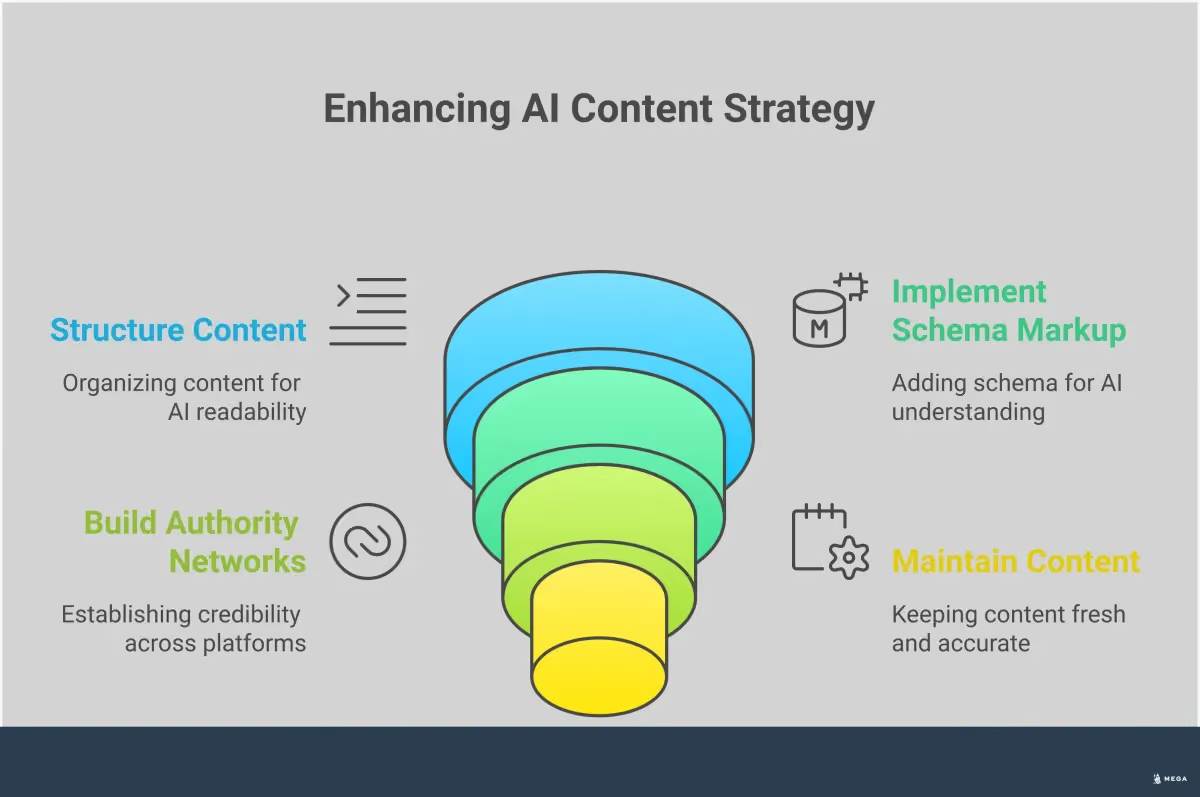
- Structure Content for Clarity and Accuracy: Write articles like a research report, using a clear hierarchy of headings, lists, and data citations. This makes your information easy for AI to process and verifies its trustworthiness.
- Establish Authority Across Multiple Platforms: AI confirms expertise by cross-referencing information from various sources. Build your brand's credibility on industry websites, review aggregators, and forums to create a network of trust signals.
- Combine Technical SEO with Content Maintenance: Implement schema markup to help AI understand your content and establish a regular schedule for updating articles. This ensures your site is both accessible to crawlers and provides fresh, relevant information.
The Growing Impact of AI on Search
Key Statistics on AI Search Growth
AI-powered search is quickly becoming a major source of website traffic, and the numbers show just how fast this shift is happening. For example, one report from Microsoft showed that visits to top websites from AI systems grew by 357% in just one year, resulting in over a billion visits. This means a growing number of your potential customers are finding businesses through AI-generated summaries, not just traditional search results. If your content isn't optimized to be included in these answers, you're missing out on a significant and expanding audience. Getting your business featured in these AI responses is a direct path to connecting with users who are actively seeking solutions.
Why Fresh, Structured Content Wins in AI Search
So, how do you get your content included in these AI answers? It comes down to providing information that is fresh, clear, and well-organized. AI models favor new content, citing it up to 70% more often than older articles, because recency often correlates with accuracy. Beyond freshness, your content needs a logical structure. Think of it like a well-organized report with clear headings and lists. This format makes it easy for AI to understand the key points and trust your information as a reliable source. Regularly updating your existing articles to ensure they are accurate and easy to read is essential for staying visible. Tools like MEGA AI's Maintenance Agent can automate this process, keeping your content fresh and structured to meet the demands of AI search.
What is AI-Friendly Content?
Creating content for AI search engines like Perplexity or Google’s AI Overviews requires a shift in thinking. It’s no longer just about targeting keywords. Instead, the goal is to produce clear, factual, and highly structured information that AI models can easily understand, process, and present to users. AI-friendly content is essentially a well-organized knowledge base that directly answers specific questions. Think less like a storyteller and more like a researcher presenting findings. This approach ensures your content is seen as a reliable source, making it more likely to be featured in AI-generated summaries and answers.
The core idea is to make your content machine-readable without sacrificing its value to a human reader. When an AI can easily parse your information, it can confidently use it to construct responses for its users, often citing your website as the source. This positions your business as an authority in your field and can drive highly qualified traffic to your site. It's about building a library of expert content that serves both people and the AI assistants they use.
Introducing Content Engineering
To create AI-friendly content consistently, you need a system. This is where content engineering comes in—it’s a methodical approach to creating, organizing, and maintaining your content so it’s clear to both people and AI. A key part of this is structuring articles for clarity with headings and lists, and using technical signals like structured data to help AI understand context. Content engineering also involves continuous maintenance, as AI prioritizes freshness. Regularly updating articles with new information is crucial, and an automated content maintenance process can help keep your content current and valuable.
Keep Your Content Fact-Based
AI models can sometimes generate incorrect or outdated information, a phenomenon known as AI hallucination. If you use AI to help generate content, it's your responsibility to verify every claim. Publishing inaccurate information can quickly damage your business’s credibility with both customers and search engines. To avoid this, make fact-checking a non-negotiable step in your content creation process. Double-check statistics, cite credible sources for your data, and ensure all your claims are up-to-date and supportable. This commitment to accuracy signals to AI models that your content is trustworthy and a valuable resource for their users.
Use a Clear and Logical Structure
AI search tools favor content that is logically organized and easy to parse. Structure your articles like a research report, with a clear hierarchy of headings (H1, H2, H3) that breaks down the topic into digestible sections. Use bullet points and numbered lists to present information concisely. To guide your structure, find the exact questions your audience is asking on platforms like Reddit, Quora, or industry forums. By building your content around these specific queries, you create a piece that directly addresses user needs, making it simple for an AI to extract the information and use it to formulate an answer.
Focus on Natural, Conversational Language
Writing for AI means using clear, conversational language that mirrors how people ask questions. Avoid jargon and overly complex sentences. AI models are designed to understand and process human language, so straightforward writing performs best. It’s also helpful to explain your methodology when presenting information. For example, if you’re reviewing products, describe the criteria you used for your evaluation. This transparency not only builds trust with your audience but also provides the structured, logical information that AI models can easily interpret. MEGA AI’s SEO tools can help you generate well-structured content that follows these principles automatically.
Leverage a Q&A Format
One of the most effective ways to make your content AI-friendly is to use a direct question-and-answer format. Structure your headings as questions and provide concise, direct answers in the paragraphs that follow. Focus on long-tail queries that users are likely to type into a search bar or ask a chatbot, such as “what is the best CRM for a small plumbing business” or “Mailchimp versus Constant Contact for nonprofits.” Including a dedicated FAQ section at the end of your articles is another great way to capture this type of search intent. This format makes your content a perfect match for AI-powered answer engines.
How Does AI Actually Read Your Content?
Understanding how AI search engines work is the first step to creating content that ranks well within them. Unlike traditional search, which primarily matches keywords to documents, AI models aim to comprehend, synthesize, and generate direct answers from the information they find. They act less like a librarian pointing you to the right aisle and more like a research assistant who reads the books for you and delivers a summary. This fundamental shift changes how these tools evaluate your content, from the facts you present to the sources you cite.
What AI Considers High-Quality Content
AI models prioritize content that is factually accurate, logical, and up-to-date. One of the biggest challenges with AI-generated content is its tendency to "hallucinate"—a term for when the AI produces incorrect claims, outdated facts, or broken logic. Because of this, AI search tools place a high value on content that is clearly well-researched and trustworthy. Copying and pasting AI-generated text without thorough fact-checking can introduce misinformation, which damages your credibility. To stand out, focus on creating content that is demonstrably true and reliable. Regularly updating your articles to reflect the latest information is a strong signal of quality that both users and AI models appreciate.
How AI Determines Your Site's Authority
AI search engines have a clear bias toward certain types of sources when determining authority. Research shows they heavily favor three categories. First are authoritative industry publications and well-respected websites known for their expertise. Second are review aggregator sites like G2, Capterra, and Trustpilot, which provide social proof and user validation. The third category includes community discussion forums like Reddit and Quora, where real people share authentic experiences and ask specific questions. Earning mentions, links, or positive discussions on these platforms can significantly signal your authority to an AI model and increase your traffic.
AI Parses Content, It Doesn't Read It
An AI system doesn’t read your webpage the way a person does. Instead of processing sentences in order, it breaks your content down into smaller, structured pieces of information. According to research from Microsoft, these individual snippets are then ranked and reassembled to form a comprehensive answer, often pulling from many different websites at once. This means every section, paragraph, and bullet point on your page is individually evaluated for its potential to answer a user's query. The AI is essentially deconstructing your article to find the most valuable building blocks it can use to construct a response.
The Goal: Getting Snippets Selected for AI Answers
In this new landscape, the primary objective shifts. It's less about getting your entire page to rank number one and more about having specific parts of your content *selected* for inclusion in an AI-generated answer. Your goal is to create the most accurate, concise, and helpful snippet of information for any given subtopic within your article. Think of each heading and its corresponding paragraph as a standalone answer competing for a spot in the final AI summary. This makes a modular content structure essential, as every piece needs to be strong enough to be pulled out of context and still make perfect sense.
How Structure Acts as a Confidence Signal for AI
A clear and consistent structure is one of the strongest signals of trustworthiness you can send to an AI. When your page title, H1 tag, and meta description all align, it gives the AI confidence that your content is well-organized and accurately represents its topic. This logical hierarchy helps the model understand the relationship between different pieces of information on your page, making it easier to parse and trust. Tools like MEGA AI are designed to help you build this structure automatically, ensuring your content is optimized for how AI systems process information and positioning it as a reliable source worth citing.
Aligning Your Content with User Intent
To be featured in an AI-generated answer, your content must directly address the specific questions people are asking. Think less about broad keywords and more about conversational queries. Users interact with AI assistants by asking direct questions, and your content needs to provide the answers. A great way to find these queries is to spend time on platforms like Reddit, Quora, and other industry forums. Pay attention to the exact language people use when they describe their problems or seek advice. Structuring your content in a question-and-answer format or using clear headings that mirror these questions makes it easier for AI to identify your page as a relevant source.
Understanding How AI Creates Answers
The final output of an AI search is often a concise, synthesized answer, not a list of ten blue links. The AI model pulls information from what it considers the best sources and presents a summary to the user, often with citations included. Your goal is to have your content be one of those primary sources. This means your information must be easy for the AI to parse, understand, and extract. Clear, well-structured articles that get straight to the point are more likely to be included in these generated responses. When your content is selected, you are positioned as a direct solution, which is far more powerful than simply being another option on a results page.
Practical Writing and Formatting Tips for AI Search
Adapting your content for AI doesn’t require a complete overhaul of your writing process. Instead, it’s about making small, strategic adjustments to how you structure and present information. By focusing on clarity, precision, and logical organization, you can make your content much more appealing to AI models that are scanning the web for reliable answers. These practical tips will help you format your articles in a way that is easy for AI to parse, increasing the likelihood that your content will be selected as a primary source for its generated responses. Think of these as the new fundamentals for creating high-performing content.
Write "Snippable" Content
AI search engines are designed to find and deliver direct answers. To make your content a prime candidate, write short, declarative sentences that can be easily pulled out and used as a standalone piece of information. This is what’s known as “snippable” content. When a user asks a question, the AI looks for a concise answer it can present immediately. Structure your paragraphs so the first sentence directly answers the question posed in your heading. For example, if your heading is “What is a Local SEO Citation?”, your first sentence should be a clear definition. This approach makes it effortless for an AI to extract your answer and feature it in its response.
Use Tables and Lists to Break Down Information
Complex information is best presented in a structured format. AI models can more easily process and understand data that is organized into lists, bullet points, or numbered steps. This formatting breaks down complicated topics into simple, digestible pieces that the AI can grab and reuse. For example, use a numbered list for a step-by-step guide or bullet points for key features or benefits. This not only helps AI parse your content but also significantly improves the reading experience for your human audience, keeping them engaged and on your page longer.
Provide Specific, Factual Context
Vague marketing claims don't perform well with AI. These models prioritize content that is specific, factual, and supported by data. Instead of saying a product is “the best,” explain what makes it the best using concrete numbers and evidence. For instance, state that it “reduces processing time by 30% according to a case study with XYZ Corp.” Citing your sources for statistics and data is also critical, as it provides a trail of verification that builds trust. This commitment to factual accuracy signals to AI that your content is a reliable source of information, making it more likely to be used in a search answer and helping you build credibility with potential customers.
Incorporate Synonyms and Related Terms
To demonstrate expertise on a topic, you need to show a comprehensive understanding of it. This means going beyond a single primary keyword and incorporating a range of related terms and synonyms. This practice, often associated with semantic search, helps AI understand the full context and nuance of your content. If you’re writing about “social media marketing for restaurants,” you should also include phrases like “Instagram for cafes,” “restaurant Facebook ads,” and “foodie content strategy.” This shows the AI that your article covers the topic in depth and helps you match with the wide variety of conversational queries that users are asking.
Keep Punctuation Simple and Clear
While it might seem like a minor detail, clean and simple punctuation is important for machine readability. AI models parse text based on established grammatical rules, and unusual characters or complex punctuation can sometimes cause confusion. Stick to standard punctuation like periods and commas. Avoid using special characters, excessive exclamation points, or emojis within your main body content. The goal is to make your text as clean and straightforward as possible, removing any potential obstacles that could prevent an AI from accurately interpreting your information. Simple formatting ensures your message is understood exactly as you intended.
How to Create Research-Driven Content That Ranks
Creating content that resonates with AI search engines starts with a foundation of solid research. AI models are designed to find and present the most comprehensive, accurate, and helpful information available. This means your content needs to go beyond surface-level explanations and provide real, verifiable value to the user. By focusing on depth, data, and authority, you can create content that both users and AI will trust.
This approach involves more than just finding a keyword. It's about understanding the entire conversation around a topic, backing up your claims with evidence, and presenting your information in a way that machines can easily parse and understand. Let's walk through the key steps to building content that is truly research-driven.
Start with Comprehensive Topic Research
To create content that AI search favors, you need to answer the specific questions your audience is asking. Instead of writing a simple blog post about why your service is great, think bigger. Aim to create a complete guide that covers a topic from every angle. A great way to find these specific questions is to look where people have conversations. Explore forums like Reddit and Quora to see the exact language and queries people use. This helps you create content that directly addresses their needs, making it more likely for an AI to select your page as a top resource. This deep research is a core function of many modern SEO platforms, which can analyze these sources at scale.
Back Up Your Claims with Data
AI models value evidence. When you make a claim, you should back it up with credible data and sources. This builds trust and demonstrates the authority of your content. You can do this by linking to user reviews on third-party sites, citing case studies with measurable results, or referencing data from industry reports. Think of it like a research paper; every major point is stronger when it's supported by evidence. When an AI crawler sees that you are citing other credible sources, it weighs your content more heavily. This simple practice signals that your content is well-researched and trustworthy, not just an opinion piece.
Always Verify Your Sources
Not all sources are created equal in the eyes of an AI. Analysis shows that AI models have a strong bias toward certain types of sources that are seen as highly credible. These include major industry publications, authoritative websites, and academic journals. They also favor review aggregator sites like G2, Capterra, and Trustpilot, as these platforms collect a wide range of user experiences. Finally, AI often pulls from community discussions on platforms like Reddit where real people share authentic feedback. When you cite sources in your content, try to link to these types of authoritative domains to show that your information is well-grounded.
Include Insights from Subject Matter Experts
Your expertise is a critical asset. AI search engines are getting better at identifying and rewarding content that comes from genuine experts. This means you need to demonstrate your authority on your subject matter. You can do this by getting your content and insights published on respected industry websites or participating in expert roundups. When your name or brand is associated with expertise across different platforms, AI models begin to recognize you as an authority. This cross-platform recognition helps build a stronger signal of trust and credibility, making it more likely that your content will be featured in AI-generated answers.
Use Structured Data to Add Context
Structured data, also known as schema markup, is a way of labeling the information on your website so that search engines can understand it perfectly. Think of it as creating a clear, machine-readable summary of your content. For example, Organization schema tells an AI who you are, while Product schema details what you sell, including features, prices, and reviews. By adding this structured data to your site, you make it incredibly easy for AI to pull accurate information for its responses. This technical step is crucial for ensuring your key business details are correctly interpreted and displayed in AI-powered search results.
Essential Technical SEO for Content AI Search
Beyond creating great content, you need to make sure AI search tools can easily find, understand, and process the information on your website. Think of it as creating a clear, well-lit path for AI to follow. These technical adjustments help search engines interpret your content correctly and present it to users who are looking for your products or services. By optimizing the backend of your site, you ensure that your research-driven content can have the maximum impact. Many of these technical elements can be managed with the right tools, simplifying the process so you can focus on running your business.
Use Schema Markup to Explain Your Content
Think of schema markup as a translator for your website. It’s a type of code you add to your site that helps AI search engines understand the context of your content without any guesswork. For example, organization schema tells AI your business name, logo, and contact information, while product schema details what you sell, including prices and features. This structured data ensures that when an AI tool scans your site, it correctly interprets the information. Implementing schema markup is a direct way to communicate with search engines, reducing the chances of misinterpretation and helping your business show up accurately in AI-generated search results.
Organize Your Site for Easy Crawling
How you organize your content on the page matters just as much as what you write. AI search prefers content that is structured logically, almost like a research report. Use clear headings (H1, H2, H3) to create a distinct hierarchy and break down complex topics into smaller, digestible sections. This approach makes your content more scannable for human readers and easier for AI to parse. To make your content even more effective, find the specific questions your audience is asking on sites like Quora or Reddit and structure your pages to answer them directly. This clear information architecture helps AI pinpoint exact answers to pull for its responses.
Provide Machine-Readable Data
To make it even easier for AI to understand your business, you can present key information in a simple, machine-readable format. Instead of burying important details like pricing, features, or target customers in long paragraphs, you can create a dedicated page or a simple data file (like a facts.json file) that lists them out. This gives AI a clean, structured source of information to pull from. Think of it as a cheat sheet for your business. This method allows AI to quickly access essential facts about your offerings, including how you compare to competitors, ensuring the information it shares is accurate and straight to the point.
Track the Right Performance Metrics
You can’t improve what you don’t measure. Using a free tool like Google Search Console is essential for monitoring your site’s technical health. It gives you a direct look at how search engines see your website, highlighting performance metrics like Core Web Vitals, click-through rates, and which keywords you’re ranking for. It also alerts you to backend errors or security issues that might not be visible on the front end of your site. Regularly checking these metrics helps you spot and fix problems before they impact your visibility in AI search results, ensuring your site remains healthy and accessible.
Ensure Your Site is Mobile-Friendly
A significant portion of your customers will find you through their smartphones, so your website must provide a seamless mobile experience. AI search engines prioritize mobile-friendly websites because they offer better user experiences. A site that is difficult to use on a phone can lead to high bounce rates, signaling to search engines that your content may not be valuable. You can use Google’s Mobile-Friendly Test to see how your site performs and identify areas for improvement. Ensuring your site is responsive and easy to use on any device is a foundational step for succeeding in any search environment.
How to Keep Your Content Fresh and Relevant
Creating great content is the first step, but maintaining it is what keeps you relevant in AI-driven search. AI models prioritize information that is current, accurate, and consistently refreshed. A "set it and forget it" approach simply won't work in this landscape. Instead, you should think of your content as a living asset that needs regular care to perform its best and continue delivering value to your audience. This ongoing process of refinement does more than just please algorithms; it builds trust with your readers. When they see that your information is up-to-date and reliable, they are more likely to view your business as an authority in its field.
This commitment to maintenance is a powerful signal. For AI, it indicates that your site is actively managed and a credible source of information. For users, it shows you care about providing them with the best possible answers. Over time, this practice compounds, strengthening your site's authority and making it more likely that AI will feature your content in its responses. By establishing a routine for updates and quality checks, you create a sustainable system for keeping your content in top shape. This section will walk you through how to create a simple yet effective maintenance strategy for your content, ensuring your hard work continues to pay off.
Regularly Audit Your Content
The first step in any maintenance plan is a quality check. AI-generated content can sometimes contain outdated facts or logical errors, a phenomenon known as hallucination. Publishing content without a thorough review can damage your site's credibility. Regularly audit your existing articles for factual accuracy, clarity, and relevance. Check for broken links, update statistics, and ensure your information still serves your audience's needs. This process helps you maintain a high standard of quality and trustworthiness, which is essential for ranking well in AI search results. MEGA AI's Maintenance Agent can automate this by identifying which articles need updates to improve their performance.
Create a Consistent Update Schedule
AI systems pay close attention to what's new and what's updated. Just as traditional search engines have always favored fresh content, AI tools do the same. To keep your content from becoming stale, establish a regular update schedule. You don't need to revise every page every month. Instead, prioritize your most important or highest-traffic articles for quarterly or semi-annual reviews. For other content, an annual check-in might be enough. A content calendar can help you track when each piece was last updated and schedule future reviews, turning maintenance into a manageable, routine task.
The 12-Month Content Refresh Rule
Think of your content's relevance as having an expiration date. A good rule of thumb is to review and refresh your articles at least once every 12 months. This regular maintenance signals to AI models that your site is actively managed and a credible source of information. AI systems prioritize fresh content because it reduces the risk of serving outdated facts to users. This consistent effort has a direct impact on performance, as content freshness is a known ranking factor. While this might sound like a lot to track, tools can help you prioritize which articles to update first, making the process more manageable and ensuring your articles remain a reliable resource.
How to Show AI Your Content is Up-to-Date
Regularly updating your content signals to AI that you are an active and authoritative source. When you refresh an article, you’re not just correcting old information; you’re adding new value. You can add new sections, incorporate recent data, or expand on topics based on customer questions. After making significant changes, update the "last modified" date on the page. This simple action helps AI crawlers recognize the content as fresh. With millions of people using AI for research, they prefer updated information. By keeping your content current, you position your business as the go-to source in your niche.
Monitor Content Performance Over Time
You can’t improve what you don’t measure. Tracking your content's performance provides the data you need to make smart update decisions. Tools like Google Search Console offer vital information, including click-through rates (CTR), ranking keywords, and indexed pages. A page with many impressions but a low CTR might need a more compelling title or meta description. A page that has lost rankings might need a content refresh to compete with newer articles. Monitoring these metrics helps you focus your efforts on the updates that will have the most impact on your visibility and traffic.
Avoid These Common Content Mistakes
Proactive maintenance can help you avoid common pitfalls that hinder content performance. Many businesses struggle with creating content that truly connects with their audience or they neglect essential on-page SEO elements. To prevent this, regularly review your content against your target audience's needs. Are you still answering their most pressing questions? Does your tone resonate with them? At the same time, ensure every page follows SEO best practices, with clear headings, relevant keywords, and optimized images. This ongoing diligence ensures your content remains effective and discoverable by both users and AI search engines.
Using AI Tools for Content Maintenance
Manually auditing every article is a huge time commitment, especially for small businesses. AI tools can automate much of this work, turning content maintenance into a more manageable process. These platforms can regularly scan your site to find outdated facts, identify articles with declining performance, and even suggest specific updates to improve metrics like click-through rates. For instance, MEGA AI’s Maintenance Agent automates this audit process, flagging content that needs a refresh and helping you prioritize your efforts. This allows you to focus on the strategic updates that will make the biggest difference, ensuring your content library stays accurate and effective without requiring constant manual oversight.
How to Build Long-Term Authority for AI Search
Building authority for AI search is about more than just optimizing your website. It’s about establishing your brand as a trusted and credible source of information across the entire web. AI models look for consistent signals of expertise from multiple platforms to verify information and determine who the real experts are. Think of it like building a reputation in real life; it’s not just what you say about yourself, but what others say about you that truly matters. When an AI sees your business cited and referenced on various reputable sites, it learns to trust your content.
This process requires a long-term mindset focused on creating a strong, consistent digital footprint. It’s not a one-time task but an ongoing effort that pays dividends over time. By distributing your expertise across different channels and creating genuinely helpful, research-driven content, you can build the kind of authority that AI systems reward. This ensures your content is seen as reliable and is more likely to be used in generated responses, positioning you as a leader in your field. Ultimately, strong AI authority means your business becomes a go-to source, not just for users, but for the AI tools they rely on.
Create a Content Strategy for Multiple Platforms
Your website is your home base, but it shouldn't be the only place your expertise lives online. AI search tools cross-reference information from many sources to confirm its accuracy and weigh a source's authority. This means you need to think about "authority distribution"—getting your knowledge recognized on different platforms. When your brand appears consistently in multiple relevant places, it sends a strong signal to AI that you are a legitimate and knowledgeable entity. This approach moves you from being just another website to becoming a recognized voice in your industry.
Select the Right Distribution Channels
To distribute your authority, you need to get your content published on other reputable websites. Think about where your ideal customers and industry peers go for information. If you run a local home services business, you might contribute an article to a popular home improvement blog or get featured in a local business publication. For an e-commerce store, you could pitch guest posts to blogs relevant to your niche. The goal is to place your content on platforms that already have an established audience and credibility, which helps build your own brand authority by association.
Keep Your Brand Message Consistent Everywhere
As you build your presence across different channels, consistency is critical. When an AI model finds the same core information about your business—your name, services, and areas of expertise—across multiple trusted sources, it reinforces your credibility. Inconsistent details can create confusion and weaken the authority signals you’re trying to build. Make sure your messaging, business information, and expert positioning are uniform everywhere you have a presence. This includes your website, social media profiles, directory listings, and any content you publish on other sites. A consistent digital footprint is a trustworthy one.
Apply Proven Tactics to Build Authority
The content that builds the most trust is helpful and educational, not purely promotional. Instead of writing about why your product is the best, create content that solves a genuine problem for your audience. For example, a marketing agency could create a complete guide to local SEO for small businesses. This research-driven approach positions you as an expert who provides real value. By focusing on creating comprehensive, useful resources, you can build a library of content that serves your audience and demonstrates your deep expertise, which is a cornerstone of any effective SEO strategy.
The Importance of Third-Party Mentions
AI models confirm expertise by cross-referencing information from multiple sources. Think of it as a digital background check. When an AI finds your brand mentioned on respected industry websites, review platforms, or forums, it builds a network of trust signals that validate your claims. This cross-platform recognition is powerful because it shows that your authority isn't just self-proclaimed; it's recognized by others in your field. Each positive mention or link acts as a vote of confidence, telling the AI that your content is credible and worth featuring in its answers. This is how you move from being just another voice to a recognized authority.
AI search engines show a clear preference for certain types of third-party sources when evaluating authority. The first category includes well-respected industry publications known for their expertise. The second is review aggregator sites like G2 and Capterra, which offer social proof from real users. The third includes community forums like Reddit and Quora, where authentic discussions happen. Earning mentions, links, or positive conversations on these platforms sends a strong signal of your credibility to an AI model. This is a key part of a modern off-page SEO strategy, as it helps build a robust and trustworthy online presence that both AI and customers can rely on.
Track Your Authority with Analytics
Building authority is an ongoing process, and you need data to know if your efforts are paying off. Tools like Google Search Console provide essential information about how search engines view your site. You can track metrics like click-through rate (CTR), ranking keywords, and indexed pages, and identify technical issues that might be holding you back. Monitoring these analytics helps you understand what content is resonating and where you can make improvements. For instance, if an important article has a low CTR, you might need to refine its title to better match user intent.
Common AI Optimization Mistakes to Avoid
Optimizing for AI search introduces new variables, and it's easy to make a few missteps along the way. Getting ahead of these common mistakes will keep your strategy on track and ensure your content is visible to both AI crawlers and human readers. Many of these errors happen when we apply old SEO rules without considering how AI processes information differently. From how you structure your articles to the technical signals you send, every detail matters. Let’s walk through the most frequent errors and how you can correct them.
Ignoring Your Content's Structure
A common mistake is creating content that reads like a sales pitch instead of a helpful resource. AI search tools are designed to find direct answers to user questions. If your content is focused only on why your product is the best, it’s less likely to be selected as a definitive source. Instead, shift your focus to creating comprehensive guides that address a user's entire problem. For example, rather than just listing your services, write an article that walks a reader through how to choose the right service for their needs. This approach directly answers user intent and positions your content as a valuable, unbiased resource that an AI would trust.
Avoiding Long Paragraphs and Hidden Information
AI models and human readers both prefer content that gets straight to the point. Long, dense paragraphs make it difficult to find specific information quickly. Since AI search tools favor content that is logically organized, breaking up your text is essential. Use shorter paragraphs, bullet points, and numbered lists to present key details in a scannable format. This structure helps AI models extract facts and figures efficiently, increasing the likelihood that your content will be used to generate an answer. Similarly, don't hide important information like pricing or key features deep within a page. If a user or an AI can't find it easily, it might as well not be there.
Overlooking Technical SEO Errors
You can create the best content in the world, but it won’t matter if AI crawlers can't access it. A critical technical error is accidentally blocking these bots. AI tools, much like Google, use crawlers to scan the internet for information. Sometimes, a simple misconfiguration in your site’s robots.txt file can prevent these bots from indexing your pages. It’s also worth noting that some security tools or plugins can automatically block unfamiliar bots. You should regularly check your site’s accessibility to ensure you aren’t unintentionally putting up a "do not enter" sign for the very tools you want to attract.
Updating Content Without a Strategy
AI systems prioritize fresh and current information. A frequent misstep is letting your content become stale or using ineffective update methods. Simply changing the publication date on an article without making substantial changes won’t work. AI is sophisticated enough to detect meaningful revisions. A better strategy is to periodically review your content and add new, relevant information, update statistics, or fix outdated sections. This signals to AI that your content is actively maintained and remains a reliable source. A consistent content refresh schedule is essential for maintaining visibility in AI-driven search results.
Using Outdated Authority-Building Tactics
Focusing solely on your own website is a limited approach to building authority. AI doesn't evaluate your site in a vacuum; it cross-references information from multiple sources to verify credibility. If your brand is only mentioned on your own domain, it’s difficult for an AI to confirm your expertise. The key is to build what you might call "authority distribution." This means ensuring your brand is present and consistent across other reputable platforms, such as industry directories, social media profiles, and guest articles. This creates a network of validation that reinforces your authority and makes your content a more trustworthy choice for AI-generated answers.
Tracking the Wrong Performance Metrics
Relying only on traditional ranking reports can give you an incomplete picture of your AI search performance. A major mistake is not adapting your measurement strategy to account for how AI surfaces information. Your content might be used to generate an AI response without the user ever clicking through to your site. It's important to expand your metrics beyond keyword rankings. Start monitoring for increases in brand mentions, track how your content appears in AI snapshots or featured snippets, and analyze your server logs to see if AI crawlers are visiting your site. This broader view helps you understand your true impact in an AI-powered search landscape.