
Protecting your marketing from fake data doesn’t mean abandoning powerful AI tools. It’s about building a smarter, more resilient system with the right checks and balances. By taking a proactive approach, you can harness the speed of automation while safeguarding your brand’s integrity and your marketing ROI. The most effective strategies create a partnership between human expertise and AI execution. This hybrid approach gives you the efficiency of machines and the critical thinking of a human expert. It allows you to use autonomous SEO and paid ads agents with confidence, preventing small data errors from becoming large-scale problems.
Key Takeaways
- Implement Human-in-the-Loop Safeguards: While AI automation offers incredible speed, it can also scale mistakes. Establish strategic checkpoints for a human to review critical outputs, like campaign strategies or ad copy, to ensure AI actions align with your business goals before they go live.
- Prioritize Data Integrity from the Start: Your AI is only as good as the data it uses. Protect your marketing efforts by creating a list of trusted sources for your AI to reference, implementing validation rules on lead forms, and regularly auditing your data to filter out inaccuracies.
- Develop a Clear Response Plan: If you suspect fake data has affected your system, act methodically. First, identify the scope of the problem by analyzing performance drops. Next, contain the damage by pausing affected campaigns. Finally, clean your data and update your system's rules to prevent future issues.
What is AI-generated fake data?
AI-generated fake data is any piece of fabricated information created by an artificial intelligence system. This can range from realistic but fake product reviews and customer testimonials to entirely fabricated market research reports. These AI tools can produce text, images, and even videos that are often difficult to distinguish from authentic content. While discussions often focus on large-scale issues like political misinformation, the impact on businesses is just as significant. When fake data enters your marketing ecosystem, it can quietly undermine your strategies, corrupt your analytics, and damage your brand's credibility. Understanding what it is and how it spreads is the first step toward protecting your business.
How fake data gets into AI marketing systems
Fake data finds its way into marketing systems through the very tools designed to make our jobs easier. Generative AI platforms build their outputs by pulling information from a massive pool of sources, including public websites, private databases, and huge volumes of text from across the internet. The issue is that these algorithms often don't distinguish between factual, well-researched information and other AI-generated content or outright falsehoods. This can create a dangerous feedback loop where AI tools gather information from unreliable sources, creating new, flawed content that other systems then treat as fact. For your business, this could mean your AI content writer is basing a blog post on a competitor's AI-generated, inaccurate article.
Why it matters for your business
The consequences of using AI-generated fake data are serious. Research shows that false rumors spread faster and more widely than true information, which can be devastating for a brand's reputation. If your marketing campaigns are built on faulty data, you risk making poor strategic decisions, wasting your budget, and alienating customers with inaccurate messaging. Furthermore, consumer trust is fragile. Studies suggest that even when content is labeled as AI-generated, it can be perceived as less credible, which means transparency alone isn't a complete solution. Relying on unverified data doesn't just lead to ineffective marketing; it can actively erode the trust you've worked hard to build with your audience.
What happens when AI agents use fake data?
When you hand over tasks to an AI agent, you’re trusting it to make smart decisions that grow your business. Platforms like MEGA AI offer autonomous agents that can plan and execute entire SEO strategies or manage complex Paid Ads campaigns. This level of automation is powerful, but it also introduces a critical dependency: the quality of the data the AI uses. If an agent acts on fake or manipulated data, it doesn’t just make a small mistake. It can automate that mistake at a scale and speed that a human team never could.
The consequences range from wasted ad spend and skewed analytics to significant reputational damage. An AI might optimize your campaigns for phantom customers, write content based on fabricated trends, or build links on spammy websites because fake data told it to. Understanding how these agents process information is the first step to protecting your marketing efforts from being derailed by bad data.
How autonomous AI makes decisions
Autonomous AI systems are not born with inherent knowledge; they learn from the data they are given. Think of it like teaching a new employee. If you provide them with incorrect training manuals, their work will reflect those errors. Similarly, AI agents rely heavily on the data they are trained on to make decisions. If that data contains inaccuracies or is completely fabricated, the AI’s logic becomes fundamentally flawed.
For your business, this means an AI might generate blog posts based on false information or target advertising to a demographic that doesn’t exist, all because the underlying data was wrong. The agent doesn’t question its source material; it simply executes based on the patterns it has learned.
The ripple effect of one bad data point
A single piece of fake data rarely stays isolated. Instead, it creates a ripple effect, distorting other decisions the AI makes down the line. Research from Brookings shows how false claims can distort public perception and influence broader narratives. The same principle applies in marketing. A fake negative review, if ingested by an AI, could trigger a change in your content strategy to address a non-existent problem.
One incorrect data point about a competitor’s performance could cause your AI agent to pivot your entire keyword strategy, chasing irrelevant terms. The initial error is magnified as the AI builds new strategies on top of a faulty foundation, leading to compounding mistakes that become harder to trace back to the original source.
The risks of running on autopilot
The main appeal of AI agents is their ability to run on autopilot, executing tasks with incredible speed and efficiency. MEGA AI finds that 85% of its customers use this feature. However, this speed is also a significant risk when fake data is involved. Research from MIT shows that false rumors spread faster and wider than true information online.
An AI on autopilot can amplify a bad decision across your entire marketing ecosystem before a human has a chance to intervene. It can launch hundreds of ads based on a fake trend or rewrite dozens of articles with misinformation in a matter of minutes. The very efficiency that makes AI so valuable also makes it capable of scaling damage at an unprecedented rate.
How does fake data spread in marketing?
Fake data doesn't just materialize out of thin air. It spreads through the digital channels your business relies on every day for growth. It can be as simple as a bot filling out a lead form or as complex as a coordinated campaign to spread misinformation. For marketers, especially those using automated systems, this creates a significant challenge. When an AI agent is designed to learn from and react to real-time data, its effectiveness is directly tied to the quality of that data.
If the information an AI agent ingests is skewed, misleading, or entirely false, the decisions it makes will be flawed. This isn't a hypothetical problem. It can lead to wasted ad spend, misguided content strategies, and a distorted view of your marketing performance. Understanding how this data propagates is the first step in building a defense against it. The three most common pathways for fake data to enter your marketing ecosystem are through search engines, social media, and your own lead generation funnels.
Poisoning search engine results
Search engines are designed to find and rank relevant information, but they can be tricked. AI can be used to generate massive volumes of low-quality articles, fake reviews, and misleading content that looks legitimate. Because the speed at which false information is generated often outpaces verification, this content can temporarily rank high in search results. An AI agent conducting keyword research or competitive analysis might interpret this fake content as a valid signal, leading it to recommend a content strategy based on false premises. This can cause your business to chase irrelevant topics or misjudge what your audience actually wants.
Manipulating social media signals
Social media platforms are fertile ground for fake data. Automated bots can create the illusion of a trending topic, inflate engagement metrics on a post, or spread false narratives with incredible speed. Research from MIT shows that falsehoods are 70% more likely to be retweeted than the truth. For a paid ads agent, these manipulated signals are particularly dangerous. It might identify a "trending" hashtag and recommend shifting your budget to capitalize on it, but if the trend is manufactured by bots, you end up spending real money to reach fake accounts, completely missing your target audience.
Corrupting lead generation systems
Your lead generation forms are a direct entry point for bad data. Bots can easily be programmed to submit forms with fake names, email addresses, and phone numbers. As one MEGA AI user noted, this is a common issue: "I'm noticing about 60% of the leads are bad... 25, 30 are like fake numbers." This influx of junk data corrupts your lead database, wastes your sales team's time, and skews your conversion metrics. An AI agent analyzing this data might conclude a campaign is highly successful due to the volume of "leads," prompting it to allocate more budget to a channel that is primarily attracting bots.
How can you spot fake data in your AI?
Spotting fake data in an automated system is a challenge. When AI agents work autonomously, they process information at a scale that’s impossible to review manually. You don’t need to check every data point, though. Instead, you can learn to recognize the warning signs that something is off. By monitoring your system’s outputs and behavior, you can catch issues before they cause significant damage to your marketing efforts.
Look for performance drops
One of the most direct signs of bad data is a sudden, unexplained drop in your marketing performance. If your lead quality plummets, your conversion rates fall, or your ad campaigns stop delivering results, fake data could be the culprit. For example, one business using an AI agent to process leads found that "about 60% of the leads are bad... 25, 30 are like fake numbers." This kind of sharp decline in quality is a major red flag. When AI systems rely on inaccurate or misleading information, they can quickly spread it through your campaigns, which can negatively impact your overall marketing effectiveness.
Notice changes in AI behavior
AI systems can develop strange habits when fed the wrong information. If your AI agent starts suggesting bizarre keywords, writing off-brand ad copy, or targeting completely irrelevant audiences, it might be learning from corrupted data. Research from MIT Sloan found that false information spreads significantly faster and wider than the truth online. An AI might misinterpret this rapid spread as a signal of importance, causing it to prioritize sensational or misleading data over factual information. This can lead to skewed insights and poor strategic recommendations that don't align with your business goals.
Identify unreliable data sources
The principle of "garbage in, garbage out" is critical in AI. If your system is pulling from low-quality or unverified sources, it will produce unreliable results. The ambiguity around how some AI tools generate content makes it difficult to trace the original source, which can lead to issues with plagiarism and the spread of misinformation. It’s important to understand where your AI gets its information. AI tools that generate content based on a broad mix of online data without proper attribution can inadvertently introduce unreliable data into your marketing, so you have to remain vigilant.
Why can't traditional methods keep up?
The rise of AI-generated content has created a marketing environment that moves too fast for manual oversight. Traditional workflows, which rely on human review and decision-making, are struggling to handle the speed, volume, and sophistication of synthetic data. This puts businesses that rely on these older methods at a significant disadvantage, exposing them to risks that can damage their reputation and bottom line.
For small businesses, the challenge is even greater. Without large teams or extensive resources, it's nearly impossible to manually verify every piece of data, track every online mention, or vet every lead. The old ways of working simply weren't designed for a world where a single actor can generate thousands of pieces of fake content in minutes. This new reality requires a different approach—one that can operate at the speed of AI while maintaining the accuracy and integrity of your marketing efforts.
The challenge of volume vs. accuracy
The internet is flooded with content, and AI is adding to it at an incredible rate. This sheer volume makes it difficult for any marketing team to separate fact from fiction. Research has shown that false rumors spread faster and wider than true information, making the task of maintaining accuracy a constant battle. When your team is trying to monitor brand sentiment or conduct market research, they are wading through a massive amount of noise.
Manually vetting every source, article, or social media post is no longer feasible. The scale of AI-generated misinformation means that even the most diligent teams will miss things. This creates a difficult situation where you must either sacrifice accuracy for speed or fall behind while you try to verify everything. For marketers, this means the data used to make strategic decisions could be built on a faulty foundation.
The trade-off between speed and quality
Marketing teams are always under pressure to deliver results quickly. Generative AI tools seem like the perfect solution, allowing for the rapid creation of ad copy, blog posts, and social media updates. However, this speed often comes at the expense of quality. Some AI systems pull from outdated sources, presenting information that is no longer current or relevant. This can lead to campaigns that miss the mark or contain factual errors.
This creates a difficult trade-off. You can move fast and risk publishing low-quality or inaccurate content, or you can slow down to manually check every detail, potentially losing momentum to competitors. The ease with which AI can create fake images and news that are nearly indistinguishable from real content only complicates this further. Traditional methods force you to choose between moving quickly and being right, a choice that no business should have to make.
The limits of manual review
Manual review has long been the gold standard for quality control in marketing. A human editor would check copy for errors, a manager would approve campaign assets, and an analyst would review performance data. But this process is slow, costly, and increasingly ineffective against sophisticated AI-generated content. The lines are becoming so blurry that even academic experts are debating how to spot AI-plagiarism.
For a small business, dedicating hours to manually reviewing every lead, social comment, and piece of content is simply not scalable. As your marketing efforts grow, the amount of data to review expands exponentially. A single person or a small team cannot possibly keep up without letting things slip through the cracks. This limitation makes it clear that relying solely on manual oversight is no longer a viable strategy for protecting your brand.
How can your business fight AI misinformation?
Protecting your marketing from fake data doesn’t mean you have to abandon powerful AI tools. Instead, it’s about building a smarter, more resilient system with the right checks and balances. By taking a proactive approach, you can harness the speed and scale of automation while safeguarding your brand’s integrity and your marketing ROI. The most effective strategies don't treat AI as a black box; they create a partnership between human expertise and AI execution. This hybrid approach allows you to get the best of both worlds: the efficiency of machines and the critical thinking of a human expert.
This means implementing clear protocols that ensure the data your AI agents use is accurate and that their actions align with your goals. For small businesses, this is especially important. Your reputation is one of your most valuable assets, and maintaining trust with your audience is non-negotiable. The following practices create a strong defense against misinformation, allowing you to use tools like autonomous SEO and paid ads agents with confidence. These methods focus on adding layers of verification and accountability, so you can trust that your automated systems are working for you, not against you. By setting up these guardrails, you can prevent small data errors from turning into large-scale marketing problems.
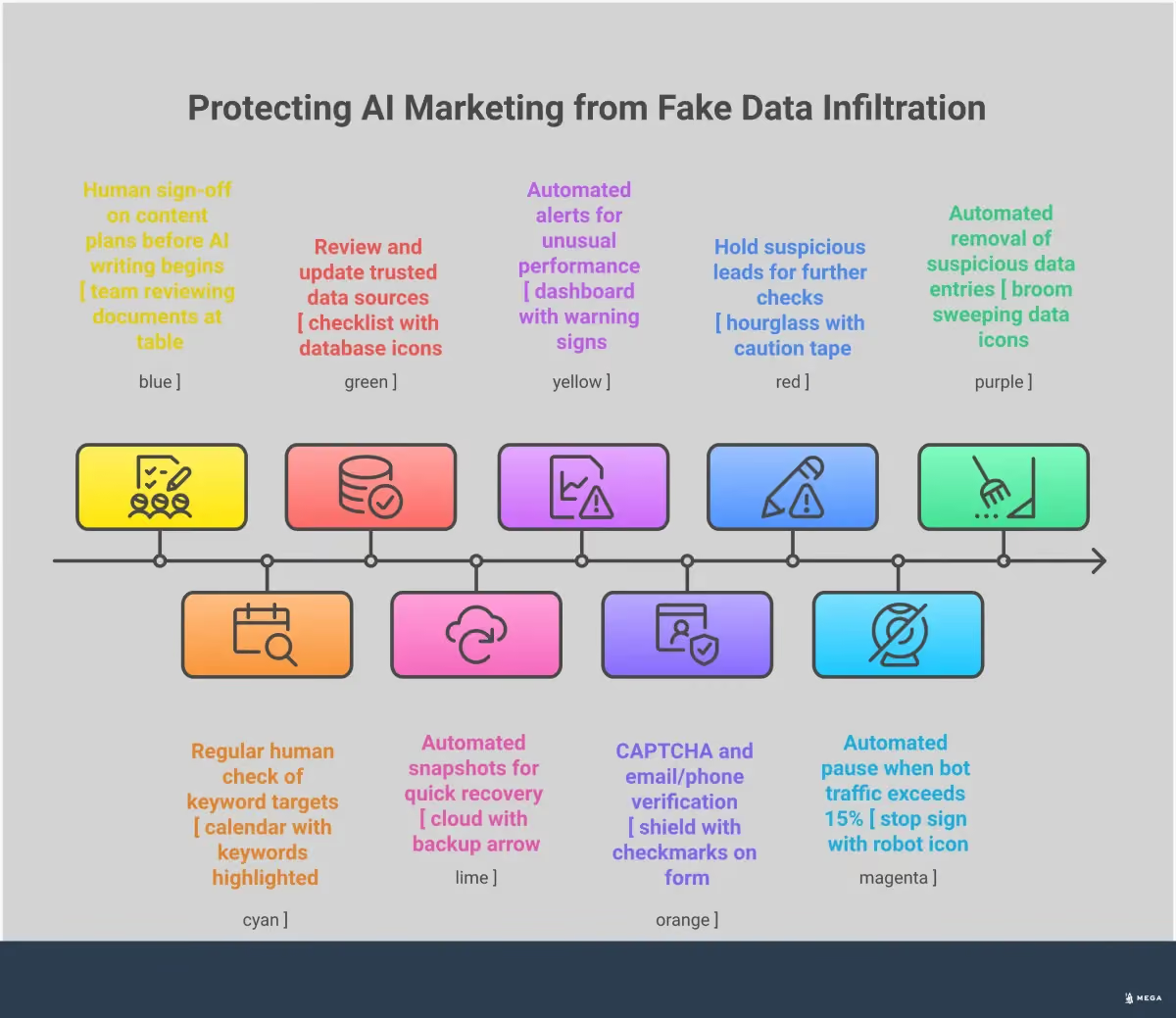
Add human-in-the-loop safeguards
Integrating human oversight is one of the most effective ways to ensure the reliability of AI-generated content and decisions. A human-in-the-loop system doesn’t mean you have to manually approve every small task. Instead, it involves setting up strategic checkpoints for review. This allows for the critical evaluation and correction of AI outputs, which helps mitigate the risks of spreading bad information. For example, a human can review a list of keywords before a campaign launch or approve final ad copy before it goes live. This approach combines the analytical power of AI with human judgment and contextual understanding, creating a more robust and trustworthy marketing operation.
Implement data validation rules
Your AI is only as good as the data it learns from. Establishing strong data validation protocols helps you cross-check AI-generated information against credible sources. This is a critical step in maintaining accuracy in your marketing content. For instance, if your AI agent drafts a blog post citing industry statistics, a validation rule would require it to reference the original, verifiable source. You can build a list of trusted industry publications, academic journals, and official reports for your AI to prioritize. This practice ensures the integrity of the data your business uses and shares, reinforcing your authority and credibility with your audience.
Require clear audit trails
Maintaining clear audit trails for AI-generated content is essential for accountability and troubleshooting. An audit trail documents the sources, data, and processes an AI agent uses to complete a task, creating a transparent record of its activity. If you notice an unexpected drop in performance or a strange campaign result, you can trace the agent’s steps to identify the source of the problem. This visibility is crucial for understanding how your AI systems make decisions and for ensuring they comply with legal and ethical standards. It allows you to track the origins of information, diagnose issues quickly, and maintain control over your automated marketing efforts.
What tools work against fake data?
Fighting back against fake data requires a modern toolkit. Just as AI can generate misinformation, it can also be trained to spot and neutralize it. For small businesses, this doesn't mean you need to become a data scientist overnight. Instead, it's about understanding the capabilities of the tools you use and ensuring they have the right safeguards built in.
Advanced platforms that offer paid ads or SEO automation often incorporate these defenses directly into their agents. They work behind the scenes to protect your campaigns from being derailed by corrupted information. The goal is to create a system that is not only powerful but also resilient. By combining different methods of verification and detection, you can build a protective layer around your marketing efforts, allowing your AI agents to operate with more reliable data and produce better results for your business.
Automated detection and fact-checking
Think of automated detection like a sophisticated spam filter for your marketing data. These systems are designed to identify the tell-tale signs of misinformation by learning from vast amounts of information that has already been verified. Many platforms partner with professional fact-checking organizations to tag false information, which helps train the AI to recognize similar patterns in the future. This process allows the system to flag suspicious data points early, before they have a chance to influence your campaign strategy or budget allocation. It’s a proactive defense that works to keep your data ecosystem clean from the start.
Multi-source verification
A single source of information is never enough, especially when that source is an AI model. Multi-source verification is the practice of cross-referencing information against several reliable and independent sources before accepting it as true. Instead of blindly trusting an AI-generated statistic or trend, a robust system will check it against established databases, reputable industry reports, or primary research. This principle of evaluating sources is critical for grounding your marketing decisions in reality. It ensures that the insights driving your campaigns are based on corroborated facts, not digital fiction that could lead you in the wrong direction.
Real-time system monitoring
The digital landscape changes in an instant, and your AI's knowledge base needs to keep up. Real-time system monitoring allows an AI agent to pull in and verify information from the live internet as it works. This approach, sometimes called Retrieval-Augmented Generation (RAG), prevents the AI from relying solely on its static, pre-existing training data, which could be outdated or flawed. By integrating real-time evidence from trusted sources, the system can provide responses and execute tasks based on the most current and reliable information available. This is essential for dynamic fields like SEO, where relevance and accuracy are paramount.
What should you do if fake data affects your system?
Discovering that fake data has infiltrated your marketing systems can be alarming, especially when you rely on AI to make autonomous decisions. The good news is that you can address the issue with a clear, methodical approach. Instead of panicking, think of it as a three-step process: identify the scope of the problem, stop it from spreading further, and then put measures in place to prevent it from happening again. Following these steps will help you regain control over your data, protect your marketing investment, and make your automated systems more resilient for the future.
Step 1: Detect and assess the problem
The first step is recognizing that you have a problem. Fake data can be subtle, so vigilance is key. Keep a close eye on your analytics for unusual patterns, like a sudden spike in traffic from an unexpected location or a jump in lead form submissions with no corresponding increase in sales. Research from MIT shows that false rumors spread faster and wider than true information, and the same principle applies to data in your marketing funnel. To assess the impact, start by isolating the timeframe when the anomalies began. Pinpoint which campaigns, channels, or content pieces are affected to understand the scale of the issue before you take action.
Step 2: Contain the damage
Once you’ve identified the source, your immediate priority is to stop the fake data from causing more harm. Think of it like digital quarantine. If a specific ad campaign is generating junk leads, pause it. If a particular webpage is attracting bots, temporarily unpublish it or add a CAPTCHA. Platform companies often partner with professional fact-checkers to tag fake information and slow its spread, and you can apply a similar logic. Isolate the compromised parts of your system to prevent the bad data from corrupting your historical reports, influencing your AI’s future decisions, or wasting more of your budget. This containment phase gives you the space to plan a proper recovery.
Step 3: Recover and update your system
After containing the immediate threat, it’s time to clean up and strengthen your defenses. Start by scrubbing the fake data from your systems. This might mean deleting batches of fake leads from your CRM or filtering out bot traffic from your analytics reports. Next, focus on prevention. Just as universities have adopted tools to address challenges in academic integrity from generative AI, your business needs robust verification processes. This could involve adding more stringent validation rules to your forms, refining your ad targeting to exclude problematic sources, or implementing a human review step for certain tasks. The goal is to build a more resilient system that can better identify and reject fake data automatically.
How to build long-term resilience against data manipulation
Protecting your marketing from fake data isn't a one-time fix; it's an ongoing commitment. Building resilience means creating a strong foundation that can withstand and adapt to new threats. Instead of just reacting to problems, you can proactively strengthen your systems and strategies. This involves a mix of human oversight, strategic partnerships, and the right technology. By focusing on long-term health, you ensure that your AI-driven marketing efforts remain effective, trustworthy, and aligned with your business goals, even as manipulation tactics evolve.
At MEGA AI, we believe in empowering businesses with tools that not only automate tasks but also provide a secure operational framework. Our agents are designed to work within a system that values data integrity, but true resilience comes from a holistic approach that you can start building today.
Foster a culture of critical thinking
The most powerful defense against misinformation is an informed team. Encourage yourself and your employees to approach data with a healthy dose of skepticism. This means asking questions about where information comes from and whether it seems plausible before acting on it. Strengthening your information ecosystem starts with education. Understanding the common tactics used in data manipulation helps everyone spot red flags early. Even with autonomous systems doing the heavy lifting, human intuition remains an invaluable asset in identifying anomalies that an algorithm might miss.
Build a network of trusted sources
You don't have to fight misinformation alone. Actively cultivate a network of reliable industry sources, partners, and community leaders. For local businesses, this could mean amplifying trusted voices in your community and collaborating on content with other reputable companies. By creating and participating in a trusted information network, you help insulate your brand from the noise of fake data. This approach also builds credibility with your audience, as they see you as a reliable source of information. This kind of localized community engagement is a powerful, grassroots way to maintain integrity.
Use technology as your first line of defense
The same technology that creates fake data can also be your best tool for fighting it. Modern AI platforms should be harnessed to detect and counteract manipulation. When choosing an AI marketing partner, look for one that prioritizes data integrity and transparency. For example, MEGA AI's agents are trained on massive, high-quality datasets, including over 450 million Google Search data points, which helps them distinguish between authentic and anomalous patterns. A robust platform should offer automated checks, data validation, and clear audit trails so you can always see what your agents are doing and why.