
AI is a powerful tool. In the right hands, it helps you build a content strategy that attracts and helps your ideal customers. In the wrong hands, it can create low-quality spam that gets your site penalized. Many business owners are hesitant to even start, fearing they’ll use it incorrectly. This guide is your instruction manual. We’ll show you the difference between creating helpful AI content and using it to manipulate search rankings. You’ll get a clear framework for using AI safely and effectively to grow your business with confidence.
Key Takeaways
- Prioritize helpful content over the creation method: Google rewards content that is valuable and serves the user, regardless of whether it was written by a human or assisted by AI. Avoid scaled content abuse by focusing on quality, not just volume.
- Combine AI efficiency with your unique expertise: Use AI as a tool to handle research, outlines, and first drafts, but always have a human review the final content. This ensures accuracy and allows you to add personal insights and a brand voice that AI cannot replicate.
- Delegate strategically and write what matters most yourself: Let AI handle structured, data-heavy content like FAQs or product descriptions. You should personally write high-stakes content, brand-defining materials, and expert analysis to build trust and authority.
Understanding the Technology Behind AI Content
Before you start using AI, it helps to have a basic grasp of what’s happening behind the screen. You don’t need a degree in computer science, but knowing the key concepts will help you choose the right tools and use them more effectively. Think of it like learning the difference between a flathead and a Phillips head screwdriver; both turn screws, but they’re designed for different jobs. The same is true for AI. Some models are built to create brand new content from scratch, while others are designed to refine and improve what you’ve already made. Understanding this distinction is the first step to making AI a valuable part of your content workflow.
The two main categories you’ll encounter are generative and transformative AI. Generative AI is what most people picture: an AI that writes an article or designs an image based on a prompt. Transformative AI, on the other hand, works with existing content to make it better. It can summarize a long report, rewrite a paragraph in a different tone, or even update an old blog post with new information to make it more relevant. Both types are incredibly useful for small businesses, but they solve different problems. Knowing which one to use, and when, will save you time and lead to much better results for your business.
Generative vs. Transformative AI
The main difference between generative and transformative AI comes down to their starting point. Generative AI begins with a blank slate and a prompt from you, creating something entirely new. It learns from massive datasets to produce text, images, or audio that mimics human creation. Transformative AI starts with content that already exists. Its job is to modify, enhance, or repurpose that content. For example, it might take a blog post you wrote last year and suggest ways to improve its click-through rate or re-optimize it for a recent search engine update. Both approaches are powerful tools for content creation and management.
Creating New Content with Generative AI
Generative AI is your go-to for creating new material. When you ask a tool like ChatGPT for a blog post outline or a social media caption, you're using generative AI. These models have been trained on vast amounts of information from the internet, allowing them to produce original content on almost any topic. For a small business owner, this can be a huge time-saver. It can help you brainstorm ideas, write first drafts, or create ad copy, letting you produce more content than you could on your own. The key is to guide it with clear prompts and use its output as a starting point, not the final product.
Improving Existing Content with Transformative AI
Transformative AI is all about making your existing content work harder for you. Instead of creating from scratch, it analyzes and improves what you've already published. This could mean summarizing a long article into key takeaways, translating content for a new audience, or rewriting a product description to be more persuasive. At MEGA AI, our Maintenance Agent is a perfect example of transformative AI in action. It identifies opportunities to improve the click-through rate (CTR) of your current articles and adds new, relevant information to help them rank higher. This approach helps you get more value from the content you’ve already invested time in creating.
Core Technologies: NLP and GANs
The magic behind AI content isn't really magic at all; it's just very clever technology. For written content, the core technology is Natural Language Processing (NLP). NLP is what allows AI models to understand, interpret, and generate human language in a way that sounds natural and coherent. When you use an AI writing assistant, it’s using NLP to predict the next best word in a sentence, ensuring the text flows logically. This is the tech that powers everything from simple chatbots to sophisticated AI that can draft entire articles for your blog.
When it comes to visuals, a different technology called Generative Adversarial Networks (GANs) often comes into play. A GAN consists of two competing neural networks: one that generates images and another that judges them against real-world examples. This process allows the AI to create incredibly realistic and original images, videos, and audio. For a small business, this means you can generate custom graphics for your website or social media posts without needing a graphic designer. Understanding these core technologies helps you appreciate what these tools can do and how they do it.
What Can AI Create? Exploring Different Content Types
The applications for AI in content creation are incredibly broad, extending far beyond just writing blog posts. AI can help you produce a full spectrum of marketing materials that can attract and engage your audience. From the text on your website to the images in your social media feed and even the background music in your promotional videos, AI tools can play a role in almost every aspect of your content strategy. This versatility is especially valuable for small businesses and local businesses, where time and resources are often limited. By handling some of the heavy lifting, AI frees you up to focus on the bigger picture of your business.
Thinking about AI as a multi-talented assistant can help you see new possibilities. Need a quick product description? AI can write it. Want a unique image for your next ad campaign? AI can generate it. Need a voice-over for a short video? AI can do that, too. By exploring the different types of content AI can create, you can find new and efficient ways to manage your daily work and reach your marketing goals. The key is to match the right AI capability to the right content need, creating a more dynamic and effective online presence for your brand.
Written Content for Marketing and SEO
Written content is often the foundation of a digital marketing strategy, and it’s where AI can have an immediate impact. AI tools excel at producing structured text like blog posts, email newsletters, social media updates, and product descriptions. They can analyze data to find relevant keywords and topics, helping you create content that is optimized for search engines from the start. For small businesses, this means you can build out a content-rich website that attracts organic traffic without spending weeks on research and writing. It’s about working smarter, not just harder, to get your message in front of the right people.
Platforms like MEGA AI take this a step further by integrating these capabilities into an end-to-end system. Our SEO tools use AI to perform automated keyword research and generate high-quality content drafts tailored to your business. This process simplifies content creation, making it accessible even if you don't have a dedicated marketing team. By letting AI handle the initial drafting and optimization, you can focus your energy on adding your unique expertise and brand voice to make the content truly stand out. This combination of AI efficiency and human oversight is the key to a successful content strategy.
Visuals: Images and Video Enhancements
A picture is worth a thousand words, and with AI, you can generate thousands of pictures in minutes. AI image generators can create custom visuals for your blog posts, social media, and advertisements based on simple text descriptions. This means you no longer have to rely on generic stock photos. Instead, you can create unique, on-brand images that capture your audience's attention. AI can also assist with video content by suggesting edits, generating subtitles, or even creating short animated clips, making professional-looking video content more accessible for small businesses.
This capability is especially powerful when it comes to advertising. For example, MEGA AI's Paid Ads platform uses AI to remix your existing content into hundreds of ad variations. This includes creating different visual combinations to see what resonates most with your audience across platforms like Meta and Google. By automating the creation of visual assets, you can test more creative approaches and optimize your ad spend more effectively, ensuring your campaigns deliver the best possible results without a massive budget or a design team.
Audio: Voice-overs and Music
Audio content is another area where AI is making significant strides. Need a professional-sounding voice-over for a product demo or an explainer video? AI voice generators can create realistic human speech in various languages and accents, often for a fraction of the cost of hiring a voice actor. This is perfect for small businesses looking to create engaging video content on a budget. Similarly, AI can compose royalty-free background music tracks for your videos, podcasts, or social media stories, ensuring your content has a polished and professional feel without any copyright issues.
The ability to generate and modify audio is also a game-changer for advertising, especially for businesses looking to reach a global audience. For instance, the MEGA AI platform can automatically translate voice-overs and closed captions into multiple languages. This allows you to adapt a single video ad for different markets quickly and efficiently. By removing language barriers, you can expand your reach and connect with new customers around the world, all while maintaining a consistent brand message across your campaigns. It’s a powerful way to scale your marketing efforts without scaling your workload.
Code and Interactive Content
While it might sound complex, AI can also help with technical tasks like writing code. You don't need to be a developer to use it. AI can generate simple HTML snippets for your website, like a custom button or a formatted text box, based on a plain English description of what you need. This can be incredibly helpful for making small tweaks to your site without having to hire a web developer. AI can also help you create more engaging, interactive content for your audience, such as generating the questions and logic for an online quiz or a customer feedback form.
This capability extends to creating more dynamic user experiences. AI tools can help you build interactive elements that adapt based on user input, making your website feel more responsive and personalized. For a local business, this could mean creating a simple calculator to help customers estimate the cost of a service or an interactive map to showcase your service area. By making your content more than just static text and images, you can hold your audience's attention longer and provide them with real value, which helps build trust and encourages them to become customers.
How Does Google View AI Content?
It’s the question on every business owner’s mind: Will using AI to create content hurt my search rankings? The short answer is no, as long as you do it right. Google’s core mission has always been to reward high-quality content that helps users. The method of creation—whether by a human, an AI, or a combination of both—is less important than the final product.
The official guidance is clear: Google focuses on the quality of content, not how it is produced. The key is to create content for people first, not just for search engine algorithms. When AI is used as a tool to produce original, helpful, and accurate information that serves your audience, it aligns perfectly with what Google wants to see. The problem arises when AI is used to generate low-quality content at a massive scale purely to manipulate search rankings. This is where the line is drawn between a helpful tool and a spam tactic. Using an AI agent like MEGA AI’s SEO service ensures your strategy is focused on creating valuable assets for your audience, not just churning out words.
What Google Actually Penalizes
Google’s penalties are not aimed at all AI-generated content, but specifically at its misuse. The search engine has been clear about targeting what it calls "scaled content abuse." This refers to the practice of generating hundreds or thousands of pages of low-value, often nonsensical text with the sole purpose of gaming the system. This is an aggressive spam technique that offers no real value to the reader.
If you’re using AI to help you write a few thoughtful blog posts or create product descriptions, you are not engaging in scaled content abuse. The penalty is for those who automate content creation without any human oversight, quality control, or intent to be helpful.
Helpful AI Content vs. Spam: What's the Difference?
Not all AI content is spam. The distinction comes down to intent and value. Spammy AI content is generic, unoriginal, and created without adding any unique insight or expertise. It’s designed to fill a page with keywords rather than answer a user's question. Google’s main concern is with this type of content overrunning the search results and making it harder for users to find what they need.
Helpful AI content, on the other hand, is used as a tool to assist in creating something valuable. It can help you research topics, structure your articles, and draft initial text that you then refine with your own expertise and brand voice. The final piece is original, well-written, and genuinely useful to your audience.
When Does AI Content Cross the Line into Spam?
The main question for many small business owners is where to draw the line. How can you use AI to create content efficiently without getting on Google’s bad side? The answer is simpler than you might think. It’s not about whether AI wrote the content; it’s about the intent behind it.
Google’s core mission is to provide users with helpful, reliable, and people-first content. If your primary goal is to create massive amounts of content to manipulate search rankings, you’re heading into spam territory. But if you use AI as a tool to produce original, high-quality content that genuinely helps your audience, you’re using it correctly. The line is crossed when the focus shifts from serving the user to gaming the system. Content created at scale with little to no value, originality, or human oversight is what Google targets as spam. This is why having a solid SEO strategy is more important than just producing a high volume of articles.
Why Quality Always Wins Over Quantity
Think of it this way: Google wants to be a trusted source of information. It rewards content that is original, insightful, and demonstrates expertise. Simply using AI to rephrase existing articles or generate generic text won’t cut it. Your content needs to add unique value. This means ensuring the information is accurate, well-researched, and answers the user's query completely.
Using AI should be about enhancing your ability to produce quality material, not just increasing your output. Tools can help you draft articles, but the final product must meet high standards of originality and usefulness. This is why a human touch is essential to verify facts, add unique perspectives, and ensure the content aligns with Google's helpful content system.
How Google Ranks Your Content
Google has become very clear about its stance on what it terms "scaled content abuse." This refers to the practice of generating large quantities of unoriginal, low-value pages with the primary purpose of manipulating search rankings. This is often done without human review and results in a poor user experience. If a website is publishing hundreds of generic AI-generated articles a day that offer no real insight, it’s a huge red flag for Google.
To stay on the right side of the guidelines, use AI to support a content strategy that prioritizes expertise and trust. You can do this by incorporating primary data, expert quotes, and unique insights into your AI-assisted content. The goal is to create assets that are genuinely useful to your audience, not just to fill pages with keywords. This approach builds authority and shows Google that you’re a credible source of information.
Understanding the Challenges and Risks of AI Content
Using AI for content isn't without its pitfalls. Like any powerful tool, you need to understand its limitations to use it safely and effectively. Being aware of the potential challenges from the start helps you create a workflow that avoids common mistakes. This isn't about being scared of the technology; it's about being smart. By anticipating issues like factual errors, hidden biases, and security risks, you can put safeguards in place. This ensures the content you produce is accurate, authentic, and truly represents your brand, helping you build trust with your audience instead of accidentally damaging it.
Factual Inaccuracy and "Hallucinations"
One of the most talked-about risks of AI is its tendency to "hallucinate," which is a technical way of saying it sometimes makes things up. Because AI models are designed to predict the next most likely word in a sentence, they can generate information that sounds plausible but is completely false or nonsensical. The AI doesn't understand truth; it only understands patterns in data. This means it can struggle with nuance and factual accuracy, presenting incorrect statistics or inventing events that never happened. This is why human oversight is absolutely critical.
You should treat every piece of AI-generated text as a first draft that needs to be verified. Before you publish anything, have a human expert—that’s you or someone on your team—fact-check all claims, statistics, and important details. This step is non-negotiable for maintaining your credibility. Think of the AI as a research assistant, not the final author. Its job is to give you a starting point, but it's your responsibility to ensure the final product is accurate and reliable for your customers.
Potential for Bias
AI models learn from the enormous amount of text and data available on the internet. Unfortunately, that data contains all of the existing human biases, both conscious and unconscious. As a result, AI can sometimes generate content that reflects these societal biases, leading to statements that might be unfair, stereotypical, or offensive. An AI model might use gendered language when it’s not appropriate or make assumptions based on biased training data. This can happen without any malicious intent from the tool itself; it's simply mirroring the patterns it learned.
To counter this, you must carefully review all AI-assisted content through the lens of your brand's values and commitment to inclusivity. Check for stereotypes, exclusionary language, or any other form of bias that could alienate your audience. This human review process ensures your content is welcoming to everyone and doesn't accidentally perpetuate harmful ideas. It’s a crucial step in maintaining a brand reputation that is built on respect and trust with your community.
Maintaining an Authentic Human Touch
While AI is great at assembling information, it can't replicate your unique voice, experiences, and brand personality. Content that lacks a human touch often feels generic, sterile, and fails to connect with readers on an emotional level. Your customers follow you because they trust your expertise and relate to your story. Relying too heavily on AI can strip that authenticity from your content, making it sound like everyone else's. The goal should be to use AI to enhance your ability to produce quality material, not just to increase your output.
The best approach is a partnership. Let AI handle the heavy lifting, like creating an outline, summarizing research, or writing a rough draft. Then, you step in to add your personal stories, unique insights, and expert opinions. Edit the text to match your brand's specific tone and style. This hybrid process combines the efficiency of AI with the irreplaceable value of your human expertise, resulting in content that is both helpful and genuinely you.
Copyright and Data Security Concerns
When you use an AI tool, you need to be aware of two major concerns: copyright and data security. Because AI models train on vast datasets from the internet, there's a small risk they might generate text that is too similar to copyrighted material. This could unintentionally lead to plagiarism. Several high-profile lawsuits are currently exploring this complex legal area. To be safe, always run your final content through a plagiarism checker before publishing.
Data security is another critical piece. The prompts and information you feed into an AI model could potentially be used to train it further or be seen by the AI provider. This is especially important if you're working with sensitive customer information or proprietary business data. You need to understand the privacy policy of any AI tool you use and be cautious about what you input.
The Importance of SOC2 and GDPR Compliance
When choosing an AI platform, look for indicators of strong data security practices, such as SOC2 and GDPR compliance. SOC2 is a certification that verifies a company has robust systems in place to protect customer data. GDPR is a set of regulations from the European Union that governs data protection and privacy. These aren't just acronyms; they are assurances that a service provider takes your data security seriously. Using tools that adhere to these standards helps protect your business and your customers' information from potential breaches. It's a key factor in building a trustworthy tech stack for your business.
How to Create Google-Friendly AI Content
Creating content that ranks well and resonates with readers isn't about tricking algorithms. It’s about being genuinely helpful. When you use AI, the same rules apply. Google’s focus has always been on the quality and usefulness of the content, not how it was made. By keeping a few core principles in mind, you can use AI to create high-quality, effective content that both your audience and search engines will appreciate.
Start by Providing Real Value
Your primary goal should always be to create content that serves your audience. Think about the person behind the search query. What problem are they trying to solve? What question do they need answered? Your content should provide a clear, comprehensive, and accurate solution. AI can help you research topics and structure information, but the final piece must be genuinely useful. By focusing on creating valuable, informative content, you build trust with your audience and demonstrate to search engines that your site is a reliable resource. This approach aligns perfectly with Google's emphasis on rewarding content created for people, not just for search rankings.
Write for Your Readers, Not Just for Robots
Valuable information is only effective if people actually read it. User engagement is a key signal that your content is hitting the mark. This means presenting your information in a clear, accessible, and interesting way. Use AI to help you break down complex topics with clear headings, bullet points, and short paragraphs that are easy to scan. The goal is to create a positive user experience that keeps visitors on your page longer. When users find your content easy to digest and navigate, they are more likely to read it thoroughly, which tells search engines that you’re providing a quality answer to their query.
Inject Your Unique Expertise and Voice
This is where you turn good AI-generated content into great content. AI can provide a solid foundation, but it can't replicate your personal experience, unique insights, or brand voice. After generating a draft, it's crucial to have a human expert review, edit, and enrich it. Add personal anecdotes, case studies, or original data that only you can provide. This human touch is what builds authority and trust. It ensures your content stands out and reflects a unique perspective. Services like MEGA AI's SEO agent handle the heavy lifting of content creation, freeing you up to infuse your expert knowledge where it matters most.
Follow Google's "Who, How, Why" Framework
To keep your content strategy aligned with Google's goals, you can use their simple "Who, How, Why" framework. This approach helps you focus on what matters most for building trust. First, consider who created the content. This is where your human expertise is critical, as it establishes credibility. Next, think about how it was made. Was it based on original research, data analysis, or assisted by AI tools? Finally, be clear about why it was created. The purpose should always be to provide genuine help to the reader, not just to rank in search results. Following this guidance ensures you're creating content that is both valuable and transparent, which is the foundation of a strong SEO strategy.
Be Transparent About Your AI Usage
Being transparent about your process, especially when AI is involved, is a straightforward way to build credibility with your audience. If a reader might reasonably wonder how a piece of content was created, it’s a good practice to provide a simple explanation. This doesn't need to be a long, technical breakdown. A brief note at the beginning or end of an article, such as, "This post was researched with the help of AI and written by our expert staff," is often sufficient. This honesty shows respect for your readers and builds a stronger relationship, demonstrating that you are confident in the quality and accuracy of your work, regardless of the tools you used to produce it.
Why You Shouldn't List AI as an Author
While transparency is important, you should avoid listing AI as the author of your content. Google's guidance is clear on this: AI is a tool, not a creator with experiences, beliefs, or accountability. Attributing authorship to a person or your organization signals that a real human is standing behind the information, ready to vouch for its accuracy and quality. This directly supports the principles of E-E-A-T (Experience, Expertise, Authoritativeness, and Trustworthiness). Instead of a byline for an AI, it's better to explain its role in the creation process. This positions AI correctly as a powerful assistant that helps your team produce helpful content more efficiently, while keeping your brand's human expertise at the forefront.
How to Build a Solid AI Content Framework
A solid framework is your best defense against creating content that feels generic or gets flagged as spam. It’s a set of rules and processes that ensures every piece of AI-assisted content meets your quality standards and aligns with Google’s guidelines. Think of it as a playbook for your team that outlines how to use AI responsibly to create genuinely helpful content for your audience. This structure helps you scale your SEO efforts without sacrificing the quality that builds trust with readers and search engines.
Set Clear Guidelines for Your Team
Start by defining how your business will use AI. These guidelines should be clear, whether you're a solo entrepreneur or managing a small team. Decide which AI tools are approved and for what specific tasks, like brainstorming outlines or generating initial drafts. It's also important to outline what AI shouldn't be used for, such as creating entire articles without review or generating content on sensitive topics. This helps you maintain a consistent and high-quality output. A clear policy also helps you maintain a clean backlink profile by preventing the creation of low-value content that could attract spammy links.
Establish Your Content Quality Standards
Your content standards are the foundation of your framework. AI-generated text must be original, accurate, and useful to your audience. Before you even start creating, define what a high-quality article looks like for your brand. This includes standards for tone of voice, formatting, and factual accuracy. Using AI content detection tools is a good step to ensure originality and avoid potential penalties. Your goal is to create content that is so factually dense and well-structured that it can easily be integrated into Google’s generative answers, establishing your site as a credible source of information.
Define the Role of Your Human Editors
AI is a powerful assistant, but it shouldn't be the final decision-maker. Your framework must define where and when a human needs to step in. Every piece of AI-generated content should be reviewed by a person for accuracy, tone, and brand alignment. This human touch is where you add unique insights, personal stories, and expert commentary that AI can't replicate. This process of review and refinement is key to creating SEO-friendly AI writing that feels authentic. At MEGA, we believe in this model, which is why we add humans in the loop for more complex tasks.
Using AI Strategically in Your Content Workflow
Using AI strategically means treating it as a powerful assistant, not a replacement for your expertise. When you know where to apply its strengths, you can produce high-quality content faster and more efficiently. It’s about working smarter, not just creating more. By integrating AI into the right stages of your workflow, you can focus on what matters most: delivering genuine value to your audience.
Know When and Where to Use AI
Think of AI as your research and operations partner. It’s incredibly effective for tasks that are data-heavy or repetitive. Use it to generate topic ideas, conduct keyword research, create detailed outlines, and write meta descriptions. AI can also handle technical tasks, like performing an SEO audit to find broken links or toxic backlinks that might harm your rankings. By delegating these foundational steps to AI, you free up your time to focus on the creative and strategic aspects of your content.
Which Content Types Are Best for AI?
Not all content is created equal, and some formats are better suited for AI assistance. AI excels at creating structured, fact-based content. Think product descriptions, frequently asked questions (FAQs), and summaries of data or reports. This type of content often requires factual density and clear information, which AI can generate quickly and accurately. Using AI for these pieces helps you build a foundation of helpful content that can perform well in Google’s generative answers and AI summaries, getting straight to the point for your audience.
Automating SEO Research and Content Generation
AI can take on the time-consuming parts of SEO, like keyword research and creating article outlines. It's great at generating first drafts for structured content, such as product descriptions or FAQ pages, where facts and clarity are key. This process lets you skip the blank page and jump straight to refining the content with your unique expertise. By treating AI as a powerful assistant, you can produce high-quality content more efficiently. For small businesses, tools like MEGA AI's SEO platform automate this entire workflow, from research to generation, so you can focus on running your business while your content strategy works for you.
Maintaining and Updating Existing Articles
Your existing content is a valuable asset, and AI can help you keep it that way. Instead of letting articles become outdated, you can use AI to identify opportunities for improvement. This could mean finding new keywords to include, adding sections to make an article more comprehensive, or rewriting titles and meta descriptions to improve click-through rates. For example, MEGA AI’s Maintenance Agent is designed to do just this—it analyzes your existing content and suggests updates to help it rank higher. This approach ensures your articles remain relevant and helpful, which is a strong signal to search engines. Of course, a final human review is always necessary to confirm the changes add real value for your readers.
Add Expert Commentary to Personalize Content
This is where you make AI-assisted content truly your own. After AI generates a draft, your job is to infuse it with your unique perspective, experience, and brand voice. Add personal anecdotes, expert opinions, or case studies that an AI can't replicate. This human layer is what builds trust with your audience and signals expertise to Google. An originality check is a good final step, but true personalization goes beyond that. It’s about adding value that only you can provide, turning a generic article into a go-to resource.
What Content Should You Always Write Yourself?
AI is a powerful partner in content creation, but it’s not meant to replace your unique expertise entirely. Think of it as a highly efficient assistant that can handle the heavy lifting, freeing you up to focus on the tasks that require a human touch. Certain types of content carry more weight, either because they deal with sensitive information, define your brand, or showcase your deep industry knowledge.
Handing these pieces over to AI without careful oversight can dilute your message and, in some cases, create risk for your business. The goal isn't to avoid AI but to use it strategically. By identifying which content needs your direct input, you can build a process that combines the speed of automation with the authenticity and authority that only you can provide. This balanced approach ensures your content is not only effective for SEO but also builds genuine trust with your audience. Knowing when to step in and write something yourself is just as important as knowing when to delegate.
Your High-Stakes, High-Impact Content
High-stakes content is anything that could have a significant real-world impact on your readers' health, finances, or safety. This includes legal advice, medical information, and detailed financial guidance. This type of content falls under Google's stringent E-E-A-T guidelines, where experience, expertise, authoritativeness, and trustworthiness are paramount. While AI can summarize information, it cannot verify facts with the same level of scrutiny as a human expert. For these topics, your personal experience and professional qualifications are your greatest assets. Always write this content yourself or have it thoroughly reviewed by a qualified professional to ensure it is accurate, compliant, and safe for your audience.
Anything That Defines Your Brand Voice
Your brand's voice, mission, and core values are the heart of your business. Content that communicates these elements—like your "About Us" page, mission statement, or key policy announcements—should come directly from you. AI can mimic a tone, but it can't capture the genuine passion and nuance that defines your brand story. These materials build a direct connection with your audience and establish your company's personality. Writing them yourself ensures they are authentic and truly reflect your vision. This is your opportunity to share your "why" and create a memorable identity that resonates with customers on a personal level, something that is core to building a lasting brand reputation.
Content That Requires True Expert Analysis
While AI is excellent at gathering and structuring existing information, it can't create original insights or offer a unique point of view. Content that relies on your specific expertise, industry analysis, or forward-thinking predictions should always be written by you. This includes thought leadership articles, case studies, and in-depth product reviews where your personal experience is the main value proposition. Your audience comes to you for your perspective, not a summary of what's already available online. Sharing your expert opinion is how you build authority and differentiate yourself from competitors. This is where you move beyond simply answering a question and start leading the conversation in your field.
How to Set Up Quality Control for AI Content
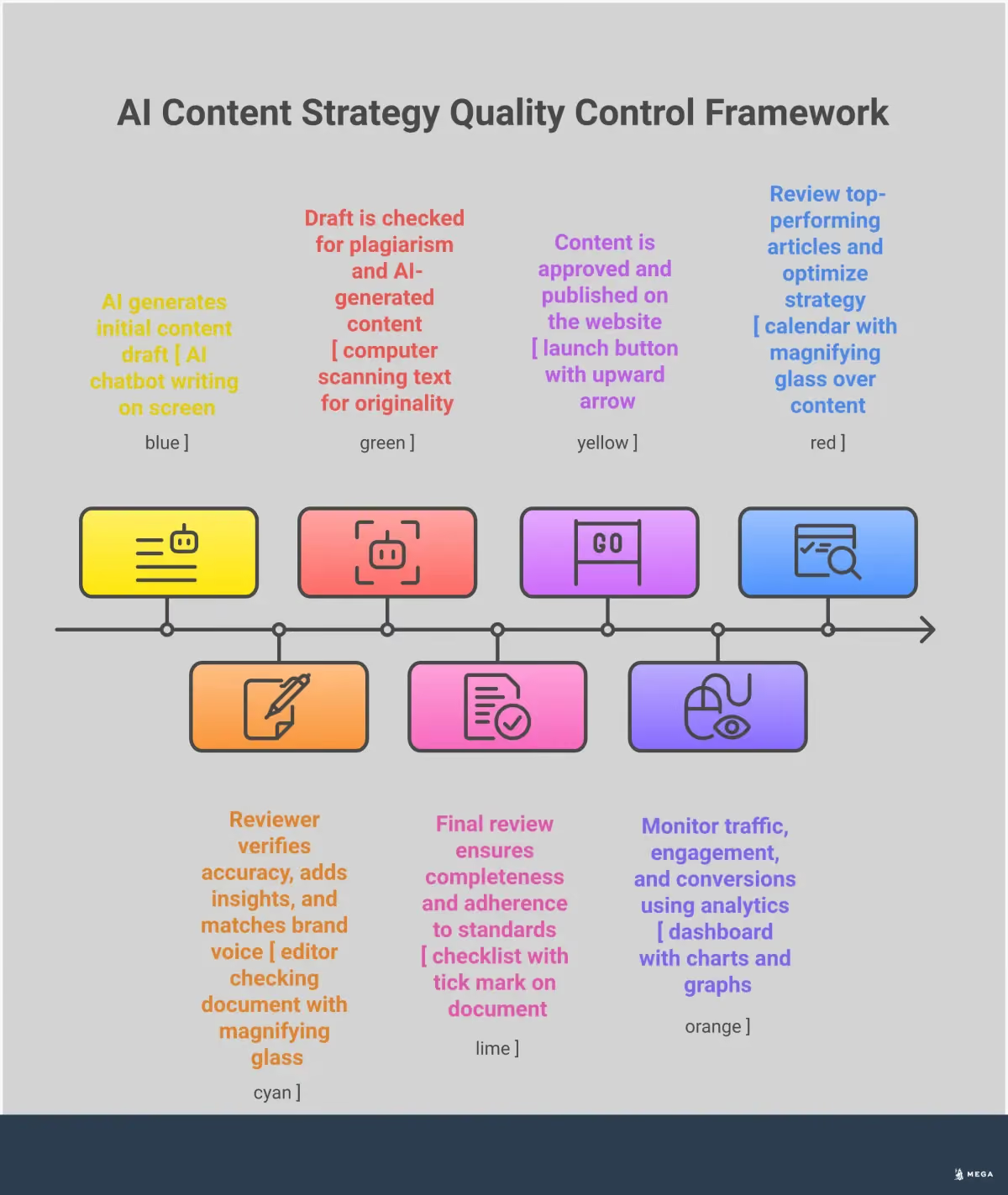
Using AI for content doesn't mean you can set it and forget it. To build a sustainable strategy that Google will reward, you need a system of checks and balances. Think of it as a safety net that ensures every piece of content published under your name is accurate, helpful, and a true reflection of your brand. Creating quality controls protects your reputation and your search rankings by catching potential issues before they go live.
This process doesn't have to be complicated. It’s about building a simple, repeatable workflow that combines the speed of AI with the critical thinking of a human expert—you. By establishing a clear review process, checking for originality, and tracking performance, you can confidently scale your content creation. This framework helps you maintain high standards, ensuring your AI-assisted content consistently meets the needs of your audience and the guidelines of search engines.
Create a Human-Led Review Process
Before any AI-generated content is published, a human should review it. This step is non-negotiable. The goal of the review is to verify factual accuracy, refine the tone to match your brand voice, and add unique insights that only you or your team can provide. An effective review process ensures your content is not just technically correct but also genuinely helpful and authentic.
Create a simple checklist for your reviewer. Does the article answer the user's question completely? Are all claims backed by credible sources? Does it sound like it came from your business? This human touch is what separates valuable, expert-driven content from generic AI output. A consistent review process also helps you maintain a clean and authoritative online presence, which is crucial for building trust with both users and search engines.
Check for Originality and Plagiarism
While AI tools are designed to generate unique text, they learn from vast amounts of existing online content. This means there's always a small risk they might produce something that closely resembles another source. To protect your site from potential penalties, it's essential to run all AI-generated drafts through a plagiarism checker.
Beyond simple plagiarism, you should also use AI content detection tools. These tools help ensure the content is original and doesn't have the robotic feel that can sometimes signal low-quality AI output to search engines. Making originality checks a standard part of your workflow is a critical step in publishing content that is both unique and trustworthy, helping you build a strong foundation for your SEO efforts.
Using AI Detection Tools
As a final step in your quality control process, you can use AI detection tools. These tools analyze text to estimate the likelihood that it was written by an AI. They aren't a substitute for a detailed human review, but they can serve as a useful final check. An AI detector can help you spot sections that might sound robotic or unnatural before you publish. Think of it as one last safety measure to ensure your human-edited content feels authentic and original, which is key for building trust with your readers and maintaining a high standard for your brand's voice.
Understanding Accuracy and Limitations
It's important to know what AI detection tools can and can't do. They are getting better, and some can effectively identify text from various AI models, even if it's blended with human writing. This is helpful for catching content that might come across as low-quality. While some tools claim high accuracy rates, no detector is foolproof. They can sometimes produce false positives, flagging human writing as AI-generated. For this reason, you should use them as a guide to highlight areas that may need another look from a human editor, rather than as a definitive judgment on the content's quality.
Language-Specific Performance
If your business creates content in multiple languages, keep in mind that a detector's accuracy can change depending on the language. Many top platforms now support a wide range of languages with solid performance. For example, a tool might achieve over 99% accuracy for English content but slightly lower rates for French or Spanish. This makes them a flexible choice for businesses with a global audience that need to uphold quality standards everywhere. Before committing to a tool, it's a good idea to check its documented accuracy for the specific languages you work with to make sure you're getting a dependable analysis.
Track the Right Performance Metrics
The only way to know if your AI content strategy is working is to measure its impact. Once your content is live, you need to track key performance metrics to understand how users and search engines are responding to it. Pay close attention to organic traffic, keyword rankings, click-through rates, and time on page. These metrics will tell you whether your content is resonating with your audience.
If you see positive trends, it’s a strong signal that your quality controls are effective and that you’re creating helpful content. If a piece of content isn't performing well, use that data to refine your prompts and review process. Consistently monitoring SEO performance allows you to double down on what works and improve what doesn’t, creating a feedback loop that continuously strengthens your content strategy.
How to Measure the Success of Your AI Content
Creating content with AI is just the first step. To know if your strategy is working, you need to track its performance. Measuring success isn't just about watching your search rankings, though that's part of it. It’s about understanding if your content truly connects with your audience and drives them to act. The right metrics will tell you what’s working and where you need to adjust, ensuring your AI-powered content delivers real business value.
Think of it like this: you wouldn't run a paid ad campaign without tracking clicks and conversions. The same principle applies to your content. By focusing on a few key areas—user engagement, SEO performance, and conversions—you can build a clear picture of your return on investment. This data-driven approach helps you refine your process, ensuring that every piece of AI-assisted content contributes to your growth. It also proves that you're creating helpful content that users and search engines trust, not just adding noise.
Look at User Engagement Signals
Engagement metrics tell you how people interact with your content once they land on your page. Are they sticking around to read, or are they leaving immediately? Key metrics to watch include time on page, bounce rate, and scroll depth. A high time on page and low bounce rate suggest that readers find your content valuable and relevant. You can find this data in Google Analytics. Strong engagement sends positive signals to Google, indicating that your content satisfies user intent. AI can help you understand user behavior and optimize your pages to keep visitors engaged longer.
Monitor Your SEO Performance and Rankings
SEO performance is a direct indicator of how well your content is resonating with search engines. The most important metrics here are organic traffic, keyword rankings, and backlinks. Use Google Search Console to see which queries are bringing people to your site and how your pages rank for specific keywords. An increase in organic traffic and improved rankings for your target keywords are clear signs of success. Good AI for SEO helps create factually dense content that aligns with what search engines are looking for, which can lead to steady growth in visibility and traffic over time.
Track Conversions and Business Impact
Ultimately, your content should support your business goals. Whether a conversion means a product purchase, a form submission, or a phone call, you need to know if your AI content is driving these actions. Set up goal tracking in Google Analytics to attribute conversions to specific blog posts or landing pages. This is the most important way to measure the ROI of your content efforts. When you see that AI-generated articles are leading to new customers, you know your strategy is working. This focus on quality and results helps you avoid creating content that could be flagged as scaled content abuse.
Common AI Content Mistakes to Avoid
AI can be a powerful partner in your content strategy, but it's easy to fall into a few common traps. Using AI effectively means understanding where the lines are drawn between helpful automation and low-effort spam. Steering clear of these mistakes will help you create content that both your audience and Google will appreciate, building a sustainable foundation for growth.
Scaling Content at the Expense of Quality
One of the biggest temptations with AI is the ability to generate content at an incredible speed. However, using this power to flood your site with hundreds of generic, low-quality articles is a fast track to a penalty. Google has a name for this: "scaled content abuse." This happens when a site publishes a large volume of content created without human oversight, purely to manipulate search rankings. The focus is on quantity, not quality. Instead of churning out content daily, focus on a strategic publishing schedule that allows for proper review and ensures every piece you publish serves a real purpose for your audience.
Forgetting the 'Helpful Content' Rule
Not all AI-generated content is created equal. If the information is generic, factually incorrect, or lacks any real insight, it won't help your readers or your rankings. Search engines are getting better at identifying content that offers little value. This is why human oversight is non-negotiable. Every piece of AI-assisted content should be reviewed for accuracy, originality, and helpfulness. Think of AI as a first-draft assistant, not the final author. Using AI content tools requires a commitment to quality control to ensure the final product is polished, trustworthy, and genuinely useful.
Chasing Volume Instead of Value
Ultimately, the mistakes of content scaling and low-quality publishing boil down to one core issue: prioritizing volume over value. A successful content strategy is built on creating assets that solve problems and answer questions for your audience. One in-depth, well-researched article that becomes a go-to resource is far more valuable than 50 thin articles that barely scratch the surface. In the current search landscape, AI for SEO is most effective when it helps create factually dense content that satisfies user intent. Focus on creating the best possible answer for a given query, not just on publishing another page.
How to Scale AI Content Without Sacrificing Quality
Scaling your content production with AI is a powerful way to grow your online presence, but it requires a thoughtful approach. The goal isn't just to create more content; it's to create more high-quality content that serves your audience and meets search engine standards. This means finding the right balance between automation and human expertise, building a strategy that lasts, and staying current with search engine rules. By focusing on quality at every step, you can use AI to build a stronger, more effective content program.
Balance Automation With a Human Touch
Think of AI as a highly efficient assistant, not a replacement for your team's expertise. While AI can handle the heavy lifting of drafting articles, outlines, and research, human oversight is what adds the final layer of polish and authority. A human editor should always review AI-generated drafts to check for factual accuracy, inject your unique brand voice, and add personal anecdotes or expert insights. This process ensures the originality of AI-generated text and adds value that a machine alone cannot. Remember, Google doesn't penalize AI content; it penalizes low-quality content that doesn't help the user, regardless of how it was made.
Create a Sustainable Long-Term Strategy
A successful AI content strategy goes beyond just publishing articles. It involves creating a system that consistently adds value for your audience. Instead of just competing on word count, think about how you can use AI to enhance your content with unique elements. This could mean using AI to analyze data for an original report, generate scripts for video content, or create outlines for in-depth case studies. Fostering a culture of innovation where your team experiments with AI tools is key. A sustainable strategy focuses on building a library of genuinely helpful resources that position your brand as a trusted authority in your field.
Stay Updated on Search Engine Guidelines
Search engine algorithms are constantly changing, and your content strategy needs to be flexible enough to adapt. Google has been clear about cracking down on "scaled content abuse," which targets sites publishing large volumes of unedited, low-value AI content. To stay on the right side of these guidelines, it's important to stay informed about what search engines consider helpful. Regularly review Google's own guidance on creating helpful content and perform content audits to ensure your existing articles remain fresh, accurate, and valuable. This proactive approach helps you maintain a healthy backlink profile and avoid potential penalties down the line.
AI Content Policies Beyond Google
While Google’s guidelines get most of the attention, it’s important to remember that other platforms have their own rules for AI-generated content. As AI becomes more integrated into our daily lives, social media and content platforms are establishing policies to ensure transparency and authenticity. These rules often focus on clearly labeling AI-generated media to prevent misinformation and maintain user trust. For small businesses, this means that your content strategy needs to be mindful of the specific rules on every platform where you have a presence, not just your website. Understanding these policies helps you build a trustworthy brand and avoid potential issues with your accounts.
TikTok's Labeling Requirements for AI Content
TikTok is a great example of a platform taking a clear stance on AI. The platform requires creators to label any content that is either entirely made by AI or significantly altered by it, especially if it depicts realistic scenes, sounds, or people. This policy is all about transparency. It helps viewers understand what they are watching and prevents the spread of convincing but fake media. For businesses using TikTok, this means if you use AI to create a realistic video ad or image, you must use the platform’s built-in labeling tools. This simple step helps you comply with the rules and builds trust with your audience by being upfront about your creation process.
AI's Role in Careers and Monetization
The rise of AI isn't just changing how we create content; it's also creating entirely new economic opportunities. From new career paths in tech to new services that small businesses can offer, AI is reshaping the job market. For entrepreneurs and local business owners, this technology opens up new ways to generate revenue and work more efficiently. Understanding how to leverage AI can give you a competitive edge, whether you're looking to expand your service offerings, streamline your operations, or even build a new business from the ground up. It’s a tool that can help you make money by working smarter, not just harder.
New Career Paths in AI Engineering and Data Science
On a larger scale, AI has created a demand for highly specialized roles like AI engineers, machine learning specialists, and data scientists. These professionals are the ones building and refining the AI models that power the tools we use every day. While you might not be looking to become an AI engineer yourself, understanding that these roles exist helps put the technology in context. The growth in this field shows how deeply AI is being integrated into the economy. For small businesses, this trend means that AI tools will only become more powerful and accessible over time as more experts enter the field to build them.
Using AI to Offer Creative Services
This is where AI becomes a game-changer for small businesses. You can use AI to expand your existing services or offer entirely new ones. For example, a marketing consultant can use AI to quickly draft blog posts, social media captions, or ad copy for clients. A graphic designer can use AI image generators to create initial concepts or marketing materials. By using AI as an assistant, you can complete projects faster and take on more clients without sacrificing quality. This allows you to scale your creative services and generate more revenue without needing to hire a large team.
Understanding Copyright for AI-Assisted Work
As you start using AI to create content for your business, it's important to understand the basics of copyright. Generally, content created entirely by an AI without any human creative input is considered public domain, meaning it can't be copyrighted. However, the situation changes when you get involved. If you take an AI-generated image or piece of text and significantly modify it with your own creative work, your contributions can be protected by copyright. This distinction is crucial. It means the value you add through editing, refining, and personalizing AI content is what makes it a unique asset for your business.
The Future of AI in Content Creation
The world of AI is moving fast, and what we see today is just the beginning. The future of content creation will likely involve even deeper collaboration between humans and machines, leading to new forms of media and more personalized experiences for audiences. As the technology evolves, we can expect AI to become an even more integrated and intuitive partner in the creative process. For business owners, staying aware of these trends is key to building a forward-thinking strategy that can adapt and thrive. The focus will continue to shift toward using AI not just for efficiency, but for innovation and creating richer, more engaging content.
The Rise of Multi-modal Content
Looking ahead, one of the most exciting developments is the rise of multi-modal AI. This means AI will be able to create content that seamlessly blends text, images, video, and audio into a single, immersive experience. Imagine a blog post that doesn't just have an embedded video but generates a unique, interactive visual experience for each reader based on the text. This will allow businesses to create far more engaging and personalized content that captures attention in a crowded digital landscape. As these tools become more common, the definition of a "piece of content" will expand far beyond a simple article or video.
Advances in Deepfake Detection
With the good comes the bad, and as AI gets better at creating realistic content, it also gets better at creating convincing fakes, or "deepfakes." However, the same technology is being used to fight this problem. The future will bring more advanced AI tools designed specifically to detect AI-generated content and verify the authenticity of media. For businesses, this means that maintaining trust will be more important than ever. Using AI responsibly and being transparent with your audience will be critical, as new technologies emerge to help users distinguish between real and fake content.
The Shift Toward Human-AI Collaboration
The future isn't about AI replacing human creators; it's about AI working alongside them as a powerful assistant. AI will handle the repetitive and time-consuming tasks, like research, data analysis, and drafting, freeing up humans to focus on strategy, creativity, and adding their unique expertise. This collaborative model is the foundation of platforms like MEGA AI, which are designed to automate the heavy lifting of SEO and content creation so you can focus on the big picture. This partnership allows you to produce better content, faster, by combining the analytical power of AI with the creative spark of a human mind.
Evolving Rules and Regulations
As AI technology becomes more widespread, the conversations around its responsible use will continue to grow. We can expect to see new laws and regulations emerge that address issues of content ownership, data privacy, and authenticity. For businesses, this means that staying informed about the legal landscape will be an ongoing process. The rules that govern AI content today will likely evolve, and adapting to these changes will be essential for long-term success. Being proactive about ethical and responsible AI use will not only keep you compliant but also help you build a brand that your customers trust.