
If you’ve ever wondered why some businesses seem to pop up everywhere on social media, the answer is often simpler than you think. It’s not just about having a huge following or a massive ad budget. It’s about understanding that platforms like Instagram, TikTok, and YouTube are powerful search engines. People no longer start every search on Google; they turn to social media for recommendations, tutorials, and local services. This shift in user behavior creates a huge opportunity for small businesses. By treating your social profiles like a second website, you can connect with customers who are actively looking for what you offer, right when they need it. This guide will show you how to build a social media SEO strategy that gets your business discovered.
Key Takeaways
- Optimize Your Profiles for Social Search: Treat social media platforms like individual search engines. Incorporate relevant keywords and conversational phrases into your bio, captions, and on-screen text to ensure your business is discoverable when users search for solutions.
- Prioritize Engagement to Signal Relevance: Social algorithms show valuable content to more people. Encourage meaningful interactions like comments, shares, and saves to signal that your content is relevant, which helps increase its organic reach.
- Create a Sustainable Content System: Avoid inconsistent posting by building a manageable workflow. Use a content calendar to plan ahead, adapt your content for each platform, and use automation to maintain a steady presence without burning out.
What is social media SEO?
Social media SEO is the practice of optimizing your content to be discovered through search functions on social platforms. While traditional SEO focuses on ranking in search engines like Google, social media SEO targets the search bars within apps like Instagram, TikTok, YouTube, and Facebook. Think of each platform as its own powerful search engine with a built-in, highly engaged audience.
The goal is to make your brand visible when users search for keywords, hashtags, or topics relevant to your business. People’s search habits are changing; they no longer start every query on Google. Instead, they turn to social media for product reviews, local recommendations, and visual inspiration. A solid social media SEO strategy ensures your business shows up in those critical moments of discovery, connecting you with potential customers directly on the platforms they use most. This approach helps you build a presence where the conversation is already happening.
How social platforms act as search engines
Every day, users type queries into social media apps to find exactly what they need. Someone might search Instagram for “best brunch in Brooklyn,” look up a DIY tutorial on YouTube, or find product demonstrations on TikTok. These platforms have evolved from simple content feeds into complex discovery engines that process billions of searches. They analyze your profile bio, post captions, video transcripts, and hashtags to understand what your content is about. When a user searches for a relevant term, the platform’s algorithm sorts through the content to provide the most useful results. This is why a well-optimized profile and descriptive captions are no longer optional—they are essential for getting found.
The link between social signals and search rankings
On social media, engagement is a powerful ranking factor. Social signals are the actions users take on your content, such as likes, comments, shares, and saves. When a post receives high engagement, it signals to the platform’s algorithm that the content is valuable and relevant. The algorithm then rewards that content with greater visibility, pushing it higher in search results and suggesting it to more users. Platforms prioritize content that keeps people on the app longer. A post that sparks conversation or gets saved to a collection is seen as more valuable than one that is quickly scrolled past. This direct link between engagement and visibility is the core of social media SEO.
Why social media SEO is important for small businesses
Thinking of social media as just a place to post updates is a missed opportunity. These platforms have become powerful search engines in their own right, and for small businesses, they represent a direct line to new customers. When people are looking for recommendations, solutions, or local services, their search often starts on Instagram, TikTok, or Facebook long before they open Google. Mastering social media SEO gives you a competitive edge by making your business discoverable where your audience is already spending their time. It’s about showing up as the answer when potential customers ask a question.
How user search habits are changing
The way people look for information has fundamentally changed. Instead of typing in short keywords, users now search with full questions and conversational phrases. As marketing expert Neil Patel notes, "People search in sentences now, not keywords... If your content doesn't match that language, the algorithm has no idea you're the solution." This means your social media content needs to directly address the questions, problems, and needs of your target audience. Think about what your ideal customer would type into a search bar. By creating posts that use this natural language, you position your business to be found by people who are actively looking for what you offer. This shift in consumer search behavior makes your social content a critical asset for discovery.
A cost-effective way to increase visibility
For small businesses, every marketing dollar counts. Social media SEO is a cost-effective way to build brand awareness and drive traffic without a large ad budget. When you create valuable content that answers questions and encourages engagement, social platforms reward you with more visibility. The goal of these platforms is to keep users engaged, so content that performs well gets shown to a wider audience organically. Your visibility grows when people take action on your content, whether it's a comment, a share, or a purchase made directly through the app. Creating helpful content builds a foundation of visibility that compounds over time, establishing your brand as a trusted authority in your field. This approach helps you attract new customers consistently.
How social media algorithms work
Think of social media algorithms as the gatekeepers of a user’s feed. Their main job is to sort through the massive amount of content published every second and show each person what they’re most likely to find interesting and relevant. To do this, they use a complex set of rules and signals to rank posts, prioritizing content that keeps users on the platform longer. These systems analyze everything from a user's past behavior—like the accounts they interact with and the types of posts they’ve liked—to the specifics of the content itself, such as the caption, visuals, and hashtags used.
For a small business, understanding the basics of how these algorithms function is the first step to creating a strategy that gets your content in front of the right people. While the exact formulas are secret and always changing, the core principles behind what gets prioritized remain fairly consistent. By learning these principles, you can stop guessing and start creating content that the algorithms are designed to show to a wider audience. This means moving from a "post and pray" approach to a more intentional strategy where every piece of content is optimized for discovery.
Key content ranking factors
Algorithms look at several key factors to decide if a post is worth showing to more people. First is user behavior. Platforms analyze a user’s past interactions to predict what they’ll engage with in the future. If someone frequently likes posts from accounts similar to yours, your content is more likely to appear in their feed. Content relevance is another major factor. The algorithm scans your captions, hashtags, and even on-screen text to match your post with users who have shown interest in those topics. Finally, platforms are increasingly prioritizing authenticity and quality. They favor genuine content that sparks real conversations over posts that simply chase vanity metrics like follower counts.
The role of engagement in visibility
Engagement is one of the most powerful signals you can send to a social media algorithm. When users like, comment on, save, or share your post, it tells the platform that your content is valuable and interesting to your audience. The algorithm then rewards this by showing your post to more people, both in your followers' feeds and potentially on discovery pages. Not all engagement is equal, however. Meaningful interactions, like detailed comments or shares, often carry more weight than a simple like. This is why focusing on creating content that encourages conversation and community is a critical part of any successful social media SEO strategy. High engagement rates directly contribute to increased visibility and reach.
How to build your social media SEO foundation
Before you can create content that gets discovered, you need to lay the groundwork. A strong foundation ensures that when potential customers search for solutions on social media, your business shows up. Think of your social media presence as a digital storefront. You need to choose the right location, put up a clear sign, and stock your shelves with what people are looking for. Getting these foundational pieces right from the start will make all your future content efforts more effective. It’s about setting up your profiles and your strategy for discoverability from day one.
Choose the right platforms for your audience
You don’t need to be everywhere at once. The key is to be on the platforms where your audience is actively searching. People use different platforms with different frequencies and intentions. For example, users might search on Instagram and YouTube daily, while LinkedIn searches are less frequent. If your business is B2C, focus your energy on Instagram and YouTube where your audience looks for solutions every day. For B2B companies, LinkedIn and YouTube are often better bets. The goal is to meet your customers where they already are, saving you time and making your marketing more impactful. Understanding your target audience is the first step.
Optimize your profiles for search
Your social media profile is often a potential customer's first impression of your brand, so treat it like a mini-landing page. Start with a consistent username and a high-quality profile picture. Your bio is critical; use it to state what your business does and who you help, incorporating keywords your audience would use to find you. This optimization extends beyond your bio. Your captions, video titles, and on-screen text should all align with the phrases people are typing into search bars. Finally, include a link to your website so interested users can easily learn more.
Create a content and hashtag strategy
People use social media search bars just like they use Google, asking full questions and describing their problems. Your content strategy should be built around providing answers to these exact questions. You can use free tools to see what people are searching for related to your industry and build your content plan from there. Hashtags are a critical part of this strategy, acting as labels that help platforms categorize your content. A good approach is to use a mix of broad, niche, and branded hashtags to expand your reach and help the right people find your content.
What type of content gets discovered on social media?
As social platforms become go-to search engines, the content that wins is the content that helps. Think less about chasing viral trends and more about creating a library of useful, findable answers to your audience's biggest questions. The goal is to create content that directly addresses what users are typing into the search bar, whether that’s on TikTok, Instagram, or Pinterest. This shift requires a more thoughtful approach to content generation, one that prioritizes user intent over simple keywords.
When you create content designed to be discovered, you’re not just posting for today’s feed; you’re building a long-term asset that can attract new customers for months or even years. The key is to structure your content—from the words you say to the text you put on screen—in a way that makes it easy for both people and platform algorithms to understand. By focusing on clarity, relevance, and a conversational tone, you can turn your social profiles into powerful discovery tools for your business.
Write for conversational and voice search
People search on social media the way they talk. They aren't just typing "winter skincare"; they're asking full questions like, "How do I fix my dry skin in winter?" This is a major shift in user behavior. These searches are packed with context and intent, giving you a clear signal of what your audience needs. To meet them where they are, your content should mirror this conversational style.
Instead of building content around a single keyword, frame it as an answer to a specific question. Create a video titled "My 3-Step Routine for Dry Winter Skin" or a carousel post that walks through a solution. This approach not only makes your content more relatable but also optimizes it for voice search, which is increasingly popular on mobile devices.
Optimize captions with descriptive language
Your captions are valuable real estate for social media SEO. They provide critical context that helps algorithms understand and categorize your content. To make the most of this space, write descriptive captions that naturally include the terms and phrases your audience is searching for. Think about the questions they might ask and weave the answers directly into your text.
For example, if you’re a local bakery posting a photo of a new cake, don't just write "New cake." Instead, try something like, "Our new lemon raspberry layer cake is here. We made this gluten-free cake with a light lemon sponge and fresh raspberry filling, perfect for a spring birthday party in [Your City]." This descriptive language helps your post show up in searches for "gluten-free cake in [Your City]" or "spring birthday ideas."
Use clear headlines and structured text
Algorithms need to understand your content to rank it, and they process information similarly to how humans do. If your content is a wall of text or lacks a clear focus, it’s difficult for both users and the platform to quickly grasp what it’s about. Make your content scannable by using clear, compelling headlines and structured text.
On video, use a text overlay with a strong headline in the first three seconds. In your captions, break up long paragraphs into shorter, digestible lines. Use bullet points or numbered lists to outline steps or key takeaways. This structure makes your content more approachable for your audience and provides clear signals to the algorithm, helping it classify your post and match it to relevant user searches.
Optimize visuals with on-screen text
In a feed where most users scroll with the sound off, your visuals need to do the heavy lifting. Adding on-screen text and subtitles to your videos is one of the most effective ways to improve discovery. This text isn't just for the viewer; it's crawlable data that the platform’s algorithm reads to understand your content's topic.
When you add text that reinforces your main points or subtitles that transcribe your spoken words, you give the algorithm direct keywords to work with. This makes it much easier for the platform to identify the purpose of your content and serve it to people who are actively looking for that information. It’s a simple step that improves both user accessibility and search visibility at the same time.
Common social media SEO mistakes to avoid
Building a strong social media presence involves more than just knowing what to do; it's also about knowing what not to do. Many small businesses make similar missteps that can limit their reach and prevent their content from being discovered. By understanding these common mistakes, you can create a more effective and sustainable strategy that connects with your audience and supports your growth goals. Let's walk through some of the most frequent errors and how you can steer clear of them.
Forgetting keyword research for social media
It’s easy to think of keywords as something you only need for your website, but they are just as crucial for social media. Every social platform has a search bar, and your potential customers are using it to find products, services, and inspiration. Failing to research and use relevant keywords in your profile bio, captions, and hashtags is a missed opportunity. A solid SEO strategy always starts with understanding what your audience is searching for. Take the time to identify the terms and phrases they use, and weave them naturally into your content to make sure you show up in their search results.
Posting on an inconsistent schedule
Posting sporadically sends a confusing signal to both your audience and the platform's algorithm. When your content appears without a regular rhythm, followers may lose interest, and the algorithm might deprioritize your posts because it sees your account as less active. Consistency is key to building momentum and staying top-of-mind. Creating a simple content calendar can help you plan your posts in advance, ensuring a steady stream of valuable content. This doesn't mean you have to post every day, but establishing a predictable schedule helps build a reliable presence that your audience can count on.
Ignoring mobile optimization
The vast majority of social media users are scrolling on their phones. If your content isn't designed for a mobile-first experience, you're likely losing engagement. This means using vertical video formats, ensuring any on-screen text is large and clear enough to read on a small screen, and checking that any links you share lead to mobile-friendly web pages. A poor user experience can cause people to quickly scroll past your content or abandon your website, which hurts your visibility and your brand's reputation. Always preview your posts on a mobile device before publishing to catch any formatting issues.
Missing opportunities for audience engagement
Social media is meant to be social. One of the biggest mistakes is treating it as a one-way broadcast channel instead of a place for conversation. When you don't respond to comments, ask questions, or interact with your followers, you miss the chance to build a loyal community. High engagement rates—likes, comments, shares, and saves—are powerful signals to social media algorithms that your content is valuable. This can lead to greater visibility in users' feeds and on explore pages. Make it a priority to foster genuine interactions and build relationships with your audience.
Engagement strategies that improve social media visibility
Engagement is the engine of social media SEO. When users interact with your content, it signals to the platform’s algorithm that your posts are valuable and should be shown to more people. This creates a positive feedback loop where more engagement leads to greater visibility, which in turn leads to more engagement. The key is to move beyond simply broadcasting your message and start building a conversation with your audience.
Build authentic interactions to encourage sharing
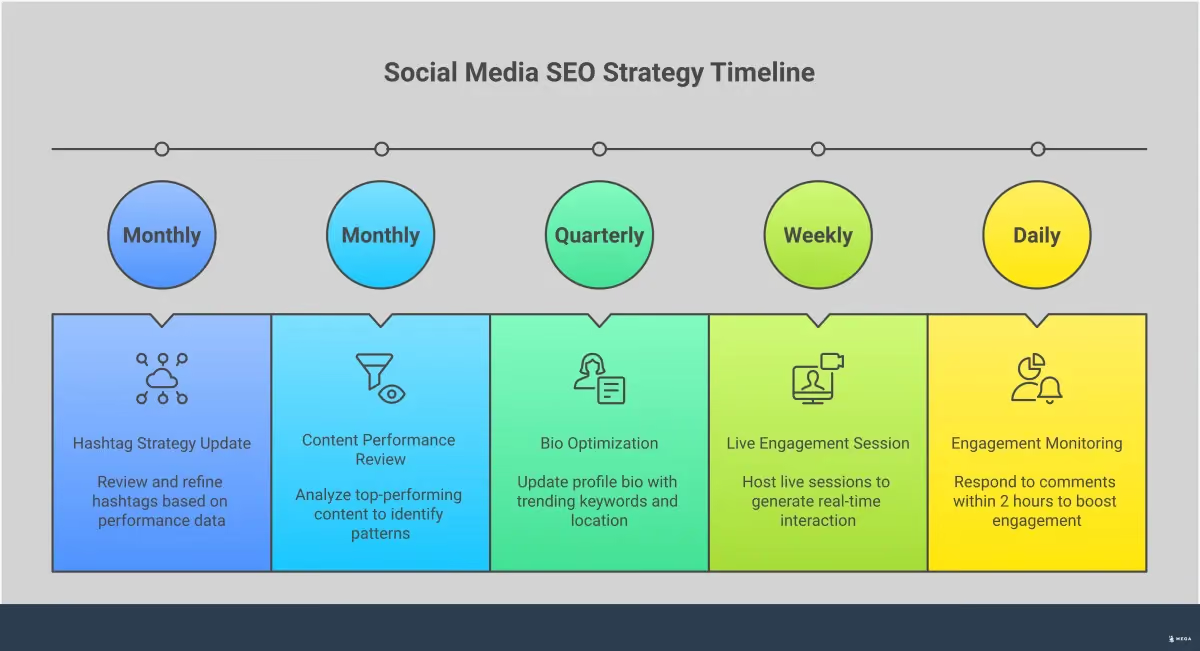
Creating genuine connections is the foundation of a strong social media presence. When followers feel seen and heard, they are more likely to trust your brand and share your content with their own networks. Make it a practice to respond to comments and direct messages thoughtfully. Ask questions in your captions to spark conversation and show that you value your audience's opinions. These social media engagement strategies help you cultivate relationships and establish meaningful connections that go beyond a simple transaction. This approach builds a loyal following that acts as a natural amplifier for your brand.
Promote user-generated content
User-generated content (UGC) is one of the most powerful tools for building authenticity and reach. It serves as social proof, showing potential customers that real people love your products or services. Encourage your audience to share photos or stories featuring your brand by creating a unique hashtag. You can also incentivize participation by organizing contests and giveaways for the best submissions. When you feature UGC on your profile, always credit the original creator. This not only shows appreciation but also encourages others to share their own content in the hopes of getting a feature.
Find the best times and frequency to post
To maximize visibility, you need to post when your audience is most likely to be online and active. Every social media platform provides analytics that show your follower activity by day and hour. Use this data to schedule your posts for peak engagement times. While there are general best practices, your specific audience’s behavior is what matters most. Focus on consistency over quantity. It’s better to post high-quality content three times a week when your audience is active than to post mediocre content every day. Regularly analyzing engagement rates will help you refine your schedule for the best results.
Build a community for sustained reach
A strong community turns passive followers into active brand advocates. Think of your social media profile as a hub where people with shared interests can connect. You can foster this by creating a dedicated Facebook Group, hosting live Q&A sessions, or featuring community members in your posts. A well-crafted social media marketing strategy focuses on creating a sense of belonging. When people feel like they are part of a community, they are more invested in its success. They will engage more frequently, defend your brand, and eagerly share your content, providing sustained visibility that lasts long after a post is published.
How to measure your social media SEO success
You can’t improve what you don’t measure. To know if your social media SEO efforts are paying off, you need to track the right metrics. While likes and follower counts are nice, they don’t tell the whole story. Instead, focus on data that shows your content is being discovered and valued by your target audience. This means looking at how people find your content, what they do with it, and whether it drives them back to your website. By monitoring these key performance indicators, you can refine your strategy, create more of what works, and turn your social profiles into powerful search tools for your business.
Track engagement rates and share metrics
High-quality engagement signals to social media algorithms that your content is valuable. When someone saves your post, it indicates the information has lasting utility. When they share it, they’re providing social proof that your content solves a problem or is worth seeing. These actions are much stronger indicators of relevance than a simple like. Pay close attention to your shares, saves, and comments. These metrics show that your content is not just being seen but is also resonating deeply enough to inspire action, which helps increase its visibility in both user feeds and search results within the platform.
Monitor brand mentions and referral traffic
Your social media SEO strategy is working when its impact extends beyond the platform itself. Start tracking mentions of your brand across the web, including in comments, on forums like Reddit, or even in answers from AI chatbots. If your brand name starts appearing in these conversations, it’s a sign that your social content is building authority and recall. You should also use a tool like Google Analytics to monitor referral traffic. This shows you how many visitors are coming to your website directly from your social media profiles. A steady increase in referral traffic is a clear sign that your social content is successfully driving qualified leads to your business.
Use analytics to find new content opportunities
Your own analytics are a goldmine for future content ideas. Look for metrics within your social media dashboards like "reach through search" or "traffic source: search." While not every platform provides the exact search queries people use, this data shows that your content is being discovered through search. You can also use external tools to find what people are actively looking for in your niche. Researching question-based queries helps you identify content gaps where you can provide valuable answers, positioning your brand as a helpful resource and capturing more search traffic on social platforms.
Calculate engagement rates for performance insights
To get a clear picture of your content’s performance, calculate your engagement rate. A simple way to do this is to add up your total likes, comments, and shares on a post, divide by your total number of followers, and multiply by 100. This percentage gives you a standardized metric to compare different posts and track your performance over time. While you may not see the exact keywords that led a user to your content, a high engagement rate on a keyword-optimized post is a strong indicator that it’s hitting the mark. Consistently tracking this helps you understand what topics and formats best capture your audience's attention through search.
How to create a sustainable social media SEO strategy
A successful social media SEO plan isn’t built on sporadic posts or chasing viral trends. It’s about creating a consistent, manageable workflow that you can maintain over the long term. Sustainability means developing a process that saves you time, reduces stress, and delivers steady results without leading to burnout. By putting the right systems in place, you can turn your social media efforts from a daily scramble into a well-oiled machine that continuously drives discovery and engagement for your business.
Use a content calendar for consistent optimization
Consistency is a major signal to social media algorithms that your account is active and valuable. A content calendar is your best tool for achieving this. Think of it as a strategic roadmap for your posts, allowing you to plan content themes, topics, and keywords in advance. This proactive approach ensures you’re regularly publishing optimized content that aligns with your business goals. A well-structured social media content calendar helps you organize hashtags, schedule posts for peak engagement times, and maintain a balanced mix of promotional, educational, and entertaining content. It removes the daily pressure of figuring out what to post and keeps your SEO efforts on track.
Apply cross-platform optimization techniques
While it’s tempting to post the same message everywhere, a one-size-fits-all approach doesn’t work for social media SEO. Each platform has a unique audience, algorithm, and content format. To maximize your reach, you need to tailor your content for each channel. For example, a visually driven platform like Instagram requires high-quality images and story-driven captions, while LinkedIn favors professional insights and industry-specific keywords. Before you post, take a moment to define your SEO goals for each platform. Adapting your core message, keywords, and hashtags to fit the context of each channel makes your content more discoverable and relevant to the users there.
Scale your strategy with automation tools
As a small business owner, your time is limited. Automation tools help you work smarter, not harder. These platforms can handle tasks like scheduling posts, analyzing performance, and even generating content ideas, freeing you up to focus on engaging with your community. Using the right scheduling tools ensures your content goes live at optimal times, even when you’re busy. For more advanced needs, AI-powered platforms can manage your entire SEO workflow. At MEGA AI, we’re developing a Social Media Content Agent to help businesses automate their content strategy, making high-level SEO accessible to everyone. Integrating automation allows you to scale your efforts effectively and maintain a powerful presence without a large team.