
Social media is no longer just a marketing channel; it has become a digital storefront. Many businesses still focus on driving traffic to an external website, adding extra steps and friction to the buying process. The most successful brands now treat platforms like Instagram and TikTok as complete sales ecosystems, shortening the path from discovery to purchase. This guide covers the essential trends shaping social commerce, from optimizing your content for in-app search to creating ads that convert directly in the feed. Learn how to meet customers where they are and make it easier for them to buy.
Key Takeaways
- Treat social media as a direct sales channel: Users now search for and buy products directly within social apps. Optimize your content for in-app search and use native commerce features to shorten the path from discovery to purchase.
- Prioritize quality and authenticity over quantity: Audiences are tired of generic content and now control their feeds more than ever. Build a loyal community by creating valuable, long-form video and showing the real people behind your brand.
- Build trust with credible experts, not just influencers: Modern audiences value genuine authority over large follower counts. Partner with niche experts who have earned trust with your target audience to create authentic collaborations that drive results.
Convert Customers Directly on Social Platforms
The line between social media and e-commerce is disappearing. For years, the goal was to use social platforms to drive traffic to your website, hoping a few clicks would eventually lead to a sale. That model is quickly becoming outdated. The most successful brands now treat social media platforms as complete sales ecosystems, shortening the path from discovery to purchase by allowing customers to buy products without ever leaving the app.
This shift is a massive opportunity for small and local businesses. It reduces friction in the buying process, captures customers at the peak of their interest, and meets them where they are already spending their time. Instead of being a billboard that points to your store, your social profile becomes the storefront itself. Managing this requires a cohesive strategy across platforms, ensuring your ads, content, and checkout process are optimized for in-app conversions. This is where having a system to manage paid ads across multiple channels becomes essential, allowing you to test and scale what works on each platform’s native shopping environment.
Why Social Platforms Are Becoming Sales Ecosystems
Social media platforms want to keep users engaged for as long as possible. By integrating shopping features directly into their apps, they create a seamless experience that benefits everyone. For the user, it’s convenient and fast. For the business, it dramatically lowers the chance of a potential customer getting distracted or abandoning their cart between the social app and an external website. Every major platform is evolving into a self-contained marketplace.
This trend transforms social media from a top-of-funnel marketing channel into a full-funnel sales machine. Think about it: a user sees a product in their feed, taps to view details, and completes the purchase with a saved payment method in under a minute. This is the future of social commerce, and businesses that adapt will have a significant advantage. They will capture sales that might have otherwise been lost to the extra steps of navigating to a new site.
How to Use Native Commerce Tools for Your Business
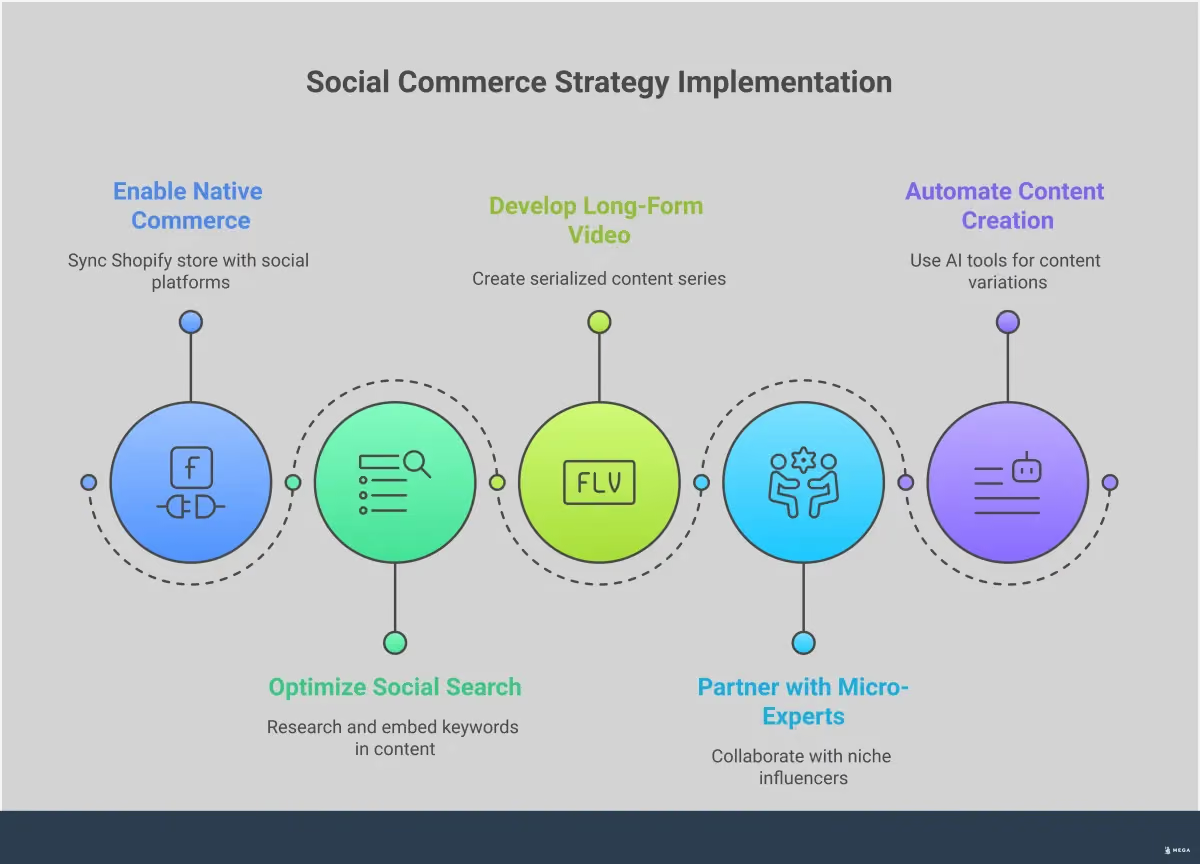
Getting started with on-platform selling is straightforward. First, integrate your online store with the native commerce tools available on each platform. If you use Shopify, for example, you can enable TikTok Shop and Instagram Shopping to sync your products directly. Next, adjust your call to action. Instead of asking users to "visit our website," use direct commands like "Shop Now" or "Buy Here" that link to native checkout buttons.
Finally, rethink your social funnels. Your ads, product descriptions, and checkout process all need to work perfectly inside the platform. This means optimizing your creative and copy for a mobile-first, in-app experience. The entire journey should feel intuitive and cohesive without ever pushing the user to an external browser. By designing your sales process to live within the social apps, you align your strategy with modern consumer behavior and make it easier for people to buy from you.
Adapt to User-Controlled Feeds
Social media users now have more direct control over what they see. On many platforms, they can actively tune their feeds to exclude entire categories of content they find uninteresting. This is a significant shift from simply scrolling past a post. When a user tells a platform they don't want to see content like yours, your reach can drop significantly. This change means you can no longer rely solely on passive discovery or a single viral hit to grow your audience. Your strategy must now focus on earning intentional attention.
For small businesses, this presents both a challenge and an opportunity. The challenge is producing consistently valuable content that people choose to see, which requires time and resources that are often in short supply. The opportunity is that by doing so, you can build a more loyal and engaged audience that actively looks forward to your posts, making your marketing efforts more effective in the long run. Instead of chasing fleeting trends, you are building a durable connection with customers who have explicitly chosen to keep you in their digital space. This is a more sustainable path to growth than simply hoping the algorithm favors you on any given day.
What User-Controlled Feeds Mean for Brands
This new level of user control changes the game for brands. Previously, the primary goal was to please the platform's algorithm to gain visibility. Now, you're competing directly for a spot in a user's curated feed. If your content is too niche or repetitive, a user might suppress your entire category, making it much harder for you to reach them organically.
This means your content must provide clear and consistent value. Relying on engagement momentum from a few successful posts is no longer a sustainable strategy. Instead, you need to think about the overall experience you provide your followers. Every post should reinforce why someone followed you in the first place, ensuring they see your brand as a valuable part of their feed rather than something to be filtered out.
Create Valuable Content Users Choose to See
To succeed in this environment, you need to create content that people actively want. This requires a shift in mindset from chasing algorithmic favor to earning genuine interest. The key is consistency. If users engage with your content regularly, they are far less likely to suppress your category. This builds a defensive moat around your brand's visibility.
A practical step is to diversify your content themes. If you only post about one specific topic, you make it easy for users to tune you out. Broaden your content pillars to cover related areas that still resonate with your target audience. For small teams, producing a steady stream of varied, high-quality content can be demanding. This is where AI-powered tools can help you generate creative variations and maintain a consistent publishing schedule without sacrificing quality.
Long-Form Video Makes a Comeback
After years of prioritizing short, fast-paced clips, the social media landscape is shifting. While short-form video isn't disappearing, audiences are beginning to show signs of fatigue with constant, snackable content. Viewers are starting to crave more depth, genuine connection, and real substance from the brands and creators they follow. This opens a significant opportunity for businesses to build a more loyal audience by investing in longer, more thoughtful video content.
Long-form video allows you to move beyond quick trends and tell a compelling story. It gives you the space to educate, entertain, and build trust in a way that a 15-second clip simply can't. According to a recent Upskillist study, long-form videos can generate significantly more views and meaningful comments than their shorter counterparts. This indicates a clear demand for content that offers real value and holds a viewer's attention for more than a few seconds. Platforms like YouTube, which are built for longer content, continue to dominate total social watch time, proving that when the content is good, people are willing to watch.
Why Audiences Want Deeper Content
The constant stream of quick, dopamine-driven content that defined social media for the past few years is becoming less effective. Viewers are growing tired of the endless scroll of similar-sounding videos and are actively seeking out content that feels more substantial. They want to learn something new, follow a compelling narrative, or connect with a brand on a deeper level. This is where long-form video excels. It provides the format needed for effective storytelling in marketing, allowing you to build a narrative around your brand, products, or mission. Deeper content fosters a stronger, more engaged community that is invested in your brand for the long haul.
How to Create Serialized Content to Build a Loyal Audience
If you’ve been focused on short-form video, you can start transitioning by following a few simple steps. First, experiment with slightly longer formats. If you typically post 60-second Reels, try creating a few three-to-five-minute videos that tell a complete story or offer a detailed tutorial. Second, think about creating serialized content. Treat your content strategy like a TV show with recurring themes or a narrative that unfolds over several "episodes." This encourages viewers to come back for the next installment. Finally, shift your focus from chasing virality to prioritizing audience retention. Social platforms reward content that keeps users watching, as it signals quality and value. This focus on watch time is also a core principle of running successful Paid Ads, where engagement directly impacts performance.
Treat Social Platforms Like Search Engines
The way people find information online is changing. Social media platforms are no longer just for scrolling through updates from friends; they have become powerful discovery tools. Users, especially younger demographics, are turning to apps like TikTok and Instagram to search for everything from product reviews to local restaurant recommendations. This behavior transforms these platforms into visual search engines, where your content's discoverability is just as important as its engagement metrics.
For small businesses, this shift presents a massive opportunity. If you treat your social media content with the same strategic approach as you do your website's search engine optimization, you can reach customers at the exact moment they are looking for a solution. This means thinking about keywords, user intent, and providing clear, valuable answers through your posts. The core principles that help you rank on Google—understanding what your audience is searching for and creating content that directly addresses it—are now essential for succeeding on social media.
How Gen Z Uses Social Media for Discovery
Younger consumers have fundamentally changed the search landscape. Research shows that nearly two-thirds of Gen Z now use TikTok for search, and around 40% prefer using TikTok or Instagram over Google for finding new things or learning how to do something. They aren't just looking for entertainment; they are seeking answers, tutorials, and authentic reviews.
This preference is driven by the desire for visual, relatable results. Instead of reading a blog post, they can watch a short video that shows a product in use, demonstrates a recipe, or offers a tour of a local shop. The content feels more genuine and is often accompanied by real-time feedback in the comments section. For your business, this means your visibility depends on showing up in these in-app searches.
Optimize Your Social Content for Search
To make your content discoverable, you need to optimize every post for search. Social media algorithms are becoming more sophisticated, indexing not just your captions but also the words spoken in your videos, the text on screen, and even the comments. If your content isn't optimized with relevant keywords, you're missing out on a huge audience that is actively searching for what you offer.
Start by treating every post like a piece of SEO content. Research keywords your target audience might use and incorporate them naturally into your video titles, descriptions, and captions. Say the keywords out loud in your videos, as platforms transcribe the audio. Pay attention to tools like TikTok's creator dashboard, which can show you the search terms driving traffic to your content. This simple shift in strategy can dramatically increase your reach and connect you with high-intent customers.
Partner with Credible Experts, Not Just Influencers
For years, influencer marketing was a numbers game focused on partnering with people who had the largest audiences. That model is changing. Audiences are growing tired of generic endorsements and are seeking out genuine expertise. The new focus for brands isn't on entertainers with massive follower counts, but on credible experts who have built real authority within a specific niche.
This shift is great news for small businesses. You no longer need a massive budget to work with mega-influencers. Instead, you can form powerful partnerships with micro-influencers and niche authorities whose followers are highly engaged and trust their recommendations. These collaborations often feel more authentic and can deliver a much higher return on investment.
Why Credible Experts Are Replacing Traditional Influencers
The value of an influencer is no longer measured just by their follower count. A creator with 50,000 highly engaged followers who is a known authority in their field is far more valuable than a generalist influencer with a million followers who posts about everything. Consumers are savvy; they can spot a paid post from a mile away and are more likely to trust someone who has demonstrated deep knowledge and passion for a specific subject. This is why brands are moving away from chasing vanity metrics and are instead looking for partners who can provide authentic social proof and build genuine trust with their target audience.
How to Build Niche Authority with an Engaged Audience
If you're a brand, it's time to stop chasing follower counts. Instead, identify and partner with people who have real authority in your industry. Look for creators who share your values and whose audience aligns perfectly with your ideal customer. For business owners and creators, the path to authority is through specialization. Pick a niche and focus on becoming the go-to expert in that space by consistently creating valuable, insightful content. As you build these partnerships, you can even explore co-branded products, moving beyond simple endorsements to create something unique with your expert partners.
Prioritize Authenticity Over Artificial Personas
A few years ago, digital avatars and AI-driven personalities seemed poised to take over social media. But audiences are pushing back against this trend, signaling a clear preference for genuine human connection over synthetic perfection. For small and local businesses, this is a significant advantage. Authenticity is already part of your DNA, giving you a natural edge over larger, more corporate brands.
People want to connect with the real individuals behind a business. They respond to relatable stories, shared values, and content that feels human. Leaning into this trend means moving away from overly polished, impersonal posts and instead showing the true character of your brand. This shift doesn't just build a following; it builds a community that trusts and supports you.
Why Audiences Reject Synthetic Influencers
Virtual influencers and faceless AI personas often create a sense of frustration for users. It feels like calling customer service and getting stuck with an automated voice system when you’re trying to reach a real person. These synthetic personalities might provide information, but they lack the warmth and relatability that builds genuine brand trust. Audiences can spot inauthenticity quickly, and they are increasingly rejecting content that feels manufactured. People use social media to connect, and a digital avatar simply can’t offer the same level of engagement as a real human. Investing in synthetic personalities is becoming a fast way to alienate your audience, as they crave real stories and faces they can relate to.
How to Create Genuine Human Connections
Building a genuine connection starts with focusing on real, authentic creators and content. Double down on showing the human side of your business. This could mean sharing behind-the-scenes footage, featuring your employees, or highlighting customer stories. The more human and relatable your content is, the better it will perform. Focus on creating an emotional connection rather than just chasing perfect aesthetics. A consistent and authentic brand voice helps your audience feel like they know you. By automating the more repetitive tasks with tools like MEGA AI’s upcoming Social Media Content Agent, you can free up more time to focus on what truly matters: creating content that makes your audience feel seen and understood.
Combat Social Media Fatigue with Quality Content
The old social media playbook of posting as much as possible is becoming less effective. Your audience is experiencing content fatigue from scrolling through endless feeds of repetitive, low-effort posts. This shift creates an opportunity for small businesses to stand out by prioritizing substance. As marketing expert Neil Patel notes, "Audiences are craving real substance, not empty calories."
The focus is moving from quantity to quality. Instead of just adding to the noise, the goal is to create content that makes people pause and engage. A single, well-crafted post that tells a story or offers genuine value will always outperform ten generic updates. For small businesses with limited resources, this is good news. It means you can compete by being more thoughtful and strategic with your content, not by trying to out-publish larger brands.
Why Users Prefer Substantive Content
Viewers are tired of mindless scrolling. The constant stream of similar content has trained many users to tune out anything that doesn't immediately capture their attention or provide value. This is why a quality-first content strategy is so critical. When you focus on creating substantive content, you’re not just posting an update; you’re building a relationship with your audience.
This approach respects your audience's time and intelligence. Whether it's a detailed tutorial, an insightful case study, or a behind-the-scenes look at your business, high-quality content establishes your authority and builds trust. It encourages shares, saves, and comments, which are far more valuable engagement signals than a passive "like." One meaningful piece of content can build more brand loyalty than a month's worth of forgettable posts.
How AI Automation Helps Maintain Quality at Scale
Consistently creating high-quality content is a challenge, especially for small teams. This is where AI automation becomes a powerful ally. AI tools can handle the heavy lifting of content creation, allowing you to maintain a high standard without burning out. "Content that tells a compelling story always cuts through the noise," and AI can help you find and tell those stories more efficiently.
AI can assist with everything from generating topic ideas and writing first drafts to creating variations of your best-performing content. For example, MEGA AI’s Paid Ads agent can remix your creative assets into hundreds of variations, helping you test and scale what works. This allows you to focus on the core message while the technology handles the production. As social media continues to evolve, brands that use AI to produce quality content at scale will be the ones that connect with their audience and grow their business.
How These Trends Impact Your Marketing Budget
The way people use social media has fundamentally changed. It's no longer just for connecting with friends; it's a primary tool for search, entertainment, and shopping. This shift directly affects how you should allocate your marketing budget, especially for a small business where every dollar has a job to do. A simple presence isn't enough anymore. Your strategy needs to invest in the right kind of content for the right platforms. Trends like long-form video, social search, and authentic expert content demand a more thoughtful approach to spending. Instead of spreading your budget thin across every channel, you can make targeted investments that build a loyal audience and drive sales directly within social apps. This means re-evaluating where your money goes and prioritizing quality and connection over sheer volume. It’s about making smarter choices, like funding one great video series instead of dozens of low-engagement posts, or partnering with a niche expert instead of paying for broad, untargeted ads. This strategic focus ensures your limited resources generate meaningful results, turning social media from a cost center into a powerful revenue driver for your business.
Adapt Your Social Strategy with Limited Resources
With a limited budget, your focus should shift from driving website traffic to optimizing the customer journey inside social platforms. Successful businesses are learning how to master on-platform conversion, which means allocating funds to platforms that support native shopping tools. Instead of paying for clicks that may not convert, you can invest in creating valuable, searchable content that leads to a direct sale within the app. This might mean dedicating more of your budget to producing a high-quality video series for YouTube or creating detailed guides on TikTok rather than running broad awareness campaigns. By concentrating your resources on platforms that function as sales ecosystems, you can capture revenue more efficiently.
Why Autonomous Social Media Agents Are the Future
Creating authentic, high-quality content consistently is a significant challenge, especially when resources are tight. Audiences crave genuine human connection, not synthetic perfection, which means you need to invest in relatable content. This is where AI-powered agents come in. An autonomous agent can handle the heavy lifting of content creation, remixing videos, and testing hundreds of creative variations to see what resonates with your audience. This frees you up to focus on strategy and engaging directly with your community. By automating paid ads management and optimization, you can make your marketing dollars work harder, achieving the scale of a larger team without the associated cost.