
The conversation around AI in marketing is moving beyond simple tools that write captions. The future is about autonomous agents that can plan, execute, and optimize your entire social media strategy for you. This technology allows small teams to achieve results that once required a large agency budget. This guide explains what this shift means for your business. We will cover how to build a forward-thinking plan that uses automation to handle the heavy lifting, freeing you up to focus on what you do best: running your business and connecting with your customers.
Key Takeaways
- Adapt your content for social search: Your audience now uses social platforms to find answers and discover products. Create posts that solve specific problems to ensure your brand appears when they are actively looking for solutions.
- Use AI to build a content system, not just single posts: Repurpose one core idea into multiple formats tailored for different platforms. This allows you to scale your efforts and maintain a consistent presence without starting from scratch every day.
- Measure your influence beyond simple engagement: Track metrics like brand sentiment and mentions in AI summaries to understand your true impact. This shows how your content builds authority and shapes opinions long before a customer ever clicks a link.
What's New in Social Media Marketing for 2026?
The biggest change in social media isn't a new feature or platform; it's a fundamental shift in how people find information. Social feeds are now the first stop for discovery. Consumers are increasingly stumbling upon brands while scrolling, not because they went looking, but because an algorithm put something relevant in front of them. People now actively search within TikTok, YouTube, and Instagram the same way they once used Google.
This new behavior changes the entire marketing approach. In the past, strategy often started with a user's intent, like typing a query into a search bar. Now, discovery begins without a specific goal. A potential customer might be scrolling their feed and find a video that solves a problem they didn't even know they could fix. When the starting point for a customer moves, your strategy has to move with it.
To meet this demand for helpful content, AI is becoming a critical part of the workflow. Artificial intelligence is changing how brands approach content creation, allowing small teams to produce high-quality, value-driven posts at scale. The brands that are winning are the ones creating clear, structured content that teaches, not just promotes. The algorithms on these platforms prioritize content that answers questions or explains something clearly. In a world where platforms index videos visually, clarity performs better than ever. Your goal is to provide immediate value that stops the scroll and establishes your brand as a helpful resource.
Is This Social Media Guide for You?
If you run a small business, you know social media is essential for connecting with your audience and driving sales. But keeping up can feel like a full-time job. Many business owners feel overwhelmed by the constant changes in trends and algorithms, leading to a lack of confidence in their marketing strategies. In fact, recent reports highlight these exact small business marketing challenges.
This guide is for you if you’re a startup founder wearing multiple hats, an SMB owner who knows you should invest more in social media but can't find the time, or a local business owner looking for a more effective way to serve your clients. It’s designed for ambitious teams who need a clear, structured approach to cut through the noise and get results.
We’ll move beyond temporary trends and focus on building a sustainable system for growth. You'll learn how to create content that resonates, measure what truly matters, and use new technology to your advantage. As AI and automation become more integrated into marketing, adopting these technologies gives you a competitive edge, letting you streamline your work and improve customer engagement. This playbook provides the clarity and direction you need to make your social media efforts count in 2026.
How Social Media Became the New Search Engine
The line between social media and search engines has blurred. Users no longer just turn to Google when they have a question or need a recommendation. They’re opening TikTok to find recipes, scrolling through Instagram for vacation ideas, and searching Pinterest for home renovation inspiration. This shift isn't just a trend; it's a fundamental change in how people discover products and information. Discovery is no longer a separate, intentional act. It’s woven into the fabric of daily scrolling, making every social feed a potential storefront and every post a potential answer to a question a user hasn't even typed yet. For businesses, this means your social strategy needs to evolve from simply broadcasting a message to becoming a valuable resource that people can find and trust.
How Users Treat Social Platforms Like Search Engines
Think about how people find new things today. Discovery often starts when people are scrolling, not when they have a specific intent. As marketing expert Neil Patel notes, "Consumers are starting to stumble upon brands in the middle of scrolling on social, not because they went looking, but because the algorithm put something relevant in front of them." This passive discovery model changes the game. Instead of optimizing for keywords people type into a search bar, you need to optimize for interests and problems. Your goal is to show up in their feed as the perfect solution at the exact moment they realize they have a need. This requires a deep understanding of your target audience and the kind of content that will make them stop and pay attention.
Why Algorithms Favor Problem-Solving Content
Social media platforms are designed to keep users engaged, and their algorithms have become incredibly sophisticated at identifying what holds our attention. What's changing is how they decide what gets seen. Algorithms are prioritizing content that answers questions, explains something clearly, or solves a problem. A post that teaches someone how to fix a leaky faucet is more likely to get traction than a simple ad for a plumber. This is because helpful content generates more authentic engagement—saves, shares, and comments—which signals value to the algorithm. For your business, this means shifting your focus from sales pitches to service. Create content that educates, entertains, and empowers your audience, and the platforms will reward you with greater visibility.
Why On-Platform Conversions Matter
When the entire customer journey—from discovery to research—happens within a social media app, it only makes sense for the final step to happen there, too. The journey now often ends on the platform where it began, which is why on-platform conversions are becoming so important. Features like Instagram Shops, TikTok Shop, and Pinterest Product Pins make it seamless for a user to go from seeing a product in their feed to purchasing it without ever leaving the app. Every extra click or new tab is a chance for a potential customer to get distracted. By enabling social commerce, you reduce that friction and capture the sale while their interest is at its peak, turning passive scrollers into active customers.
How to Create Content That Converts
Creating content that actually converts means shifting your mindset. It’s no longer just about posting pretty pictures or chasing viral trends. Since users now treat social platforms like search engines, your content needs to provide immediate value and clear answers. The goal is to solve a problem, answer a question, or teach something useful right in the feed. This approach not only stops the scroll but also builds trust and guides potential customers toward a solution. Here’s how to create content that serves the user’s intent and drives results for your business.
Structure Content to Stop the Scroll
Your first second is everything. To stop someone from scrolling, you need a hook that grabs their attention instantly. This could be a compelling visual or an opening line that reflects a thought they already have. Think about the main problem your audience faces and address it directly. For example, instead of “Our new software is here,” try “Tired of wasting hours on manual data entry?” A strong hook feels personal and relevant, making the viewer feel understood. This initial connection is what earns you the next few seconds of their attention, giving you the chance to deliver your message.
Simplify Complex Ideas for Social Media
No one comes to social media for a textbook. Your content needs to be easy to understand and digest in seconds. Break down complex topics into simple, scannable formats like bullet points, short videos, or image carousels. Use plain language and avoid industry jargon. When your content is easy to categorize, it’s not just better for the user; it’s also better for the algorithm. Platforms can more easily match your content to a user's search intent, putting your solution in front of the right people at the right time. Simplicity is key to making your message stick.
Use Hashtags and Formatting for Each Platform
Think of hashtags as filing labels, not confetti. Gone are the days of stuffing 30 random tags into a post. Most platforms now favor two or three highly intentional hashtags that accurately categorize your content. Instead of using broad tags like #marketing, get specific with niche tags that your target audience actually follows. Beyond hashtags, you need to adapt your formatting to each platform’s strengths. A single idea can be a polished carousel on Instagram, a professional text post on LinkedIn, or a quick, conversational thread on X. Tailoring your format shows you understand the platform and its users.
Repurpose Content for Social Media
You don’t need to reinvent the wheel for every single post. A smart content strategy focuses on repurposing. One core piece of content, like a detailed blog post or a long-form video, can be the source for dozens of social media updates. That blog post can become a series of tips for an Instagram carousel, a quick answer for a Reddit thread, and a script for a TikTok video. This approach saves you an incredible amount of time and ensures your message is consistent across channels. It allows you to generate content efficiently, which is crucial for any small business trying to maintain a strong online presence.
Use AI to Create Content at Scale
Social media runs on a constant stream of fresh content. For small businesses, keeping up with this demand can feel like a full-time job. You need to post consistently to stay relevant, but creating high-quality content day after day is a huge drain on time and resources. This is where AI changes the game. It’s not about replacing your team’s creativity; it’s about building a scalable system to support it.
Using AI, you can move from a manual, one-off content process to an efficient engine that handles the heavy lifting. This allows your team to focus on high-level strategy and connecting with your audience instead of getting bogged down in repetitive tasks. AI can help you brainstorm ideas, repurpose existing assets into new formats, and automate the entire workflow from creation to distribution. This approach makes it possible for any business to maintain a strong, consistent presence across multiple platforms without needing a massive marketing department.
Overcome Creative Blocks with AI
We’ve all stared at a blank screen, waiting for inspiration to strike. Creative blocks are a major hurdle to maintaining a consistent social media calendar. AI tools can act as a brainstorming partner, helping you push past these moments. You can feed it a single idea, and it will suggest different angles, formats, and variations tailored to specific audiences.
This isn't about letting a machine do your thinking. Instead, AI handles the time-consuming steps that often prevent creativity from happening in the first place. By generating outlines, hooks, and initial drafts, it gives you a starting point to build upon. An AI-powered platform like MEGA AI can analyze data to find relevant topics and questions your audience is asking, ensuring your content is always on point.
Create Content Variations for Multiple Platforms
One great idea can fuel your content calendar for weeks, but only if you can adapt it for different platforms. A long-form blog post can become a LinkedIn carousel, a long video can be cut into multiple TikToks or Instagram Reels, and a customer case study can be turned into a series of quote graphics. Manually reformatting content for each channel is tedious and time-consuming.
AI makes this conversion process much faster. It can summarize articles, pull key quotes, and reformat text and video for the unique specifications of each platform. For example, MEGA AI’s Paid Ads Agent can remix content to create hundreds of ad variations automatically. The same principle applies to organic social media, allowing you to maximize the value of every piece of content you create with minimal extra effort.
Automate Your Content Workflow
Consistency is one of the biggest challenges in social media marketing. Automation helps by handling the repetitive tasks that slow teams down and lead to burnout. Instead of manually researching, writing, and scheduling every post, you can build a workflow that runs on its own. This frees up your team to focus on more strategic work, like community engagement and campaign analysis.
An autonomous AI agent can manage your entire content pipeline. It can identify trending topics, generate drafts for your review, and schedule approved posts across all your channels. This is similar to how MEGA AI’s SEO Agent automates content creation and optimization for search engines. By applying this model to social media, you can build a sustainable system that ensures you’re always publishing relevant content without the manual grind.
What Traditional Metrics Miss About Social Impact
If you only track clicks and direct website traffic from social media, you’re missing a huge piece of the puzzle. User behavior has changed. People now discover brands, research products, and form opinions entirely within their social feeds, long before they ever decide to click a link. This top-of-funnel activity is powerful, but it’s often invisible to traditional analytics tools. Your content is shaping customer decisions in subtle ways, and recognizing this is key to building a strategy that works in the long run.
Measure Influence Beyond Clicks
People are constantly discovering your brand without ever visiting your website. They see your content in their feeds, watch your videos, and read comments from your community. This exposure builds brand recognition and trust over time. When they are finally ready to make a purchase, they might search for your brand directly on Google instead of clicking a link from a social post. In your analytics, this shows up as organic search, hiding social media’s role in the customer journey. This means your social strategy could be driving growth that you aren't properly attributing.
How Content Shapes Decisions Before Clicks Happen
Your social content has a job to do before anyone even thinks about clicking. It should educate, solve problems, and establish your authority. When you consistently provide value, you influence how people think about your industry and your brand. They start to see you as a go-to resource. Later, when they have a problem you can solve, your business is the first one they think of. This is especially true as AI-powered search tools pull information from social platforms to answer user questions. Your content’s ability to shape brand perception is an asset that traditional metrics can’t capture.
Why Rising Ad Costs Demand Smarter Measurement
Relying on direct conversions from social media is becoming less effective as advertising costs climb. While organic social posts may not lead to immediate sales, they are often the first touchpoint for future customers. Post-purchase surveys frequently reveal that many buyers first discovered a brand on social media, even if another channel gets the final credit for the conversion. Understanding this full-funnel impact is critical for justifying your social media investment. It helps you see how organic content supports your paid ads by warming up audiences and building trust before they ever see a direct offer.
New Metrics That Matter in 2026
As social media solidifies its role as a search and discovery engine, the old metrics of likes, shares, and follower counts are becoming less relevant. They don't capture the full picture of your brand's influence or its impact on purchasing decisions. In an environment where AI summaries and user-generated reviews shape opinions before a user ever visits your website, your measurement strategy needs to evolve. The focus is shifting from vanity metrics to indicators of authority, trust, and attention. These new metrics help you understand if you're not just being seen, but if you're becoming a trusted voice in your industry.
Track Mentions in AI Summaries
Your authority is now defined by how often AI tools cite you as a credible source. When a user asks a question, does your business appear in the generated answer? Being positioned as an expert or an example in these summaries is the new top-ranking position. This means your content needs to be so valuable that multiple sources reference it, and it appears across related queries. Tracking these AI-powered citations is critical because it shows you’re building true topical authority. It’s a direct signal that both algorithms and users see you as a go-to resource.
Monitor Brand Sentiment and Perception
Social search excels at surfacing real experiences, reviews, and product demos almost instantly. This makes brand sentiment—how people feel and what they say about you online—more important than ever. Are customers sharing positive reviews, or are they highlighting issues? Monitoring this perception gives you direct insight into the quality of your discovery moment. A positive brand sentiment can be your most powerful marketing asset, while a negative one can stop a potential customer in their tracks. This isn't just about tracking keywords; it's about understanding the context and emotion behind the conversation.
Measure Return on Attention
In a crowded digital space, capturing and holding attention is a victory in itself. "Return on Attention" is a metric that measures how effectively your content influences your audience, even if they don't click or convert immediately. It’s about building brand recall and trust so that when a customer is ready to buy, your name is the first one they think of. Top-of-funnel metrics now include how often your content appears in AI summaries and how AI interprets the sentiment around your brand. This approach values the long-term impact of your content over short-term engagement clicks.
Analyze Your Competitive Position
If your content can shape a person's thinking before they even click, you have a much higher chance of winning their business. Citations and mentions measure whether people trust you. It’s no longer enough to know how your content performs in a vacuum; you need to understand your position relative to competitors. Are you being mentioned in the same conversations as industry leaders? Does your content answer questions more effectively than theirs? A thorough competitive analysis helps you identify gaps and opportunities, ensuring your voice is the one that stands out as the most helpful and authoritative.
How AI Agents Will Change Your Social Strategy
The biggest shift in social media marketing isn’t a new platform; it’s the move from using tools to deploying agents. Unlike a simple scheduling tool or a content generator, an AI agent is an autonomous system that can plan, execute, and optimize your entire social strategy. Think of it as hiring a dedicated marketing expert who works 24/7 to hit your goals. For small and local businesses, this is a game-changer. It allows you to implement sophisticated marketing campaigns that were once only possible for companies with large teams and budgets.
At MEGA AI, our agents, the SEO Agent for SEO and the Ads Agent for Paid Ads, are built on this principle. They don't just give you suggestions; they do the work. They research topics, write posts, launch campaigns, and adjust budgets without needing constant direction. This is the future of social media management: less time spent on manual tasks and more time focused on growing your business. An agent handles the day-to-day execution, giving you complete visibility into the work while you focus on the bigger picture.
Automate Content Testing and Optimization
Knowing which ad creative or post will perform best often feels like a guessing game. AI agents eliminate that uncertainty by automating A/B testing at a massive scale. An agent can create hundreds of variations of a single ad—testing different hooks, images, captions, and calls to action—to quickly find the winning combination. This process of continuous optimization means your campaigns are always improving based on real-time data. For small businesses, this provides a level of data-driven decision-making that was previously out of reach, ensuring your content connects with your audience effectively.
Distribute Content Across Platforms Automatically
Creating tailored content for TikTok, Instagram, LinkedIn, and X is a significant time commitment. AI agents streamline this process by acting as your content distribution engine. You can start with a single core idea, like a blog post or a customer story, and the agent will automatically repurpose it for each platform. It can transform a long-form article into a concise Twitter thread, a professional LinkedIn update, and a series of engaging Instagram Stories. This allows you to package one idea differently for each channel, maintaining a consistent and active presence everywhere without the manual effort.
Optimize Your Budget and Performance
When you have a limited budget, every dollar needs to deliver results. AI agents serve as a tireless manager for your ad spend, ensuring you get the most out of your investment. Instead of you having to manually track campaign performance, an agent monitors your ads around the clock. It automatically shifts funds from low-performing creatives to the ones driving the best results, maximizing your return on ad spend. This is particularly valuable for small businesses with smaller marketing budgets that need to compete effectively. An agent ensures your budget is always allocated to what’s working right now.
Maintain Your Brand Voice with Automation
A common concern with AI is that it might dilute your brand’s unique personality. However, modern AI agents can be trained to become experts in your brand voice. By analyzing your existing content, style guides, and customer communications, an agent learns to write in a way that is authentic to your business. This allows you to scale your content creation without sounding generic or robotic. The agent can even help you tailor your conversation to different audience segments, delivering personalized outreach that feels genuine. It’s not about replacing your voice; it’s about amplifying it.
What Are the Challenges of Using AI Tools?
AI offers incredible potential for social media marketing, but it's not a magic wand. Adopting these new technologies comes with a few common hurdles, especially for small businesses. Understanding these challenges is the first step to creating a strategy that uses AI effectively without losing what makes your brand unique. The goal is to find the right balance where technology supports your efforts, not complicates them.
Manage Budget and Resource Limits
For small businesses, every dollar in the marketing budget has a job to do. The cost of AI can be a major hurdle, as "small businesses often have smaller marketing budgets" and can't afford to experiment with dozens of tools. Subscribing to separate platforms for content generation, scheduling, and analytics quickly becomes expensive and complex. The most effective approach is to find a single, integrated solution that handles multiple functions. This simplifies your workflow, provides more predictable costs, and ensures you get a clear return on your investment without juggling multiple subscriptions.
Overcome Technical Skill Gaps
You're an expert in your business, not necessarily in prompt engineering. Many AI tools have a steep learning curve, and as a 2024 Forbes report noted, many business owners avoid marketing tasks because they feel they lack the technical knowledge. This is where it’s useful to distinguish between an AI tool and an AI agent. A tool requires you to direct it every step of the way. An agent, on the other hand, is designed to understand a goal and execute the necessary tasks autonomously. Look for solutions that reduce the technical burden and focus on achieving outcomes.
Maintain a Human Connection
Your brand’s voice is your most valuable asset, and the biggest risk with AI-generated content is that it can sound generic. While AI is great for generating ideas and first drafts, it can’t replicate your unique personality and expertise. The best strategy is a human-in-the-loop model. Use AI to automate routine tasks and handle the heavy lifting of content creation, but always have a final human review to add authenticity. This approach allows you to gain efficiency without sacrificing the genuine connection that turns followers into loyal customers.
Balance Automation with Personal Engagement
The purpose of AI isn't to put your social media on autopilot so you can walk away. It’s about automating the right tasks so you have more time for meaningful engagement. AI for marketing helps you "automate, personalize, and compete with big brands" by taking over repetitive work like drafting posts, creating variations, and scheduling content. This frees you from the content creation treadmill and gives you the bandwidth to respond to comments, participate in conversations, and build real relationships. Think of AI as your marketing assistant, handling the background work so you can be the face of your brand.
Build Your 2026 Social Media Plan
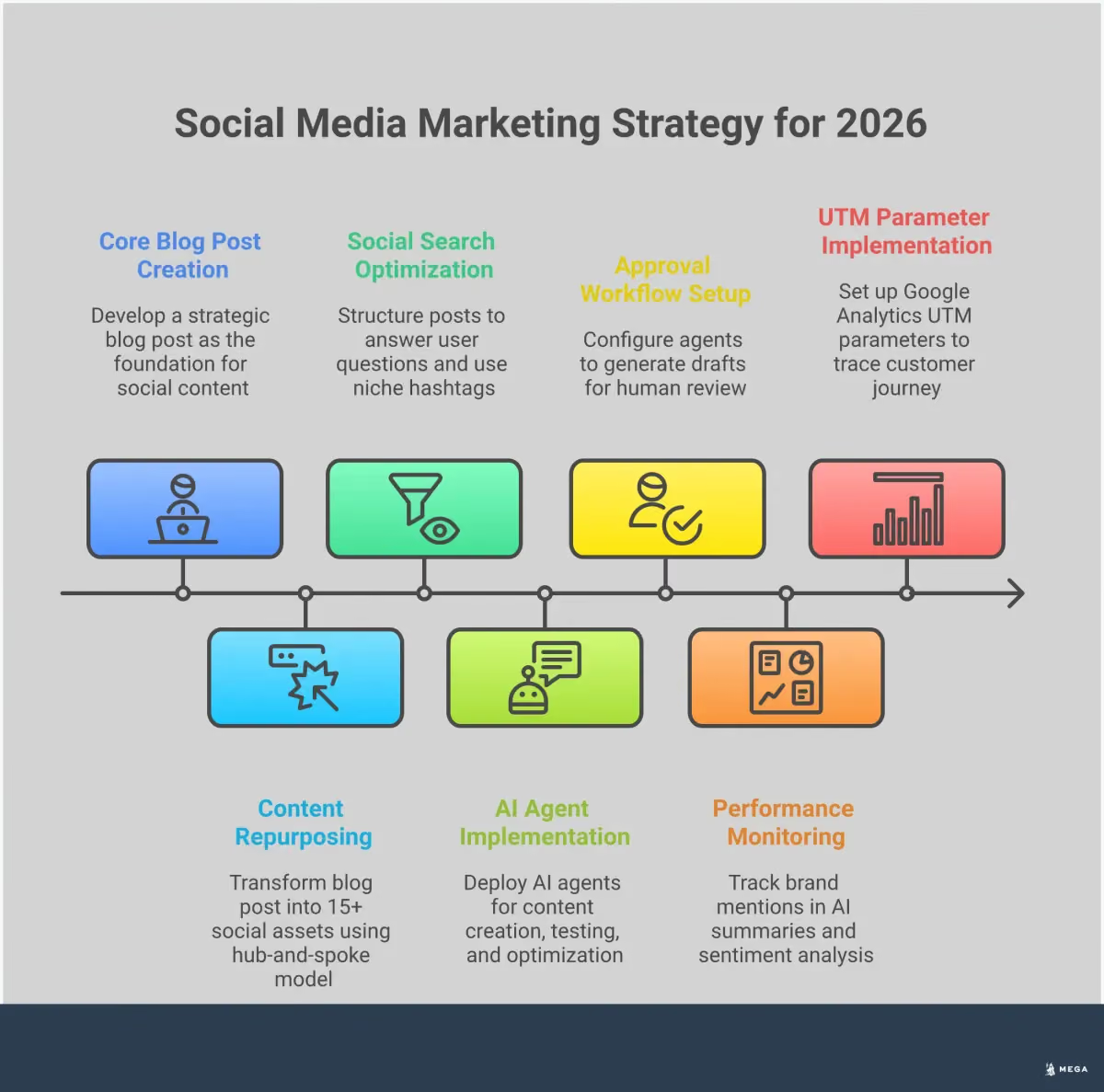
Putting these ideas into practice requires a clear plan. A solid social media strategy for 2026 isn't about chasing every trend. It’s about building a repeatable system that connects with your audience, measures what truly matters, and grows with your business. The right plan focuses on efficiency and impact, turning your social media presence from a daily chore into a predictable growth engine. For small businesses and startups, this means focusing on four key areas: content structure, platform optimization, measurement, and sustainable systems.
Structure Content for Fast Scrolling
In a user-controlled feed, your content must immediately align with a user's motivations for being there. Relevance is your biggest competitive advantage. To stop the scroll, structure your posts with a clear hook in the first two seconds, followed by concise, valuable information. Use visual cues like bold text, short paragraphs, and lists to make your content easy to scan. The closer your content mirrors the reasons users show up—whether for education, entertainment, or connection—the more likely you are to increase brand visibility. Think less about what you want to say and more about what your audience wants to see.
Optimize for Each Social Platform
Every social network has its own culture, audience, and content format. A post that performs well on LinkedIn will likely fall flat on TikTok. For 2026, it’s critical to know which platforms your audience trusts most and tailor your message accordingly. When you align your messaging with platform-specific behavior, you meet users where they are, build credibility, and improve engagement. Instead of blanketing every channel with the same content, focus on the few that matter most to your business. Create native content for each, respecting the unspoken rules and user expectations that define the experience on that platform.
Create a Measurement and Optimization Process
Traditional metrics like likes and shares don’t tell the whole story. People are discovering and forming opinions about brands without ever clicking a link. Your measurement process needs to account for this "zero-click" influence. Start tracking new top-of-funnel metrics, such as whether your brand is mentioned in AI-generated answers or positioned as an expert in online discussions. These indicators show that your content is shaping opinions before a purchasing decision is even made. This shift requires you to redefine social media ROI to include brand awareness and authority, not just direct conversions.
Build a System for Sustainable Growth
The goal is not simply to produce more content; it’s to make each idea work harder. A sustainable growth system focuses on distribution efficiency. Start with one core piece of content—like a blog post or video—and use it as the foundation for dozens of variations tailored to different formats and audiences. AI tools can help you remix content by suggesting different hooks, summarizing key points for a carousel post, or pulling quotes for text-based updates. This approach allows you to maintain a consistent presence across platforms without burning out your team. The game isn’t about production volume; it’s about getting the right variation in front of the right person.