
The way businesses handle SEO is changing. For years, the only option was a traditional agency model built on manual work, which often meant high costs and slow progress. Now, AI-powered platforms offer a powerful alternative. But how do these new tools stack up against conventional SEO agency pricing? This article breaks down the costs and benefits of both approaches. We’ll compare the predictable subscription fees of an AI service with the retainers of a traditional agency, showing you how automation can deliver a full suite of services with more transparency and efficiency for a fraction of the cost.
Key Takeaways
- Set a realistic budget by knowing the models: SEO fees vary from monthly retainers to project-based rates, with costs depending on your business size. Understanding these structures helps you create a realistic budget and compare agency proposals fairly.
- Recognize that price is tied to scope and competition: The investment needed for SEO depends on your industry, website complexity, and specific goals. A higher price typically reflects a more comprehensive strategy required to compete effectively.
- Vet any provider by asking about transparency and results: Whether you choose a traditional agency or an AI-powered platform, look for clear deliverables, predictable costs, and flexible terms. Avoid partners who promise guaranteed rankings and instead focus on those who can explain their strategy for long-term growth.
What Are the Common SEO Pricing Models?
When you start looking for SEO help, you'll find agencies structure their fees in a few different ways. The right model depends on your budget and goals. Let's walk through the four most common pricing structures so you know what to expect.
Monthly Retainers
The monthly retainer is the most common model. You pay a fixed fee each month for ongoing SEO services, allowing for a long-term strategy. Most businesses pay between $3,000 and $7,500 per month for a retainer. The main benefit is a predictable marketing expense and a dedicated team. The downside is that it's a significant investment, so you need a clear understanding of the specific deliverables included.
Hourly Rates
Some agencies and freelancers charge by the hour, which works well for specific tasks or consultations. In the US, expect to pay between $100 and $250 per hour for quality work. While this model is flexible, it can make budgeting difficult since the total cost can vary. It’s important to set clear expectations and track hours closely to ensure the work stays focused on your primary goals.
Project-Based Fees
With project-based pricing, you pay a flat fee for a one-time initiative like a technical SEO audit. A single project can cost anywhere from $500 to over $5,000, depending on the scope. The advantage is knowing the total cost upfront. The drawback is that SEO isn't a one-and-done activity. You'll need an ongoing strategy to maintain and improve your search rankings over time.
Performance-Based Pricing
This model links an agency's fee to specific outcomes, like a top keyword ranking. It seems attractive because you only pay for results, but it comes with risks. As experts point out, no one can guarantee rankings because search engine algorithms constantly change. These agreements can also be complex and may focus on vanity metrics instead of goals that actually drive revenue. Always read the fine print carefully.
How Much Does SEO Cost?
SEO pricing isn't one-size-fits-all. The amount you'll invest depends on your business size, industry, competition, and goals. An agency might charge a local bakery a few hundred dollars a month for basic local listings, while a national e-commerce brand could pay tens of thousands for a comprehensive strategy. Understanding the typical price ranges can help you set a realistic budget and know what to expect for your money.
Most agencies structure their pricing in a few common ways, such as monthly retainers, hourly rates, or project-based fees. A monthly retainer is the most common model, where you pay a fixed fee each month for an agreed-upon set of services. This provides consistency for both you and the agency. When you start looking for an SEO partner, you'll find that costs can vary dramatically. To make sense of it all, it helps to look at pricing based on business size. Below, we’ll break down the typical monthly costs for small, mid-sized, and enterprise businesses. This will help you align your expectations with your budget and find a plan that fits your needs without overpaying for services you don't require.
For Small Businesses ($500–$3,000/month)
If you run a small or local business, your SEO budget will likely fall into this range. Basic service packages often start around $500 to $1,500 per month. These plans typically cover the fundamentals, like keyword research, on-page SEO for a limited number of pages, and managing your Google Business Profile. For more comprehensive local SEO or a content-focused strategy, expect to invest closer to $1,500 to $3,000 per month. Be cautious of providers offering services for less than $500, as quality can be a concern. Modern AI-powered SEO platforms can offer a full suite of services within this price range, providing a predictable and effective alternative to traditional agency retainers.
For Mid-Sized Businesses ($3,000–$7,500/month)
Mid-sized businesses operate in more competitive markets and often have larger websites, which requires a more significant investment. At this level, you’re moving beyond the basics and into a more aggressive growth strategy. A monthly budget between $3,000 and $7,500 is standard. This typically includes everything in a small business plan plus more advanced services like in-depth technical SEO audits, consistent content creation, strategic link building, and detailed performance reporting. The goal here is to not just compete but to capture a larger market share. An agency working with a mid-sized business will focus on scaling what works and finding new opportunities for organic traffic growth.
For Enterprise Businesses ($7,500+/month)
For large companies competing on a national or international scale, SEO is a major marketing channel that demands a substantial budget. Enterprise SEO plans often start at $7,500 per month and can easily exceed $20,000. This investment covers the management of massive websites with thousands or even millions of pages. Services at this level are highly specialized and may include programmatic SEO, advanced technical fixes, large-scale content campaigns, and sophisticated conversion rate optimization. At the enterprise level, SEO is about dominating search results for highly competitive keywords and protecting the company’s digital footprint against other major players in the industry.
What Factors Influence SEO Pricing?
SEO pricing isn't a simple, one-size-fits-all number. When you ask an agency for a quote, they consider several key factors before presenting a price. Think of it like hiring a contractor to work on your house; the cost depends on the size of the house, its current condition, and the scope of the project. Understanding these variables will help you evaluate proposals and see why one agency might charge $1,000 a month while another quotes $5,000.
The price you pay is directly tied to the amount of work and expertise required to achieve your goals. A business in a highly competitive market with a large, complex website will naturally require a larger investment than a local business with a simple site and less competition. Your starting point also matters. A brand-new website needs to build authority from the ground up, while an older site might need significant cleanup before it can move forward. By breaking down these factors, you can better understand what goes into an SEO proposal and find a solution that aligns with both your budget and your business objectives.
Your Industry and Competition
The level of competition in your industry is one of the biggest factors in SEO pricing. If you’re a niche local business in a small town, ranking on Google will be far less difficult than if you’re a real estate agent in a major city. In competitive fields like law, finance, or e-commerce, countless other businesses are all fighting for the same top spots for valuable keywords. To stand out, an agency needs to invest more time and resources into in-depth competitive analysis, creating superior content, and building a stronger backlink profile. This increased effort directly translates to a higher cost.
The Size and Complexity of Your Website
The scale of your website plays a crucial role in determining the price. A simple five-page website for a local service business requires much less work than a large e-commerce store with thousands of product pages, categories, and a blog. Each page needs to be optimized, from its title tags and meta descriptions to its content and internal links. A larger site also has a higher potential for technical issues like slow page speed, broken links, or duplicate content that need to be identified and fixed. The more pages and complexity involved, the more hours are required for auditing, implementation, and ongoing management.
Your Current SEO Performance
Your website's starting point heavily influences the initial workload and cost. If your site is brand new, it has no existing authority, so the focus will be on building a solid foundation from scratch. On the other hand, if you have an older website with a history of poor SEO practices, it might have technical errors, Google penalties, or low-quality content that needs to be addressed. This cleanup phase requires significant upfront work before any growth-focused strategies can be effective. A thorough SEO audit will reveal these issues, and the cost to fix them will be factored into the overall price.
The Agency's Reputation
Just like in any other industry, expertise and a proven track record come at a premium. A well-established SEO agency with years of experience and a portfolio of impressive case studies will typically charge more than a newer or smaller firm. You are paying for their accumulated knowledge, strategic insights, and the confidence that they can deliver results. While a higher price doesn't always guarantee success, experienced agencies often have more refined processes and deeper industry connections. For small businesses, the key is to find a balance between expertise and affordability that fits your specific needs.
The Scope of Services
Not all SEO plans are created equal. The specific services included in your package are a primary driver of cost. A basic plan might only cover keyword research and on-page optimization. A more comprehensive, full-service plan will include a wider range of tasks like technical SEO, content creation, link building, local SEO, and detailed performance reporting. Activities like writing high-quality blog posts or earning authoritative backlinks are labor-intensive and add to the monthly cost. When comparing proposals, look closely at the list of deliverables to ensure you’re making an apples-to-apples comparison.
What Do You Get for Your Money?
Understanding what services are included at different price points helps you find the right fit for your budget and goals. Agency offerings are typically tiered based on the scope and intensity of the work. While every agency structures its packages differently, you can generally expect the deliverables to fall into these three categories.
Basic SEO Services ($500–$1,500/month)
This entry-level tier is designed for small businesses or startups focused on building an initial online footprint. A basic package lays the essential groundwork for search visibility. Services usually concentrate on foundational tasks like initial keyword research to find relevant search terms, fundamental on-page optimization for your main website pages, and setting up basic performance reporting. Think of this as getting your house in order. It ensures search engines can find and understand your site, but it may not include more proactive strategies like content creation or link building, which are often necessary to outrank competitors.
Standard SEO Services ($1,500–$3,500/month)
Aimed at small to mid-sized businesses ready to grow, the standard tier offers a more comprehensive and proactive strategy. In addition to the basics, these packages typically include ongoing work to improve your authority and relevance. You can expect more advanced keyword strategies, the creation of new SEO content like blog posts or landing pages, and more detailed performance analysis. This level of service moves beyond just setting up your foundation and actively works to build upon it, helping you compete for more valuable keywords and attract more organic traffic over time.
Premium SEO Services ($3,500+/month)
Premium packages are built for larger businesses or companies in highly competitive industries where gaining an edge is critical. Starting at $3,500 and often going much higher, these plans provide a full-service, deeply integrated approach. This tier includes everything from the standard package plus more intensive services. Expect in-depth competitor analysis, comprehensive technical SEO audits to fix complex site issues, and a personalized content marketing strategy. At this level, you are paying for a dedicated team and a high-touch, strategic partnership to manage and execute a robust SEO plan designed for significant market share growth.
What's a Realistic ROI from SEO?
SEO is a long-term investment in your business’s online visibility. Unlike paid ads, where you see an immediate traffic flow that stops when you turn off the spend, SEO builds foundational strength over time. The return on investment isn't just about a single sale; it's about creating a sustainable source of leads and customers. A successful SEO strategy helps your business show up when potential customers are actively searching for your products or services, building trust and authority with every click. This consistent presence means you're not just paying for attention; you're earning it.
Think of it as planting a tree rather than buying a bouquet of flowers. It requires patience and consistent effort, but the result is an asset that grows stronger and provides more value over the years. The initial work involves technical fixes, content creation, and building authority, which can take time to gain traction with search engines. However, once you achieve strong rankings, the cost to maintain them is often much lower than acquiring a new customer through other channels. This makes the long-term return on investment from SEO one of the highest in digital marketing. It transforms your website from a simple online brochure into a reliable, lead-generating machine that works for you around the clock.
How Long Until You See Results?
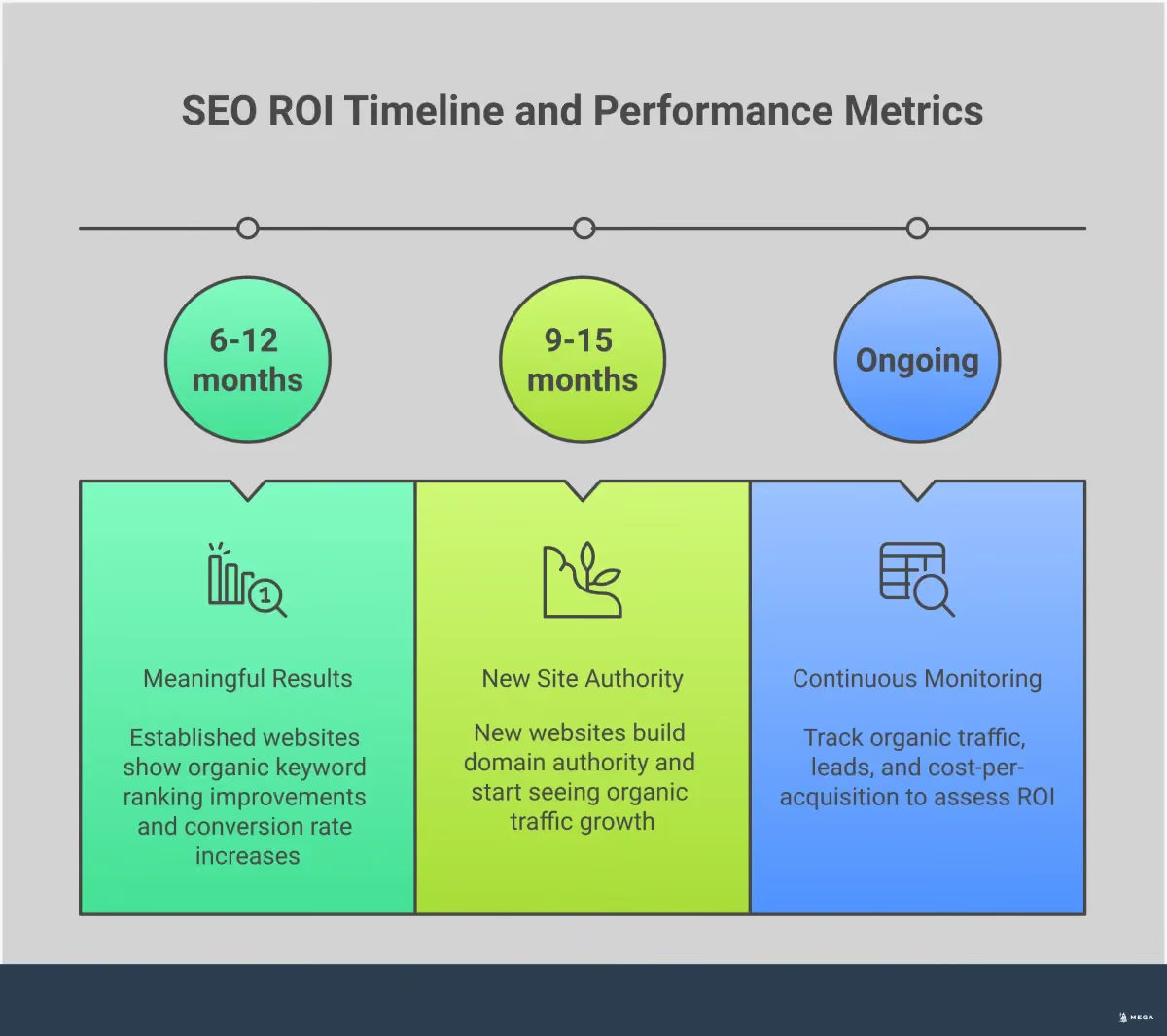
Patience is key when it comes to SEO. Most businesses should expect to see meaningful results within six to 12 months. This timeline allows for search engines to crawl and index new content, for backlinks to start passing authority, and for your website to build a history of trustworthiness. If you have a brand-new website, it might take even longer to gain traction.
Be cautious of any agency or tool that promises instant or guaranteed first-page rankings. These offers often rely on risky, "black-hat" tactics that can get your site penalized by Google, causing more harm than good. A reputable SEO plan focuses on sustainable growth through quality content and legitimate authority-building. The goal is to build a lasting presence, not to find a temporary loophole.
Key Metrics to Track for ROI
To understand your return on investment, you need to look beyond simple traffic numbers. While an increase in website visitors is a good sign, the ultimate goal is to generate more business. The most important metrics are tied directly to your bottom line: leads, sales, and revenue. A good SEO provider will focus on how their efforts contribute to these goals.
Other important indicators include organic keyword rankings for your target terms, conversion rates on your key pages, and the number of quality backlinks your site has acquired. Tracking these key performance indicators will give you a clear picture of how your SEO strategy is performing. Remember that your budget also covers essential components like content creation and link-building, which are the fuel for your SEO engine.
What to Expect in Your Industry
The cost and timeline for SEO can vary significantly depending on your industry. If you’re in a highly competitive market, like law, real estate, or a large ecommerce niche, it will take more time and a larger investment to see results. This is because you are competing against established players who have likely been investing in SEO for years.
Before starting an SEO campaign, it’s important to conduct a competitive analysis to understand the landscape. Look at who is ranking for your target keywords and what their websites look like. A business in a less crowded local market might see results much faster and with a smaller budget than a national company in a saturated field. Understanding your specific environment helps you set realistic expectations for your investment.
How AI-Powered SEO Compares to Agency Pricing
Traditional SEO agencies have long been the standard for businesses looking to improve their search rankings. Their pricing models—monthly retainers, hourly rates, and project-based fees—are familiar, but they often come with high costs and a lack of transparency that can be a barrier for small businesses. An agency retainer can feel like a black box, where you pay a significant fee each month without a clear understanding of the specific tasks being completed or their direct impact on your growth.
The emergence of AI-powered platforms offers a compelling alternative. Instead of relying on manual processes, these tools use artificial intelligence to automate and optimize SEO tasks, from keyword research to content creation and technical fixes. This approach introduces a new model that is often more predictable, transparent, and cost-effective. For a small or local business owner, this means you can get the benefits of a full-service SEO strategy without the traditional agency price tag or ambiguity. This shift allows you to invest your marketing budget with more confidence, knowing exactly what you're getting and how it aligns with your goals.
MEGA AI's Predictable Subscription Model
One of the biggest challenges with agency pricing is budgeting. A variable monthly bill or a retainer that doesn't clearly map to deliverables can make financial planning difficult. MEGA AI addresses this with a straightforward subscription model. You pay a flat monthly fee, which makes your SEO costs completely predictable. This is a game-changer for small businesses that need to manage their cash flow carefully.
With clear tiers, you can choose a plan that fits your current budget and business needs. There are no surprise charges or hidden fees. This predictable pricing structure removes the financial uncertainty often associated with hiring an agency, allowing you to focus on growing your business while the AI handles your SEO strategy and execution in the background.
Transparent Services and Deliverables
Have you ever paid an agency invoice and wondered what work was actually done? It’s a common frustration. MEGA AI provides complete transparency into the services you receive. Every plan includes a comprehensive suite of services, such as full-service SEO management, content generation, technical audits and fixes, keyword strategy, and even acquiring backlinks. You aren't just paying for a vague promise of "optimization."
Instead, you get a clear list of deliverables and can see the tasks your AI agent is performing in real-time. This visibility builds trust and helps you understand the direct value of your investment. You can track progress and see how specific actions, like fixing canonical tags or updating old blog posts, contribute to your overall SEO performance, eliminating the guesswork that often comes with traditional agency relationships.
The Cost and Efficiency Advantage of AI
The core reason AI-powered platforms can offer a more attractive pricing model is efficiency. AI can analyze data, generate content, and implement technical fixes at a scale and speed that a human team simply can't match. This automation drastically reduces the manual labor involved, which in turn lowers the cost. For example, MEGA AI's platform can perform keyword research, write dozens of articles, and fix site-wide technical issues autonomously.
This efficiency doesn't just save money; it also accelerates results. Because the AI can work continuously and implement changes quickly, many businesses see organic traffic growth faster than they would with a traditional agency. If you're curious to see how this automated approach works, you can book a demo to get a firsthand look at the platform. This combination of lower costs and faster outcomes makes AI a powerful tool for any business looking to maximize its SEO ROI.
SEO Pricing Red Flags to Watch For
Choosing an SEO partner is a significant investment. While most agencies are transparent, some use confusing pricing and overblown promises to sign clients. Understanding the common red flags helps you find a trustworthy partner who will genuinely help your business grow. Here are a few things to watch for when evaluating SEO proposals and contracts.
"Guaranteed" Rankings and Unrealistic Promises
If an agency promises to get you the #1 spot on Google, consider it a major red flag. No one can truly guarantee rankings because search engine algorithms are complex and constantly changing. Reputable SEO professionals understand that their job is to align your website with best practices, not to game the system. Instead of promising a specific rank, a trustworthy partner will focus on a clear strategy, transparent reporting, and sustainable growth in organic traffic and conversions. They should be able to explain how they plan to improve your visibility, not just promise that they will.
Vague Proposals and Hidden Fees
Your SEO proposal should be a clear roadmap, not a mystery. Be cautious of agencies that offer vague service descriptions like "on-page optimization" or "link building" without detailing what those activities include. You should know exactly what you're paying for, whether it's a specific number of blog posts, technical fixes, or local citation updates. Also, be wary of prices that seem too good to be true. Extremely cheap SEO services often cut corners by using black-hat tactics that can get your site penalized by Google, undoing any short-term gains.
High-Pressure Tactics and Long-Term Contracts
A good SEO provider will take the time to learn about your business, goals, and website before giving you a price. If an agency pressures you to sign a contract immediately without a proper discovery process, they may be more interested in their sales quota than your success. Pay close attention to the contract terms, especially the length. While SEO is a long-term strategy, being locked into a rigid 12- or 18-month contract with no performance clauses can be risky. Look for partners who offer more flexible terms or have clear subscription models that don't require a long-term, high-risk commitment.
How to Choose the Right SEO Plan for Your Business
Selecting the right SEO plan is a significant decision for your business's growth. The key is to find a plan that aligns with your specific situation, not just a flashy sales pitch. By breaking the decision down into a few key steps, you can find a partner and a plan that fits your needs and budget.
Define Your Budget and Business Goals
Before you look at any pricing sheets, start with your own business. What can you realistically invest in SEO each month? SEO is a long-term strategy, not a quick fix. While good SEO isn't cheap, it's a crucial investment in your business's growth. Your budget will determine the level of service you can access. At the same time, clarify your goals. Are you trying to increase local foot traffic, generate online leads, or drive ecommerce sales? Having clear, measurable objectives will help you and your potential SEO provider determine if a plan is likely to deliver the results you're looking for.
Match the Services to Your Needs
Not all SEO plans are created equal. A local bakery has very different needs than a national software company. Avoid one-size-fits-all packages and look for a provider that tailors its services to your specific industry and website complexity. A good plan should clearly outline what's included, from keyword research and content creation to technical fixes and link building. For small businesses, a comprehensive solution like MEGA AI's SEO agent can be ideal because it covers every task you need without forcing you to pick and choose from a confusing menu of services. This ensures all your bases are covered from day one.
Evaluate Contract Terms and Flexibility
Always read the fine print. Some agencies require long-term contracts that lock you in for a year or more, while others offer month-to-month flexibility. A shorter-term contract can be a great way to test a service without a major commitment. Pay close attention to the cancellation policy and any hidden fees. Transparent pricing is a sign of a trustworthy partner. For example, MEGA AI offers clear monthly and annual subscription plans with no setup fees, so you know exactly what you're paying for. This kind of clarity helps you plan your budget and build a relationship based on trust.
Key Questions to Ask Before You Sign a Contract
Before you commit to an SEO agency, it’s important to do your homework. A contract is a significant commitment, and asking the right questions upfront can save you from headaches later. Think of it as an interview where you’re deciding if the agency is the right partner for your business. A trustworthy provider will welcome your questions and provide clear, direct answers.
Focus on understanding exactly what you'll receive, how much it will truly cost, and what happens if things don't work out. Getting clarity on these key areas helps you set realistic expectations and ensures you’re entering a partnership that aligns with your business goals.
About Deliverables and Reporting
A good SEO provider should want to learn about your business, goals, and customers before quoting a price. Be wary of any agency that offers a one-size-fits-all package without a discovery process. Your proposal should clearly outline the specific activities they will perform. A solid SEO strategy includes a mix of technical fixes, content creation, and link building, and these should be itemized. Ask how they measure success. Reporting should focus on business outcomes like leads and revenue, not just traffic or rankings. Vague promises are a red flag; you want a partner focused on growth.
About Billing and Any Hidden Costs
Your contract should be crystal clear about all fees. Ask what’s included in the monthly retainer and what might count as an additional expense. Some agencies charge extra for things like content creation or specific technical fixes. It’s also wise to be cautious of unusually low prices. Legitimate SEO takes time and expertise, so a price that seems too good to be true probably is. Make sure you understand the payment schedule and any setup fees. A transparent pricing model with a flat monthly rate can help you avoid surprise costs and manage your budget more effectively.
About Performance and Cancellation Policies
No one can guarantee a #1 ranking on Google. Search engine algorithms are constantly changing, and any agency that makes such a promise is not being honest. Instead, ask about their process and the typical timeline for seeing results, which is usually three to nine months. It’s also critical to understand the contract terms. Are you locked in for a year, or is it a month-to-month agreement? A flexible cancellation policy gives you an out if the partnership isn’t delivering. SEO is an ongoing effort, but you shouldn’t be tied to a provider that isn’t meeting your expectations.