
The rise of AI search and social discovery can feel like another challenge for small businesses. But it’s actually a massive opportunity. The old system often favored big brands with huge budgets. This new environment rewards authority, helpfulness, and authenticity over sheer size. When an AI chatbot recommends a local service or a TikTok search highlights a unique product, it levels the playing field. This is the core of Search Everywhere Optimization. It’s a strategy that helps you build genuine authority and get discovered on platforms where you can compete effectively. This guide will show you how to adapt your approach to turn these changes into your biggest advantage.
Key Takeaways
- Adapt to a multi-platform search world: Customers now search for answers on AI chatbots, social media, and local apps. Your strategy must expand beyond traditional SEO to ensure your business is visible wherever your audience is looking.
- Establish authority with expert content: Consistently create valuable content that directly answers your customers' questions. This builds the trust needed to be recommended by AI tools and shared on social platforms, making you the go-to source in your field.
- Use AI agents to automate your strategy: Implementing a Search Everywhere approach is complex. AI agents can handle the entire workflow, from research and content creation to cross-platform optimization, making a sophisticated strategy achievable for any business.
What is Search Everywhere Optimization?
Search Everywhere Optimization is a modern approach to making your business visible across all the platforms your customers use to find information. While traditional SEO focuses almost exclusively on ranking high on search engines like Google, this updated strategy recognizes that your audience is also searching on social media, in AI chatbots, and on local directory apps. It’s about meeting your customers wherever they are looking.
The need for this shift comes from evolving user behavior. People no longer rely on a single source for answers. AI-driven search models, for instance, don’t just list websites—they synthesize answers from multiple sources to provide a direct response. This means your content strategy must be adapted to ensure your business is part of that synthesis. If your information isn't clear, authoritative, and accessible on various platforms, you risk being left out of the conversation entirely.
For small and local businesses, this means building a comprehensive online presence. Winning in local AI search requires more than just a website. It involves maintaining consistent customer communication, participating in your community, and creating detailed content that answers the real questions your customers are asking. Your authenticity and local expertise are valuable assets that both customers and AI systems reward. A complete SEO and GEO strategy ensures you show up in these new search experiences.
To make this work, it’s important to help AI models and search engines understand the context of your content. Using structured data markup, also known as schema, provides this context. It’s a way of labeling your website’s information so that search tools can easily interpret it and feature it accurately. This technical step is essential for optimizing your business for the future of search and ensuring you remain visible as technology continues to change.
Why Traditional SEO Isn't Enough
For years, search engine optimization meant one thing: getting your website to the top of Google’s search results. While that’s still important, the way people find information has changed dramatically. Your customers aren't just searching on Google anymore. They're asking questions to AI chatbots, looking for products on social media, and checking reviews on local map listings. A strategy focused only on traditional search engines misses huge opportunities to connect with your audience where they are.
This shift requires a new approach. Simply ranking for keywords is no longer the whole game. You need to be the answer wherever questions are being asked. The rise of AI-powered search, combined with changing consumer habits and decreased brand loyalty, means your business needs to be visible across a much wider digital landscape. Relying on old SEO tactics alone is like bringing a map to a world that now requires GPS; you might get somewhere eventually, but you’re missing the most direct and effective routes.
How AI search tools change user behavior
AI-driven search platforms like ChatGPT, Google’s Gemini, and Microsoft Copilot are fundamentally redefining how users find and trust information. Instead of presenting a list of blue links for you to sort through, these tools synthesize information from multiple sources to provide a single, direct answer. This changes the user's goal from finding the best website to getting the best answer as quickly as possible.
For businesses, this means getting a click is no longer the primary objective. The new goal is to become a trusted source that AI models cite in their responses. If your content provides the most authoritative, clear, and helpful information on a topic, the AI is more likely to feature it, putting your brand directly in front of users without them ever needing to visit a search results page.
Why people bypass traditional search engines
Users are increasingly turning to AI chatbots first because they perceive the results as higher quality and more convenient. Instead of sifting through ads and SEO-optimized articles to find a simple answer, they can get a direct response in seconds. Many people feel they get better quality information from a tool like ChatGPT because it cuts through the noise.
There’s also an element of built-in trust. The average person assumes that major platforms like Google and OpenAI have already vetted the sources they use. If an AI tool recommends your brand or cites your data, it acts as a powerful endorsement. Users trust that the platform wouldn't feature an unreputable source, giving your business instant credibility with a new audience that might have never found your website through a traditional search.
The decline of brand loyalty
In an environment where AI-driven recommendations are becoming more common, brand loyalty is becoming less of a factor in purchasing decisions. Data shows that brand loyalty is declining, as consumers are more willing than ever to try new products based on trusted recommendations. When an AI chatbot suggests a product or service, it feels like an unbiased tip from a knowledgeable source.
This creates a massive opportunity for small and local businesses. If your brand consistently appears as the answer to relevant queries across different platforms, you can capture customers who might have otherwise defaulted to a larger, more established competitor. Being visible everywhere—from AI-generated answers to local search results—is your best strategy for building trust and winning over modern consumers who prioritize reliable information over a familiar logo.
How Search Everywhere Optimization Works
Search Everywhere Optimization is a continuous cycle of strategy, execution, and refinement. It’s not about setting up a campaign and letting it run. Instead, it’s an active process that adapts to new platforms, changing algorithms, and shifting user behavior. This approach ensures your business stays visible wherever your customers are looking for answers.
The process breaks down into three core functions: letting an intelligent system handle the high-level planning, tailoring your content for every possible search environment, and making constant, automated adjustments to keep your strategy effective. When these pieces work together, you create a powerful presence that goes far beyond traditional search rankings.
Let AI agents handle strategy and execution
A successful search strategy requires more than just the right keywords. It demands a deep understanding of your market, competitors, and the subtle ways users search for information on different platforms. Instead of spending hours on manual research and planning, you can use AI agents to handle both the strategy and the day-to-day execution. These systems analyze data to find growth opportunities, create a content plan, and carry out the necessary tasks to achieve your goals. This frees you up to focus on running your business, knowing your online presence is being managed strategically.
Optimize content for every search environment
Your content needs to perform well everywhere, from Google search results to AI chatbot responses and social media feeds. Each platform has its own rules and user expectations. Search Everywhere Optimization involves creating a core piece of content and then adapting it for each specific channel. This means your blog post might become a short video for TikTok, a conversational answer for a chatbot, or a detailed guide for your website. This approach combines traditional local SEO with AI-optimized strategies to make sure you appear in these new search experiences.
Make real-time adjustments automatically
The digital world moves fast. A strategy that works today might be outdated tomorrow. That’s why making real-time adjustments is so important. An automated system can monitor your content’s performance across all channels and make small, continuous updates to improve its visibility and click-through rate. For example, it can refresh an article with new information, fix technical issues, and notify search engines of the changes to ensure they get indexed quickly. This ongoing maintenance keeps your content fresh and competitive without requiring constant manual effort.
Where to Prioritize Your Efforts for Maximum Visibility
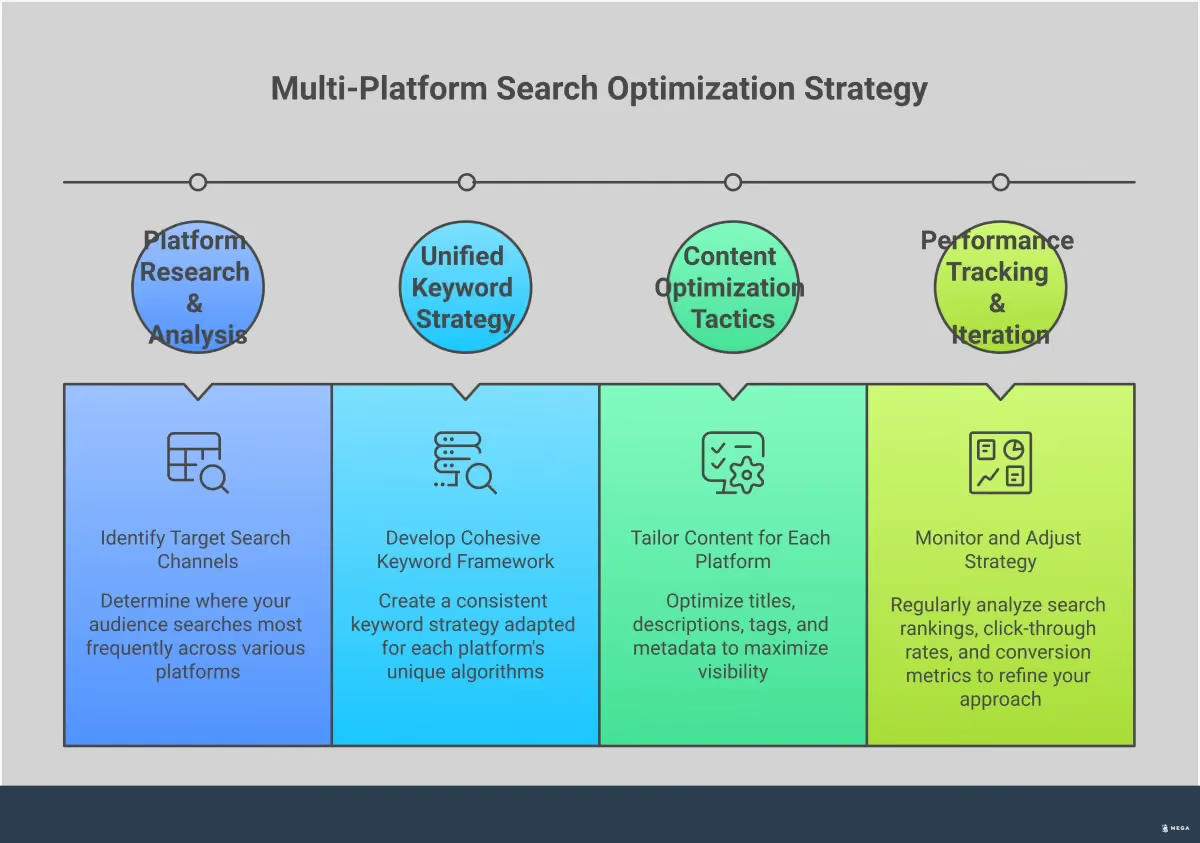
With customers searching for information on Google, TikTok, and AI chatbots, figuring out where to focus can feel overwhelming. The goal of Search Everywhere Optimization isn’t to be on every single platform, but to show up where your specific customers are looking. A smart strategy involves prioritizing the channels that offer the highest return for your business.
Instead of spreading your efforts too thin, you can concentrate on a few key areas that drive the most impact. By understanding how users behave on each platform, you can tailor your content to meet their needs, whether they’re typing a query into a search bar or asking a chatbot for a recommendation. This targeted approach ensures your business remains visible and relevant, no matter how people choose to search. Let’s look at the four main areas where you should direct your attention.
Traditional search engines and Google Overview
While the search landscape is expanding, traditional search engines like Google are still a primary source of traffic for most businesses. However, the classic list of blue links is changing. With the introduction of AI Overviews, Google now often provides a direct, AI-generated summary at the top of the results page. To appear in these summaries, your content needs to be clear, authoritative, and directly answer the user’s question.
This means your SEO foundation must be solid. You still need well-researched keywords, a technically sound website, and high-quality content. AI-powered tools can help you manage your online presence by keeping your content aligned with evolving search engine algorithms. An AI agent like MEGA AI’s SEO tool handles this automatically, updating your site to ensure it’s optimized for both traditional rankings and new AI-driven features.
AI chatbots and conversational search
The rise of AI chatbots is fundamentally changing how people find information. Platforms like ChatGPT, Microsoft Copilot, and Google Gemini are becoming the new starting point for discovery. Users are having conversations with these tools, asking complex questions and seeking recommendations for products and services. If your business isn’t part of that conversation, you’re missing a major opportunity.
To get noticed here, your strategy needs to adapt. This new environment requires creating detailed, factual content that establishes your authority on specific topics. When an AI chatbot trusts your website as a reliable source, it’s more likely to cite your business in its answers. The key is to adapt your company for the era of AI search by producing content that is helpful, accurate, and directly addresses the kinds of questions your potential customers are asking.
Social media platforms
Social media is no longer just for connecting with friends; it’s a powerful search engine in its own right. Younger audiences, in particular, often turn to platforms like TikTok, Instagram, and Pinterest to discover new products, find reviews, and get ideas. They’re searching for video tutorials, visual inspiration, and authentic recommendations from creators and other users. Showing up here means thinking like a creator, not just a marketer.
To succeed, you need comprehensive online profiles and content that answers real customer questions in an engaging format. This could mean creating short-form videos that demonstrate your product, sharing user-generated content, or using relevant hashtags and keywords in your captions to make your posts more discoverable. The goal is to build a community and provide value, which in turn makes your brand more visible when users search within these platforms.
Local search and Google Business Profile
For small and local businesses, winning the local search game is critical. When a potential customer searches for "best pizza near me" or "plumber in Brooklyn," the results they see are heavily influenced by proximity and local ranking factors. Your Google Business Profile (GBP) is your most important asset in this arena. It’s often the first impression a customer has of your business, displaying your location, hours, reviews, and photos directly in Google Search and Maps.
Optimizing for local search means keeping your GBP listing complete and up to date. It also involves encouraging customer reviews and responding to them promptly. According to Clicked Studios, focusing on local SEO features is one of the most effective ways for small businesses to improve their visibility. Consistently managing your local presence ensures you appear when nearby customers are ready to make a purchase.
How to Build Authority That Stands Out
In a world where answers come from chatbots, social feeds, and search engines, building authority is about more than just ranking first. It’s about becoming the trusted, go-to source wherever your audience is looking. When people see your name, they should associate it with reliable, expert information. This doesn't happen by accident. It requires a deliberate strategy focused on demonstrating what you know and consistently delivering value. By establishing your brand as an authority, you create a durable advantage that stands out in any search environment.
Create content that shows your expertise
The most direct way to build authority is by consistently creating valuable, informative content that addresses your target audience’s needs and pain points. Think of every question a potential customer might have and aim to answer it better than anyone else. This establishes your brand as a helpful expert they can rely on. Your content should be thorough, accurate, and focused on solving real problems. For small businesses, scaling this kind of expert content generation can be a major challenge, but it's the foundation of earning trust and visibility across all platforms.
Maintain quality standards to build trust
Trust is fragile. One piece of inaccurate or poorly produced content can undermine all your hard work. That’s why maintaining high quality standards is non-negotiable. Every blog post, video, or social media update should be well-researched, clearly communicated, and aligned with your brand's voice. This consistency shows your audience that you care about providing them with the best information. It signals professionalism and reliability, which are key ingredients for building a loyal following that turns to you first for answers and, eventually, for solutions.
Use both text and video for broader reach
Your audience consumes content in different ways on different platforms. A deep-dive article is perfect for your blog, while a short, engaging video might perform better on social media. To build authority everywhere, you need to meet people where they are with the formats they prefer. You can also encourage user-generated content (UGC) by creating shareable moments or asking for customer stories. According to Shopify, around 40% of US shoppers say UGC is important to their purchasing decisions, making it a powerful tool for building social proof and trust.
Develop unique insights and original research
To truly stand out, you need to contribute something new to the conversation. Instead of just summarizing what others have said, develop your own unique perspective. This could involve surveying your customers, analyzing your internal data to reveal industry trends, or conducting original research. Presenting unique data and insights positions you as a leader, not a follower. This is especially powerful for local businesses, as AI-optimized strategies that feature original insights can help them compete effectively against larger competitors by establishing deep, localized expertise.
Content Strategies That Work on Any Platform
To be visible everywhere, you need a content strategy that’s both consistent and flexible. The goal isn’t to create entirely different campaigns for every platform. Instead, focus on developing a strong core message and foundational content pieces. From there, you can adapt your work to fit the unique formats and audiences of different channels. This approach ensures your brand voice remains clear while allowing you to show up in the places your customers are already searching, whether that’s a search engine, a social feed, or an AI chatbot.
Repurpose content for different channels
Start with a single, high-value piece of content, like an in-depth blog post or a webinar. This becomes your pillar asset. From that one piece, you can extract and reformat content for multiple platforms. A detailed guide can be broken down into a series of tips for a Twitter thread, a visual carousel for Instagram, or key talking points for a short video. This method saves time and reinforces your core message across channels. Effective content marketing tactics always aim to engage a specific audience, and repurposing allows you to tailor your message for each one.
Create interactive content to drive engagement
Interactive content turns passive viewers into active participants. Think about incorporating quizzes, polls, online calculators, or live Q&A sessions into your strategy. This type of content does more than just capture attention; it encourages users to engage directly with your brand, which often sends positive signals to platform algorithms. By creating valuable content that invites participation, you establish your brand as an authority in your industry. It’s a direct way to address your audience’s needs while gathering useful insights about their preferences.
Encourage user-generated content and community
Your happiest customers can be your most effective marketers. User-generated content (UGC) includes reviews, social media posts, and testimonials created by people who use your product or service. You can encourage UGC by running contests, creating a unique hashtag, or featuring customer content on your official profiles. This strategy builds powerful social proof, as shoppers often trust peer recommendations over brand advertising. It's one of the most authentic marketing ideas for building a loyal community and influencing purchasing decisions.
Build content around customer pain points
The most effective content solves a problem. Before creating anything, take time to understand the specific challenges and questions your target audience has. You can find these by reviewing customer support tickets, reading online reviews, and browsing industry forums. When you build your content strategy around these pain points, every article or video becomes genuinely helpful. This problem-solving approach is fundamental to building trust and authority. It ensures your content is relevant and valuable, which is a core principle behind many tried-and-true content marketing ideas for small businesses.
How AI Agents Upgrade Your Search Strategy
Executing a Search Everywhere strategy sounds like a full-time job because, traditionally, it has been. Managing multiple platforms, creating unique content for each, and tracking performance is a heavy lift for any team, let alone a small business owner. This is where AI agents come in. They aren't just tools you have to learn and operate; they are autonomous systems that handle the strategic planning and execution for you.
Think of an AI agent as your dedicated marketing operator. It connects to your data, learns about your business, and then gets to work. It can plan a content calendar, write blog posts, launch ad campaigns, and optimize your budget across channels. This allows you to implement a sophisticated, multi-platform strategy without needing a large marketing department. For example, MEGA AI’s agents, Lindsay for SEO and Erle for Paid Ads, work autonomously to manage your entire search presence, from Google to social media to AI chatbots. They handle the complex tasks so you can focus on running your business.
Automate keyword research and content creation
The foundation of any search strategy is understanding what your audience is looking for and creating content that meets their needs. An AI agent automates this entire process. It can perform deep keyword research tailored to each platform, identifying not just what people search for on Google, but also the questions they ask AI chatbots and the topics they engage with on social media. Once it identifies these opportunities, the agent can generate high-quality, optimized content, from blog posts to social media captions. This ability to automate keyword research and content creation saves countless hours and ensures your brand is consistently producing relevant material.
Manage and optimize cross-platform campaigns
Running campaigns on Google, Meta, TikTok, and LinkedIn requires different strategies, creatives, and targeting. An AI agent acts as a central command center, allowing you to manage and optimize these efforts seamlessly. It can take a core message and automatically remix it for each platform, creating hundreds of ad variations to test. The agent then monitors performance across all channels, identifying what works best where. This allows you to manage and optimize cross-platform campaigns without having to become an expert on every single ad network. It ensures your message is cohesive while being perfectly adapted to each environment.
Track budget allocation and performance
One of the biggest challenges for small businesses is knowing where to put their marketing dollars for the best return. AI agents solve this by providing real-time performance tracking and automated budget optimization. The agent monitors your campaigns 24/7, analyzing which channels, audiences, and creatives are driving the best results. It can then automatically shift your budget to the top performers, ensuring your ad spend is always working as hard as possible. This strategic approach to tracking budget allocation and performance helps you compete effectively and maximize your ROI without constant manual adjustments.
Handle continuous content maintenance and updates
Search Everywhere Optimization is not a one-time setup. Platforms change, trends shift, and content can become outdated. AI agents handle the ongoing work of keeping your online presence fresh and relevant. An agent can perform regular content audits to identify articles that need updates, find new information to add to existing posts, and re-optimize content after a major search engine algorithm change. This focus on continuous content maintenance and updates is critical for maintaining visibility and authority across all platforms. It ensures your content remains a valuable resource for your audience over the long term.
What Technical Setup Do You Need?
Getting started with Search Everywhere Optimization doesn’t require a complete overhaul of your tech stack. The key is to connect your existing platforms to a central system that can automate and manage your efforts. This approach ensures your strategy is efficient, consistent, and scalable across all the channels where your customers are searching.
Integrate with your CMS
Your Content Management System (CMS) is the home base for your website content. Integrating your optimization tool directly with your CMS allows for seamless updates and ensures your information is consistent everywhere. When your AI agent can publish new blog posts, update service pages, and apply technical fixes directly to your site, you save time and avoid manual errors. This direct connection is what allows for the speed needed to keep up with different platforms. A good SEO agent should connect easily with popular systems like WordPress, Shopify, and Webflow.
Use an automated content optimization system
To effectively appear in various search environments, you need a system that can adapt your content for different algorithms. An automated content optimization system handles this for you. It can re-optimize an article for a Google update, adjust it for an AI chatbot, or ensure it meets the requirements of a specific social media platform. This technology ensures your content is always relevant and formatted correctly, no matter where it’s discovered. It’s a critical component for adapting your strategy to the capabilities of advanced AI technologies without needing a team of specialists.
Set up cross-platform management and reporting
When your presence is spread across multiple channels, you need a single place to see what’s working. Setting up cross-platform management and reporting gives you a unified view of your performance. Instead of logging into Google Analytics, your social media accounts, and your ad platforms separately, you can track key metrics from one dashboard. This helps you understand how efforts on one platform impact another and allows your AI agent to move budget around automatically to the channels delivering the best results. It provides the clarity needed to make smart, data-driven decisions.
How to Measure Success Across Channels
With your presence expanding across so many platforms, tracking success is no longer as simple as checking your Google ranking. A "like" on social media, a question asked to an AI chatbot, and a click on your Google Business Profile are all valuable signals, but they mean different things. Measuring success in a Search Everywhere world requires a unified view that connects these different interactions to what really matters: growing your business.
This might sound like you need a team of data analysts, but it’s where AI agents truly shine. Instead of logging into a dozen different dashboards, you can get a single, clear picture of your performance. This allows you to see which channels are driving the most valuable traffic, which content is resonating with customers, and where to focus your efforts next. The goal is to move beyond platform-specific metrics and start measuring your overall impact on customer acquisition and retention. By tracking performance holistically, you can make smarter decisions that lead to sustainable growth.
Set up a comprehensive tracking system
To measure success everywhere, you need to see everything in one place. Juggling Google Analytics, social media insights, and local listing reports separately makes it nearly impossible to see the full picture. A comprehensive tracking system pulls all this data together into a single dashboard, giving you a clear and immediate understanding of your performance. This unified view helps you connect the dots between your efforts and your results.
AI-powered tools are essential for this. They can automatically manage business listings, monitor engagement metrics, and track performance across various platforms without constant manual input. Instead of spending hours compiling reports, you can see at a glance how your content is performing on social media, how your local SEO efforts are driving foot traffic, and how users are discovering you through AI search. This centralized approach saves time and provides the clarity needed to make informed decisions.
Identify metrics that drive business results
It’s easy to get distracted by vanity metrics like follower counts or page views. While these numbers can be encouraging, they don’t always translate to business growth. Instead, focus on metrics that are directly tied to your bottom line. Are your efforts generating qualified leads? Are you seeing an increase in sales from specific channels? Are you building a loyal customer base that comes back again and again?
The businesses that succeed with modern search focus on building relationships and providing real value. This means tracking metrics that reflect customer engagement and satisfaction. Pay attention to conversion rates from different platforms, the number of inquiries from your local listings, and the engagement on content that answers specific customer questions. By prioritizing these performance-oriented metrics, you can ensure your strategy is not just generating visibility, but also delivering tangible business results.
Understand realistic timelines for each platform
Patience and consistency are key, as different channels deliver results on different timelines. Traditional SEO is a long-term investment, with significant results often taking three to nine months to appear. Building an engaged community on social media also takes time and consistent effort. On the other hand, paid advertising can generate traffic almost immediately, but requires ongoing optimization to achieve a profitable return on ad spend.
Understanding these timelines helps you set realistic expectations and stick with your strategy. You can take steps to speed things up, like using tools that notify search engines of content updates to get them indexed faster. An AI agent works continuously in the background, managing these different timelines and optimizing each channel for the best possible results. This allows you to maintain momentum across all platforms without getting bogged down in the day-to-day details.